
Game review
Greedy Greedy Gnomes
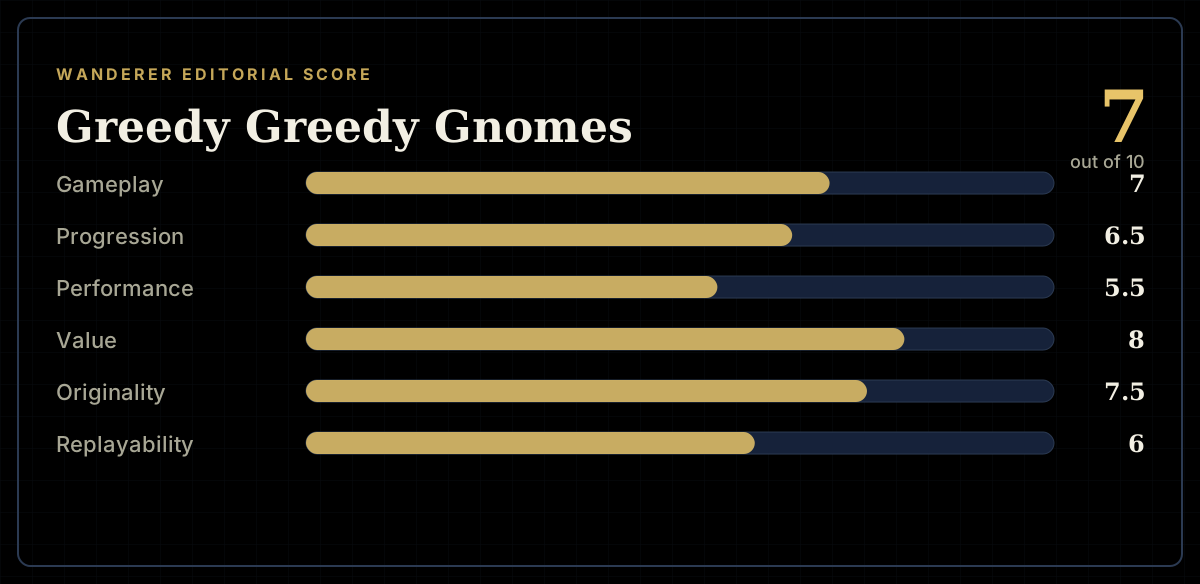
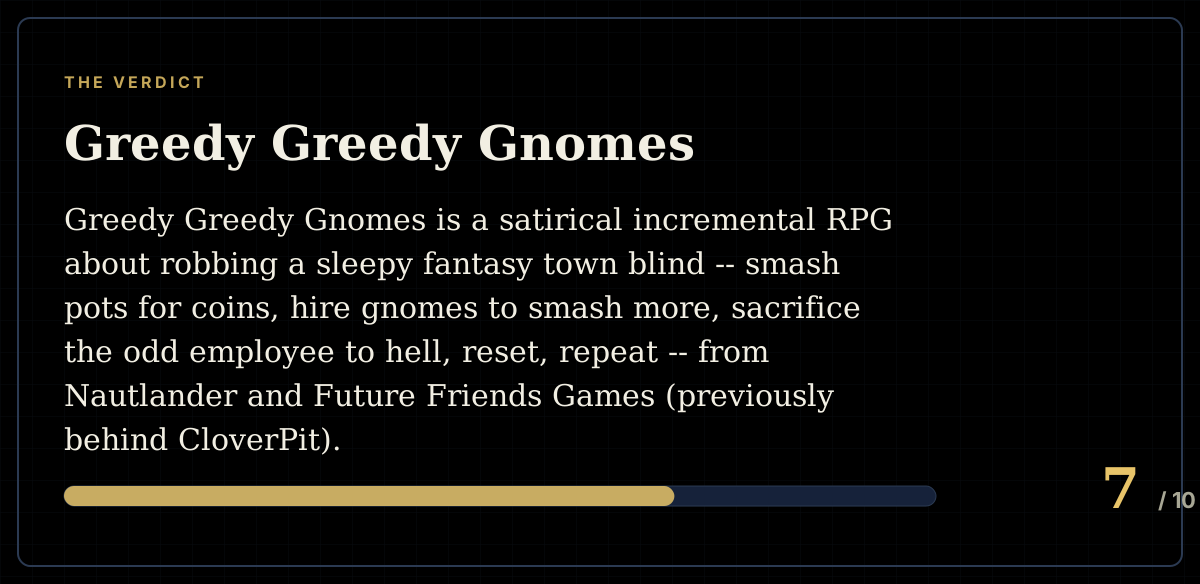
7 / 10
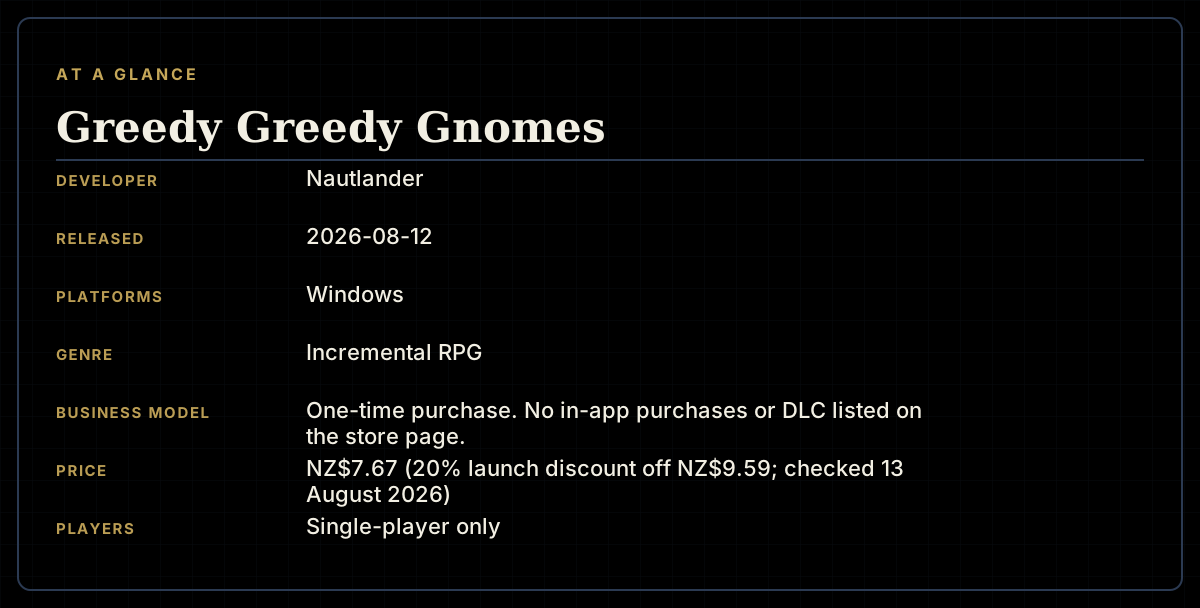
- Developer
- Nautlander
- Publisher
- Future Friends Games
- Released
- 12 August 2026
- Platforms
- Windows
- Genre
- Incremental RPG
- Monetisation
- One-time purchase. No in-app purchases or DLC listed on the store page.
- Players
- Single-player only
The short version
Greedy Greedy Gnomes is a satirical incremental RPG about robbing a sleepy fantasy town blind -- smash pots for coins, hire gnomes to smash more, sacrifice the odd employee to hell, reset, repeat -- from Nautlander and Future Friends Games (previously behind CloverPit). It launched 12 August 2026 to a small but Mostly Positive reception, 72.7% of 22 English reviews, with reviewers calling it a fun, cheap, well-judged length for an incremental.
The two available negative reviews report the same concrete, specific bug -- pressing Save and Exit doesn't actually save or exit, costing one player three hours of progress -- and several positive reviews independently flag the prestige loop's manual, repetitive click-through as the game's biggest design weakness.
Biggest strengths
- Genuinely funny, well-written satirical premise -- robbing houses, exploiting gnome labour, sacrificing staff to demonic forces -- that commits to the bit rather than treating comedy as a coat of paint over a generic clicker
- Cheap and appropriately short: reviewers report finishing everything, achievements included, in roughly 8 to 18 hours, which several call well matched to the asking price
- A handful of distinct side attractions -- a mine, a dungeon boss, a wizard's tower, a cemetery ghost to bargain with -- that break up the core pot-smashing loop rather than padding it
Biggest weaknesses
- Both available negative reviews report the same specific, reproducible bug: the Save and Exit button doesn't actually save, which cost one reviewer three hours of progress
- The prestige/reset loop requires manually unassigning every hired gnome by hand each run -- "got 40 gnomes? you'll need to click 40 times" -- turning the reset into repetitive busywork rather than a clean loop restart
- Thin on numeric feedback for an incremental: at least one outside preview and a Steam review both independently ask for more visible stats to make upgrade decisions with
Who it's for: Incremental and clicker fans who want a short, joke-filled session rather than a deep system to sink months into -- something closer to a well-made game jam idea polished into a full release than a Melvor-scale commitment. Not for anyone who wants stat depth or a long tail of content, or anyone burned before by a broken-save bug on a game they haven't backed up.
Our recommendation: A safe cheap buy at NZ$7.67 for incremental fans specifically because it doesn't overstay its welcome -- most reviewers finish it in a single sitting or two. Save manually and often until the reported save/exit bug is confirmed fixed, and expect the mid-to-late prestige loop to ask you to click through the same menus more times than the joke really supports.
7 / 10
Eldor'Idle is a sleepy fantasy town, the kind that usually exists in these games purely as a hub to click "start adventure" from. Greedy Greedy Gnomes has other plans for it. You've come to make your fortune "no matter the cost," and the game means that literally: break into houses, smash pots for coins, hire gnomes to smash more pots, then invest the profits, automate the labour and -- when the loop needs a reset -- sacrifice the odd employee to the demonic forces of hell before starting over. It launched 12 August 2026 from developer Nautlander and publisher Future Friends Games, priced at NZ$9.59 (NZ$7.67 with a launch discount, checked 13 August 2026), and landed to a small but Mostly Positive reception -- 72.7% of 22 English-language reviews, most of them short and enthusiastic.
Committing to the bit
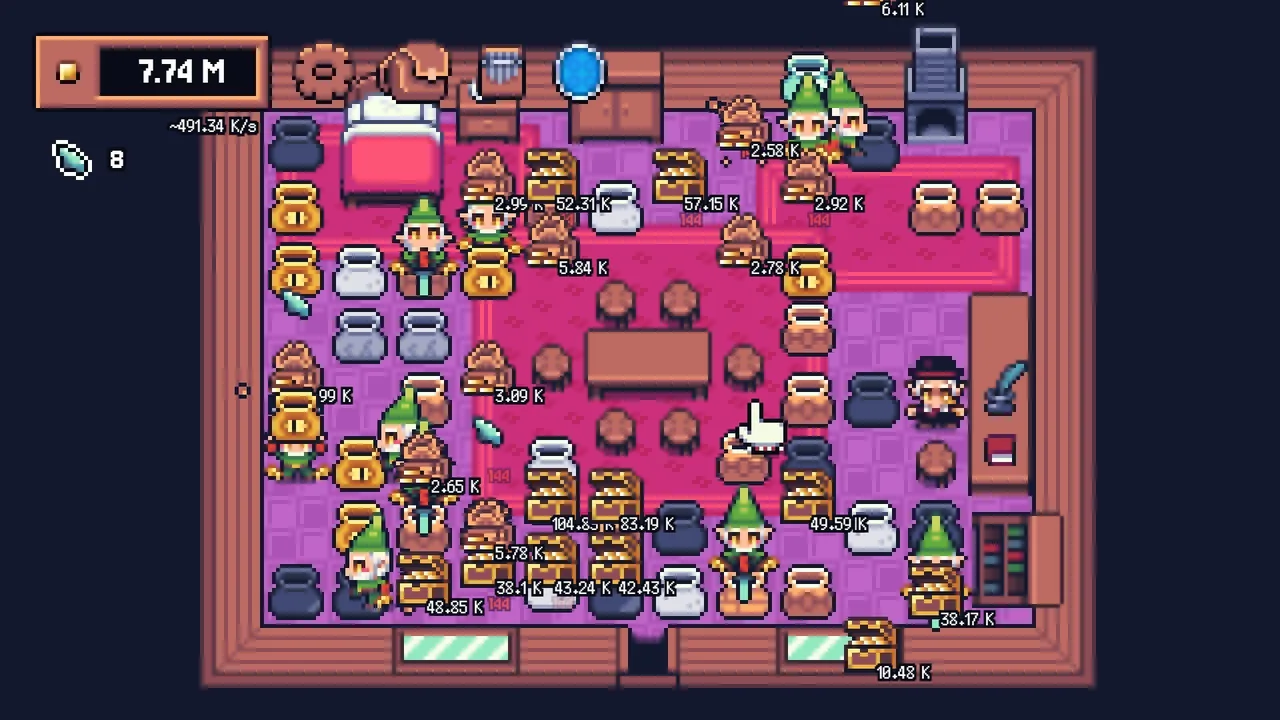
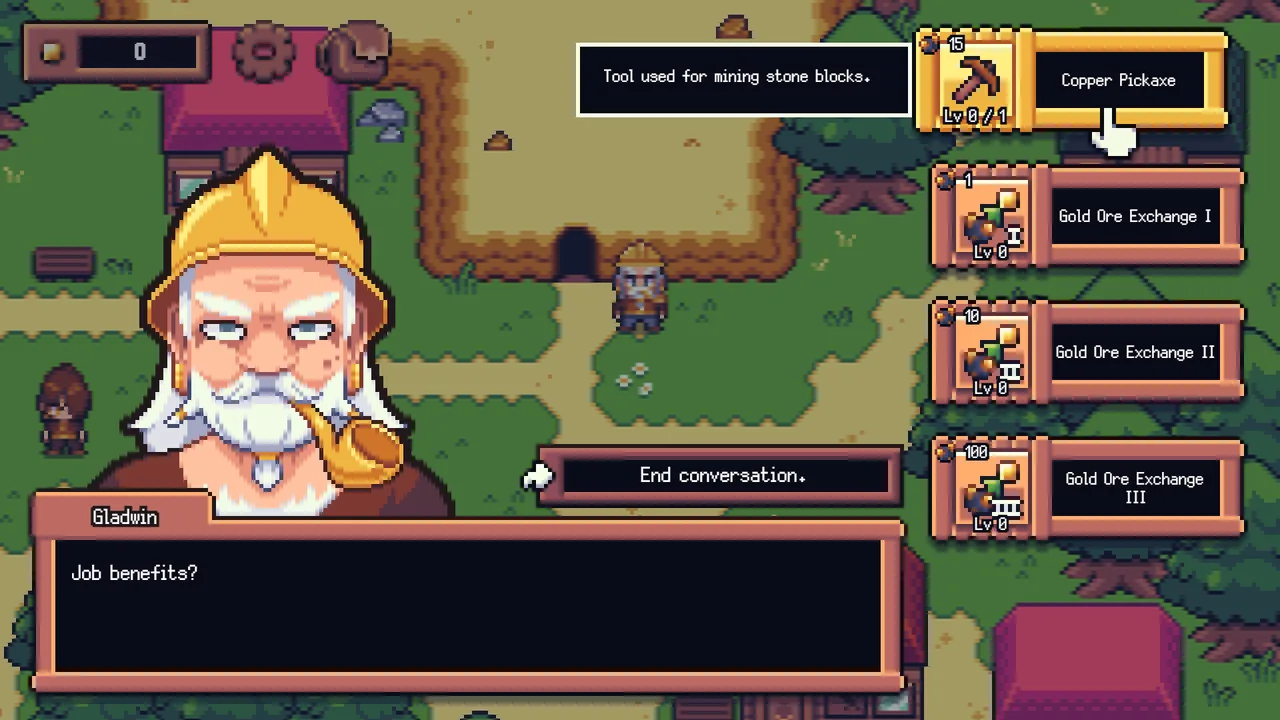
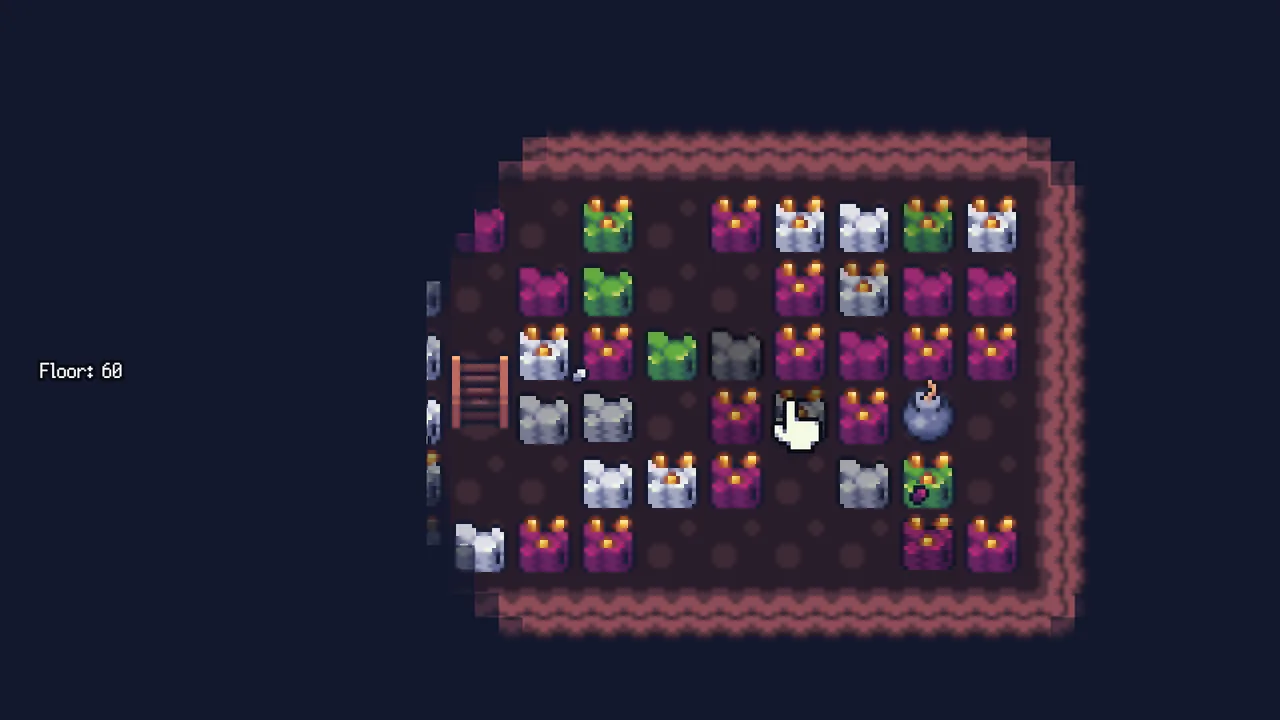
What separates this from the dozens of other pot-smashing, coin-collecting incrementals clogging Steam's new-release feed is that it actually has a voice. The premise isn't a thin wrapper around a number-go-up engine; it's a running joke about labour exploitation and greed played with a straight face, and the side content backs it up -- a Mine to dig into for secrets, a Dungeon boss fight, a Wizard's Tower for brewing upgrades, a Cemetery where you strike deals with a ghost. Reviewers consistently describe it as "fun," "creative" and, more than once, simply "good little incremental game" -- unglamorous praise, but the kind that's honest about what the game is trying to be. One outside preview called it a fun and creative take on the genre while wishing for more visible numbers to base decisions on, and that complaint echoes a Steam review asking for the same thing -- a fair note for a genre whose whole appeal is usually watching numbers climb in a readable way.
The core loop starts as pure clicking and shifts, as gnomes get hired and trained for speed, strength and efficiency, into a management exercise -- deciding where labour goes rather than where your cursor goes. That's a familiar incremental-genre beat, executed competently rather than inventively, but the writing and the specific gnome-labour framing keep it from feeling like a reskin of the fifty other games doing the same structural thing this year.
Short is the point, and mostly delivers on it
The strongest, most consistent thing reviewers say about Greedy Greedy Gnomes is that it doesn't overstay its welcome. One player reports finishing every achievement in around 18 hours, with a lot of that idling away in the background -- "probably you can do it in 8-10 hours," they estimate, of actual engaged play. Another calls it "short, but fun" and "a nice game to spend a day or so on." The global achievement data backs this up: the easiest achievement sits at 100%, and even the hardest available one is still sitting at roughly 10% rather than falling off a cliff after the first hour, the pattern you'd expect from a game most buyers who start it actually see through. For a genre that too often pads runtime to justify a higher price tag, a developer building a short, complete, appropriately-priced incremental and trusting that to be enough is worth crediting on its own.
The complaint that surfaces most often inside otherwise positive reviews is the prestige loop's busywork. "The main prestige mechanic requires unassigning all your gnomes, and you have to do that manually," one reviewer explains. "Got 40 gnomes? You'll need to click 40 times. And you'll have to do that every run." That's the kind of friction an incremental game is specifically supposed to automate away, and its presence right at the reset point -- the moment meant to feel like a clean restart -- undercuts the loop's satisfaction each time it recurs. A smaller but similar complaint concerns a "hover to break pots" upgrade that at least one reviewer found actually slower than manual clicking, an upgrade that fails at being an upgrade.
A concrete bug, not a vague complaint
The more serious issue is specific enough to take seriously rather than write off as launch-week noise. Both of the game's available negative reviews describe the same bug, independently and in similar terms: pressing Save and Exit does not save, and does not exit. "No auto save, and save/exit is broken so lost 3 hours of progress," reads one, adding that "the game is great otherwise tho, simple and satisfying." The other is more direct: "If you play the game and press Save and exit it doesn't close the game so all your progress get reset, I will change my review when a fix comes." A third reviewer separately mentions a bug on one of the game's endings serious enough to force a full restart. None of this reads as a fundamentally broken game -- both reviewers who hit the save bug still liked what they'd played -- but it's a bug that costs real hours rather than a cosmetic annoyance, on a genre where unattended, trustworthy progress is close to the entire premise. Buyers should save manually and often until Nautlander confirms a fix, and treat "no auto save" as a real limitation rather than an oversight to shrug off.
7.0 out of 10. Greedy Greedy Gnomes is a cheap, genuinely funny incremental that knows exactly how long it should be and mostly sticks the landing on that promise -- the writing carries it further than its fairly ordinary click-and-automate mechanics would on their own. A specific, reproducible save bug and a prestige loop that asks for more manual clicking than an incremental should need are real, documented weaknesses rather than launch-jitters noise, and worth knowing before buying rather than after losing three hours to them. At its launch price, still a reasonable pickup for anyone who wants an afternoon with a genre built around watching numbers go up.
Pros and cons
Pros
- Genuinely funny, well-written satirical premise -- robbing houses, exploiting gnome labour, sacrificing staff to demonic forces -- that commits to the bit rather than treating comedy as a coat of paint over a generic clicker
- Cheap and appropriately short: reviewers report finishing everything, achievements included, in roughly 8 to 18 hours, which several call well matched to the asking price
- A handful of distinct side attractions -- a mine, a dungeon boss, a wizard's tower, a cemetery ghost to bargain with -- that break up the core pot-smashing loop rather than padding it
- A gentle, largely-completable achievement curve (100% down to roughly 10% for the hardest one) that matches reviewer reports of a short game most buyers see through to the end
Cons
- Both available negative reviews report the same specific, reproducible bug: the Save and Exit button doesn't actually save, which cost one reviewer three hours of progress
- The prestige/reset loop requires manually unassigning every hired gnome by hand each run -- "got 40 gnomes? you'll need to click 40 times" -- turning the reset into repetitive busywork rather than a clean loop restart
- Thin on numeric feedback for an incremental: at least one outside preview and a Steam review both independently ask for more visible stats to make upgrade decisions with
- A "hover to break pots" upgrade that one reviewer found actually slower than plain clicking, undermining an upgrade meant to be a convenience
Screenshots
-
Greedy Greedy GnomesImage: Future Friends Games via Steam -
Greedy Greedy GnomesImage: Future Friends Games via Steam -
Greedy Greedy GnomesImage: Future Friends Games via Steam -
How the review scores each part of the gameWanderer Editorial -
The essentialsWanderer Editorial -
The short versionWanderer Editorial