
Game review
Infinite Dungeon: Idle Adventure
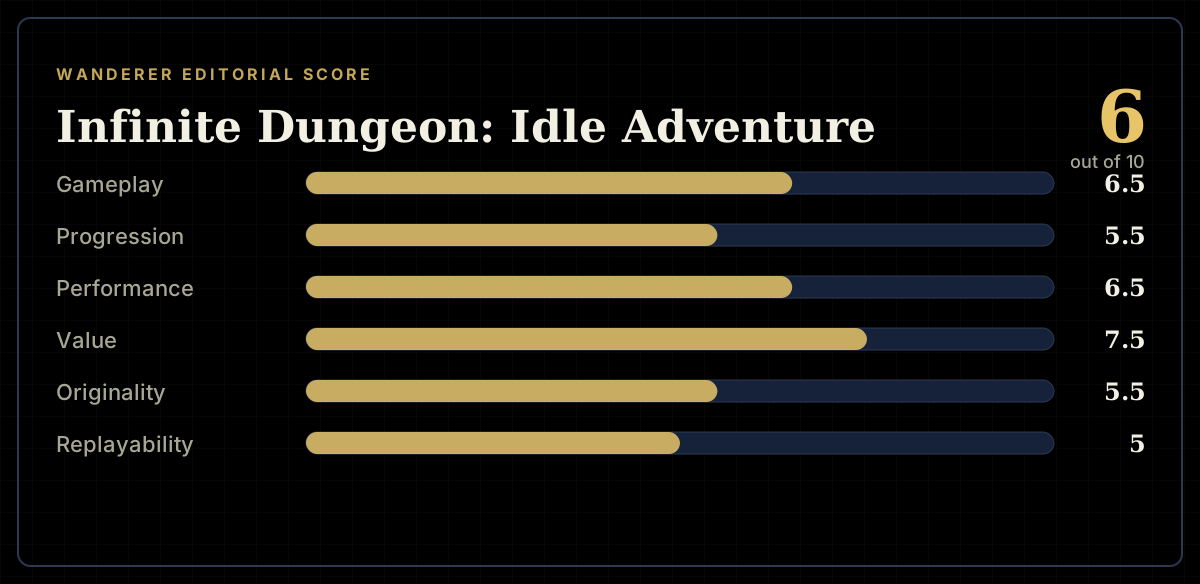
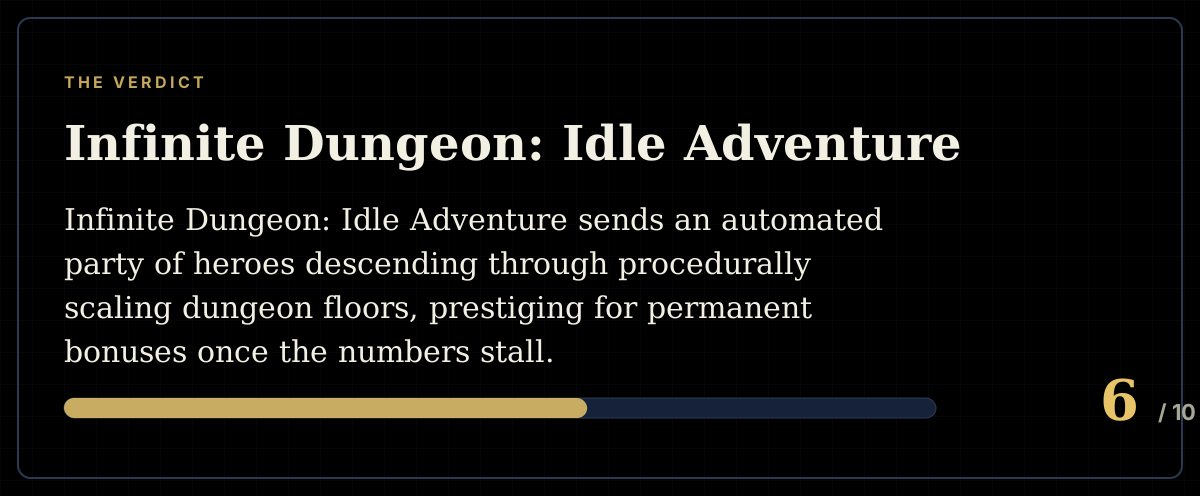
6 / 10
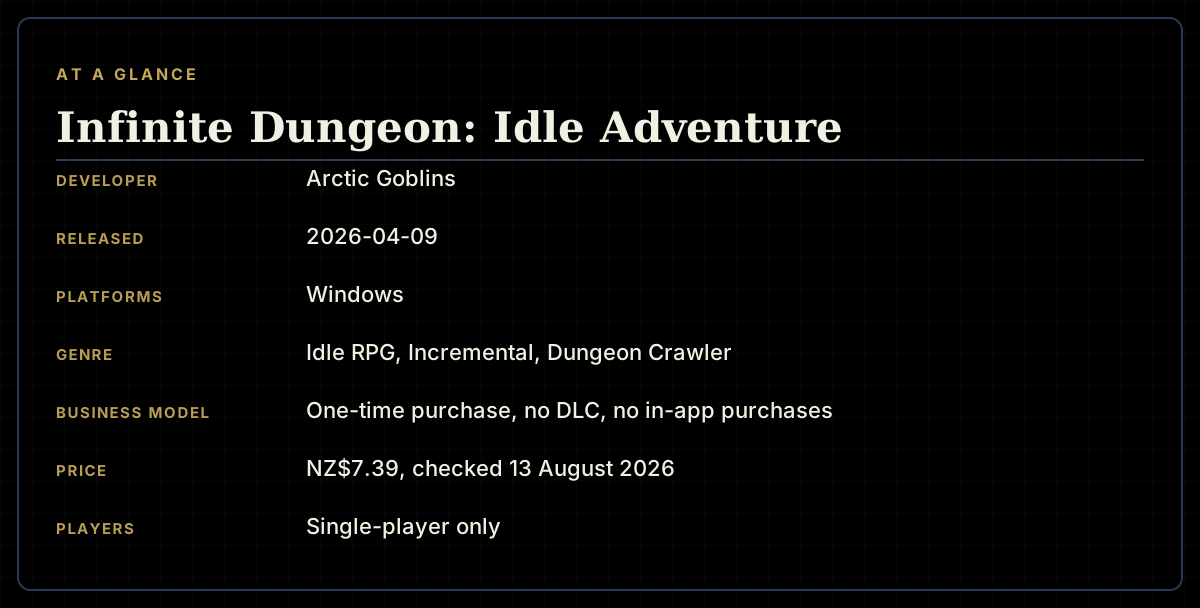
- Developer
- Arctic Goblins
- Publisher
- Arctic Goblins
- Released
- 9 April 2026
- Platforms
- Windows
- Genre
- Idle RPG, Incremental, Dungeon Crawler
- Monetisation
- One-time purchase, no DLC, no in-app purchases
- Players
- Single-player only
The short version
Infinite Dungeon: Idle Adventure sends an automated party of heroes descending through procedurally scaling dungeon floors, prestiging for permanent bonuses once the numbers stall. Released 9 April 2026 by the small studio Arctic Goblins, it sits Mixed across a tiny 24-review sample — all of it read here, spanning five languages. The praise is consistent: a cheap, satisfying idle grinder with a developer who shipped five patches in the first eight days. The criticism splits two ways — a genuinely CPU-hungry launch build, largely addressed within days, and a longer-running complaint about balance changes and thin differentiation between dungeons once a run goes deep, which is still live in the most recent reviews.
Biggest strengths
- A satisfying, low-friction idle loop that reviewers repeatedly compare favourably to genre touchstones like Tap Titans 2, for a fraction of the attention demand
- Arctic Goblins shipped five separate updates in the first eight days after launch, including a dedicated fix for the CPU and lag complaints that dominated early reviews
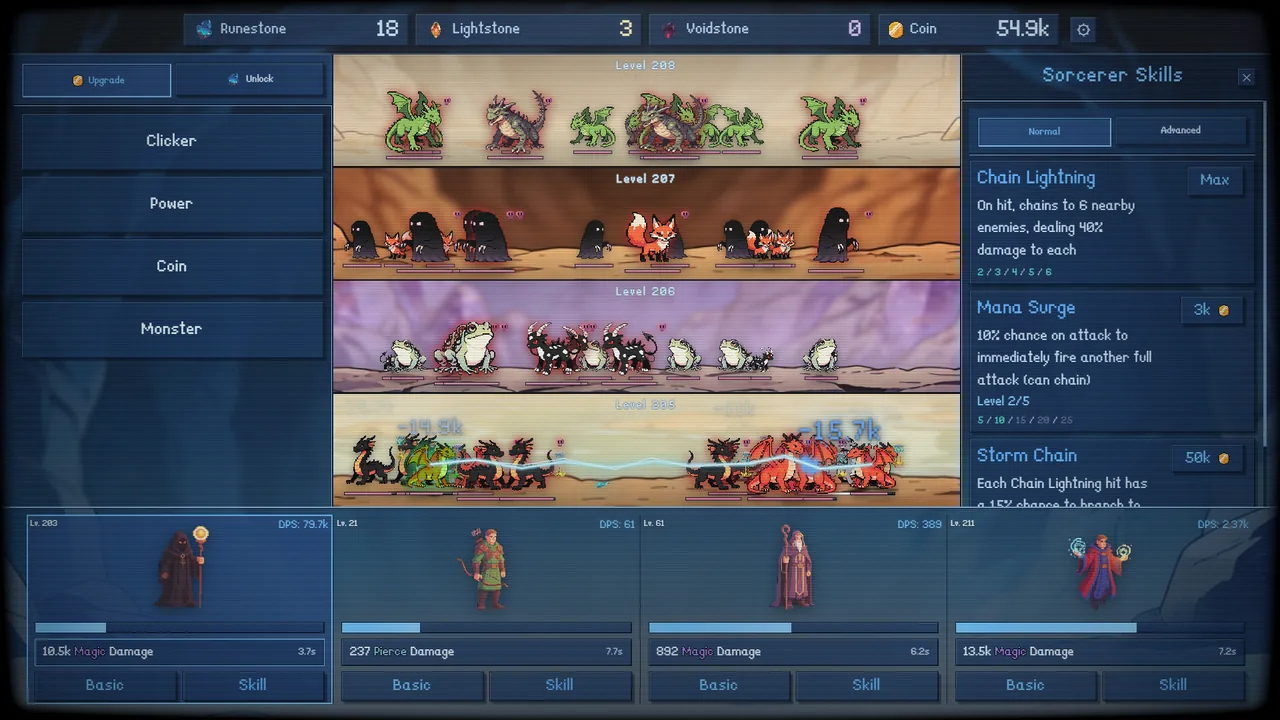
- Automation options are unusually deep for the price — full auto-purchase and auto-skill setups are praised by name, letting the game run genuinely hands-off
Biggest weaknesses
- The launch build ran hot: several early reviewers reported a Steam window process consuming 50%+ CPU, and one specifically flagged it worsening when running several idle games at once
- A balance patch reworking spellcaster damage arrived days after community feedback had called for the opposite change, and the most recent negative review in the sample is specifically about being blindsided by it after a long, invested run
- Reviewers who reach the later floors report the four dungeons don't meaningfully differentiate from one another, with one long-term player describing 750 levels of grinding with "no real difference in gameplay"
Who it's for: Idle and incremental fans who enjoy a Tap Titans-style dungeon-descent loop and don't mind a small, still-evolving game; a weak fit for anyone who wants their prestige runs to feel meaningfully different once they've unlocked all four dungeons.
Our recommendation: A cheap, actively supported idle RPG worth a look for genre fans, with the honest caveat that its balance is still shifting under players' feet and its endgame doesn't yet differentiate itself dungeon to dungeon.
6 / 10
Introduction
Infinite Dungeon: Idle Adventure hands the player a small party of heroes and sends them automatically descending through an endlessly scaling dungeon, clicking and upgrading between prestige resets that carry permanent bonuses forward. Released 9 April 2026 by Arctic Goblins, it carries a Mixed rating from a small sample — 24 reviews across five languages, every one read for this piece. Community tag votes back up the store's own genre framing without surprises: Idler, RPG, Casual, Incremental, Automation and Auto Battler all sit within a few dozen votes of each other, and one English reviewer names the comparison directly, describing it as reminiscent of "those late nights I spent playing Tap Titans 2 on my phone." That's an honest description of what this is: a familiar idle-RPG shape, executed cheaply and openly by a small team still actively shaping it.
A responsive studio, moving fast
The most striking thing about this launch isn't the game itself so much as the pace behind it. Arctic Goblins shipped five separate updates in the eight days after release — a day-one hotfix, a build specifically targeting lag and high CPU usage, a prestige and auto-purchase overhaul, and a content patch adding seven new active skills alongside further performance work. Several reviewers credit this directly: one 12-hour player wrote that the developer "responds to feedback, and implements positive changes," and another noted the game "plays much better after the update" and found themselves "getting hooked again." For a solo or near-solo studio, that is a genuinely good sign, and it shapes how the complaints below should be read — as live issues a fast-moving developer is actively working through, not a finished, abandoned product.
The CPU problem, and its timing
The most concrete technical complaint in the sample is CPU usage. Multiple Chinese-language reviewers in the first two days after launch reported the game's window process consuming 50% or more of their CPU, with one specifically noting it got worse running several idle games simultaneously — a real concern for a genre built around leaving windows open in the background. Dated against the patch history, this complaint belongs almost entirely to launch week: the dedicated "Fix Lag & High CPU issue" update landed on 13 April, four days after release, and every CPU-specific complaint in this sample predates it. That doesn't erase the problem — a buyer in the first 96 hours genuinely had a hot-running game — but it does mean a shopper checking the store page today is looking at a largely resolved issue rather than a live one.
Where the real disagreement still lives
Two complaints in the sample are not about launch bugs and are still current as of the most recent reviews. The first is balance. The single most detailed negative review in the sample, posted 18 April — after all five known patches — describes a spellcaster nerf landing the day after the community had been asking the opposite class to be toned down, undercutting a build the reviewer had invested roughly 30 hours into reaching floor 24,000 with. Whether that specific balance call was correct isn't something a review corpus can adjudicate, but the pattern — a nerf that seems to contradict recent player feedback, delivered without much visible explanation — is the kind of thing that erodes trust in an idle game's core promise: that time invested compounds rather than gets rebalanced out from under you.
The second is depth. A German reviewer with 98 hours logged posted an update to their own review in late April titled, in effect, "I'm done" — after unlocking all four dungeons, they describe playing from floor 500 to floor 1,250 twice with no meaningful change in what the game asked of them, concluding that leaving their PC on standby would at least save electricity. A separate Simplified Chinese reviewer with 141 hours makes a similar point more bluntly: after roughly ten hours, the loop becomes repeatedly upgrading one spell and watching it one-shot enemies, with little else changing. Worth flagging plainly: playtime figures this high, for a game this genre, measure a window left running far more than hours of active attention — but the substance of both complaints is about design, not patience, and it's a fair one. Four dungeons that don't feel distinct from each other is a real content gap, not a pacing complaint.
Automation and value
Set against those complaints, the parts of the game built for genuinely hands-off play draw specific, repeated praise. Reviewers single out the auto-purchase and auto-skill systems by name as unusually complete for the price, letting a run be configured once and left to farm prestige currency without further input — exactly what an idle game in this price bracket should be judged on. At NZ$7.39 with no in-app purchases of any kind, value sentiment is close to unanimous: reviewers across English, German and Chinese all independently describe it as worth more than they paid, with one calling it "worth the price" outright and another simply noting it "lasts far longer" than the cost of a coffee suggests it should.
There is currently no Steam achievement schema for this game, which means the usual completion-rate cross-check this review would normally run isn't available yet — worth noting as a gap in the evidence rather than treating its absence as a mark against the game itself.
Final Verdict
Infinite Dungeon: Idle Adventure is a cheap, competently built idle RPG let down less by its core loop than by a rocky first week and an endgame that hasn't yet earned its "infinite" name. The technical problems that dominated launch reviews look largely solved by a developer moving fast enough to be worth some patience; the balance whiplash and dungeon sameness that surface in the most recent reviews are the more serious open questions, because they're about design decisions rather than bugs. For genre fans willing to accept some rough edges from a small, actively patching studio, it's an easy recommendation at this price. Anyone hoping the deep end delivers a meaningfully different game from the opening hours should wait and see what the next few updates change.
Pros and cons
Pros
- A satisfying, low-friction idle loop that reviewers repeatedly compare favourably to genre touchstones like Tap Titans 2, for a fraction of the attention demand
- Arctic Goblins shipped five separate updates in the first eight days after launch, including a dedicated fix for the CPU and lag complaints that dominated early reviews
- Automation options are unusually deep for the price — full auto-purchase and auto-skill setups are praised by name, letting the game run genuinely hands-off
- Broadly agreed to be good value at under eight dollars, with multiple reviewers independently calling it worth more than they paid
Cons
- The launch build ran hot: several early reviewers reported a Steam window process consuming 50%+ CPU, and one specifically flagged it worsening when running several idle games at once
- A balance patch reworking spellcaster damage arrived days after community feedback had called for the opposite change, and the most recent negative review in the sample is specifically about being blindsided by it after a long, invested run
- Reviewers who reach the later floors report the four dungeons don't meaningfully differentiate from one another, with one long-term player describing 750 levels of grinding with "no real difference in gameplay"
- No achievement schema exists yet, so there's currently no way to independently verify how far into the game typical buyers actually get
Screenshots
-
Infinite Dungeon: Idle AdventureImage: Arctic Goblins via Steam -
Infinite Dungeon: Idle AdventureImage: Arctic Goblins via Steam -
Infinite Dungeon: Idle AdventureImage: Arctic Goblins via Steam -
How the review scores each part of the gameWanderer Editorial -
The essentials at a glanceWanderer Editorial -
The short versionWanderer Editorial