Game review
Bones and Coins
5.5 / 10
- Developer
- Troyd Games
- Publisher
- Rogue Duck Interactive
- Released
- 7 September 2026
- Platforms
- Windows
- Genre
- Action, Casual, RPG, Simulation, Strategy
- Monetisation
- One-time purchase, no in-game purchases listed
- Players
- Single-player
The short version
Bones and Coins, released 7 September 2026 by Troyd Games, is an incremental dungeon crawler where players build a synergised hero party, unlock weapons with distinct attack styles, and loot legendary drops while exploring dungeon rooms filled with enemies. It sits Mostly Positive with a sample of 58 reviews, and reading widely through it reveals a genuinely split reception that traces back to a specific, recurring disagreement over what the game actually is. Multiple detailed, highly-upvoted reviewers argue the game markets itself as an auto battler with real hero-versus-enemy combat, but delivers instead a cursor-dragging clicker where enemies stand passively waiting to be defeated with essentially no thematic or mechanical difference between successive weapon tiers. Other reviewers push back directly against that framing, arguing the demo and screenshots accurately represent exactly what the game is, and that dissatisfied reviewers simply didn't do their homework before buying. Beyond that genre-labelling dispute, this review found consistent complaints about thin build variety, with only one hero widely described as genuinely useful, no ability to respec a bad skill choice without restarting entirely, and a short three-to-four hour runtime to full completion that several reviewers feel undersells the asking price even at its currently discounted level.
Biggest strengths
- Presentation draws consistent, specific praise, with reviewers describing charming, old-school Diablo-inspired art direction and pleasant music well suited to a relaxed, low-effort session
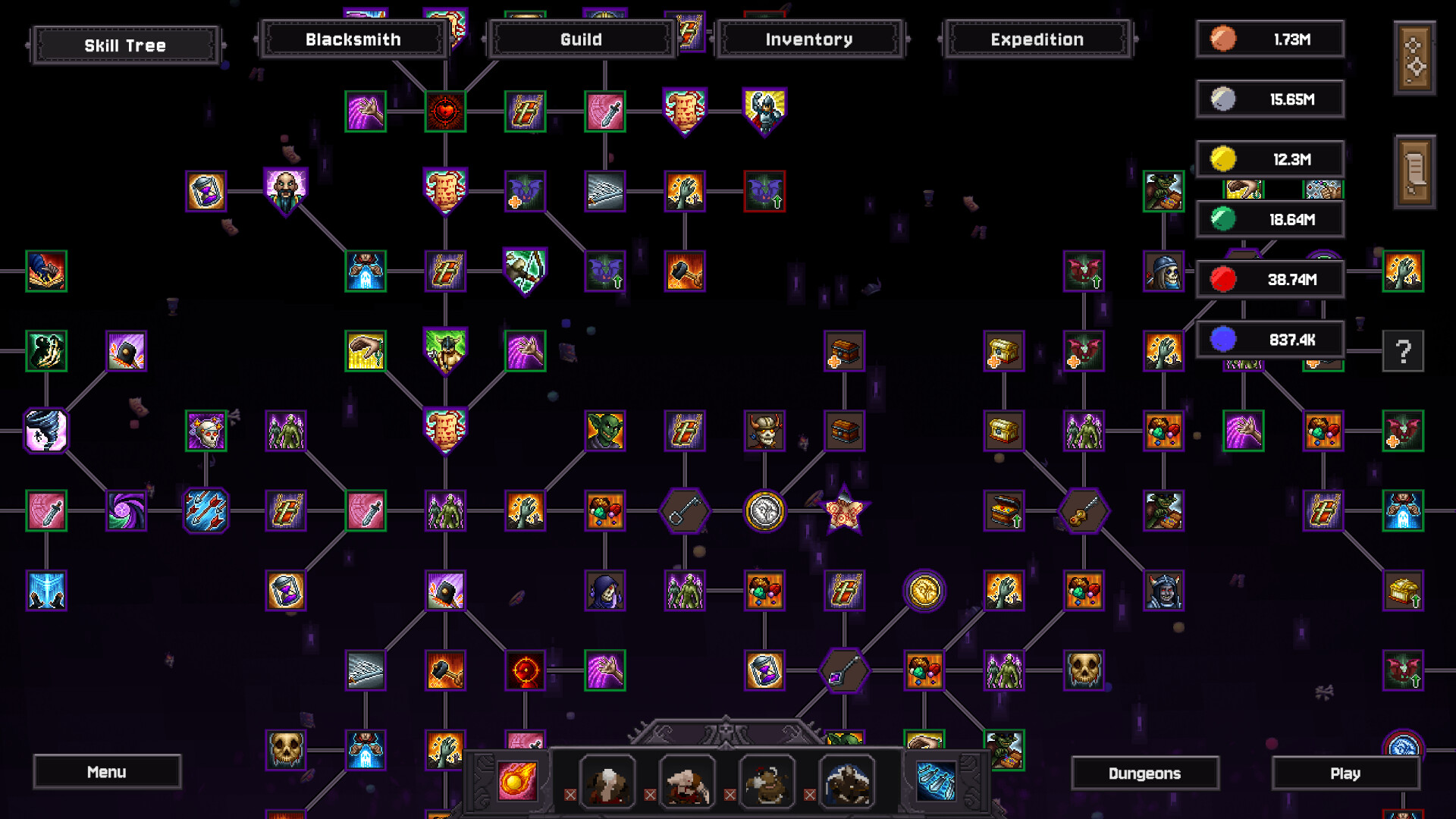
- The skill tree and unlock progression draw genuine appreciation from reviewers who enjoy the incremental genre specifically, with several describing a satisfying sense of steady growth as coins are converted into permanent upgrades
- Value draws real praise from a meaningful share of this sample, with multiple reviewers specifically framing a few hours of relaxed, engaging play for a handful of dollars as a fair trade regardless of the game's other limitations
Biggest weaknesses
- Multiple detailed, highly-upvoted reviewers argue the marketing and screenshots imply real hero-versus-enemy combat that the actual game doesn't deliver, describing enemies that stand passively waiting to be cleared rather than engaging in any visible fight
- Reviewers consistently report minimal build variety, with only one specific hero, the Shaman, widely described as genuinely useful, and successive weapon tiers offering strict numerical upgrades with no meaningful thematic or gameplay differentiation between them
- At least one detailed reviewer reports no ability to respec a poorly-chosen skill without resetting progress and restarting the game entirely, a significant design gap for a game built around permanent, cumulative choices
Who it's for: Fans of short, low-effort incremental and clicker games looking for a cheap, cute, Diablo-flavoured skin on a familiar formula, who have played the free demo first and know precisely what kind of loop they're buying into.
Our recommendation: Play the demo first and judge for yourself what kind of game this actually is; worth the low price if the demo's exact loop appeals to you, skip it if you're hoping for real tactical hero-versus-enemy combat.
5.5 / 10
Introduction
Bones and Coins, released 7 September 2026 by Troyd Games, is an incremental dungeon crawler where players build a synergised hero party, unlock weapons with distinct attack styles, and loot legendary drops while exploring dungeon rooms filled with enemies. It sits Mostly Positive with a sample of 58 reviews, and reading widely through it reveals something this review found genuinely useful to untangle directly: a Mixed-leaning reception that traces back not to inconsistent quality so much as a specific, recurring disagreement between reviewers over what kind of game this actually is.
A real dispute over what "auto battler" means here
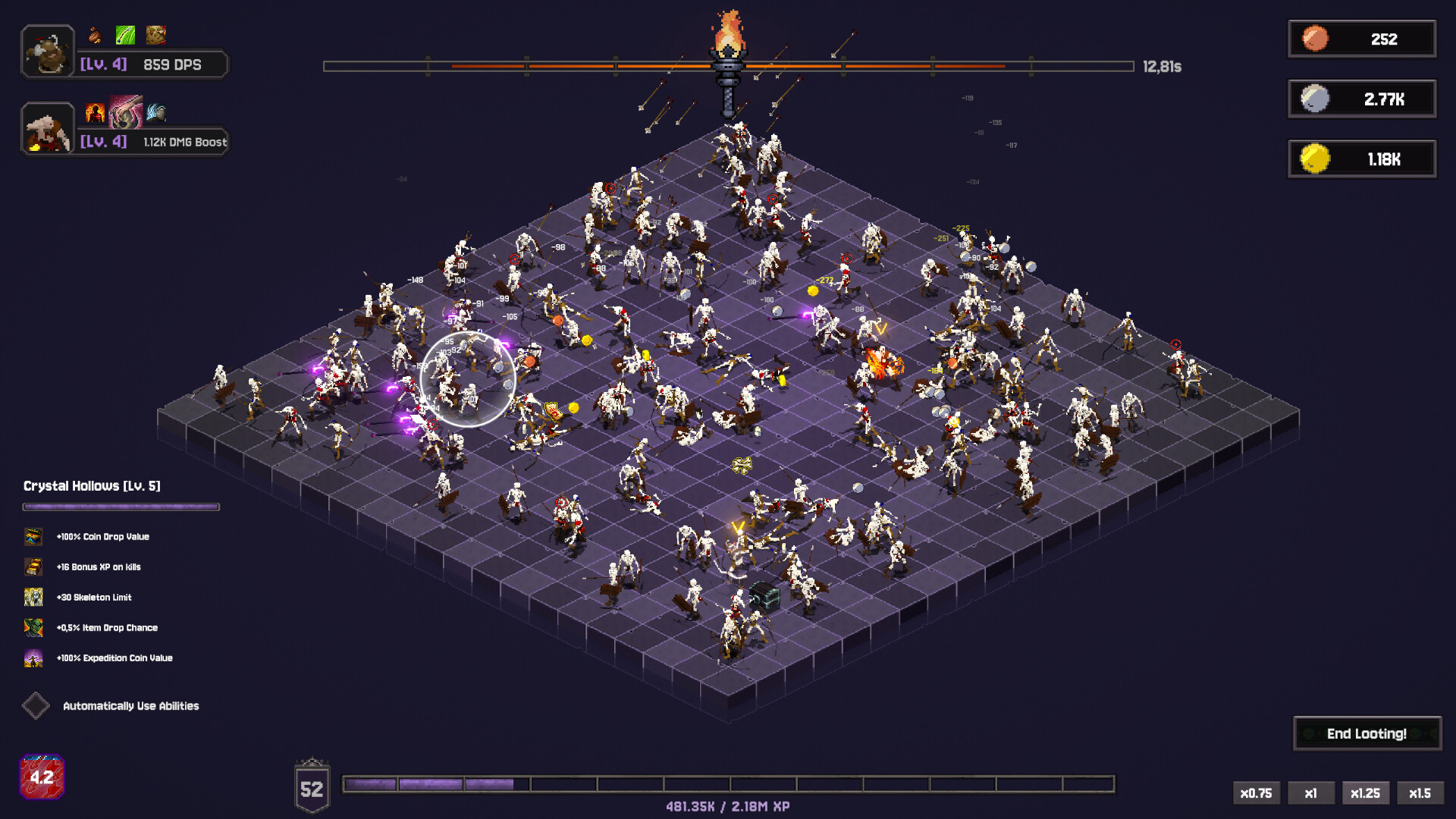
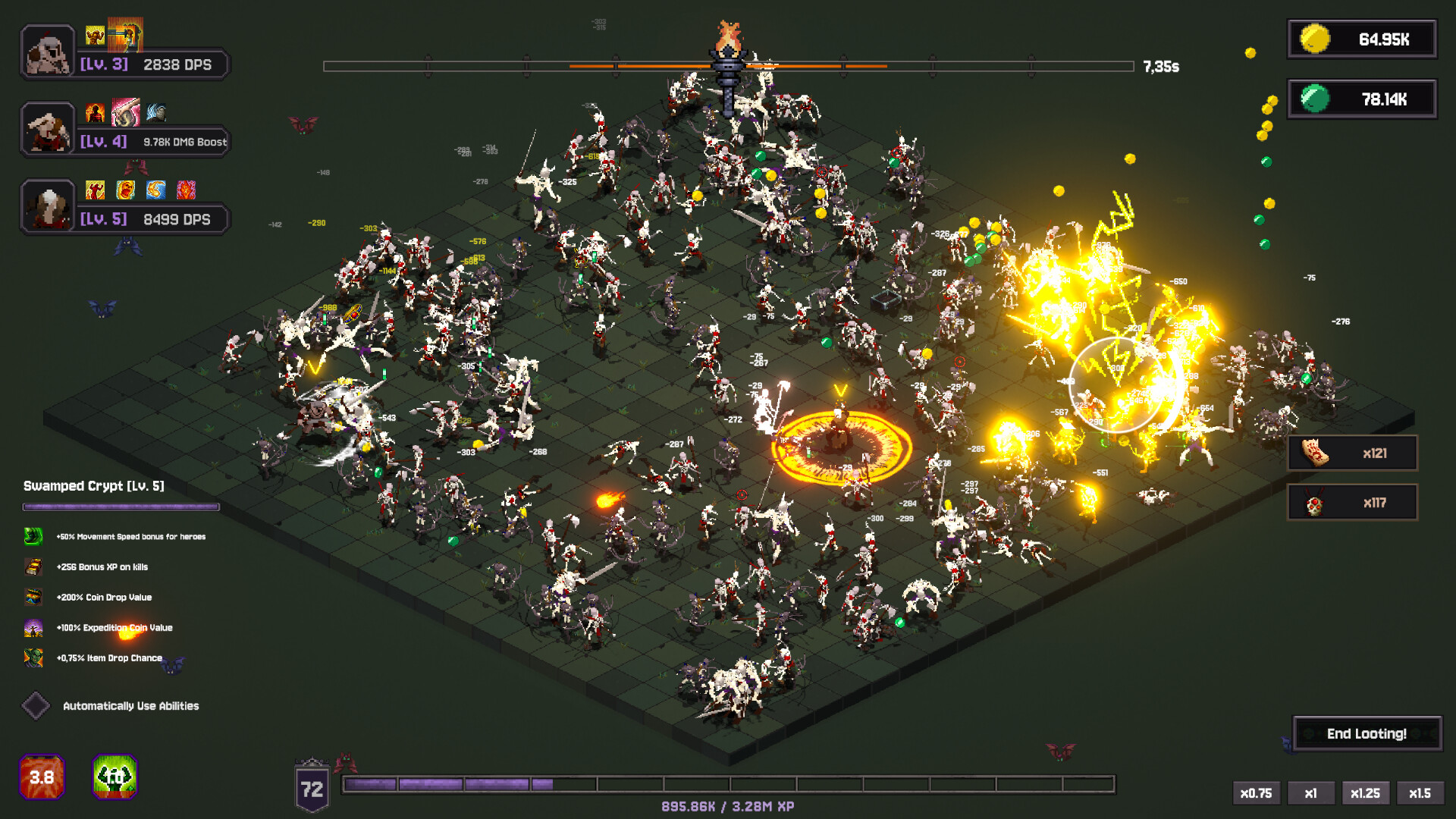
The clearest and most consequential thread in this sample is a direct, recurring argument about genre labelling. Multiple detailed, highly-upvoted reviewers argue the game's marketing implies real hero-versus-enemy combat — a party of heroes actually fighting skeletons — but that the actual gameplay instead consists of dragging a cursor across the screen while enemies stand passively, essentially waiting to be cleared with no visible exchange of blows. One reviewer states this directly: "this is NOT an idle game and it hardly counts as an Auto Battler." Set directly against that complaint, other reviewers push back just as directly, arguing the freely available demo and the game's own screenshots accurately represent exactly this loop, and that dissatisfied reviewers simply didn't check before purchasing. One reviewer frames this bluntly, arguing prospective buyers frustrated by the genre label "can try the game in the demo and you know it is autobattler." This review treats both sides of that argument as genuinely reasonable given the evidence in this sample: the underlying gameplay loop itself appears to be represented honestly in the demo, but the framing language used in wider marketing is different enough from what some buyers expected that real, good-faith confusion is happening independent of the game's actual quality.
Genuine, if modest, charm for incremental fans
Beyond that labelling dispute, this review found consistent, real appreciation from reviewers who specifically enjoy the incremental genre on its own terms. Presentation draws repeated praise, with reviewers describing charming, old-school Diablo-inspired art direction and pleasant music well suited to a relaxed, low-effort session. The skill tree and unlock progression draw genuine satisfaction from reviewers who describe a steady, engaging sense of growth as accumulated coins convert into permanent account-wide upgrades, and value draws real, specific praise from a meaningful share of this sample who frame a few hours of relaxed play for a handful of dollars as a fair trade regardless of the game's other limitations.
Thin build variety, and only one hero that matters
Set against that praise, this review found consistent, specific complaints about build depth. Multiple reviewers report minimal meaningful variety across the roster, with only one specific hero, the Shaman, widely described as genuinely useful thanks to abilities that boost the player's own active weapon. Separate reviewers report successive weapon tiers — dagger to bow to wand, for example — represent strict numerical upgrades with no real thematic or gameplay differentiation between them, undercutting the sense of meaningful choice the game's own marketing around "synergised" party building implies.
No respec, and a short runtime
A specific, concrete design complaint concerns permanence: at least one detailed reviewer reports no ability to respec a poorly-chosen skill without resetting all progress and restarting the game entirely, a serious gap for a game built around cumulative, permanent choices made without full information up front. Compounding that, multiple reviewers report completing the game to full achievement completion in as little as three to four hours, with several explicitly questioning whether the current asking price is justified by that volume of content even accounting for the launch discount.
A feeling of incompleteness, without a stated roadmap
Beyond the specific mechanical complaints, this review found a more general, structural concern raised by at least one detailed reviewer: the game currently shows no indication of planned future content updates, leading that reviewer to frame the release as feeling closer to an early access demo than a genuinely finished, ongoing full release. Given how consistently this sample describes the current content as thin, that absence of a stated development roadmap compounds rather than resolves the underlying concern.
What this dispute reveals about buying incrementals blind
This specific labelling disagreement is worth dwelling on a little longer, because it's a genuinely useful case study rather than just noise in the review sample. Incremental and idle games as a broader category cover an unusually wide range of actual moment-to-moment interaction, from games that genuinely play themselves in the background to games, like this one, that require constant, active cursor input to progress at all. When a store page leans on language borrowed from a more hands-off subgenre while the actual product demands continuous manual engagement, the resulting mismatch in buyer expectations isn't really either side's fault individually — it's a genre-labelling problem the wider incremental-games category still hasn't fully solved. This review's own recommendation to try the demo first isn't a dodge of that tension; it's the most direct way to sidestep it entirely, since the demo appears to represent the shipped game honestly regardless of how the surrounding marketing language is interpreted.
Final Verdict
Bones and Coins delivers a genuinely charming, low-effort incremental loop with satisfying progression for players who go in understanding exactly what they're buying, and reviewers who played the demo first consistently report getting precisely what they expected. What holds this score down is a real, specific dispute over whether the game's broader marketing honestly represents that loop, compounded by thin build variety concentrated around a single genuinely useful hero, no respec option for permanent skill choices, and a short three-to-four hour runtime some reviewers feel undersells the price. Play the demo first and judge for yourself what kind of game this actually is; worth it at this price if that specific loop appeals to you.
Pros and cons
Pros
- Presentation draws consistent, specific praise, with reviewers describing charming, old-school Diablo-inspired art direction and pleasant music well suited to a relaxed, low-effort session
- The skill tree and unlock progression draw genuine appreciation from reviewers who enjoy the incremental genre specifically, with several describing a satisfying sense of steady growth as coins are converted into permanent upgrades
- Value draws real praise from a meaningful share of this sample, with multiple reviewers specifically framing a few hours of relaxed, engaging play for a handful of dollars as a fair trade regardless of the game's other limitations
- Several reviewers specifically and directly defend the game's genre labelling, arguing the freely available demo accurately represents the full experience and that prospective buyers who play it first know exactly what they're purchasing
Cons
- Multiple detailed, highly-upvoted reviewers argue the marketing and screenshots imply real hero-versus-enemy combat that the actual game doesn't deliver, describing enemies that stand passively waiting to be cleared rather than engaging in any visible fight
- Reviewers consistently report minimal build variety, with only one specific hero, the Shaman, widely described as genuinely useful, and successive weapon tiers offering strict numerical upgrades with no meaningful thematic or gameplay differentiation between them
- At least one detailed reviewer reports no ability to respec a poorly-chosen skill without resetting progress and restarting the game entirely, a significant design gap for a game built around permanent, cumulative choices
- Multiple reviewers report completing the game to full achievement completion in as little as three to four hours, with several explicitly questioning whether the asking price is justified by that amount of content even at a discount
- At least one detailed reviewer specifically states the game currently shows no indication of planned future content updates, framing the release as feeling closer to an early access demo than a genuinely finished, supported full release
Screenshots
-
Bones and CoinsImage: Rogue Duck Interactive via Steam -
Bones and CoinsImage: Rogue Duck Interactive via Steam -
Bones and CoinsImage: Rogue Duck Interactive via Steam -
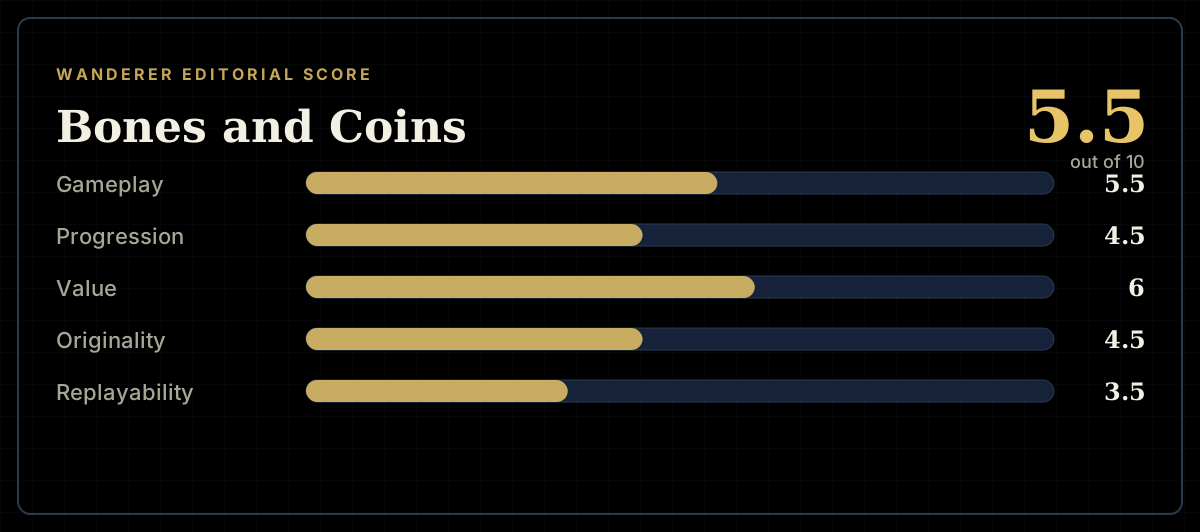
How the review scores each part of the gameWanderer Editorial -
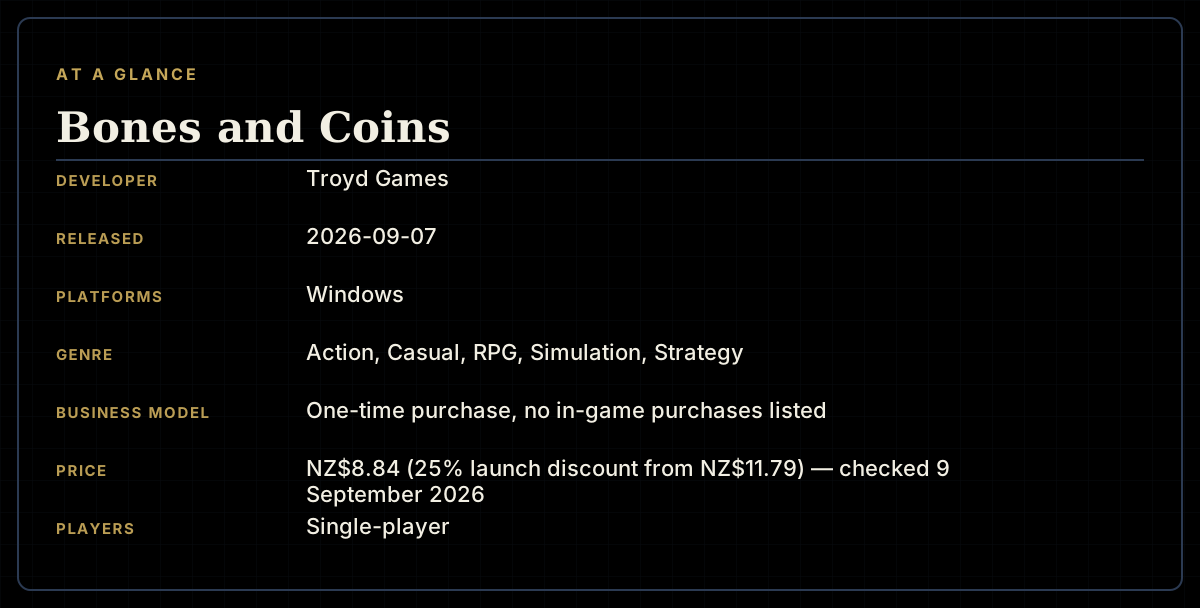
The essentials at a glanceWanderer Editorial -
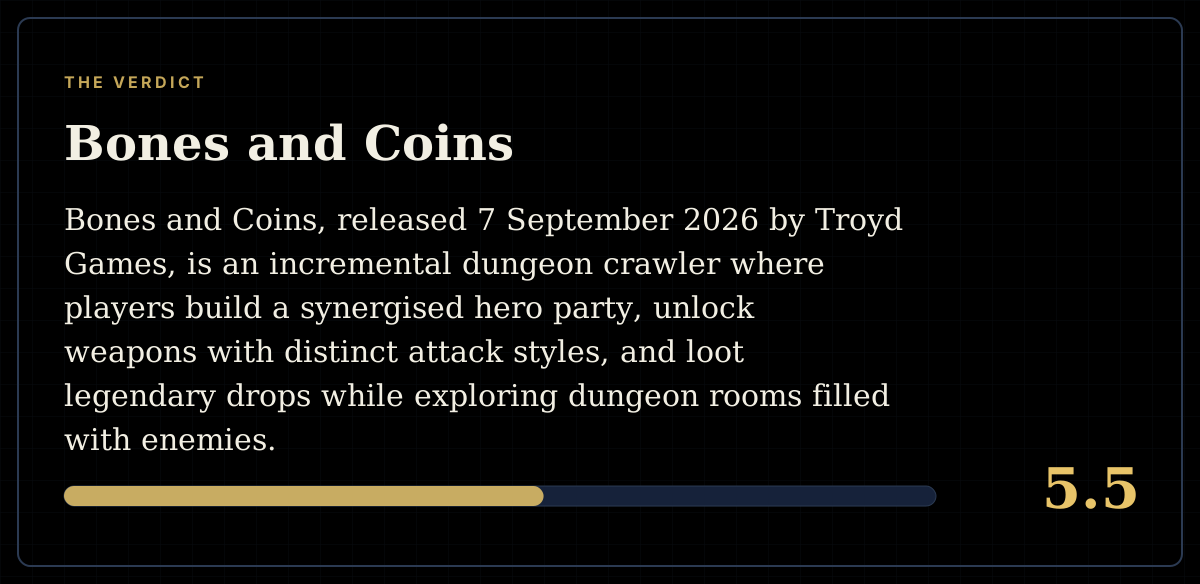
The short versionWanderer Editorial