
Game review
Lets Get Loot!
6 / 10
- Developer
- John Timpson, Teeja Timpson
- Publisher
- John Timpson
- Released
- 23 March 2025
- Platforms
- Windows
- Genre
- Idle RPG, Hack and Slash, Auto Battler
- Monetisation
- One-time purchase only. No DLC, no in-app purchases, no ads, no premium currency, no energy or timer systems of any kind
- Players
- None; single-player with asynchronous seasonal leaderboards (Normal and Hardcore) rather than any shared or competitive online mode
The short version
Lets Get Loot puts a real idle loop under its hack-and-slash skin: pick a class, set a challenge rating and spawn speed, and watch loot pile up while stats, elements and a fusion-point respec system turn drops into power. For a genuine stretch of players that loop held for hundreds, even thousands of hours, and the developer's Season 1 and Season 2 patch record shows real responsiveness to feedback. But the game's own official screenshot of a veteran's statistics panel shows the story plainly: 14,087 Common drops against 141 Rare, 11 Epic, 1 Unique and zero Legendary, Mythical or Divine items. Steam's achievement data shows the same taper, cratering below 5% past the starting classes. Then, in January 2026, the developer announced they were ending development entirely to start a different game. Whatever wall a player hits today is permanent.
Biggest strengths
- The class, element, fusion-point and artifact systems layer into a loot loop that demonstrably held a real subset of players for hundreds to thousands of hours
- NZ$7.39 for a complete, one-time purchase with no DLC, ads, premium currency or timers to push against — one of the cleanest business models this library has covered
- The developer was genuinely responsive through Season 1 and Season 2, shipping balancing patches and a "State of the Union" post addressing player feedback directly
Biggest weaknesses
- Development stopped permanently in January 2026, with the developer confirming in writing that there will be no further updates, reworks or seasons
- The rarity ladder thins out sharply past its middle tiers; the studio's own promotional screenshot of a played-in save shows zero Legendary, Mythical or Divine drops after 15,681 items looted
- Several of the highest-playtime negative reviews describe hitting a hard progression wall — one reports 180-plus hours and a single crafted artifact at level 20 of a 30,000-level cap
Who it's for: Idle-game players who want a low-cost, background hack-and-slash loot fix and are comfortable buying a game that is finished forever, warts included.
Our recommendation: A fair buy at NZ$7.39 for the first several dozen hours of class-picking and loot-sorting satisfaction it genuinely delivers, but go in knowing the mid-to-late progression wall its own veterans describe will never be patched.
6 / 10
A loot game whose own statistics screen makes the argument
Lets Get Loot is a solo-and-partner-built idle hack-and-slash: pick a hero class, drop them into a dungeon, and let them auto-fight endless waves of monsters while loot piles up. You can adjust the challenge rating of the enemies and how fast they spawn — all the way up to "Instant" — so the game scales from a genuinely idle background task to something closer to active number-chasing. Items drop in eight rarity tiers, from Common up through Uncommon, Rare, Epic, Unique, Legendary, Mythical and Divine, and can be imbued with elements, fused for stat points, salvaged for crafting parts, or fed into an artifact system that consumes rare catalysts to build permanent, account-wide gear. On paper, and for the opening stretch in practice, that's a real idle-RPG skeleton.
The developer's own promotional material undercuts the pitch better than any negative review could. One of the official Steam screenshots is a Statistics panel pulled from an actual played save, and it lists a lifetime loot count: 14,087 Common items, 1,441 Uncommon, 141 Rare, 11 Epic, 1 Unique — and zero Legendary, zero Mythical, zero Divine. That's not a cherry-picked complaint. It's the developer's chosen marketing image, showing that after looting 15,681 items, the top three of the game's eight rarity tiers had never dropped once. A loot game's entire pitch rests on the rarity ladder meaning something, and the studio's own screenshot is the best evidence in this review that, for a real slice of players, it stops meaning much past the middle.
The split isn't language, and it isn't drive-by reviewers
Lets Get Loot sits at Mixed on Steam. As of this review it has 44 total reviews across every language — 26 positive, 18 negative, 59% — with 38 of those in English, and a handful each in Russian, German, Spanish, French, Korean and Turkish. Every one of them was read individually. Splitting the corpus by language doesn't explain the divide: the six non-English reviews split three positive to three negative, matching the English ratio almost exactly, and their complaints echo the English ones rather than diverging from them — a German reviewer describes an autobattler that punishes actual idling because loot chests appear in short clickable windows you'll miss if you walk away; a Korean reviewer's entire review is four words, "too little to do." This isn't a review-bombing wave and it isn't one market reading the game differently from another. It's a small, genuinely divided audience.
What does explain it is playtime, and it explains it cleanly in one direction. The 18 negative reviews have a median playtime of 45 hours and a mean of 79 — five of them are quick bounces under six hours, but the other thirteen range from 12 hours up past 220. The 26 positive reviews run far higher still: a median of 332 hours and a mean of 664, with several accounts logging over 1,000 hours and one at 2,743. These are not two different populations arriving with different expectations. They're mostly the same kind of player — people who committed real time to an idle background game — and the negative half is disproportionately made up of people who put in dozens to hundreds of hours before deciding the game wasn't going anywhere. That's a wall, not an onboarding problem.
Steam's own achievement data backs the shape of that wall up independently. The two starting class unlocks, Cleric and Necromancer, sit at a healthy 63.6% each. From there the curve tapers steadily through the golden variant classes in the high 20s and low 30s, then falls off a cliff: Angel at 11.8%, Paladin at 10.8%, Kitsune at 5.5%, and the deepest fusion-tier achievement at 1.1%. That's a believable difficulty curve for the opening hours, followed by a genuine cliff around the exact point the highest-playtime negative reviews describe — one 180-plus-hour reviewer writes about reaching character level 20 out of a stated cap of 30,000 and having crafted precisely one artifact in that time; another describes investing seriously in a spawn-chance stat for the game's "Loot Goblin" enemy because chasing that specific monster became close to mandatory for progress past a certain point.
A roster that oversells itself a little
One recurring, specific complaint deserves its own mention because it checks out against the game's own data. A reviewer states that the trailer shows a screen full of unlockable heroes, but that the real roster is closer to a fifth of that, with half the remainder being "empowered versions" of earlier classes rather than new designs. Steam tracks sixteen class-unlock achievements, and several of them are explicitly variants: Golden Fighter, Golden Wizard and Golden Rogue sit alongside their un-golden counterparts, and Fallen Angel sits alongside Angel. The roster isn't fake, and thirty- plus classes including hidden unlocks isn't an unreasonable count for the price — but the store page's screen full of portraits reads as more variety than the achievement list actually delivers.
Clean money, dense interface
Whatever else is debatable here, the business model isn't. NZ$7.39 buys the whole game, with no downloadable content, no premium currency, no advertisements and nothing resembling an energy or timer system standing between a player and the next drop. For a genre this library regularly finds monetised aggressively, a flat one-time price with nothing else attached is worth stating plainly. The one recurring monetisation-adjacent complaint in the corpus is really an interface complaint in disguise: the game's stat panels — visible in its own official screenshots — are dense grids of small icons with numeric readouts and no text labels at all, so reading a character sheet means either memorising two dozen symbols or hovering each one for a tooltip. It's functional rather than broken, but it asks real patience of anyone not already used to this specific game's iconography.
The store page's own AI Generated Content Disclosure states that the developers used generative AI "for some store materials and also for some of the music within the game," while gameplay assets and functionality are unaffected. Exactly one review, out of forty-four, raises AI use as a complaint, framing it as evidence of corner-cutting; given the developer's own disclosure names music and store art specifically, and no broader pattern shows up anywhere else in the corpus, that single review reads as an outlier opinion rather than a substantiated trend.
Steam's vote-weighted community tags back up what the loop actually feels like more honestly than the storefront's official genre line does. Lets Get Loot ships listed under Action, Adventure and Casual, but the tags players have actually voted on put Idler first at 172 votes, ahead of Hack and Slash (165), Incremental (163), Dungeon Crawler (160) and Auto Battler (155) — with Action trailing near the bottom of the visible list at 68. The people who've played it agree, in large numbers, that this is an idle and incremental game wearing hack-and-slash art, not an action-adventure title.
The developer said the quiet part out loud
The detail that reframes everything else here is dated 4 January 2026, in a Steam news post titled "The Future of Lets Get Loot," written by the developer under the handle Cerry. After describing months of work on what had become a total system rework, the post states plainly: "I've made the difficult decision to stop development on Let's Get Loot. There will be no further major updates, reworks, or future seasons." The developer describes pivoting to a new, unrelated project built from the lessons learned here, and thanks the community for supporting the game through its first year.
That single post explains the shape of the two most recent reviews in the entire corpus, both from 2026 and both negative — one describing the wall around mythical and divine gear, the other stating flatly that they feel their purchase was wasted once development stopped. It also reframes the earlier, glowing reviews about a "very responsive dev team" and a developer who is "an absolute machine at improving this game." Both things are true, at different points in the same story: for roughly ten months after launch, through a full Season 1 and Season 2 with real balance patches, the developer earned that praise. Since January 2026, the game anyone buys today is whatever that final patch left behind, permanently. The loot ladder that thins out past Epic, the artifact grind that ate 180 hours for one craft, the class roster that's a little thinner than the trailer implies — none of it is getting revisited.
Final verdict
Lets Get Loot built a real idle hack-and-slash loop, and for a genuine subset of its small player base — several logging well over a thousand hours — that loop delivered exactly what it promised for exactly the NZ$7.39 asked. The loot, class and fusion systems interlock in ways that reward patience for the first several dozen hours, the retro pixel art carries real identity, and the pricing is about as clean as this library ever gets to report. But its own achievement data, its own promotional screenshot, and its highest-playtime critics all point at the same wall around the game's higher rarity tiers, and the developer has confirmed in writing that wall is permanent. A 6.0 reflects a genuinely competent, honestly priced idle game that stops a meaningful stretch of its own veterans in their tracks and will never be patched to fix it. Buy it for what the first stretch of hours delivers, not for what the store page's trailer promises further down the road — there is no further down the road.
Players drawn to the class-and-loot idle structure here but wanting a longer-supported alternative should look at Wanderer's other idle RPG coverage on this site; anyone weighing whether a small studio's silence means abandonment or just a quiet patch cycle should treat Lets Get Loot's January 2026 announcement as the clearest example this library has of a developer simply saying so.
Pros and cons
Pros
- The class, element, fusion-point and artifact systems layer into a loot loop that demonstrably held a real subset of players for hundreds to thousands of hours
- NZ$7.39 for a complete, one-time purchase with no DLC, ads, premium currency or timers to push against — one of the cleanest business models this library has covered
- The developer was genuinely responsive through Season 1 and Season 2, shipping balancing patches and a "State of the Union" post addressing player feedback directly
- Retro pixel art and a moody dungeon aesthetic give the game a distinct visual identity that several reviewers single out unprompted
- Normal and Hardcore leaderboards, reset each season, give the number-go-up loop a real stake for players who want one
Cons
- Development stopped permanently in January 2026, with the developer confirming in writing that there will be no further updates, reworks or seasons
- The rarity ladder thins out sharply past its middle tiers; the studio's own promotional screenshot of a played-in save shows zero Legendary, Mythical or Divine drops after 15,681 items looted
- Several of the highest-playtime negative reviews describe hitting a hard progression wall — one reports 180-plus hours and a single crafted artifact at level 20 of a 30,000-level cap
- The trailer and store screenshots imply a large hero-class roster; several of the sixteen Steam-tracked class unlocks are "Golden" or "Fallen" recolours of earlier classes rather than new designs
- Dense, icon-only stat panels carry no on-screen labels, so reading a character sheet means hovering or memorising symbols rather than reading words
Screenshots
-
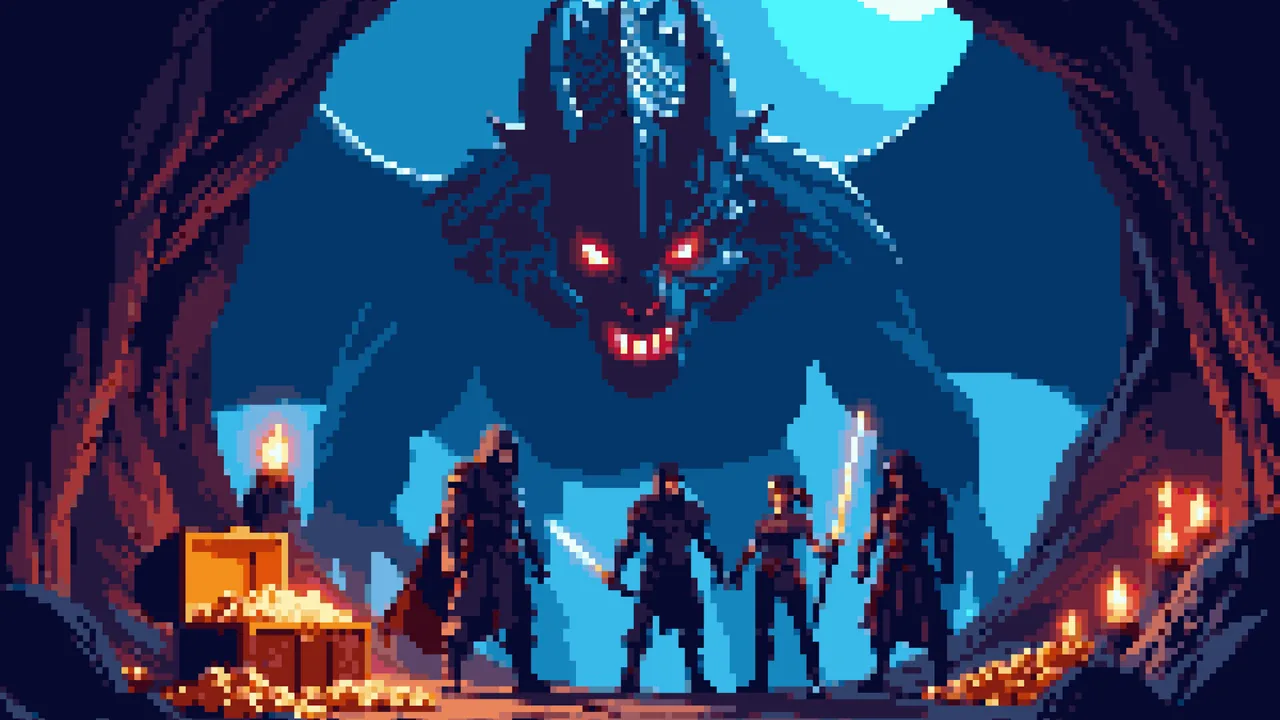
Lets Get Loot!Image: John Timpson via Steam -
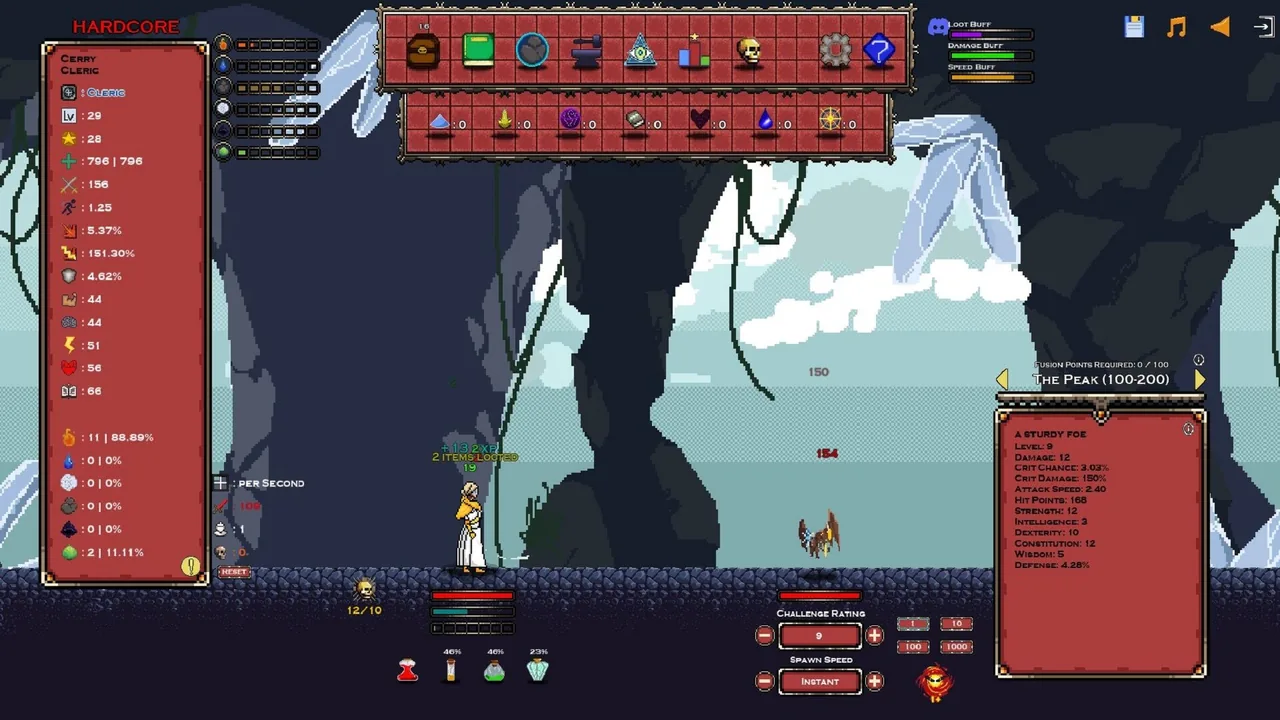
Lets Get Loot!Image: John Timpson via Steam -
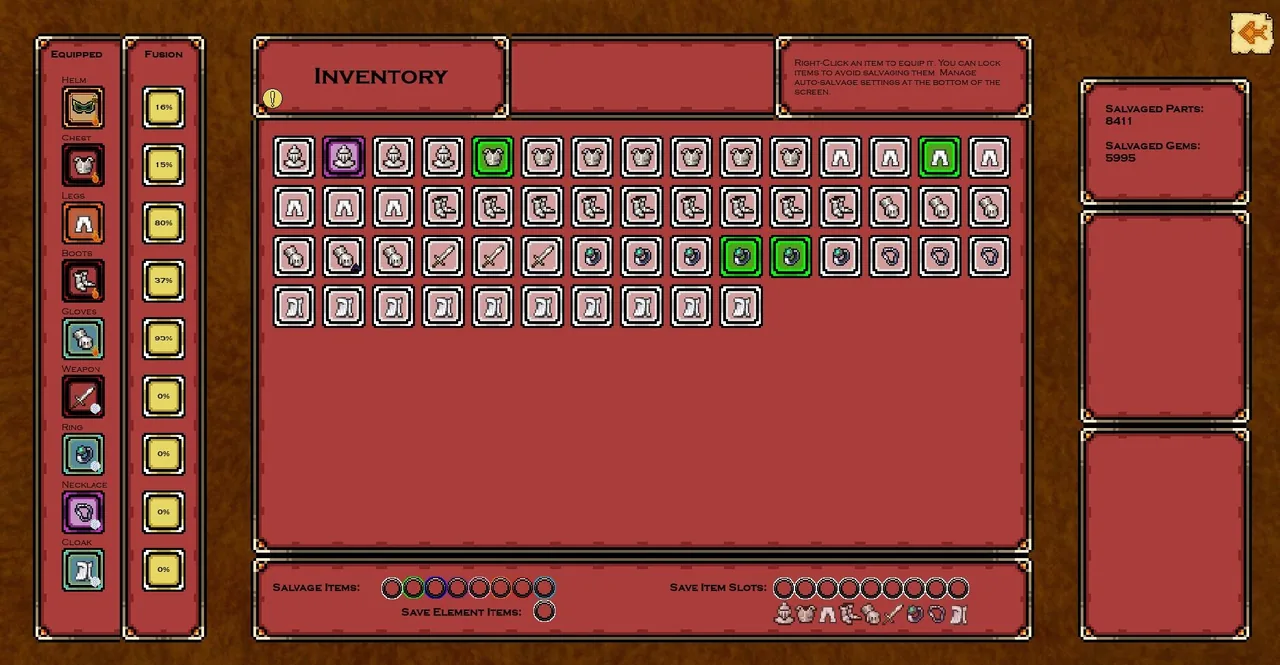
Lets Get Loot!Image: John Timpson via Steam -
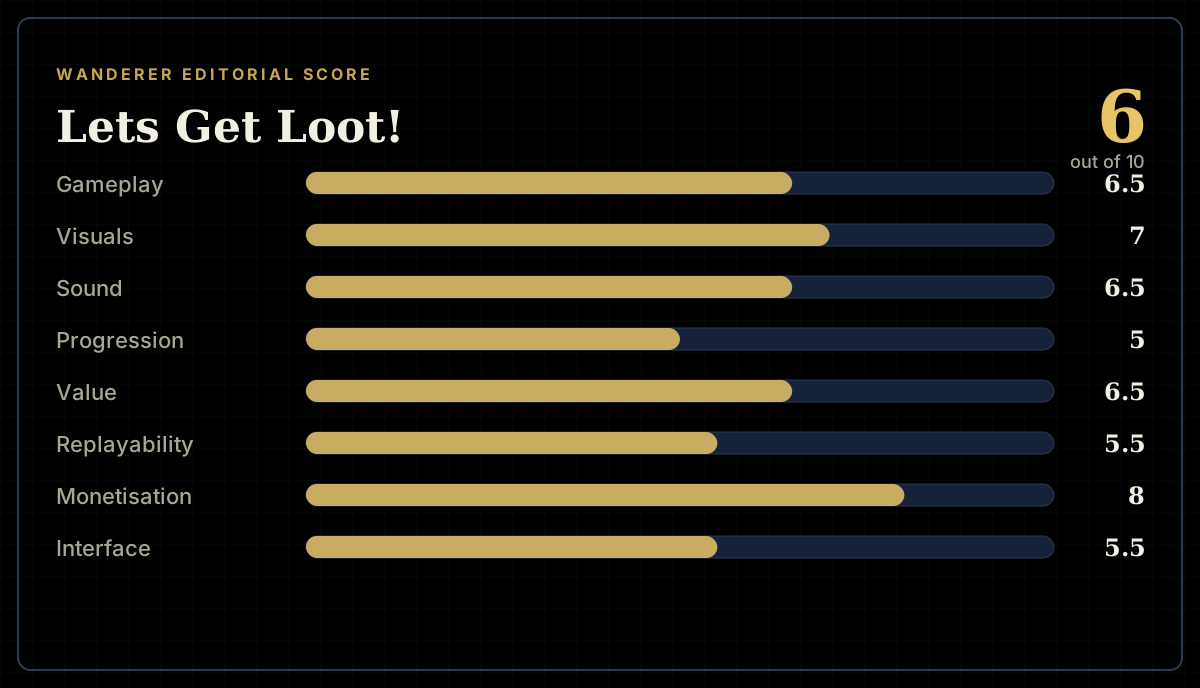
How the review scores each part of the gameWanderer Editorial -
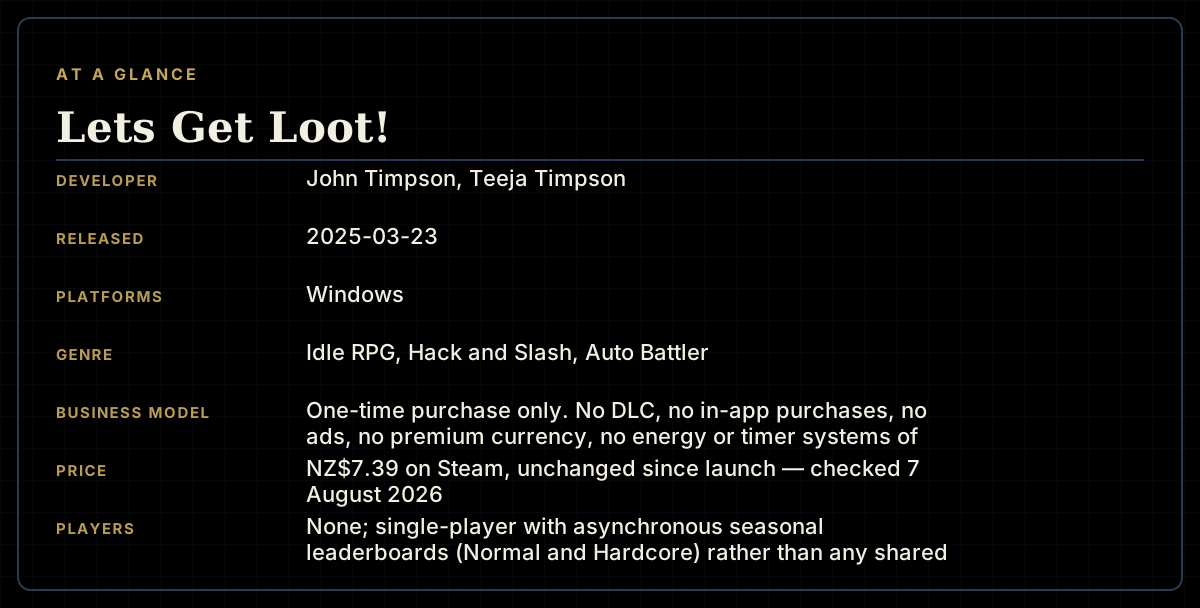
The game at a glanceWanderer Editorial -
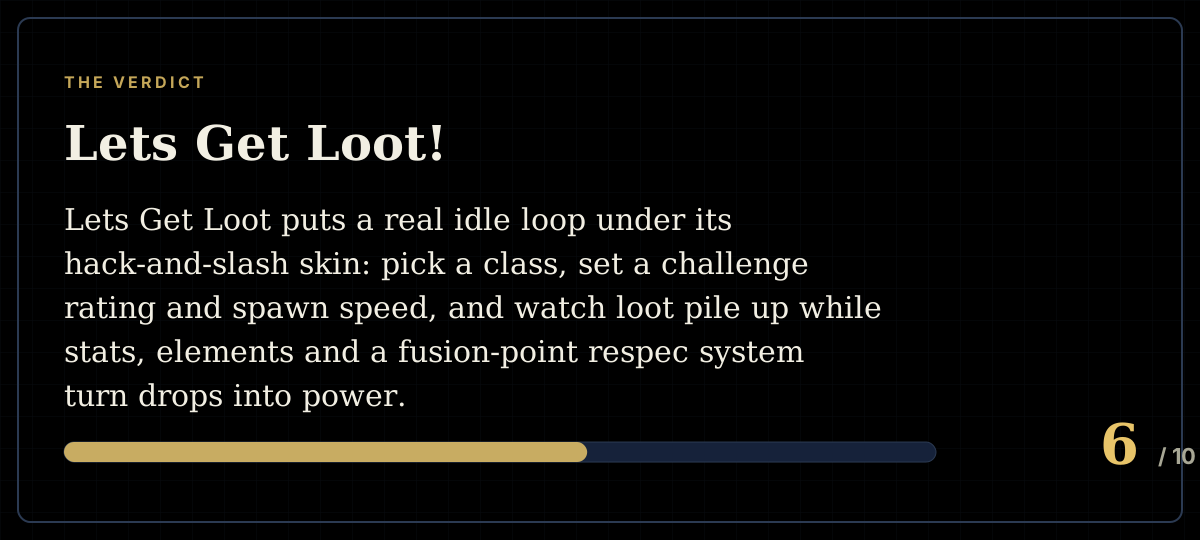
The short versionWanderer Editorial