
Game review
GeneLoot
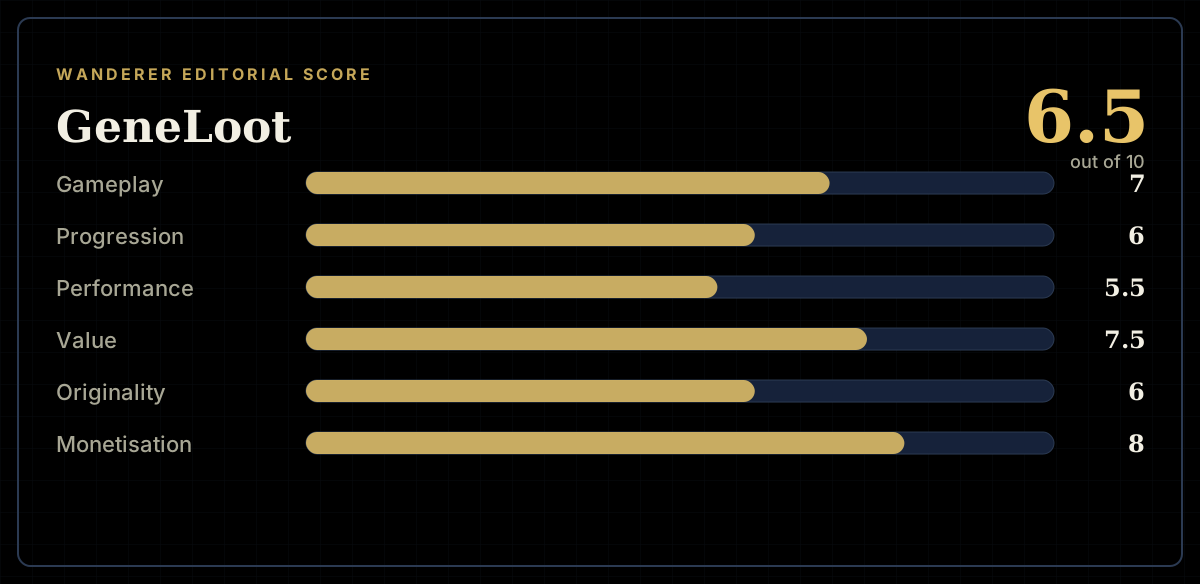
6.5 / 10
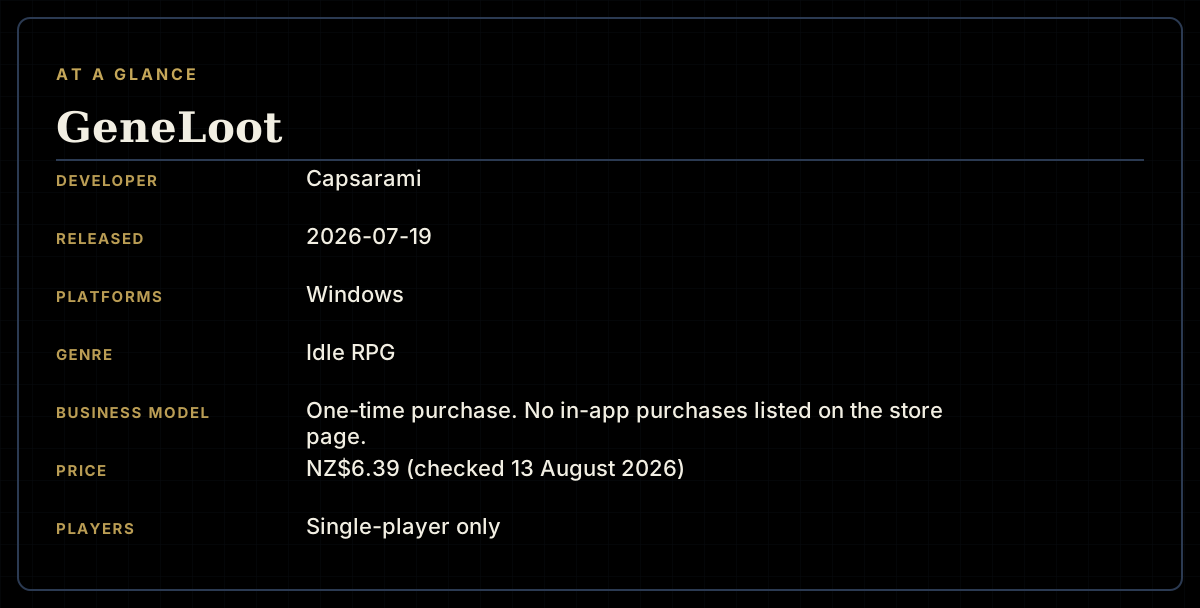
- Developer
- Capsarami
- Publisher
- Capsarami
- Released
- 19 July 2026
- Platforms
- Windows
- Genre
- Idle RPG
- Monetisation
- One-time purchase. No in-app purchases listed on the store page.
- Players
- Single-player only
The short version
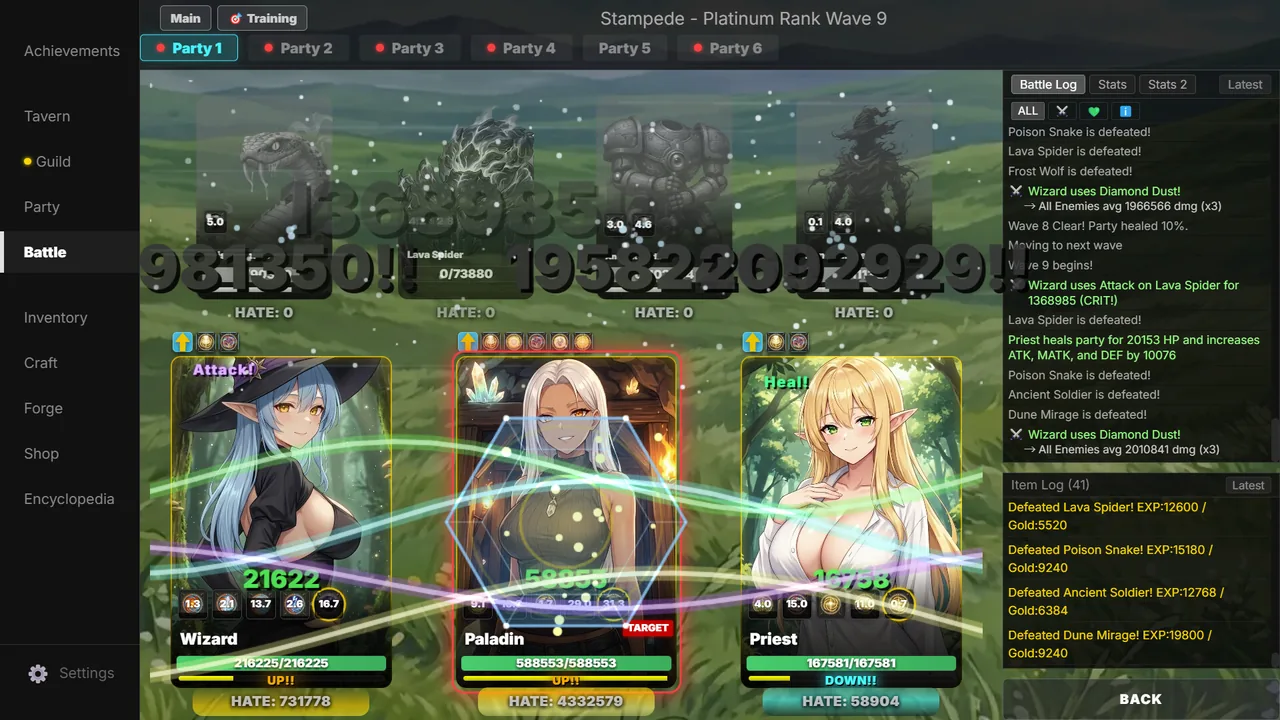
GeneLoot is an idle auto-battler about assembling up to six simultaneous parties of "cute girl" characters, sending them to farm dungeons automatically, and gearing them up through a dress-up equipment system where armour visibly changes appearance. Released 19 July 2026 from solo-to-small developer Capsarami for NZ$6.39, it sits at Positive -- 81.25% of 16 English reviews -- built almost entirely on detailed, credible reviews from players who pushed well past the opening hours.
The two most substantial available reviews, from players with 17 and 25 hours logged, independently arrive at a similar list of endgame limitations: gearing becomes almost entirely RNG-dependent past a certain point, the skill-conditional system is too shallow to matter, and (per one of them) there is no offline progress at all -- an unusual omission for the genre that means the game must stay open and running to actually farm.
Biggest strengths
- A solid, well-regarded core loop -- six simultaneous parties, an unusual Hate/aggro management system, and dungeon-clearing auto-battles that reviewers say holds up better than a lot of its genre competition
- An auto-equip system for loot, sparing players the manual gear-comparison busywork that similarly structured idle RPGs elsewhere in this genre are frequently criticised for lacking
- Real content variety beyond the core grind, including a full built-in card mini-game with its own deckbuilding and rewards
Biggest weaknesses
- Endgame gearing turns almost entirely RNG-dependent once crafting caps out, with no way to reroll an item's number of upgrade slots or its skill lines -- both detailed reviewers hit this wall independently and call it artificially extending playtime the way ARPG loot treadmills often do
- The character roster is hard-capped at exactly 18 (six parties of three), so experimenting with a new class or race combination means dismantling and re-leveling an existing character rather than simply trying something new
- The skill-conditional system exists but is described as too shallow to matter, missing common triggers like enemy HP percentage or boss-target checks, and locked to AND logic where OR would usually be more useful
Who it's for: Fans of loot-treadmill idle auto-battlers -- something in the Lootun mould -- who don't mind an anime dress-up aesthetic and disclosed AI-generated art, and who want 10 to 15 hours of a solid core loop rather than a hundred-hour commitment. Not for anyone allergic to fanservice character design, or anyone who specifically wants their idle game to keep progressing while the game itself is closed.
Our recommendation: A reasonable NZ$6.39 pickup for idle-auto-battler fans specifically because its most detailed reviewers, who clearly put real time in, still call it worth playing despite listing its flaws in detail. Go in expecting a solid but not exceptional 10-to-15-hour loop, RNG-heavy endgame gearing, and -- notably for the genre -- no confirmed offline progress, so budget real session time rather than treating it as a background game.
6.5 / 10
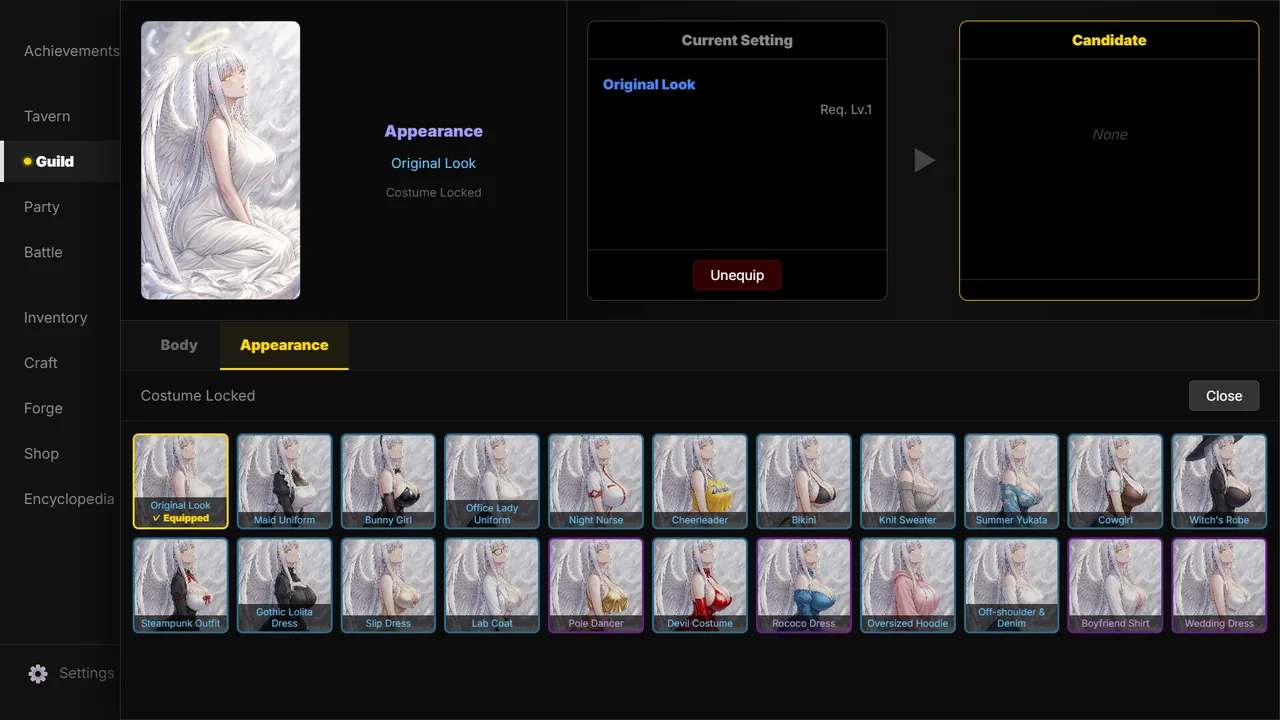
GeneLoot's pitch fuses two things idle-RPG fans and dress-up-game fans rarely get handed together in one package: an auto-battling loot treadmill and a genuine equipment-driven appearance system, where the "Body Armor" you gear a character into visibly changes how they look. Assemble up to six parties from five job classes -- Warrior, Paladin, Rogue, Priest, Wizard -- dispatch them to different dungeons simultaneously, and watch fully automated combat generate the materials to craft, enhance and reroll your way to a stronger team. Solo-to-small developer Capsarami released it 19 July 2026 for NZ$6.39 (checked 13 August 2026), and a month later it sits at Positive, 81.25% of a small but unusually substantial 16-review sample.
A genre-competent core, according to the people who actually finished it
What makes GeneLoot's small review count more useful than it looks is that its most-read reviews aren't quick first impressions -- they're written by players with 17 and over 25 hours logged, people who clearly pushed into the parts of the game a launch-week snapshot usually can't speak to. Their verdict, in both cases, amounts to a real but qualified recommendation. "It's not bad, and honestly does better for its genre than a lot of its competitors (though admittedly there's a lot of chaff out there)," reads the more detailed of the two, praising the class design specifically and noting an unusual Hate/aggro management mechanic that most idle auto-battlers don't bother implementing. The second calls it a game that "scratches a very specific niche" and describes the loop bluntly and honestly: "you sit back and do nothing aside from managing characters and resources... You watch the numbers get bigger, your brain releases dopamine, rinse, and repeat" -- which is either exactly what a reader wants from this genre or exactly what they don't, and the review is refreshingly upfront about which.
One concrete quality-of-life win worth crediting: GeneLoot ships with an auto-equip system for loot, letting the game handle routine gear comparison automatically -- a feature its closest genre neighbours this year have sometimes shipped without, to real reviewer frustration elsewhere. There's also a genuinely surprising amount of side content for a NZ$6.39 release, including a full built-in card mini-game with its own deckbuilding, described as a real break from the main hack-and-slash loop rather than a token distraction.
The specific list of things that stop it being great
Both detailed reviews converge, independently, on a similar cluster of endgame problems, and the overlap is what makes the complaints credible rather than idiosyncratic. The biggest is gearing: crafting is described as reliable for a good chunk of the game but capped at a certain equipment tier, after which players become "entirely reliant on random equipment drops to improve a character's power." Rerolling is similarly constrained -- "you cannot roll for the 4th and 5th skill lines that directly affect class abilities," and item upgrade-slot counts can't be changed at all, which one reviewer says "serves to artificially extend playtime in the same way that ARPG loot treadmills do, with the same sort of problem that usually involves." Both reviewers report hitting a hard progression wall in roughly the same place -- around the fifth "parallel stage" for one of them -- where craftable gear stops being sufficient to advance.
The second cluster concerns the systems meant to add strategic depth. Skill programming exists, letting players set conditional triggers for when a character uses an ability, but both reviewers call the implementation thin: missing common triggers like enemy HP percentage, number of enemies remaining, or whether the current target is a boss, and hard-locked to AND logic in a context where OR would usually be the more useful operator. Racial passive skills are separately described as "pretty much universally filler," with only two standing out as build-relevant. A loot filter exists but reportedly can't combine multiple rules -- filtering out both low-level items of any rarity and high-level items of low rarity at once isn't possible, which for a build-up-quantity idle game is a real, ongoing annoyance rather than a one-off complaint.
The most structurally unusual complaint, and worth flagging clearly for anyone shopping this genre specifically for its away-from-keyboard appeal: one reviewer states plainly that "there is also no offline progress that I can tell, so you have to keep the game running constantly to farm for gear with the exact substats you want." That's a significant departure from most of what idle RPGs promise, and this review could not independently verify it beyond that one detailed account -- worth confirming for yourself before buying if unattended progress is the reason you're shopping this genre at all. The same reviewer separately flags a performance issue: their laptop's fans spin up heavily whenever the battle menu is open, a concrete, reproducible complaint about the game's resource use during combat rather than a vague "runs hot" comment.
The art, and the disclosure around it
GeneLoot's character art uses generative AI tooling, disclosed on the store page, and reviewers who mention it treat it evenhandedly rather than as a dealbreaker. "Yes, there is AI-generated art; it's in the disclosure. However, it is consistent, as the same character with the same features and clothing can be seen in different poses," reads one review, adding "for the price, I can look past it, but if that's a deal-breaker for you, avoid this game" -- a fair, practical framing rather than either dismissal or alarm. The more substantive complaint about the art isn't that it's AI-generated but that it's repetitive: "all of the character art is just big booba ladies... the dwarves don't look any different from humans, and there's no variety in the beastfolk," one reviewer writes, wishing for actual body-type variety to give the dress-up system's different races and classes real individuality rather than one silhouette in different outfits.
6.5 out of 10. GeneLoot is a competently built idle auto-battler with a genuinely distinctive dress-up hook and an unusually thoughtful auto-equip system, let down in its second half by an RNG-heavy gearing wall, shallow strategic systems that promise more than they deliver, and -- if the most detailed available review is accurate -- no offline progress at all, an odd gap for the genre. Its own most engaged reviewers still call it worth the 10 to 15 hours they gave it, and at NZ$6.39 that's a fair trade for idle-auto-battler fans who know what they're walking into and don't mind its disclosed AI art or fanservice-leaning character designs.
Pros and cons
Pros
- A solid, well-regarded core loop -- six simultaneous parties, an unusual Hate/aggro management system, and dungeon-clearing auto-battles that reviewers say holds up better than a lot of its genre competition
- An auto-equip system for loot, sparing players the manual gear-comparison busywork that similarly structured idle RPGs elsewhere in this genre are frequently criticised for lacking
- Real content variety beyond the core grind, including a full built-in card mini-game with its own deckbuilding and rewards
- Cheap for the amount of play its most engaged reviewers report getting from it -- one calls 10 to 15 hours "worth playing," a fair value case at NZ$6.39
Cons
- Endgame gearing turns almost entirely RNG-dependent once crafting caps out, with no way to reroll an item's number of upgrade slots or its skill lines -- both detailed reviewers hit this wall independently and call it artificially extending playtime the way ARPG loot treadmills often do
- The character roster is hard-capped at exactly 18 (six parties of three), so experimenting with a new class or race combination means dismantling and re-leveling an existing character rather than simply trying something new
- The skill-conditional system exists but is described as too shallow to matter, missing common triggers like enemy HP percentage or boss-target checks, and locked to AND logic where OR would usually be more useful
- No offline progress, per the most detailed available review -- unusual for an idle RPG, since it means gear farming requires the game to stay open and running rather than progressing in the background
- Character art uses disclosed generative AI tooling and, per multiple reviewers, offers very little body-type or silhouette variety across races despite the dress-up system's core premise
Screenshots
-
GeneLootImage: Capsarami via Steam -
GeneLootImage: Capsarami via Steam -

GeneLootImage: Capsarami via Steam -
How the review scores each part of the gameWanderer Editorial -
The essentialsWanderer Editorial -
The short versionWanderer Editorial