
Game review
Coin Push RPG
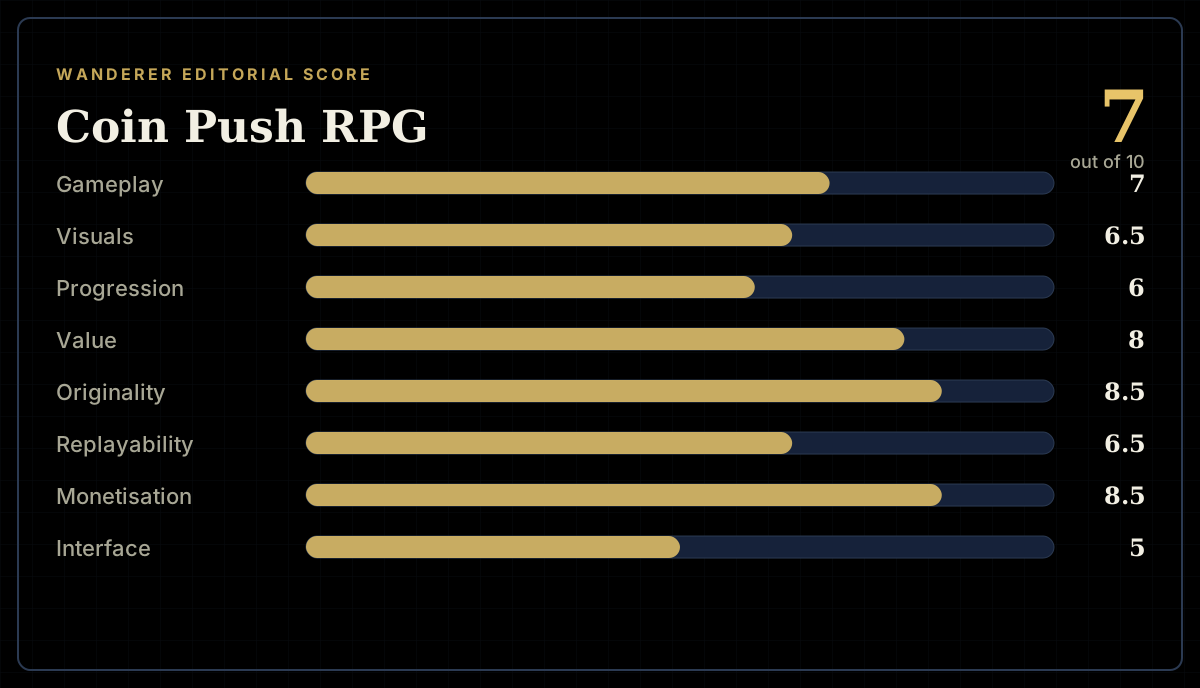
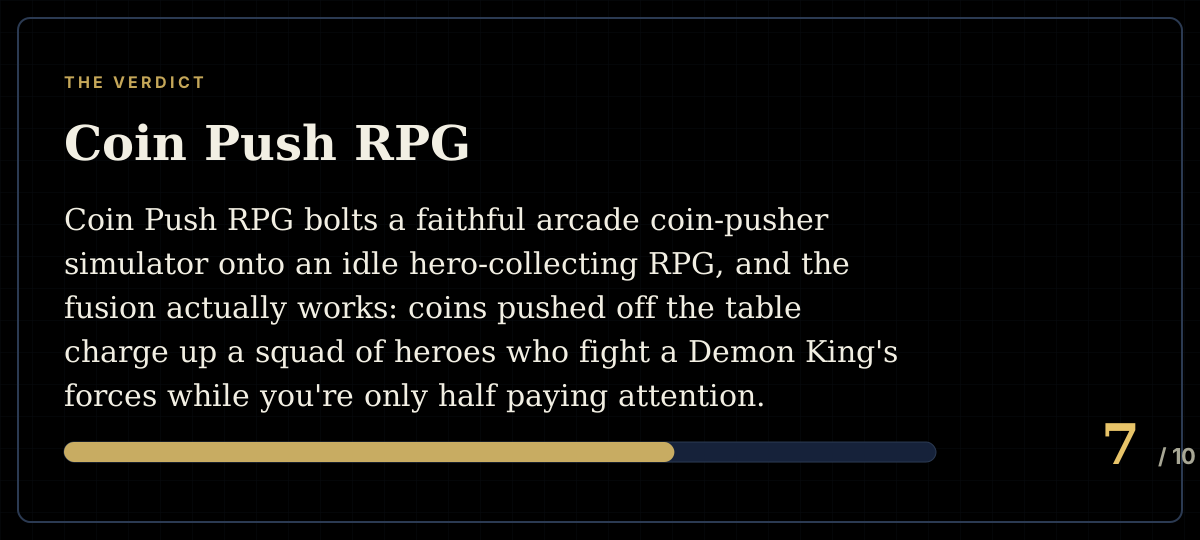
7 / 10
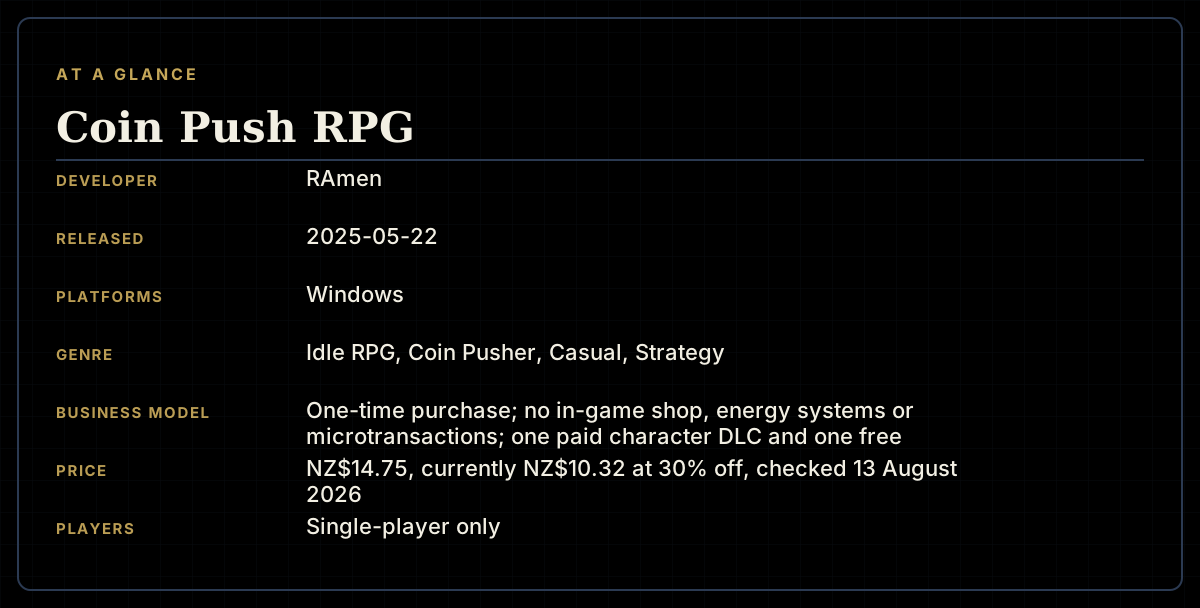
- Developer
- RAmen
- Publisher
- Wise Games
- Released
- 22 May 2025
- Platforms
- Windows
- Genre
- Idle RPG, Coin Pusher, Casual, Strategy
- Monetisation
- One-time purchase; no in-game shop, energy systems or microtransactions; one paid character DLC and one free cosmetic DLC
- Players
- Single-player only
The short version
Coin Push RPG bolts a faithful arcade coin-pusher simulator onto an idle hero-collecting RPG, and the fusion actually works: coins pushed off the table charge up a squad of heroes who fight a Demon King's forces while you're only half paying attention. Developed by RAmen and published by Wise Games, it launched 22 May 2025 at Very Positive across its English-language reviews and Mostly Positive overall. The idea is the strongest thing about it. The English localization, by several accounts, is the weakest, and enough reviewers describe the mid-game as a flat repeat of the same five minutes that it's worth going in with tempered expectations about how long the novelty lasts.
Biggest strengths
- The coin-pusher-into-idle-RPG fusion is a mechanic this reviewer hasn't seen done properly anywhere else, and the community tag votes back that novelty (Idler and RPG rank almost dead even, ahead of Strategy and Simulation)
- No in-game shop, no energy system, and no microtransactions of any kind — heroes, gear and talents are all earned by playing, confirmed by multiple long-playtime reviewers
- A visible pattern of quality-of-life updates in the weeks after launch — auto-save, tavern auto-refresh, auto star-upgrade, attribute filtering — aimed directly at the grind complaints the community raised
Biggest weaknesses
- Several reviewers, including the most-upvoted English review at launch, describe talent and skill text as confusing or "indecipherable," calling out specific odd word choices; the developer's own storefront AI disclosure covers generated art assets but says nothing about the text, so the localization complaint and the disclosed AI use are two separate things worth keeping apart
- A real minority of reviewers — about a quarter of the English negative sample — describe the loop as repetitive or "dry" once the opening systems are unlocked, with one 89-hour reviewer calling it "the same, you just get stronger" even while admitting they kept playing anyway
- Interface and system explanations are thin; several players report being unsure what a fighter's weapon or armour actually does without external guides
Who it's for: Idle-game and coin-pusher fans who want a genuinely new mechanical hybrid and don't mind reading around some rough English text to get it; a poor fit for players who need clean, well-explained systems from the first hour.
Our recommendation: A clever, honestly priced hybrid with no microtransactions and real long-term fans, weighed down by localization that several reviewers call AI-rough and a grind that goes flat for some players well before the endless mode's higher tiers.
7 / 10
Introduction
Coin Push RPG takes one of the oldest arcade cabinets there is — the coin pusher, the machine that eats your loose change and taunts you with coins forever balanced on the edge of falling — and wires it directly into an idle RPG's hero-collection engine. Coins that drop off the table don't just pay out a jackpot; they charge up a roster of recruited heroes, who then fight through levels and an endless mode largely on their own while the player keeps feeding the machine. Developed by the small studio RAmen and published by Wise Games, it launched as a full release on 22 May 2025, not as an Early Access build, and it has stayed in active post-launch development since. Community tag votes on its own store page rank Idler and RPG almost dead even at the top — 398 votes to 342 — ahead of Strategy, Simulation and Loot, which is a fair summary of what this actually is: not a coin-pusher game with an RPG skin bolted on, and not an idle RPG with a gimmick minigame, but a genuine fusion of the two.
A mechanic that actually earns its hybrid billing
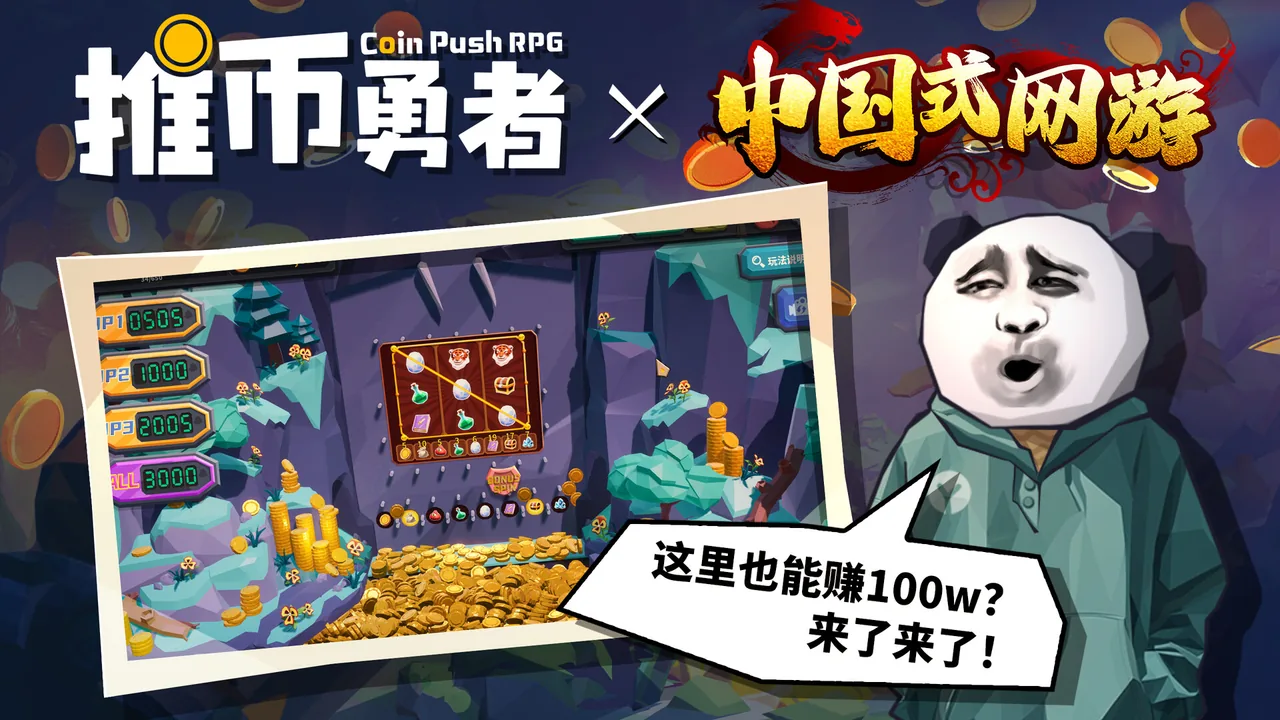
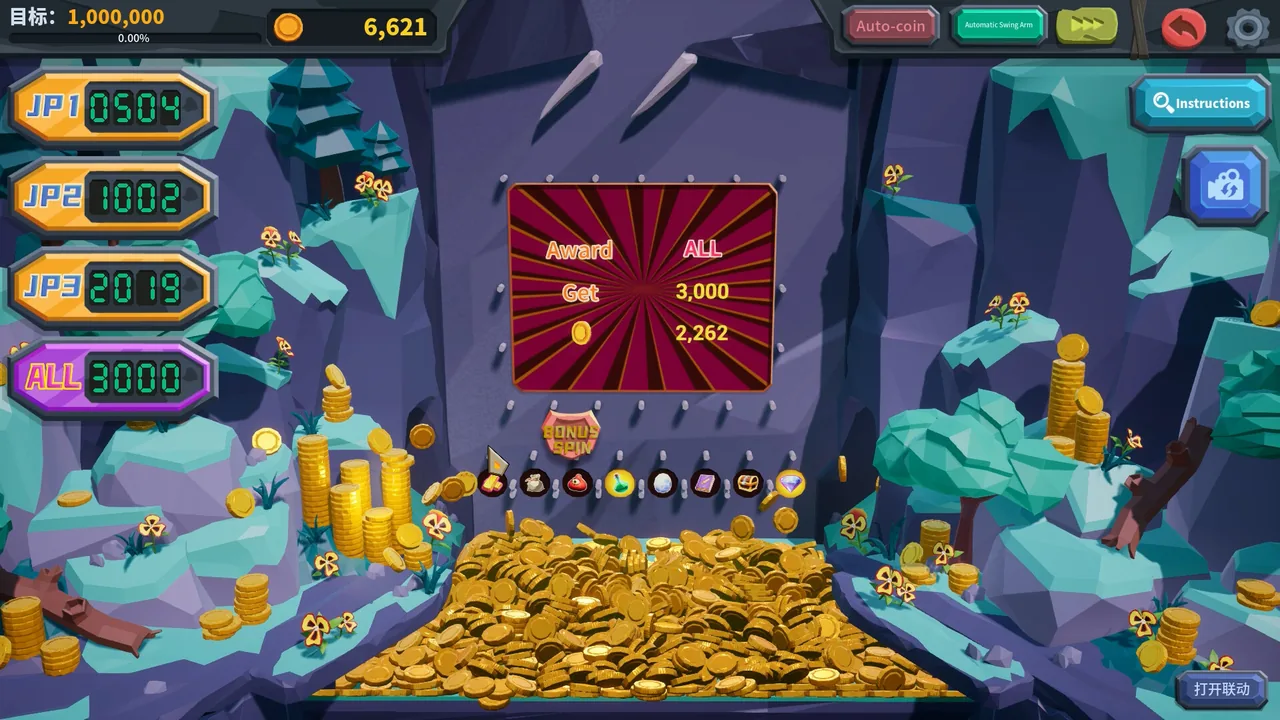
It would be easy for a "coin pusher meets RPG" pitch to turn out to be two systems running in parallel that never really touch. That isn't what happens here. The store page and the game's own mode breakdown describe three linked pieces: a 1:1 replica coin-pusher table complete with a rotating Lucky Spin wheel, a Tower Stacker bonus and a full-table jackpot; an Adventure mode built around character backstories, talent combinations and gear; and a Challenge mode that pairs fast monster battles with idle farming. The coins the pusher physically ejects are the resource that funds hero combat — "they'll only fight for you once they get their fair share," as the store page puts it — so a player who wants a hands-on session can sit and time their coin drops for maximum push efficiency, while a player who'd rather let it run can set it to auto-drop and walk away.
That range is what its strongest reviewers respond to. A 596-hour review frames a session as a small story in itself — a good combo interrupted, a moment of frustration, a return to the machine — while other long-playtime players compare the loop to Puzzle Quest, to a blender of Soda Dungeon and an old-school coin-pusher toy with "a sprinkle of Pachinko," or simply call the combo-chasing "deep" and "insanity" in a complimentary sense. None of that reads like marketing copy; it reads like players who found a genre mash-up that actually clicked for them, which is the best evidence a review like this can offer for a game it hasn't played.
Heroes, gear and talents — reasonably deep, thinly explained
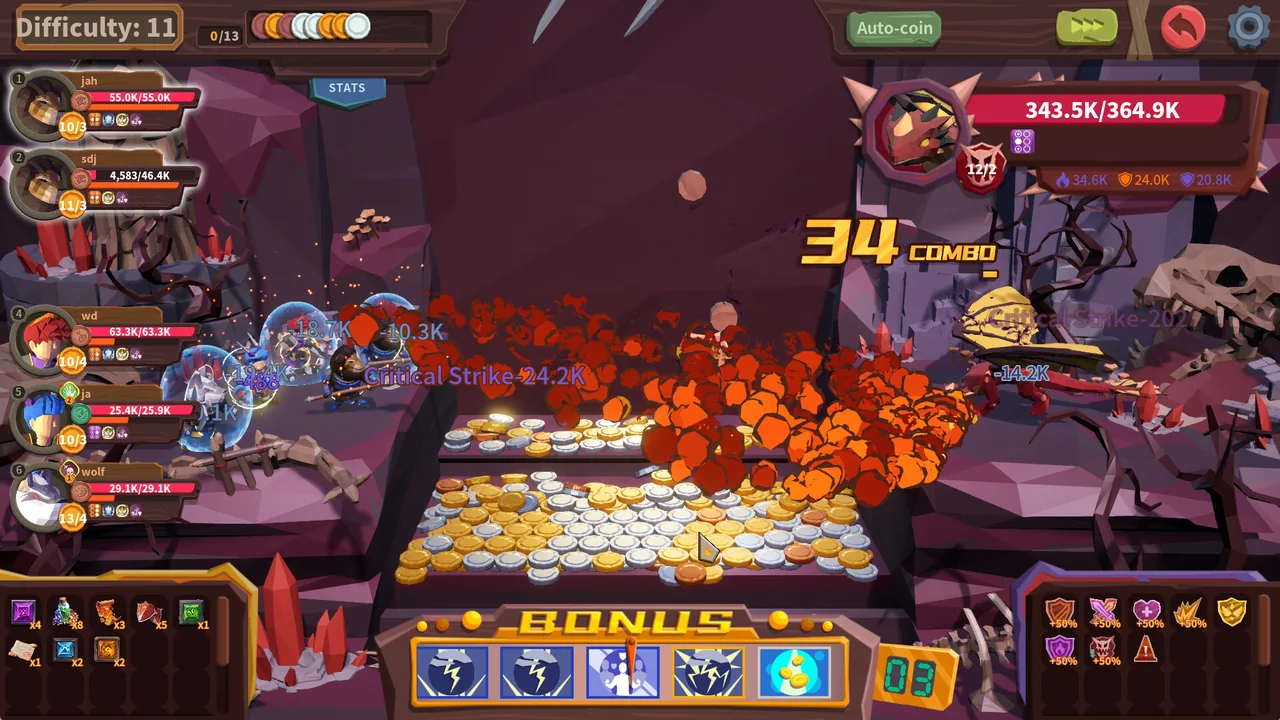
Beneath the coin table sits a fairly conventional idle-RPG skeleton: heroes with rarity tiers and individual backstories, a stated 260-plus talent buffs to mix for coin-pusher synergies and combat combos, and over a hundred pieces of droppable equipment that can be refined, enhanced or rebuilt from scratch. Formations and hero positioning matter for combat effectiveness, and a village layer sits on top for base-building between runs. On paper that's a legitimate amount of system depth for a coin-pusher hybrid, and reviewers who stuck around for tens of hours generally engaged with all of it rather than ignoring the RPG half in favour of just watching coins fall.
The problem several of them report is knowing what any of it actually does in the moment. More than one reviewer describes being unsure what a given weapon or armour piece is for, or what a fighter's role in a formation actually changes, without resorting to outside guides — a fair complaint for a game whose core appeal is supposed to be picking it up casually. That thinness in on-screen explanation compounds a separate, more specific complaint about the English text itself, covered below, and together they're the two biggest reasons this review doesn't score the interface any higher than it does.
Localization, AI art, and a distinction worth keeping straight
The single most-upvoted English review of Coin Push RPG — 136 votes, from a player with 65.6 hours logged — opens by calling the game "lovely and creative" before pivoting hard: "the translations for all the talents and skills were clearly done by AI and are at best confusing and at worst indecipherable." That complaint recurs. Across this game's 22 English-language negative reviews (all of them read for this review), five specifically flag translation quality and six raise AI in some form, including two blunter one-liners calling the whole game "AI slop" and "AI generated." Odd, oversized word choices get singled out by name — "remuneration" shows up more than once as an example of localization that reads like a machine translated it without a pass for tone.
It's worth being precise about what the developer has actually said versus what players are inferring. Coin Push RPG's store page does carry an official AI Generated Content Disclosure, and it's specific: "some of the equipment icons in the game, we used AI generation," plus prop icons, the character avatar shown in the in-game shop, and a guide character's stand-up artwork. That disclosure covers art assets. It says nothing about the English text, and this review has no way to verify how the localization was actually produced — only that a meaningful slice of players reading it concluded, rightly or wrongly, that it carries the same tells as machine translation. Whether or not that inference is accurate, the practical effect for a new buyer is the same: expect some genuinely confusing wording in the systems you're meant to be learning.
Where the grind starts to show
A separate, quieter complaint runs through about a quarter of the negative sample: that the loop gets repetitive once its opening systems are unlocked. "Not enough content," one 89-hour reviewer writes, "the game loop is the same, you just get stronger" — while admitting in the same breath that they were still playing and enjoying the optimisation. Others are less generous, describing the first hour as effectively the whole game and calling it "dry" or lacking in "flavor" once the initial coin-pusher novelty wears off.
Steam's global achievement data gives that complaint some texture without confirming the harsher version of it. The story-mode achievements decline gradually rather than falling off a cliff — 43.8% of tracked players reach Level 1's completion, dropping in a fairly even curve down to 15.3% by Level 6 — which reads as steady attrition through genuinely lengthy content rather than most buyers quitting at the first wall. The endless-mode milestones tell a longer-tail story: 19.3% of players have cleared 1,000 endless levels, and even 3.8% have reached 5,000, numbers that argue real players are finding a reason to keep going well past the point where a truly hollow game would have lost them. The honest read is that the core loop has enough legs to carry a meaningfully long playthrough, but the mid-game stretch several reviewers describe as flat is a real texture in the data, not just a vocal minority venting.
The developer's own update history backs up that this is a known issue being worked on rather than an abandoned launch. In the weeks immediately after release, patch notes added auto-save, tavern auto-refresh, automatic star-upgrades and attribute filtering — all quality-of-life changes aimed squarely at reducing the manual busywork reviewers were complaining about — followed by a "No-Gimmicks" alternate mode and a major September 2025 update adding a new coin-pusher table and fresh content. Updates and crossover promotions with other coin-pusher and idle games continued into 2026, alongside sale events, which is a healthier support cadence than most single-developer releases in this price bracket manage.
Pricing and monetisation — the actual good news
This is the part of the review that needs the least hedging. Coin Push RPG sells for NZ$14.75 and is currently discounted 30% to NZ$10.32. There is no in-game shop, no energy system, no premium currency and no microtransactions of any kind — a point multiple long-playtime reviewers make explicitly and approvingly, with one 70.9-hour review flagging it in capital letters specifically because it's unusual for the genre. The only paid add-on is a single cosmetic character DLC at NZ$4.49; a second "Cat meme" cosmetic pack is free. For a genre where energy timers and gacha pulls are closer to the norm than the exception, a flat purchase price with everything earnable through play is worth calling out plainly rather than burying in a monetisation checklist. Wanderer's own players who've grown tired of pay-to-skip idle games will recognise the appeal of a hybrid that asks for one payment and then leaves you alone.
Final Verdict
Coin Push RPG's central idea — a coin pusher that actually feeds a working RPG rather than sitting next to one — is the kind of genre mash-up this library doesn't see often, and enough long-term players have logged hundreds of hours proving it holds up past the novelty stage. What keeps it out of the higher bands is execution around the edges: English text that a real portion of its reviewers find confusing enough to call out by name, systems that don't explain themselves well on first contact, and a mid-game stretch that a meaningful minority describe as repetitive before the endless mode's longer tail kicks back in. None of that is disqualifying, and the complete absence of microtransactions at this price is a genuinely rare thing to be able to say about a modern idle game. Buyers who can tolerate some rough wording while they learn the systems, and who want a mechanic nobody else on Steam has quite built, are the right audience. Buyers who need everything explained cleanly from minute one should wait and watch whether localization improves.
Pros and cons
Pros
- The coin-pusher-into-idle-RPG fusion is a mechanic this reviewer hasn't seen done properly anywhere else, and the community tag votes back that novelty (Idler and RPG rank almost dead even, ahead of Strategy and Simulation)
- No in-game shop, no energy system, and no microtransactions of any kind — heroes, gear and talents are all earned by playing, confirmed by multiple long-playtime reviewers
- A visible pattern of quality-of-life updates in the weeks after launch — auto-save, tavern auto-refresh, auto star-upgrade, attribute filtering — aimed directly at the grind complaints the community raised
- Achievement data shows a gentle, not catastrophic, drop-off through the level-based story content, suggesting most buyers get well into the game rather than bouncing immediately
Cons
- Several reviewers, including the most-upvoted English review at launch, describe talent and skill text as confusing or "indecipherable," calling out specific odd word choices; the developer's own storefront AI disclosure covers generated art assets but says nothing about the text, so the localization complaint and the disclosed AI use are two separate things worth keeping apart
- A real minority of reviewers — about a quarter of the English negative sample — describe the loop as repetitive or "dry" once the opening systems are unlocked, with one 89-hour reviewer calling it "the same, you just get stronger" even while admitting they kept playing anyway
- Interface and system explanations are thin; several players report being unsure what a fighter's weapon or armour actually does without external guides
- Single-player only, Windows-only, with no announced console or Mac plans
Screenshots
-
Coin Push RPGImage: Wise Games via Steam -
Coin Push RPGImage: Wise Games via Steam -
Coin Push RPGImage: Wise Games via Steam -
How the review scores each part of the gameWanderer Editorial -
The essentials at a glanceWanderer Editorial -
The short versionWanderer Editorial