Game review
That Time I Got Reincarnated as a Tyrant God
5 / 10
- Developer
- Sekhmet Games
- Publisher
- Sekhmet Games
- Released
- 4 August 2026
- Platforms
- Windows
- Genre
- Incremental Action
- Monetisation
- One-time purchase, no in-game store, no DLC
- Players
- Single-player only
The short version
That Time I Got Reincarnated as a Tyrant God takes its name from the isekai-anime-parody playbook — think a truck, a reincarnation, a shot at godhood — but underneath the title is a minimalist, mouse-only incremental with no RPG systems, no dialogue beyond a single opening cutscene, and a permanent upgrade tree that most reviewers clear in well under two hours. It released 4 August 2026 for NZ$6.39, and eight days later sits at Mixed across its English review sample: 13 positive, 9 negative.
The positive and negative reviews describe almost the same experience — a short, low-effort session that many call relaxing and a few call boring, both groups converging on roughly 90 minutes to see everything the game has. What separates this review from most short-incremental verdicts is a specific, dateable safety complaint: once the game's "frog bomb" effect unlocks late in the upgrade tree, several reviewers report intense screen flashing with no way to disable it, and at least one explicitly frames it as a photosensitive-seizure risk that the store page doesn't warn about.
Biggest strengths
- The core mouse-driven "sweep your damage area over monsters" loop is genuinely satisfying in short bursts, and both positive and negative reviewers credit the music and pixel art
- A clean, unintrusive price with no monetisation beyond the NZ$6.39 purchase
- Designed explicitly for short sessions, and it delivers on that framing honestly rather than padding itself out with filler
Biggest weaknesses
- The upgrade tree follows a single fixed path rather than offering real choices, so multiple reviewers with incremental-game experience describe it as instantly familiar and mechanically thin compared to genre peers
- Most reviewers on both sides of the recommendation clear the entire 240-upgrade tree in 55 to 98 minutes, and the global "campaign complete" achievement sits at 54.9% — over half of all owners have already finished the whole game
- A late-unlocking "frog bomb" visual effect produces screen flashing that at least two reviewers describe in safety terms — one explicitly calling for a seizure warning — and there is currently no in-game setting to disable it
Who it's for: Players who want a truly disposable, ten-to-ninety-minute incremental to unwind with and don't mind that the upgrade path is fixed rather than chosen. Not suited to anyone sensitive to flashing visual effects, or players expecting the RPG progression the title's framing implies.
Our recommendation: At NZ$6.39 for roughly the length of a long movie, the price is defensible if you go in wanting exactly what's on the label — a brainless, pleasant, mouse-driven number-go-up session. Photosensitive players and anyone who dislikes screen-shake-heavy visual effects should wait for a settings update before buying; the game currently ships no way to turn the late-game flashing off.
5 / 10
Introduction
The title is doing a lot of work it can't cash. "That Time I Got Reincarnated as a Tyrant God" borrows its structure directly from the isekai anime genre's most parodied naming convention — a character dies, wakes up somewhere new, and gains absurd power — and it's a reasonable hook for an incremental game about numbers climbing toward godhood. What's actually behind that title is a minimalist, mouse-only action-incremental from Sekhmet Games: move a damage field over waves of monsters, collect coins, spend them on a fixed upgrade tree, and repeat until the tree runs out. Released 4 August 2026 for NZ$6.39, it's drawn a small but genuinely divided English review sample in its first week and a half — 13 positive against 9 negative — and reading all 22 in full tells a consistent story from both sides of that split.
A genre correction worth making up front
Before anything else, it's worth flagging a mismatch between the marketing and the game. Steam's own community tag votes put this squarely in Casual (98 votes), Incremental (73) and Strategy (66) territory, with Idler (58) close behind — RPG doesn't rank inside the top twenty tags at all. That matches what the game actually delivers: no dialogue system, no characters beyond a single silhouette, no choices that shape a build, and a story that amounts to one wordless opening beat of a figure getting hit by a truck before the game gets on with its upgrade tree. One reviewer summed up the gap precisely: "Story: truck -> ...??? Music: best game ever." If you're drawn in by the isekai framing expecting anything resembling a role-playing game, that expectation won't survive the first ten minutes — this is a clicker-adjacent incremental wearing anime-parody clothing, and it's worth judging on those terms instead.
The loop, and why it runs out fast
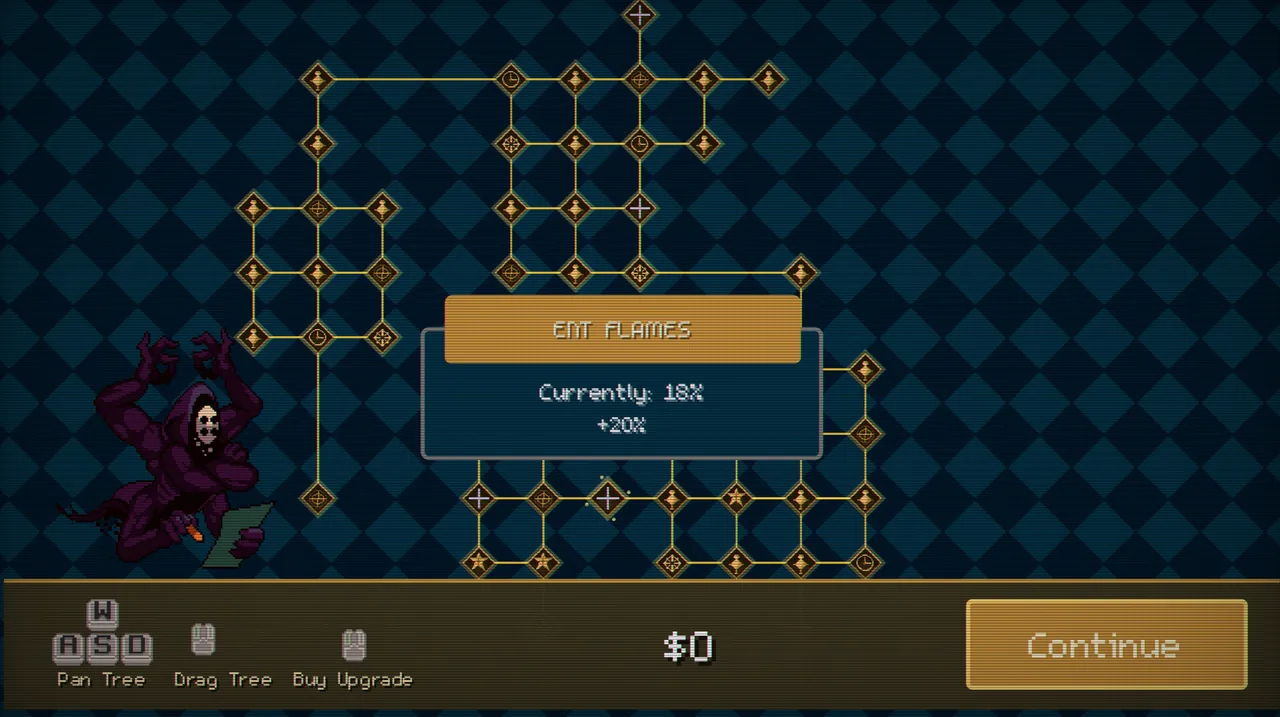
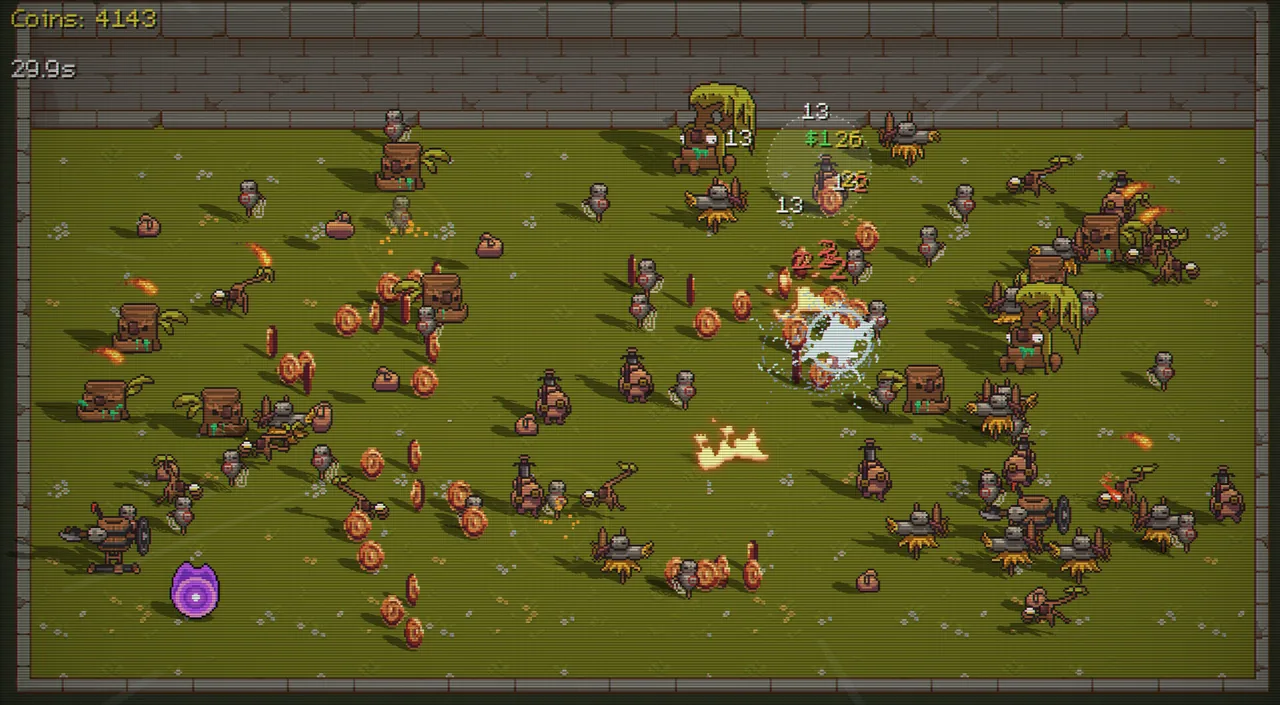
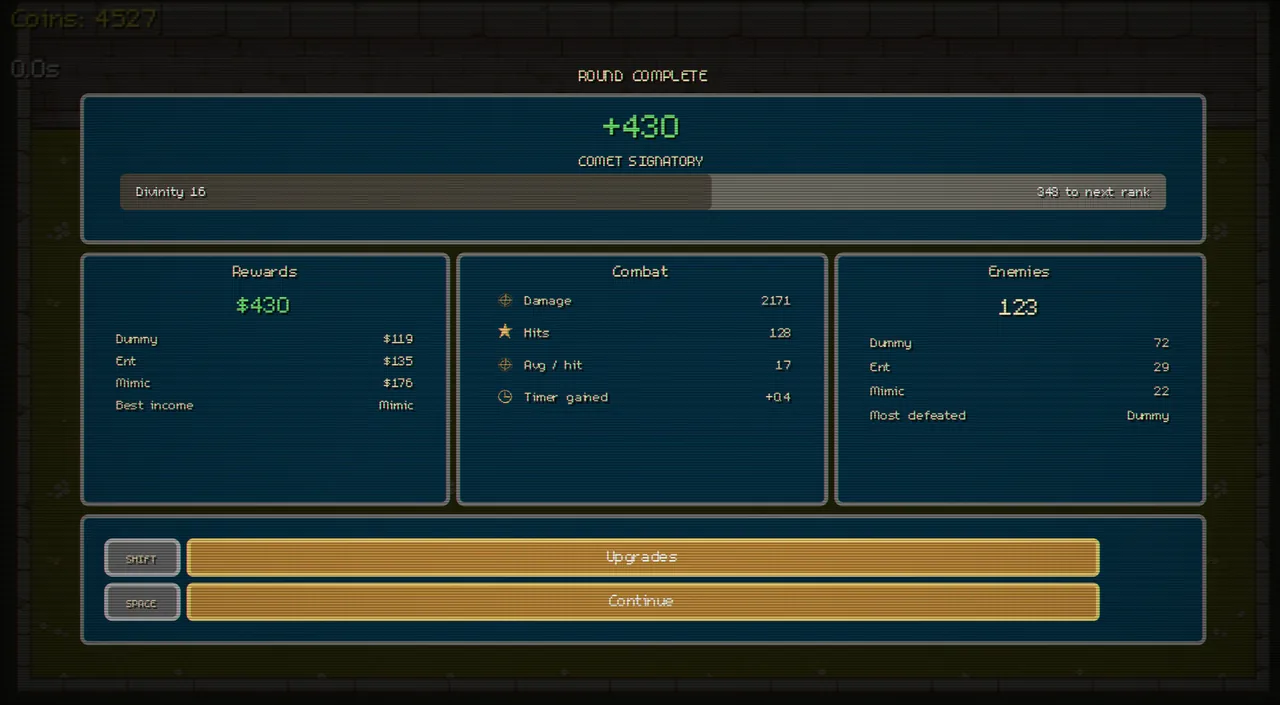
Judged as what it actually is, the core loop has real, if narrow, appeal. You sweep a damage area across the screen to melt monsters in real time, bank the coins, and spend them on a 240-entry permanent upgrade tree between rounds — more power, wider reach, better economy, tougher enemy waves. Several reviewers on both sides of the recommendation single out the music and pixel art as genuinely well done, and more than one describes the opening stretch as a legitimately satisfying "turn your brain off" experience. The trouble is how quickly it's over. The two most detailed reviews in the sample — one recommending, one not — both describe unlocking all 240 upgrades and finishing a final round in around 90 to 98 minutes. That's not an outlier: across the full English sample, seven of 22 reviews use the word "short" unprompted, and the negative and positive camps report almost identical median playtimes, 1.6 and 1.8 hours respectively — a rare case where liking or disliking the game doesn't correlate with how long anyone actually spent with it, because there simply isn't more of it to spend time on either way.
The store's own achievement data backs this up with a number rather than a vibe: the tenth and final achievement, for completing the campaign, sits at 54.9% globally. More than half of everyone who owns the game has already finished all of it. One negative reviewer, having 100%'d the game in 55 minutes, put the practical consequence bluntly: "I'd recommend the dev update the game and add extra content to prevent people refunding it when they've finished." Multiple reviewers independently suggested the obvious fix — a prestige layer, extra tiers, anything to extend a loop that currently has a hard, fast ceiling — and it's a reasonable ask for a genre that usually sells itself on the opposite problem.
Compounding the short runtime is a structural complaint about the upgrade tree itself: it's a single linear path rather than a set of real choices. "You follow a set path getting unlocks in a forced route," wrote one reviewer with substantial incremental-genre experience, and another put it more bluntly still: "If you enjoy incrementals then you've played this game before it just looked different." That's a harsher read than the length complaint alone, because it argues the 90 minutes on offer isn't just short but also mechanically familiar — there's no meaningful decision-making inside the tree to reward a second look, which is part of why almost nobody in this review's sample describes wanting to replay it.
A photosensitivity concern the store page doesn't address
The most serious complaint in the sample isn't about length or depth — it's a specific, dateable safety report. Once players progress far enough to unlock the game's "frog bomb" area-damage effect, multiple reviewers describe intense screen flashing with no in-game option to reduce or disable it. One review, posted 11 August, states it directly: "!PHOTOSENSITIVE SEIZURE WARNING! Was loving this game, no warning on any screen. Once you unlock the frog bombs the flashing is terrible, and no way to toggle it off in settings." A separate reviewer, writing five days earlier with over sixteen hours logged, made the same point in different terms: "bloated and motion sickness inducing. Should definitely have a seizure warning or a explosion particle turn-off setting."
This deserves being reported carefully and precisely rather than amplified past what the evidence supports: two reviewers out of 22 raise it, which is a small sample, and this review cannot assess photosensitivity risk directly. What can be verified is the gap itself — the Steam store page lists several accessibility-relevant categories for this game, including Camera Comfort and Adjustable Difficulty, but neither reviewer describes finding a setting that addresses this specific effect, and the developer's news feed carries no update or acknowledgement addressing it as of this review. For a NZ$6.39 impulse purchase aimed at players who want something relaxing to unwind with, an unaddressed flashing-effect report with a specific named trigger is worth knowing about before buying, regardless of how it eventually gets resolved.
Silence from the developer
Unlike a lot of small Steam launches that draw early criticism, there's no visible response to weigh here yet. Sekhmet Games' news feed for the game carries no posts at all since release — no acknowledgement of the length complaints, no hotfix notes, and nothing addressing the flashing-effect reports. That's not unusual for an eight-day-old release from a small studio, and it shouldn't be read as a red flag on its own, but it does mean none of the specific, fixable issues in this review's sample — the linear tree, the missing prestige layer several reviewers ask for by name, and especially the accessibility gap around the frog-bomb effect — currently have a stated plan attached to them. Anyone buying today is buying the game exactly as described above, not a promise of what it might become.
Where it sits against the rest of the genre
It's worth being precise about what kind of incremental this is, because the genre spans an enormous range. At one end sit games built to be played for hundreds or thousands of hours, with prestige layers stacked on prestige layers and enough systemic depth to reward returning years later. That Time I Got Reincarnated as a Tyrant God isn't reaching for that, and shouldn't be judged as though it were — its own store description calls out "short sessions" as the design goal, not long-term investment. Judged purely as a single-sitting, disposable incremental in the mould of a browser flash game from a decade ago — a comparison one reviewer makes explicitly and not unkindly — it mostly succeeds at what it's trying to be. The problem is less the length itself than the gap between that short, linear design and a title that markets itself with isekai-anime framing usually reserved for games promising a much bigger world to grow into.
Final Verdict
That Time I Got Reincarnated as a Tyrant God is a small, cheap, competently made incremental that delivers almost exactly what its price suggests: a relaxing hour and a half, pleasant music, decent pixel art, and then nothing left to do. Reviewers who bought it expecting that got roughly what they paid for, and several say so plainly. Reviewers expecting the RPG weight its isekai title implies, or hoping for the kind of escalating, choice-driven progression the incremental genre's best examples offer, are going to find the fixed upgrade tree and single-cutscene story thin by comparison — and the achievement data confirms this isn't a minority complaint, since more than half of all owners have already seen everything there is. Set against a small but real safety concern around one late-game visual effect that currently has no way to be turned off, this lands as a cautious recommendation at best: fine for a single cheap, short session if the premise appeals and the flashing-effect reports don't concern you, and easy to skip otherwise.
Pros and cons
Pros
- The core mouse-driven "sweep your damage area over monsters" loop is genuinely satisfying in short bursts, and both positive and negative reviewers credit the music and pixel art
- A clean, unintrusive price with no monetisation beyond the NZ$6.39 purchase
- Designed explicitly for short sessions, and it delivers on that framing honestly rather than padding itself out with filler
- Accessible controls — mouse-only play, adjustable difficulty and a "playable without timed input" option are listed among its Steam accessibility categories
Cons
- The upgrade tree follows a single fixed path rather than offering real choices, so multiple reviewers with incremental-game experience describe it as instantly familiar and mechanically thin compared to genre peers
- Most reviewers on both sides of the recommendation clear the entire 240-upgrade tree in 55 to 98 minutes, and the global "campaign complete" achievement sits at 54.9% — over half of all owners have already finished the whole game
- A late-unlocking "frog bomb" visual effect produces screen flashing that at least two reviewers describe in safety terms — one explicitly calling for a seizure warning — and there is currently no in-game setting to disable it
- The isekai-parody title implies narrative and RPG framing the game doesn't deliver: the story is a single wordless cutscene of a character getting hit by a truck, with no further context given for what "Tyrant God" actually means
- Community tags put this closer to Casual/Incremental/Strategy than RPG, and reviewers with prior incremental-game experience describe it as a close cousin of games already on the market rather than a distinct take on the genre
Screenshots
-
That Time I Got Reincarnated as a Tyrant GodImage: Sekhmet Games via Steam -
That Time I Got Reincarnated as a Tyrant GodImage: Sekhmet Games via Steam -
That Time I Got Reincarnated as a Tyrant GodImage: Sekhmet Games via Steam -
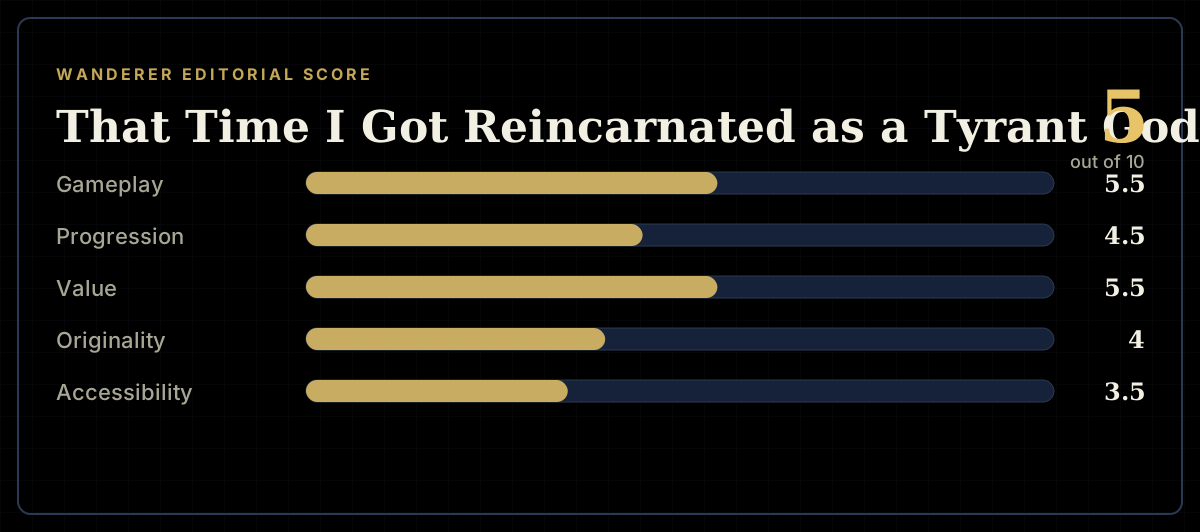
How the review scores each part of the gameWanderer Editorial -
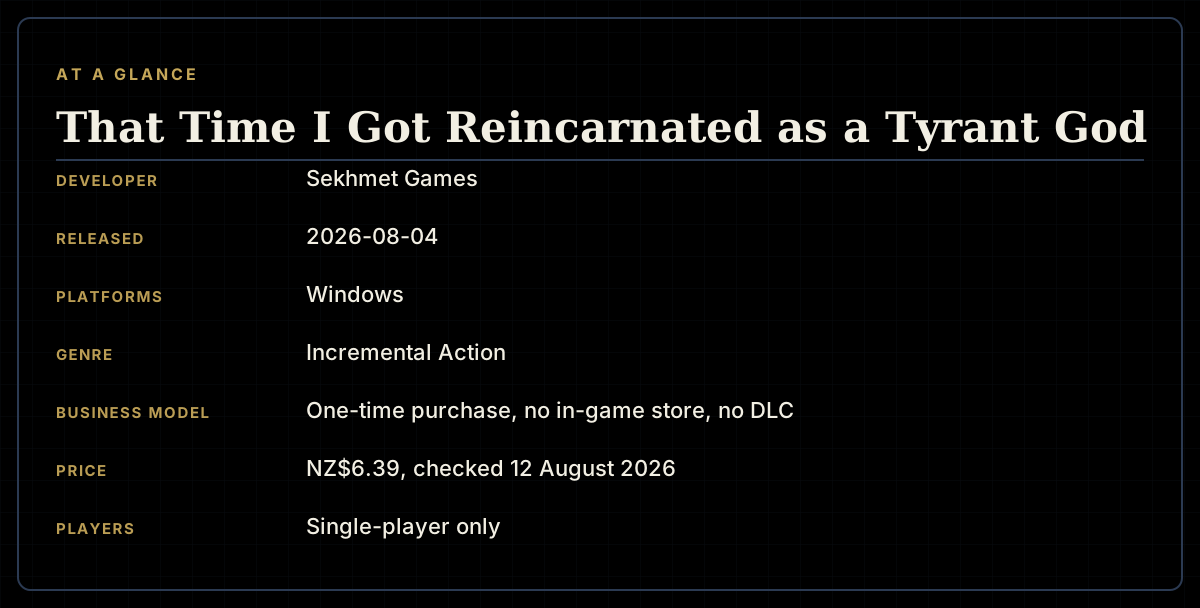
The essentials at a glanceWanderer Editorial -
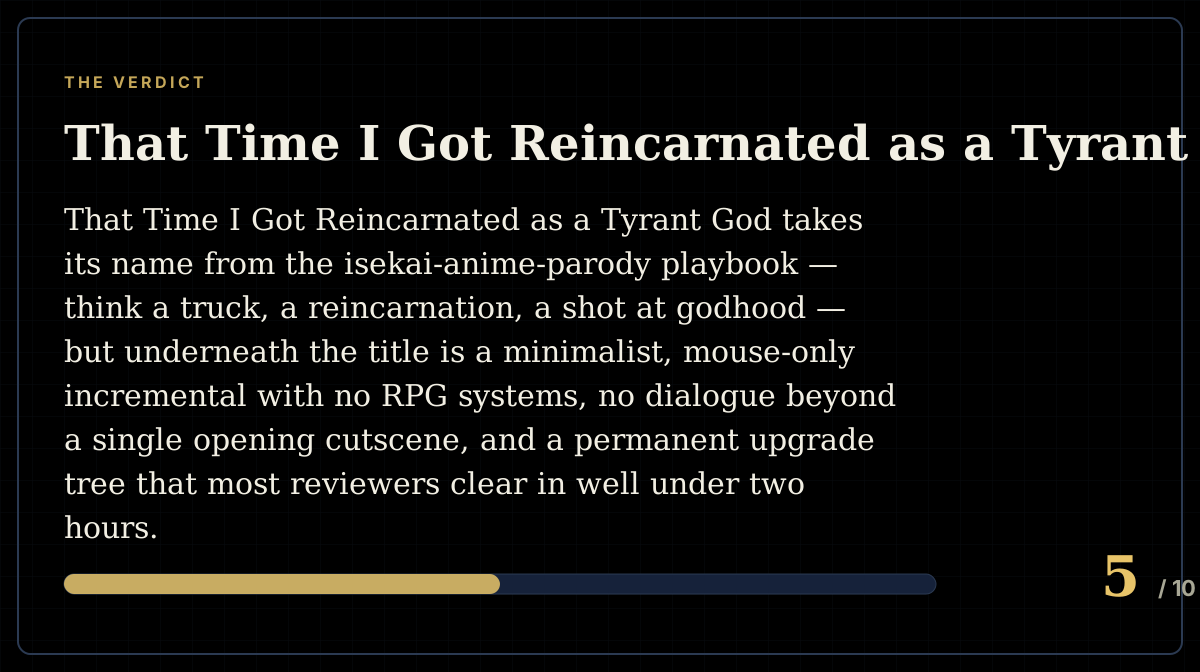
The short versionWanderer Editorial