
Game review
Talespinner
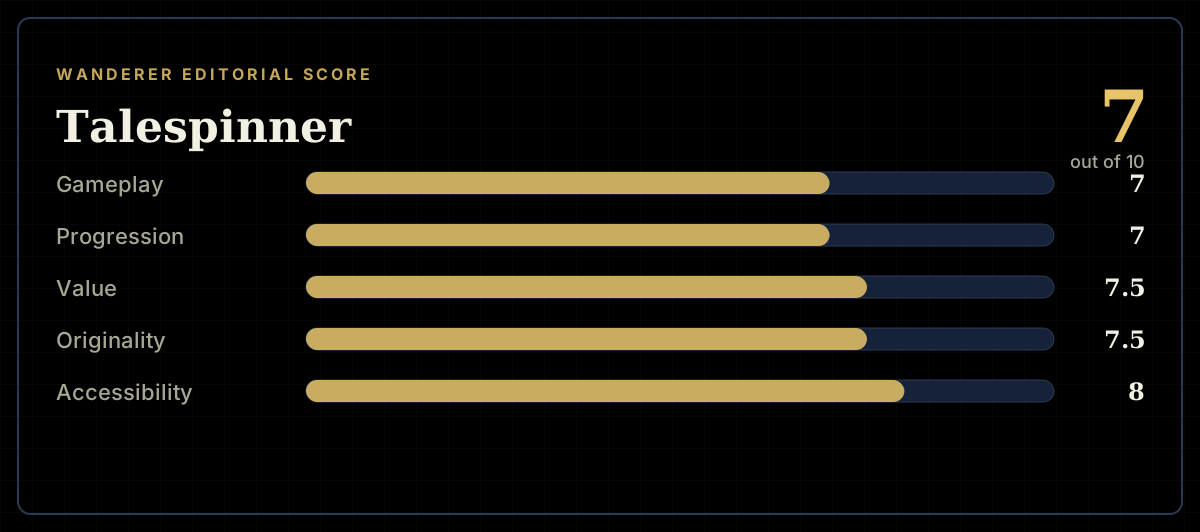
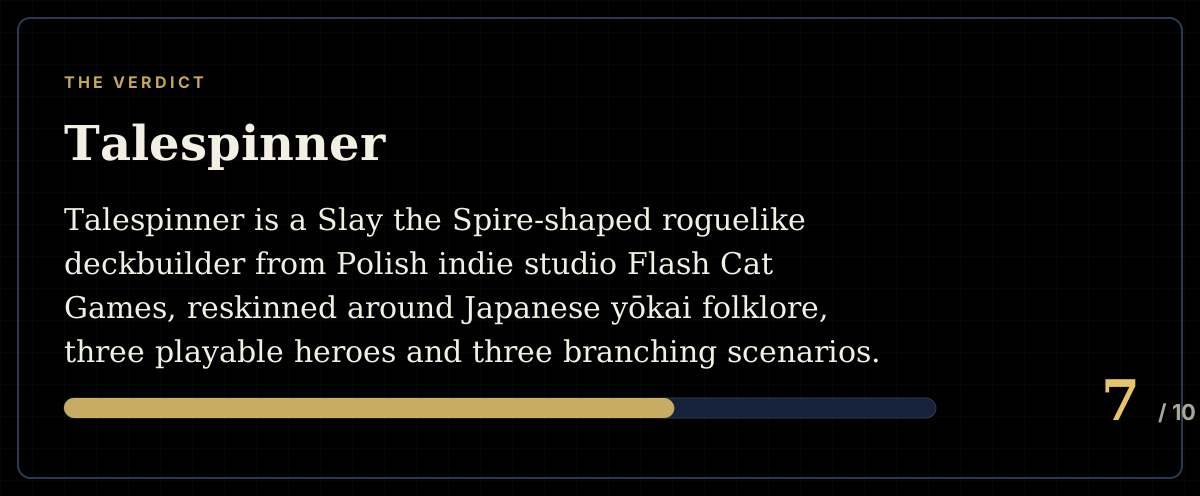
7 / 10
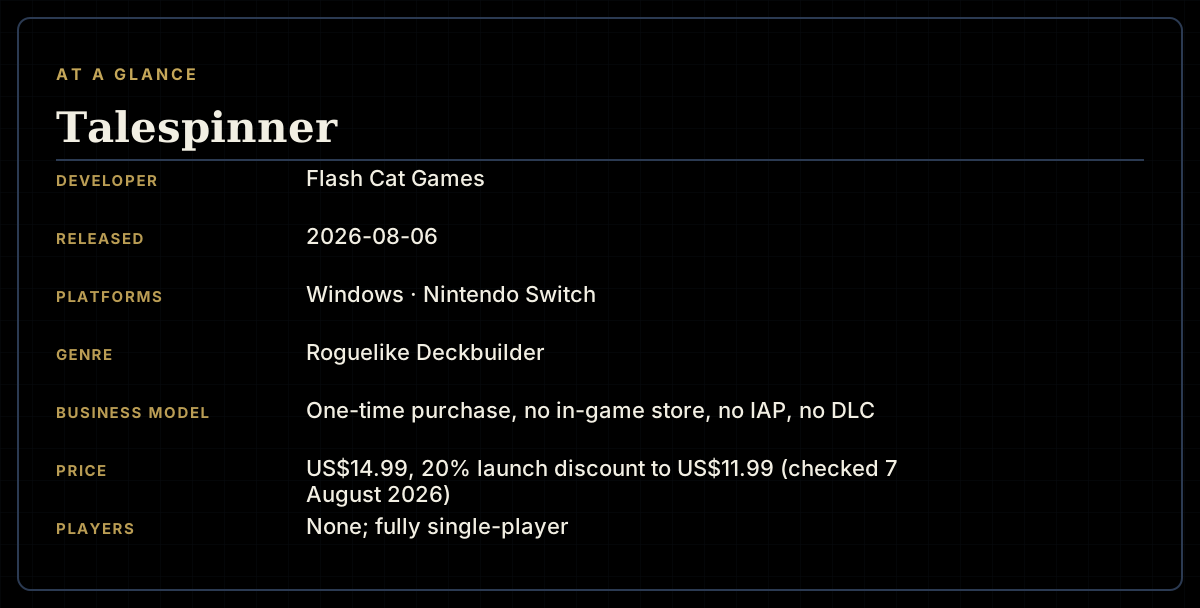
- Developer
- Flash Cat Games
- Publisher
- Kwalee
- Released
- 6 August 2026
- Platforms
- Windows, Nintendo Switch
- Genre
- Roguelike Deckbuilder
- Monetisation
- One-time purchase, no in-game store, no IAP, no DLC
- Players
- None; fully single-player
The short version
Talespinner is a Slay the Spire-shaped roguelike deckbuilder from Polish indie studio Flash Cat Games, reskinned around Japanese yōkai folklore, three playable heroes and three branching scenarios. Its one real mechanical twist is "narration": before each encounter you choose how the story is told, trading a safer outcome for a smaller reward or a riskier one for a bigger prize, which turns the genre's usual fixed difficulty curve into something the player actively steers.
This review is written on the game's actual launch day. Steam's review API returns zero results for the base game, because it has existed as a purchasable product for barely more than 24 hours. The best available evidence instead comes from the free demo, which has been public since October 2025 and carries a small but genuine review history — 24 positive notes against 2 negative ones, including substantive complaints about card balance and lingering bugs written weeks before launch.
Biggest strengths
- The narration choice before each encounter gives players direct control over risk versus reward, instead of the genre's usual fixed difficulty dial
- A free, standalone demo has been public since 23 October 2025 and has been patched repeatedly since, including changes made in response to player feedback, so the purchase decision doesn't have to be made blind
- Genuinely strong accessibility options for the genre: a Mouse Only Option, "Playable without Timed Input," Save Anytime, and full controller support including DualSense-specific features
Biggest weaknesses
- No public verdict exists for the released game yet. Steam shows zero user reviews for the base build at the time of this review, so nothing here about the full three-scenario campaign's pacing, balance or bugs has been independently confirmed
- The demo's own small review sample already contains a substantive complaint, posted six weeks before launch, that some early card math feels arbitrary and that certain enemy encounters repeat with too little variation
- Windows only on PC, with no Mac or Linux support listed on the Steam store page
Who it's for: Roguelike deckbuilder fans who enjoy Slay the Spire's basic shape and want a folklore setting and an accessibility-forward control scheme, but who are comfortable buying a day-one indie release before any outside verdict on the finished game exists.
Our recommendation: Play the free demo first — it predates this review by nearly a year and has its own small but real player feedback attached to it. The underlying design is sound and the price is modest, but nothing here can yet confirm how the full three-character, three-scenario game holds together over a full run, because no review corpus for it exists on day one.
7 / 10
Roguelike deckbuilders don't need much of an excuse to exist any more — the shape Slay the Spire established is stable enough that a new one arrives almost every month. What usually separates them is the reskin and the one mechanical idea the developer actually added. Talespinner, from the three-person Polish studio Flash Cat Games and published by mobile-games veteran Kwalee, launched on Steam and Nintendo Switch on 6 August 2026 with a reskin built from Japanese yōkai folklore and one genuinely interesting idea layered on top: you don't just fight the story, you choose how loudly it's told.
As of this writing, the game's own review corpus is empty. Steam's review API returns zero results for the base build, because it has been purchasable for well under two days. That's not a gap in this review's research — it's the honest state of a game whose reception hasn't had time to exist yet. What this review can lean on instead is unusually solid for a day-one title: a free demo that's been public since October 2025, patched repeatedly in the ten months since, carrying its own small stack of dated player feedback.
The one real twist: narration as a difficulty dial
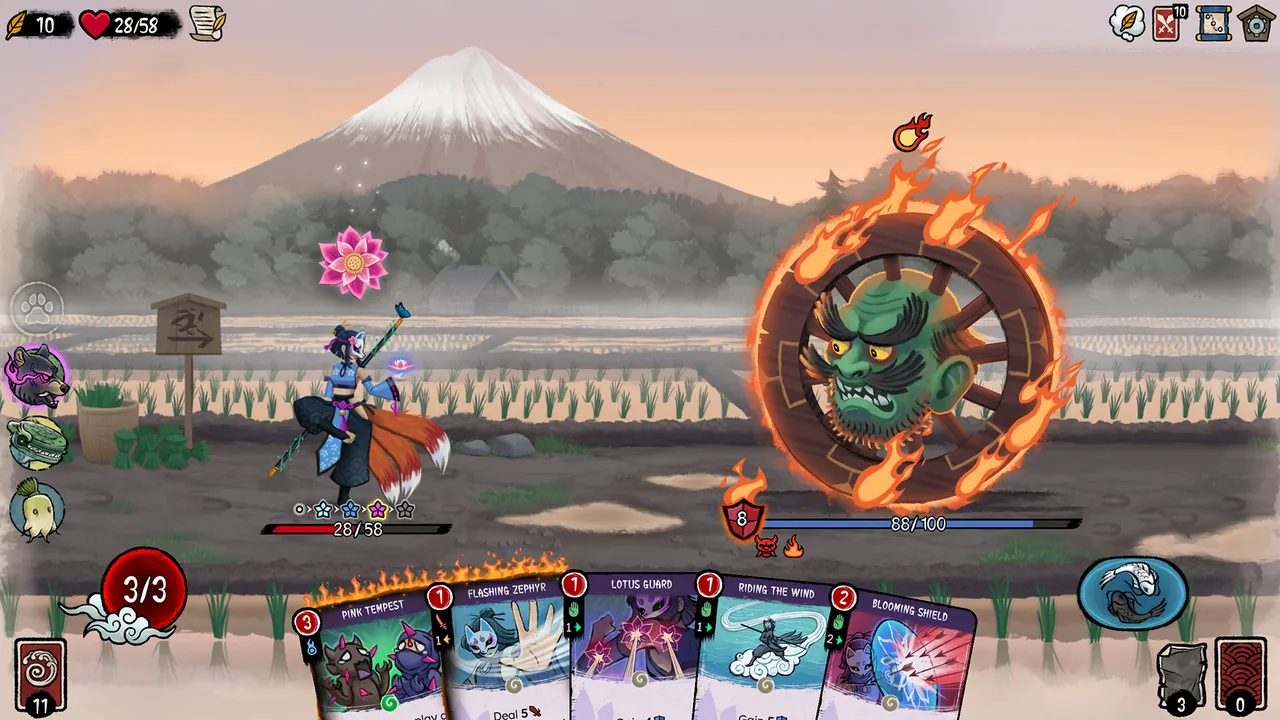
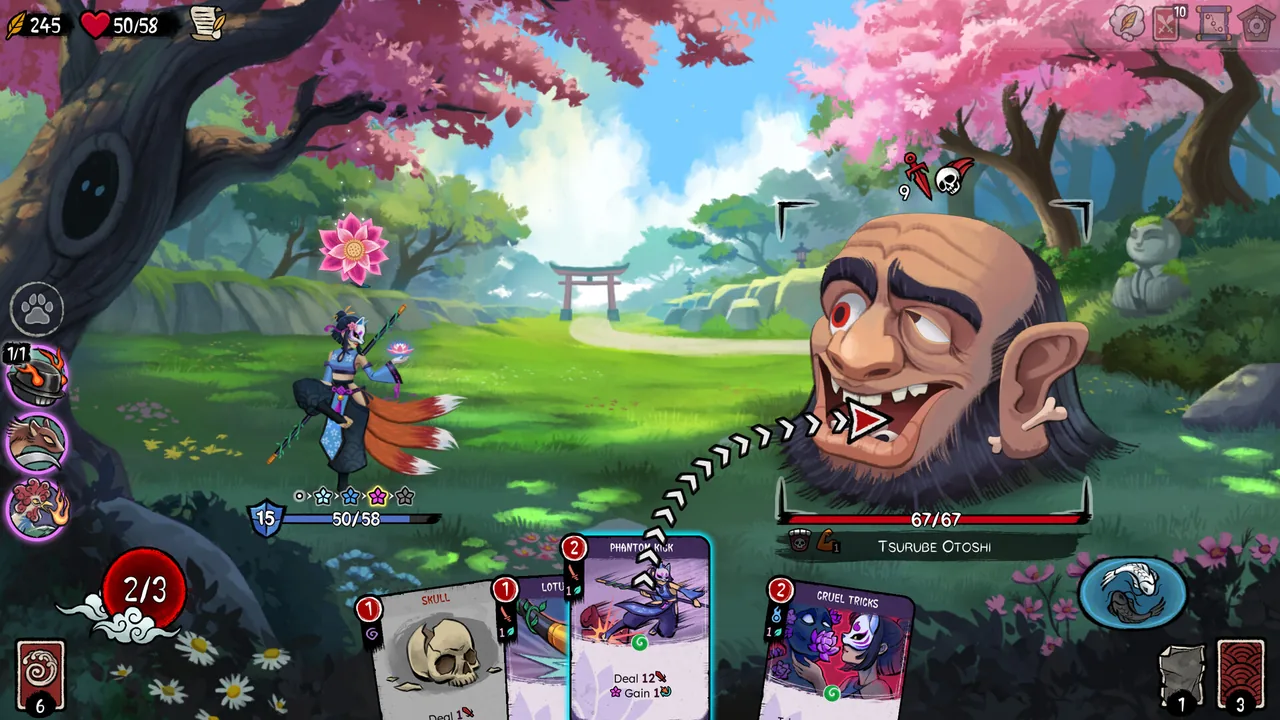
Strip away the setting and Talespinner is built from familiar parts — three playable heroes, each with distinct mechanics and a signature card pool; a map that branches between biomes; turn-based combat against a rotating cast of enemies; a run that ends in death or victory and starts over. That's the genre's baseline, and Talespinner doesn't pretend otherwise.
Its actual hook sits in the "storyteller" framing the store page leads with: before certain encounters, the player chooses how the narrative handles what happens next, and that choice has mechanical teeth. A Steam Next Fest patch note from mid-2025 describes adding a "Neutral Narration" option specifically because the existing choices skewed too hard toward one extreme — it "provides fewer rewards than other narration options BUT comes with no negative effects," which only makes sense in a system where the other options offer bigger rewards for bigger risk. That's a meaningfully different lever than most of the genre gives players. Slay the Spire's Ascension levels and Balatro's Stakes are both external, set-once-per-run difficulty knobs; a narration choice made encounter-by-encounter is closer to letting the player negotiate with the run in real time. Whether the swings are tuned well enough to matter over a full campaign is exactly the kind of thing that needs a wide, played-through audience to settle, and that audience doesn't exist yet for the finished game.
Three heroes, three scenarios, a folklore cast doing real work
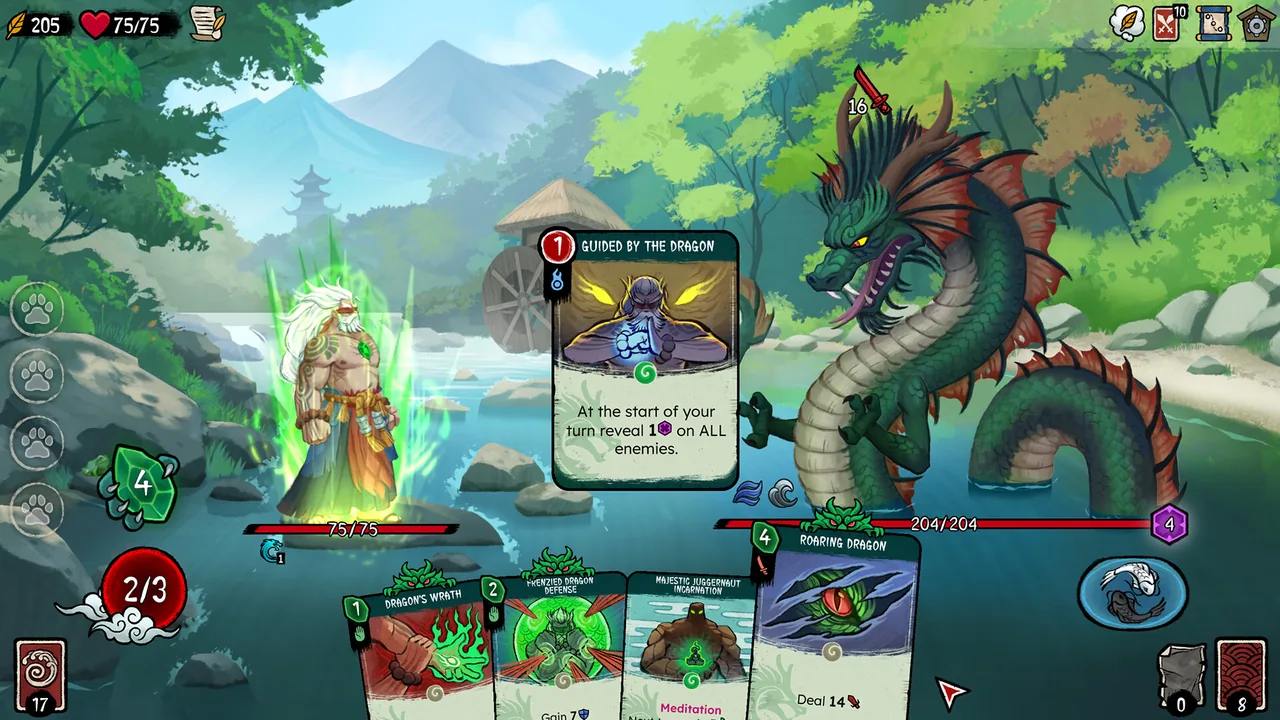
The three playable characters — publicly named Gyokushin, Rinka and Himura across the game's own achievement list — each carry distinct mechanics: Gyokushin, introduced first in the demo, spends a resource called Jade to power dragon-themed cards. The three scenarios send the hero after specific named threats rather than a generic final boss: a ninja clan led by the historical Hattori Hanzō, or the mountain-dwelling Yuki-onna, among others. The store's own current feature list claims 200-plus battle cards, over 50 enemy types, 15 bosses, 9 biomes and more than 50 recruitable companions — specific enough, in figures rather than adjectives, to be worth taking at face value rather than dismissing as marketing filler.
The folklore theming isn't just cosmetic set-dressing, either. Boss names in the achievement list read as a genuine cast list — Yuki Onna, Jorōgumo, Kitsune, Akashita, Hitotsume-nyūdō — rather than the reskinned elementals a lot of genre entries settle for. It's the same kind of swing Critternauts made with real-world cities in place of invented fantasy kingdoms: the combat underneath is still classic turn-based deckbuilding, but the wrapper is doing more work than most competitors bother with.
What a year-old demo already tells us
Talespinner's demo has existed since 23 October 2025, well over a year before this review, and it carries 26 Steam reviews — 24 positive, 2 negative, a 92% score on a genuinely small sample. Read individually rather than as a badge, they're informative. The first review, posted the day after the demo launched, came from someone who "doesn't even like the deckbuilder genre" and still found the game charming enough to try; a Japanese-language review specifically praised that an overseas team handling Japanese folklore didn't produce the "chimera Japan" pastiche the reviewer expected.
The two negatives matter more than their raw count suggests, because both are dated and specific rather than vague. One, in French, posted in June 2026 with an hour of playtime, describes bugged cards that do nothing and text errors, alongside praise for the artwork — a "would consider it if the mechanics worked" verdict rather than a rejection. The other, in Simplified Chinese, posted the same month with nearly three hours logged, is the more substantial read: it argues specific card math feels arbitrary (citing exact numbers), that low-rarity filler cards show up at inappropriate points in a run, that one early elite enemy's attack pattern doesn't require much thought to beat, and that some interface bugs around a card-deletion event were still present close to launch. None of that is proof the finished game has the same problems — the demo is, definitionally, an older build — but it's the most concrete, dated evidence available about how the underlying systems have actually played for real people, and it reads as ordinary pre-launch rough-edge territory rather than a fundamental design failure.
Accessibility options that are unusually good for the genre
One thing the store listing gets right regardless of how the campaign itself lands: Talespinner ships with a genuinely strong accessibility spread for a turn-based card game. It's listed as playable without timed input, includes a dedicated Mouse Only Option, supports save-anytime, and has full controller support with specific DualShock and DualSense feature listings rather than generic pad support. None of that requires playtesting to verify — it's what the storefront itself commits to supporting — and it's a more complete accessibility offering than several bigger-budget entries in this genre bother to list.
An app ID a lot older than the demo's
One detail worth flagging for anyone tracking how long this game has actually been in the works: the base game's Steam app ID, 1725410, is dramatically lower than its own demo's ID of 4039370, even though the demo only went public in October 2025. Valve's app numbers climb continuously across the whole platform, so a gap of that size between a game and its own demo almost always means the base store page existed for a long stretch before anyone outside the studio knew the game existed. The earliest public trace this review could find is a Discord server announcement from 10 June 2025, followed by a first public reveal post that September — meaning whatever happened on Talespinner between the page quietly existing and the studio going public isn't part of any documented record. That's a normal shape for a small indie project (a page reserved early, development happening quietly, marketing starting once there's something to show), not evidence of trouble, but it does mean the visible 14-month public runway from Discord to launch is very likely shorter than the game's actual development time.
Value, and how to check before buying
At US$14.99 (US$11.99 at the current 20% launch discount), with no IAP, no DLC and no subscription, this is a low-risk purchase on the numbers alone. There's also a genuinely useful way to reduce the uncertainty this review can't close on day one: play the demo. It isn't a stripped-down teaser slapped together for launch week — it's been live and receiving updates for the better part of a year, including changes made directly in response to the Next Fest feedback period, and its own review history is the closest thing to a verdict currently available for how the game actually plays.
Final verdict
Talespinner is a competently built roguelike deckbuilder with one real idea worth the reskin — letting players actively steer risk and reward through the narration system — wrapped in a Japanese-folklore setting that does more work than most genre entries bother with, and backed by an accessibility feature set that's better than the genre's average. The price is fair, the monetisation is nonexistent, and a substantial free demo has existed for long enough to have accumulated its own small, honest record of both praise and dated complaints.
What keeps this from scoring higher isn't anything specific the finished game does wrong — it's that nothing here has been tested against a real audience yet. Zero reviews, zero patch notes, zero community consensus for the actual release build: the two negative demo reviews are the only critical signal in either direction, and they're about a version of the game that's now out of date. That's not a mark against the design itself, but it's a gap this review won't paper over with invented confidence.
Worth trying, with the year-old demo doing real risk-reduction that a launch-day review alone can't provide. Players who enjoy steering their own difficulty curve and want a progression system that rewards patience over grinding may also want to look at Wanderer.
Pros and cons
Pros
- The narration choice before each encounter gives players direct control over risk versus reward, instead of the genre's usual fixed difficulty dial
- A free, standalone demo has been public since 23 October 2025 and has been patched repeatedly since, including changes made in response to player feedback, so the purchase decision doesn't have to be made blind
- Genuinely strong accessibility options for the genre: a Mouse Only Option, "Playable without Timed Input," Save Anytime, and full controller support including DualSense-specific features
- A distinctive setting for a crowded genre — Japanese yōkai folklore standing in for the usual fantasy trappings, with named yōkai (Yuki Onna, Jorōgumo, Kitsune) as bosses rather than generic monster archetypes
- Low price with no monetisation beyond the upfront cost: no IAP, no DLC, no battle pass, no energy system
Cons
- No public verdict exists for the released game yet. Steam shows zero user reviews for the base build at the time of this review, so nothing here about the full three-scenario campaign's pacing, balance or bugs has been independently confirmed
- The demo's own small review sample already contains a substantive complaint, posted six weeks before launch, that some early card math feels arbitrary and that certain enemy encounters repeat with too little variation
- Windows only on PC, with no Mac or Linux support listed on the Steam store page
- A three-person Polish studio backed by a mobile-first publisher means post-launch support capacity is untested; nothing here confirms how quickly day-one issues would get patched
- Mechanically, this is still a familiar shape underneath the reskin — three characters, a run structure, and card-based combat is the Slay the Spire template, and the narration system is the one piece that isn't
Screenshots
-
TalespinnerImage: Kwalee via Steam -
TalespinnerImage: Kwalee via Steam -
TalespinnerImage: Kwalee via Steam -
How the review scores each part of the gameWanderer Editorial -
The game at a glanceWanderer Editorial -
The short versionWanderer Editorial