Game review
Hand of Fate 2
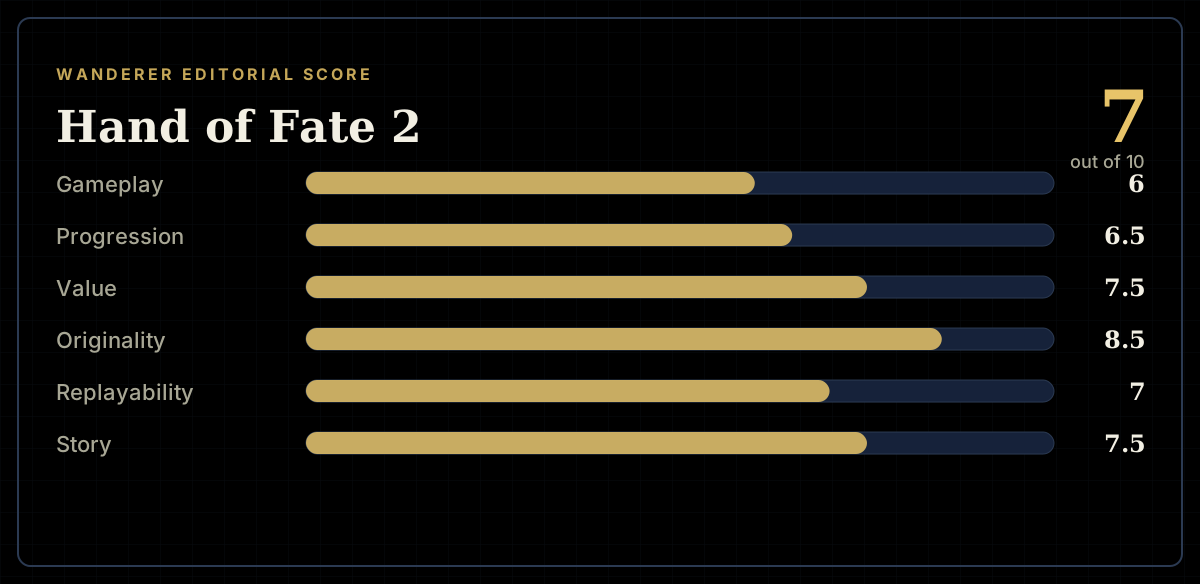
7 / 10
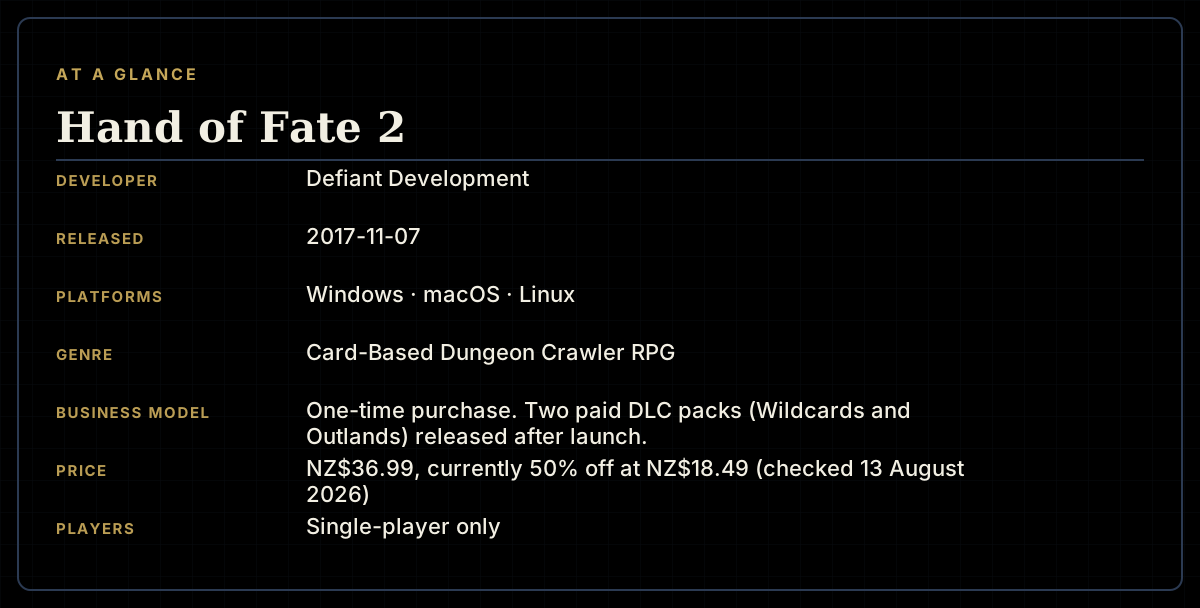
- Developer
- Defiant Development
- Publisher
- Defiant Development
- Released
- 7 November 2017
- Platforms
- Windows, macOS, Linux
- Genre
- Card-Based Dungeon Crawler RPG
- Monetisation
- One-time purchase. Two paid DLC packs (Wildcards and Outlands) released after launch.
- Players
- Single-player only
The short version
Hand of Fate 2 sits you across a table from the Dealer, building decks of encounter and equipment cards that form a randomised dungeon run, then drops you into real-time combat every time a fight card comes up. It's a genuinely unusual hybrid -- part deckbuilder, part board game, part action RPG -- and Steam calls it Very Positive, 84% of 2,274 English-language reviews. Read the review corpus and a very consistent verdict emerges: this is, almost across the board, agreed to be a real improvement on the original Hand of Fate in scope, content and polish, with exactly one recurring exception that shows up in negative and positive reviews alike -- the combat.
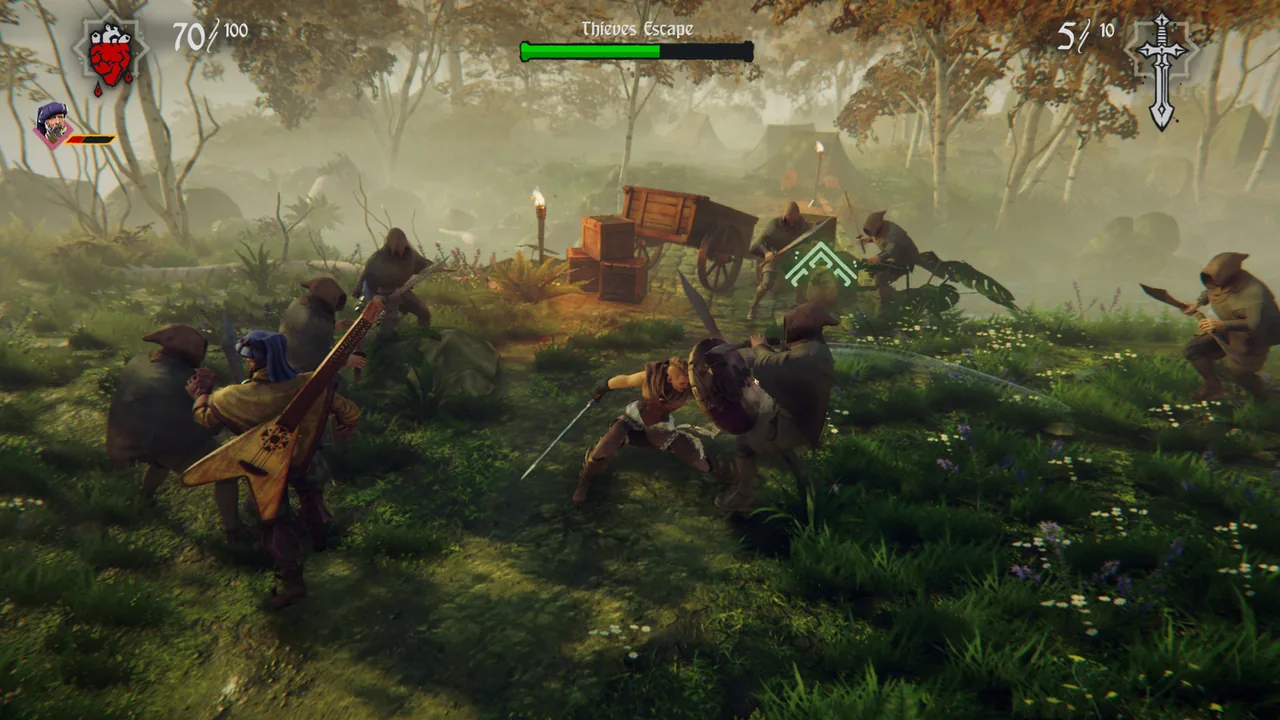
"Combat's still a little wonky but serviceable," reads a representative launch-week review, and nine years of reviews since have repeated some version of that sentence almost verbatim: clunky camera work, imprecise hit timing, and fights that several reviewers say become tedious well before the campaign's end, sitting inside a card-and-dice framing that most of the same reviewers otherwise praise without reservation. It's a rare case where a game's two halves get reviewed almost separately, and consistently, by the same people.
Biggest strengths
- A genuinely distinctive card-and-dice structure -- building your own encounter decks, then navigating a randomised dungeon board -- that reviewers consistently call more inventive than a straightforward action RPG or straightforward deckbuilder
- Widely agreed to improve on the original Hand of Fate in scope, story and content variety, with an explicit campaign structure the first game lacked
- Strong replay value from its randomised decks and multiple playable scenarios, several reviewers reporting 30+ hours across repeat runs
Biggest weaknesses
- Real-time combat is the single most consistent complaint across nine years of reviews -- described as clunky, one-dimensional and eventually tedious, even by reviewers who otherwise recommend the game strongly
- Gear upgrade conditions that several reviewers describe as grindy rather than skill-based, requiring repeated specific actions rather than rewarding general play
- A real, documented split among returning fans of the original: some call it a clear improvement, others say the sequel lost some of what made the first game's tighter loop work
Who it's for: Fans of card and tabletop games looking for something with real-time action layered on top, and anyone who enjoyed the first Hand of Fate and wants more scope and story. Not for anyone who wants tight, responsive action combat as the main draw, since even fans of the format consistently flag it as the weak link.
Our recommendation: Worth it on the frequent discount for the tabletop half alone, which most reviewers agree is a real step up from the original. Go in treating the real-time combat as a functional means to an end rather than the game's strength, since that's how its own most devoted fans describe playing it.
7 / 10
The pitch
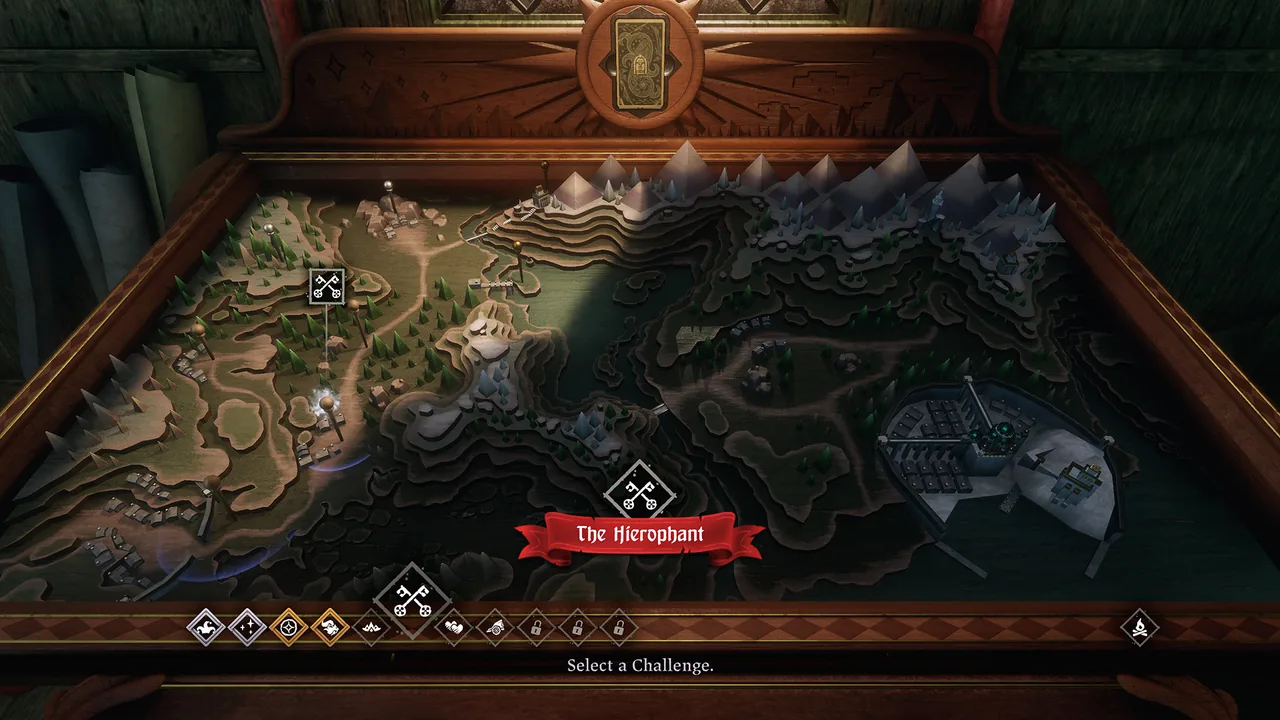
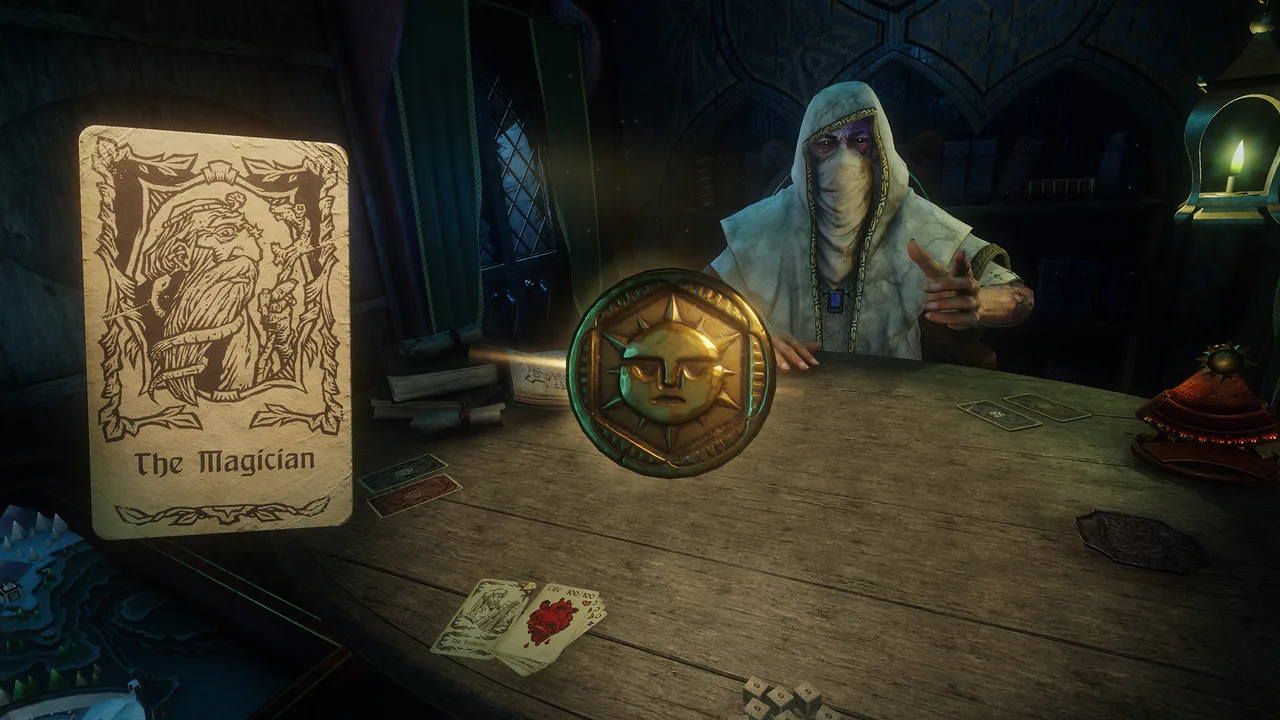
Hand of Fate 2 puts you across a table from the Dealer, a recurring narrator-antagonist who lays out a board of face-down cards representing rooms, encounters and events. You build your own deck of equipment, food and encounter cards ahead of each run, shuffle it into the Dealer's, and navigate the resulting board turn by turn -- some cards trigger a story choice, others trigger a fight, and the run ends when you clear the objective or run out of health and food. When a combat card flips, the game drops out of its tabletop framing entirely and into a real-time, third-person action sequence, weapons and all, before returning you to the board.
It's a direct sequel to 2015's Hand of Fate, built by the same small Australian studio, Defiant Development, and it launched as a full release on 7 November 2017 with no Early Access period. Two paid DLC packs followed over the next year, expanding the card pool and scenario roster.
Where the reviews agree: this is a real sequel
Read through Hand of Fate 2's reviews and there's an unusually strong consensus that this is what a sequel is supposed to be. Reviewers who played the original consistently describe more content, a proper campaign structure the first game lacked, additional games of chance beyond the core card mechanic, and generally sharper production values. "Hand of Fate 2 is a real sequel, with massive improvements, but no drastic changes to the core gameplay," reads a launch-week review, and that specific framing -- more of what worked, refined rather than reinvented -- repeats constantly across years of subsequent reviews. The Dealer, voiced with a dry, theatrical menace that carries much of the game's personality, gets singled out often as the connective tissue holding the whole experience together.
Where the reviews agree: the combat is the weak link
What's unusual is how consistently the same reviewers who praise the sequel's improvements single out one specific thing as unchanged, or even worse: the real-time combat. "Combat's still a little wonky but serviceable" is about as generous as the negative-leaning assessments get; less generous ones call it "tedious," "one-dimensional," and "not designed properly," with specific complaints about camera positioning, hit timing and a lack of meaningful depth once the novelty wears off. Crucially, this isn't only a negative-review talking point -- multiple reviewers giving the game an enthusiastic recommendation explicitly carve out the combat as an exception, describing it as the price of admission for the tabletop half rather than a strength in its own right. One long-time fan puts it directly: "the combat is a bit wonky, but the atmosphere, the cards, [and everything else]" are what keep them coming back.
A second, more structural complaint sits alongside it: several reviewers describe gear upgrade requirements as grind-based rather than skill-based, requiring a specific number of repeated actions -- use a weapon type 25 or 50 times, for instance -- rather than rewarding general competent play. That complaint compounds the combat fatigue for players who don't naturally enjoy the fighting on its own terms, since progression partly depends on doing more of the thing several reviewers already find the weakest part of the game.
A real, documented split among the original's fans
Underneath the broad consensus, there's a genuine minority disagreement worth naming: some returning fans of the first Hand of Fate feel the sequel, despite its added scope, actually lost some of what made the original's tighter, more focused loop work. A handful of reviewers explicitly prefer the first game's shorter, more replayable roguelike structure to the second's fuller campaign, describing the sequel as "objectively worse" in specific respects even while acknowledging its expanded content. This is a minority position in the review corpus -- most returning fans do call it an improvement -- but it's consistent enough across different years to be worth noting rather than dismissing as a handful of outliers.
What the achievement data adds
Global achievement completion follows a familiar shape: early story milestones sit very high -- 89% for the game's first achievement, 81% for the second -- and mid-campaign story beats sit in the 50-60% range, reasonable numbers for a game with a genuine multi-hour campaign structure. From there, a long tail of scenario-specific and challenge-run achievements sits under 1%, which is typical for a game with this much optional replayable content rather than a sign of players abandoning the core campaign early.
The studio's story matters here too
It's worth stating plainly, for a review written nine years after release: Defiant Development, the small Australian studio behind both Hand of Fate games, ceased development of new titles in July 2019, citing an inability to sustain its experimental, self-funded approach, and moved into what it called "caretaker mode" to keep its existing games running rather than developing anything further. One of the most emotionally direct reviews in this game's corpus was posted the day that news broke, opening with "I write this positive review with a heavy heart after reading of your impending closure today." There has been no further content or major patch support for Hand of Fate 2 since, which is worth knowing going in -- the game you'd buy today is, functionally, the same game its long-time fans have been playing, unchanged, for years.
Value
At NZ$36.99, currently 50% off at NZ$18.49 at the time of checking, Hand of Fate 2 is a reasonable purchase for a genuinely distinctive, replayable RPG hybrid with dozens of hours of content across its base campaign and two expansions. For players who click with the card-and-dice structure and can accept the combat as functional rather than exceptional, it holds up well nine years on; Defiant's closure means there's no ongoing support to factor in, for better (a finished, complete package) or worse (nothing left to fix what reviewers have flagged since launch).
Verdict
Hand of Fate 2 is a genuinely inventive hybrid that mostly succeeds at being more of what made its predecessor interesting -- a real campaign, a stronger Dealer-led narrative frame, more variety in its card pool -- while carrying forward the one thing reviewers have never stopped flagging: combat that functions but rarely impresses. That split holds remarkably steady across nine years of reviews from players who otherwise disagree about almost everything else regarding the sequel. For anyone drawn to its tabletop half specifically, it remains a distinctive, worthwhile pickup, especially discounted, from a small studio whose closure in 2019 makes this and its predecessor the complete extent of what Defiant Development left behind.
Pros and cons
Pros
- A genuinely distinctive card-and-dice structure -- building your own encounter decks, then navigating a randomised dungeon board -- that reviewers consistently call more inventive than a straightforward action RPG or straightforward deckbuilder
- Widely agreed to improve on the original Hand of Fate in scope, story and content variety, with an explicit campaign structure the first game lacked
- Strong replay value from its randomised decks and multiple playable scenarios, several reviewers reporting 30+ hours across repeat runs
- A distinctive Dealer character and narration that carries much of the game's tone and humour
Cons
- Real-time combat is the single most consistent complaint across nine years of reviews -- described as clunky, one-dimensional and eventually tedious, even by reviewers who otherwise recommend the game strongly
- Gear upgrade conditions that several reviewers describe as grindy rather than skill-based, requiring repeated specific actions rather than rewarding general play
- A real, documented split among returning fans of the original: some call it a clear improvement, others say the sequel lost some of what made the first game's tighter loop work
- Developer Defiant Development closed in July 2019, less than two years after release, moving into "caretaker mode" -- there has been no further content or major patch support since
Screenshots
-
Hand of Fate 2Image: Defiant Development via Steam -
Hand of Fate 2Image: Defiant Development via Steam -
Hand of Fate 2Image: Defiant Development via Steam -
How the review scores each part of the gameWanderer Editorial -
Hand of Fate 2 at a glanceWanderer Editorial -
The short versionWanderer Editorial