Game review
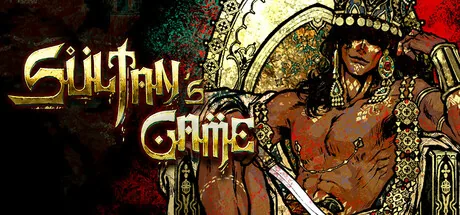
Sultan's Game
7.5 / 10
- Developer
- Double Cross
- Publisher
- 2P Games
- Released
- 30 March 2025
- Platforms
- Windows, macOS, Linux
- Genre
- Card-based RPG
- Monetisation
- One-time purchase, no in-game store
- Players
- Single-player only
The short version
Sultan's Game is a dark-fantasy card RPG from developer Double Cross, published by 2P Games: a weekly card drawn from the mad Sultan's whims sets a challenge, and the player spends seven days of resources, followers and moral compromise trying to survive it without losing themselves in the process. Released 30 March 2025, it became a genuine commercial and critical phenomenon — a million copies sold within four months, a Steam Deck Verified badge, and an Indie Game of the Year award from the INDIE Live Expo in November 2025 — and it holds a large, healthy review base: 93.7% positive across roughly 31,000 Simplified Chinese reviews and 93.4% across 1,458 English-language reviews, all 96 of the latter's negatives read for this piece. What that reading surfaces is a genuinely inventive game whose two biggest problems are structural rather than incidental: an English localisation reviewers were already calling unacceptable in April 2025 and are still calling unacceptable more than a year later, and a core loop that a large share of long-playtime critics say collapses into repetitive busywork once its novelty wears off. A March 2026 anniversary content update also proved genuinely divisive among returning players, a dispute this review reports rather than adjudicates.
Biggest strengths
- The central hook — a weekly card from an all-powerful, capricious Sultan that forces a resource-and-morality trade-off — draws wide, specific praise as something reviewers say they genuinely haven't played before
- Writing and atmosphere earn real credit where the translation holds up, with several high-playtime reviewers naming specific character arcs (Sharma, Nawfal, an adopted daughter) as the game's emotional high points
- Commercial and critical validation is unusually strong for an indie release: a million sales within four months, Steam Deck Verified status, and an Indie Game of the Year win
Biggest weaknesses
- The English localisation is this review's single most repeated complaint across the negative sample, spanning launch week through May 2026, with one 269-vote review specifically asking why "it's been a YEAR" and the translation still hasn't been fixed on a game built almost entirely around reading text
- A large share of long-playtime negative reviews (40+ hours logged) describe the loop turning into repetitive "stat farming" on later playthroughs, once the novelty of new events runs out and runs start repeating the same outcomes
- RNG-driven softlocks are a recurring, specific complaint — reviewers describe reaching a card they cannot resolve with the resources available, with no way to recover the run
Who it's for: Fans of narrative-heavy, morally uncomfortable roguelikes (Cultist Simulator is the most common comparison) who read carefully and don't need pristine prose; a poor fit for players who bounce off unclear tutorials or need every playthrough to feel fresh.
Our recommendation: A genuinely original, frequently gripping idea let down by a translation its own audience has been asking the developer to fix for over a year, and a loop that rewards a first run far more generously than a tenth. Worth the price for the concept alone, but go in patient.
7.5 / 10
Introduction
Sultan's Game hands the player a genuinely uncomfortable job. Every seven days, a card arrives bearing the whim of an all-powerful, bored Sultan — sometimes cruel, sometimes strange, always demanding — and surviving it means spending resources, followers and, frequently, some piece of the player's own conscience. It's a dark-fantasy card RPG loosely rooted in the world of One Thousand and One Nights, developed by Double Cross and published by 2P Games, released 30 March 2025. The concept caught on fast and hasn't let go: a million copies sold within four months of launch, an Indie Game of the Year award from the INDIE Live Expo in November 2025, Steam Deck Verified status in January 2026, and a review base large enough to actually analyse in depth — roughly 31,000 Simplified Chinese reviews at 93.7% positive and 1,458 English-language reviews at 93.4%, all 96 of that English negative sample read in full for this piece.
That reading finds a game whose acclaim is earned on its central idea, and whose two most serious problems have nothing to do with the idea itself.
A weekly card, a Sultan's whim, and impossible choices
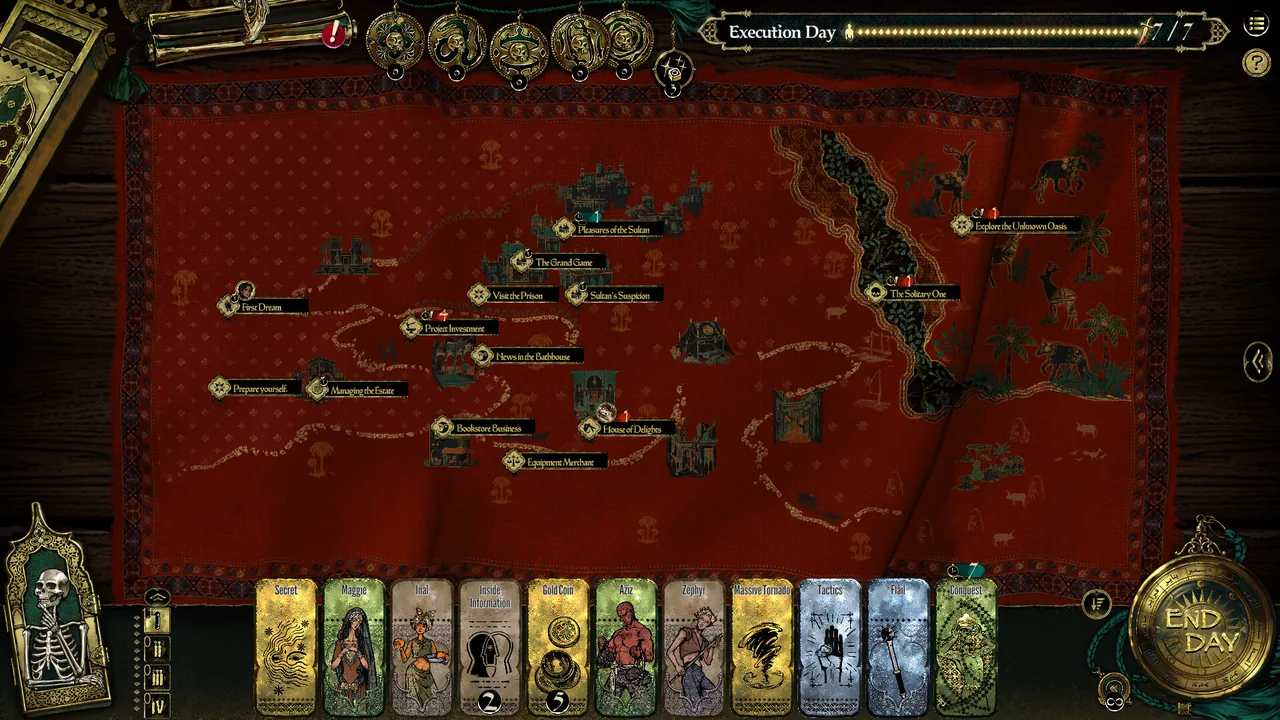
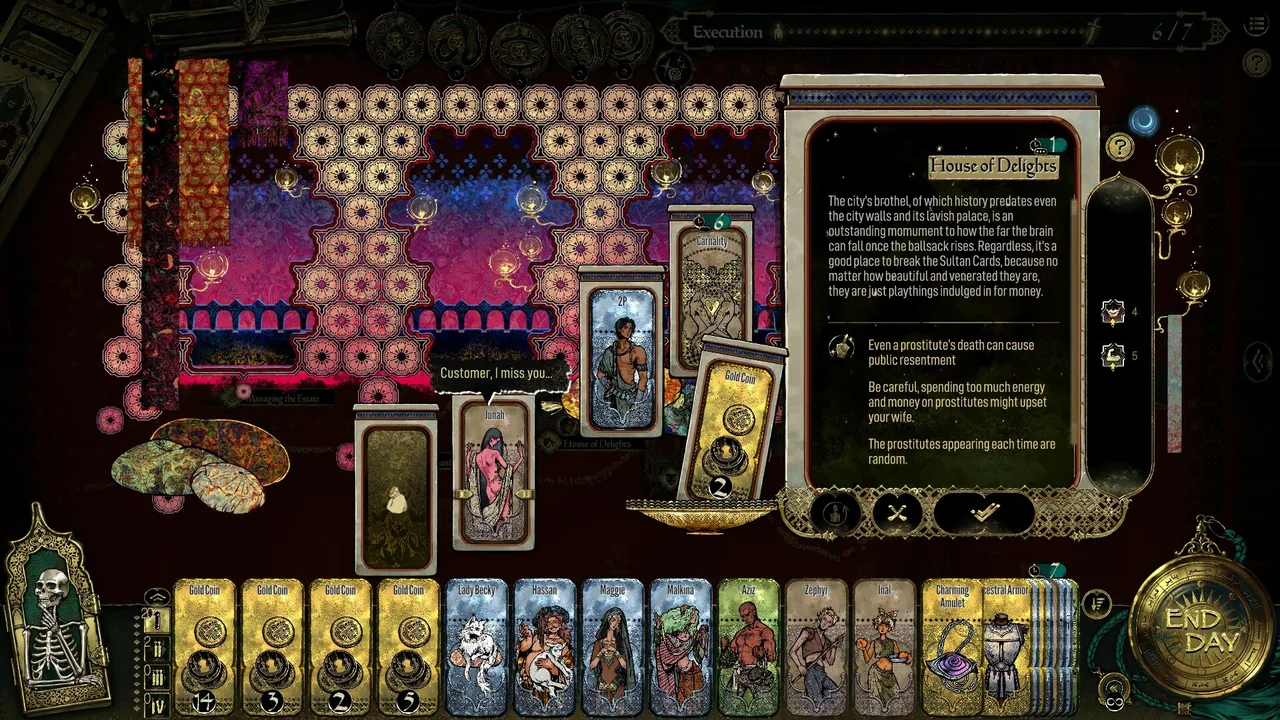
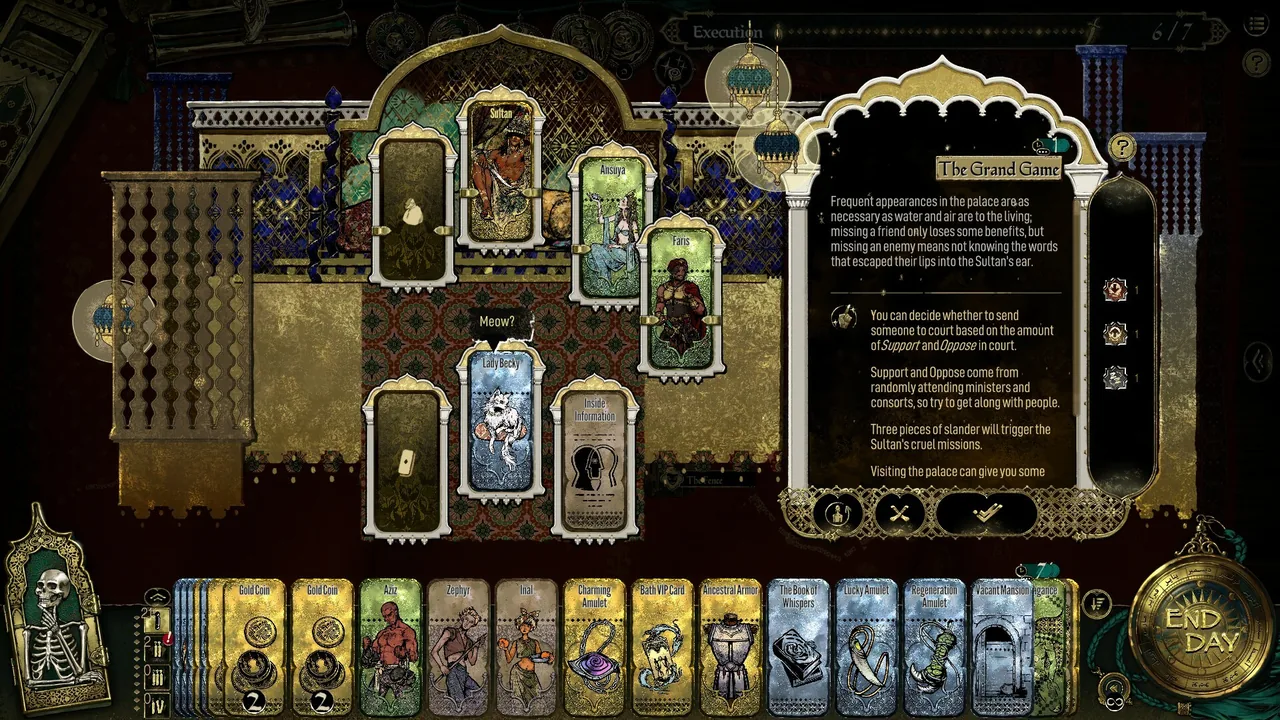
The loop is the pitch. Draw a card, read what it demands, and figure out how to survive the next seven days without losing the resources, followers or moral standing the rest of the game depends on. Time management runs alongside the resource management — every action costs days the player doesn't have enough of — and the tone leans hard into "brutal": one of the highest-voted positive reviews, at 191.7 hours played, specifically credits the design for offering paths to stay principled while making clear the game will actively test that resolve. Reviewers across the sample single out specific characters and storylines by name — Sharma, Nawfal, an adoptable daughter whose arc one reviewer called "cute/cool/sad depending on how you choose to interact with her" — as proof the writing has real emotional range when it lands. The genre comparison that recurs most often in both praise and complaint is Cultist Simulator, and it's an apt one: an obtuse, learn-by-dying card system wrapped around dense, uncomfortable narrative content, from the same rough design lineage.
When the loop stops surprising you
The praise above comes with a ceiling, and this review's read of the negative sample finds it clearly. A significant share of the harshest negative reviews come from players who logged substantial time before turning on the game — 40, 51, 88, even 332 hours — and the pattern in what they say is consistent: the first run or two is gripping, and by the third or fourth the same events start recurring with the same outcomes, turning a tense moral gauntlet into what one reviewer flatly called "stat farming." Global achievement data backs this up better than any single quote. Sultan's Game ships 15 achievements; the easiest sits at 81.6%, the kind of number a launch tutorial produces, but the next-highest is 29.1% and the median across all 15 is just 6.5%, with nine of them under 10%. That's a steep cliff — most players who finish a first run don't go on to unlock more than a couple of the game's harder endings, which corroborates the veteran complaint about the loop losing its grip rather than deepening on replay. RNG-driven softlocks compound the frustration: several reviewers describe runs ending not in a narrative failure but in a mechanical dead end, stuck holding a card with no combination of resources able to resolve it, with no way back.
Localisation: the complaint that never went away
If there's one finding from this review's full read of the English negative sample that should weigh most heavily on a prospective buyer, it's this one. Translation and localisation quality is the single most repeated complaint in the corpus, and unlike most launch-week technical gripes, it does not fade with time. Reviews call the English "unplayable," inconsistent about who is being addressed as "the Sultan" from sentence to sentence, and simply unclear enough that basic mechanics become guesswork. That's a serious problem specifically for this game, which is built almost entirely around reading dense event text under time pressure — a translation issue here isn't cosmetic, it's load-bearing. And it hasn't been resolved: a 269-vote review from May 2026, more than a year after launch, opens by asking why "it's been a YEAR" and the localisation is still, in that reviewer's word, "terrible." Earlier reviews from April and May 2025 make near-identical complaints. Whatever else the year of steady post-launch patches has fixed, this review's sample suggests the English translation isn't one of them.
Two waves of controversy
Sultan's Game has been through two distinct periods of concentrated negative attention, and they're worth separating rather than reading as one continuous story. The first sits at launch, where one of the highest-voted English positive reviews (224 votes) argues that part of the initial negative wave was coordinated review-bombing over an optional same-sex romance option — a claim consistent with a visible cluster of launch-week negative reviews focused on that content rather than on mechanics or translation. It's worth noting the game's own community tags now list LGBTQ+ among its most-applied descriptors, alongside Dark Fantasy and Psychological Horror, so that content is neither hidden nor incidental to what the game is. The lifetime Chinese-language score — 93.7% positive across 31,000 reviews — suggests that first wave didn't meaningfully dent overall reception once the larger audience weighed in.
The second wave is smaller but more recent and harder to characterise cleanly. Double Cross shipped a major free anniversary update, "The Battle of Ascension," on 31 March 2026, adding new story and romance content. A cluster of negative reviews dated March and April 2026 — in both English and Chinese — object specifically to that new content, describing it in terms ranging from disappointed ("not what I hoped for from these characters") to considerably more pointed. This review does not have a way to verify the substance of those objections without playing content it hasn't accessed, and the brief it works from doesn't permit that kind of claim regardless. What can be reported plainly: the update is real, it changed romance and story content in a way a meaningful portion of returning reviewers found objectionable, and the dispute is worth knowing about before buying if that kind of content matters to a reader's decision. Readers who want the specifics should read the March–April 2026 reviews directly rather than take either side's framing secondhand.
Final Verdict
Sultan's Game earns its sales figures and its award on the strength of an idea few other games have attempted: a weekly ultimatum from an unpredictable god-king, dressed in genuinely striking dark- fantasy writing, that turns resource management into something closer to dread. Where it falls short of the "Very Good" tier its lifetime score implies is in two specific, well-documented and largely unaddressed places — a translation its own English-reading audience has been asking to be fixed for over a year on a game where the text is the game, and a loop that a substantial slice of its most invested players say runs dry well before the hours they've put into it would suggest. A divisive content update layered on top in year two adds a further, harder-to-summarise caveat. None of that erases what makes the concept worth experiencing — it's still one of the more original things to land on Steam in 2025 — but it's a game to go into patient, and ideally not expecting a smooth ride through the English text along the way.
Pros and cons
Pros
- The central hook — a weekly card from an all-powerful, capricious Sultan that forces a resource-and-morality trade-off — draws wide, specific praise as something reviewers say they genuinely haven't played before
- Writing and atmosphere earn real credit where the translation holds up, with several high-playtime reviewers naming specific character arcs (Sharma, Nawfal, an adopted daughter) as the game's emotional high points
- Commercial and critical validation is unusually strong for an indie release: a million sales within four months, Steam Deck Verified status, and an Indie Game of the Year win
- Active, sustained post-launch support, with patch notes running roughly monthly from release through August 2026 and a major free anniversary update rather than the game being abandoned
Cons
- The English localisation is this review's single most repeated complaint across the negative sample, spanning launch week through May 2026, with one 269-vote review specifically asking why "it's been a YEAR" and the translation still hasn't been fixed on a game built almost entirely around reading text
- A large share of long-playtime negative reviews (40+ hours logged) describe the loop turning into repetitive "stat farming" on later playthroughs, once the novelty of new events runs out and runs start repeating the same outcomes
- RNG-driven softlocks are a recurring, specific complaint — reviewers describe reaching a card they cannot resolve with the resources available, with no way to recover the run
- A March 2026 anniversary content update proved divisive among returning players, with a meaningful cluster of reviews objecting to new story and romance content; this review reports that the dispute exists without adjudicating its substance
Screenshots
-
Sultan's GameImage: 2P Games via Steam -
Sultan's GameImage: 2P Games via Steam -
Sultan's GameImage: 2P Games via Steam -
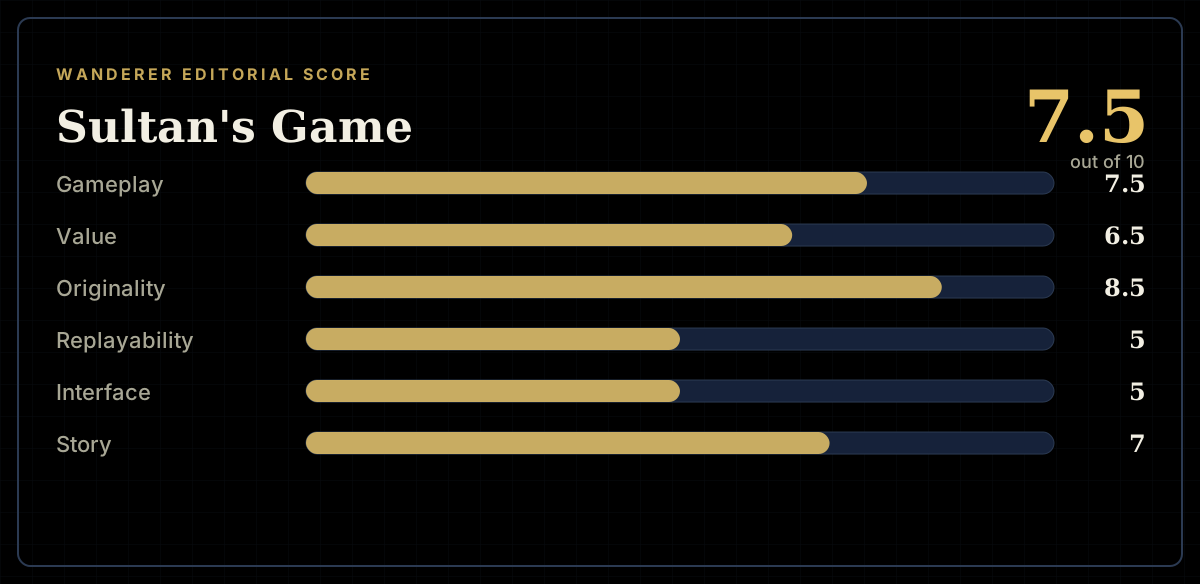
How the review scores each part of the gameWanderer Editorial -
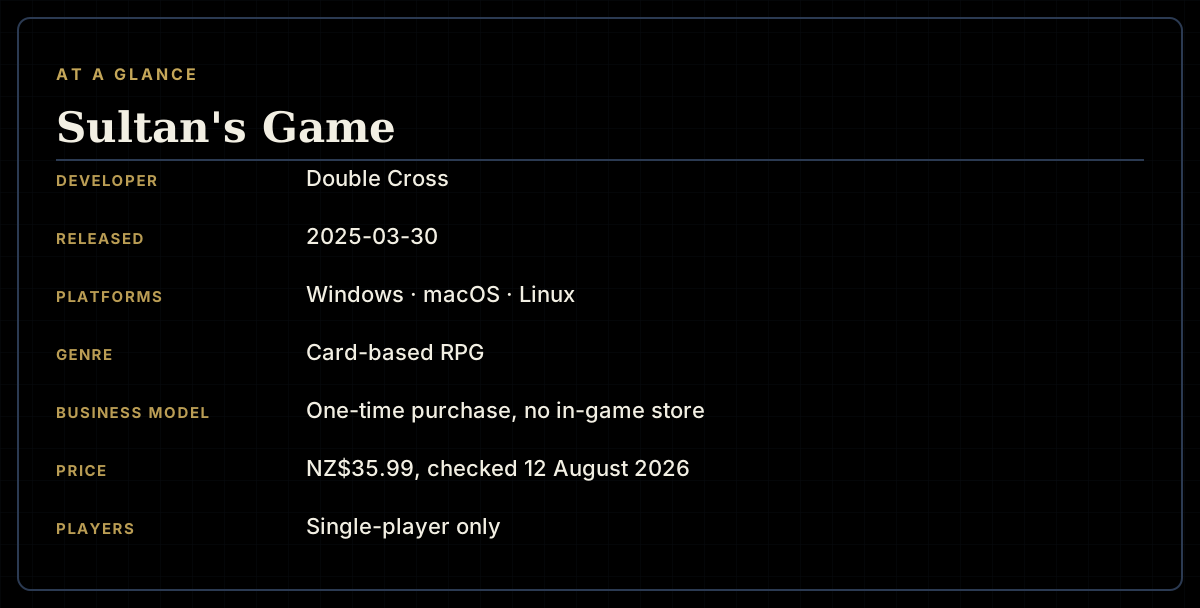
The essentials at a glanceWanderer Editorial -
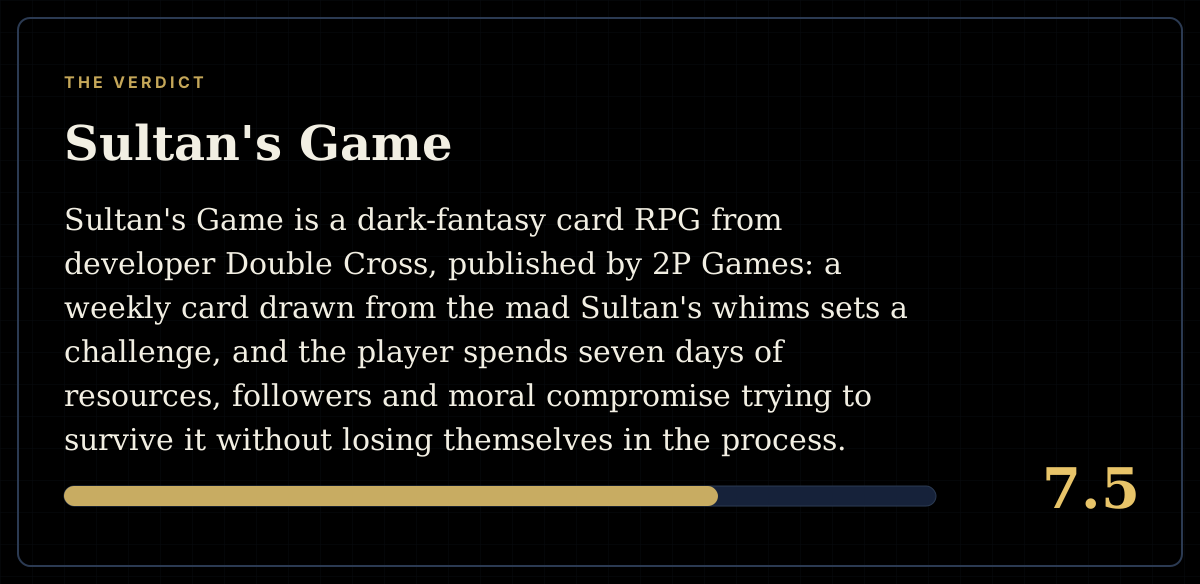
The short versionWanderer Editorial