
Game review
Dungeons & Degenerate Gamblers
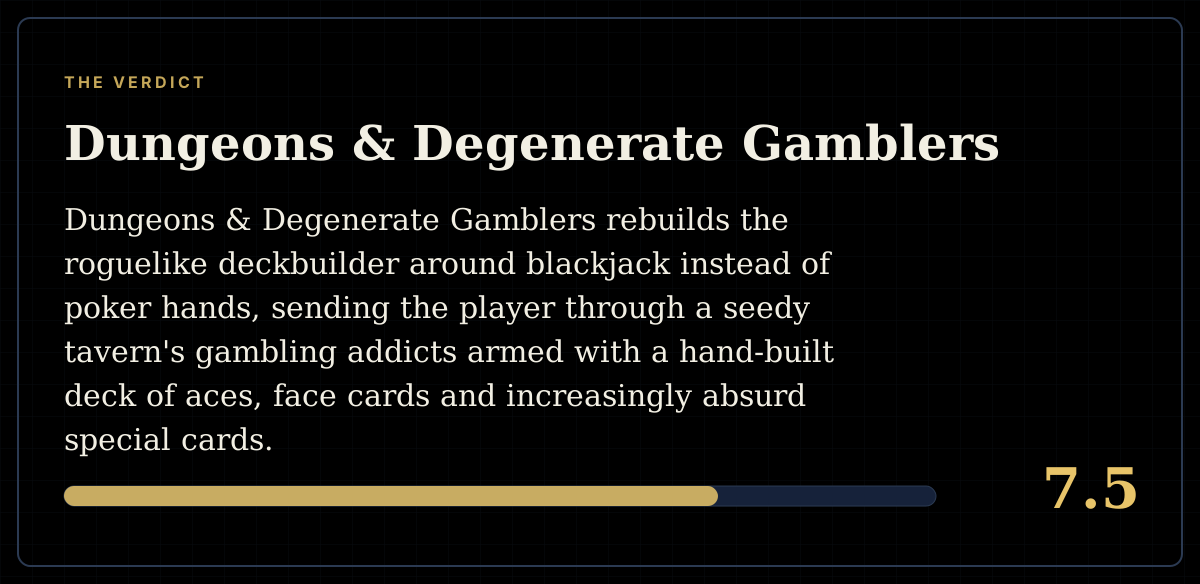
7.5 / 10
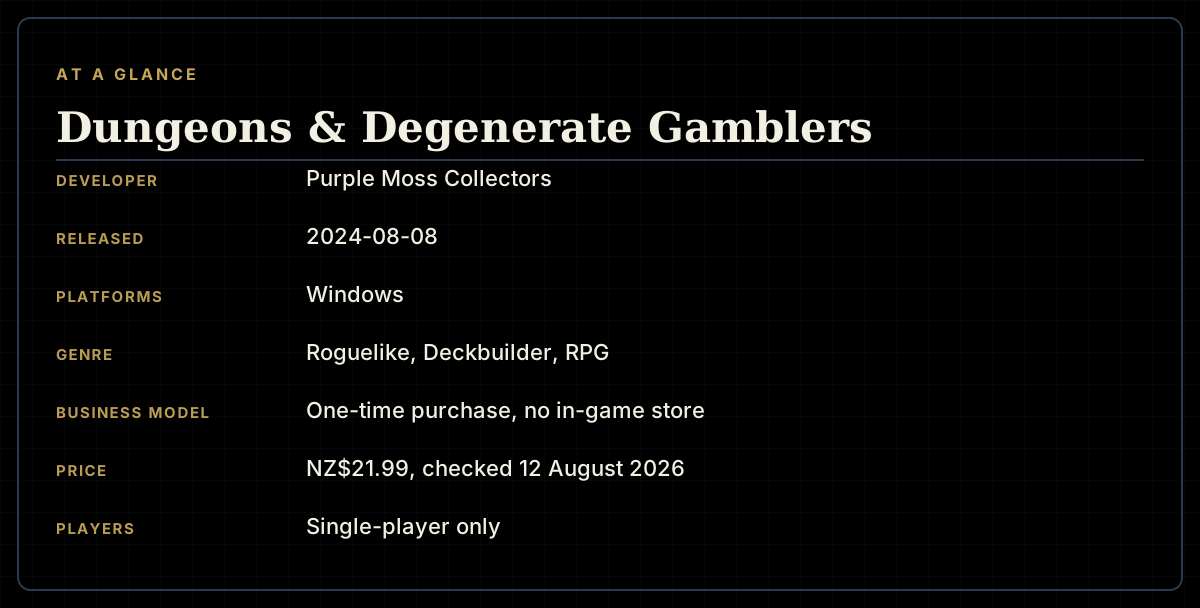
- Developer
- Purple Moss Collectors
- Publisher
- Yogscast Games
- Released
- 8 August 2024
- Platforms
- Windows
- Genre
- Roguelike, Deckbuilder, RPG
- Monetisation
- One-time purchase, no in-game store
- Players
- Single-player only
The short version
Dungeons & Degenerate Gamblers rebuilds the roguelike deckbuilder around blackjack instead of poker hands, sending the player through a seedy tavern's gambling addicts armed with a hand-built deck of aces, face cards and increasingly absurd special cards. Developed by Purple Moss Collectors and published by Yogscast Games, it released on 8 August 2024. Its 2,510 English-language Steam reviews sit at Very Positive, roughly 83.8%, and reading 100 of the most-upvoted reviews on each side of the split finds a launch defined almost entirely by one comparison — Balatro, mentioned in 42 of the top 100 negatives alone — which set expectations the game's blackjack-based randomness couldn't always meet. Two years of sustained updates, capped by a major content-doubling patch that landed weeks before this review, tell a more finished story than the launch-week reviews describe.
Biggest strengths
- The blackjack-and-deckbuilding hybrid draws real praise as a genuinely different take on the roguelike deckbuilder formula rather than a clone of its more famous card-based rivals
- The developers responded to launch-week balance complaints within days, and reviewers who updated their verdicts after that patch describe most of their original problems as resolved
- A major "Doubling Down" update landed in late July 2026, adding four new floors, a persistent "Lucky Charms" collectible system and a new Daily/Custom run mode, roughly doubling the game's content two years after launch
Biggest weaknesses
- The single most consistent complaint is a comparison to Balatro that the game invites and then can't fully deliver on: several detailed reviews argue there's little real strategic control over a run, with outcomes leaning more on luck than deliberate deck construction
- Multiple reviewers describe losses that feel unavoidable rather than earned, citing specific opponent decks that can lock a player into repetitive, unwinnable-feeling loops
- A cluster of early reviews found the volume of special card effects overwhelming to track, describing the experience as "watching Yu-Gi-Oh without context"
Who it's for: Deckbuilder and roguelike fans who like blackjack and can accept a game built to feel unfair by design, rather than one promising the tight optimisation of its most obvious inspiration; less suited to players who want maximum control over their build every run.
Our recommendation: A genuinely distinct, well-supported deckbuilder that's grown considerably since launch, worth playing on its own terms rather than as a substitute for the game everyone compares it to.
7.5 / 10
Introduction
Dungeons & Degenerate Gamblers takes the roguelike deckbuilder template Balatro popularised and rebuilds its core game from poker hands into blackjack — get as close to 21 as possible without busting, against a tavern full of increasingly strange gambling addicts, using a deck stuffed with aces, face cards, tarot cards and business cards that bend the rules in stranger and stranger ways. Purple Moss Collectors developed it and Yogscast Games published it on 8 August 2024. Reading the 100 most-upvoted negative reviews and 100 most-upvoted positives out of a healthy 2,510-review English corpus — Very Positive at roughly 83.8% — finds a launch almost entirely defined by one word: Balatro, which shows up in 42 of the top 100 negative reviews alone, more than any actual gameplay keyword in the sample.
The comparison that made and complicated it
This is the single cleanest instance of a pattern worth naming outright: when a game's marketing and its most obvious point of reference are the same thing, that reference becomes the review sample's entire framework, for better and worse. "Balatro but Blackjack" sold copies — several positive reviews open with exactly that pitch — but it also set an expectation the game's own design deliberately works against. Blackjack is a game built around imperfect information and house-favouring odds, and reviewers on the positive side make that point directly: one wrote "it's Blackjack?? The famously unfair casino game?" as the whole rebuttal to complaints about randomness, noting the game actually lets players see both decks at any time, making it fairer than the real thing. Several of the most detailed positive reviews spend real effort explaining why comparing the two games is unfair before getting to discuss Dungeons & Degenerate Gamblers on its own merits — a tell that the framing still dominates how the game gets talked about, two years on.
A real, specific control complaint
Strip away the Balatro comparison and there's a more substantive critique underneath it. Multiple detailed negative reviews argue that deckbuilding here offers less deliberate control than the genre's best examples — one reviewer with over 800 hours in Balatro described feeling like they "don't have much control over the play," and another put it more sharply: "it's impossible to actually craft a deck with any proper strategy," pointing to opponent decks with clear internal themes that the player's own deck can't reliably mirror. A related complaint describes specific loss states that feel less like a punished mistake and more like a bad matchup the player had no way to see coming — an opponent whose deck structure locks a run into a repetitive, low-agency loop. That's a more precise version of the "Balatro" complaint: not that the game resembles it too little, but that it offers less of the selection and shaping tools that make losing in a randomised builder feel earned rather than arbitrary.
A fast first fix and a much bigger one two years later
To the developers' credit, the response to launch-week feedback was quick. One widely-upvoted positive review updated itself days after posting: "the game has received a massive balance patch that undid a lot of the problems I'd had with it," adding simply "just go buy it." That pattern has continued well past launch — version patches have shipped roughly monthly through 2025 and into 2026, and on 30 July 2026, two weeks before this review, Purple Moss Collectors shipped what they themselves call "the biggest update ever": four new floors with new enemies, events and music; a persistent "Lucky Charms" collectible system with over 50 always-on run modifiers; and a new High Stakes mode offering Daily and Custom runs with seeded and player-chosen modifiers. That update directly targets the review sample's central complaint — the Lucky Charms system in particular adds exactly the kind of persistent, player-visible build-shaping tool that reviewers said the base game lacked. It's recent enough that this review's negative sample, weighted toward launch week by Steam's most-helpful sorting, likely understates how much has changed. The more current signal backs that up: 86 of the 100 most recent English reviews are positive, running ahead of the 83.8% lifetime figure.
Final Verdict
Dungeons & Degenerate Gamblers earns its Very Positive score by being a genuinely distinct deckbuilder rather than a lesser copy of the game everyone measures it against — its blackjack foundation, absurd card design and tavern setting are their own thing, not a reskin. Where the launch-week criticism has real substance is in how much deliberate control a run actually offers, and that's precisely the area the developers spent two years, and one major recent update, working to address. A player picking this up today gets a materially larger, more shaped game than the one its harshest early reviews describe, at a fair price with a developer that's kept delivering. Play it expecting blackjack's inherent unfairness rather than Balatro's tight optimisation, and it's easy to have a very good time.
Pros and cons
Pros
- The blackjack-and-deckbuilding hybrid draws real praise as a genuinely different take on the roguelike deckbuilder formula rather than a clone of its more famous card-based rivals
- The developers responded to launch-week balance complaints within days, and reviewers who updated their verdicts after that patch describe most of their original problems as resolved
- A major "Doubling Down" update landed in late July 2026, adding four new floors, a persistent "Lucky Charms" collectible system and a new Daily/Custom run mode, roughly doubling the game's content two years after launch
- Recent review sentiment (86% of the 100 most recent English reviews) runs ahead of the lifetime score, suggesting the game plays better today than its launch-week reputation reflects
Cons
- The single most consistent complaint is a comparison to Balatro that the game invites and then can't fully deliver on: several detailed reviews argue there's little real strategic control over a run, with outcomes leaning more on luck than deliberate deck construction
- Multiple reviewers describe losses that feel unavoidable rather than earned, citing specific opponent decks that can lock a player into repetitive, unwinnable-feeling loops
- A cluster of early reviews found the volume of special card effects overwhelming to track, describing the experience as "watching Yu-Gi-Oh without context"
- The game's own most enthusiastic defenders spend real time explaining why the Balatro comparison is unfair before they can discuss the game on its own terms, which says something about how much that framing still shapes its reception
Screenshots
-
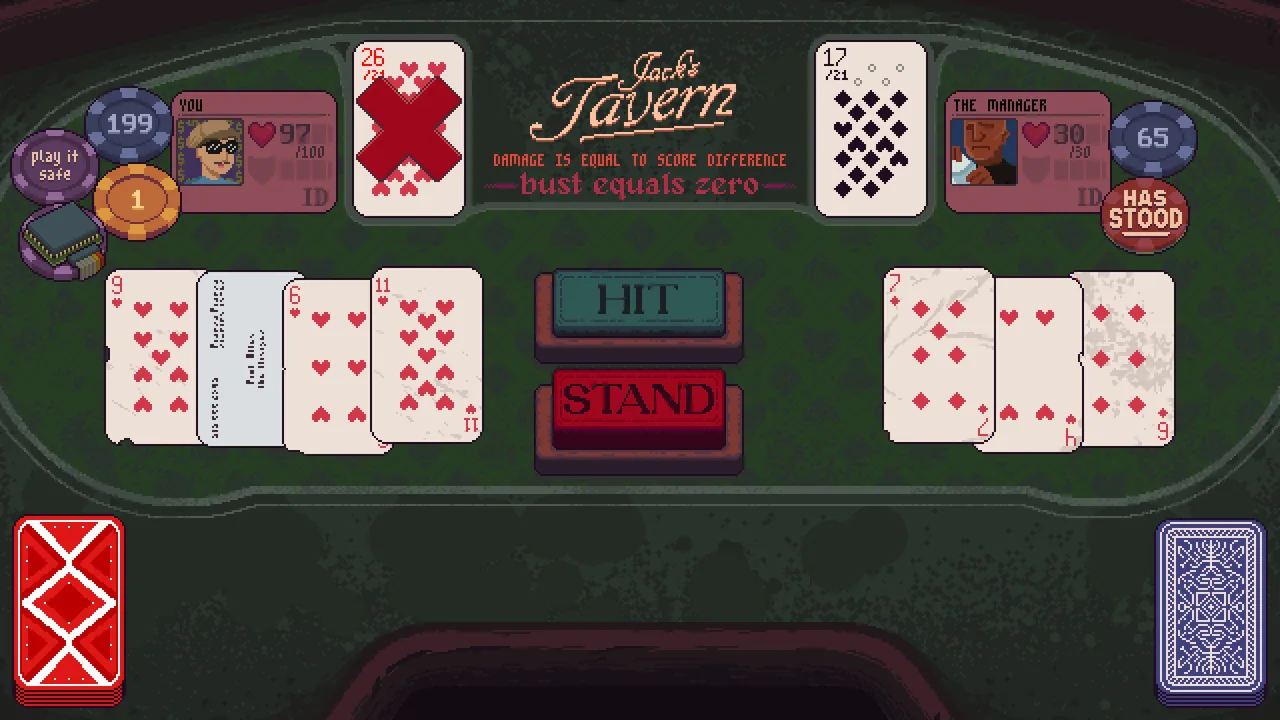
Dungeons & Degenerate GamblersImage: Yogscast Games via Steam -
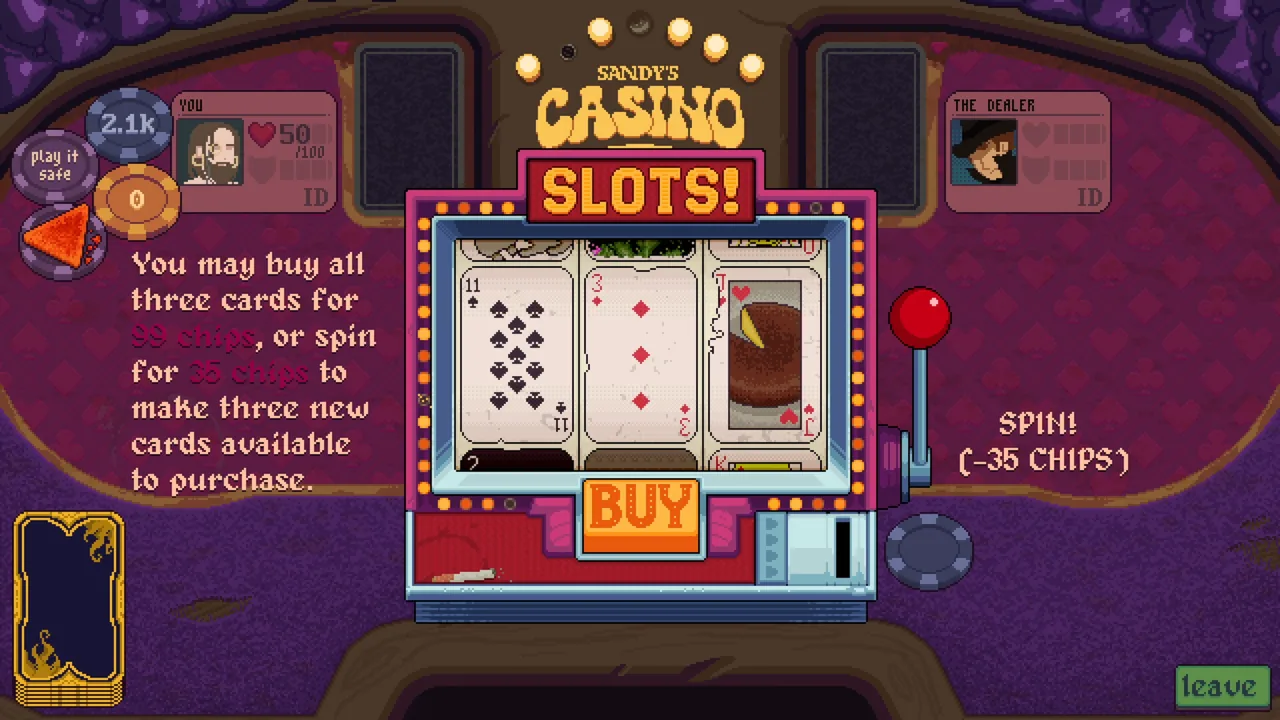
Dungeons & Degenerate GamblersImage: Yogscast Games via Steam -
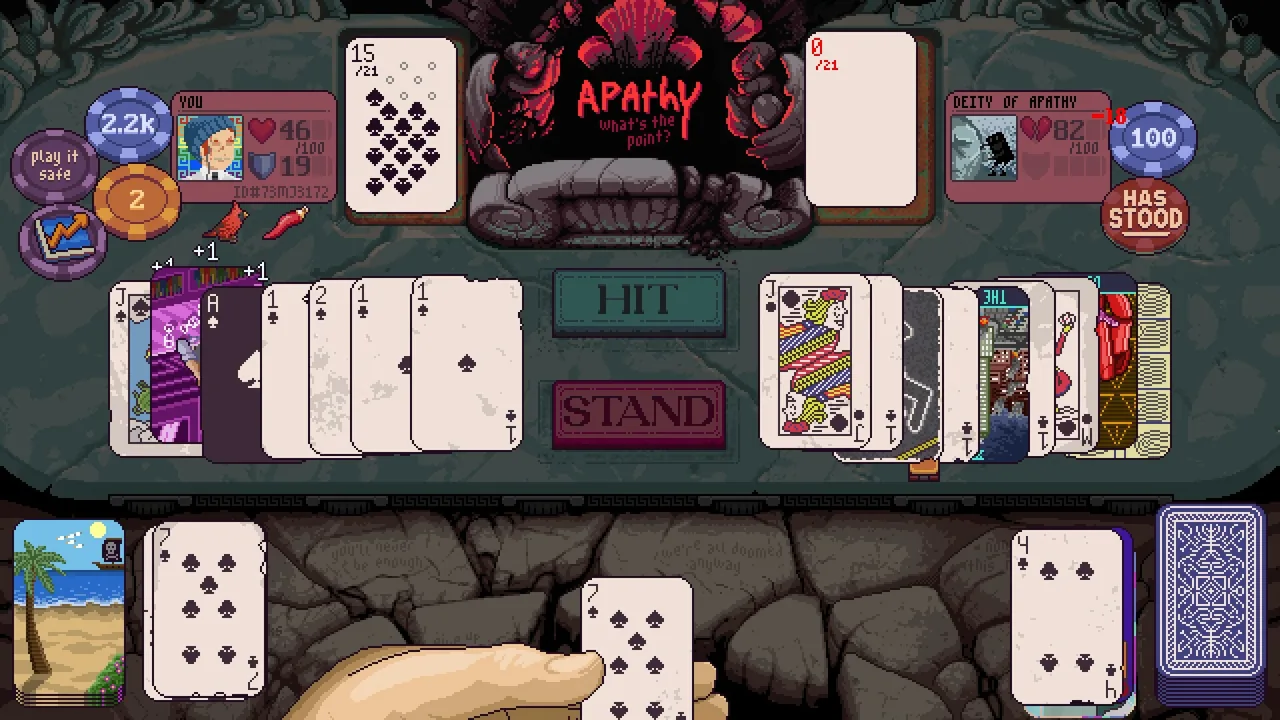
Dungeons & Degenerate GamblersImage: Yogscast Games via Steam -
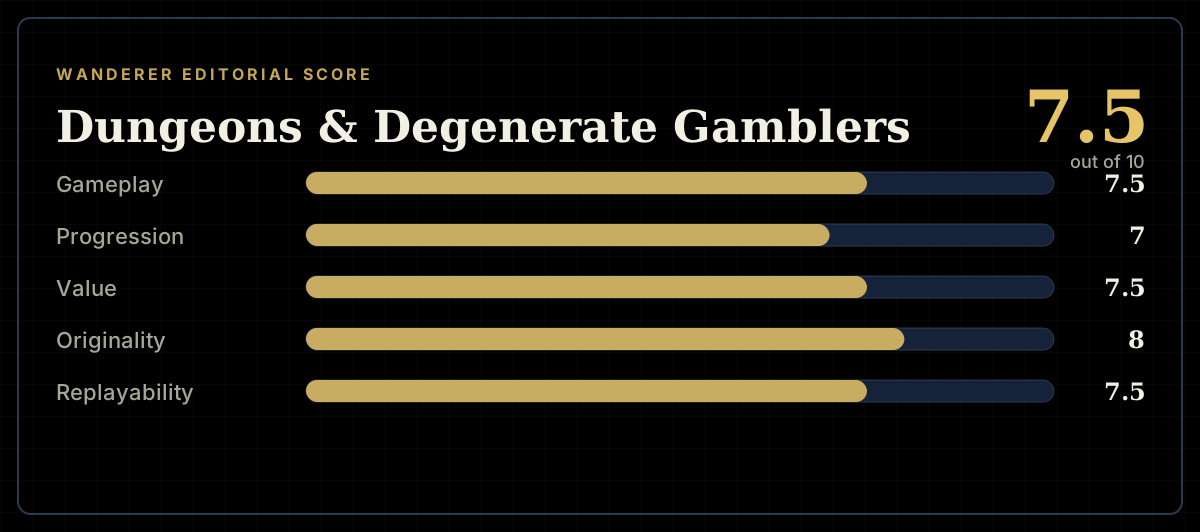
How the review scores each part of the gameWanderer Editorial -
The essentials at a glanceWanderer Editorial -
The short versionWanderer Editorial