
Game review
Dream Quest
7.5 / 10
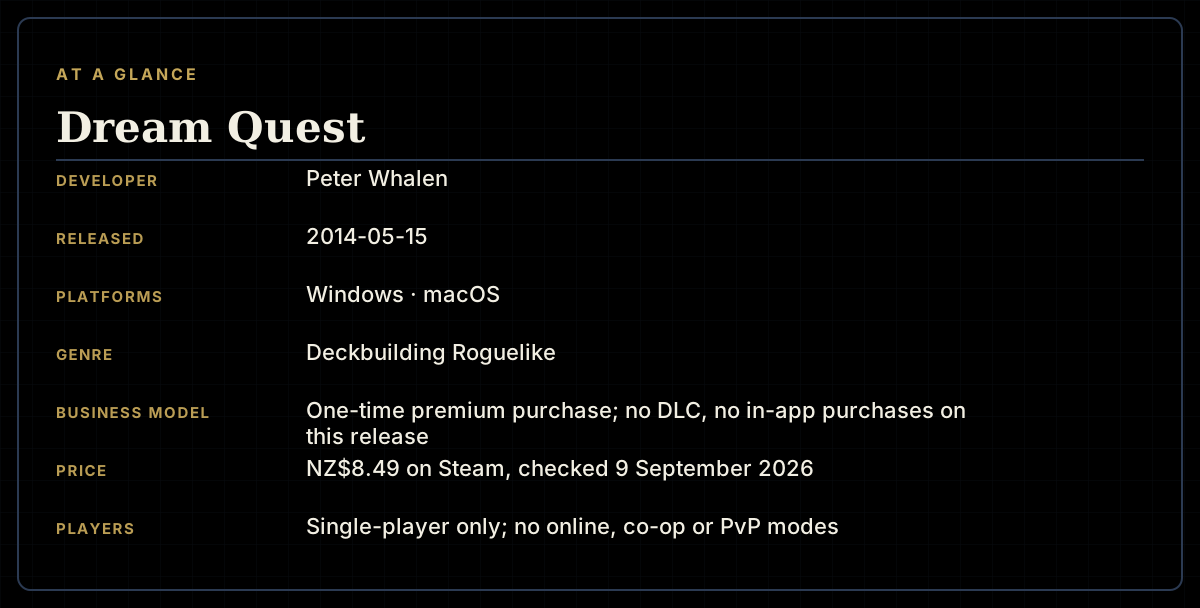
- Developer
- Peter Whalen
- Publisher
- Peter Whalen
- Released
- 15 May 2014
- Platforms
- Windows, macOS
- Genre
- Deckbuilding Roguelike
- Monetisation
- One-time premium purchase; no DLC, no in-app purchases on this release
- Players
- Single-player only; no online, co-op or PvP modes
The short version
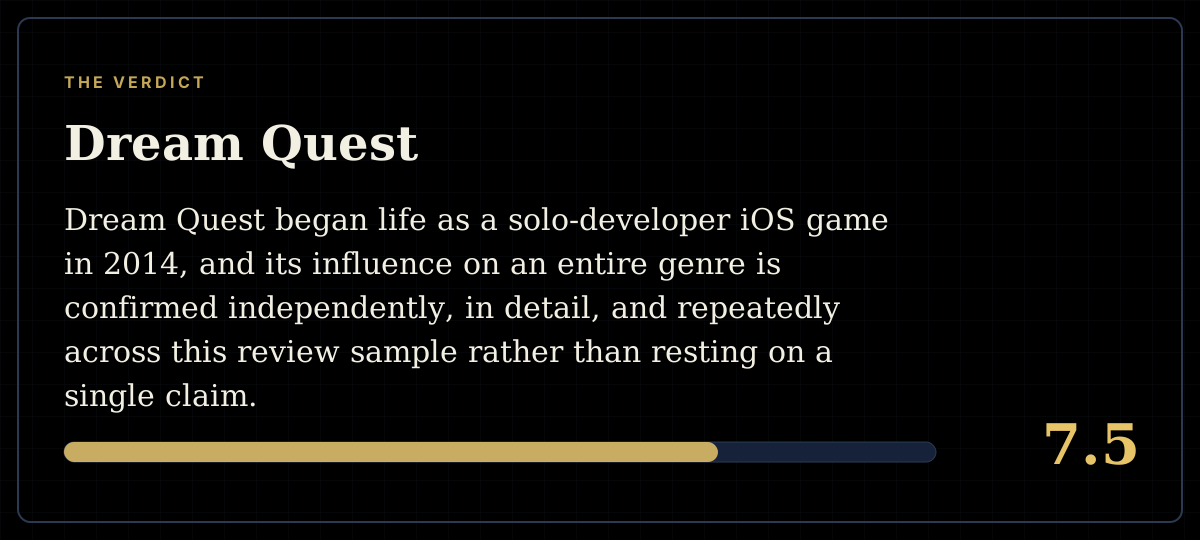
Dream Quest began life as a solo-developer iOS game in 2014, and its influence on an entire genre is confirmed independently, in detail, and repeatedly across this review sample rather than resting on a single claim. Reviewers point to it as a direct ancestor of Slay the Spire and Monster Slayers, and note that its creator, Peter Whalen, went on to become a senior game designer at Blizzard, where the fingerprints of this exact design reportedly shaped Hearthstone's Kobolds and Catacombs expansion. Reviewers also mention that Magic: The Gathering creator Richard Garfield personally called the game revolutionary.
None of that historical weight comes with modern production values. The game's presentation is described bluntly and consistently as some of the ugliest reviewers have ever seen, a fact its most devoted fans state upfront rather than downplay. Underneath it, a real, specific design complaint recurs: as players unlock more cards, building a synergistic deck reportedly gets harder rather than easier, with no way to filter the growing pool — a genuine tension between long-term unlocks and short-term deck coherence.
Biggest strengths
- Genuinely foundational historical significance, independently confirmed by multiple reviewers as a direct influence on Slay the Spire, Monster Slayers, and design elements later carried into Hearthstone's Kobolds and Catacombs expansion by its creator
- A deckbuilding-meets-dungeon-crawling core loop reviewers describe as "phenomenal" and genuinely addictive despite, or reviewers argue partly because of, its complete lack of graphical polish
- Real strategic depth in deck construction, with reviewers comparing the card-building layer favorably to Dominion and the dungeon-navigation layer to Desktop Dungeons
Biggest weaknesses
- Presentation is universally and bluntly described as some of the ugliest reviewers have ever encountered, with even the game's most devoted fans stating this upfront rather than downplaying it
- A specific, recurring design complaint: unlocking more cards over time reportedly makes building a coherent, synergistic deck harder rather than easier, since the growing card pool dilutes synergy with no in-game way to filter or exclude specific cards from future runs
- Multiple reviewers describe genuine unfairness in some runs, where a bad early break feels unrecoverable regardless of how carefully later decisions are made
Who it's for: Deckbuilding roguelike fans and genre historians who want to experience where the format actually started, and who can look past deliberately, aggressively unpolished presentation. Less suited to players who need modern visual quality or who want difficulty that always feels earned rather than occasionally arbitrary.
Our recommendation: An essential purchase for anyone who cares about the history of the deckbuilding roguelike genre, and a genuinely good game in its own right for players who can see past the presentation — just be ready for real difficulty spikes and a design that shows its age in a few specific, fixable ways nobody ever went back to fix.
7.5 / 10
Genre origin stories are usually murky, contested, or lost entirely to time. Dream Quest's isn't. Long before Slay the Spire made "deckbuilding roguelike" a genre label worth putting on a store page, a solo developer named Peter Whalen released Dream Quest on iOS in 2014. Its Steam review sample is small — barely 200 English reviews — but what it lacks in volume it makes up for in the specificity and consistency of what reviewers say about it: this isn't just a good deckbuilder, it's the one several later, far more famous games were directly built on top of.
A genre's actual origin point, confirmed independently
The historical claims in this review sample aren't vague nostalgia — they're specific and repeated across multiple, independently written reviews. One detailed review states plainly that Dream Quest "inspired Monster Slayers, Slay the Spire, and took several key concepts from Desktop Dungeons." A separate reviewer draws a different, equally specific line: "This is the ancestor of Hearthstone's free expansion, Kobolds and Catacombs... The developer of this game is Peter Whalen, a now senior game designer at Blizzard." A third reviewer adds a striking detail worth reporting carefully as an attributed claim: "Richard Garfield himself thought this game was revolutionary when it came out" — a specific, if unverified by this review, claim about the creator of Magic: The Gathering personally endorsing the design. Taken together, these aren't one enthusiastic fan repeating a rumor; they're multiple, differently-worded accounts converging on the same broader picture of a genuinely foundational, if commercially overlooked, piece of genre history.
Presentation nobody, including its fans, defends
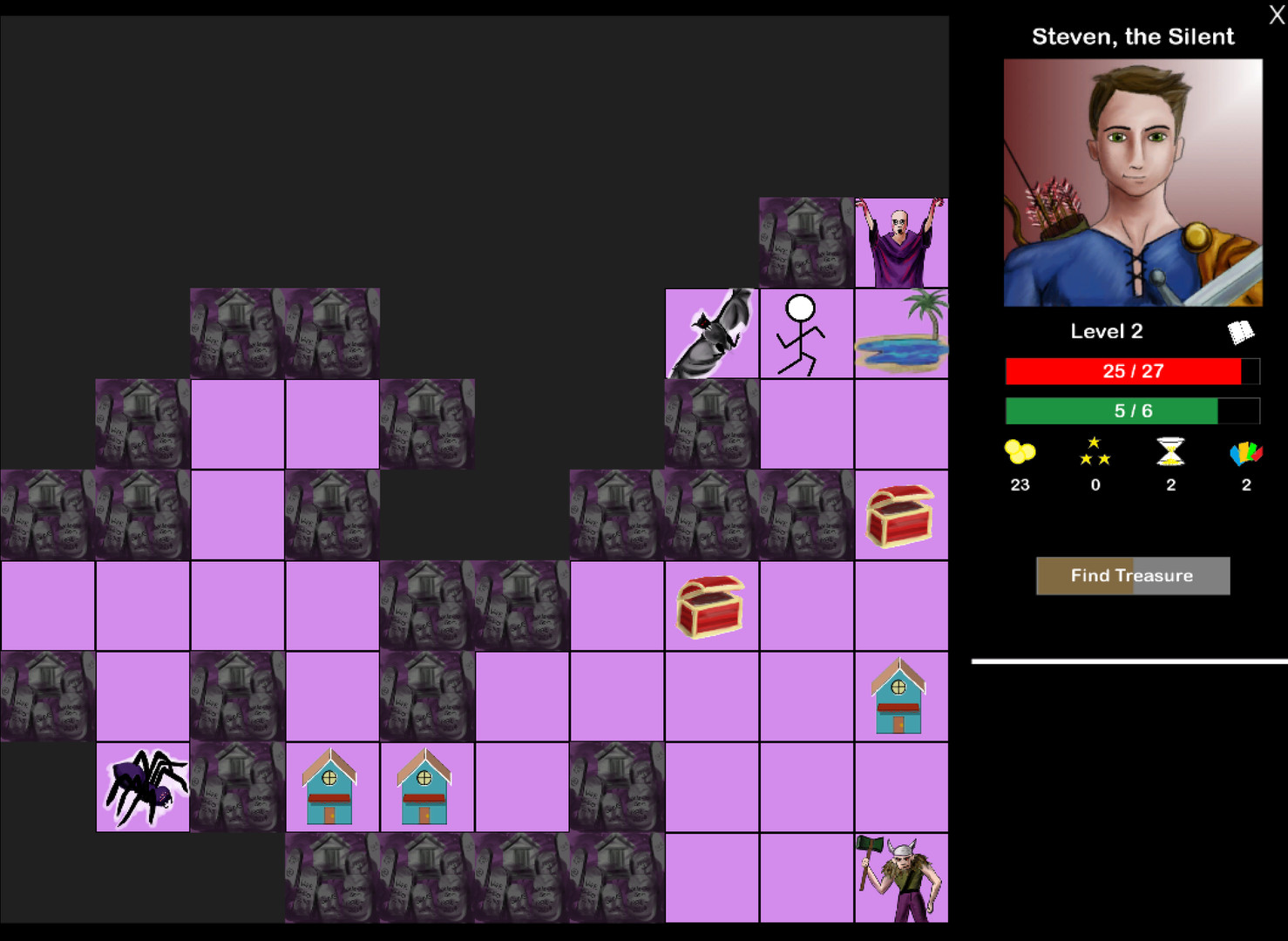
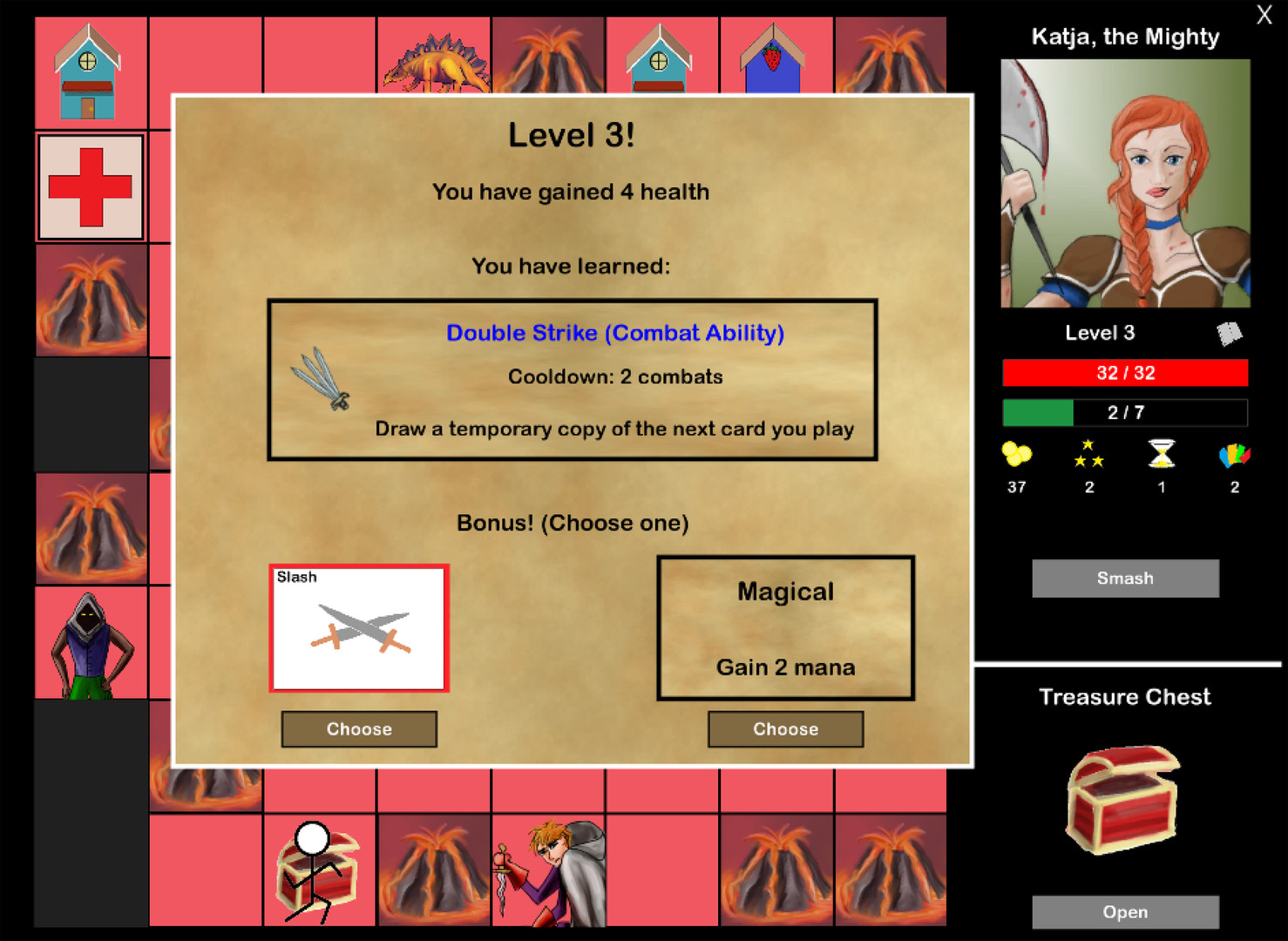
Set that historical weight against the game's actual look, and the contrast is stark — and reviewers say so themselves, bluntly and without hedging. One review calls it "the ugliest piece of sh*t you'll ever see," in the same breath crediting the gameplay underneath as "phenomenal." Another reviewer's advice to newcomers is direct: "Please don't be put off by the awful graphics... This game is so good Blizzard hired the designer to work on Hearthstone." This isn't reviewers being unfairly harsh — it's a consistent, self-aware acknowledgment from the game's own strongest advocates that presentation was never the point, and that judging it by modern visual standards would mean missing what actually matters here.
A real, specific unlock-scaling problem
Underneath the historical praise sits a genuine, detailed design complaint worth taking seriously. One reviewer lays it out precisely: "the more cards I've unlocked, the harder it is to build a deck with good synergy every run, and that just doesn't feel right." The core issue is that unlocking more cards over time — normally a reward in roguelike deckbuilders — actually dilutes the pool of cards any given run might offer, with no in-game option to filter out cards a player doesn't want to see. The same reviewer separately describes runs that feel genuinely unwinnable regardless of careful play: "there was literally nothing I could do to stop from being killed. Even when looking for misplays and recognizing them, they hardly change anything." That's a specific, mechanically grounded complaint distinct from ordinary roguelike difficulty, and it's compounded by the fact that, per multiple reviewers, no further updates or design tweaks ever followed to address it — this is a frozen artifact rather than an actively maintained release.
A minority view worth reporting, not adjudicating
At least one detailed reviewer goes further than simply noting Dream Quest's influence, arguing directly that it's the superior game: "Dream Quest invented the deckbuilding roguelike genre, not Slay the Spire... I found Slay the Spire uninspired and riddled with bad design choices." That's a genuine, specific opinion rather than a settled fact, and this review reports it as exactly that — one reviewer's comparative preference, not a consensus position the rest of the sample shares. Most other reviewers frame Dream Quest and its successors as complementary rather than competing, crediting the later, more polished games without diminishing them. The disagreement itself is worth noting as a real, if minority, current running through how this game's fans talk about its legacy.
A veteran player's specific caveat about the Steam version
Notably, at least one very high-hour player — reporting over 1,200 plays on iOS and over 500 hours logged on mobile — explicitly states they bought the Steam version specifically to support the developer, while being upfront that they can't personally vouch for this release's technical quality since their real experience is with the mobile original. That's a useful, honest caveat worth passing along: most of the deep, high-hour testimony in this review sample comes from the mobile version's much larger and longer-running community, not from extensive play of this specific Steam port.
Where it lands
Dream Quest's place in gaming history is corroborated too many times, by too many independently written reviews, to treat as a fringe claim — this genuinely appears to be where an entire genre's foundational ideas were first worked out, years before the games that made those ideas famous. That alone makes it worth experiencing for anyone who cares about how the deckbuilding roguelike format came to exist. The universally acknowledged ugly presentation and the specific, unresolved unlock-dilution and fairness complaints are real limitations worth knowing about going in — but for a few dollars, this is a rare chance to play a piece of design history most of its own genre's biggest fans have never actually touched.
Pros and cons
Pros
- Genuinely foundational historical significance, independently confirmed by multiple reviewers as a direct influence on Slay the Spire, Monster Slayers, and design elements later carried into Hearthstone's Kobolds and Catacombs expansion by its creator
- A deckbuilding-meets-dungeon-crawling core loop reviewers describe as "phenomenal" and genuinely addictive despite, or reviewers argue partly because of, its complete lack of graphical polish
- Real strategic depth in deck construction, with reviewers comparing the card-building layer favorably to Dominion and the dungeon-navigation layer to Desktop Dungeons
- Extremely cheap for a piece of genre history this significant, with reviewers consistently framing the price as an easy, low-risk way to support a solo developer directly
- A specific historical anecdote worth noting: Magic: The Gathering creator Richard Garfield is reported by reviewers to have personally called the game revolutionary on its release
Cons
- Presentation is universally and bluntly described as some of the ugliest reviewers have ever encountered, with even the game's most devoted fans stating this upfront rather than downplaying it
- A specific, recurring design complaint: unlocking more cards over time reportedly makes building a coherent, synergistic deck harder rather than easier, since the growing card pool dilutes synergy with no in-game way to filter or exclude specific cards from future runs
- Multiple reviewers describe genuine unfairness in some runs, where a bad early break feels unrecoverable regardless of how carefully later decisions are made
- No further development or design tweaks appear to have followed — reviewers explicitly wish for a modern remake or QoL pass that was never made, treating the game as a frozen artifact rather than an actively maintained release
- No Steam achievement schema exists for this release, removing one of the usual independent ways to corroborate engagement or difficulty claims
Screenshots
-
Dream QuestImage: Peter Whalen via Steam -
Dream QuestImage: Peter Whalen via Steam -
Dream QuestImage: Peter Whalen via Steam -
How the review scores each part of the gameWanderer Editorial -
The specsWanderer Editorial -
The short versionWanderer Editorial