Game review
Vaporum
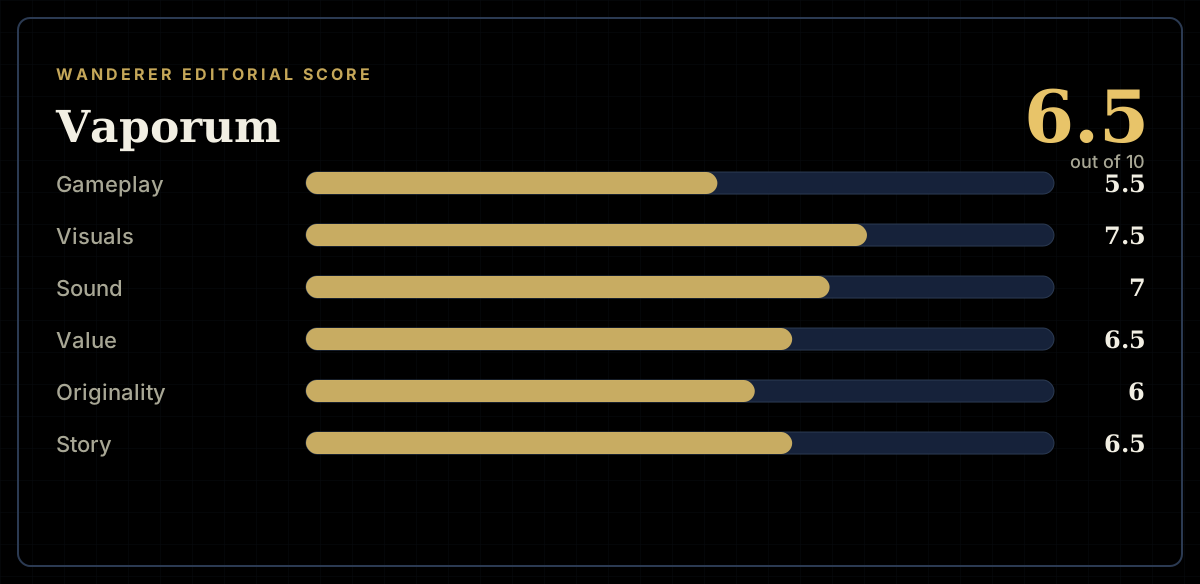
6.5 / 10
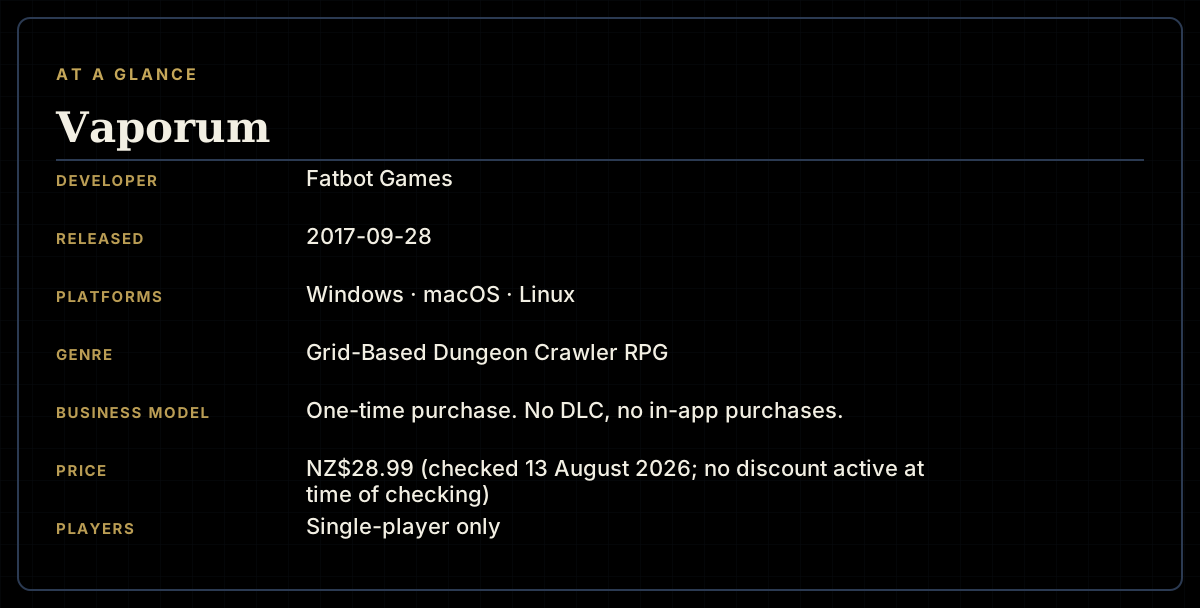
- Developer
- Fatbot Games
- Publisher
- Fatbot Games
- Released
- 28 September 2017
- Platforms
- Windows, macOS, Linux
- Genre
- Grid-Based Dungeon Crawler RPG
- Monetisation
- One-time purchase. No DLC, no in-app purchases.
- Players
- Single-player only
The short version
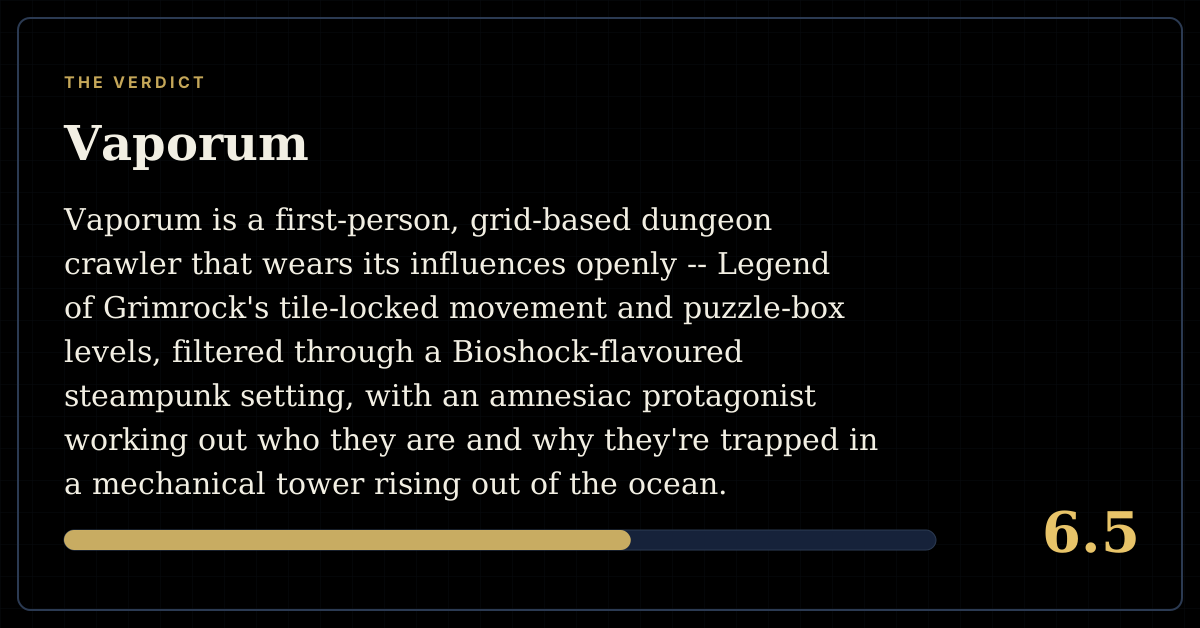
Vaporum is a first-person, grid-based dungeon crawler that wears its influences openly -- Legend of Grimrock's tile-locked movement and puzzle-box levels, filtered through a Bioshock-flavoured steampunk setting, with an amnesiac protagonist working out who they are and why they're trapped in a mechanical tower rising out of the ocean. Reviews call the atmosphere and setting a genuine success, and Steam's aggregate agrees: Very Positive, 85% of just over 600 English-language reviews (85% of just over 1,000 across all languages).
What keeps that number from climbing higher is one specific, named design choice that shows up constantly in the negative sample: enemies scale in strength alongside the player rather than being fixed encounters you outgrow, which a large share of reviewers -- including several who otherwise like the game -- say turns the back half into an "ambush, kite, retreat" loop instead of the exploration-driven puzzle-solving the opening hours promise. It's rare to find a disagreement in a review corpus this specific: almost nobody argues about whether the atmosphere or the puzzles are good. The argument is entirely about whether the combat system holds up once the novelty of the setting wears off.
Biggest strengths
- A genuinely strong steampunk atmosphere and setting, frequently compared favourably to Bioshock's Rapture by reviewers who otherwise have reservations about the combat
- Well-designed environmental puzzles and level layouts that reward the grid-based, tile-locked approach the genre is built around
- A functional, story-driven throughline (an amnesiac protagonist uncovering what happened in the tower) that most reviewers rate as a clear step up from Legend of Grimrock's more minimal narrative
Biggest weaknesses
- Enemy level-scaling is the single most repeated complaint in the negative sample, described by multiple reviewers as removing the sense of growing stronger that the genre usually rewards
- Combat leans heavily on kiting, luring enemies through doorways and repeated retreat-and-heal cycles, which a meaningful share of reviewers -- even favourable ones -- call repetitive by the midgame
- Frequent forced ambushes and "trapped in a room until you clear it" encounter design, named directly as artificial difficulty rather than earned challenge by several long-form reviews
Who it's for: Fans of Legend of Grimrock and grid-based dungeon crawlers who want a shorter, single Bioshock-adjacent campaign and can tolerate real-time, kiting-heavy combat. Not for anyone who wants a game that gets easier to control as you gain power, or who dislikes rooms designed around ambushes and timed puzzles.
Our recommendation: Worth it for genre fans specifically, best on a sale given how consistently even positive reviews flag the same fatigue setting in during the second half. Go in prepared for combat that stays a fight throughout rather than one that rewards your growing power with an easier time.
6.5 / 10
The pitch
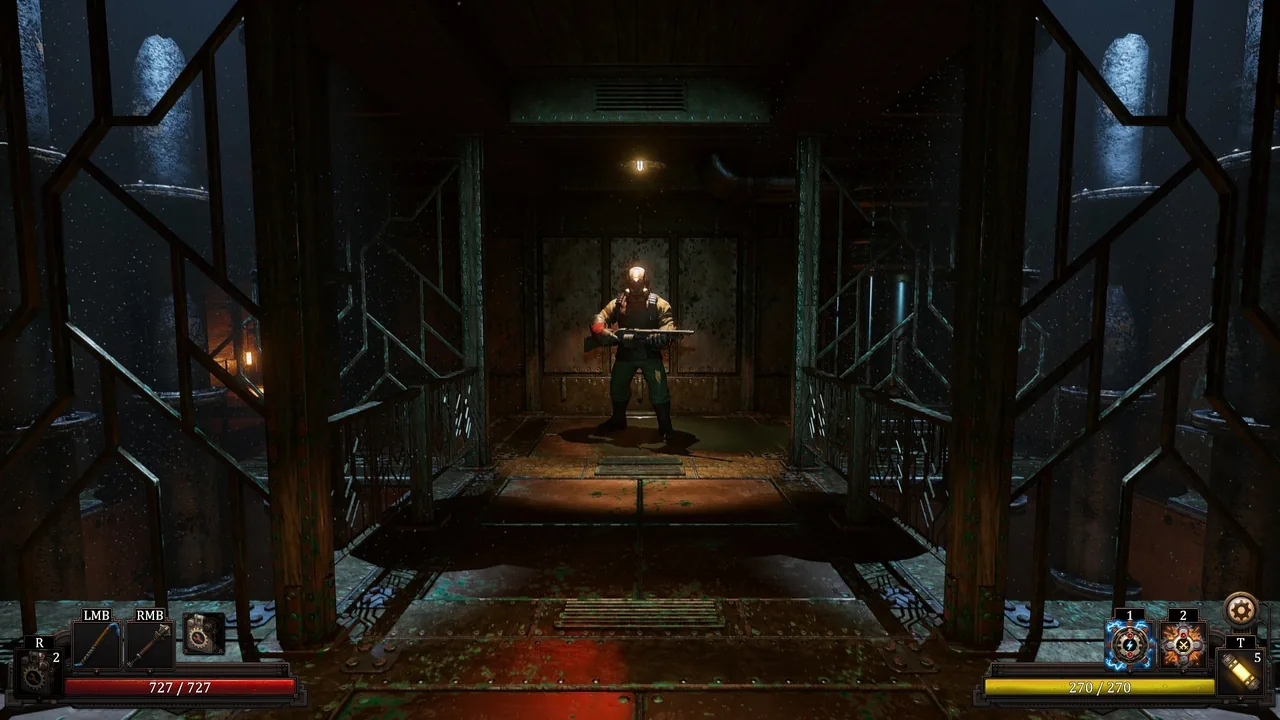
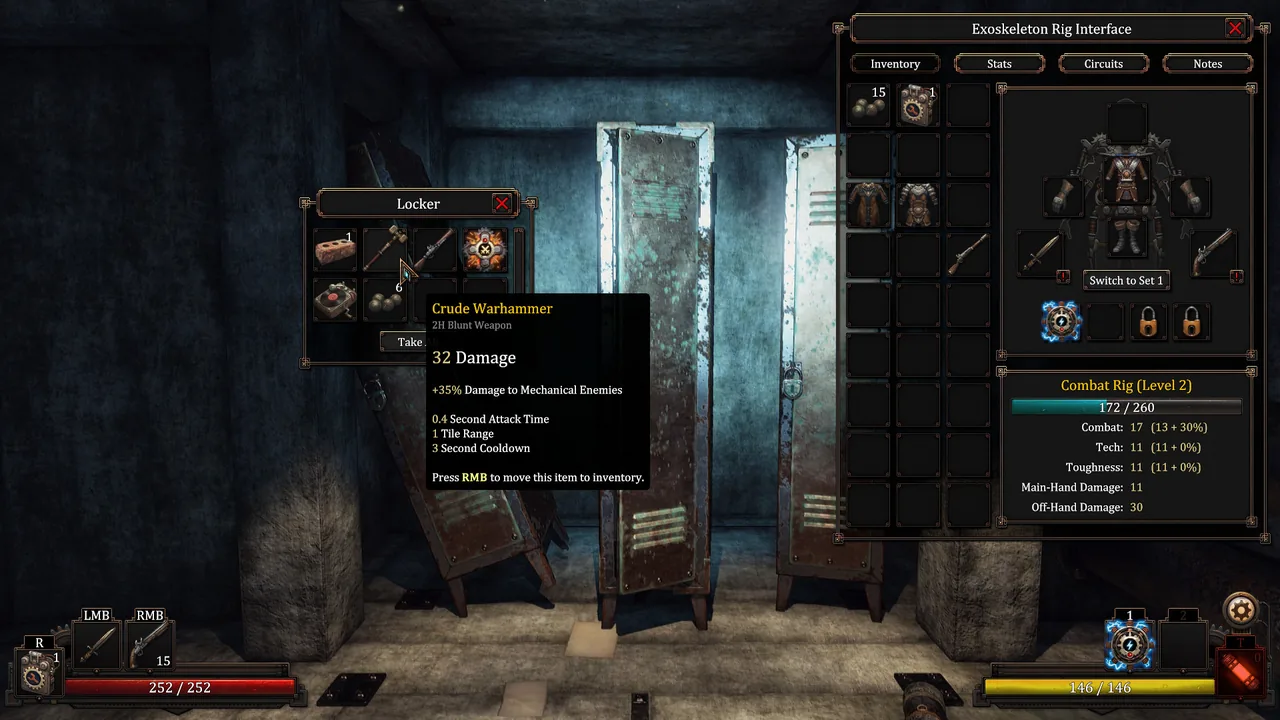
Vaporum puts you, amnesiac and alone, at the base of Arx Vaporum -- a mechanical tower rising out of open ocean, full of steam-powered machinery, hostile automatons and the scattered story of whoever built it and why. Movement is tile-locked and first-person, in the tradition Legend of Grimrock revived in 2012: you step from square to square, turn in 90-degree increments, and solve environmental puzzles -- levers, pressure plates, sliding blocks -- to progress. Combat is real-time rather than turn-based, built around a powered exosuit that doubles as your equipment and upgrade system.
Developed and self-published by the small Czech studio Fatbot Games, Vaporum launched as a full release on 28 September 2017 with no Early Access period. A standalone prequel, Vaporum: Lockdown, followed in 2020, but the original stands as a complete, self-contained game.
What almost nobody disputes
Read through Vaporum's reviews, positive and negative, and the atmosphere is close to a consensus strength. Reviewers reach for Bioshock as the comparison point almost as often as Legend of Grimrock -- one describes it as what you'd get "if Legend of Grimrock and Bioshock had a child" -- and the environmental storytelling, audio logs and steampunk mechanical design get consistent praise for making the tower feel like a real, decaying place rather than a generic dungeon skin. The puzzle design draws similar agreement: block puzzles, switch sequences and level layouts that reward paying attention to the grid rather than brute-forcing through, in the specific tradition the genre is built on. Several reviewers, including ones giving the game an overall thumbs-down, open by saying the first several hours are genuinely excellent.
Where the disagreement actually is
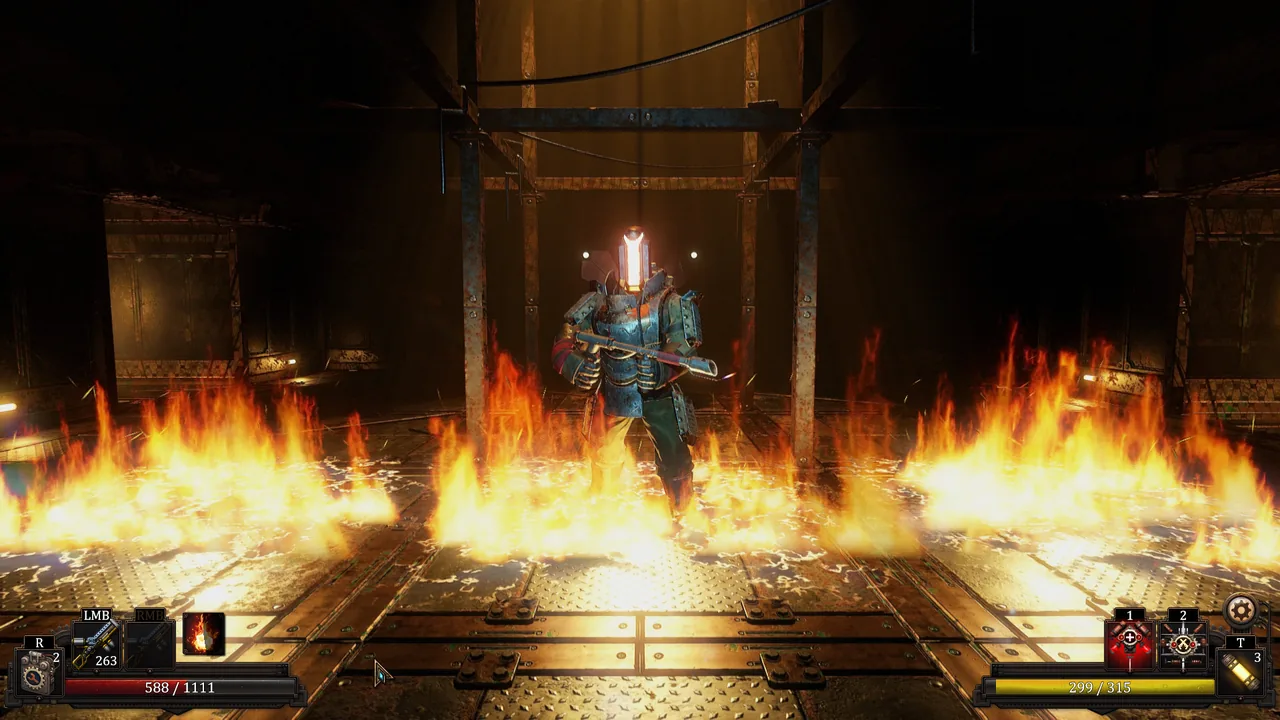
The negative sample converges hard on one specific mechanic: enemy level-scaling. Rather than fixed encounters that get easier relative to your growing power -- the traditional RPG reward loop -- Vaporum's enemies scale up alongside the player, which a large share of reviewers say undercuts the entire sense of progression the genre depends on. One reviewer puts it directly: "the dev decided to have enemies scale with you as you progress though the levels," and frames it as the single decision that turned an otherwise excellent game into a frustrating one. Others describe the practical effect in combat terms -- constant kiting, luring enemies through doorways to separate them, retreating to heal and re-engage -- a loop that a number of reviewers, even ones recommending the game overall, call repetitive well before the campaign ends. One long, detailed negative review lists "KITING!" as its entire opening line before cataloguing every enemy type it applies to.
The related complaint is encounter design built around forced ambushes -- rooms that lock and fill with enemies once you trigger them, timed sequences, and what several reviewers call "artificial difficulty" rather than the earned, puzzle-driven challenge the genre's fans specifically come for. It's a meaningfully different complaint from "the game is too hard" -- the recurring language is about design intent, not skill, with multiple reviewers explicitly comparing it unfavourably to how Legend of Grimrock paced its own tougher encounters.
Notably, this isn't a launch-week complaint that faded. The same specific criticism -- level scaling removing the sense of growing stronger -- appears in reviews from 2018, 2020, 2021, 2023 and 2025, which suggests it was never patched out and remains the defining trade-off for anyone picking the game up today rather than a solved problem.
What the achievement data adds
Global achievement completion backs up the shape of the story the reviews tell. Early, broadly achievable milestones -- landing a double kill, early equipment upgrades, recruiting the game's tutorial-stage companions -- sit in the 35-67% range. From there the curve falls steeply: most combat-mastery and higher-difficulty achievements sit in the single digits, and the handful tied to harder difficulty settings or speed constraints sit below 1%. Some of that drop is ordinary for any game with optional challenge runs layered on top of a normal campaign. But combined with how specifically and repeatedly reviewers describe fatigue setting in during the back half, it's consistent with a real, sizeable share of players not pushing through to the parts of the game the level-scaling affects most.
Value nine years on
At NZ$28.99 with no discount active at the time of checking, Vaporum sits at a fair-but-not-cheap price point for a roughly 12-20 hour single campaign, depending on how much of the environmental puzzle content a player engages with. It has had no significant post-launch content added to the base game since its 2020 prequel shipped as a separate purchase, which is typical for a small, self-published studio finishing one game and moving to the next rather than running a live product. For genre fans specifically -- people who already know they want more of what Legend of Grimrock offered -- it remains a reasonable, well-regarded pick nine years on. For anyone coming to grid-based dungeon crawlers for the first time, the consistency of the level-scaling complaint across nearly a decade of reviews is worth taking seriously before buying at full price.
Verdict
Vaporum succeeds at exactly what it set out to do in its first several hours: a distinctive, well-atmosphered dungeon crawler with real puzzle craft and a story that gives Legend of Grimrock's formula more narrative weight than the genre usually bothers with. Where it loses people is a single, specific, repeatedly-documented design decision -- enemy level-scaling paired with ambush-heavy encounter design -- that a genuine share of its own fans say undoes the sense of growing stronger the genre exists to deliver. That's a narrower, more specific problem than "the combat is bad," and it's worth knowing exactly what you're signing up for: a game whose difficulty never really lets up, by design, all the way to the end.
Pros and cons
Pros
- A genuinely strong steampunk atmosphere and setting, frequently compared favourably to Bioshock's Rapture by reviewers who otherwise have reservations about the combat
- Well-designed environmental puzzles and level layouts that reward the grid-based, tile-locked approach the genre is built around
- A functional, story-driven throughline (an amnesiac protagonist uncovering what happened in the tower) that most reviewers rate as a clear step up from Legend of Grimrock's more minimal narrative
- Responsive, ongoing developer support -- one reviewer describes a dev personally fixing a game-breaking bug from a submitted save file
Cons
- Enemy level-scaling is the single most repeated complaint in the negative sample, described by multiple reviewers as removing the sense of growing stronger that the genre usually rewards
- Combat leans heavily on kiting, luring enemies through doorways and repeated retreat-and-heal cycles, which a meaningful share of reviewers -- even favourable ones -- call repetitive by the midgame
- Frequent forced ambushes and "trapped in a room until you clear it" encounter design, named directly as artificial difficulty rather than earned challenge by several long-form reviews
- A steep achievement completion curve -- common early kill-based milestones sit in the 35-67% range, while most late-game combat and challenge-run achievements sit under 5%
Screenshots
-
VaporumImage: Fatbot Games, s. r. o. via Steam -
VaporumImage: Fatbot Games, s. r. o. via Steam -
VaporumImage: Fatbot Games, s. r. o. via Steam -
How the review scores each part of the gameWanderer Editorial -
Vaporum at a glanceWanderer Editorial -
The short versionWanderer Editorial