Game review
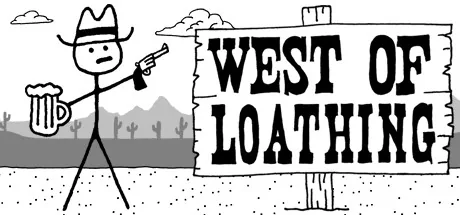
West of Loathing
7.5 / 10
- Developer
- Asymmetric
- Publisher
- Asymmetric
- Released
- 10 August 2017
- Platforms
- Windows, macOS, Linux
- Genre
- Comedy RPG
- Monetisation
- One-time purchase. A small paid expansion, Reckonin' at Gun Manor, released in 2018.
- Players
- Single-player only
The short version
West of Loathing is a turn-based comedy RPG set in a stick-figure Old West overrun by cows, cultists and the undead, built by Asymmetric, the small studio behind the long-running browser game Kingdom of Loathing. It was one of 2017's most acclaimed indie releases -- Metacritic 87, Best Comedy Game at PC Gamer's Game of the Year Awards, a spot on Polygon's top 50 games of that year -- and nine years on it sits at Overwhelmingly Positive on Steam, 98% of over 9,100 English-language reviews. The writing is the reason: dense, self-aware, genuinely funny prose that critics and players alike single out as rare in an industry that mostly treats comedy as a genre for one joke, not hundreds.
It carries something else nine years on that a launch review couldn't have: in September 2019, GamesIndustry.biz reported that Asymmetric director Zack "Jick" Johnson had been publicly accused of abuse by his ex-wife, A.M. Darke, a games studies professor at UC Santa Cruz. Darke alleged physical and emotional abuse during their marriage, extending the allegation to West of Loathing designer Kevin Simmons as well, and said Johnson had removed part of her contribution to the game's development to avoid crediting her. Johnson denied the specific allegations of physical abuse while acknowledging, in a written apology, what he called "emotional immaturity and anger and cruelty," and later added Darke to the game's credits, saying she had given feedback rather than worked on it in a design capacity. A separate allegation of similar abusive behaviour, from an earlier relationship in 2005, was made by Bonnie Mattson, an ex-girlfriend of Johnson's. None of this has been tested in court, but it is public record, reported by name, and a genuine number of the game's own negative Steam reviews now raise it unprompted, several years after the fact, as their explicit reason for withdrawing a recommendation they otherwise agree the game earned.
Biggest strengths
- Widely and consistently praised writing -- dense, self-aware and genuinely funny across dozens of hours, not just a handful of scripted jokes
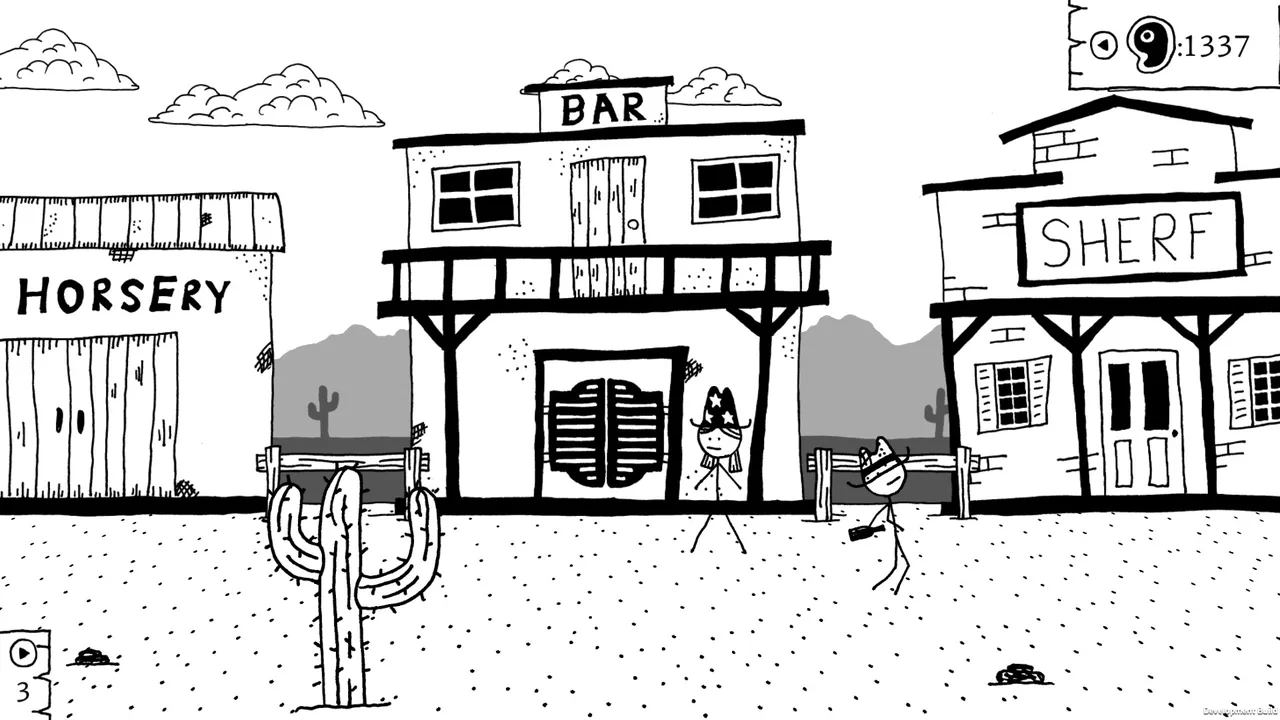
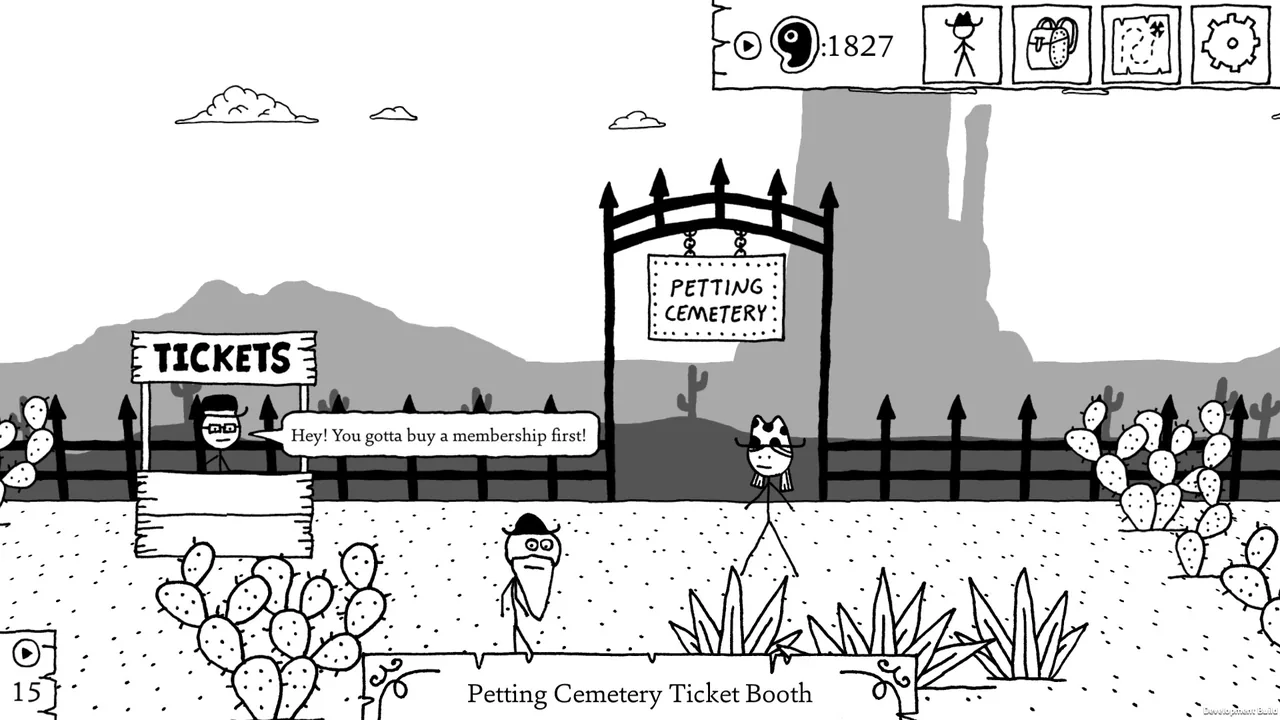
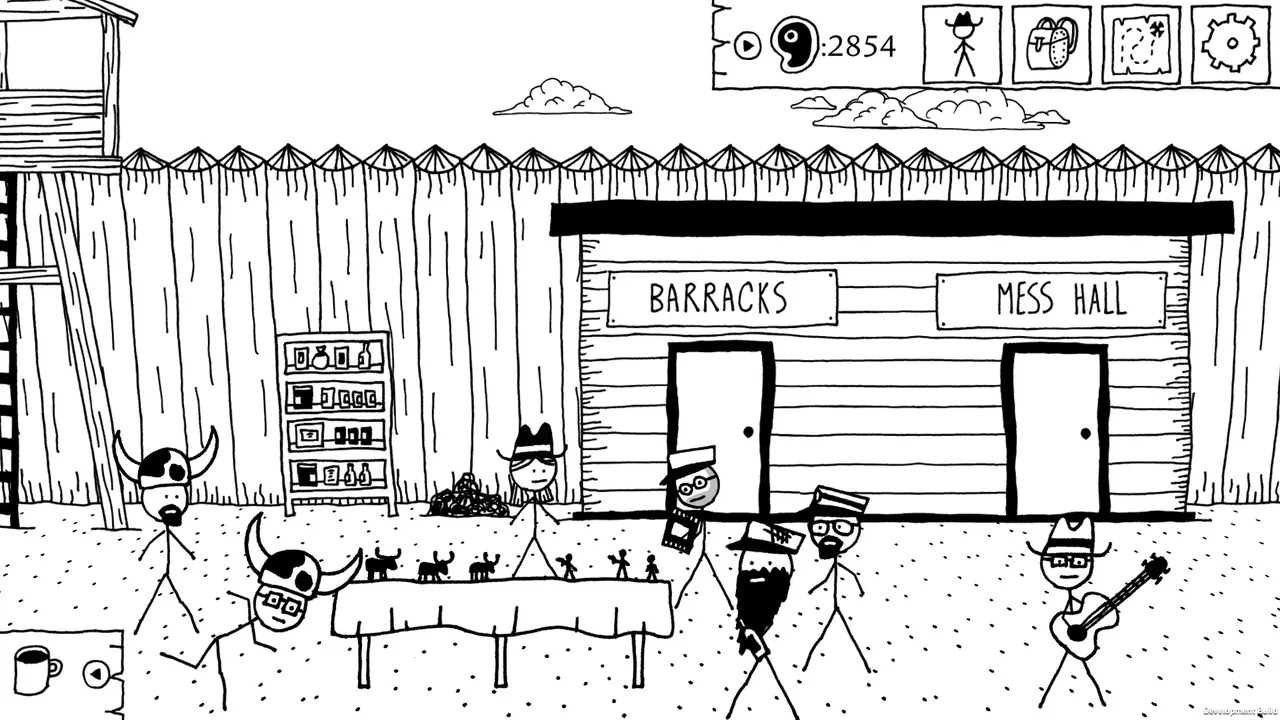
- A distinctive, fully-committed stick-figure art style that reviewers say works far better in motion than screenshots suggest
- Real structural variety -- exploration, puzzles, optional side content and a turn-based combat system -- built to support the comedy rather than just interrupt it
Biggest weaknesses
- Combat and core systems are widely described as simple and eventually repetitive, with several reviewers saying the novelty of the art style and jokes has to carry a fight system that doesn't itself hold up over a full campaign
- A specific mid-game stretch (several reviewers name the same later chapter) is repeatedly flagged as where pacing and difficulty balance falls off compared to the strong opening
- Publicly documented allegations against director Zack Johnson, raised in September 2019 and still cited by name in a real share of the game's Steam reviews as a reason not to recommend it
Who it's for: Fans of dense, witty writing and turn-based RPG comfort food, particularly anyone who already loved Kingdom of Loathing's humour. Not for anyone who wants challenging combat, and worth knowing, before buying, about the allegations against the studio's director described below.
Our recommendation: A genuinely excellent piece of comedy writing wrapped around a simple, forgiving RPG, and a game a substantial share of its own reviewers now weigh against public allegations about its director before recommending it. That's a judgment call this review can inform but not make for you.
7.5 / 10
The pitch
West of Loathing puts you in a stick-figure Old West gone strange -- cows that need punching, cultists building something in the desert, the recently deceased walking around with complaints of their own -- and lets you wander it as a turn-based RPG built almost entirely around its writing. Asymmetric, the studio behind it, is the same small team behind Kingdom of Loathing, the free browser RPG that's been running continuously since 2003 and built a devoted, very online fanbase on exactly this kind of dense, self-referential humour. West of Loathing is that same sensibility given a proper standalone game and a real production budget, and it launched to instant, broad acclaim on 10 August 2017.
The scale of that acclaim is worth stating plainly: Metacritic 87, Best Comedy Game at PC Gamer's 2017 Game of the Year Awards, 16th on Polygon's top 50 games of 2017, nominations at the Golden Joystick Awards and the Independent Games Festival's top prize. Nine years later, its Steam aggregate -- Overwhelmingly Positive, 98% of over 9,100 English-language reviews -- hasn't moved much from that reception at all.
Why the writing carries it
Read enough reviews, critical or player-written, and the consensus is close to total: West of Loathing's writing is the game. It isn't built around a handful of scripted set-piece jokes the way most "funny" games are -- reviewers describe a density of gags, asides, item descriptions and optional dialogue that rewards actually reading everything rather than clicking through it, closer in spirit to a well-written comic novel than a script. PC Gamer called it "delightfully written... absolutely packed with humor"; Rock, Paper, Shotgun praised its "warm and welcoming tone." Player reviews echo the exact same thing nine years on, often citing specific jokes from memory years after finishing the game. It's rare for a comedy game's writing to hold up across a full campaign rather than exhausting itself in the first hour, and West of Loathing is repeatedly credited with managing exactly that.
Where reviewers pull back
The negative sample -- a genuinely small 176 English-language reviews out of over 9,300, itself a sign of how well the game has been received -- converges on a few specific, structural complaints. Combat and the underlying RPG systems are widely called simple, occasionally to the point of tedium once the novelty of the presentation wears thin; several reviewers describe the fighting as serviceable rather than good, present mainly to give the writing something to interrupt rather than being a strength in its own right. A specific mid-to-late chapter -- reviewers repeatedly point to the same stretch, often called "Ghostwood" or similar -- gets singled out as the point where pacing and difficulty balance noticeably worsen compared to the tightly-paced opening hours; one reviewer's entire review is built around exactly that turn: "10/10 til Ghostwood, then the game turned into a chore." And a handful of reviewers, while still enjoying the writing, feel the campaign runs short relative to its price for anyone who isn't chasing every optional puzzle.
The allegations against the studio's director
In September 2019, roughly two years after West of Loathing's release, GamesIndustry.biz reported that Asymmetric director Zack "Jick" Johnson had been publicly accused of abuse by his ex-wife, A.M. Darke, a games studies professor at UC Santa Cruz (Rebekah Valentine, "Games professor accuses Kingdom of Loathing designer of abuse," GamesIndustry.biz, 23 September 2019). Darke alleged physical and emotional abuse during their marriage, extending the allegation to West of Loathing designer Kevin Simmons as well, and said Johnson had removed part of her contribution to the game's development to avoid crediting her. Johnson denied the specific allegations of physical abuse while acknowledging, in a written apology, what he described as "emotional immaturity and anger and cruelty"; he subsequently added Darke to the game's credits, stating she had given feedback on the game rather than worked on it in a design capacity. A separate allegation of similar abusive behaviour, from an earlier relationship in 2005, was made by Bonnie Mattson, an ex-girlfriend of Johnson's. None of this has been tested in court, and this review does not adjudicate it -- but it is public record, reported by name, and it is not a minor footnote in the game's current reception: reading through the negative Steam review sample, a real number of reviewers raise the allegations unprompted, years after the fact, explicitly as their reason for withdrawing a recommendation they otherwise say the game earned on its merits. That split -- enjoying the game while declining to endorse it -- shows up often enough to be a real, distinct category of review rather than an outlier.
It's a genuinely unusual situation for this review's coverage: a small, still-actively-developed studio (Asymmetric released a spiritual sequel, Shadows Over Loathing, in 2022, and continued support after that) whose most acclaimed work carries a serious, still-unresolved public allegation against its creative lead. A reader deciding whether to buy West of Loathing today is, by the review record, genuinely deciding on both the game and that question together, whether or not they want to be.
Value
At NZ$17.99 with no discount active at the time of checking, West of Loathing is inexpensive relative to its acclaim and its roughly 15-20 hour campaign, with a small paid expansion (Reckonin' at Gun Manor) available separately for players who want more. On pure cost-per-hour-of-genuinely- good-writing terms, it's one of the stronger value cases in this review's coverage. Whether that value case matters to a given buyer alongside the allegations above is, again, not something this review can settle on someone else's behalf.
Verdict
On craft alone, West of Loathing deserves the acclaim it got in 2017 and has kept since: writing this consistently funny across a full RPG campaign is genuinely rare, the art style commits fully to its bit, and the structural variety around exploration and puzzles keeps the format from getting stale even when the combat itself doesn't hold up its end. What separates this from a straightforward recommendation nine years later is not a design flaw -- it's the public allegations against the studio's director, which are neither this review's to resolve nor reasonable to omit, given how often the game's own current reviewers raise them unprompted. Judge the game on its writing, and it's excellent. Judge the whole picture, and that's a call this review can only inform, not make.
Pros and cons
Pros
- Widely and consistently praised writing -- dense, self-aware and genuinely funny across dozens of hours, not just a handful of scripted jokes
- A distinctive, fully-committed stick-figure art style that reviewers say works far better in motion than screenshots suggest
- Real structural variety -- exploration, puzzles, optional side content and a turn-based combat system -- built to support the comedy rather than just interrupt it
- Accessible, forgiving design (a colour-blind mode and simple systems) that reviewers say makes it approachable for readers rather than RPG veterans specifically
Cons
- Combat and core systems are widely described as simple and eventually repetitive, with several reviewers saying the novelty of the art style and jokes has to carry a fight system that doesn't itself hold up over a full campaign
- A specific mid-game stretch (several reviewers name the same later chapter) is repeatedly flagged as where pacing and difficulty balance falls off compared to the strong opening
- Publicly documented allegations against director Zack Johnson, raised in September 2019 and still cited by name in a real share of the game's Steam reviews as a reason not to recommend it
- A short campaign for the asking price by some reviewers' accounting, particularly for players who don't engage with every optional puzzle and side path
Screenshots
-
West of LoathingImage: Asymmetric via Steam -
West of LoathingImage: Asymmetric via Steam -
West of LoathingImage: Asymmetric via Steam -
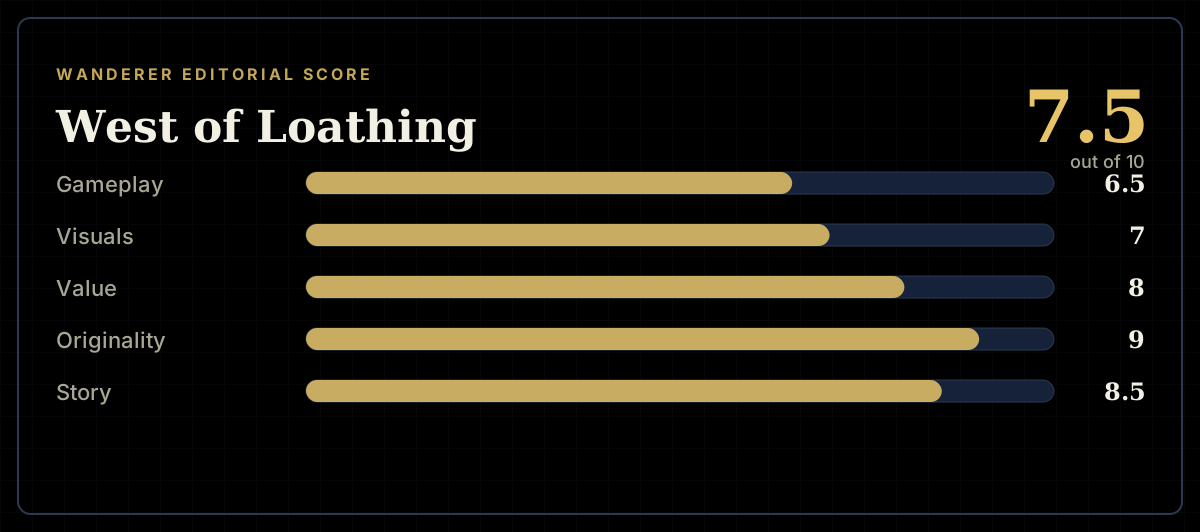
How the review scores each part of the gameWanderer Editorial -
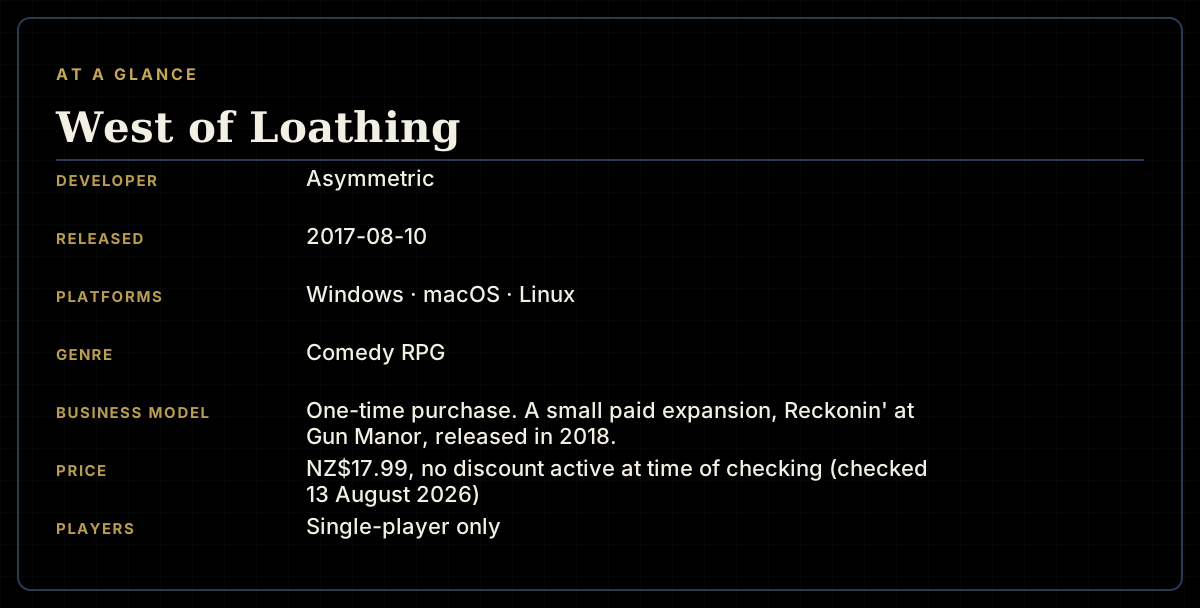
West of Loathing at a glanceWanderer Editorial -
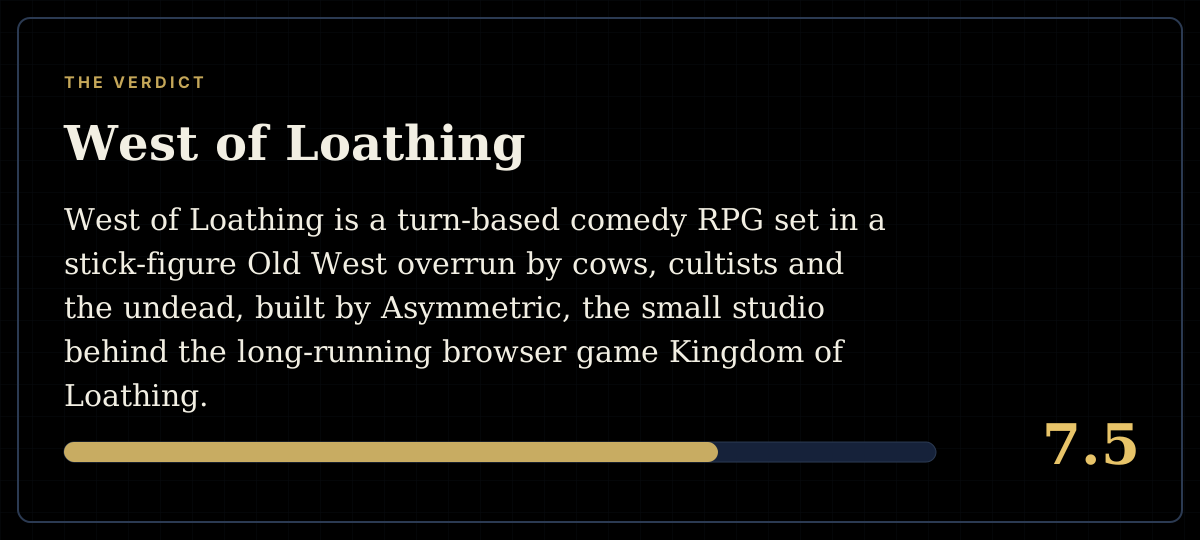
The short versionWanderer Editorial