Game review
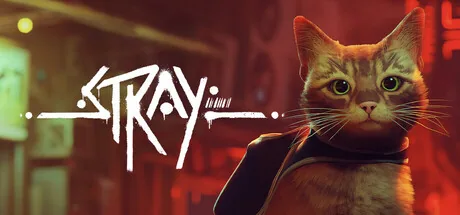
Stray
8.5 / 10
- Developer
- BlueTwelve Studio
- Publisher
- Annapurna Interactive
- Released
- 19 July 2022
- Platforms
- Windows, macOS, PlayStation 5, Xbox Series X|S, Nintendo Switch
- Genre
- Adventure
- Monetisation
- One-time purchase, with a separate soundtrack available.
- Players
- Single-player
The short version
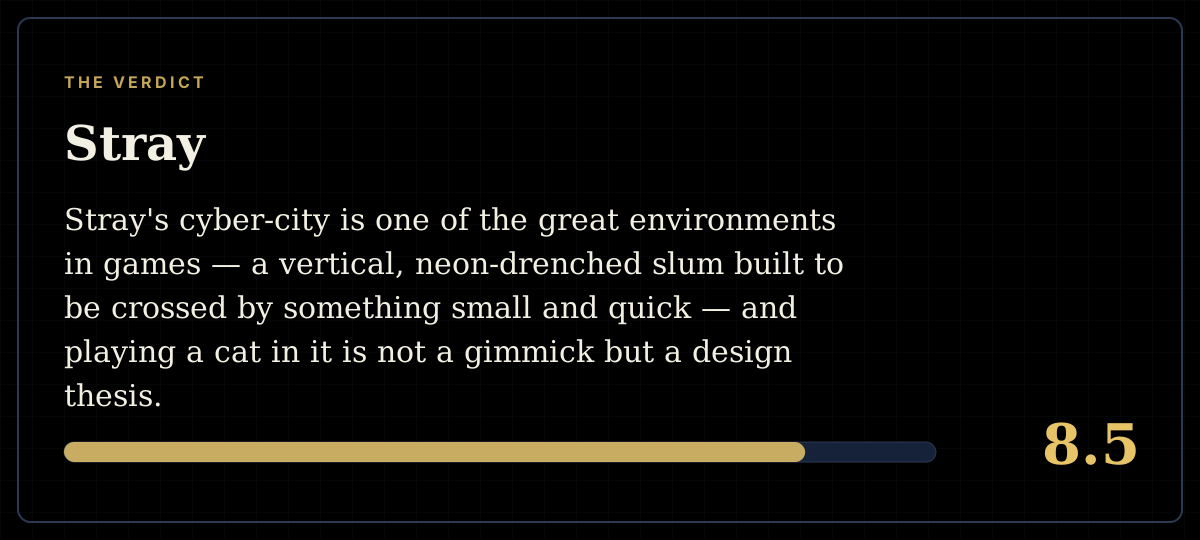
Stray's cyber-city is one of the great environments in games — a vertical, neon-drenched slum built to be crossed by something small and quick — and playing a cat in it is not a gimmick but a design thesis. You're the only living thing in a world of robots, and everything about how you move, where you fit and what people say to you follows from that.
It's 97.2% positive across 176,389 reviews and holds 97 of the last 100 English reviews positive, four years after release. The criticism is narrow, consistent and entirely about proportion: it's a six-to-eight hour linear game with simple puzzles, still selling at NZ$44.99, and 85 of its 100 most-helpful negative reviews were written in the first eighteen months.
Biggest strengths
- One of the best-realised environments in games — dense, vertical and genuinely lived-in
- Being a cat is a real design idea, not a novelty; movement and perspective flow from it
- Superb sound and score, doing a lot of the emotional work
Biggest weaknesses
- Six to eight hours, linear, with little reason to replay
- Puzzles are simple enough that critics call them trivial
- Traversal is on rails — you jump where the game allows, not where you choose
Who it's for: Anyone who wants a beautiful, moving, unhurried adventure in an extraordinary setting, and who's fine with a single evening's play. Not for anyone who needs mechanical challenge.
Our recommendation: Buy it on discount if the price matters to you — it's a short game holding a full price four years on. But buy it. The world-building and the ending are worth the trip, and almost nobody who plays it regrets it.
8.5 / 10
The sharpest negative review of Stray, at 291 votes, makes an argument you don't often see stated so baldly: "yeah, me too i like cats and robots. game is repetitive, short and directive. If main character wasn't a cat, no way this game would have overwhelmingly positive reviews."
Another, at the same vote count, complains about the corpus itself: "the review section is full of 'head empty cat only' style humor flooding the reviews and ruining any chance of this game getting a fair assessment."
I've now hit that same complaint twice in one day from opposite directions — the negative reviews of ULTRAKILL are largely jokes, and here the critics are objecting that the positive ones are. It's worth taking seriously as a question: is 97.2% measuring the game, or measuring the cat?
Having read the whole critical corpus, my answer is: mostly the game, and the cat is not a separable feature anyway.
The cat is the design
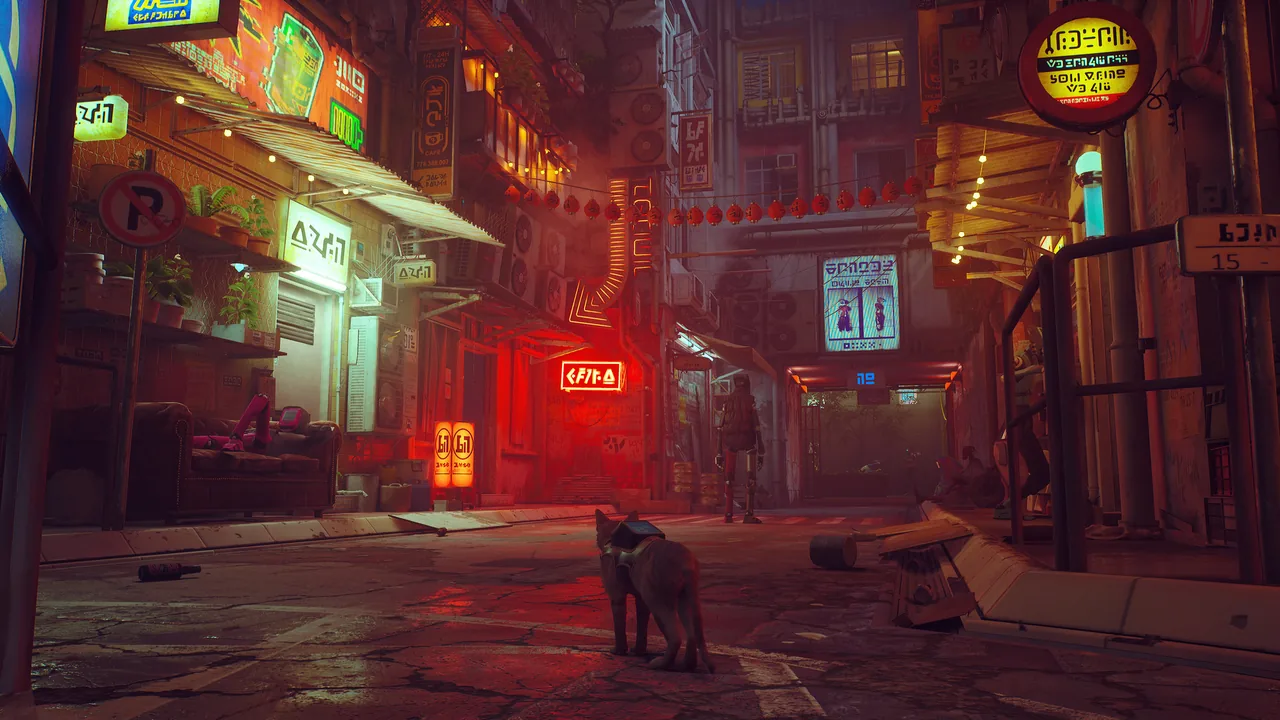
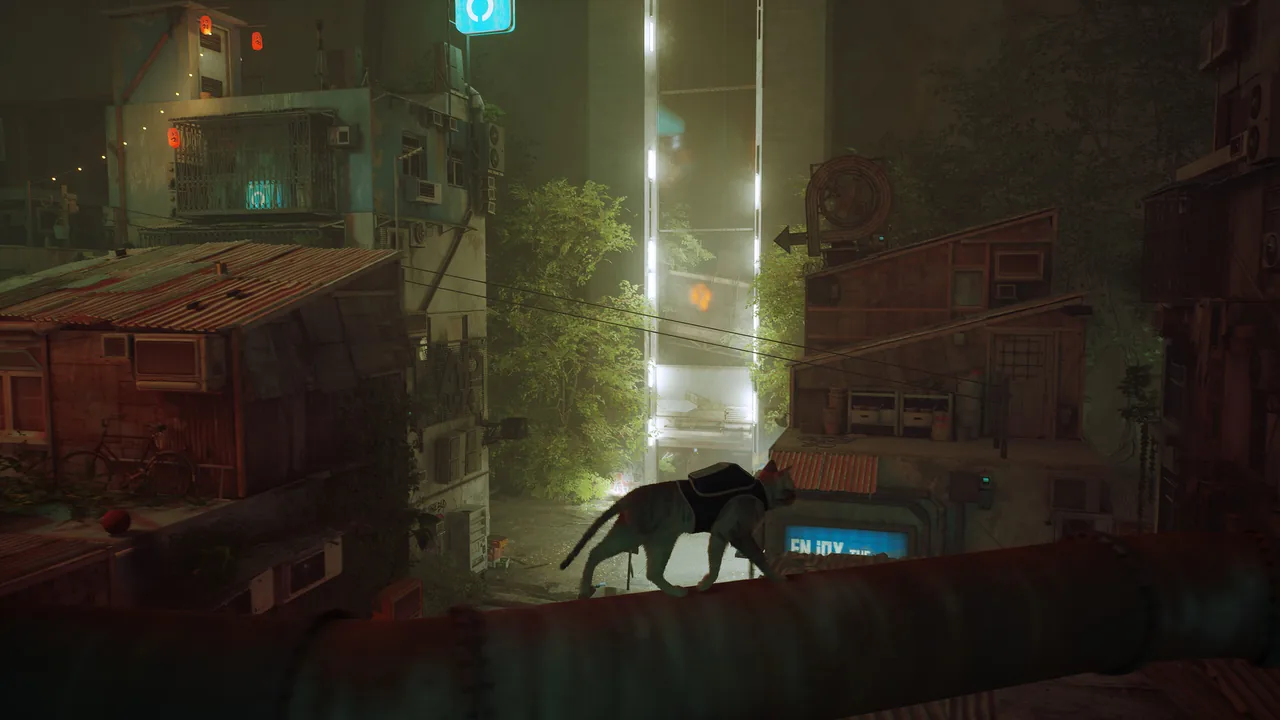
The premise is not "adventure game, but you're a cat." It's that the entire world has been built for something that can't open doors, can't talk, can't carry anything, and can go almost anywhere vertical. The city is a stack of alleys, pipes, air-conditioning units and shop awnings, and reading it as a climbing route is the core activity.
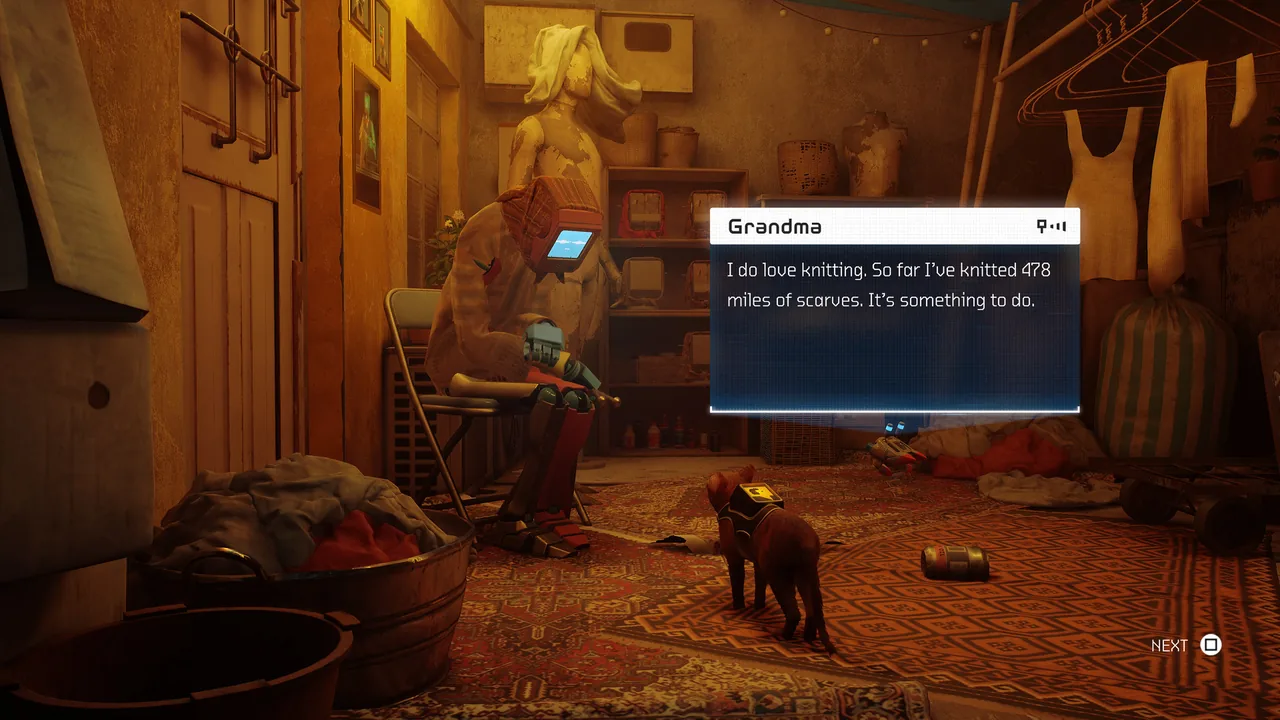
The result is one of the great game environments — Kowloon-by-way-of-cyberpunk, dense with detail, and populated entirely by robots who have made a society in the absence of the people who built them. You are the only living thing in it, which is the emotional engine of the whole story. Almost none of it is explained to you directly, because you can't ask.
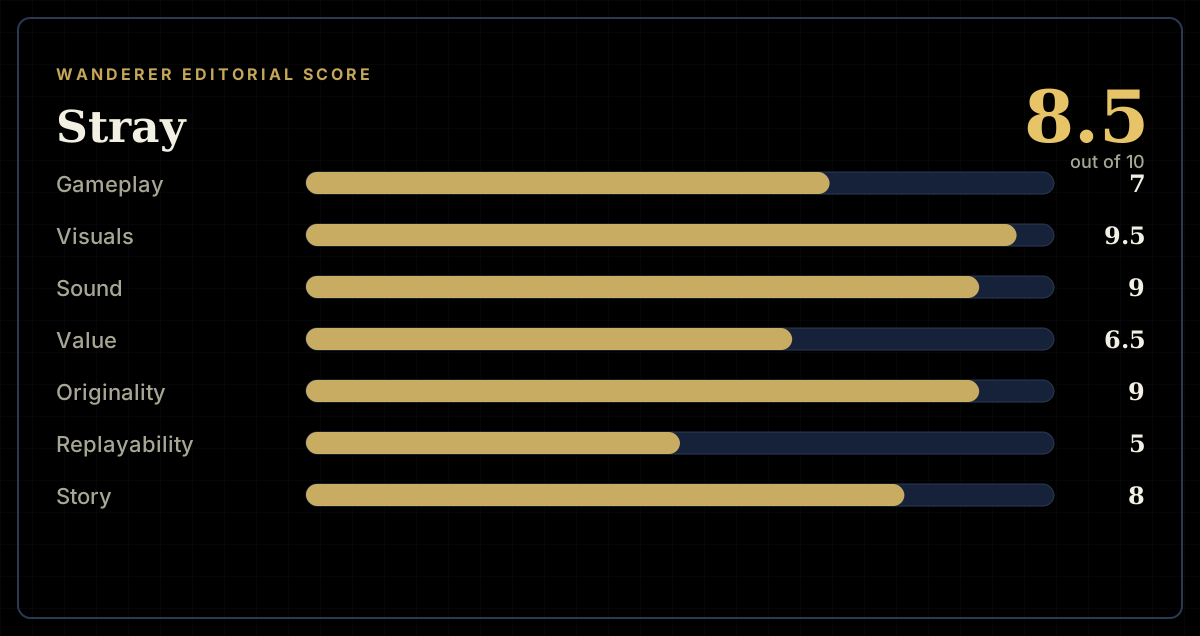
And it's a genuinely beautiful production. Visuals at 9.5 and sound at 9 aren't generosity — the animation work on the cat alone is remarkable, and the score does most of the emotional lifting.
The complaint, which is fair
Length and price. Twenty-five of a hundred negatives mention hours, 21 say short, 17 mention price. The most-upvoted negative overall, at 502 votes, is careful about it: "I do enjoy this game and I highly recommend people play it. However, due to me completing it in 6 hours while taking my time to explore every bit of content i do not recommend buying full price."
The critics' median playtime is 6.2 hours — they finished it. This isn't an early-bounce complaint, it's a completion complaint, which makes it credible. It's the same test I applied to 007 First Light, and it passes here too.
Simplicity. Puzzle appears in 31, linear in 22, and a 268-vote review is blunt: "Traversal is predetermined, meaning the cat can only jump towards set paths. Puzzles are brain dead." That's accurate. You press a button near a jump point and the cat jumps; there's no free platforming, and the puzzles rarely resist you.
Whether that's a flaw depends on what you wanted. A game about inhabiting an animal that moves with total confidence would be worse with fumbled jumps. But if you came for mechanical challenge, there isn't any, and the stealth and chase sections — the parts that do ask for execution — are the ones almost everyone rates lowest.
The achievement curve confirms how gentle it is: 24 achievements, the most common at 93%, the median at 20.6% and the rarest still at 2.6%. Compare Rift Wizard 3, where the median achievement sits at 1.4%. Stray is a game designed to be finished.
Four years of quiet
The year-by-year distribution is the most reassuring number here. Of the hundred most-helpful negatives: 57 in 2022, 28 in 2023, then 5, 7 and 3. Eighty-five percent of the substantial criticism this game has ever attracted came in its first eighteen months, when the argument was about a NZ$45 game you finish in an evening.
Since then it has simply settled into being well-liked. Recent English reviews run 97 of 100 positive at a 7.5-hour median, and the score holds above 93% in every one of the eleven languages I checked, including a 99.2% from nearly 7,500 Brazilian Portuguese reviewers.
The one thing that hasn't changed is the price. NZ$44.99, no discount, four years on.
The verdict
Stray earns an 8.5. It's a genuinely special piece of world-building with an ending that lands, and the cat is not a marketing hook but the lens the entire design is built around. Nothing else feels like it.
It isn't a 9 because six hours of gentle, on-rails adventure at full price is a real limitation, not a quibble — replayability scores a 5 and value a 6.5 for exactly the reasons its critics give, and they gave them having finished the game.
So: the critics are right about the length and wrong about the cat. Buy it in a sale if money matters, set aside one evening, and let it be what it is.
Pros and cons
Pros
- One of the best-realised environments in games — dense, vertical and genuinely lived-in
- Being a cat is a real design idea, not a novelty; movement and perspective flow from it
- Superb sound and score, doing a lot of the emotional work
- A quietly excellent story about a robot city, told with almost no dialogue from you
- Still overwhelmingly loved four years on, with 97% of recent reviews positive
Cons
- Six to eight hours, linear, with little reason to replay
- Puzzles are simple enough that critics call them trivial
- Traversal is on rails — you jump where the game allows, not where you choose
- NZ$44.99 with no discount is steep for the length
- The stealth and chase sequences are the weakest parts by common consent
Screenshots
-
StrayImage: Annapurna Interactive via Steam -
StrayImage: Annapurna Interactive via Steam -
StrayImage: Annapurna Interactive via Steam -
How the review scores each part of the gameWanderer Editorial -
The short versionWanderer Editorial