Game review
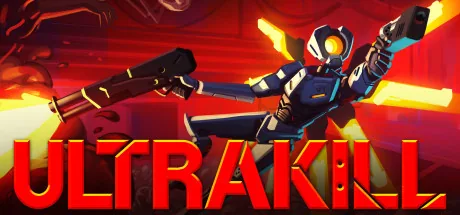
ULTRAKILL
9 / 10
- Developer
- Arsi "Hakita" Patala
- Publisher
- New Blood Interactive
- Released
- 3 September 2020
- Platforms
- Windows
- Genre
- First-Person Shooter
- Monetisation
- One-time purchase. No DLC, no in-game purchases, nearly six years of free updates.
- Players
- Single-player
The short version
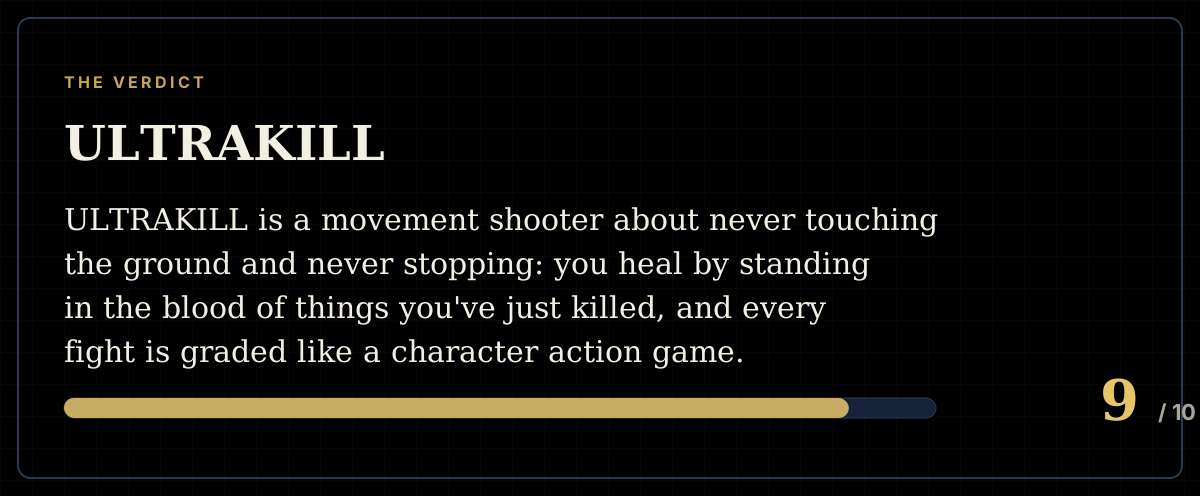
ULTRAKILL is a movement shooter about never touching the ground and never stopping: you heal by standing in the blood of things you've just killed, and every fight is graded like a character action game. It is one of the highest-rated games on Steam — **97.4% positive across 239,293 reviews** — and its players are extraordinarily committed, with a 68-hour median even among critics and one at 1,323.
Two facts tell you more than the score. It has been in Early Access for nearly six years and is still shipping major content. And in February 2026, when LAYER 8 arrived, it hit its **all-time peak of 71,000 concurrent players** — over five years after release. Almost nothing does that.
Biggest strengths
- The best movement-and-combat system in any shooter, with a genuinely enormous skill ceiling
- Style-ranking turns every encounter into a performance rather than a clearance
- Outstanding soundtrack, composed by the developer
Biggest weaknesses
- Difficulty scaling in the most recent layers draws the sharpest criticism from veterans
- Nearly six years in Early Access with no completion date announced
- Punishing enough that it is genuinely inaccessible to a lot of players
Who it's for: Players who want the highest skill ceiling in the genre and will enjoy climbing it. If you bounced off fast shooters before, this is the least forgiving of them, and that's the point.
Our recommendation: Buy it. NZ$29.99 for six years of free updates from a game this good is close to the best value on Steam. The one genuine reservation is difficulty — the newest layers are markedly harder, and that's now the most common real complaint.
9 / 10
A note on method before anything else, because this corpus is unlike any other I've handled.
ULTRAKILL has 168,757 English reviews at 97.6% positive. I read the hundred most-helpful negatives, as I do for every game — and a large share of them aren't criticism at all. They're jokes. The community has a long-running bit involving mock-complaints about content the game doesn't have, and a thumbs-down is the punchline. One 98-vote "negative" reads, in part: "stop looking in the bad reviews, this is the best fps ever made… BUY IT NOW. IT IS WORTH THE MONEY."
So the usual technique — read the negatives, find the pattern — needed filtering here. What's left once you do is small, consistent, and worth taking seriously.
What it is
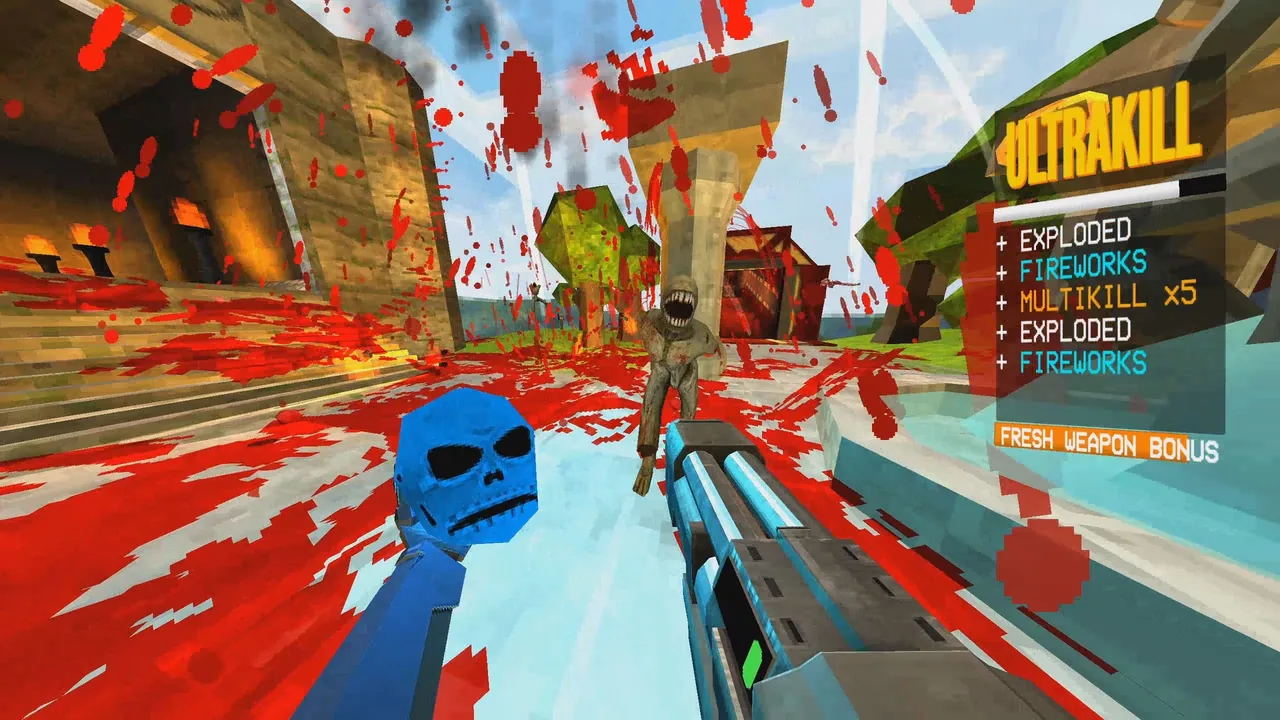
You play a machine that runs on blood, in a hell full of other machines that have run out of it. That premise is a mechanic: you heal by getting close to things you have just killed, so the game punishes caution at the level of its health system. Retreating is how you die.
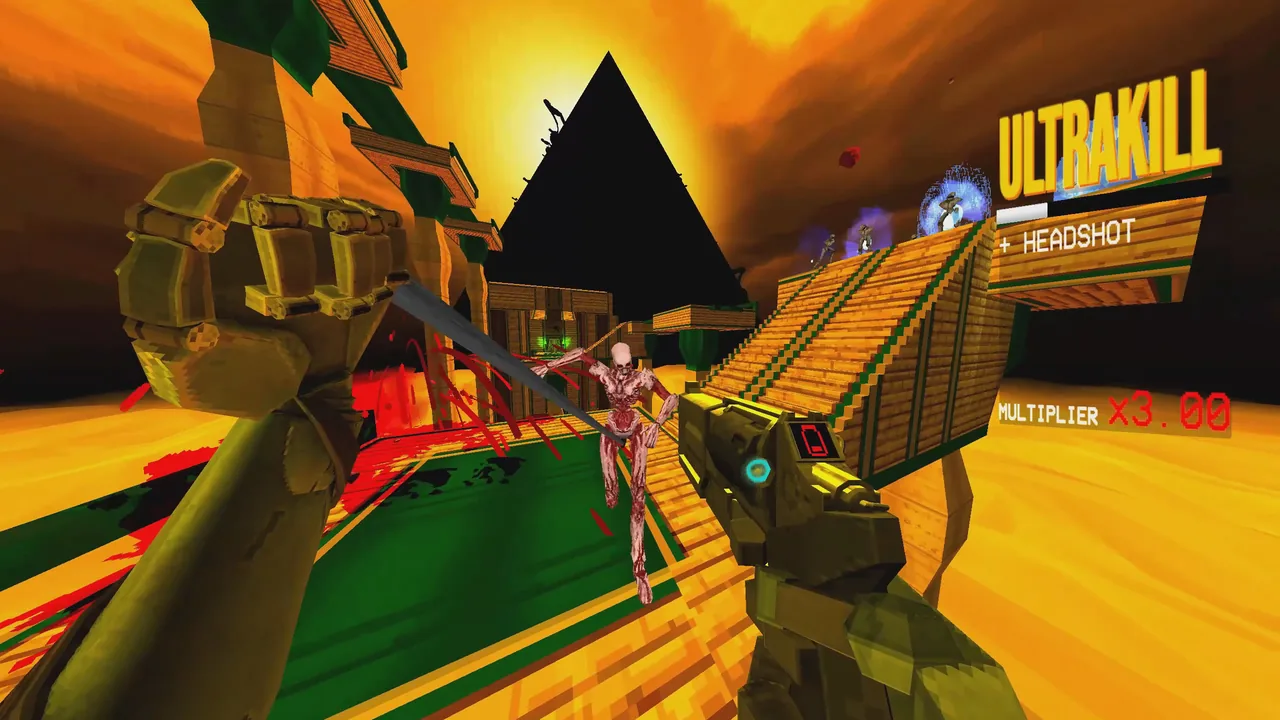
Around that sits the best movement system in any shooter — dashing, sliding, wall-jumping, rocket riding — and a style meter borrowed from character action games that grades your fight as you have it. Clearing a room isn't the goal. Clearing it beautifully is.
The soundtrack, composed by developer Arsi "Hakita" Patala, is a genuine part of the appeal rather than backing. So is the fact that it costs NZ$29.99 with no DLC and has received nearly six years of free content.
The real criticism
Filter out the bits, and one theme dominates: difficulty scaling in the newest content.
The top substantive negative, 179 votes from a player with 134 hours in February 2026, is precise about it: "the difficulty scaling in this game has been completely out of whack for the past 2 updates… Layer 8 is leagues harder than layer 7 for no real reason other than just making it 'the crazy hard fps!!!!!'" Difficult and hard together appear in 25 of a hundred; "layer" in 12.
The year-by-year distribution supports it: 2, 11, 15, 13, then 27 in 2025 and 32 in 2026. More than half the substantial criticism this game has attracted arrived in the last two years — exactly as the later, harder layers shipped. That's not a game getting worse. It's a game getting steeper, and leaving some of its long-term players behind. The critics' median playtime is 68 hours, so these are not people who bounced off in an afternoon.
There's a second, quieter complaint about the behaviour of parts of the fanbase, which a 49-hour reviewer says put them off the game entirely. I'm not in a position to characterise a community of this size, but a prospective buyer can reasonably note it exists and that the game itself is single-player.
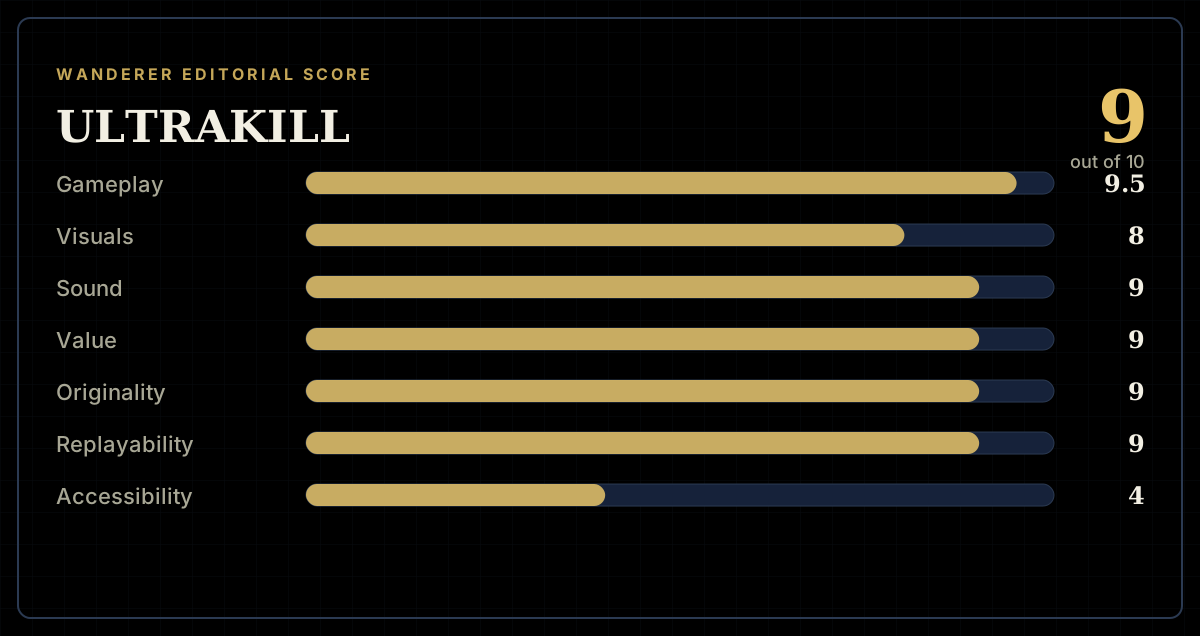
The accessibility score of 4 is mine rather than the corpus's, and I'd defend it: this is a deliberately punishing game whose difficulty is the design, and that genuinely excludes people.
Six years in Early Access
I've reviewed four Early Access games today, and this is the extreme case. Rift Wizard 3 is six weeks in, Paralives ten weeks, Witchfire two years and announcing the end of its EA period. ULTRAKILL has been in Early Access since September 2020 and has announced nothing of the sort.
Normally I'd treat that as a warning. Here the evidence points the other way entirely. LAYER 8 — FRAUD shipped on 25 February 2026, followed by patch 17b2, two hotfixes, and patches 17d through 17d4 by late April. And on the day Layer 8 landed, the game peaked at 71,000 concurrent players — an all-time record, five and a half years after release.
Games do not normally set their player records in year six. That is what a long Early Access looks like when it's working.
The one honest caveat: the update feed goes quiet after April 2026. Three months isn't alarming for a project of this scale and cadence, but it's worth knowing that the next layer has no date.
The verdict
ULTRAKILL earns a 9. As a shooter it's a 9.5 and I don't think that's controversial — nothing else combines movement, weapon variety and scoring this well, and the proof is a 97.4% rating across nearly a quarter of a million reviews and players putting hundreds of hours into it.
It isn't a 9.5 overall because the newest content has drifted toward difficulty for its own sake, which its own veterans say clearly; because the accessibility floor is high enough to exclude a lot of people; and because six years is a long time to be unfinished, however good the reason.
At NZ$29.99, with no DLC and six years of free updates behind it, it's one of the easiest recommendations on Steam — for the right player. If you want a shooter you can relax into, this is emphatically not it.
Pros and cons
Pros
- The best movement-and-combat system in any shooter, with a genuinely enormous skill ceiling
- Style-ranking turns every encounter into a performance rather than a clearance
- Outstanding soundtrack, composed by the developer
- Six years of substantial free updates with no DLC and nothing else to buy
- Still growing — its player peak came in 2026, not at launch
Cons
- Difficulty scaling in the most recent layers draws the sharpest criticism from veterans
- Nearly six years in Early Access with no completion date announced
- Punishing enough that it is genuinely inaccessible to a lot of players
- Update pace has slowed, with the last patch in April 2026
- The intensity causes motion sickness for some players
Screenshots
-
ULTRAKILLImage: New Blood Interactive via Steam -
ULTRAKILLImage: New Blood Interactive via Steam -
ULTRAKILLImage: New Blood Interactive via Steam -
How the review scores each part of the gameWanderer Editorial -
The short versionWanderer Editorial