
Game review
Rift Wizard 3
8 / 10
- Developer
- Dylan White, Khoops, Jacob Martinez
- Publisher
- Dylan White
- Released
- 23 June 2026
- Platforms
- Windows
- Genre
- Traditional Roguelike
- Monetisation
- One-time purchase. No DLC, no in-game purchases.
- Players
- Single-player
The short version
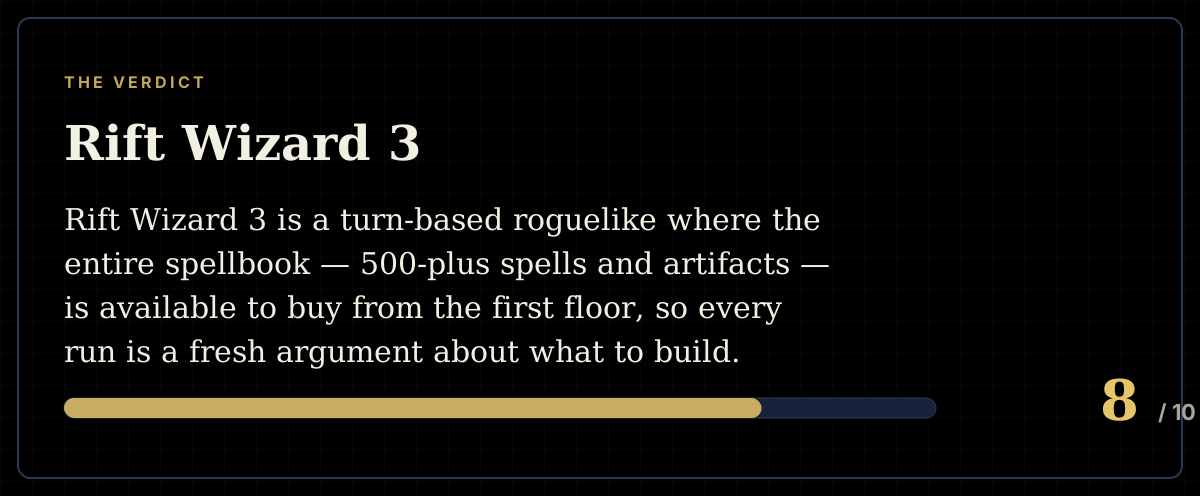
Rift Wizard 3 is a turn-based roguelike where the entire spellbook — 500-plus spells and artifacts — is available to buy from the first floor, so every run is a fresh argument about what to build. It's 91.0% positive, and the people who like it *really* like it: the median playtime among positive reviewers is 46.5 hours, six weeks after release, with one at 385.
Its criticism is unusually coherent, because I could read all of it — the game has nineteen English negative reviews in total. Almost every one is from a series veteran arguing that merging skills and equipment into a crafting system, and removing consumables, made this a different game from Rift Wizard 2 rather than a better one. Newcomers largely don't have that complaint. What everyone has is the clarity problem: this is an information-dense game with an interface that doesn't do enough to help.
Biggest strengths
- The whole spellbook is open from the start, which makes build experimentation genuinely free
- Tremendous depth — 500-plus spells and artifacts with real synergies to discover
- Enormous replayability; positive reviewers average 46 hours in six weeks
Biggest weaknesses
- Clarity is the game's weakest point — reviewers repeatedly call the information density unmanageable
- Punishing to the point that many runs end before a build comes together
- The new crafting system replaced skills and consumables, which fans of Rift Wizard 2 dislike
Who it's for: People who genuinely want a hard turn-based puzzle where every enemy placement matters and losing is normal. If you liked Caves of Qud or want something far crunchier than Slay the Spire, this is for you.
Our recommendation: Buy it if brutal tactical roguelikes are your thing and you accept that you'll lose a lot — 24.5% of players have won even once. If you specifically loved Rift Wizard 2, try the demo first, because this is a redesign rather than an expansion.
8 / 10
One reviewer says "only 20 percent of players have beaten the game." I went and checked, because that's the kind of claim worth verifying rather than repeating.
The real figure is 24.5% — that's the share of players who have earned WIN_ONE, the achievement for winning a single run. It is also the most-earned achievement in the game. Of the 104 achievements Rift Wizard 3 has, the median sits at 1.4%, and 97 of them are under 5%.
That's the review in one statistic. This is a game where three quarters of the people who bought it have never won.
What it is
A traditional turn-based roguelike: twenty floors, one screen each, an immortal amnesiac wizard, and a nemesis somewhere at the end. What makes it unusual is the shop. Rather than doling out spells as random drops, Rift Wizard puts the entire spellbook in front of you from the first floor — over 500 spells and artifacts — and lets you buy anything you can afford.
That inverts the usual roguelike tension. You're not hoping for a build; you're choosing one, and then finding out over twenty floors whether it was a good idea. The positive reviews are full of people describing the moment it clicks: "you'll learn to speak the game's language," writes one at 185 hours.
The playtimes are the strongest evidence. Positive reviewers have a median of 46.5 hours and a maximum of 385, six weeks after launch. Recent reviewers median 43.9. Nobody is dabbling here.
Reading every negative review
The game has 212 English reviews and nineteen of them are negative. I read all nineteen — total coverage, which is rare enough to be worth stating, and it means I can characterise the criticism without any sampling.
It splits cleanly in two.
The veterans' argument, which dominates. The top negative, at 131 votes from a self-described longtime player of Rift Wizard 1 and 2, says outright: "if you've never played rift wizard at all before, i'd recommend it even less — just go buy 2 instead." Another: "I'm going to say stick with RW2. 3 is reliant upon equipment spam and thus isn't quite as 'wizardry' as it should be." A third: "Loved Rift Wizard 2 but Rift Wizard 3 feels too different from it."
The substance is a specific design change: skills and equipment have been merged into a crafting system where you fuse components found on the level, and consumables — potions, the Aether Dagger, the Stopwatch — are gone. Maps are smaller. For some long-time players that removed the improvisation they valued.
Notably, the most honest framing of this comes from a positive review, 63.8 hours in: "I don't think liking RW2 means you'll like RW3, they feel like two completely different idea's for what Rift Wizard is." That's the sentence a prospective buyer needs.
The clarity problem, which everyone shares. This one is not a matter of taste. "Information overload has always been difficult to deal with in this series," writes one critic. "Each level remains a giant arithmetical nightmare. I have no idea how someone is supposed to conceptualize what happens on a given turn," writes another. Even a broadly positive reviewer: "The biggest weakness of this game is clarity. Right now it's very unclear how different items work together." That's why the interface score here is a 5.
And there's a real design tension in the difficulty — a 16-hour player asks "can we get some player agency on like the first 3 stages??? 99% of my runs end in the first 3 stages if I try to theory craft at all." When a build-focused game kills you before the build exists, the build focus is undercut.
Where it's going
Early Access, and being worked on: an EA patch on 30 June, then a public beta branch opened on 6 July with three rounds of beta patch notes through 29 July. Running a public beta branch six weeks in is a good sign for a game whose main problem is balance and legibility.
The verdict
Rift Wizard 3 earns an 8. As a tactical puzzle it's excellent — open-spellbook design is genuinely novel, the depth is real rather than decorative, and the people it suits are putting hundreds of hours in within weeks of launch. If you liked Caves of Qud or want something far crunchier than Slay the Spire, start here.
It isn't higher because the interface doesn't carry the complexity the design demands, because the difficulty frequently ends runs before the interesting decisions begin, and because it is still in Early Access with balance visibly under construction.
The series question I'd answer plainly: this is a redesign, not an upgrade. If Rift Wizard 2 is a game you love, treat 3 as a different proposition and try the demo first. If you've never played one, ignore the veterans' argument entirely — it isn't about you, and the game underneath is very good.
Pros and cons
Pros
- The whole spellbook is open from the start, which makes build experimentation genuinely free
- Tremendous depth — 500-plus spells and artifacts with real synergies to discover
- Enormous replayability; positive reviewers average 46 hours in six weeks
- Strong art and music, with a grittier tone than earlier entries
- Actively developed, with a public beta branch and regular patches
Cons
- Clarity is the game's weakest point — reviewers repeatedly call the information density unmanageable
- Punishing to the point that many runs end before a build comes together
- The new crafting system replaced skills and consumables, which fans of Rift Wizard 2 dislike
- Balance complaints from long-time players about spells that are either useless or dominant
- Early Access, and it plays like a design still being argued over
Screenshots
-
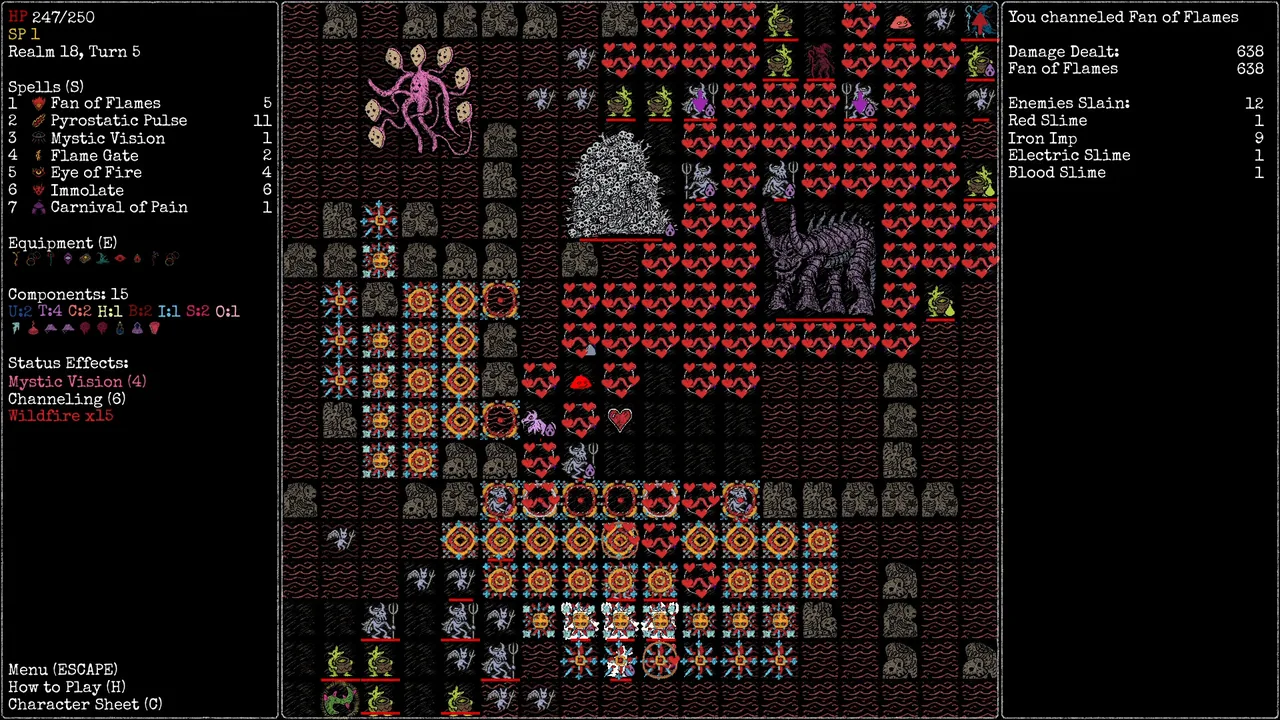
Rift Wizard 3Image: Dylan White via Steam -
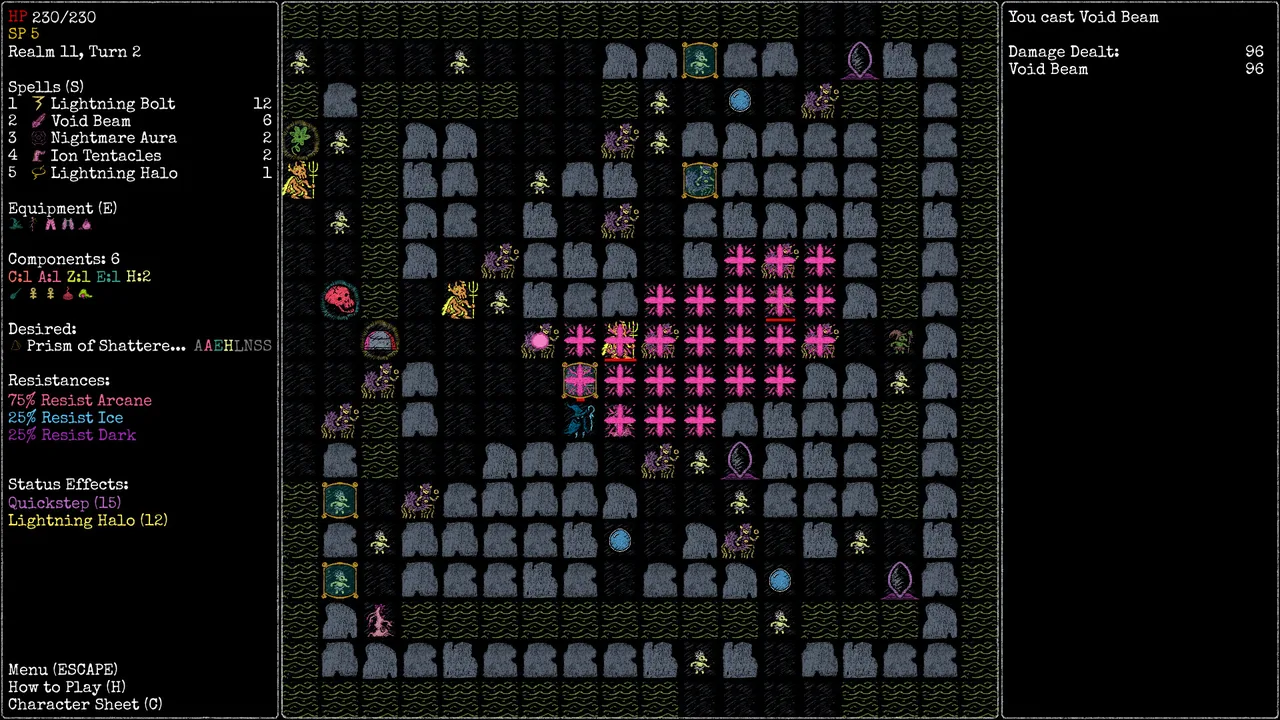
Rift Wizard 3Image: Dylan White via Steam -
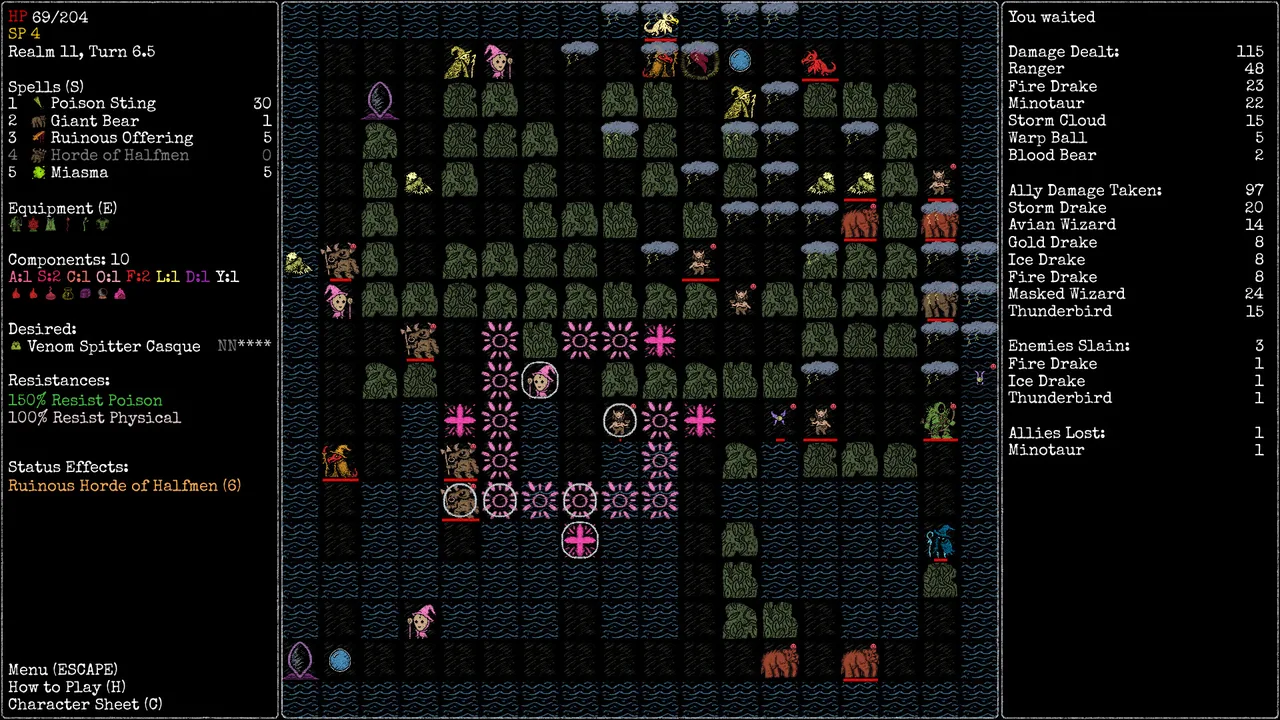
Rift Wizard 3Image: Dylan White via Steam -
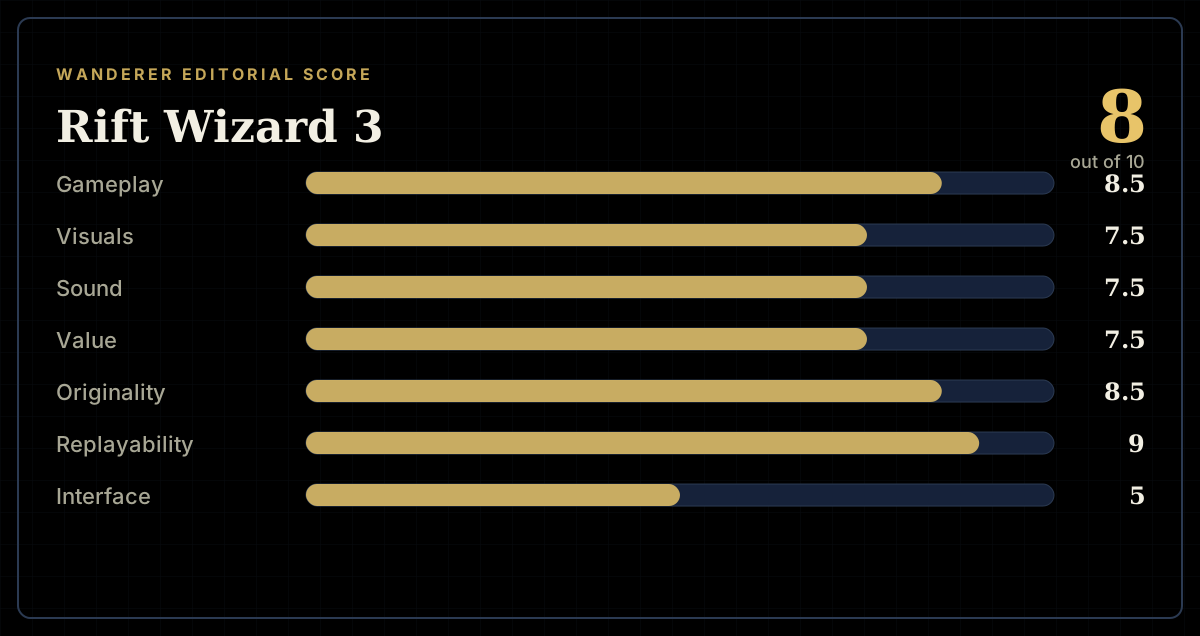
How the review scores each part of the gameWanderer Editorial -
The short versionWanderer Editorial