Game review
Path of Achra
7.5 / 10
- Developer
- Ulfsire
- Publisher
- Slouching Beast LLC
- Released
- 7 May 2024
- Platforms
- Windows
- Genre
- Roguelike
- Monetisation
- One-time purchase. No DLC, no in-game purchases.
- Players
- Single-player
The short version
You pick a race, a class, a god and a background, then assemble skills and equipment whose effects chain off each other in ways the game barely explains — and then you walk your creation through Achra and watch the numbers do what you built them to do. It's 98.0% positive across 2,921 English reviews.
Its 59 English negatives — I read all of them — make one argument twice over. **Build appears in 29 of them; automation and turn-holding in 15.** Half say there's too much information to process before a run; half say there's too little to do during one. The developer's own store page calls it "a broken build sandbox", which is the most accurate description available and explains both complaints at once.
Biggest strengths
- A build system with real combinatorial depth — the synergies genuinely surprise
- Distinctive dark-fantasy tone and a striking, austere presentation
- Fast runs, so experimenting with a wild idea costs minutes rather than hours
Biggest weaknesses
- Combat largely resolves itself once the build is set — critics call it holding a key
- Ability text is dense enough that reviewers describe information overload
- Almost no onboarding; the game explains very little of its own vocabulary
Who it's for: People who enjoy character-building as the game itself — reading synergies, stacking multipliers, and watching a plan execute. Not for anyone who wants tactical decisions turn by turn.
Our recommendation: Buy it if theorycrafting is the part of an RPG you actually like. At NZ$14.75 it's fair value for something genuinely distinctive. If you want moment-to-moment tactics, this deliberately isn't that, and its critics are right rather than wrong.
7.5 / 10
Two negative reviews of Path of Achra, both well-upvoted, saying opposite things.
The first, 24 votes: "The core problem for me is that you need to process an insane amount of information with each run. Every skill and item has a literal page of text describing it. It feels like someone threw a dictionary at your head."
The second, also 24 votes: "The gameplay is heavily automated, with virtually zero strategy outside of planning your build, and no real exploration. I literally beat the game on my first run."
Too much to read; too little to do. Both are correct, and the store page explains why: the developer describes Path of Achra as "a broken build sandbox."
That's not a defence I'm constructing on the game's behalf — it's the pitch, in the developer's own words, and it means the critics have identified the design rather than a failure of it. Whether that design is for you is the only question this review needs to answer.
What you actually do
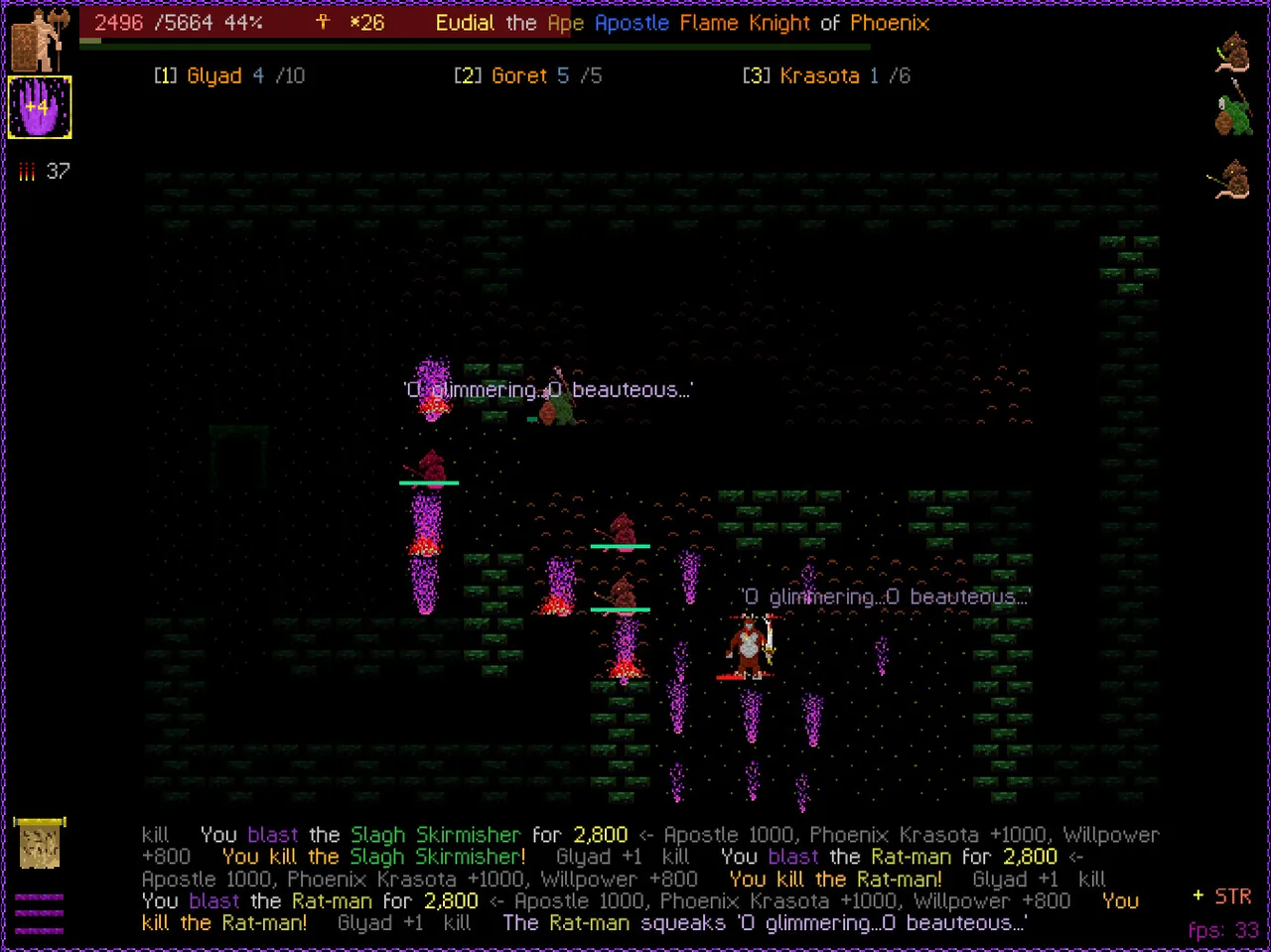
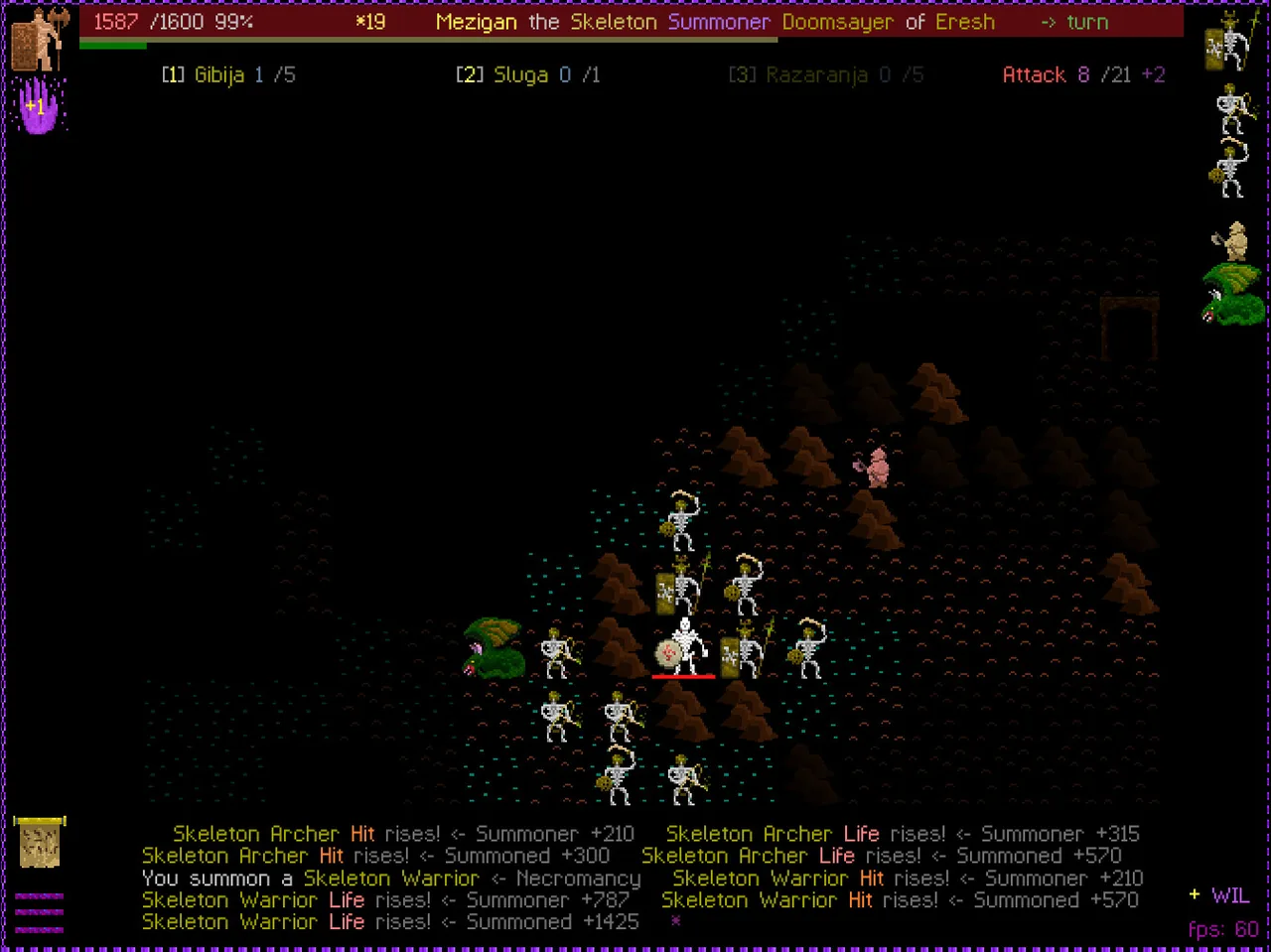
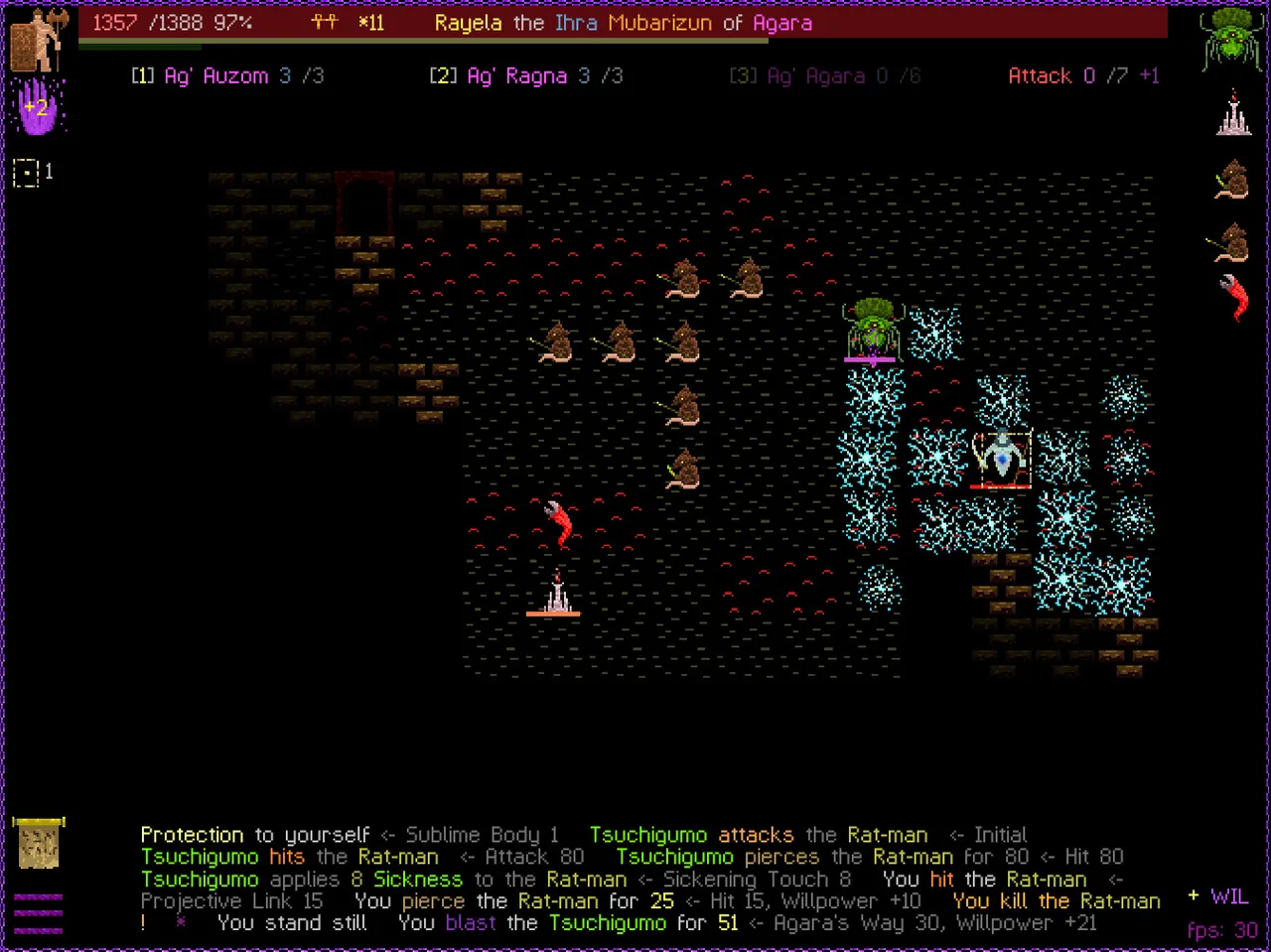
Choose a race, a class, a deity and a background. Each brings skills. Skills have triggers — on kill, on hit, on turn, on being struck — and those triggers fire other skills, which fire others. Equipment amplifies specific damage types or effects. The interesting work is finding the loop that feeds itself, and then finding out how absurd you can make it.
When you have it, you walk into Achra and press a key. Combat resolves fast, often automatically, and a working build shreds the early floors without your input. Automation and turn-holding appear in 15 of the 59 negatives, and a 13-vote reviewer puts it plainly: "you're just going to be pressing TAB most of the time."
If you've played Rift Wizard 3, reviewed here earlier today, this is the inverse. That game is all tactical execution — every turn is a puzzle with permanent consequences. Achra front-loads everything into preparation, then lets the machine run. Reviewers also name Tales of Maj'Eyal, Dungeon Crawl Stone Soup and Siralim as reference points; that's the tenth game today whose critics reach for a specific comparison.
Where I think the criticism lands
On the interface, unambiguously. Two negatives mention tutorials and two more confusion, but the dictionary complaint is the real one: the game hands you dozens of abilities with dense text and no scaffolding for understanding how they interact. A build sandbox lives or dies on how legibly it communicates its own rules, and this one is closer to a spreadsheet than a teacher. Interface scores a 5.
On the moment-to-moment, partly. A 32-hour reviewer — the most invested critic in the sample — lands on the fair verdict: "I kind of like it, and I'm probably going to play it more, but I'm not going to recommend it… it's a decent 'play this while watching TV' kind of game." That's an accurate description and a legitimate reason to buy or skip.
Where I'd push back is on "zero strategy". The strategy exists; it just happens before the run rather than during it. Whether that counts is genuinely a matter of taste, and the same argument applies to Nubby's Number Factory, which I reviewed an hour ago — both games move the decision-making away from the keys you press.
Numbers worth knowing
The critics' median playtime is 4.5 hours — most of them formed a view fast — but the maximum is 584 hours, which is the shape of a game that either doesn't click or absorbs you completely.
The achievement curve says the same: 102 achievements, the most common held by 97.6% of players, but the median by 6.1%. Nearly everyone starts; very few see most of it.
Negatives by year run 3, 31, 15, 10 — concentrated in the launch year and thinning since.
One caveat
The announcement feed stops at version 1.4.3 in December 2024. Twenty months without a public update isn't abandonment for a complete, cheap, single-developer roguelike, and there's nothing in the reviews suggesting anything is broken. But if you're buying in the expectation of continued development, there's currently no evidence for it.
The verdict
Path of Achra earns a 7.5. The build system is genuinely inventive, the runs are short enough to encourage stupid ideas, and at NZ$14.75 with 102 achievements it's honest value from one developer.
It doesn't score higher because the game asks you to read a great deal and then do very little with it, and because the interface does almost nothing to help with the first half of that bargain.
Buy it if the phrase "broken build sandbox" sounds like a promise rather than a warning. The developer chose those words, and everyone arguing about this game — on both sides — is really just agreeing with them.
Pros and cons
Pros
- A build system with real combinatorial depth — the synergies genuinely surprise
- Distinctive dark-fantasy tone and a striking, austere presentation
- Fast runs, so experimenting with a wild idea costs minutes rather than hours
- 102 achievements giving long-term direction to the experimentation
- Cheap, complete, with no DLC or purchases of any kind
Cons
- Combat largely resolves itself once the build is set — critics call it holding a key
- Ability text is dense enough that reviewers describe information overload
- Almost no onboarding; the game explains very little of its own vocabulary
- No announced updates since December 2024
- Exploration is minimal — the world is a sequence of arenas rather than a place
Screenshots
-
Path of AchraImage: Slouching Beast LLC via Steam -
Path of AchraImage: Slouching Beast LLC via Steam -
Path of AchraImage: Slouching Beast LLC via Steam -
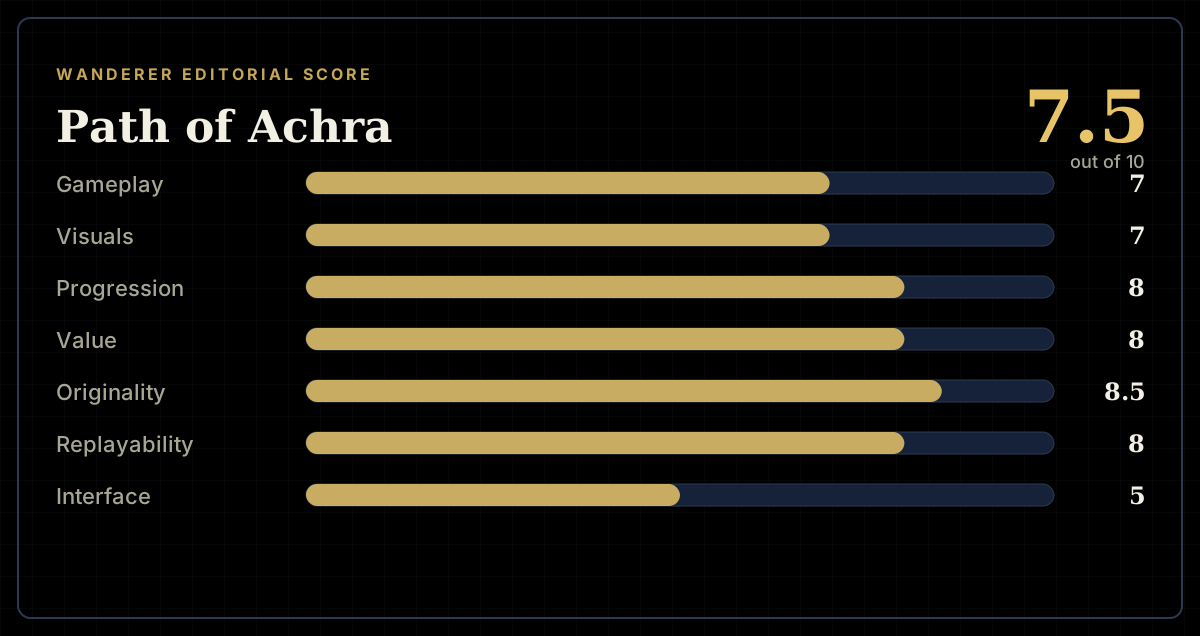
How the review scores each part of the gameWanderer Editorial -
The short versionWanderer Editorial