Game review
Nubby's Number Factory
7.5 / 10
- Developer
- MogDogBlog Productions
- Publisher
- MogDogBlog Productions
- Released
- 7 March 2025
- Platforms
- Windows
- Genre
- Roguelike
- Monetisation
- One-time purchase. No DLC, no in-game purchases.
- Players
- Single-player
The short version
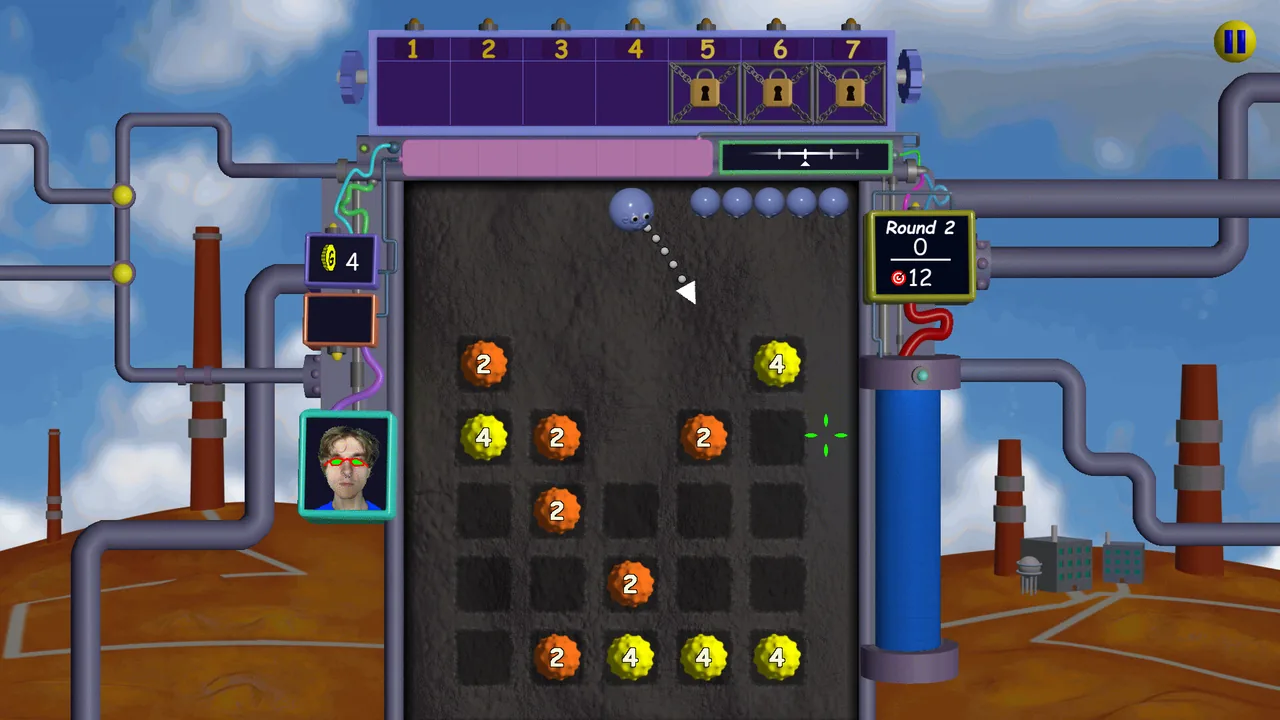
You drop a ball down a pegboard, it bounces off things, and the number gets bigger. Then you buy items that make the number get bigger faster, and try to hit escalating quotas before the factory fires you. It's cheap, it's compulsive, and it's 97.4% positive across 17,838 English reviews.
The criticism is the most concentrated I've measured: **RNG or luck appears in 56 of the 100 most-helpful negatives**, with pegs and bounces in another 41. The complaint isn't that it's hard — it's that losing rarely feels earned. The achievement data supports them: the *most common* achievement is held by 24.4% of players and the median by **1.8%**.
Biggest strengths
- A compulsive escalation loop that gets its hooks in quickly
- Strong item and synergy variety for the price
- Genuinely cheap, with no DLC or in-game purchases
Biggest weaknesses
- Outcomes hinge on physics bounces you can't reliably predict or plan around
- Item synergies can be nullified by a single bad drop, which reviewers find deflating
- Extremely punishing — the median achievement is held by 1.8% of players
Who it's for: People who like number-go-up loops and can enjoy a game they don't fully control. If losing to a bad bounce would make you close the game, this isn't for you.
Our recommendation: Buy it — at NZ$7.39 with steady updates and no monetisation it's very easy value, and the loop is genuinely moreish. Just go in understanding that the ball decides a lot, and that a substantial minority of players find that unacceptable rather than charming.
7.5 / 10
Fifty-six of the hundred most-helpful negative reviews of this game are about randomness. That is the most concentrated single complaint I have measured in any corpus, and it deserves to be taken seriously rather than waved away as sour grapes.
A 1.4-hour reviewer states the case: "This game is pure RNG and takes essentially zero strategy or skill. Losing a run almost never felt like it was my fault, it always felt like it was due to an unlucky bounce." A 16.8-hour player: "After 15 hours, I don't feel like I'm failing runs because of a lack of skill, but because of unp[redictable bounces]." A 1.6-hour reviewer in March 2026: "Item and book synergies all sound really cool on paper until they just… stop working entirely because Nubby messed up that round."
Are they right?
Partly, and the achievement data is the strongest evidence they have.
Nubby's Number Factory has 13 achievements. The most common is held by 24.4% of players. The median is held by 1.8%. The rarest, 0.2%. For comparison, Hotline Miami — a game with a reputation for brutality — has a median achievement of 10.3%, and Rift Wizard 3, the hardest thing I've covered, sits at 1.4%.
So three quarters of the people who buy this never clear its easiest milestone. That's consistent with people bouncing off hard rather than mastering it, and it's the kind of number a 97.4% badge completely hides.
Where I'd push back is on "zero strategy". The item economy is real: you choose what to buy, what to combine, and how to shape the board, and the players with 200-plus hours are clearly doing something the one-hour players aren't. But the final arbiter of any given round is a bouncing ball, and no amount of planning removes that. Whether that's tension or injustice is a genuine matter of taste, and this corpus splits cleanly along it.
One specific grievance is worth flagging: a mid-2025 physics change. A 10-hour reviewer wrote that "prior to the change I quite liked it, but I just can't get runs going anymore" — a reminder that in a game this dependent on feel, retuning the physics is a bigger intervention than a balance patch.
What it does well
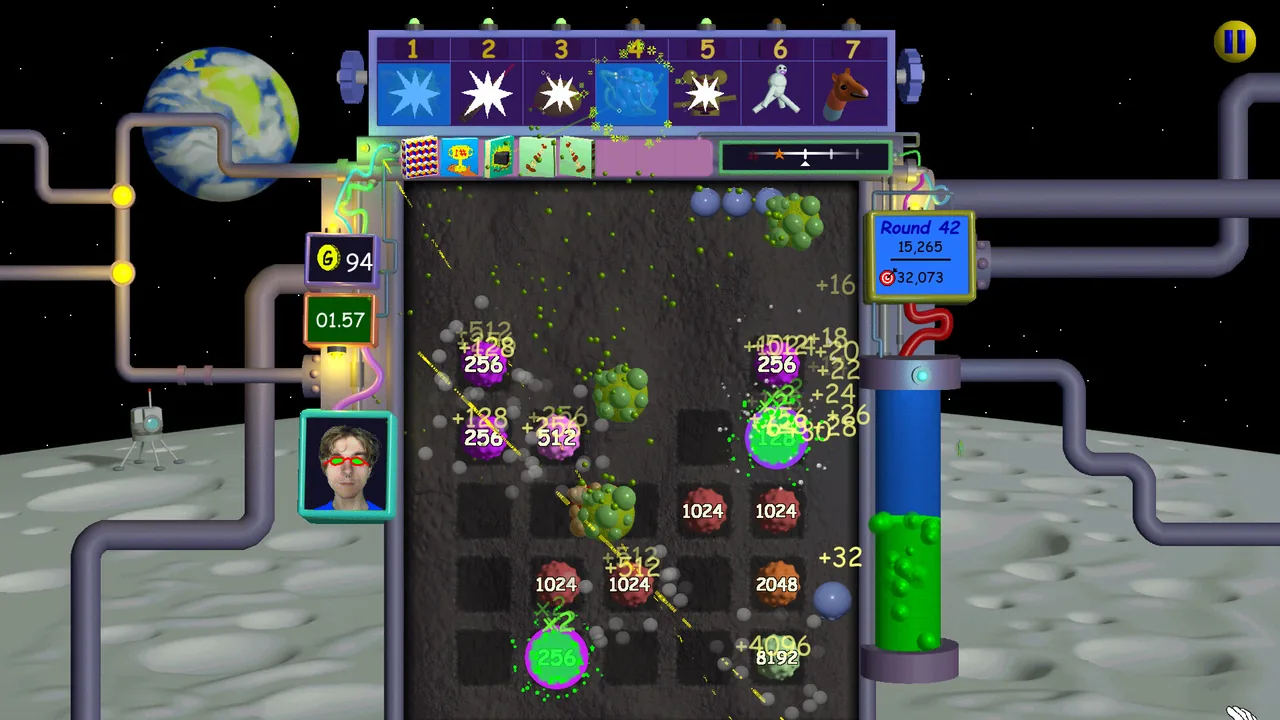
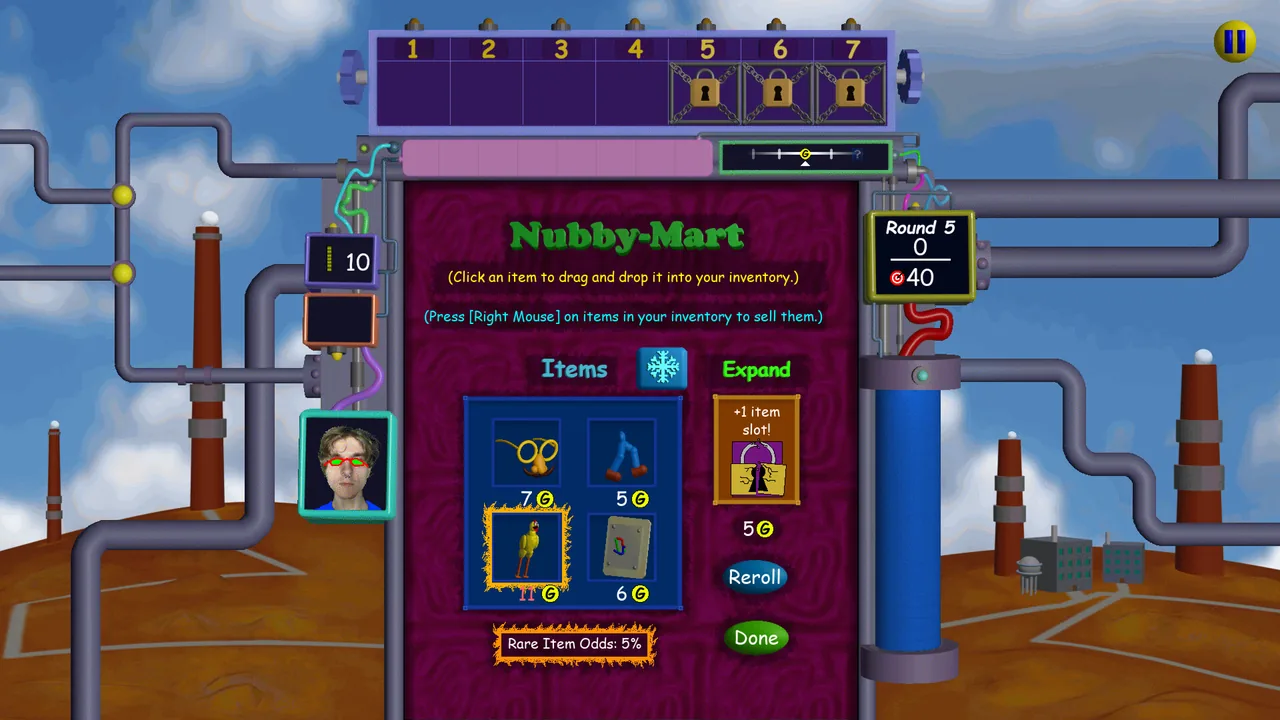
The loop. Escalating quotas, an item shop between rounds, synergies that multiply, and numbers that grow satisfyingly large — the same appetite Balatro feeds, filtered through Peglin's pegboard. Eight negatives name Balatro directly, which tells you what audience found it.
At NZ$7.39 with no DLC and no purchases of any kind, the value is straightforward. And the developer is working: patches through v1.4.7.3 in July 2026, added Russian and European Spanish localisations, Steam community items, and a mobile version in April 2026 — a year of steady output from a one-person studio.
Notably, the launch-window technical problems are gone. Crash complaints run 4 in 2025, 1 in 2026, and none in the hundred most recent reviews. The most-upvoted negative even carries a September 2025 update from its author confirming saving was added and the crashes stopped — while maintaining that "the fundamental gameplay problem persists". That's the fourth review today where a top critic has partially retracted their own complaint, and it's a good habit to check for.
The verdict
Nubby's Number Factory earns a 7.5. It's a well-made, compulsive, genuinely cheap number-go-up roguelike from a solo developer who has supported it properly for over a year, and 97.4% of its audience are happy.
It doesn't score higher because its critics have identified something real. A run-based game asks you to learn from failure, and this one frequently gives you a failure there was nothing to learn from. The achievement curve suggests most buyers hit that wall early.
Buy it for seven dollars. If you find yourself blaming the ball more than yourself after a few hours, that's the game telling you something, and a lot of people have heard it.
Pros and cons
Pros
- A compulsive escalation loop that gets its hooks in quickly
- Strong item and synergy variety for the price
- Genuinely cheap, with no DLC or in-game purchases
- Actively supported — regular patches through mid 2026, plus added localisations
- Launch-window crashes have been fixed; none appear in recent reviews
Cons
- Outcomes hinge on physics bounces you can't reliably predict or plan around
- Item synergies can be nullified by a single bad drop, which reviewers find deflating
- Extremely punishing — the median achievement is held by 1.8% of players
- Physics changes during 2025 upset players who had adapted to the original feel
- Little to look at; the presentation is deliberately drab
Screenshots
-
Nubby's Number FactoryImage: MogDogBlog Productions via Steam -
Nubby's Number FactoryImage: MogDogBlog Productions via Steam -
Nubby's Number FactoryImage: MogDogBlog Productions via Steam -
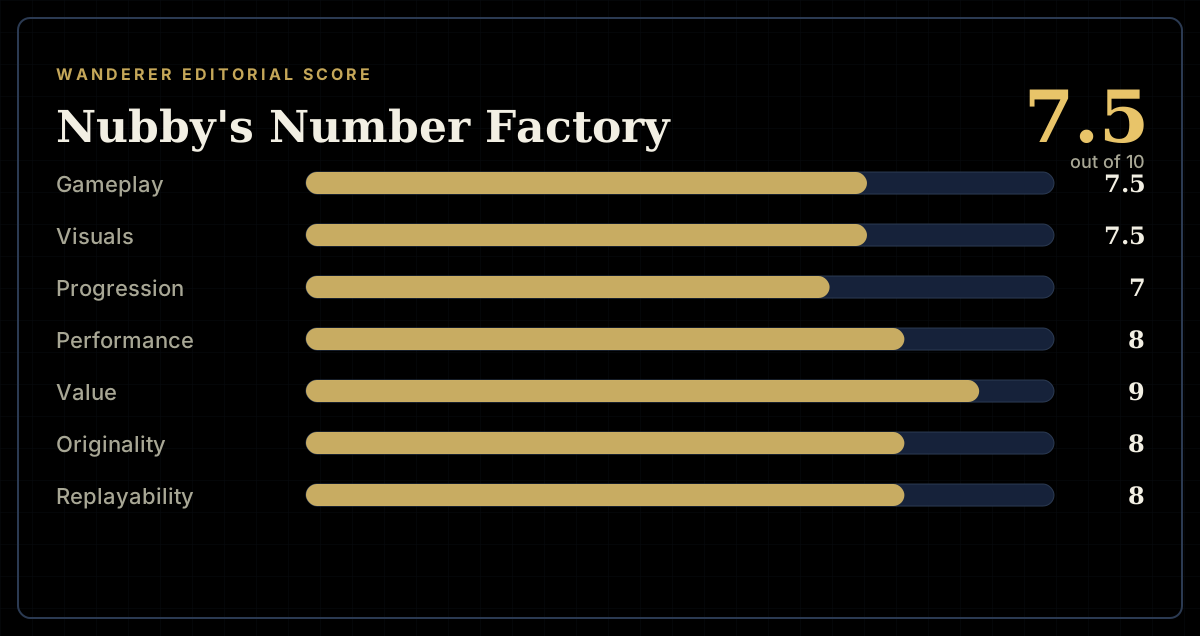
How the review scores each part of the gameWanderer Editorial -
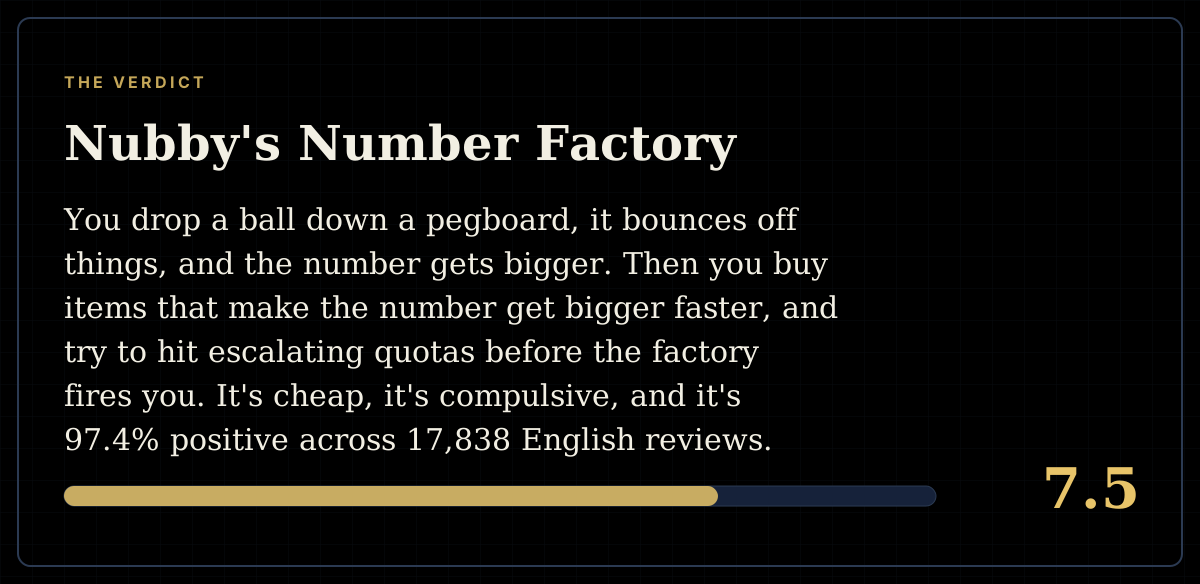
The short versionWanderer Editorial