Game review
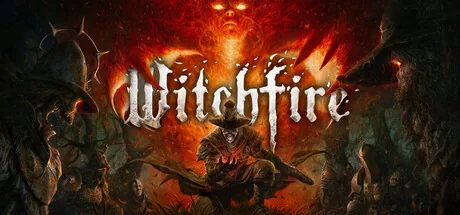
Witchfire
7.5 / 10
- Developer
- The Astronauts
- Publisher
- The Astronauts
- Released
- 23 September 2024
- Platforms
- Windows
- Genre
- Roguelite Shooter
- Monetisation
- One-time purchase. No DLC, no in-game purchases.
- Players
- Single-player
The short version
The shooting in Witchfire is exceptional. Weapons have weight and personality, the spell-and-relic loadout gives every run a different shape, and the dark-fantasy world is one of the best-looking environments in any first-person game. It sits at 91.6% positive across 11,655 English reviews, with 93 of the last 100 positive.
What its critics object to isn't the shooting — it's everything wrapped around it. Level, weapon, difficulty, stamina, progression and grind dominate the negative reviews, and the single sharpest summary comes from a *positive* one: "It feels like several different designers had several different ideas about punishing you." Progression is permanent, difficulty escalation is irreversible, and a mistimed hit can switch off a whole combat system for the rest of a fight.
Biggest strengths
- Gunplay that stands with the best in the genre — weighty, precise and distinct per weapon
- Extraordinary environment art; the photogrammetry work makes the world genuinely striking
- Runs well, which reviewers repeatedly note as a pleasant surprise
Biggest weaknesses
- Difficulty escalation is permanent and irreversible, and gates weapons, areas and challenges
- Multiple overlapping punishment systems that reviewers find contradictory rather than demanding
- Getting hit once can lock you out of the stun/weakpoint system for the remainder of an encounter
Who it's for: Players who want a single-player shooter with genuine mechanical depth and are happy to be punished for it. Excellent in short sessions. Not for anyone who wants a run-based game that lets them experiment freely.
Our recommendation: Buy it — but if you're on the fence, the Early Access period is nearly over, so waiting for 1.0 costs you nothing and gets you the finished progression design. Understand before you start that raising difficulty is a one-way door.
7.5 / 10
The most incisive thing anyone has written about Witchfire is buried in a positive review with 398 votes, from a player with 80 hours:
There are a lot of different systems for punishing you. It feels like several different designers had several different ideas about punishing you.
That is the review. Everything else is detail.
The shooting
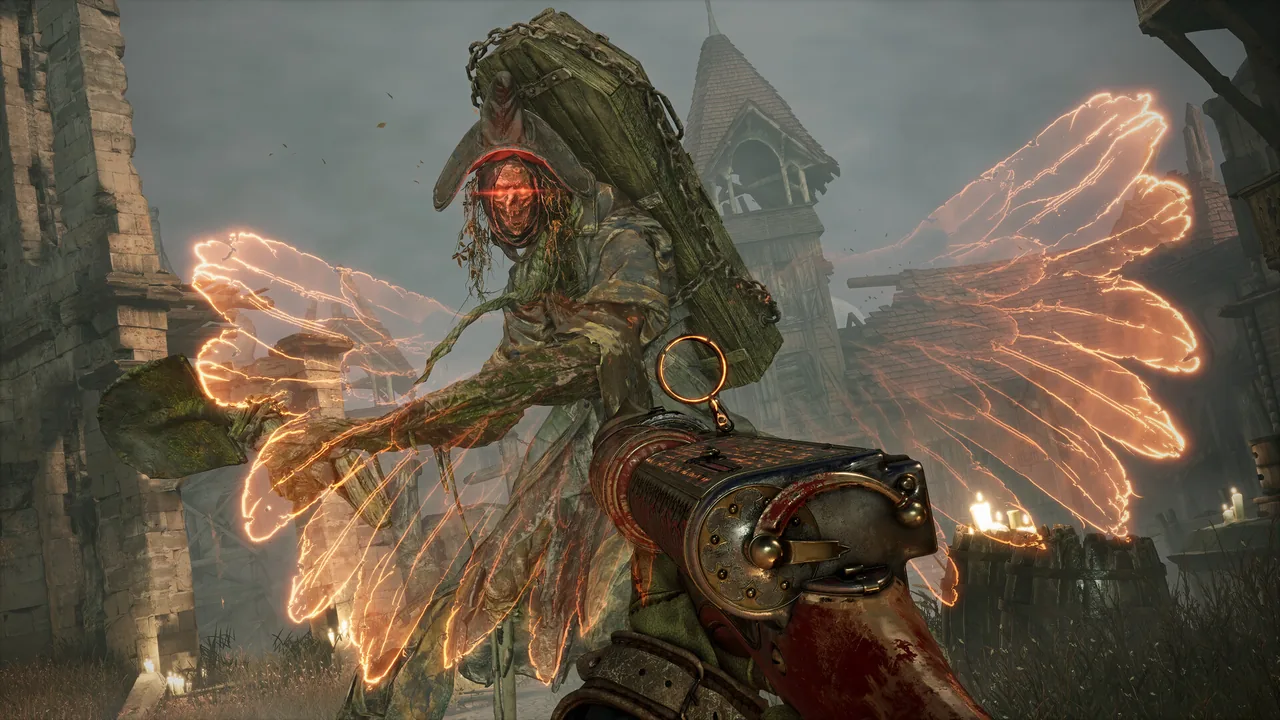
Let's establish what isn't in dispute. Witchfire's gunplay is superb. The Astronauts came out of the studio behind Painkiller and Bulletstorm, and it shows in the weapon feel — every gun has weight, recoil character and a distinct role, and the spell-and-relic loadout means two runs with different kit play genuinely differently.
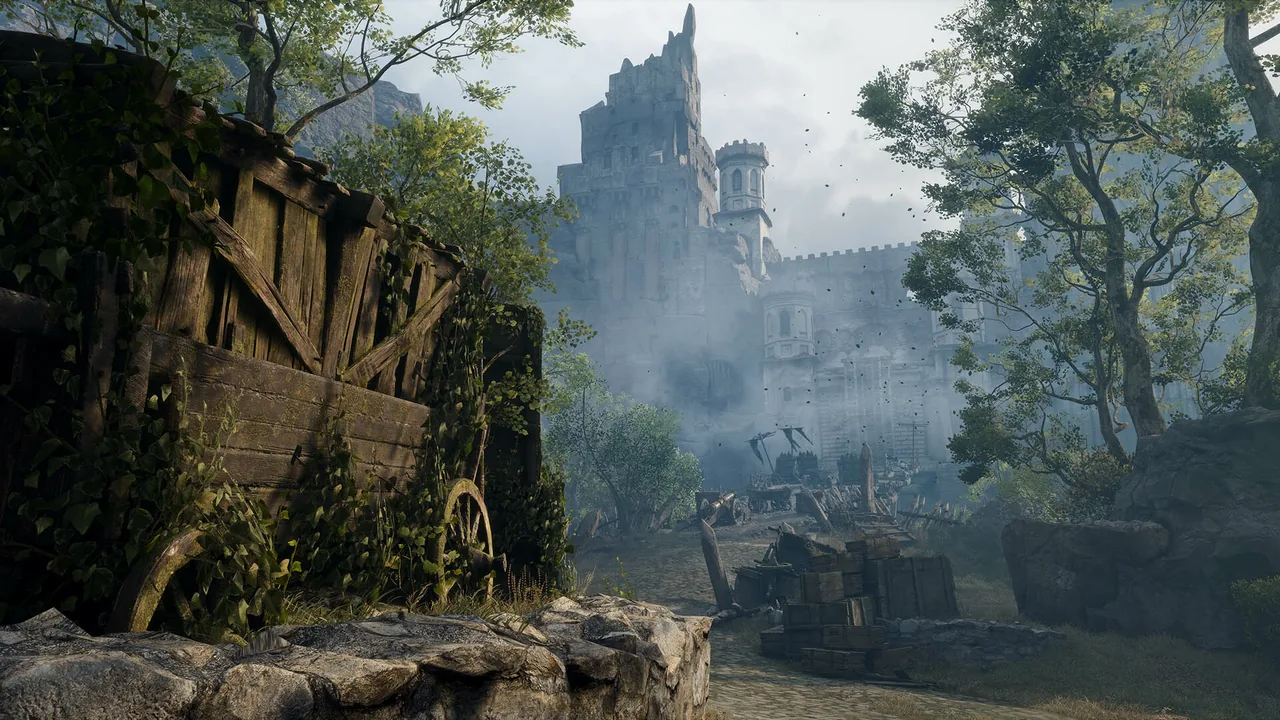
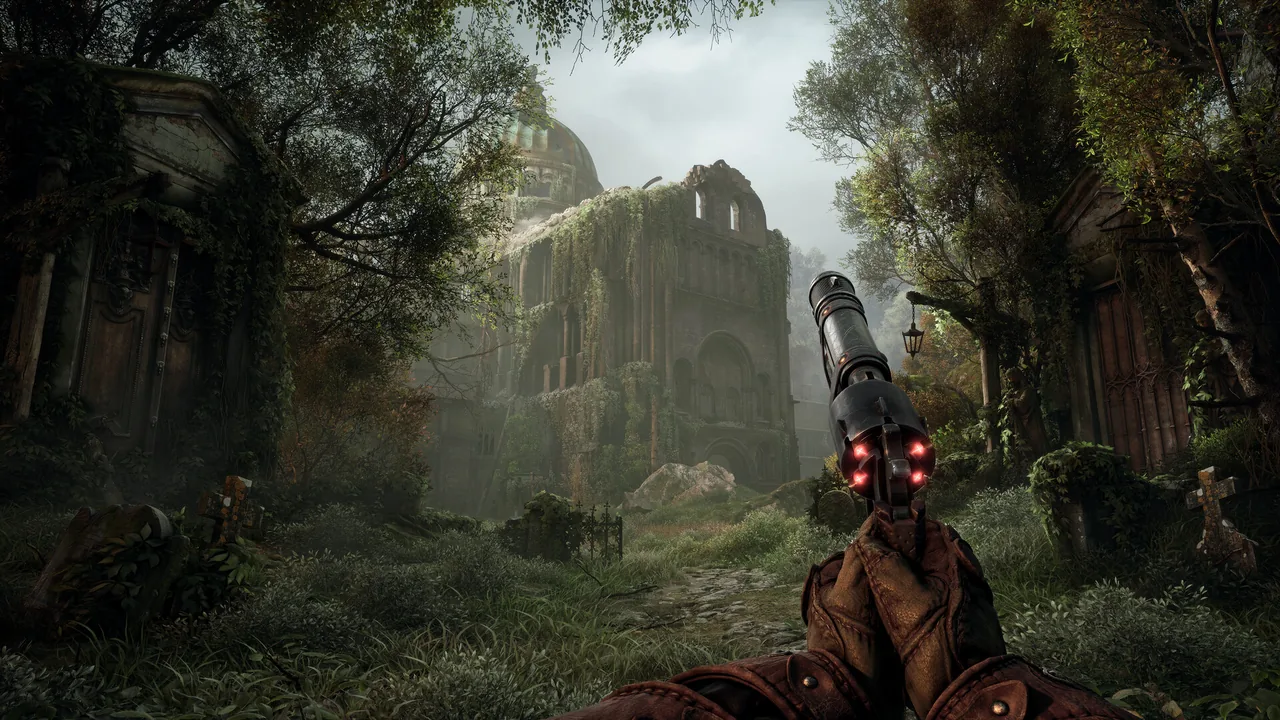
The world is the other triumph. This is a photogrammetry-heavy dark fantasy: crumbling churches, drowned bogs, a sky that looks like it's about to do something unpleasant. It's one of the best-looking first-person environments on the market, and — unusually — reviewers keep noting that it runs well. "The performance is well optimized, with only occasional dropped frames," writes one of the harsher critics.
Even the negatives lead with praise. A 238-vote thumbs-down opens: "The combat feels excellent, with highly satisfying visuals, impactful camera work, and impressive bullet effects." A 182-vote one: "Witchfire is a really good shooter mired in some weird and contradictory design decisions."
The most-upvoted positive is funnier and just as accurate: "imagine the gunplay of Destiny but none of the intense shame of being a Destiny player."
The systems
Now the other half. Bucket the hundred most-helpful English negatives by term and the picture is unambiguous: level 42, weapon 38, hard 34, map 33, enemy 33, difficulty 28, stamina 23, progression 21, grind 20, punishing 10. Almost nothing about shooting. Nearly everything about the scaffolding.
The specific mechanic worth knowing before you buy comes from a 56-hour player, 117 votes, in June 2026: "If I understood the game progression sooner, I probably would've refunded this game… you are not able to progress in certain areas until you permanently increase the difficulty. Certain weapons, challenges, and areas are all tied to difficulty progression that is non-reversible."
A one-way difficulty ratchet that gates content is a defensible design. It is also the opposite of what most players expect from a roguelite, where the promise is usually that you can experiment freely because runs are cheap. Another reviewer, 102 votes, describes a related friction: the combat-focus system that unlocks enemy weak points switches off entirely if you take a single hit, so one mistake removes a mechanic for the rest of the encounter.
And a 145-vote review names the deeper worry — that the game "plays like a list of the games that these developers love. Souls/Remnant games, Apex, Hades perhaps, and a dash of extraction," without settling on its own identity.
Is it getting better?
Yes, and the record is unusually clear.
The negative reviews are spread across the whole life of the game rather than clustered — 5, 12, 3, 4, 19, 18, 14, 19, 6 by quarter — which tells you this is a persistent design argument, not a revolt. But recent sentiment is the strongest it has been: 93 of the last 100 English reviews are positive, from players with a 30.4-hour median, double the 15.5-hour median of the critics.
The update feed is exemplary. Named releases — Reckoning in December 2025, Revelations in June 2026 taking it to 0.9 — with weekly "Road to Revelations" devlogs beforehand, prompt hotfixes, and a January 2026 post titled "World Corruption is dead, long live World Corruption", which is a studio publicly scrapping a system players disliked and rebuilding it.
Then, on 30 July 2026, a "Final Witchfire Early Access FAQ". After nearly two years, 1.0 is close.
That places it firmly on the good side of the Early Access line I keep drawing — the Dead as Disco and Paralives pattern of visible, frequent delivery, not the Assetto Corsa EVO pattern of drift.
The verdict
Witchfire earns a 7.5. On feel alone it's an 8.5 and the art is a 9 — as a thing to point and shoot it has few peers, and it's remarkably well suited to an hour at a time, which one 789-vote reviewer calls "a great game for Dads and other busy people."
It sits where it does because the progression design is still arguing with itself after two years: punishment layered on punishment, a difficulty ratchet you can't undo, and systems that switch off in ways that feel arbitrary rather than demanding. That's the difference between hard and frustrating, and 91.6% of players landing on the right side of it doesn't make the complaint wrong.
Buy it if a punishing single-player shooter with great guns sounds good. But the studio has just announced the end of Early Access, so if you have any hesitation, wait a little — you'll get the version where these arguments have been settled, at a price that will likely be lower.
Pros and cons
Pros
- Gunplay that stands with the best in the genre — weighty, precise and distinct per weapon
- Extraordinary environment art; the photogrammetry work makes the world genuinely striking
- Runs well, which reviewers repeatedly note as a pleasant surprise
- Superb for short sessions — an hour at a time still yields real progress
- Exemplary Early Access conduct, with named updates, weekly devlogs and a public road to 1.0
Cons
- Difficulty escalation is permanent and irreversible, and gates weapons, areas and challenges
- Multiple overlapping punishment systems that reviewers find contradictory rather than demanding
- Getting hit once can lock you out of the stun/weakpoint system for the remainder of an encounter
- Progression described as slow and underwhelming relative to the time invested
- NZ$56.99 list is steep for a game still in Early Access after nearly two years
Screenshots
-
WitchfireImage: The Astronauts via Steam -
WitchfireImage: The Astronauts via Steam -
WitchfireImage: The Astronauts via Steam -
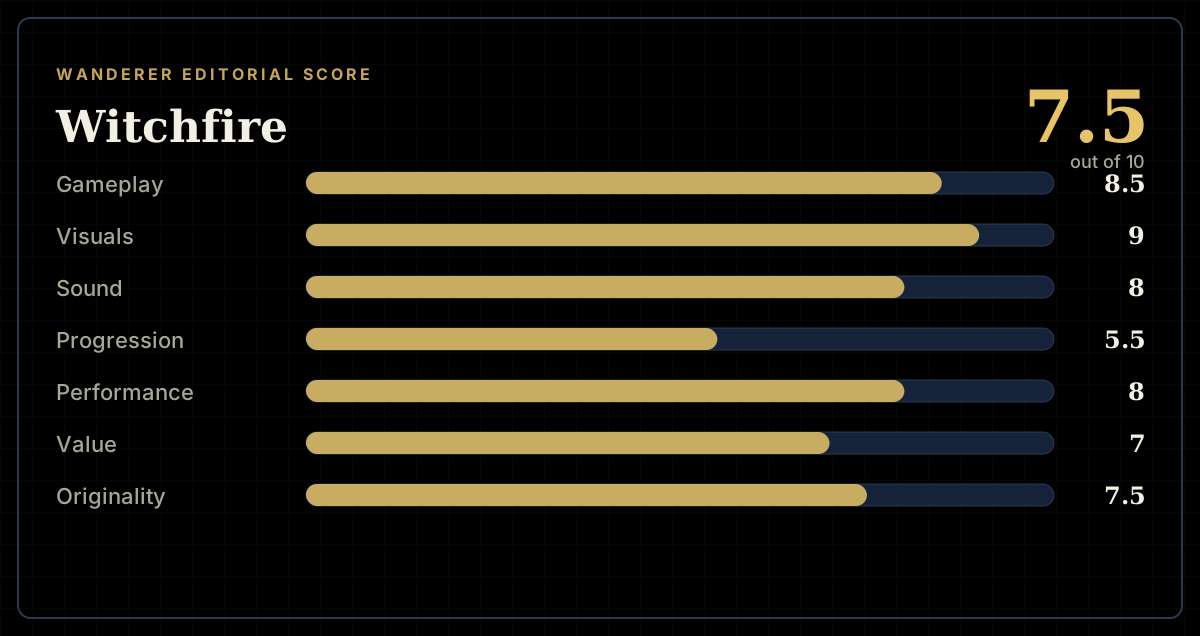
How the review scores each part of the gameWanderer Editorial -
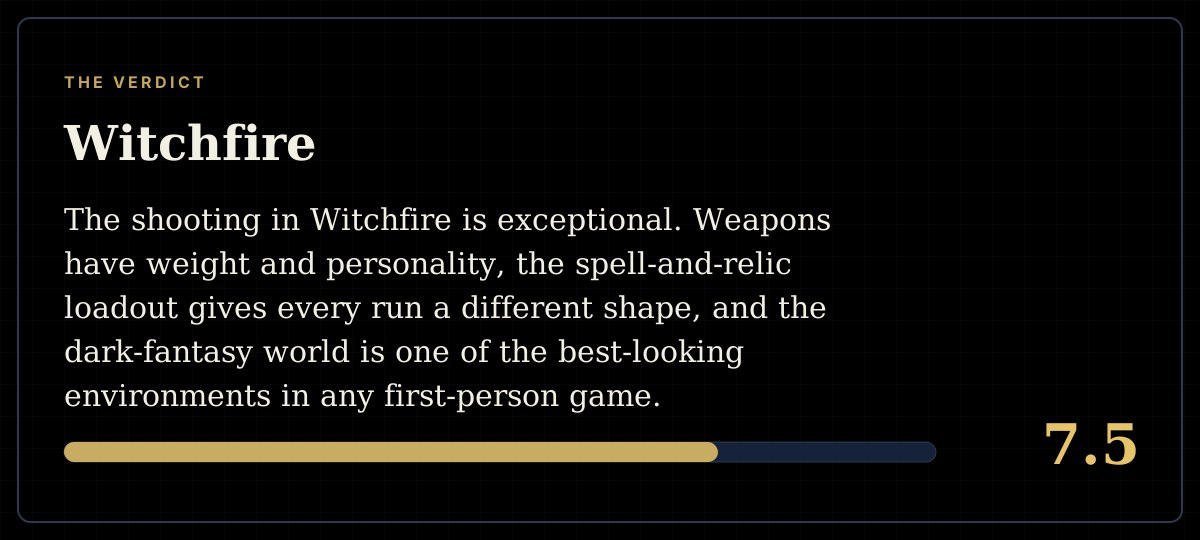
The short versionWanderer Editorial