Game review
Destiny 2
6.5 / 10
- Developer
- Bungie
- Publisher
- Bungie
- Released
- 1 October 2019
- Platforms
- Windows
- Genre
- Looter Shooter / MMO
- Monetisation
- Free to install, with paid expansions, seasonal content and an in-game premium store. Twelve DLC appear on Steam; pricing eleven of them on 4 August 2026 gives NZ$83.88, though that figure does not capture the in-game currency store, which is where much of the spending happens.
- Players
- Online co-op, raids, matchmade activities and PvP
The short version
Nothing else in games feels like firing a Destiny 2 hand cannon. The gunplay, the ability economy, the art direction and the sound design are genuinely industry-leading, and the raids are among the best cooperative content anyone has built. What surrounds that is a live-service model that has removed content players paid for, replaced permanent story with seasonal material that expires, and periodically resets the value of gear people spent hundreds of hours earning. The result is a review corpus where the most damning verdicts come from the most devoted players.
Biggest strengths
- Moment-to-moment combat that even its angriest critics describe as the best in the market
- Superb art direction, sound design and weapon feel, with an ability system that supports genuine build crafting
- Raids and dungeons are landmark cooperative design, demanding real coordination and communication
Biggest weaknesses
- Content players had paid for has been removed from the game, which remains the single most cited complaint years later
- Seasonal story content is temporary by design, so narrative context routinely disappears
- Expansions have periodically invalidated gear and progression, with a 2025 gear-tier revision driving away players with five-figure hour counts
Who it's for: Players who want the best-feeling first-person combat available and can treat it as a game to dip into rather than a commitment. Not for completionists, not for players who resent FOMO, and not for anyone who wants the story they paid for to remain playable.
Our recommendation: Install it free and play the opening hours purely for the feel of it — you'll know within an evening whether the combat has you, and that costs nothing. Beyond that, buy narrowly: a single current expansion rather than a back catalogue, and treat seasonal content as rental rather than purchase. Do not go in expecting to experience the story from the beginning, because substantial parts of it are no longer in the game.
6.5 / 10
Look at the playtimes attached to Destiny 2's most-upvoted negative reviews. 2,635 hours. 5,441 hours. 6,117 hours. 10,343 hours.
These are not people who bounced off it. These are the people who built their evenings around it for a decade, and the sentence they keep writing is some version of the one a 6,117-hour player put most plainly: "This is the best game that I can't recommend."
That's the review. Everything else is detail.
The combat is genuinely the best there is
Let me be unambiguous, because the criticism that follows only makes sense if this part is true.
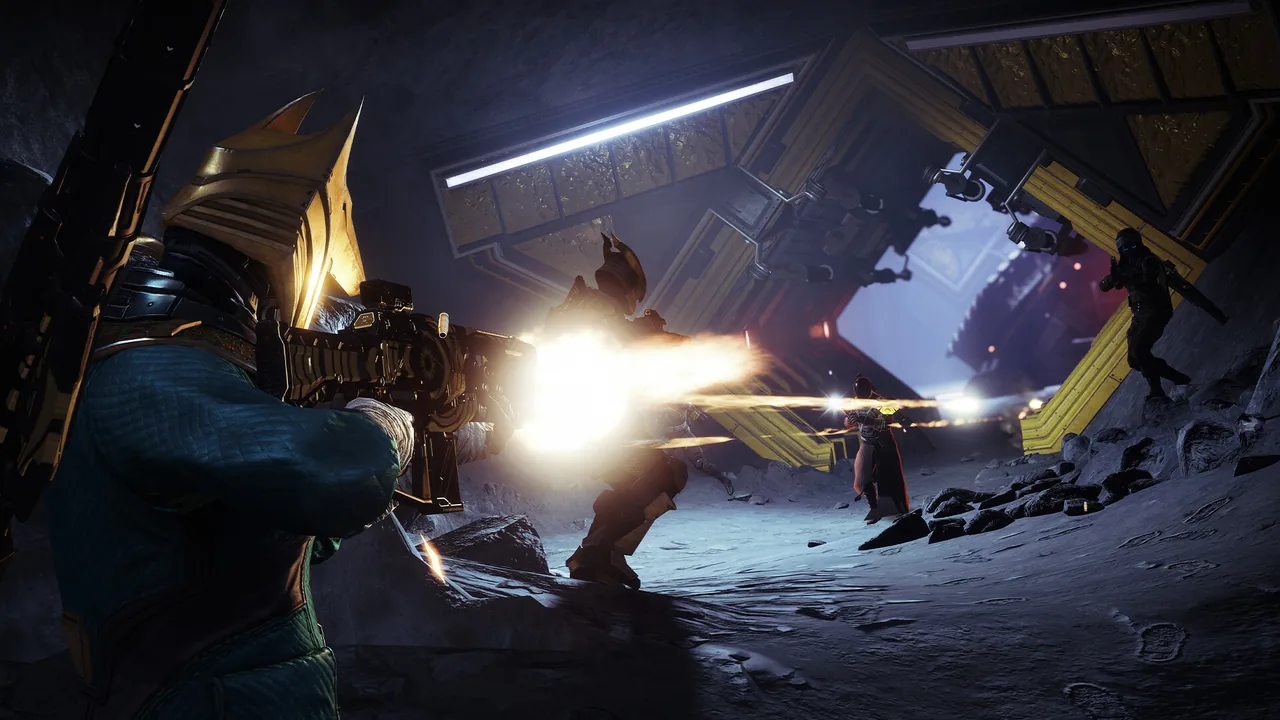
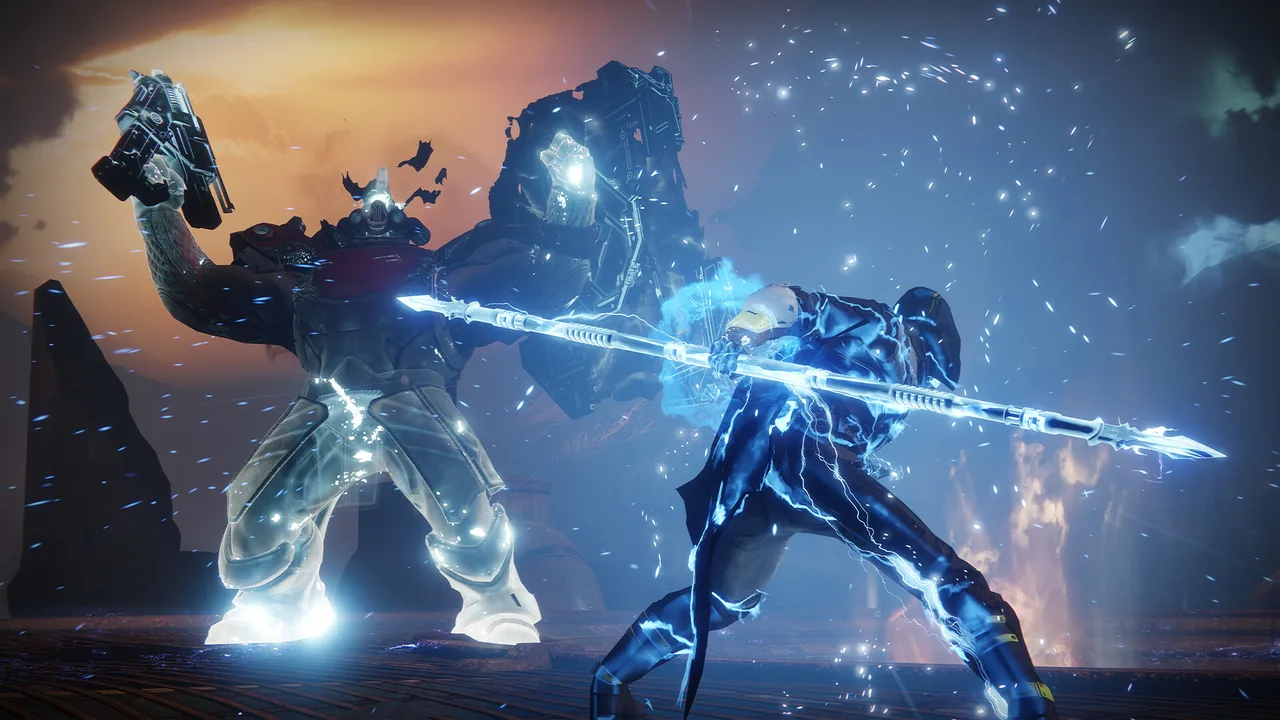
Destiny 2 has the finest first-person gunplay in the industry. Weapons have weight and personality that no competitor matches; a hand cannon lands like a hammer, an auto rifle chatters, and the audio design sells every shot. Abilities are on a resource economy that makes a firefight a rhythm of grenade, melee, weapon, super rather than a cooldown checklist. Movement is fast and expressive.
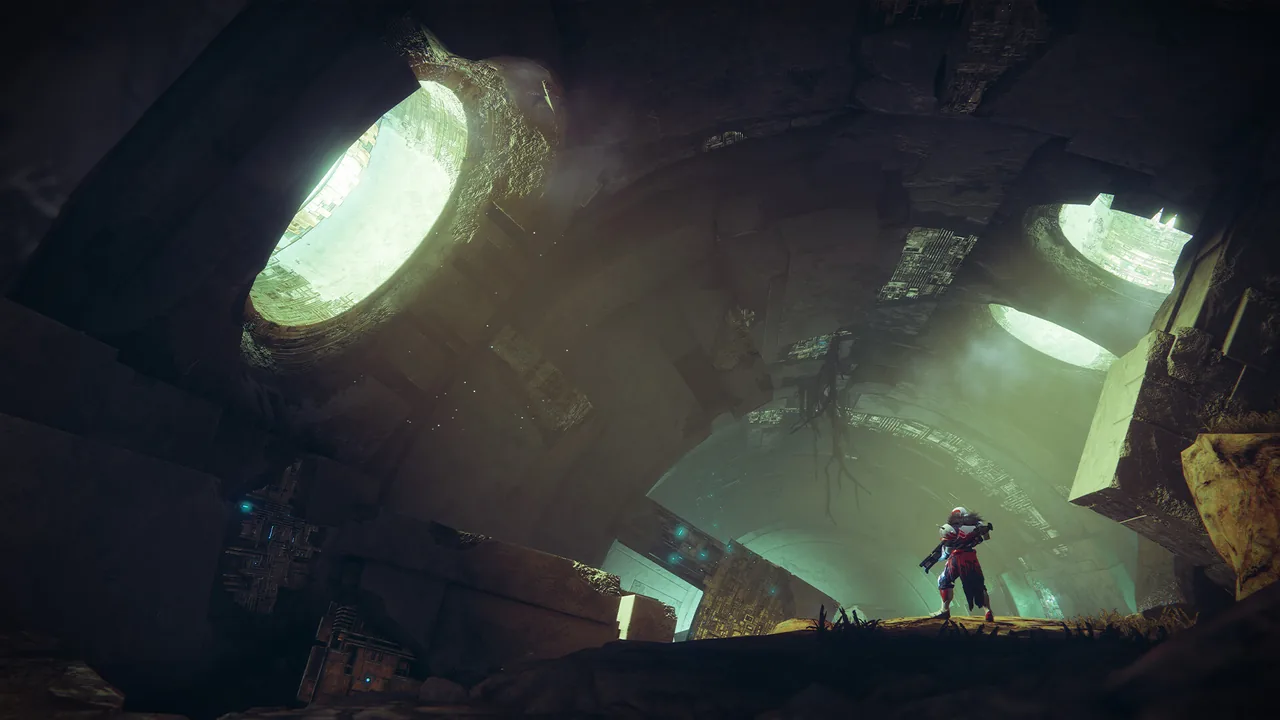
The art direction is extraordinary — vistas that stop you, architecture with actual scale, and a visual identity nothing else has copied successfully. And the raids are landmark work: multi-hour cooperative puzzles requiring six people to coordinate mechanics nobody explained, which produce the best "we actually did it" moments in the medium.
Even the reviewers writing thousand-word denunciations stop to say this. One with 5,441 hours calls it "a magnificent game with probably the most polished and satisfying gunplay and abilities in the entire market" — in a review recommending you don't play it.
What they're actually angry about
Content was removed. This is the first and largest complaint and it has never gone away. Areas, campaigns and activities — including material people had bought — were taken out of the game as it went along. A 2,635-hour reviewer describes a third of the game being ripped out, noting that other persistent-world games manage to keep their legacy content. Even a positive review from a recent newcomer opens by saying they'd heard Bungie had removed paid content before they ever installed it.
That's an unusual thing for a game to be known for among people who have never played it.
The story is temporary by design. Seasonal content arrives, tells part of an ongoing narrative, and then expires. The practical effect, as a 1,750-hour player puts it, is that half the context for the story you're playing is simply no longer available — you're reading chapter nine of a book whose earlier chapters were withdrawn.
Progression gets reset by design decisions. The 10,343-hour reviewer quit over a 2025 expansion introducing new gear tiers and weapon tiers, which they describe as telling the playerbase that everything they had earned no longer counted. Whatever the balance rationale, that's the risk inherent in a model where power is the reward: revising power revokes the reward.
The free tier isn't the game. "Pretending to be a free-to-play game with perhaps the most abysmally shallow free-to-play component ever," writes a 1,008-hour player, adding that the cost of entry keeps climbing as more paid content accumulates. That matches the twelve DLC on the Steam page — and those don't include the in-game premium store where a lot of the actual spending happens.
What "removed content" actually costs a player
It's worth being concrete about why content removal draws more anger here than almost any other live-service decision, because "they deleted some maps" undersells it.
Destiny's whole reward structure is retrospective. The reason to play a raid for the hundredth time is a weapon that drops there. The reason a weapon is precious is where it came from and what it took. Your inventory is a record of places you've been and things you finished — which is why players talk about specific guns the way other people talk about photographs.
Take the activity out of the game and you don't just remove content, you sever the connection between the reward and its origin. The gun is still in your vault. The place it came from doesn't exist any more, and no new player will ever earn one. That converts a trophy into a curio.
It also breaks the newcomer's route. A player arriving today cannot play the campaigns that established the characters currently talking to them, cannot visit destinations the dialogue references, and cannot experience the arc that made the veterans care. Several reviews note the absurdity of a story-heavy game where the story's opening chapters are unavailable at any price.
That's the difference between this and an MMO retiring an old raid. Persistent-world games usually leave the content in place and let it become trivial; you can still walk through it. Destiny removed the room. And because expansions were sold individually, a portion of what was removed had been bought — which is the specific fact that turns a design complaint into a consumer one, and the reason it still leads the negative reviews six years on.
The addiction problem
There's a tone in this corpus I haven't seen anywhere else, and it's worth naming because it's a genuine consumer warning.
Reviewers describe the game the way people describe habits they're trying to break. One compares it to heroin — it feels so good until it doesn't, and then you're chasing it. Another says they "managed to stop gas lighting myself about how good it was." A 4,217-hour review is titled "I hate Destiny 2, it's my favourite game."
Underneath that is a design fact rather than a metaphor: much of Destiny's structure is built to create urgency — seasonal deadlines, expiring content, rotating rewards, weekly resets. That's retention engineering, and it works, and a lot of people who've been inside it for years are describing what it felt like on the way out.
Whether that troubles you is personal. But it's the reason this review's recommendation is "play the free part for an evening and see" rather than "buy in."
6.5 out of 10. Rated 6.5 out of 10.
As a shooter, Destiny 2 is a 9.5 and I'd defend that against anything on Steam. As a product you commit to, it's the one game I've reviewed where the people best placed to judge it — thousands of hours, a decade of loyalty — are the ones telling you to stay away.
Six and a half is the average of those, and I think it's generous rather than harsh: the combat is so good that it survives a model which has deleted things people paid for, made its story disposable, and periodically annulled its own rewards.
Install it. It's free. Spend an evening learning why people love it, and then make a deliberate decision about whether you want the rest — because the rest is where the arguments are, and 660,000 reviews suggest almost nobody stays neutral.
Pros and cons
Pros
- Moment-to-moment combat that even its angriest critics describe as the best in the market
- Superb art direction, sound design and weapon feel, with an ability system that supports genuine build crafting
- Raids and dungeons are landmark cooperative design, demanding real coordination and communication
- Free to install with no barrier to trying the core experience
- Enormous engagement — the median recent reviewer has 133 hours and thousands are far past that
- Still receiving substantial content nearly a decade on
Cons
- Content players had paid for has been removed from the game, which remains the single most cited complaint years later
- Seasonal story content is temporary by design, so narrative context routinely disappears
- Expansions have periodically invalidated gear and progression, with a 2025 gear-tier revision driving away players with five-figure hour counts
- The free tier is widely described as too shallow to represent the actual game
- The cost of entry keeps rising as more paid content accumulates
- Progression systems are grind-heavy in ways that read as retention engineering rather than design
Screenshots
-
Destiny 2Image: Bungie via Steam -
Destiny 2Image: Bungie via Steam -
Destiny 2Image: Bungie via Steam -
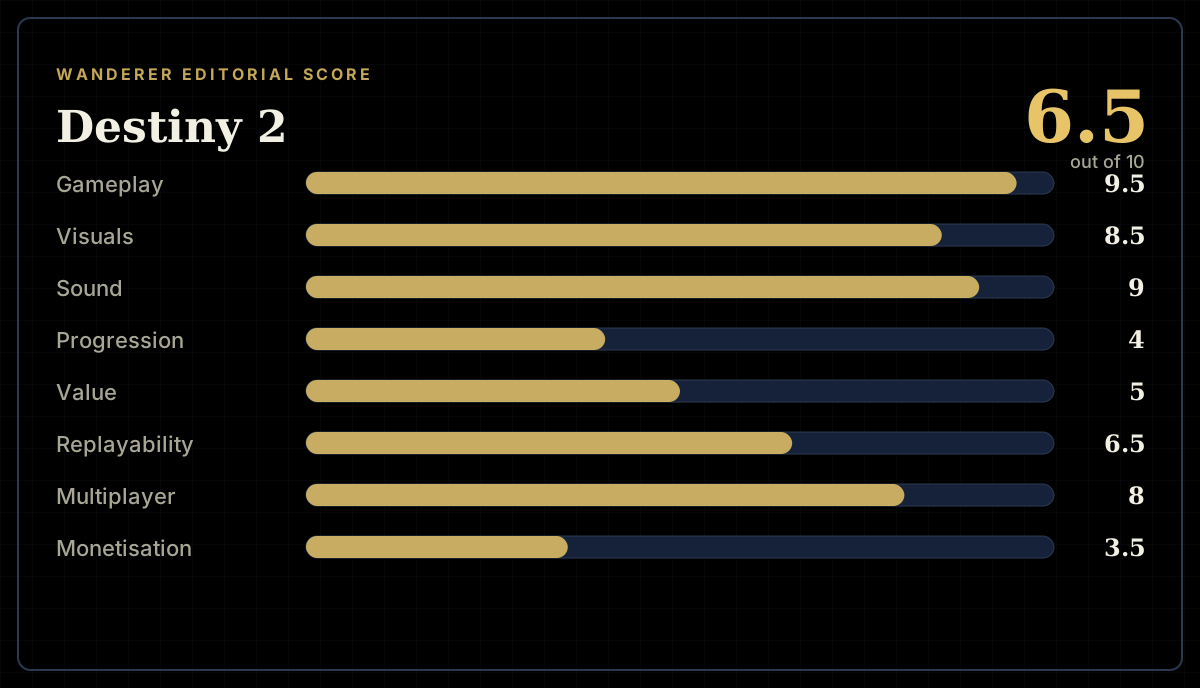
How the review scores each part of the gameWanderer Editorial -
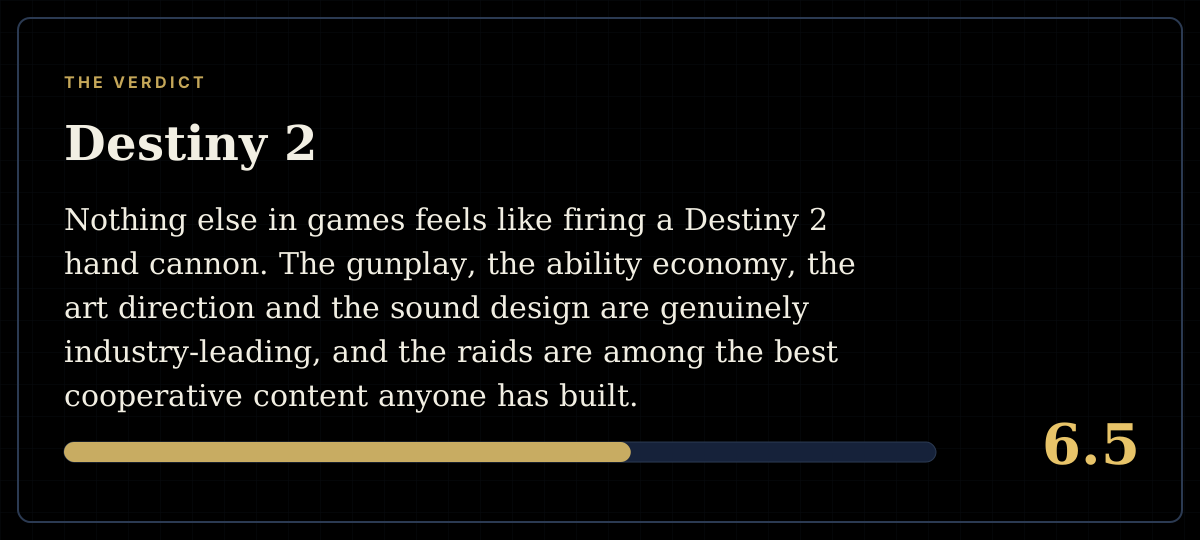
The short versionWanderer Editorial