Game review
Once Human
7 / 10
- Developer
- Starry Studio
- Publisher
- Starry Studio, NetEase Games
- Released
- 9 July 2024
- Platforms
- Windows, iOS, Android
- Genre
- Survival MMO
- Monetisation
- Free to play with in-app purchases — cosmetics, loot crates and a battle pass. No paid stat advantages, but cosmetics and passes are tied to individual characters.
- Players
- Always online; PvE and PvP servers, co-op, territory building and faction conflict
The short version
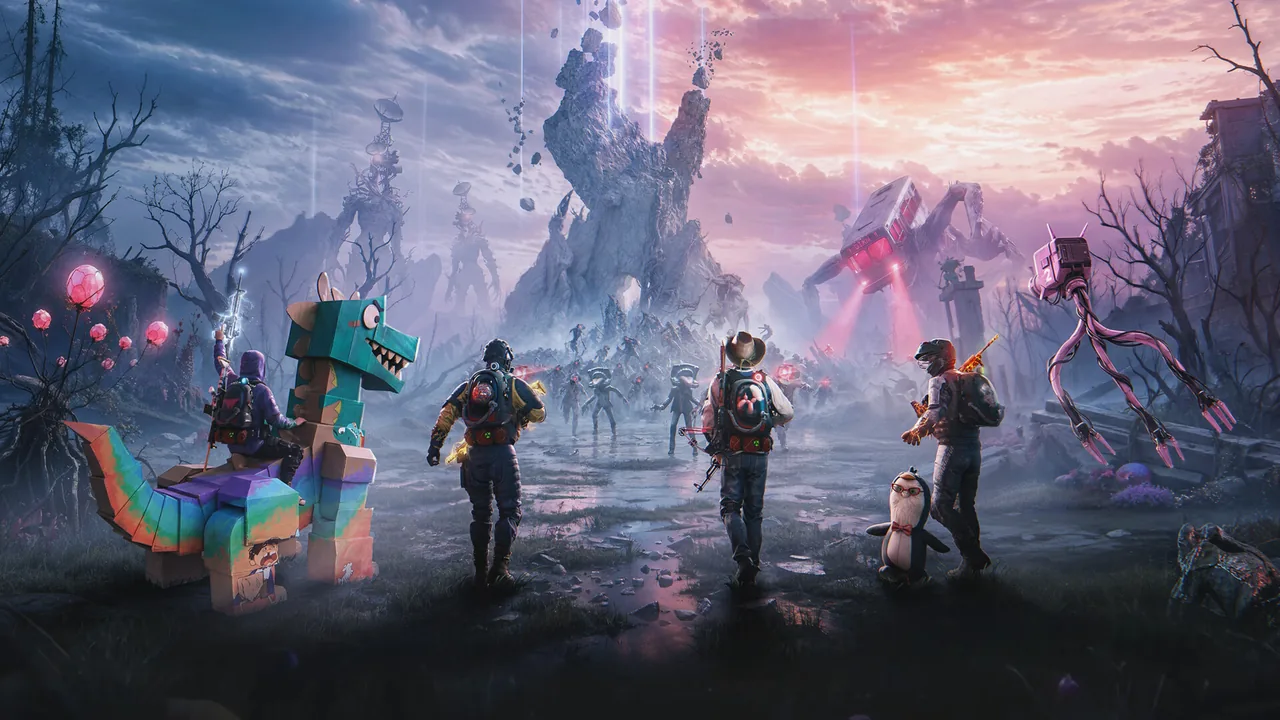
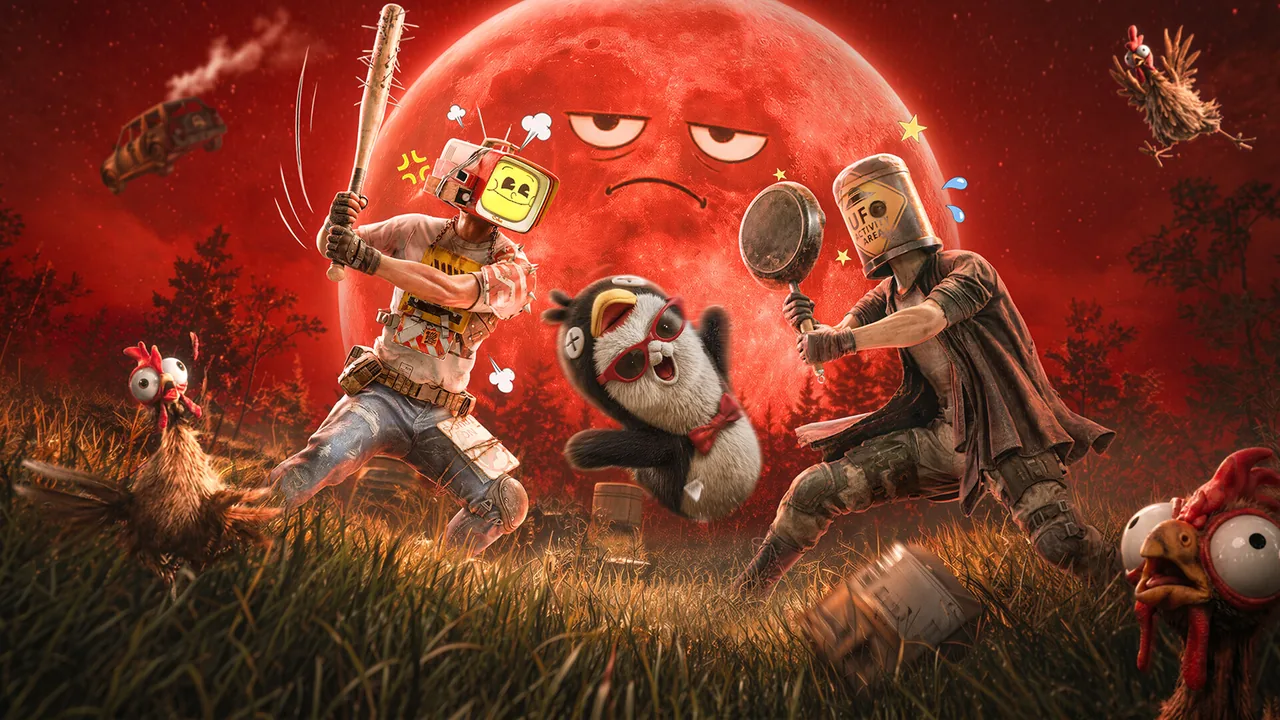
Once Human is the rare survival game with an actual imagination. Its monsters are built out of furniture and children's toys, its pollution mechanic eats your maximum health rather than a status bar, and the creatures you capture to farm your crops while you're offline are called Deviations and look like escapees from a fever dream. The building system is among the best in the genre and the whole thing is free.
For two years the case against it was simple: seasonal servers wiped your progress every six weeks. That's now largely resolved — permanent servers exist, custom servers exist, and you no longer have to choose between the game and having a life. What's replaced it is a harder problem to fix, because the loudest critics now are players with 500 to 5,000 hours who feel the game has been rebalanced out from under them repeatedly, and who watch the cash shop grow faster than the content.
Biggest strengths
- Monster and world design with real personality, well clear of the genre's usual zombies-and-rust template
- Building is fast, flexible and portable, and consistently the thing even critical reviewers praise
- Permanent and custom servers now exist, removing the forced seasonal reset that defined the game's first two years
Biggest weaknesses
- Repeated rebalancing has cost long-term players progress they had already earned, and the April 2026 patch is cited by name in review after review
- Characters are bound to servers with no transfers, and cosmetics and battle-pass rewards don't follow you to a new character
- Monetisation has drifted toward loot crates and expensive appearance systems as the content cadence slowed
Who it's for: Survival-crafting players who want something weirder than another medieval woodcutting simulator, and who like base building enough to make it the point. Best entered on a permanent server, which is a sentence that wasn't available to write in 2024.
Our recommendation: Worth installing — it's free, it's genuinely inventive, and the seasonal-wipe objection that dominates its older reviews no longer has to apply to you. Go in expecting a live-service game that reworks its own systems often, and don't buy cosmetics until you understand which character they're attached to.
7 / 10
The best thing in Once Human is a creature called a Deviation. You find one, you capture it in a containment pod, and then it lives in your base doing a job — watering crops, generating power, fighting alongside you, producing materials while you're logged out. They look like a bowl. Or an onion. Or a teddy bear, a balloon dog, a black hole, a small solemn maiden, a rabbit in a suit. There is no unifying visual logic and that's the point. This is a survival game where the loot is uncanny, and after two hundred hours of Valheim-alikes that hits differently than another iron pickaxe.
The rest of the game is a competent open-world survival shooter with an unusually good building system. But the imagination is what makes it worth writing about — that, and the fact that the criticism defining its reputation has been overtaken by events.
The complaint everyone knows, and why it's out of date
If you read this game's reviews, you will hit this within about thirty seconds. Once Human launched in July 2024 built around seasonal servers: you played a scenario for roughly six weeks, and then it ended and you started again, keeping a limited amount through a persistent home space. The most upvoted design complaint in the game's history says it plainly — "Please, PLEASE make a server that doesn't reset with seasons. I just want to play through the story and not have to get set back to nothing every time the season ends." Another player, at 1,104 hours, quit over exactly this and asked for permanent servers by name.
They got them. As of 2026 the game runs permanent servers alongside the seasonal ones, with the developers publishing merge-reservation rules for them, expanding how many are available to reserve, and designing separate reward structures so permanent-server players aren't cut off from seasonal progression rewards. There are also custom servers, where a host can configure the rules and even add buffs to weapons, plus a pioneer server track.
This matters enormously for anyone reading the score, because the overwhelming majority of the 180,078 reviews were written when the wipe was mandatory. The single most common reason people refused to recommend this game no longer has to apply to you. That's not a small correction — it's the difference between "a survival game that deletes your base every six weeks" and "a survival game with a seasonal mode you can opt into."
What the game actually plays like
The survival loop is familiar and executed well. You gather, you craft, you climb a deep tech tree through electric tools and automated farming, and you fight things. The wrinkle is Stardust pollution: contaminated food and water drain your Sanity, and lost Sanity cuts your maximum health rather than just nagging you. It makes the early game a genuine resource-management problem instead of a hunger bar to top up.
Building is the standout. It's quick, it snaps sensibly, you can edit a structure freely and then pick the whole finished house up and move it somewhere else. Reviewers who dislike nearly everything else still stop to say the building is good. The downside is aesthetic and communal — a shared world full of player structures means the landscape gets littered with other people's boxes, which several reviewers note kills the atmosphere the art team worked hard to build.
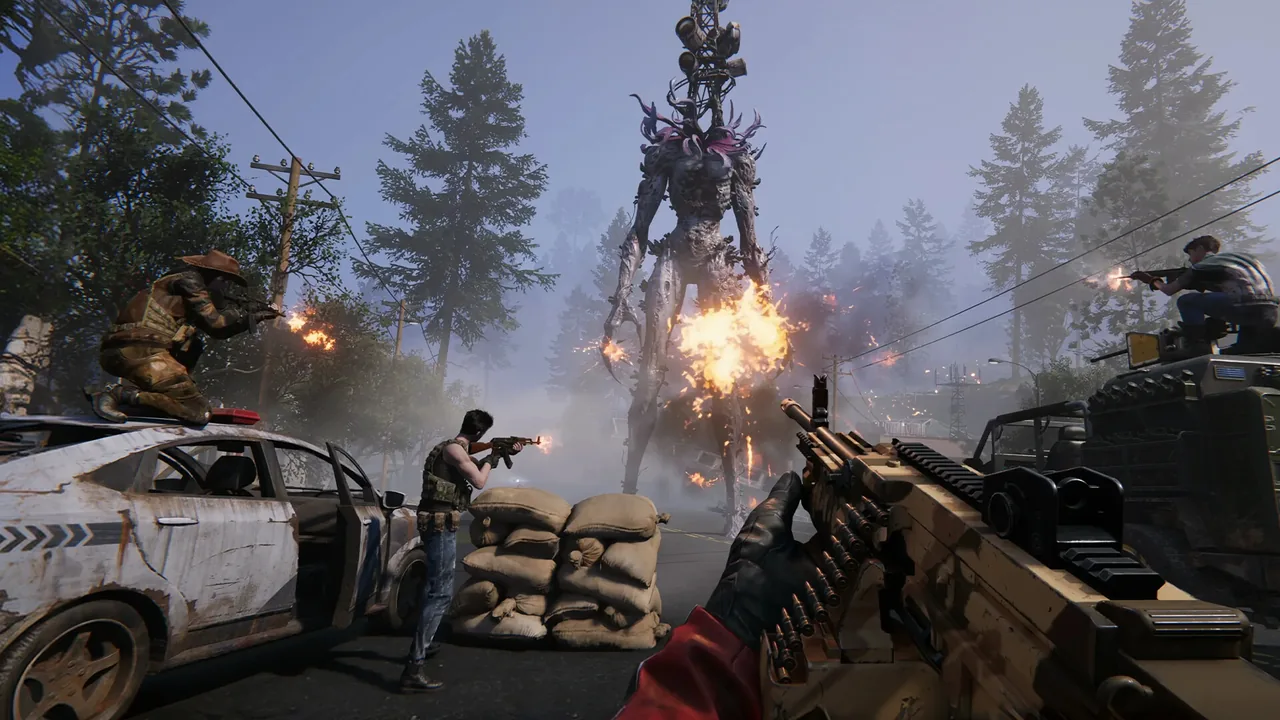
Gunplay is the weakest pillar. Around a hundred weapon blueprints with parts and perks give it crafting depth, but the shooting itself is unremarkable; one reviewer's "a 6/10 third-person shooter from a decade ago" is harsh but in the right postcode. You play this for the base and the world, not the recoil.
Where it beats its peers is tone. Valheim has atmosphere and Palworld has the creature hook, but Once Human's specific blend of post-apocalyptic Americana and dream-logic horror is its own thing, and the monster design carries it.
The real 2026 complaint: instability, not wipes
Read the negative reviews in date order and you watch the argument change. The 2024 objections are about wipes and server architecture. The 2025 and 2026 ones — written by players with 500, 900, 2,000, 3,100, 5,400 hours — are about the developers repeatedly changing systems underneath them.
The April 2026 patch comes up again and again. Players describe grinds they had completed being reset, capabilities they had three hours earlier requiring re-earning, and content reworked in ways nobody asked for. A 5,464-hour player, self-described as having spent a lot of money in the shop, writes that the patch turned their go-to game into a no-go. A 3,176-hour player is more precise about the pattern: "What drove me away was not a single bad patch, but a pattern of poor management. The developers keep changing content, systems, and mechanics so often that nothing feels stable." Earlier, a January 2026 update drew fire for adding monsters that destroy offline players' buildings and nerfing anti-Sanity consumables.
This is a specific and underrated failure mode in live-service survival games. Wipes at least announce themselves — you know the season ends. Rebalancing quietly devalues effort you already spent, on a schedule you can't see. For a game asking hundreds of hours, that erodes trust faster than a scheduled reset does.
Alongside it runs a monetisation drift. The shop is cosmetic rather than pay-to-win, and that distinction is real and worth keeping. But reviewers point to loot crates, an anniversary event several describe as a skin dump, and a dyeing system they say costs serious money to use properly. The structural problem is worse than the pricing: characters are bound to servers with no transfers, one character per server, and cosmetics and battle-pass progress don't follow you. Buy a skin, roll a new character elsewhere, and you're buying it again. In a game whose whole design encourages starting fresh, that's an unusually punishing arrangement.
Two claims that needed checking
The July 2024 privacy scare. The most-upvoted negative review on this game, with 5,690 votes, is a critique of the publisher's privacy policy, and it was followed by widely-read reviews reporting mysterious unidentified entries added to Windows startup. That looked alarming. It was also, to the community's credit, resolved by the community: a subsequent review with over 1,300 votes identified the entries as AppsFlyer, a standard mobile marketing-analytics tool, apparently shipped in the PC build and registered untidily. That's a real criticism of a PC release including mobile attribution tooling, and it isn't the security incident the first wave feared. Both halves belong in the record.
The review-incentive claim. Two reviewers, in May and July 2026, report that the game offers in-game rewards for posting a Steam review and provides a button that auto-fills the review text for you, quoting the generic sample text it produced. If a large share of the corpus were generated that way, the score would be meaningless — so I went looking. Across roughly 900 English reviews sampled from both the positive and negative corpora, the specific phrases those two reviewers quote appear nowhere except in their own reviews. Repeated sentences across the sample were rare and traced to duplicated long-form reviews rather than templated ones. So: the reports are worth knowing, the practice of rewarding reviews is worth objecting to, and there's no evidence in the English corpus that templated text has been posted at scale. Weigh the score normally.
Current conditions
Sentiment right now is healthier than the lifetime numbers suggest: 85 of the 100 most recent English reviews are positive, posted across three days in early August 2026, with a median playtime of 52 hours. Lifetime English sits at 80.0% and the all-language figure at 78.3%, with Simplified Chinese making up about a third of the sample and pulling slightly harder than English.
Development is unmistakably active. Version 3.0 landed with the second-anniversary "Dreamy Maelstrom" event in July 2026, alongside first-person mode — a two-year community request finally delivered — a free dye system, new RaidZone content, and new weapons and armour. Bug-fix announcements go out every few days. There's a public feedback platform with charts of top community requests and periodic posts stating what's been adopted, what's planned and what has no schedule, which is more accountability than most live-service games offer.
Against that: performance complaints persist. Several August 2026 reviewers describe severe stutter specifically when firing, at frame rates well above 200 elsewhere, unaffected by settings. And on PvP servers, reports of organised cheating — wallhacks, coordinated groups locking down territory — go largely unanswered, alongside a separate thread of complaints about mass-report systems auto-punishing players who simply won.
The verdict
Once Human lands at a 7. It's a more interesting game than its genre usually produces, it's free, and its single most damaging design decision has been genuinely walked back rather than defended. If you passed on it in 2024 because you didn't want your base deleted every six weeks, that reason is gone, and the game underneath is worth a weekend.
What keeps it out of the 8s is the churn. A survival game is a promise about persistence — that what you build and grind stays built and ground — and this one keeps renegotiating the terms. The players who invested most are the ones who feel that most, which is exactly backwards from how a long-running live-service game should treat its base. Add a cash shop that's grown more insistent than the content cadence, cosmetics that don't follow your account, and stutter that two years of patches haven't cleared, and the ceiling is obvious.
Install it for the Deviations and the building, pick a permanent server, and don't spend money on appearance until you know exactly which character it's stuck to. If you want the same weird-world instinct with far heavier monetisation pressure, Where Winds Meet is the same publisher's other big free-to-play swing, and the comparison is instructive in both directions.
And if what appeals here is the part where creatures quietly work your farm while you're logged out, Wanderer is built entirely around that idea — no season timer attached.
Pros and cons
Pros
- Monster and world design with real personality, well clear of the genre's usual zombies-and-rust template
- Building is fast, flexible and portable, and consistently the thing even critical reviewers praise
- Permanent and custom servers now exist, removing the forced seasonal reset that defined the game's first two years
- Deviations — captured creatures that farm, craft and fight for you, including while you're offline — are a genuinely original progression system
- Actively developed, with a public feedback platform that publishes what it has and hasn't adopted
Cons
- Repeated rebalancing has cost long-term players progress they had already earned, and the April 2026 patch is cited by name in review after review
- Characters are bound to servers with no transfers, and cosmetics and battle-pass rewards don't follow you to a new character
- Monetisation has drifted toward loot crates and expensive appearance systems as the content cadence slowed
- Frame-rate stutters during combat are still being reported in August 2026, on hardware well above spec
- PvP servers attract organised cheating that regular players describe as unanswerable
Screenshots
-
Once HumanImage: Starry Studio via Steam -
Once HumanImage: Starry Studio via Steam -
Once HumanImage: Starry Studio via Steam -
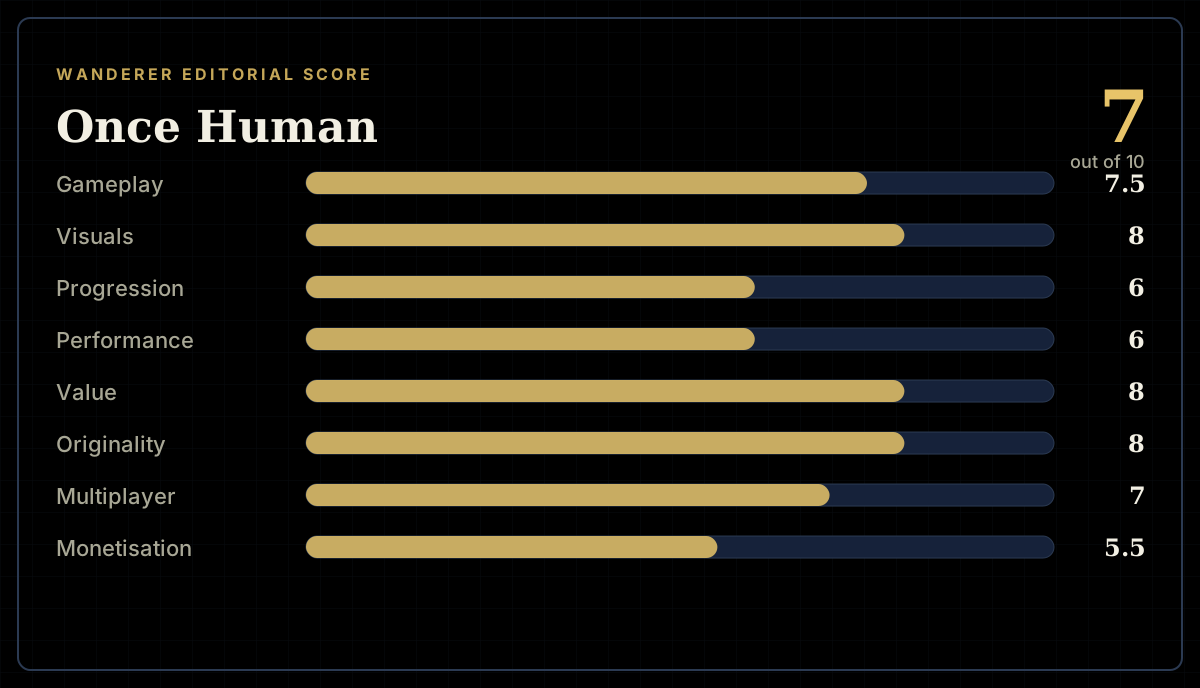
How the review scores each part of the gameWanderer Editorial -
The short versionWanderer Editorial