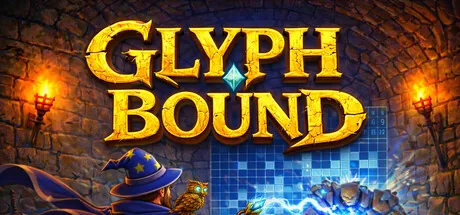
Game review
GlyphBound
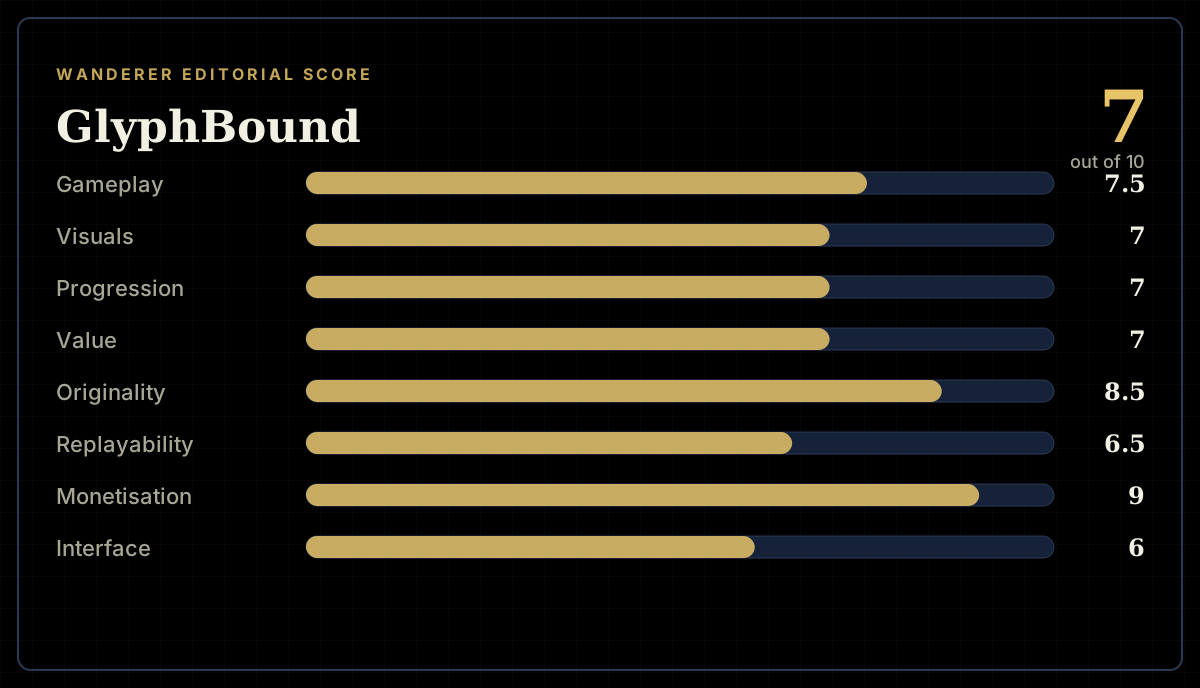
7 / 10
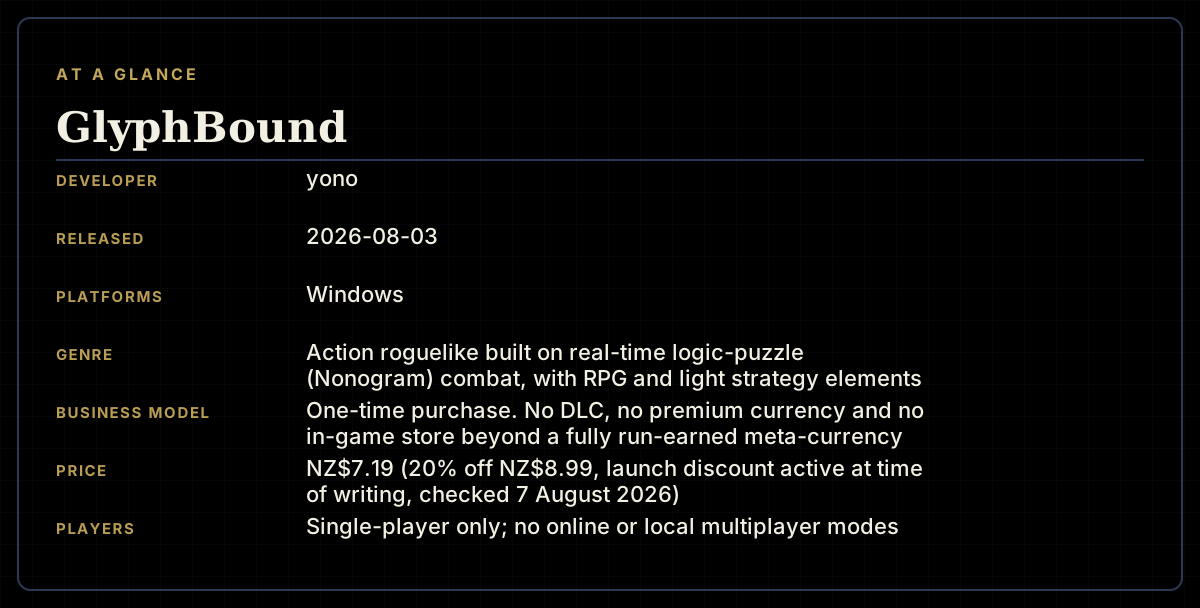
- Developer
- yono
- Publisher
- yonogames
- Released
- 3 August 2026
- Platforms
- Windows
- Genre
- Action roguelike built on real-time logic-puzzle (Nonogram) combat, with RPG and light strategy elements
- Monetisation
- One-time purchase. No DLC, no premium currency and no in-game store beyond a fully run-earned meta-currency spent between runs; Steam lists no achievements for this app at all.
- Players
- Single-player only; no online or local multiplayer modes
The short version
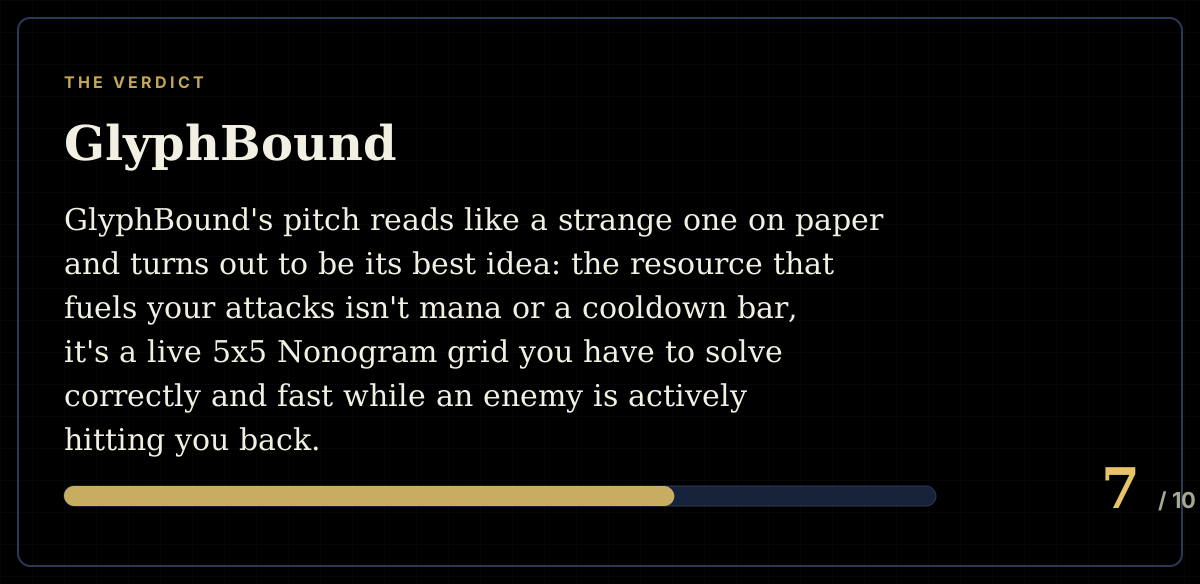
GlyphBound's pitch reads like a strange one on paper and turns out to be its best idea: the resource that fuels your attacks isn't mana or a cooldown bar, it's a live 5x5 Nonogram grid you have to solve correctly and fast while an enemy is actively hitting you back. Steam files it under RPG and Strategy, and the community tags agree those words apply, but the vote counts put Logic, Puzzle, Roguelite and Roguelike right alongside them — this is a logic-puzzle action roguelike wearing dark-fantasy-steampunk dressing, not a tactics game. Five heroes, a branching floor-by-floor dungeon map, rest-site choices between healing and training, and a between-run currency you bank and spend on permanent upgrades all sit around that puzzle core competently. What isn't here yet, four days after a quiet launch, is a single outside voice to confirm any of it holds up over a real run count — and the developer's own screenshots already show two placeholder strings ("HP: %d / %d", "TIME %d") printing raw in the combat HUD.
Biggest strengths
- The core loop — solving a live Nonogram grid to charge the Energy bar that pays for every ability, while an enemy's own attack timer keeps counting down — is a genuinely distinctive fusion the library hasn't seen before
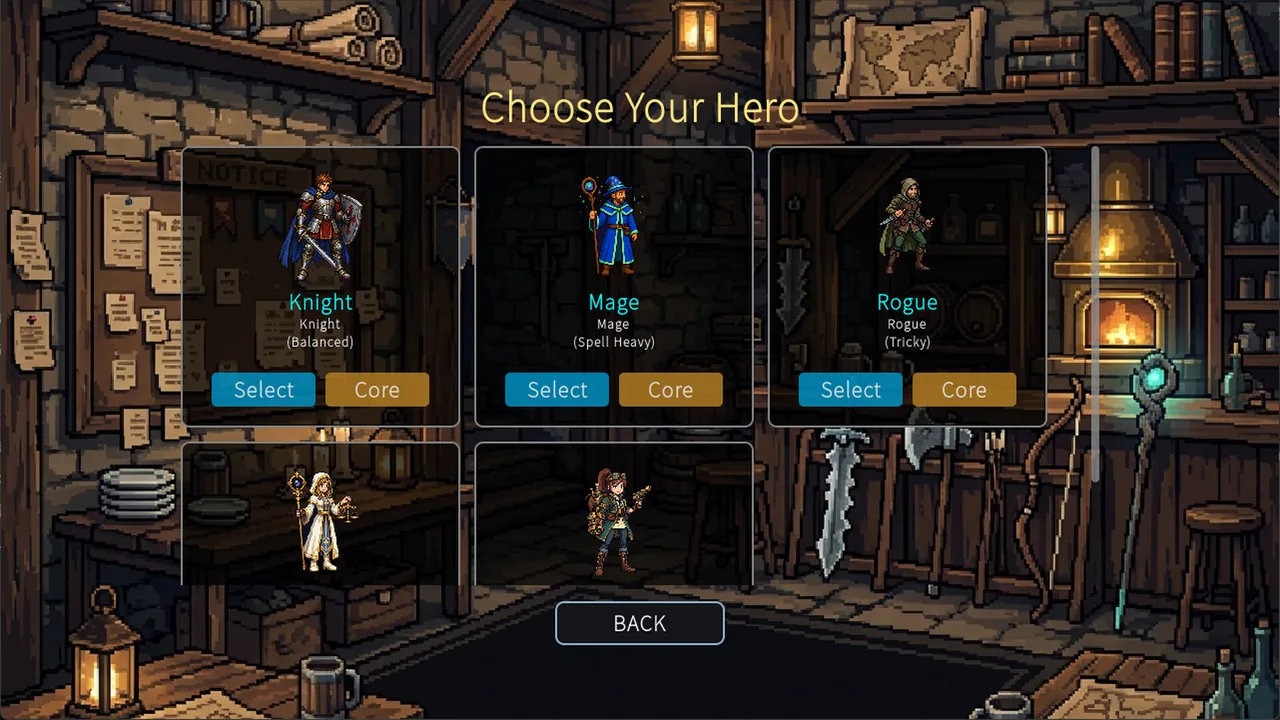
- Five playable heroes with stated archetypes (Knight: Balanced, Mage: Spell Heavy, Rogue: Tricky, plus two more locked behind a separate "Core" unlock) give the puzzle-combat loop different pressure curves to learn
- A one-time NZ$7.19 purchase with no DLC, no premium currency and a meta-currency (Circle Pieces) that is earned in-game rather than sold is about as clean as monetisation gets in this genre
Biggest weaknesses
- The developer's own official screenshots show unformatted placeholder text printing live in the combat HUD — "HP: %d / %d" in the player status box and "TIME %d" in the top-right timer — a launch-build bug visible before any outside player has weighed in
- Zero Steam user reviews and a recorded concurrent-player count of 1 four days after release mean there is no independent read yet on whether the puzzle-under-pressure pacing stays fun once the novelty wears off
- Steam lists no achievement schema for this app at all, which removes the one objective proxy — a global completion curve — this library normally uses to sanity-check a quiet launch
Who it's for: Roguelike and deckbuilder-adjacent players who like a genuinely unusual resource mechanic, and puzzle fans who've never seen Picross asked to double as a combat system under time pressure.
Our recommendation: At NZ$7.19 for a one-time purchase with no DLC and nothing to buy beyond a currency you earn by playing, the price carries very little risk even before anyone else has weighed in. The catch is that nobody else has weighed in yet, and a real-time puzzle-under-pressure hook is exactly the kind of design that lives or dies on tuning nobody outside the studio has stress-tested.
7 / 10
Most roguelikes ask you to manage a resource bar while you fight. GlyphBound puts a puzzle inside the fight instead: a live 5x5 Nonogram grid sits on screen mid-combat, row and column clue numbers and all, and solving it correctly is how you charge the Energy meter that pays for every attack, shield and finisher on your hotbar. An enemy's own countdown timer keeps running while you work the grid. That's an unusual enough idea that it's worth being precise about what kind of game it actually sits inside, because the label on the tin undersells it.
What GlyphBound actually is
Steam's own genre list files this under Indie, RPG and Strategy, and that much is accurate as far as it goes — there are heroes, stat bars, a floor-by-floor dungeon and a meta-progression shop, all things an RPG or strategy fan will recognise. But pull the store page's community tag votes and a sharper picture appears: Strategy sits on top with 54 votes, RPG and Logic are tied at 49, Puzzle follows at 43, then Roguelite (39) and Roguelike (36). Logic and Puzzle together outweigh either "RPG" or "Strategy" read in isolation, and the developer's own description calls this a "Logic-Action Roguelike" before it uses either of those other two words. Read the whole tag list and the honest genre is a real-time logic-puzzle roguelike dressed in dark-fantasy steampunk — closer in spirit to a Picross game that happens to have a health bar than to a tactics RPG. Anyone expecting deep itemisation, branching dialogue or turn-based positioning is shopping for the wrong genre; anyone who likes solving grid puzzles under a ticking clock is shopping for exactly the right one.
Solve the grid, spend the charge
The combat screen makes the idea legible at a glance in the developer's own screenshots: a hero on the left, an enemy on the right with its own HP bar and a status-effect timer counting down (a "[Weak]" debuff reading 7.8 seconds remaining in one capture), and the Nonogram board floating between them with clue numbers stacked along both axes. Filling the board correctly builds Energy, shown as a 10-point bar next to the player's HP; five ability icons sit along the bottom of the screen, each tagged with a number in brackets that reads as its Energy cost — Soul Steal at 1, Shield Bash at 2, Earthshatter at 3, Shield at 4 and a full-bar Time Stop at 5 in the Knight's loadout shown on the store page. That's a real design decision, not a cosmetic one: cheap abilities are affordable off a partial solve, while the strongest tools demand you clear the whole grid before the enemy's timer runs out. Whether that stays tense rather than punishing across dozens of floors is exactly the kind of thing a puzzle-action hybrid needs real players to stress-test, and right now nobody outside the studio has had the chance.
Floors, rest sites and a roster with a catch
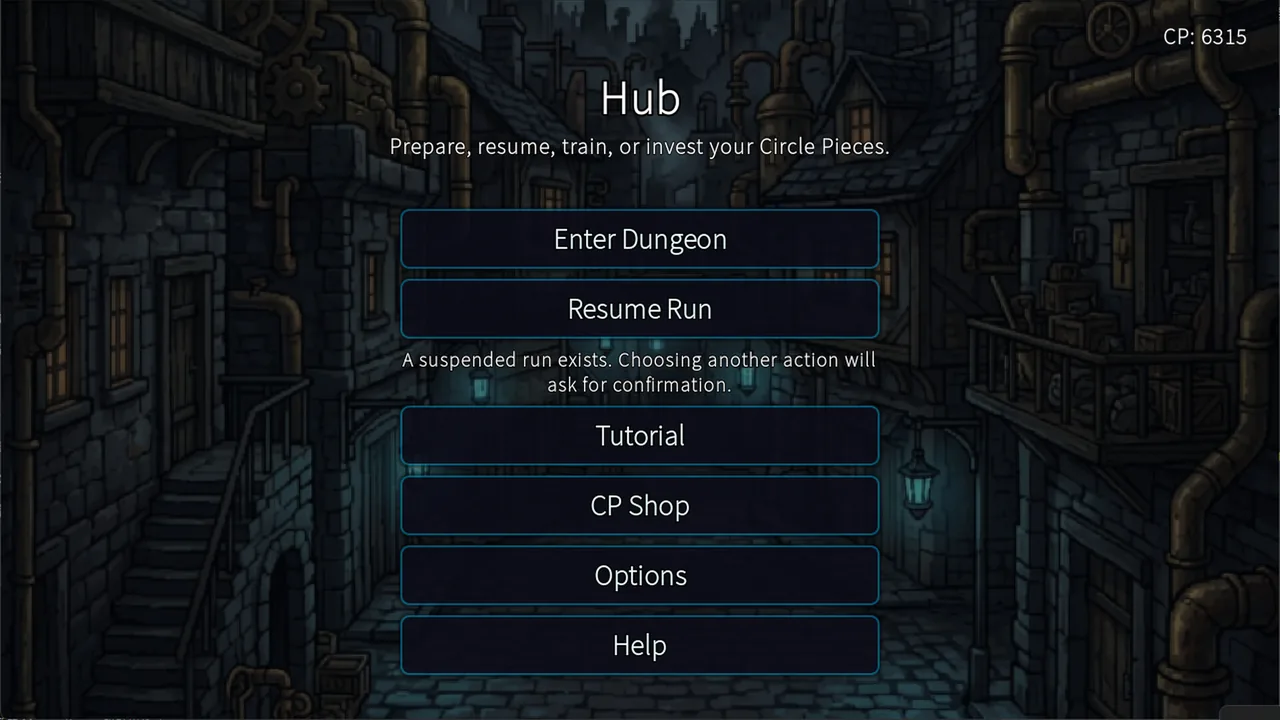
Structurally this is a familiar node-map dungeon crawl underneath the puzzle skin. A floor counter, HP, Energy and Gold sit in the corner of the screen as you pick a route at each junction — Enemy, Treasure or Rest are the three options shown in the official captures, and one screenshot shows a run still going at Floor 16 with 1,150 gold banked, so runs are built to run long rather than end in a handful of rooms. Rest sites offer a genuine choice rather than a free heal: Rest recovers 30% HP, or Train grants a random permanent upgrade for the rest of the run, and picking one means giving up the other. Five heroes are shown on the character-select screen — Knight (Balanced), Mage (Spell Heavy) and Rogue (Tricky) are unlocked and playable from the start, while two more sit silhouetted behind a "Core" button rather than the plain "Select" the first three use, which reads as a second unlock mechanic layered on top of simply picking a class. Meta-progression runs through the Hub between attempts, where a currency called Circle Pieces (CP, shown at 6,315 in one capture) banks across runs and spends in a dedicated CP Shop — the standard roguelike shape of "die, bank what you earned, come back stronger," applied to a puzzle-combat loop rather than a card pool or a skill tree.
The AI question, and a bug sitting in the marketing itself
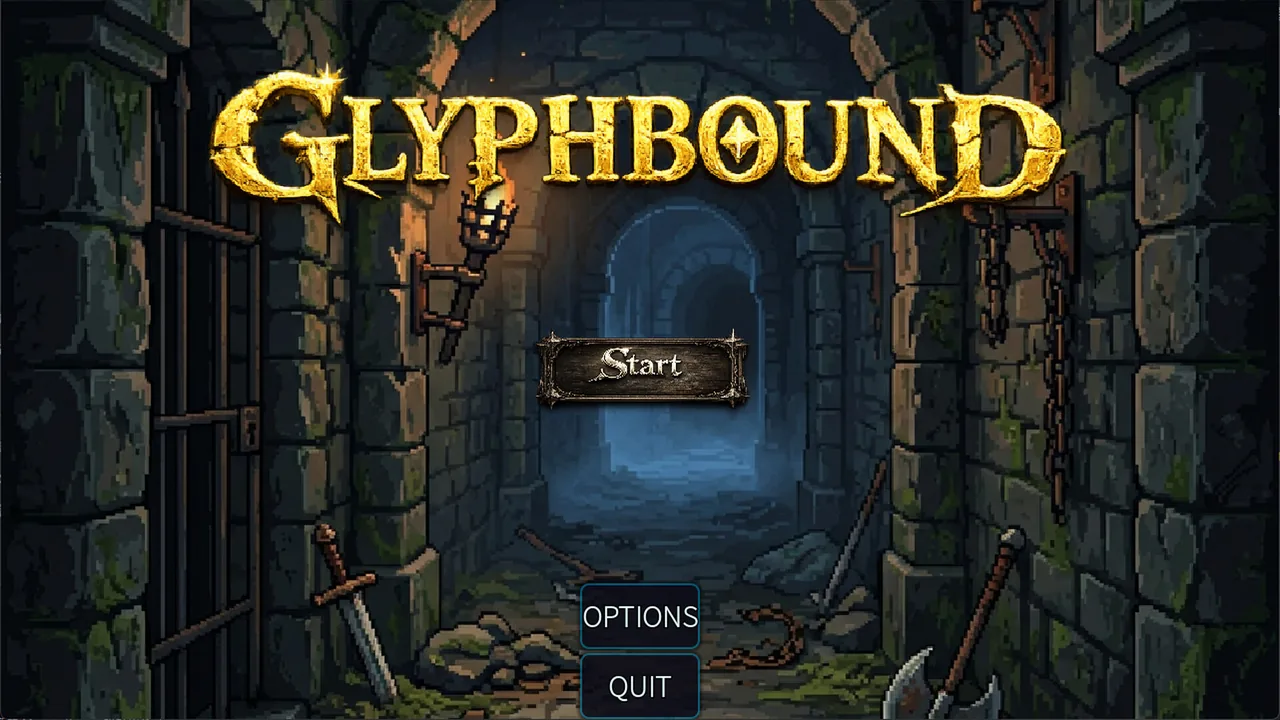
GlyphBound carries a Steam AI Generated Content Disclosure, and it's worth quoting rather than paraphrasing: "This game employs generative AI technology for portions of the background art and UI design. All AI-generated content has been manually reviewed, edited, and verified to ensure it is free of illegal or infringing material." That's a narrower disclosure than some recent releases in this library — it names backgrounds and UI specifically rather than character art or audio — and the screenshots do show a consistent, hand-finished-looking pixel-art style across hero portraits, dungeon backdrops and the Hub's steampunk cityscape. Worth knowing before buying regardless, at any price point.
The same screenshots surface a smaller but more concrete problem: the combat HUD is printing raw placeholder strings instead of real numbers in at least two spots. The player status box in the top-left reads "HP: %d / %d" rather than an actual health value, and the countdown timer in the top-right corner reads "TIME %d" the same way. That's not a rendering glitch or a compression artefact — it's an unformatted string literal shipping in the developer's own promotional material, the kind of thing a build-before-launch pass should have caught. It doesn't say anything about whether the underlying puzzle-combat math works, but it's a visible, verifiable interface flaw sitting in the marketing for a game asking players to trust its systems.
A launch with nobody watching yet
There's usually a section here built from what players are saying, and for GlyphBound there is nothing to draw on: Steam's review API returns zero reviews for the base game and zero for its free demo, which itself launched two months earlier, on 4 June 2026, under a separate appid with its own empty review count. The concurrent-player count sat at 1 at the time of writing, four days after a full 1.0 release. Steam's global achievement API doesn't even return an empty curve here — it returns nothing at all, meaning this app has no achievement schema, so the one objective proxy this library normally leans on for a quiet launch (which milestones players are actually reaching) simply isn't available. The single news post on the app's feed is the launch announcement itself, confirming the 20% discount and laying out unusually permissive streaming and monetisation terms for anyone who wants to cover it. None of that is evidence of a bad game. It's evidence of a genuinely tiny, days-old release that hasn't found any audience yet, playable or critical, which means every claim above about how the puzzle-combat loop is designed to feel is a reading of the system rather than a report on how it holds up once someone has run it past Floor 16 more than once.
Final verdict
GlyphBound earns a 7.0 for an idea worth taking seriously: charging a combat resource by solving a timed Nonogram grid is a genuinely new fusion for this library, the five-hero roster and the Rest-versus-Train dungeon structure build a competent roguelike shell around it, and the one-time NZ$7.19 price with an entirely run-earned meta-currency is close to ideal monetisation for the genre. It doesn't score higher because none of that comes with outside confirmation yet — zero reviews on the base game and its demo, a concurrent-player count of 1, no achievement data to lean on even as a proxy, and a pair of unformatted placeholder strings sitting in the developer's own screenshots. If the idea of a Picross grid doubling as your action-combat energy bar sounds interesting at a price under eight dollars, this is a low-risk way to find out firsthand. If you'd rather wait for a wider audience to confirm the puzzle stays tense rather than becomes a chore across a full run, that's the safer and equally reasonable call.
Pros and cons
Pros
- The core loop — solving a live Nonogram grid to charge the Energy bar that pays for every ability, while an enemy's own attack timer keeps counting down — is a genuinely distinctive fusion the library hasn't seen before
- Five playable heroes with stated archetypes (Knight: Balanced, Mage: Spell Heavy, Rogue: Tricky, plus two more locked behind a separate "Core" unlock) give the puzzle-combat loop different pressure curves to learn
- A one-time NZ$7.19 purchase with no DLC, no premium currency and a meta-currency (Circle Pieces) that is earned in-game rather than sold is about as clean as monetisation gets in this genre
- The node-map dungeon structure gives rest sites a real choice — heal 30% HP or gamble on a random training upgrade instead — rather than treating recovery as automatic
- Supported in fourteen languages including Japanese, Turkish, Polish, Russian and both Chinese scripts, an unusually wide localisation spread for what reads as a small or solo-developed debut
Cons
- The developer's own official screenshots show unformatted placeholder text printing live in the combat HUD — "HP: %d / %d" in the player status box and "TIME %d" in the top-right timer — a launch-build bug visible before any outside player has weighed in
- Zero Steam user reviews and a recorded concurrent-player count of 1 four days after release mean there is no independent read yet on whether the puzzle-under-pressure pacing stays fun once the novelty wears off
- Steam lists no achievement schema for this app at all, which removes the one objective proxy — a global completion curve — this library normally uses to sanity-check a quiet launch
- The store page's own AI Generated Content Disclosure states that generative tools were used for "portions of the background art and UI design," a fact worth knowing on a paid release before those %d strings are patched
- A 5x5 logic grid rendered mid-combat, alongside HP bars, an energy meter, five ability icons and status-effect timers, is a lot of information to parse at once, and the layout in the marketing shots looks tight even before accounting for a faster or larger board later in a run
Screenshots
-
GlyphBoundImage: yonogames via Steam -
GlyphBoundImage: yonogames via Steam -
GlyphBoundImage: yonogames via Steam -
The game at a glanceWanderer Editorial -
How the review scores each part of the gameWanderer Editorial -
The short versionWanderer Editorial