Game review
Goldhaven
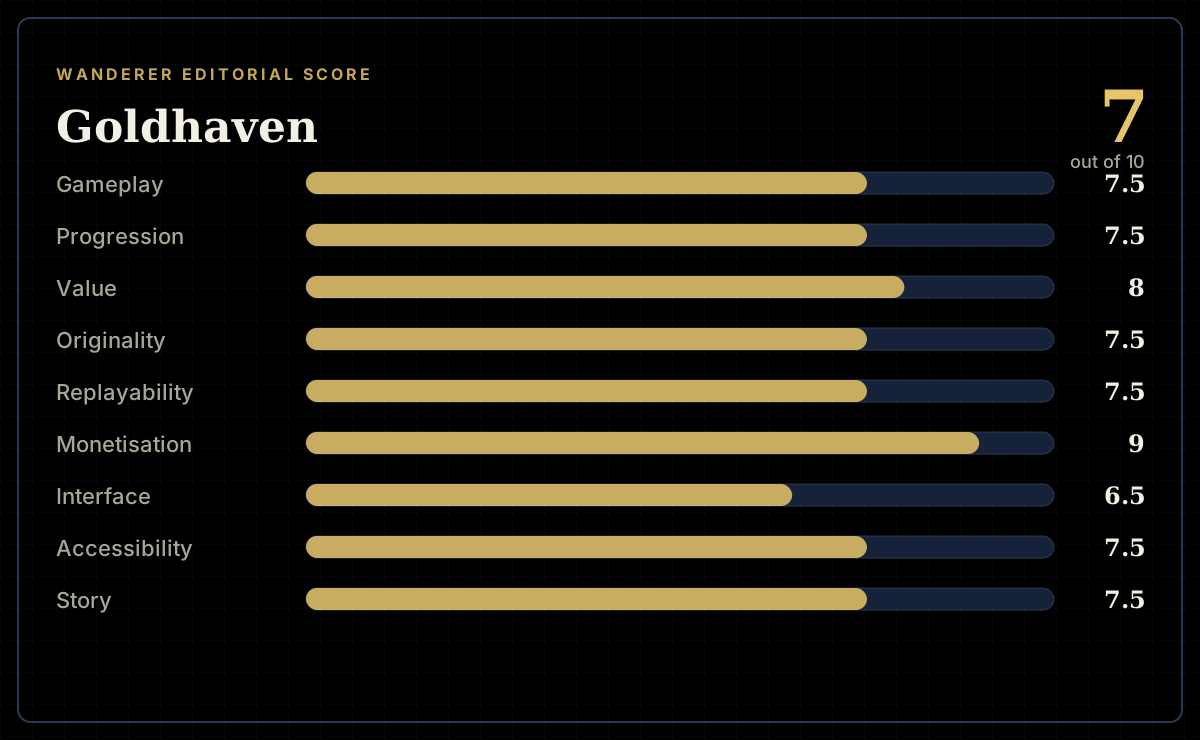
7 / 10
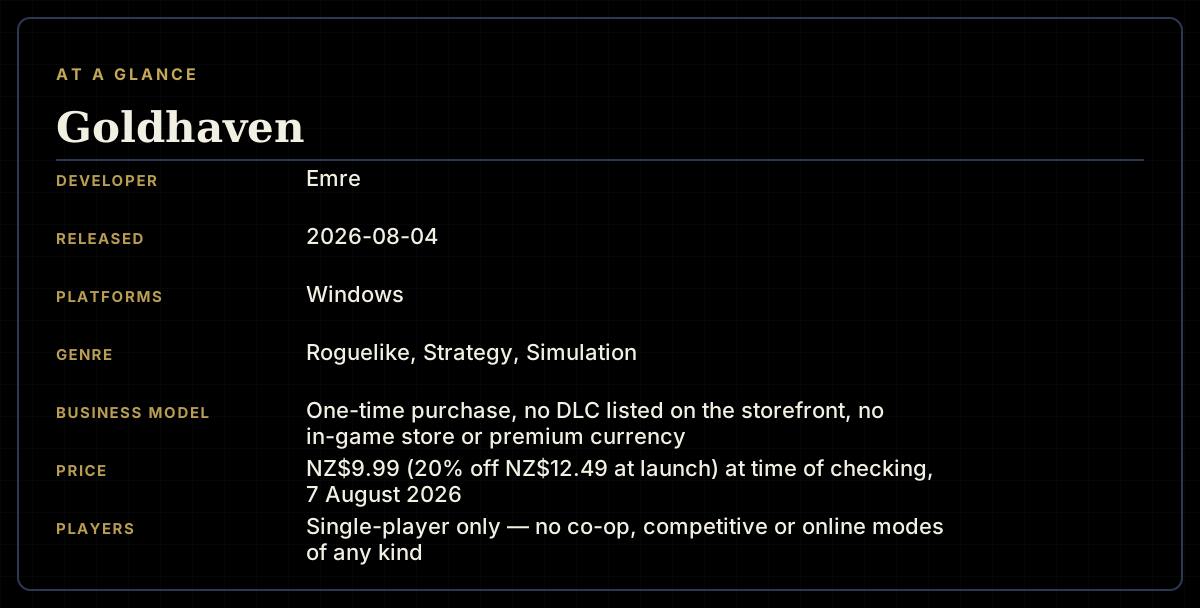
- Developer
- Emre
- Publisher
- Emre
- Released
- 4 August 2026
- Platforms
- Windows
- Genre
- Roguelike, Strategy, Simulation
- Monetisation
- One-time purchase, no DLC listed on the storefront, no in-game store or premium currency
- Players
- Single-player only — no co-op, competitive or online modes of any kind
The short version
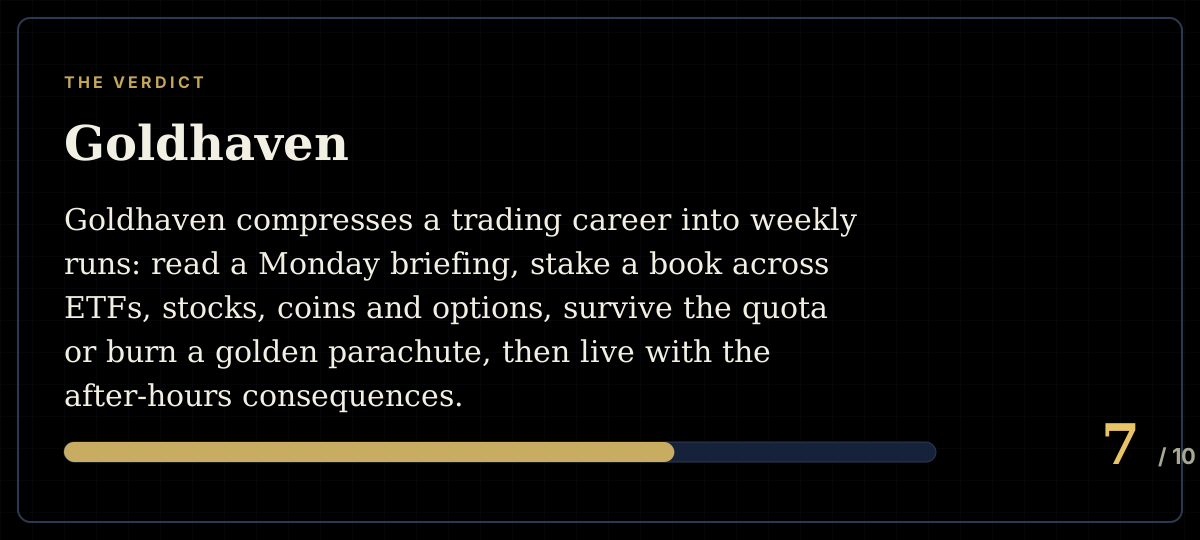
Goldhaven compresses a trading career into weekly runs: read a Monday briefing, stake a book across ETFs, stocks, coins and options, survive the quota or burn a golden parachute, then live with the after-hours consequences. It's a genuinely distinctive hybrid — a career roguelike with permadeath stakes, real meta-progression, and a 35-scene branching story worth nine different endings — built by one developer in Istanbul as a first game. The retro terminal HUD suits the subject and stays legible even when it's dense with numbers. What the review can't yet tell you is how it holds up over dozens of runs, because three days after launch there isn't a single user review or a large enough achievement sample to check against, and the interface is dense enough that "read the tape" sometimes looks more like flavour text than a real signal to learn from.
Biggest strengths
- The weekly loop forces a real decision every run — four instrument types, adjustable leverage and a quota that only grows create genuine risk-management tension rather than a number that just goes up
- Meta-progression is built in from the start: buy the same skill three times in a run and it's permanent, and lifestyle assets carry into the next career even after one ends in getting walked out
- Nine endings across three branching story threads (a rival, home, and Thorne's six-step ladder into the firm) is an unusually ambitious narrative structure for a career-survival roguelike
Biggest weaknesses
- No controller support at all, an odd absence for a Steam release with this much sit-back numbers-reading
- Windows only, with no macOS or Linux build listed
- The store page's AI Generated Content Disclosure covers code, text and some 2D artwork "reviewed by the developer," but doesn't say how much of the 35 after-hours scenes that covers, so a reader who cares can't tell from the page alone
Who it's for: Roguelike players who want permadeath tension without combat, and anyone who enjoys a numbers-heavy resource-management loop wrapped in an unusually earnest branching story.
Our recommendation: At NZ$9.99 for a one-time purchase with no DLC, Goldhaven is a fair ask for what's on offer — six difficulty rungs, seeded runs, three story threads and meta-progression that survives a failed career. It's Windows-only with no controller support, so check that before buying, and go in knowing this is a three-day-old debut with no track record yet.
7 / 10
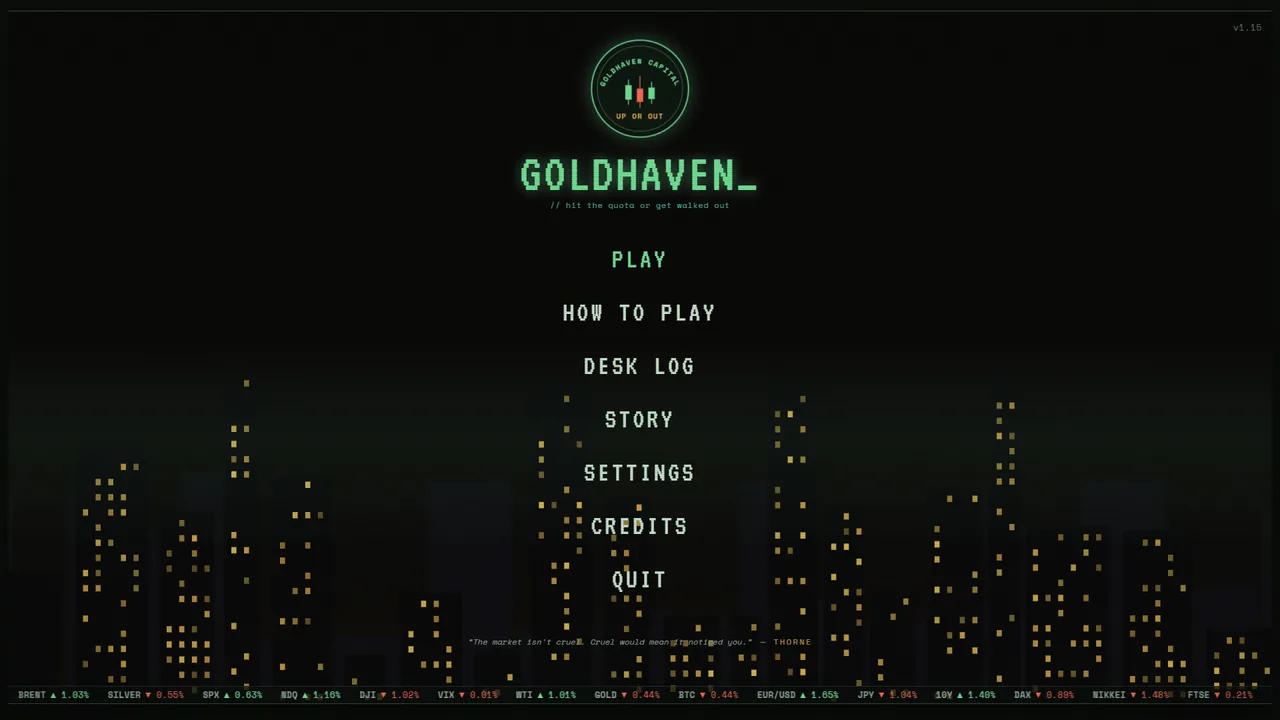
Two words sit on Goldhaven's main menu, under the logo, doing the job most games take an entire tutorial to do: "Up or out." You're a new hire drowning in six-figure student debt, handed one rule by a trading floor boss named Marcus Thorne — hit your number every week or security walks you out before lunch. Everything else in the game, from the leverage slider to the branching after-hours scenes, exists to make that one sentence feel true, and for a solo developer's first release it does that with more conviction than the premise suggests it has any right to.
The weekly loop: read the tape, take the risk
Every run compresses a career into weeks. Monday hands you a briefing — market theme, quota, SEC heat, where you sit on the desk leaderboard — and from there you build a book: stake money across ETFs, stocks, coins or options, choose a direction, choose a leverage multiplier, and lock it in. The week settles, the tape moves, and the result lands as a single net number against a quota that only ever grows. Miss it and you burn one of a limited stock of golden parachutes; run out of parachutes and the next miss ends the career outright.
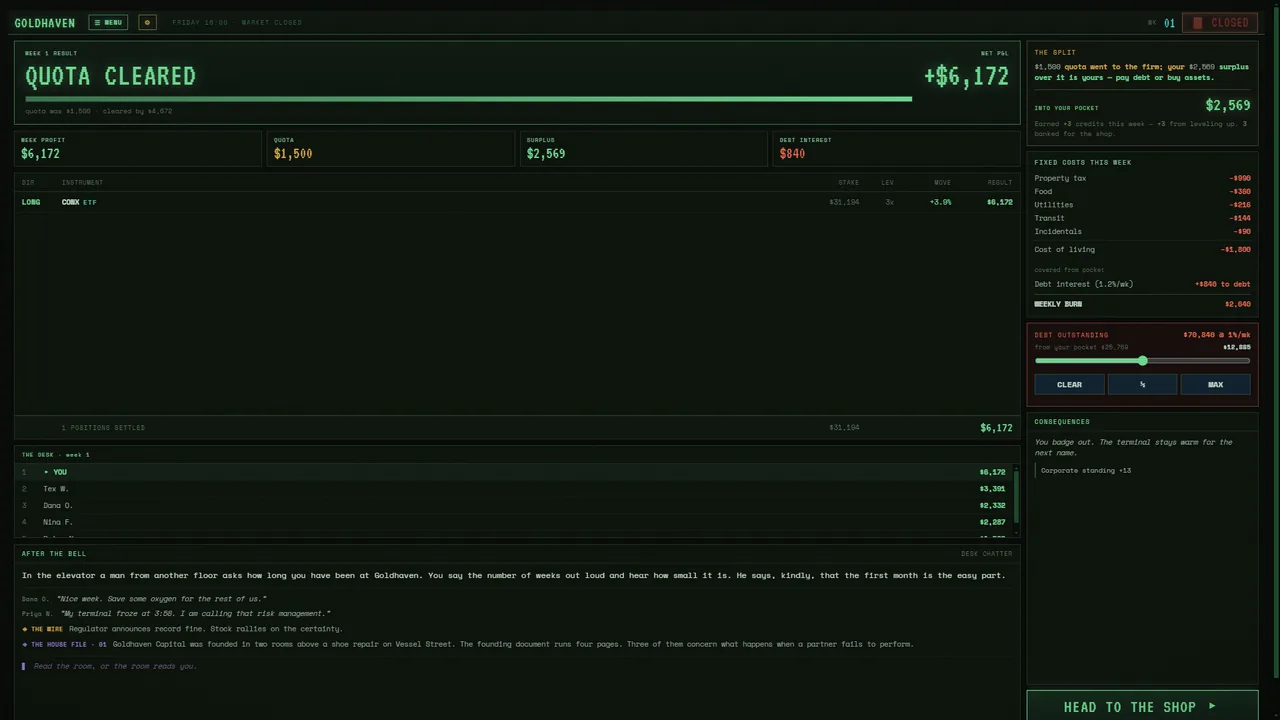
That's a familiar roguelike shape — resource management under an escalating clock, permadeath as the actual stakes — dressed in finance rather than dungeons. What keeps it interesting is how many directions the pressure comes from at once. The quota is only one of four threats the game names outright: let debt balloon and the IRS starts auditing, with three strikes ending in handcuffs; push heavy leverage or insider information too hard and SEC heat climbs toward a floor raid; finish last on the desk too often and it's your rivals who get you cut, not the market. None of those are abstract meters sitting in a corner — the week-result screen shown after each run breaks out fixed costs, debt interest and take-home pay in enough detail that a bad week reads as a specific set of choices rather than bad luck.
Four ways to bet, and a hint system that oversells itself
The four instrument types are the clearest piece of design in the whole game. ETFs are the training wheels — steadier reads, lower multipliers, a safe way to learn the interface. Stocks pay more for a murkier signal. Coins are near coin-flip chaos at maximum multiplier, pure adrenaline with no pretense of readability. Options cap the downside for a shot at five times the stake. Each tier asks a genuinely different question about how much risk a given week can absorb, and stacking leverage on top multiplies whichever answer you gave.
Where it undersells its own pitch is the "read the tape" promise. Every instrument tile ships with a one-line hint — "stuck in a tight range," "heavy accumulation all session, it breaks out," "sellers are hammering the bid, this drops" — that reads exactly like a real signal system, right up until you notice how thin the vocabulary is across a full board of eight tiles. It functions fine as flavour text that keeps the trading floor feeling alive, but a player hoping the "Education" tag on the store page means there's something real to learn about markets underneath the fiction will come away disappointed. It's atmosphere doing a systems job, and the game would lose very little by admitting that plainly.
Three threads, nine endings
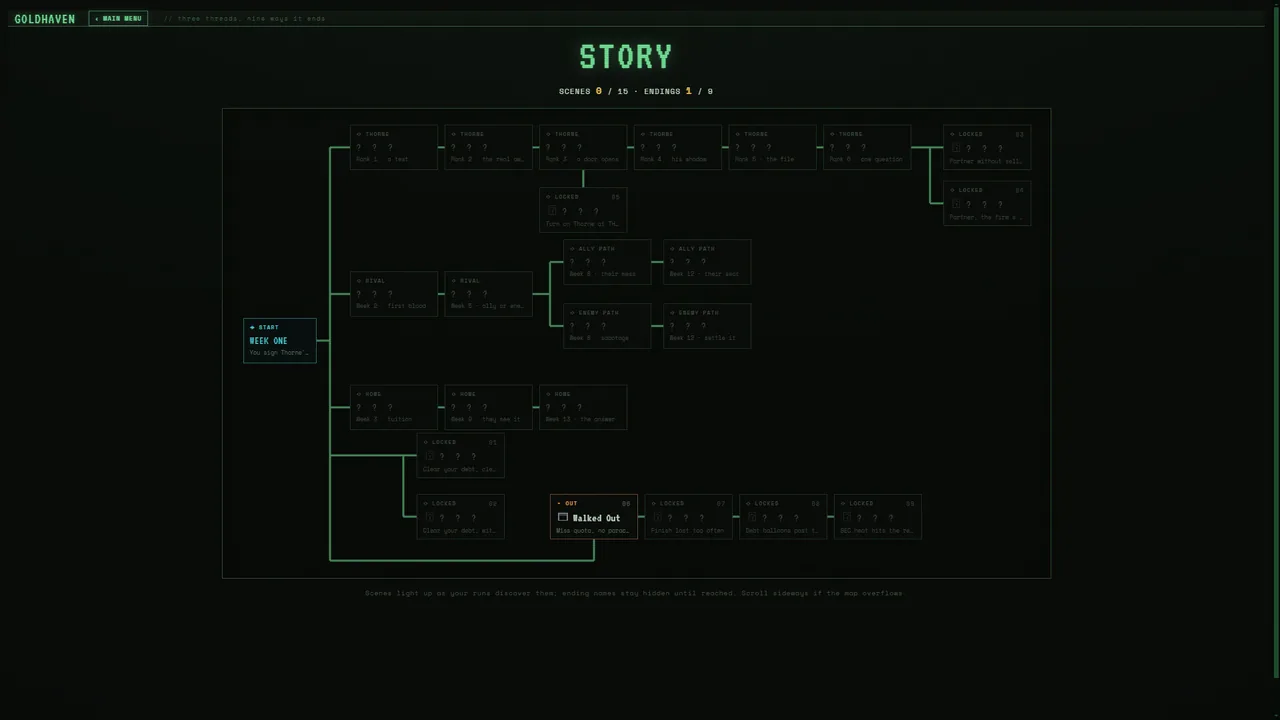
What separates Goldhaven from a straightforward number-survival loop is the 35 after-hours scenes sitting on top of it. A rival wants your seat. Calls come in from a family you're neglecting. Journalists, auditors, whales and fixers all show up between weeks, and Thorne runs his own six-step ladder into the rooms where the actual decisions happen. Staying clean or getting hands dirty tracks as a reputation stat that follows a run to its end, and the game's own story map — visible from the main menu, scenes greyed out until a run actually reaches them — lays out three branching threads (Rival, Home, Thorne) converging on nine possible endings, from a clean exit to getting walked out for good.
Nine endings is an ambitious number for a game this size to commit to, and structuring them around three separate threads rather than one binary "good or bad" split gives repeat runs an actual reason to diverge beyond drawing different cards. It's the single most distinctive thing about Goldhaven, and it's also the part of the pitch a three-day-old review sample can't yet confirm holds together at the seams — writing a branching narrative is one thing, making all nine landings feel earned across dozens of different runs is another, and there simply isn't a large enough body of player accounts yet to say which one Goldhaven achieved.
What carries between runs
A career roguelike lives or dies on whether failure teaches the next attempt anything, and Goldhaven answers that two ways. Buy the same skill three times inside a single run and it's yours forever, independent of how that run ends — a clean piece of design that rewards committing to a build without punishing the runs that don't pan out. Lifestyle assets carry over the same way; the pocket cash doesn't, so a walked-out career still leaves something behind besides the ending screen. Six playable backgrounds, from the State-School Grind to the Nepo Baby, each start the math differently, and six stacking difficulty rungs under "Thorne's Ledger" give the climb somewhere further to go once the base game stops being a threat. Seeded runs, letting players share a seed and race the same market, round out a meta layer that's unusually complete for a solo first release.
A dense, well-drawn terminal UI
The presentation commits fully to the premise. Green phosphor text on black, a scrolling market ticker along the bottom edge, a trading-floor order ticket on the right and a running desk leaderboard on the left — it looks like a Bloomberg terminal built for a roguelike, and it's a better fit for the subject than a more conventional UI would have been. It's also genuinely dense: the week-result screen alone stacks a profit breakdown, a fixed-costs ledger, a debt-outstanding bar and a desk-chatter log into one view, and the trading screen adds eight instrument tiles, an order ticket and a risk meter on top of that. Nothing in the promotional screenshots looks illegible, but there's a real amount of reading required before a new player can tell a good week from a lucky one, and the store page lists no controller support to fall back on if a mouse-and-keyboard reading session isn't the preferred way to play.
Clean pricing, real accessibility options
There's very little to untangle on the money side. One purchase at NZ$9.99 — 20% off a NZ$12.49 list price at the time of checking — with no DLC on the storefront, no in-game store and nothing resembling a premium currency. That's about as clean as monetisation gets on Steam, and it's worth saying plainly rather than burying in a paragraph about something else.
The accessibility sheet is a pleasant surprise for a solo debut: colour alternatives for anyone who needs them, keyboard-only and mouse-only input modes, adjustable difficulty, save-anytime, and no mechanic anywhere in the loop that demands timed input. None of that is standard even for much larger studios' first releases, and it suggests real thought went into who could actually sit down and play this.
A first game from Istanbul, with no track record yet
Goldhaven's own store page carries a note from its developer explaining that this is a first game, built solo in Istanbul, and that feedback — bug reports, balance complaints, feature ideas — will genuinely shape where it goes next. That's a believable claim rather than a marketing line: a search for other Steam listings under the developer or publisher name turns up nothing else, and the store page's AI Generated Content Disclosure states plainly that AI tools assisted with portions of the code, text and 2D artwork, reviewed by the developer, with nothing generated at runtime. It's worth taking that disclosure at face value rather than reading more into it than the page states — it doesn't say how much of the 35 story scenes fall under "text," and there's no way to check that from the outside.
What a review genuinely cannot supply yet is any independent read on how the game holds up. Three days after its 4 August 2026 launch, Goldhaven has zero user reviews of any kind, positive or negative, and a live concurrent-player check at the time of writing found nobody in the game at that exact moment — a dated snapshot, not a verdict on the game's fate. The global achievement percentages tell the same story from a different angle: the highest-cleared achievement sits at 33.3%, most of the rest at 16.6% or 0.0%, numbers that reflect a population still small enough that a handful of players moves the percentage by double digits. None of that is a strike against the game — a debut this fresh is supposed to look exactly like this — but it does mean nobody has yet put in the dozens of runs it would take to say whether the nine endings hold together, whether the difficulty rungs are tuned fairly, or whether the "read the tape" hints ever amount to more than mood.
Final verdict
Goldhaven earns a 7 for a genuinely distinctive premise executed with more care than a first solo release usually manages — a weekly risk loop with real teeth, meta-progression that respects a failed run, and a nine-ending branching story that's ambitious rather than decorative. It doesn't score higher because the interface asks a lot of a new player before it clicks, the market "reads" promise more insight than they deliver, there's no controller option, and — through no fault of the design itself — there simply isn't a track record yet to confirm any of it holds up over the dozens of runs the meta-progression is clearly built for. At NZ$9.99 for a one-time purchase with clean, DLC-free pricing, it's a fair bet for anyone who wants permadeath tension without combat and doesn't mind being an early adopter of a debut still finding its feet.
Pros and cons
Pros
- The weekly loop forces a real decision every run — four instrument types, adjustable leverage and a quota that only grows create genuine risk-management tension rather than a number that just goes up
- Meta-progression is built in from the start: buy the same skill three times in a run and it's permanent, and lifestyle assets carry into the next career even after one ends in getting walked out
- Nine endings across three branching story threads (a rival, home, and Thorne's six-step ladder into the firm) is an unusually ambitious narrative structure for a career-survival roguelike
- The retro green-on-black terminal HUD suits the subject matter and keeps a genuinely dense set of numbers (debt, IRS strikes, SEC heat, desk leaderboard) legible at a glance
- The accessibility category list is unusually thorough for a solo debut — colour alternatives, keyboard-only and mouse-only modes, adjustable difficulty, and no timed-input requirement anywhere in the loop
Cons
- No controller support at all, an odd absence for a Steam release with this much sit-back numbers-reading
- Windows only, with no macOS or Linux build listed
- The store page's AI Generated Content Disclosure covers code, text and some 2D artwork "reviewed by the developer," but doesn't say how much of the 35 after-hours scenes that covers, so a reader who cares can't tell from the page alone
- Three days after launch there are zero user reviews of any kind and the achievement sample is too small to say anything about difficulty or where runs actually end
- Each instrument's one-line "read" (a tight range, a barely-red tape, heavy accumulation) looks like mood-setting flavour text rather than a system with real information in it, which undercuts the "read the tape" pitch for anyone hoping to learn something about markets
Screenshots
-
GoldhavenImage: Emre via Steam -
GoldhavenImage: Emre via Steam -
GoldhavenImage: Emre via Steam -
How the review scores each part of the gameWanderer Editorial -
The game at a glanceWanderer Editorial -
The short versionWanderer Editorial