
Game review
Cropdeck Review: A Charming Farming Deckbuilder With Balance Growing Pains
7.1 / 10
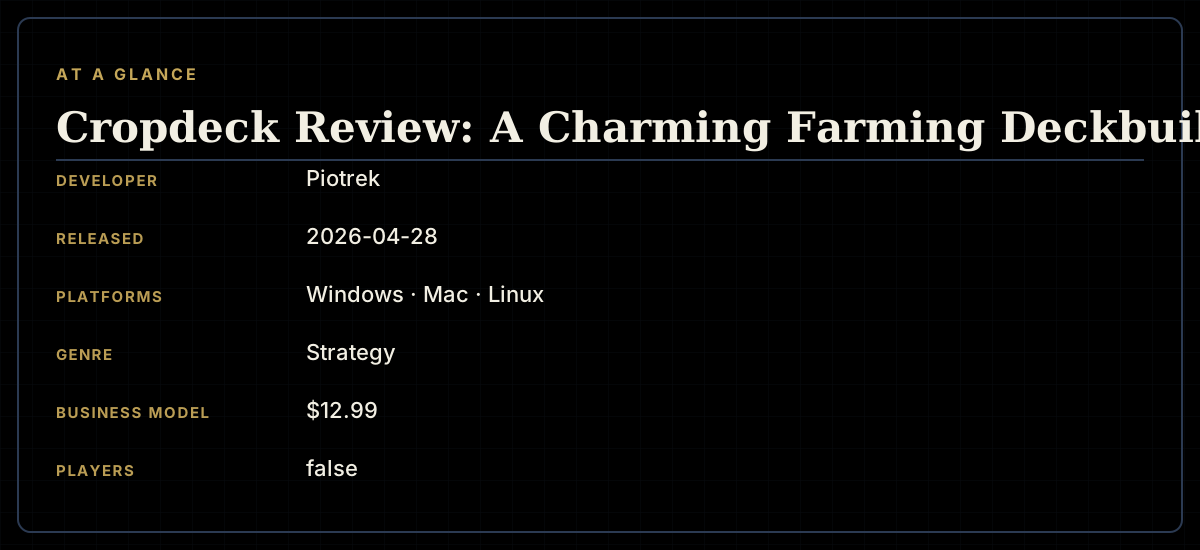
- Developer
- Piotrek
- Publisher
- Mad Head Bump
- Released
- 28 April 2026
- Platforms
- Windows, Mac, Linux
- Genre
- Strategy
- Monetisation
- $12.99
- Players
- false
The short version
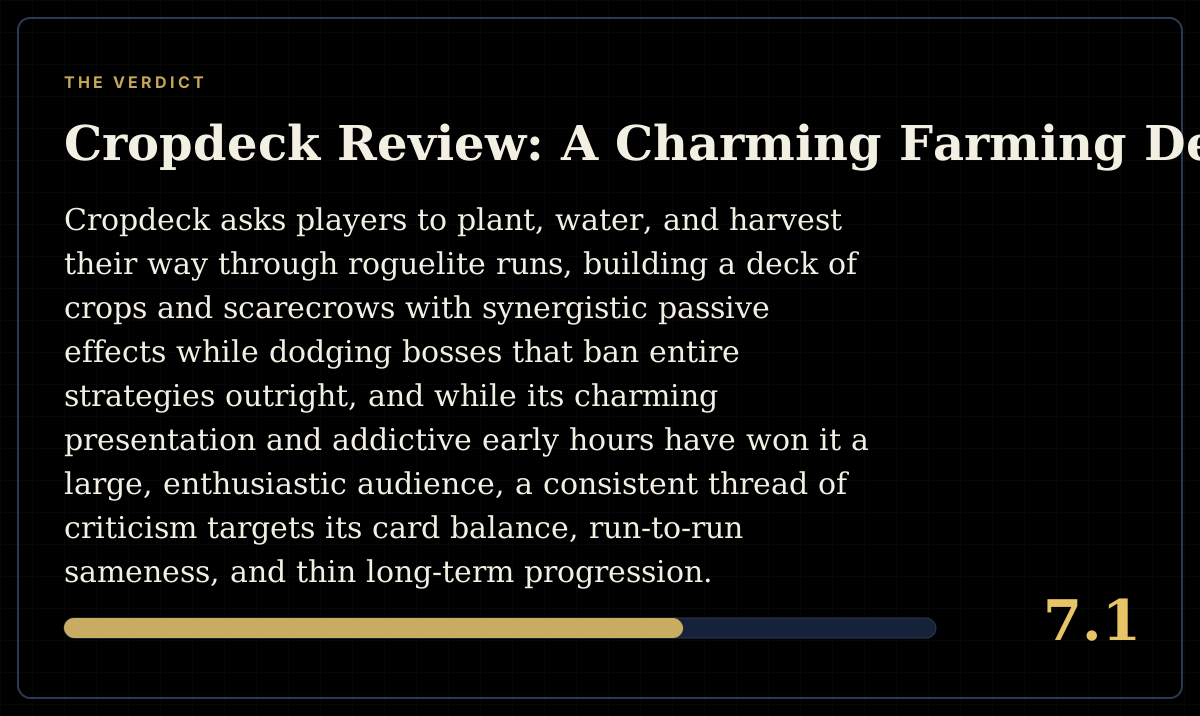
Cropdeck asks players to plant, water, and harvest their way through roguelite runs, building a deck of crops and scarecrows with synergistic passive effects while dodging bosses that ban entire strategies outright, and while its charming presentation and addictive early hours have won it a large, enthusiastic audience, a consistent thread of criticism targets its card balance, run-to-run sameness, and thin long-term progression.
Biggest strengths
- A charming art style and satisfying core loop of planting, watering, and harvesting that reviewers consistently describe as addictive
- A fresh combination of farming-sim mechanics with roguelite deckbuilding, distinct from more combat-focused genre peers
- Real difficulty and replay value for players still learning its systems, with distinct starting builds that meaningfully change how a run plays out
Biggest weaknesses
- A widely reported card balance problem, with some starting builds and scarecrows described as dramatically overpowered next to others that are barely viable
- A common complaint that runs start to feel repetitive after several playthroughs, with a narrow set of viable strategies limiting real build diversity
- Boss encounters that some reviewers say ban core tools and strategies outright rather than escalating difficulty in more interesting ways
Who it's for: A good fit for deckbuilder fans who want a chill, cozy-farming spin on the Slay the Spire formula for a run or two at a time; a weaker fit for players seeking the build diversity and long-term depth of genre benchmarks like Slay the Spire or Balatro.
Our recommendation: Try it on sale
7.1 / 10
Farming, deckbuilding, and paying your taxes
Cropdeck blends the run-based structure of Slay the Spire-style deckbuilders with a farming sim's rhythm of planting, watering, and harvesting, tasking players with building a deck of crops and quirky scarecrows with synergistic passive effects across a series of increasingly demanding seasons, all while keeping up with the game's recurring tax bill. Developed by solo creator Piotrek and published by Mad Head Bump at $12.99, it followed roughly a year of public playtests and demo builds, including a Steam Next Fest showing, before its April 28, 2026 launch. The premise, deckbuilding by way of tending a small plot of land rather than fighting monsters directly, gives it a distinct identity in an increasingly crowded genre.
A charming, addictive core loop
Reviewers consistently praise how well Cropdeck's pieces fit together. Several single out the art direction and animations as genuinely delightful, one comparing the whole package to "a nice sandwich" where everything works in concert, and multiple reviewers describe the gameplay as "wildly addicting," with one detailed review reporting a run pushed all the way to season 26 purely for the enjoyment of it. The core planting-and-harvesting rhythm, combined with meaningful choices about seed, tool, and scarecrow synergies, gives the genre's familiar deckbuilding tension a fresh, cozier coat of paint that a large number of reviewers say sets it apart from more combat-heavy peers like Slay the Spire and Balatro, even while clearly drawing inspiration from both.
A balance problem that undercuts the strategy layer
The most consistent and detailed criticism, echoed across English, Simplified Chinese, Traditional Chinese, and Polish reviews, targets card and character balance. Multiple reviewers describe a stark gap between overpowered starting builds, one specifically naming the "Engineer" as consistently dominant, and other starting characters that feel close to unplayable at higher difficulties by comparison. One English-language review puts it bluntly: starting with a strong card effectively guarantees a win regardless of the challenge selected, while starting with a weak one makes success feel arbitrary. Several Chinese-language reviewers report a related problem: as decks grow more powerful across a run, boss encounters increasingly respond by banning entire categories of cards, weather effects, or mana caps outright, which reviewers describe as feeling less like an escalating challenge and more like the game punishing players for succeeding.
Runs that start to blur together
A second, related thread of criticism concerns long-term variety. Several reviewers who put significant hours into the game report that runs begin to feel similar to one another once the initial novelty wears off, with one English-language review noting that "crops, jokers, and random events don't offer very much in terms of flexible playstyles," resulting in players optimizing toward the same narrow set of strategies run after run. Meta-progression outside of unlocking new cards is thin by design, and a specific structural complaint recurs often: unlocking new playable characters requires first beating a full run with the previous, weaker character, which several reviewers say front-loads frustration for players who haven't yet found the game's strongest builds.
Minor technical and UI complaints
Beyond balance and repetition, reviewers flag a handful of smaller issues. One English-language reviewer reports the game overriding system mouse sensitivity settings in a way the in-game sensitivity slider doesn't properly correct, and a Mac reviewer using Apple silicon reports occasional bugginess. Several Chinese-language reviews raise UI friction points too, including the absence of a quick keyboard shortcut to advance to the next day and a harvest button positioned close enough to other controls to cause frequent misclicks. None of these are described as severe, but they add up alongside the balance concerns for players hoping for a fully frictionless experience.
How it stacks up against Slay the Spire and Balatro
Reviewers who came to Cropdeck as deckbuilder genre veterans frequently frame their reactions through direct comparison to Slay the Spire and Balatro, and the comparisons cut both ways. One detailed Traditional Chinese-language review, playing through to a first completion, explicitly maps Cropdeck's structure onto both games, noting its map-based level progression echoes Slay the Spire's three-act structure while its scarecrow slot limit mirrors Balatro's joker cap, before concluding the actual card pool and build variety fall meaningfully short of either genre benchmark. Several English-language reviewers echo that sentiment more bluntly, arguing that Cropdeck's roughly three-region campaign simply doesn't offer enough card and event variety to sustain the dozens of hours those benchmark titles comfortably support, even though the farming twist keeps early runs feeling fresh. That said, reviewers who play primarily for a handful of short, cozy sessions rather than deep, long-term mastery report a much more positive experience overall, suggesting the comparison matters most to players specifically seeking a Slay the Spire or Balatro successor rather than a lighter, standalone experience in its own right.
Difficulty, taxes, and the game's sense of humor
A number of reviewers specifically credit Cropdeck's lighter touches, its recurring in-game tax bill being a favorite target of affectionate mockery, with giving the game a distinct personality that helps offset some of its mechanical shortcomings. Difficulty opinions vary widely: some reviewers, particularly newer to the genre, describe the higher difficulty tiers as a genuine, rewarding challenge worth grinding toward, while more experienced deckbuilder players report the opposite problem, clearing the base campaign in only a handful of hours and finding the endless mode's difficulty plateaus rather than continuing to escalate meaningfully past a certain point. That split in perception, a satisfying challenge for newcomers against a ceiling that arrives too early for veterans, tracks closely with the broader balance and depth complaints raised elsewhere in the review base, and is worth keeping in mind when weighing how long the game is likely to hold a given player's interest.
Verdict: a promising formula still finding its footing
Cropdeck pairs a genuinely charming, novel premise with a core loop reviewers find addictive in its early hours, and the developer's fast post-launch patching suggests real ongoing investment in fixing the issues players have raised. But the consistency of complaints about card balance, boss design that bans rather than escalates, and runs that blur together after enough repetition holds it back from being an easy, unreserved recommendation at full price. It's a strong pick for deckbuilder fans looking for something a little cozier than genre standards, especially with a sale discount or a wait for further balance patches, but players hoping for Slay the Spire or Balatro-level build diversity should temper expectations for now.
Pros and cons
Pros
- A charming art style and satisfying core loop of planting, watering, and harvesting that reviewers consistently describe as addictive
- A fresh combination of farming-sim mechanics with roguelite deckbuilding, distinct from more combat-focused genre peers
- Real difficulty and replay value for players still learning its systems, with distinct starting builds that meaningfully change how a run plays out
- Fast, responsive post-launch patching, with the developer pushing multiple hotfixes and balance updates within days of release
Cons
- A widely reported card balance problem, with some starting builds and scarecrows described as dramatically overpowered next to others that are barely viable
- A common complaint that runs start to feel repetitive after several playthroughs, with a narrow set of viable strategies limiting real build diversity
- Boss encounters that some reviewers say ban core tools and strategies outright rather than escalating difficulty in more interesting ways
- Thin meta-progression beyond unlocking new cards, with several reviewers noting character unlocks gate access behind beating the game with weaker starting decks first
Screenshots
-
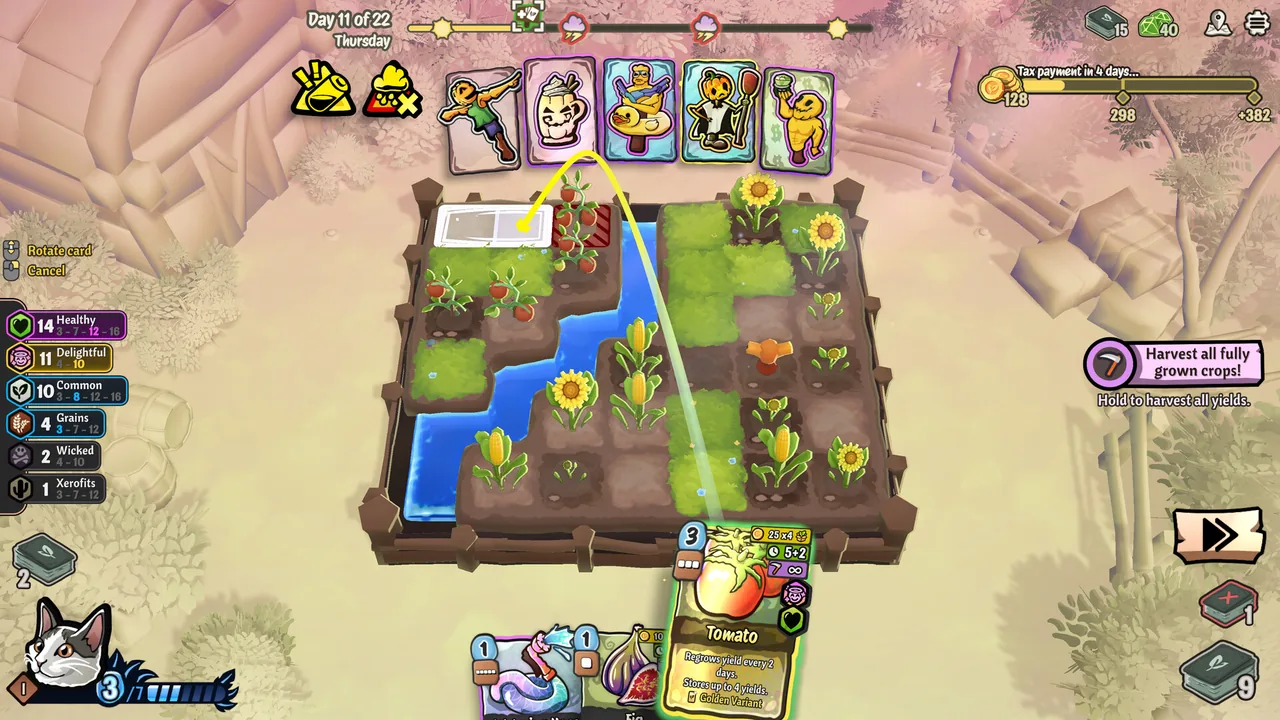
CropdeckImage: Mad Head Bump via Steam -
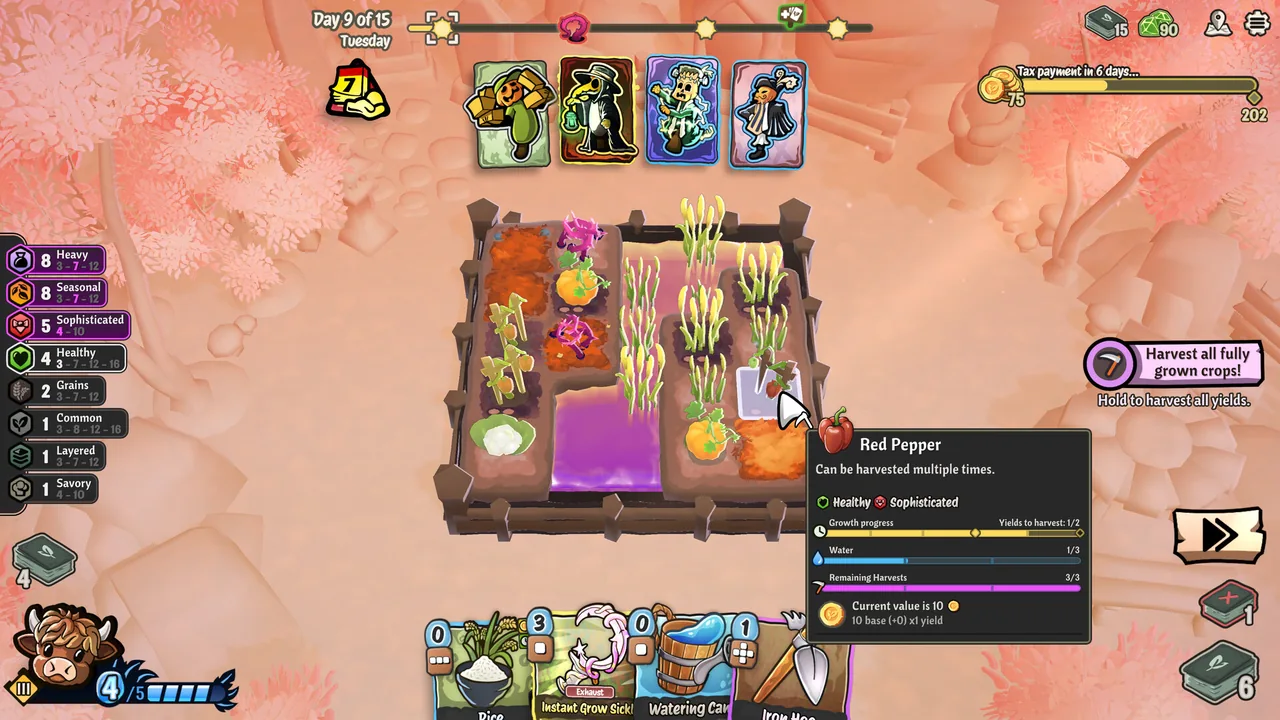
CropdeckImage: Mad Head Bump via Steam -
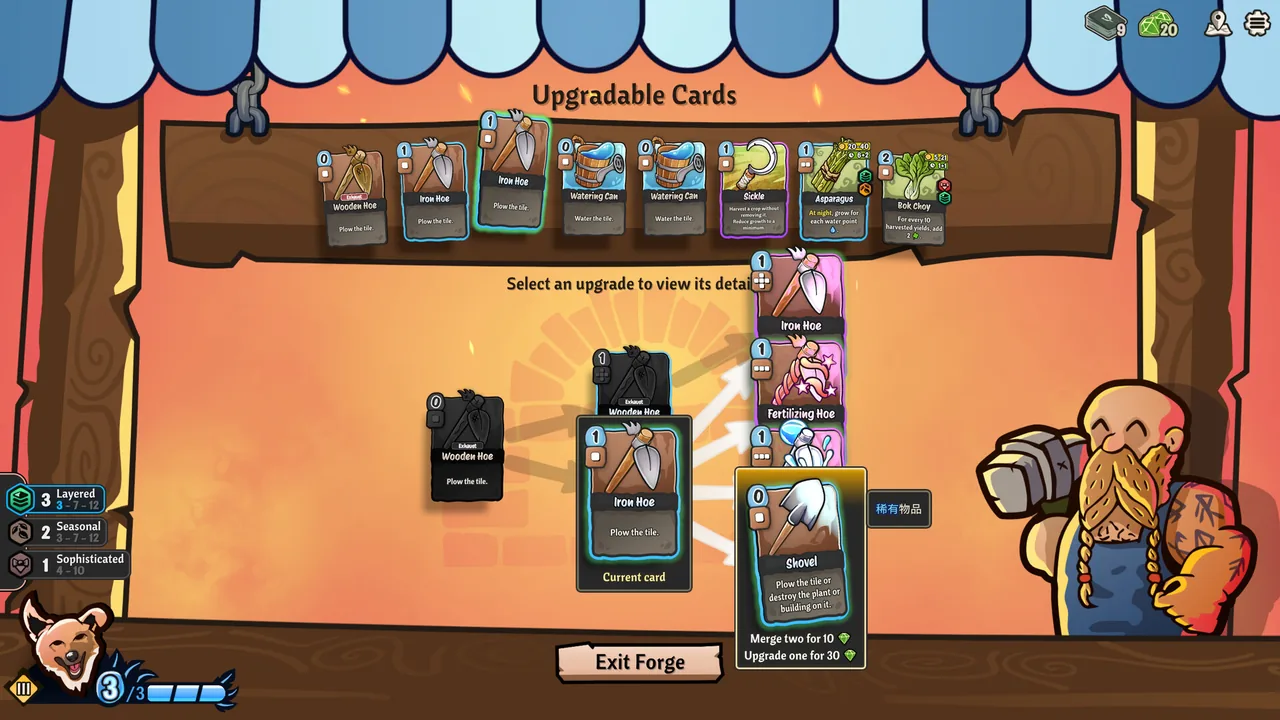
CropdeckImage: Mad Head Bump via Steam -
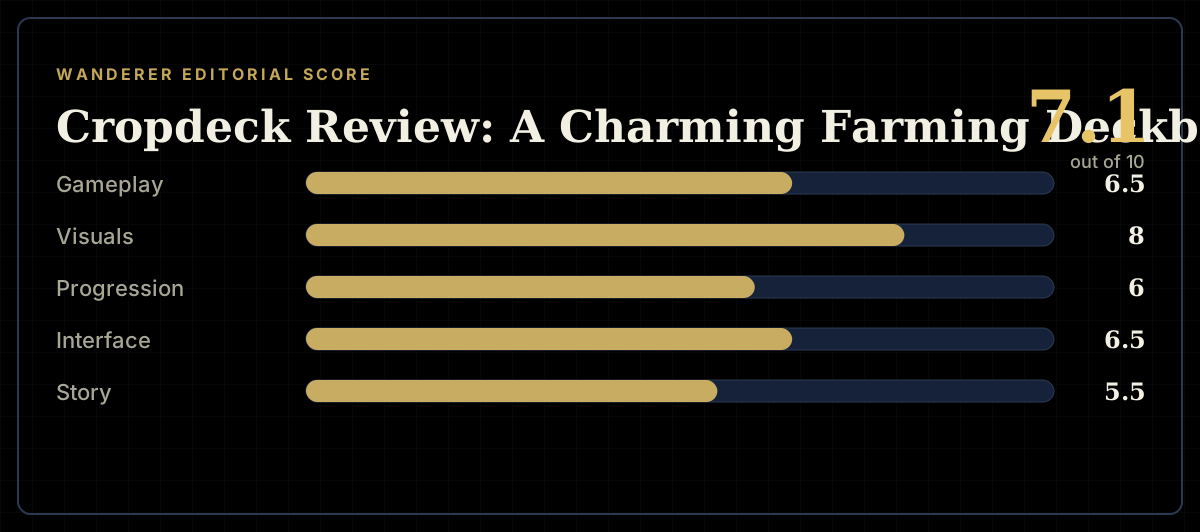
How the review scores each part of the gameWanderer Editorial -
Platform and release detailsWanderer Editorial -
The short versionWanderer Editorial