Game review
Dealer's Doom Review: Blackjack Meets Roguelike Escalation
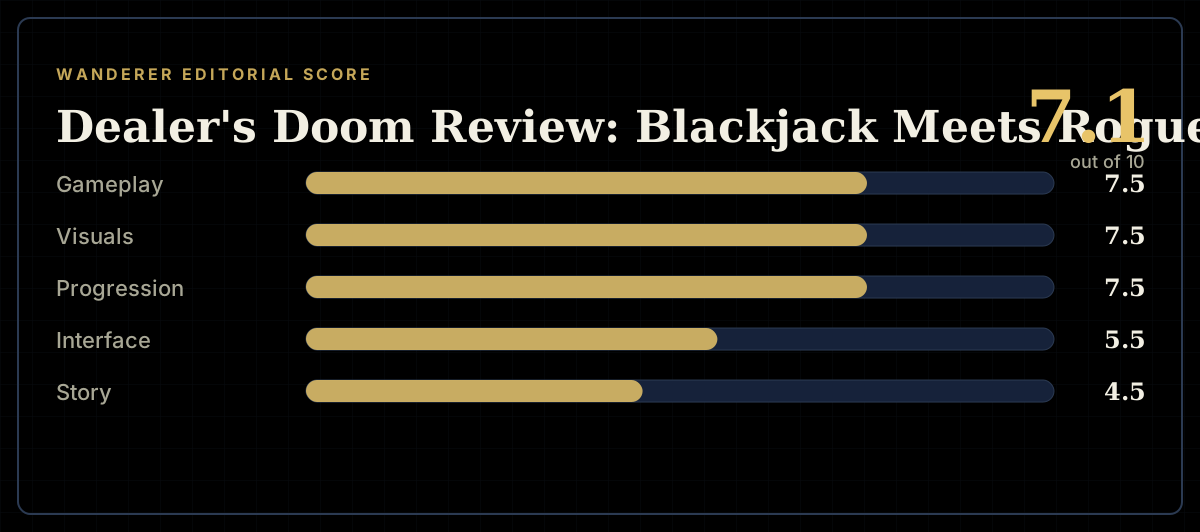
7.1 / 10
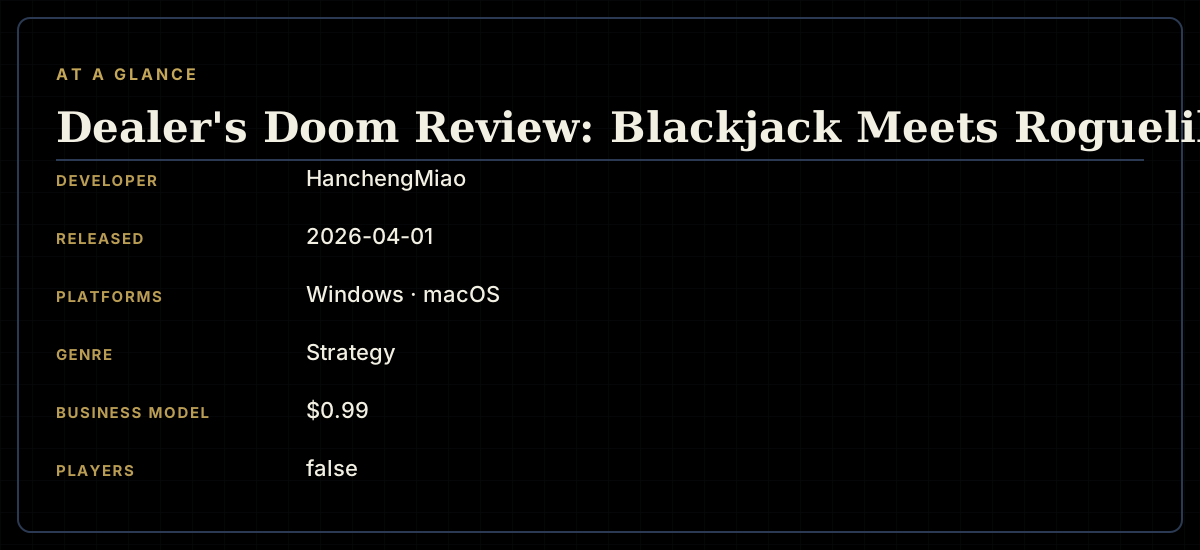
- Developer
- HanchengMiao
- Publisher
- HanchengMiao
- Released
- 1 April 2026
- Platforms
- Windows, macOS
- Genre
- Strategy
- Monetisation
- $0.99
- Players
- false
The short version
Dealer's Doom takes standard blackjack and layers escalating boss rules, contracts, and abilities on top until the familiar game becomes a genuine puzzle, and most of its review sample finds real, replayable depth in that transformation, though one detailed critique raises legitimate concerns about weak early-run agency and rough interface polish.
Biggest strengths
- An escalating boss-rule-stacking system that reviewers repeatedly praise for forcing players to constantly re-learn how to play blackjack, rather than just scaling numbers upward
- A betting and chip economy that reviewers say ties directly into risk and pacing decisions rather than functioning as a simple score counter
- A mid-run 'bar' system offering short-term strategic drink choices between floors, which multiple reviewers single out as an unusually thoughtful pacing beat
Biggest weaknesses
- One detailed English-language review raises a specific structural criticism: early runs require clearing 1-2 hands of completely standard blackjack with minimal player agency, which can make runs feel dead-on-arrival before any real build choices matter
- That same review criticizes the pools of temporary and permanent upgrade items as often inconsequential or too situational to reliably justify their cost, undercutting the sense of meaningful choice
- Interface rough edges reported include no background music volume slider, no adjustable speed for boss action animations, and occasionally unclear or incomplete English translation
Who it's for: A good fit for deckbuilder fans who want something with a lower entry barrier than Slay the Spire-style games, and for blackjack players curious about a roguelike twist; less appealing to players who need every run to feel meaningfully different from the very first hand.
Our recommendation: Consider it
7.1 / 10
Twenty-one, but the rules keep changing
Dealer's Doom takes the most universally understood card game in the world and turns it into a roguelike gauntlet: players clear escalating floors of blackjack, each one adding new boss-specific rule modifiers, action restrictions, or payout twists on top of the last. Between floors, chips earned from betting fund temporary buffs, permanent upgrades, and short-term "contract" effects that carry a run's identity forward, with an endless mode preserving accumulated builds for players who want to keep pushing past the standard campaign.
Betting that actually matters
The most consistently praised element in the sample is how the game treats its chip economy. One Simplified Chinese-language review specifically credits the game with making betting interesting again, arguing that many casino-themed games eventually reduce to comparing raw numbers, while here every large bet, conservative fold, redraw, or drink purchase creates ripple effects across later floors. Reviewers describe this tight coupling between the economic and combat systems as the reason individual runs feel meaningfully consequential rather than mechanically repetitive.
Bosses that force you to relearn the game
Multiple reviewers single out the boss design specifically for how it disrupts learned habits rather than simply raising numbers. One review describes early floors as tutorial-paced before later bosses begin "dismantling and rebuilding" the player's established strategies — some rules restrict specific actions, others change payout logic entirely, and some make the dealer counterattack aggressively at key moments. Reviewers frame this less as artificial difficulty and more as a genuine, evolving puzzle that repeatedly asks players to reconsider how to approach a game they thought they already understood.
A bar system built for mid-run decisions
A recurring specific point of praise is the game's "bar" station between floors, where drink purchases function as short-term strategic choices rather than flat stat boosts. Reviewers describe weighing current chip totals, the pressure of the upcoming boss, and their current build to decide whether a given drink should prioritize survival, speed, or high-risk payoff. More than one reviewer credits this system with turning the pause between floors into genuine decision-making rather than just a reward screen.
A distinct look for a dollar
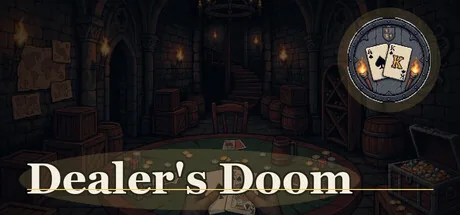
Several reviewers specifically praise the game's visual identity, describing it as leaning into an "apocalyptic gambling table" mood rather than a generic, cheap casino aesthetic. Ability badges, boss icons, the bar station, and a card codex are described as sharing a consistent visual language, with reviewers noting the UI stays readable even while displaying a fairly dense amount of run information.
A serious, detailed dissent worth weighing
Not every review is glowing, and the sample's one negative review is unusually specific and constructive rather than dismissive. That English-language reviewer credits the core rule-escalation concept while arguing the opening of each run undercuts it: players must clear one to two hands of completely standard blackjack with a small starting chip pool before any meaningful build choices become available, which the reviewer says leaves many runs effectively decided before real agency kicks in. The same review criticizes the pools of temporary and permanent upgrade items as frequently inconsequential or too narrowly situational to reliably justify their chip cost, undercutting the sense that early purchasing decisions matter.
Interface rough edges
That same detailed critique also raises structural complaints echoed nowhere else in the sample but worth flagging plainly: there's no volume slider for the background music, boss action sequences play at a fixed speed with no way to slow them down for clarity, and the English translation, while generally functional, occasionally produces unclear or incomplete sentences that muddy specific choices. None of these are described as deal-breakers at the game's very low price, but they're concrete, actionable gaps rather than vague complaints.
An accessible entry point into deckbuilding roguelikes
More than one reviewer frames Dealer's Doom as a good on-ramp for players curious about Slay the Spire-style deckbuilders but intimidated by their rules overhead, since blackjack's base rules are already familiar to nearly everyone. That framing — genuine build-and-progression depth wrapped around an instantly graspable core game — is echoed across most of the positive sample, and lines up with how the negative review frames its core concept even while disputing the execution.
Chasing floors in endless mode
The game's endless mode draws specific praise as a meaningful extension rather than a bolted-on extra. Reviewers describe a standard clear as more of a milestone than a true ending, with players who want to keep experimenting naturally rolling straight into endless mode, carrying forward the contracts, abilities, and pacing built up over the preceding run rather than starting from scratch. For players motivated by score-chasing and optimizing a build toward its theoretical ceiling, reviewers frame this as giving the game meaningfully more long-term value than its low price and short campaign length might initially suggest.
Balancing luck against decision-making
A separate thread running through several positive reviews is how the game handles the tension between randomness and skill. On the surface it's a card-draw game where the deck ultimately decides outcomes, but reviewers consistently argue that knowing when to double down, when to cut losses, and when to lean on an ability for extra value matters considerably more than raw luck once boss rule-stacking ramps up. That framing — meaningful decisions layered over a foundation of chance — is presented as the game's central hook for players willing to engage with its escalating puzzle rather than clicking through hands passively.
Verdict
Dealer's Doom succeeds at its central idea: layering escalating, rule-breaking boss modifiers onto blackjack until the familiar game becomes a genuine strategic puzzle, and most of its small review sample finds real, replayable depth in that structure. A detailed, specific dissent about weak early-run agency and rough interface polish is worth taking seriously rather than dismissing as an outlier, but at under a dollar, it remains an easy, low-risk way to find out which camp you fall into.
Pros and cons
Pros
- An escalating boss-rule-stacking system that reviewers repeatedly praise for forcing players to constantly re-learn how to play blackjack, rather than just scaling numbers upward
- A betting and chip economy that reviewers say ties directly into risk and pacing decisions rather than functioning as a simple score counter
- A mid-run 'bar' system offering short-term strategic drink choices between floors, which multiple reviewers single out as an unusually thoughtful pacing beat
- Distinct art direction reviewers describe as an 'apocalyptic gambling table' aesthetic rather than a generic casino look, plus an endless mode that carries build progress forward for players chasing higher floors
Cons
- One detailed English-language review raises a specific structural criticism: early runs require clearing 1-2 hands of completely standard blackjack with minimal player agency, which can make runs feel dead-on-arrival before any real build choices matter
- That same review criticizes the pools of temporary and permanent upgrade items as often inconsequential or too situational to reliably justify their cost, undercutting the sense of meaningful choice
- Interface rough edges reported include no background music volume slider, no adjustable speed for boss action animations, and occasionally unclear or incomplete English translation
- As a low-cost, narrowly-scoped roguelike, its appeal depends heavily on enjoying blackjack's base rules, since the entire structure is built directly on top of them
Screenshots
-
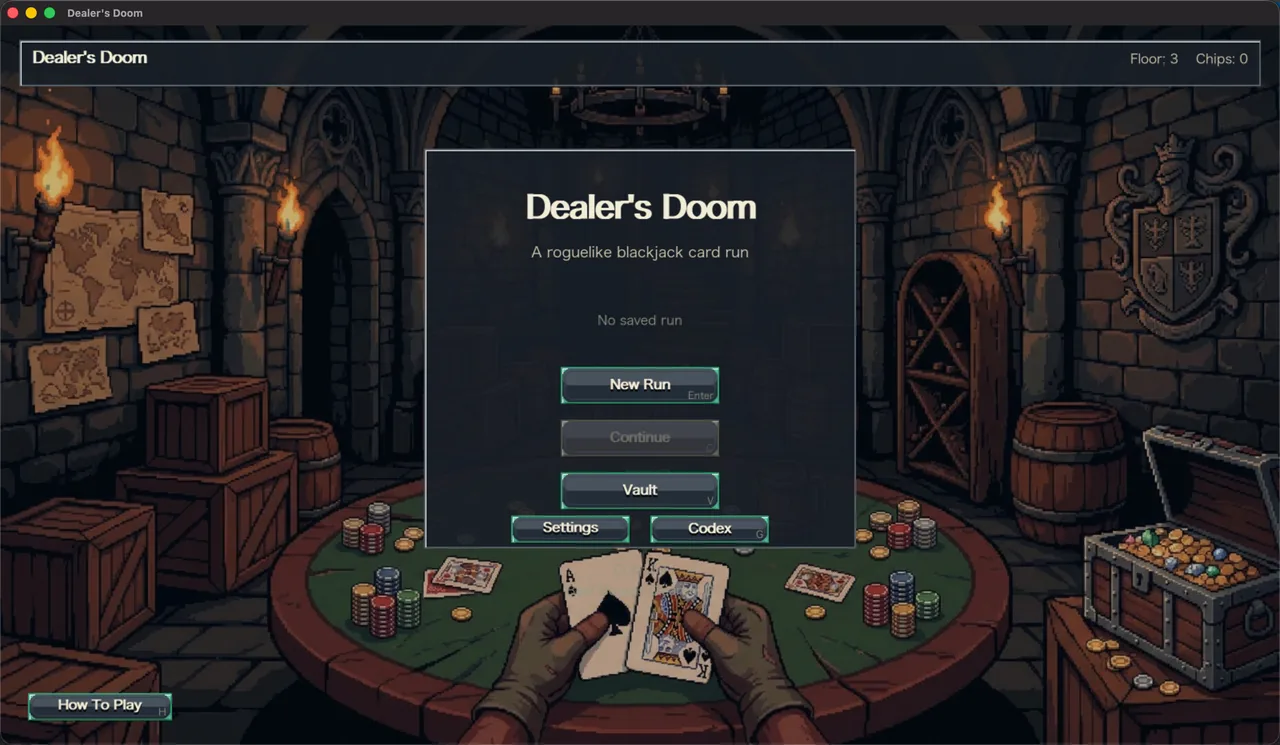
Image: HanchengMiao via Steam -
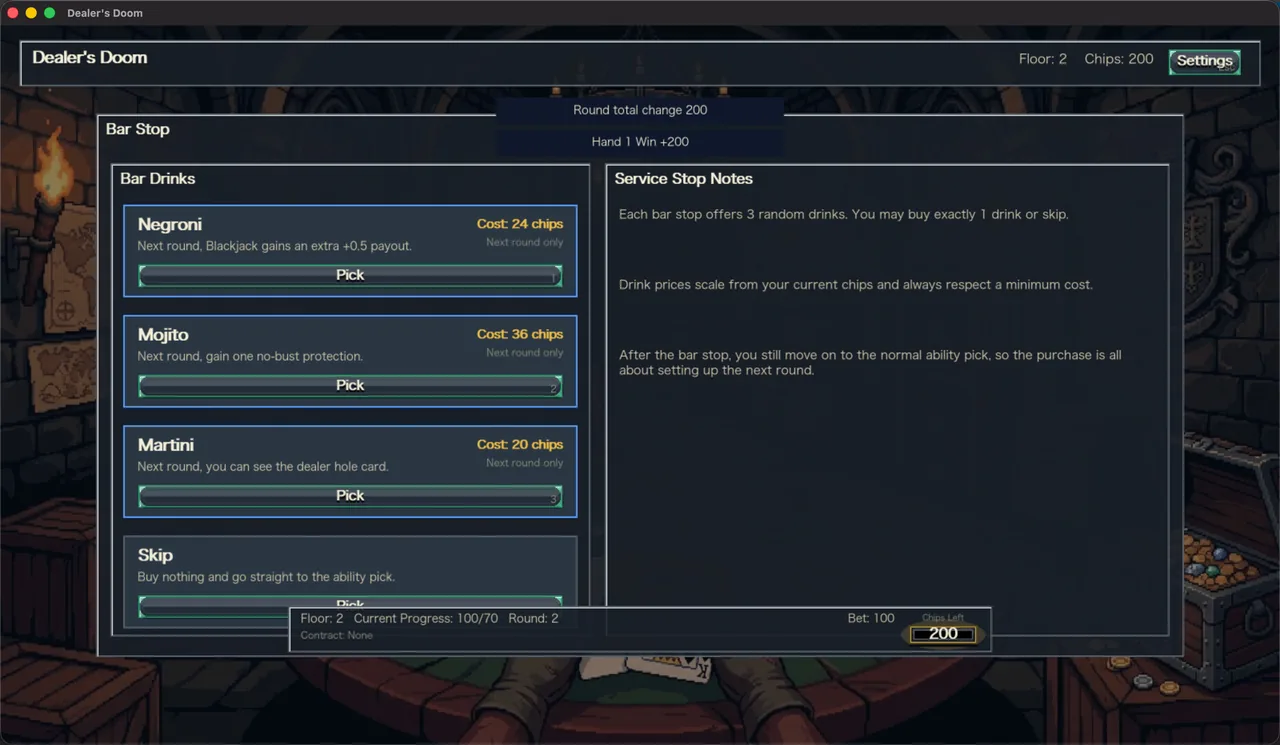
Image: HanchengMiao via Steam -
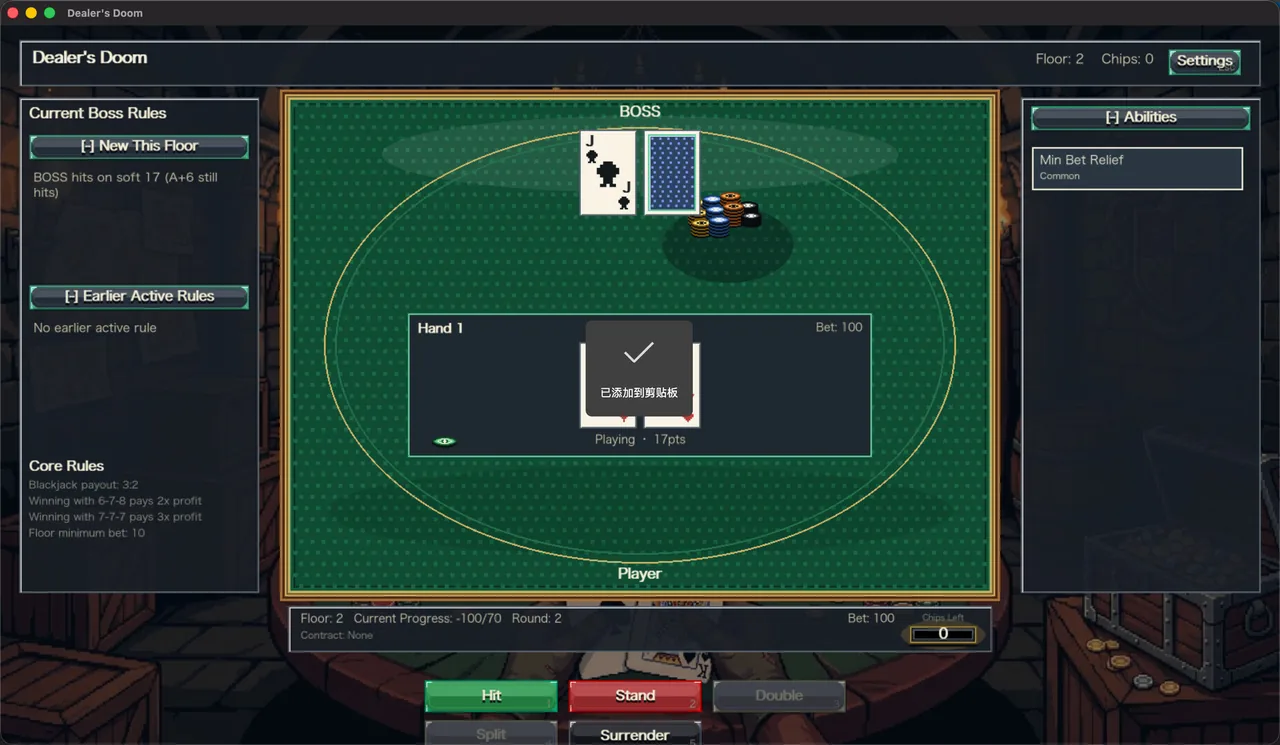
Image: HanchengMiao via Steam -
Wanderer Editorial -
Wanderer Editorial -
Wanderer Editorial