Game review
Zombie Epoch: Deck Apocalypse Review: Deep Cards, Sudden Deaths
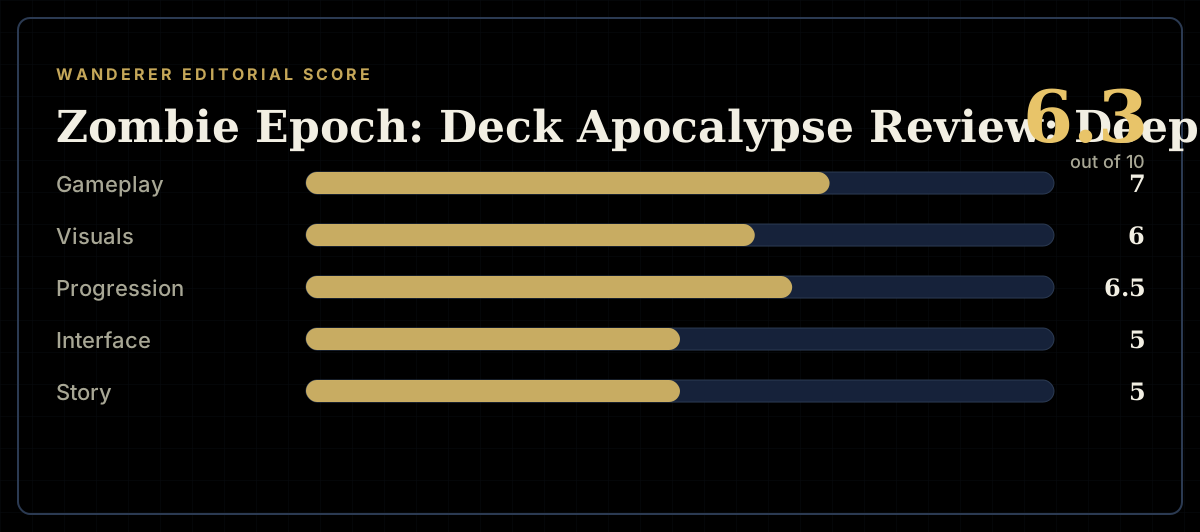
6.3 / 10
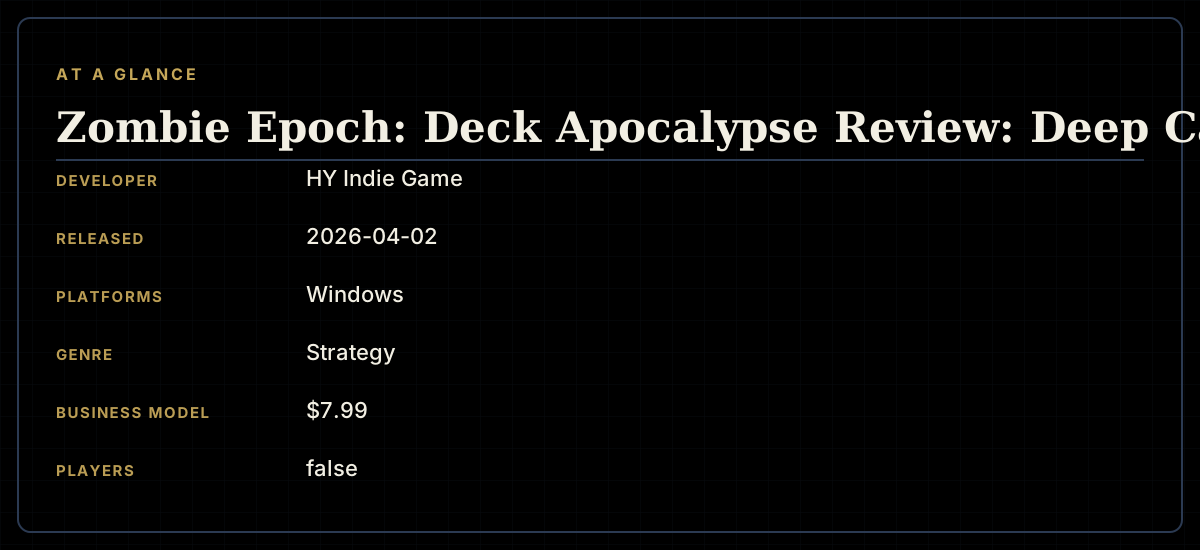
- Developer
- HY Indie Game
- Publisher
- HY Indie Game
- Released
- 2 April 2026
- Platforms
- Windows
- Genre
- Strategy
- Monetisation
- $7.99
- Players
- false
The short version
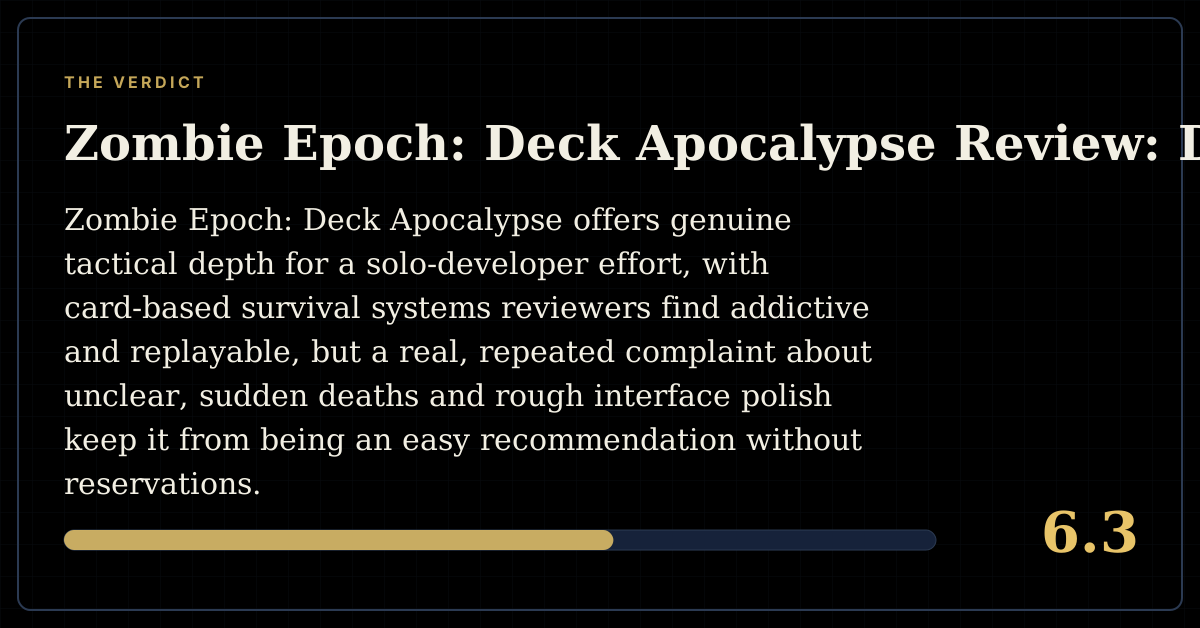
Zombie Epoch: Deck Apocalypse offers genuine tactical depth for a solo-developer effort, with card-based survival systems reviewers find addictive and replayable, but a real, repeated complaint about unclear, sudden deaths and rough interface polish keep it from being an easy recommendation without reservations.
Biggest strengths
- Genuine tactical depth across five playable characters, each with distinct ability choices and relic/talisman customization, that multiple reviewers describe as offering real build variety rather than one dominant strategy
- A card-based, tile-stepping survival loop layered with base-building and resource management that reviewers repeatedly call addictive and highly replayable
- Unusually responsive post-launch support from what appears to be a solo developer, with a dense run of balance patches, bug fixes, and new language support added within the first two weeks of launch
Biggest weaknesses
- A specific, repeated complaint across the review sample: health and hunger can drop to zero without clear enough warning during exploration or camping, leading to sudden, frustrating deaths that several reviewers say the game needs a confirmation prompt to prevent
- Localization is inconsistent, with one Russian-language review noting the translation covers menus but not actual in-game gameplay text, and a Korean reviewer noting some translated card and enemy descriptions remain unclear
- A French-language review explicitly calls the game a copy of the deckbuilding survival game Pyrene, describing it as a 'copy-paste, but less rich and harder' — a specific comparison this outlet has not independently verified but includes as reviewer-sourced context
Who it's for: Best suited to card-roguelike fans willing to tolerate some rough interface edges and learn its rules through trial and error, particularly at a sale price; less appealing to players who want their deckbuilders to clearly telegraph danger before it kills them.
Our recommendation: Consider it
6.3 / 10
Cards instead of a controller in the zombie apocalypse
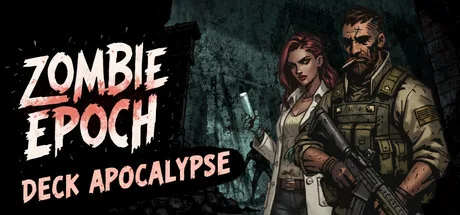
Zombie Epoch: Deck Apocalypse blends dungeon crawling with card-based strategy: players step across tile-like card maps, uncovering monsters, resources, and supplies, fighting zombies and managing hunger and health as resources that dwindle with every move and every night spent outdoors. Progress feeds into base-building back at camp and character upgrades across five playable survivors, each with distinct stat leanings and selectable special abilities, layered with a roguelike relic system the game calls talismans.
Real tactical depth for a one-person project
The most consistent praise in the review sample centers on genuine systemic depth. Reviewers repeatedly describe meaningful build variety across the five characters and their ability choices, with one English-language reviewer explicitly pushing back on the game's Mixed rating, calling it "a great card game with a lot of progression and tactical options" and specifically praising the creative freedom in combining cards and customizing a hero's approach. Several reviewers frame this as a notable achievement for what appears to be a solo-developed project, comparing it directly and often favorably to Pyrene, a more established genre entry in the same space.
An addictive loop, when the rules click
Beyond raw system depth, multiple reviewers describe the moment-to-moment loop as genuinely addictive once its mechanics are understood, with several explicitly recommending the free demo as a fair way to judge personal fit before buying. A Simplified Chinese reviewer compares the tile-stepping structure to classic "tower of magic" (魔塔)-style games, crediting the roguelike card and relic variety with keeping repeated runs interesting rather than repetitive.
Deaths that arrive without enough warning
The single most repeated specific criticism across the sample targets clarity around danger. Multiple Chinese-language reviewers independently estimate that the large majority of their early deaths came from health silently dropping to zero without adequate warning during exploration or overnight camping, rather than from a fair, readable threat. Several explicitly request a confirmation prompt before entering situations that could cause sudden death, framing it as a straightforward, fixable interface gap rather than a fundamental design flaw — and reviewer feedback in the patch notes suggests the developer has already begun adding some warning indicators for movement and camping specifically, though not yet for combat.
A specific comparison worth taking seriously
One detailed French-language review raises a pointed, specific criticism: that the game is a direct copy of Pyrene, a more established card-based zombie survival title, describing it as "a copy-paste, but less rich and harder." This outlet has not independently verified that comparison, but is including it as reviewer-sourced context given how specifically it's raised and the fact that multiple other reviewers independently draw the same comparison, albeit without the accusatory framing — several simply note the game plays similarly to Pyrene and, in one Russian reviewer's assessment, offers more distinct character abilities than that comparison title.
Localization still finding its footing
Language support expanded rapidly in the weeks after launch — the patch notes show English, then French and Russian, then broader support added within roughly 48 hours of release — but coverage is uneven. A Russian-language review specifically notes translation covers menus but not in-game gameplay text, and a Korean-language review, while generally positive and specifically thanking the solo developer for the effort, notes some card and enemy descriptions remain unclear enough to require guesswork, which the reviewer attributes to likely machine translation.
Bugs and a shorter-than-expected campaign for some players
A handful of reviewers report more conventional technical issues: movement or dialogue lockups requiring a restart, and, after replaying the same level roughly 50 times, an overlapping-card bug that leaves cards unable to be moved. Separately, one detailed Russian-language review that otherwise recommends the game notes that unlocking all characters and territories on standard difficulty took only about seven hours, after which only the game's infinite mode remains — a real completion-speed concern for players expecting the deckbuilding depth to sustain a much longer campaign.
Is $7.99 the right entry point
Several reviewers frame the price directly, generally landing on the same conclusion: fair for the content on offer, and better value still on sale given the rough edges. One Simplified Chinese reviewer who compares it explicitly to Pyrene concludes that while this game's content is comparatively simpler, its lower price makes it worth picking up during a discount, while expressing hope the developer continues actively polishing the experience given the visible update cadence. That framing — cautiously positive, price-conscious, betting on future patches — recurs often enough across the sample to be a fair summary of where general sentiment currently sits.
A minority who bounced off it entirely
Not every negative review engages constructively with the game's rough edges. A handful of shorter, blunter negative reviews describe the game as excessively luck-dependent, criticize repetitive "click through" play once a working strategy is found, and in a couple of cases report being unable to figure out core functions like switching characters after extended play. These read as more fundamental mismatches between player expectation and what the game offers, rather than the specific, constructive bug reports found elsewhere in the sample, and are worth including as a genuine minority experience rather than smoothing them into the broader, more measured criticism above.
Verdict
Zombie Epoch: Deck Apocalypse is a genuinely ambitious, tactically deep card-survival game for what appears to be a solo developer's effort, and reviewers who push past its rough edges consistently find real replay value in its build variety. A repeated, specific complaint about unclear, sudden deaths and uneven localization keep it from an unreserved recommendation, but a responsive post-launch patch cadence suggests a developer actively working through exactly these issues.
Pros and cons
Pros
- Genuine tactical depth across five playable characters, each with distinct ability choices and relic/talisman customization, that multiple reviewers describe as offering real build variety rather than one dominant strategy
- A card-based, tile-stepping survival loop layered with base-building and resource management that reviewers repeatedly call addictive and highly replayable
- Unusually responsive post-launch support from what appears to be a solo developer, with a dense run of balance patches, bug fixes, and new language support added within the first two weeks of launch
- A free playable demo available before purchase, which multiple reviewers specifically credit as a fair, low-risk way to judge fit before buying
Cons
- A specific, repeated complaint across the review sample: health and hunger can drop to zero without clear enough warning during exploration or camping, leading to sudden, frustrating deaths that several reviewers say the game needs a confirmation prompt to prevent
- Localization is inconsistent, with one Russian-language review noting the translation covers menus but not actual in-game gameplay text, and a Korean reviewer noting some translated card and enemy descriptions remain unclear
- A French-language review explicitly calls the game a copy of the deckbuilding survival game Pyrene, describing it as a 'copy-paste, but less rich and harder' — a specific comparison this outlet has not independently verified but includes as reviewer-sourced context
- Several reviewers report technical bugs including freezing/movement lockups and, after extensive replaying of the same level, overlapping cards that become unmovable
Screenshots
-
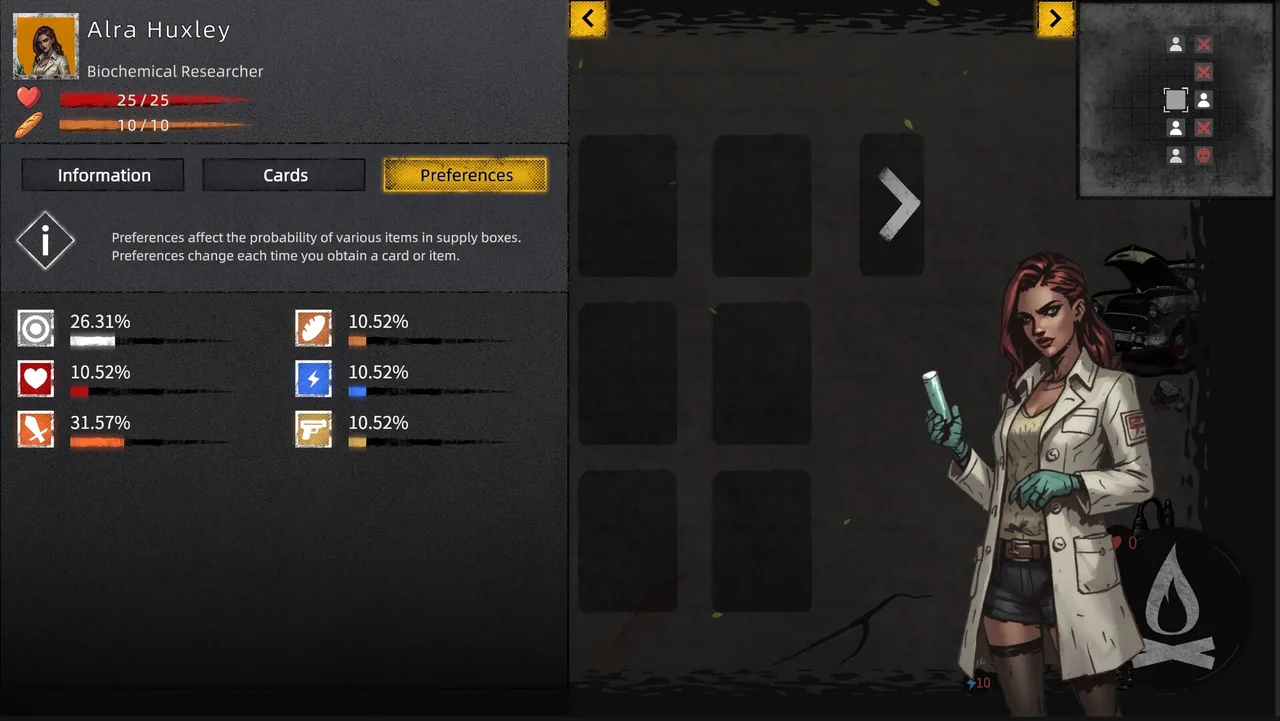
Image: HY Indie Game via Steam -
Image: HY Indie Game via Steam -
Image: HY Indie Game via Steam -
Wanderer Editorial -
Wanderer Editorial -
Wanderer Editorial