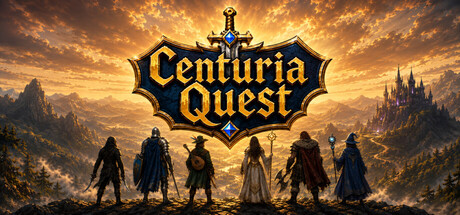
Game review
Centuria Quest
7 / 10
- Developer
- Kalemodo
- Publisher
- Kalemodo
- Released
- 31 August 2026
- Platforms
- Windows
- Genre
- RPG
A Fifty-Third Consecutive Launch Without a Single Review
Centuria Quest is a turn-based, pixel-art roguelite from solo-credited studio Kalemodo that launched on Steam on 31 August 2026, and it currently has zero user reviews. That's a genuinely surprising gap for the genre it's aiming at, since roguelites live or die on whether their run-to-run variance actually feels meaningfully different each time, and that's exactly the kind of long-haul verdict that only forms after a community has put dozens of hours into the leaderboard grind the game is explicitly built around.
Twelve Hero Classes, Two Subclasses Each, Chosen Mid-Run
The core hook is that every one of the twelve starting hero classes can evolve into one of two distinct subclasses partway through an expedition, and the store page is specific that this choice is meant to vary from run to run rather than converging on one "correct" build — a Mage that becomes a glass-cannon specialist in one expedition might instead become a support-focused caster in the next, depending on what the rest of the party needs. With two subclasses per class across twelve classes, that's a genuinely large branching-build space for a game in this price bracket, and pairing it with six-hero squads split across front and back rows gives positioning an actual tactical role rather than treating row placement as cosmetic. Enemies are stated to scale in danger as a run progresses, with bosses specifically designed to punish players who default to the same party setup every time, which at least on paper pushes the subclass system from a nice-to-have into something a full playthrough has to engage with. A screenshot of a Lich boss fight backs that up directly: the boss carries a 620-point health bar next to a named ability list — Arcane Bolt, Fireball, Freeze, Meteor — with individual MP costs, and both sides are stacking named status effects like Vulnerable, Burn, and DEF Down rather than trading generic damage numbers back and forth.
A Hub Loop Built From Seven Named Waypoints
Between battles, the expedition routes through named locations rather than a generic "shop" or "rest" screen: a Marketplace for equipment and supplies, an Adventurers' Guild for recruiting new heroes, a Forge for upgrading gear, a Campfire for recovery, a Strategy Meeting for expedition-wide buffs, Treasure Chests offering risk-reward gambles, and Combat Encounters for players who'd rather push straight ahead. Naming each stop and giving it a distinct function is a small structural choice, but it turns the between-battle decisions into a real resource-allocation puzzle — spend gold now at the Forge or bank it for a better Marketplace roll later — rather than a single monolithic shop screen that flattens every choice into the same transaction. A post-victory screenshot confirms this path-choice structure plays out exactly as described: after a "Victory on Stage 4!" banner and a gold payout, the game presents Monster Battle, Boss Battle, Campfire, Marketplace, and Adventurers' Guild as selectable cards, with one option flagged "Recommended" to nudge undecided players rather than leaving the choice entirely opaque. Five separate game modes sit on top of that same core loop: a Standard Expedition, a Hard Mode for experienced players, a Chaos Expedition that scrambles conditions mid-run, a Boss Rush for testing an already-built party against bosses back to back, and a no-stakes Training mode for experimenting with subclasses before committing to a real run. Splitting the difficulty and experimentation modes out from the main campaign like this is a sensible concession to a genre that can otherwise punish players for learning its systems the hard way — Training in particular gives newcomers somewhere to fail without losing expedition progress, which is a courtesy plenty of roguelites skip entirely in favour of throwing players straight into a permadeath run.
Permanent Talents, an Endless Mode, and Actual Leaderboards
Progression carries over between runs through permanent talents and achievement-gated perks — better Marketplace prices, extra supplies, Forge discounts, and other expedition-wide bonuses — which is the standard roguelite meta-progression contract: each failed run should still leave the player measurably stronger for the next attempt. A hundred numbered stages give the main campaign a concrete finish line, with an Endless Mode picking up afterward for players who want the difficulty curve to keep climbing indefinitely, and Leaderboards tracking stage reached, round count, and completion time give that endless tail an actual competitive framing rather than leaving it as a private high-score chase. That's a reasonably complete structure for a roguelite built around only a twelve-class, twenty-four-subclass roster, since the permanent-progression and leaderboard layers are what usually keep a smaller class roster from feeling exhausted after the first handful of runs.
In-App Purchases Are Listed but Not Explained
At NZ$12.49 with no discount, Centuria Quest sits at a fair budget-indie price point for the amount of run-based content described. What's worth flagging, though, is that Steam's own category listing for the game includes "In-App Purchases" alongside the single flat purchase price, and nothing in the store page's own description of the Marketplace, Forge, or permanent-talent systems mentions any real-money transaction — everything described there is earned through in-run gold and achievement unlocks. That's a gap between the storefront's own metadata and its marketing copy that a prospective buyer can't resolve without launching the game, and it's the kind of ambiguity that a wave of user reviews would normally clear up within days of release by simply reporting what, if anything, is actually for sale.
Verdict
Centuria Quest pairs a twelve-class, twenty-four-subclass roster with a genuinely structured hub loop — seven named waypoints, five game modes, permanent meta-progression, and an Endless Mode backed by real leaderboards — that gives a budget-priced pixel-art roguelite more shape than its price tag might suggest. Screenshots of an actual Lich boss fight and a post-victory path-choice screen confirm the systems described on the store page are real and functioning rather than aspirational marketing copy, right down to named spells, stacking status effects, and a "Recommended" nudge on the waypoint-selection cards. Steam's own listing flagging in-app purchases without the store description ever mentioning them is a loose thread worth knowing about before buying. It launched on 31 August 2026 with zero user reviews so far, so how deep the subclass system actually goes across a hundred stages, and what if anything the flagged in-app purchases turn out to be, remain unverified by anyone outside the studio.
Screenshots
-
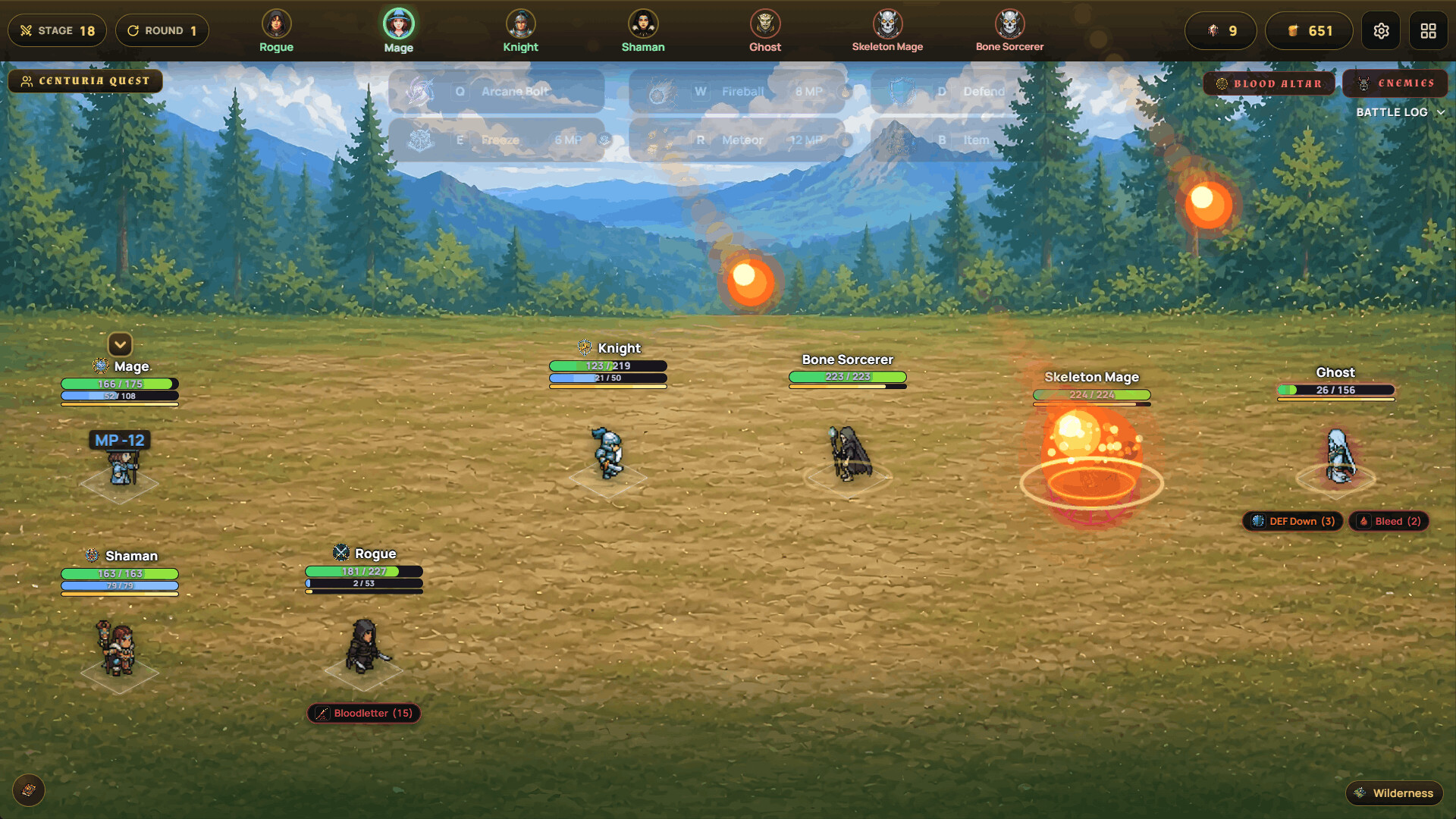
A full six-hero party engages a trio of undead enemies, with DEF Down and Bleed status stacks visible on both sides.Steam store page -
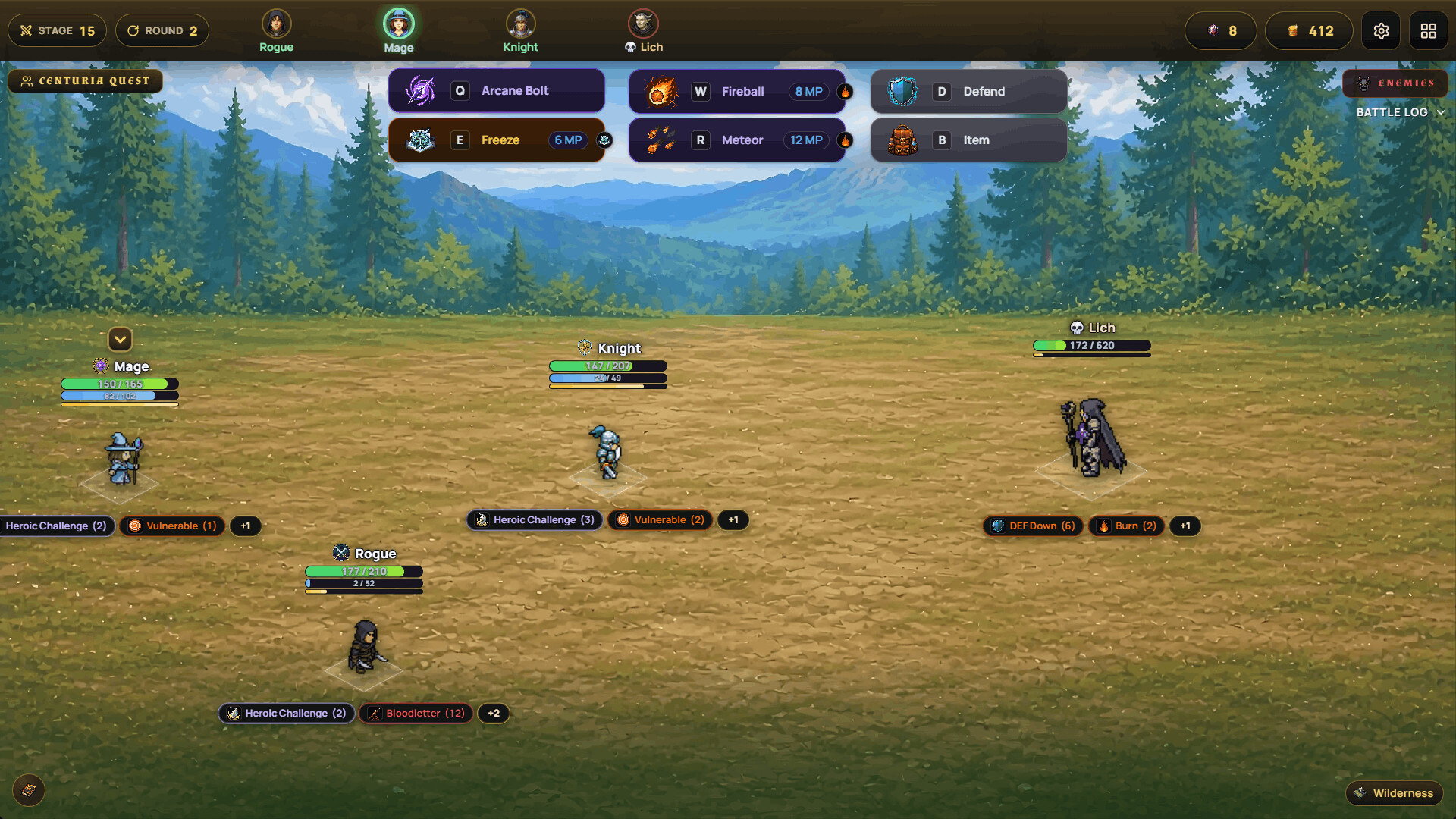
The Mage's named spell list faces off against a Lich boss with a 620-point health bar and stacking Vulnerable and Burn debuffs.Steam store page -
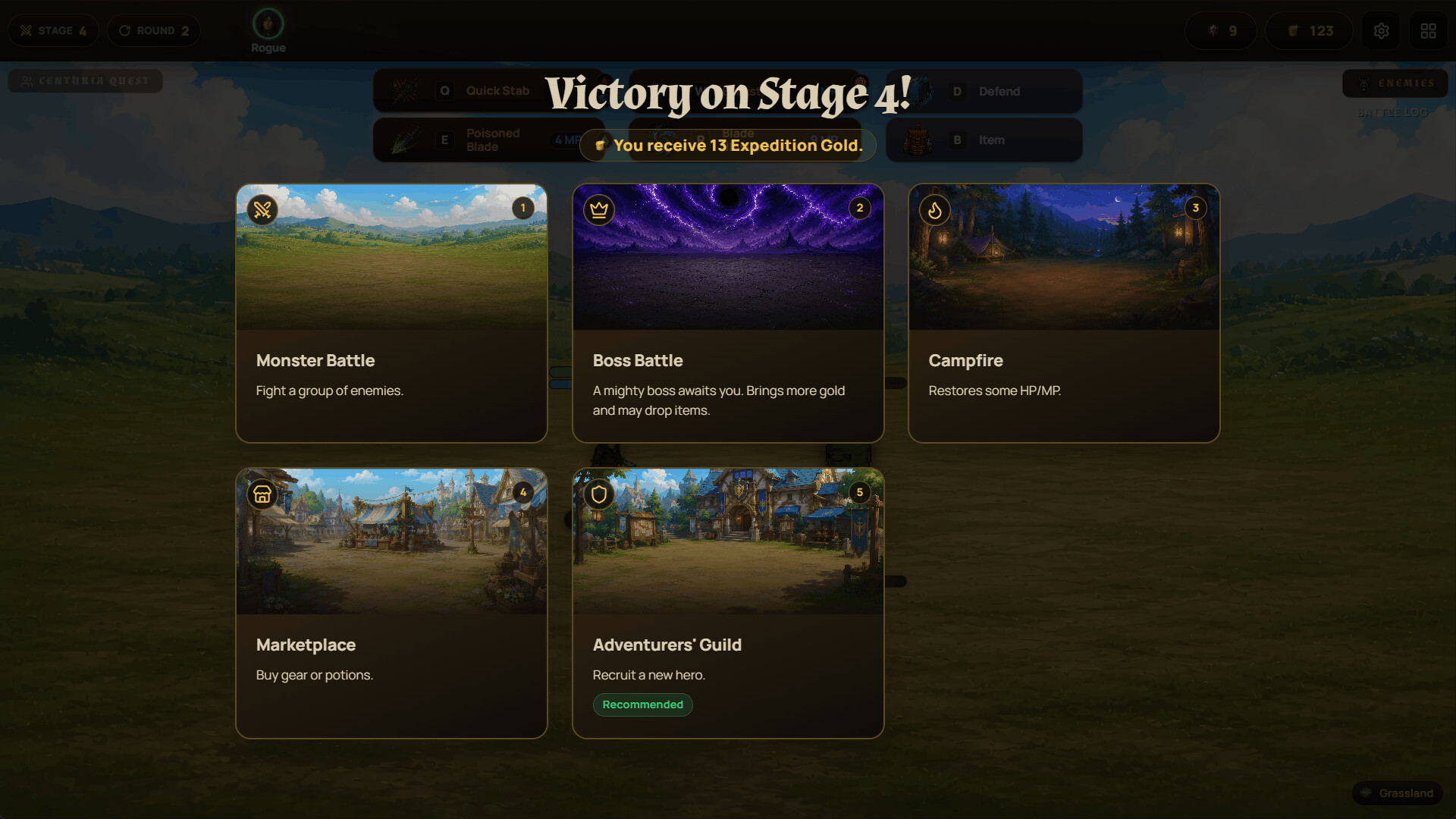
The post-battle path-choice screen lays out the named waypoints from the store description as selectable cards.Steam store page