Game review
DEFEAT THE GOBLIN KING
6.5 / 10
- Developer
- Gagurum
- Publisher
- Gagurum
- Released
- 21 August 2026
- Platforms
- Windows
- Genre
- RPG
No User Reviews Yet, But a Clear Genre Pitch
DEFEAT THE GOBLIN KING launched on Steam on 21 August 2026 from solo developer Gagurum, and at the time of writing it has no user reviews at all. That's worth knowing going in, since the game's pitch is a fairly specific one — a turn-based roguelike RPG built around expeditions, character-building runs, and a single unifying goal of finally toppling the titular Goblin King — and whether that structure holds up over repeated runs, the way any good roguelike needs to, is exactly the kind of thing a review community would normally help confirm.
Nine Characters and a Roster Built for Replays
The roster is stated at nine playable characters, each with a distinct moveset and stat spread, which is a reasonably generous number for a solo-developed roguelike to commit to fully realising. Roguelikes live or die on whether their character variety actually changes how a run plays out rather than just reskinning the same handful of buttons, and having nine separately statted, separately controlled options gives the game room to explore genuinely different playstyles across repeated attempts. The achievement list backs this up with a dedicated "Master Mage" trophy, confirming at least one of the nine is a spellcasting-focused option distinct from whatever melee or ranged archetypes fill out the rest of the roster.
Nine is also a large enough number that unlock pacing becomes a real design question worth flagging, even without direct confirmation of how it's handled: a roguelike that hands over all nine characters immediately risks diluting the sense of earned progression that makes repeated runs feel rewarding, while one that gates them too aggressively behind runs the player hasn't yet been given a reason to enjoy risks losing players before they see the variety at all. Whichever way Gagurum has balanced that tradeoff, the character count itself is a genuine structural asset for a solo project this size to have built.
Turn-Based Combat Against Fifty-Plus Enemies
Combat is turn-based, and the store page frames the design goal explicitly as fast-paced, challenging, and engaging despite the turn-based structure — an intentional counterpoint to the genre's reputation for slow, methodical pacing. Fifty-plus unique enemies is a substantial bestiary for a solo project, and combined with six zones described as having distinct visuals and challenges, it suggests each area is meant to introduce its own specific threats rather than reusing the same handful of monster types with palette swaps throughout. The Goblin King himself sits as the singular end-boss goal driving every run, giving the roguelike loop a fixed target to build toward rather than an open-ended survive-as-long-as-you-can structure.
Screenshots confirm combat runs on a named-ability system rather than a bare attack-and-defend toggle: an Archer facing down a "Goblin Raider" in the "Gone Valley" zone has access to distinct tactical options like "Aim," "Destabilize," and an attack-boosting ability, each shown as a numbered icon with its own resource cost, alongside separate gold and elemental-resource counters tracked in the corner. That's a meaningfully deeper tactical layer than "turn-based" alone implies, closer to a card-and-resource combat system than a simple menu of basic attacks. The zone structure is also confirmed to run on a branching node map in the Slay the Spire mould, with monster encounters, treasure chests, and unmarked event stops connected by dashed paths that the player chooses between — a structural detail the store page never mentions, and one that gives each Gone Valley run its own route through the zone rather than a single fixed sequence of fights.
Items, a Town to Manage, and Long-Term Build Variety
Beyond the character roster, the game promises more than fifty items in the form of potions, scrolls, and artifacts, giving each individual run's build variety a second axis beyond character choice alone — the same character played with a different item pool should, in principle, play meaningfully differently. A single town sits alongside the expedition structure as something to "take care of," a common roguelike-adjacent device for giving meta-progression a physical home base rather than leaving it as an abstract menu screen between runs, though the store page doesn't go into detail about what managing the town actually involves day to day.
That vagueness around the town is one of the few real gaps in an otherwise specific store pitch, though a screenshot of the "Camp" screen partly fills it in: it shows a recruited companion, a horned green ally standing calmly rather than fighting, positioned near the town's rundown buildings alongside the player's active Archer. That confirms recruitment is at least part of what the town involves, even if the full extent of what else can be built, bought, or upgraded there stays undocumented ahead of any player reviews. The camp's painterly art style is also worth noting as a point of consistency the earlier zone screenshots share with the game's hand-painted logo art — unlike some of this lane's recent picks, there's no jarring gap here between the marketing key art and what the game actually looks like in motion.
Achievements Confirm the Zone-by-Zone Structure
The achievement list is unusually informative here, naming zones directly through a run of "Beyond the valley," "Beyond the road," "Beyond the forest," "Beyond the fields," and a hidden "Beyond the catacombs" — a clear five-zone progression chain, with the catacombs' hidden status suggesting it's a late-game or optional area rather than part of the guaranteed critical path. A parallel set of "challenger" achievements, including a hidden "Catacombs challenger" alongside a "Bloodfields challenger," points at harder optional variants layered on top of the base zones, giving committed players an extra difficulty tier to chase once the standard run has been cleared. Generic achievements like "Survive," "Crystal trophy," and the town-adjacent "Beyond the road" round out a list that, taken as a whole, reads like a genuinely structured content ladder rather than a handful of arbitrary milestones bolted on after the fact.
Verdict
DEFEAT THE GOBLIN KING commits to a fairly traditional but well-specified turn-based roguelike shape: nine distinct characters, six visually and mechanically distinct zones (five of them directly confirmed by name through the achievement list), fifty-plus items and enemies apiece, and a town to manage between runs, all building toward a single named final boss. Screenshots go further than the store page and confirm a genuinely tactical named-ability combat system and a branching node-map structure per zone, plus a consistent painterly art style that matches its own key art — a pleasant surprise given how often that gap trips up similar launches. That's a substantial amount of content for a solo developer to have shipped, and the achievement list does real work confirming it's more than marketing copy. At NZ$20.49 it sits at a noticeably higher price than many of its indie roguelike peers, which raises the stakes on whether the promised variety actually holds up run after run — a question that, with zero reviews so far, remains entirely open.
Screenshots
-
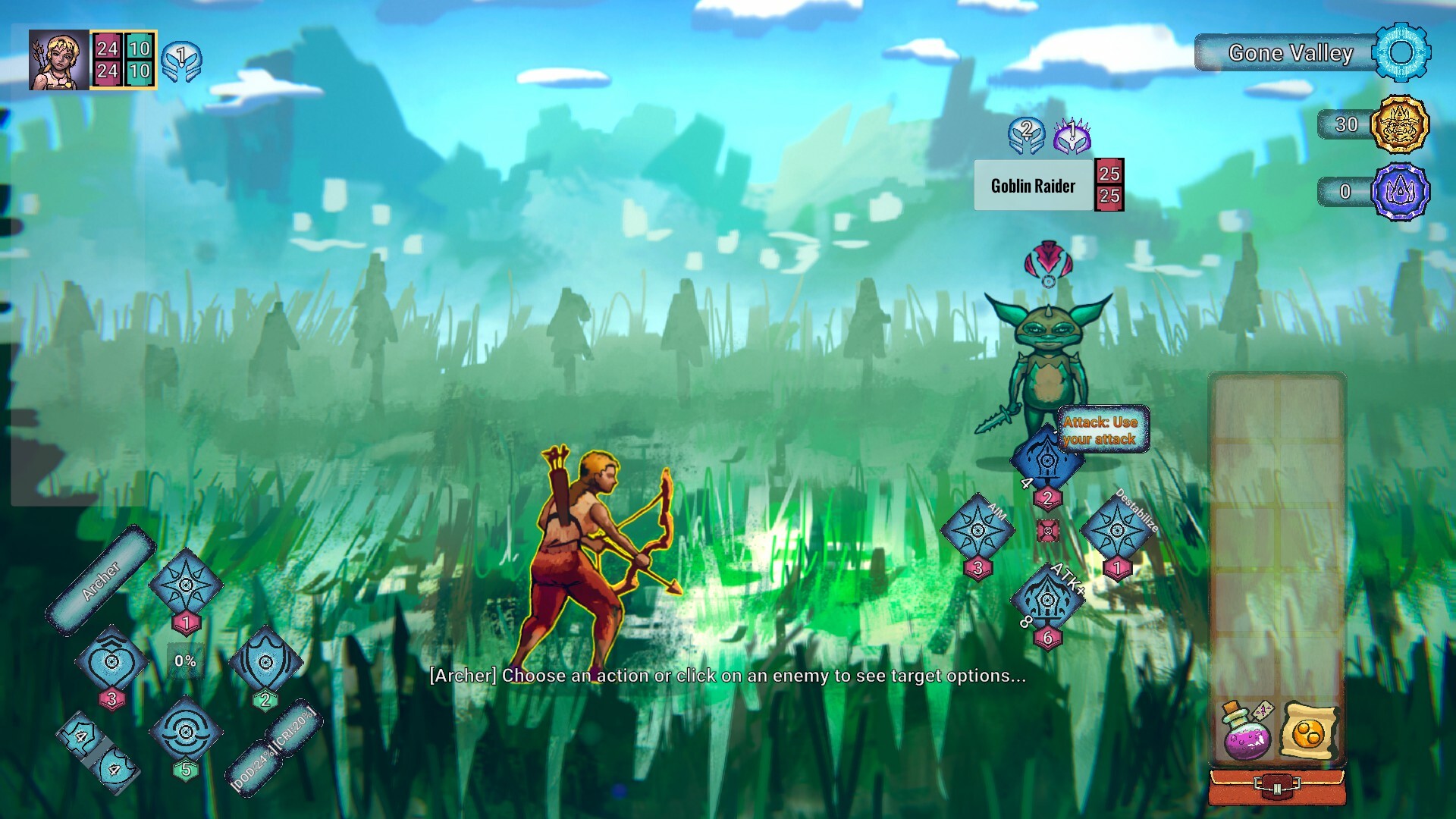
Turn-based combat in the Gone Valley zone, with named tactical abilities like Aim and Destabilize laid out as numbered icons.Steam store page -
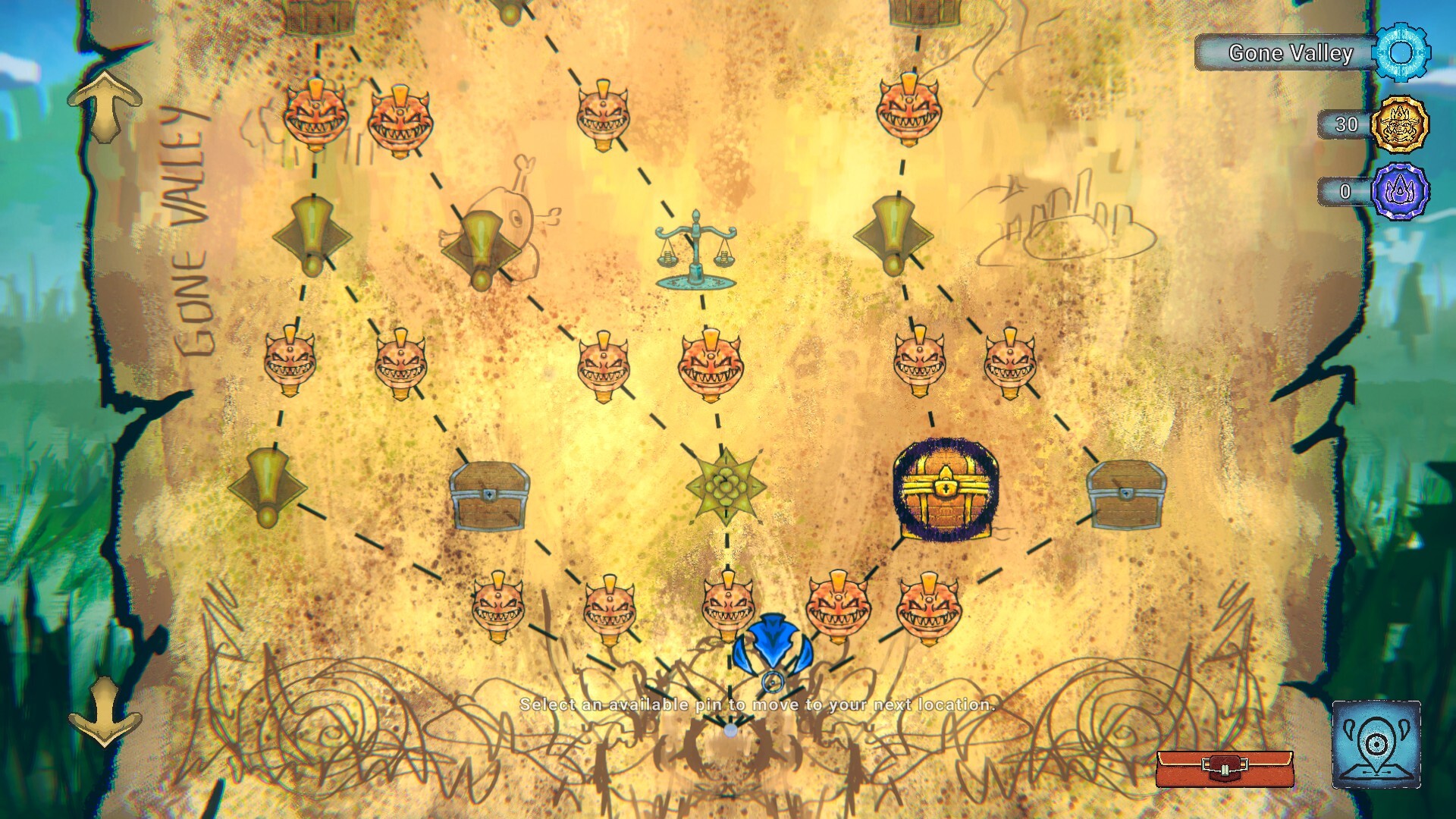
The Gone Valley run map, a branching node structure with monster fights, treasure chests, and event stops to choose between.Steam store page -
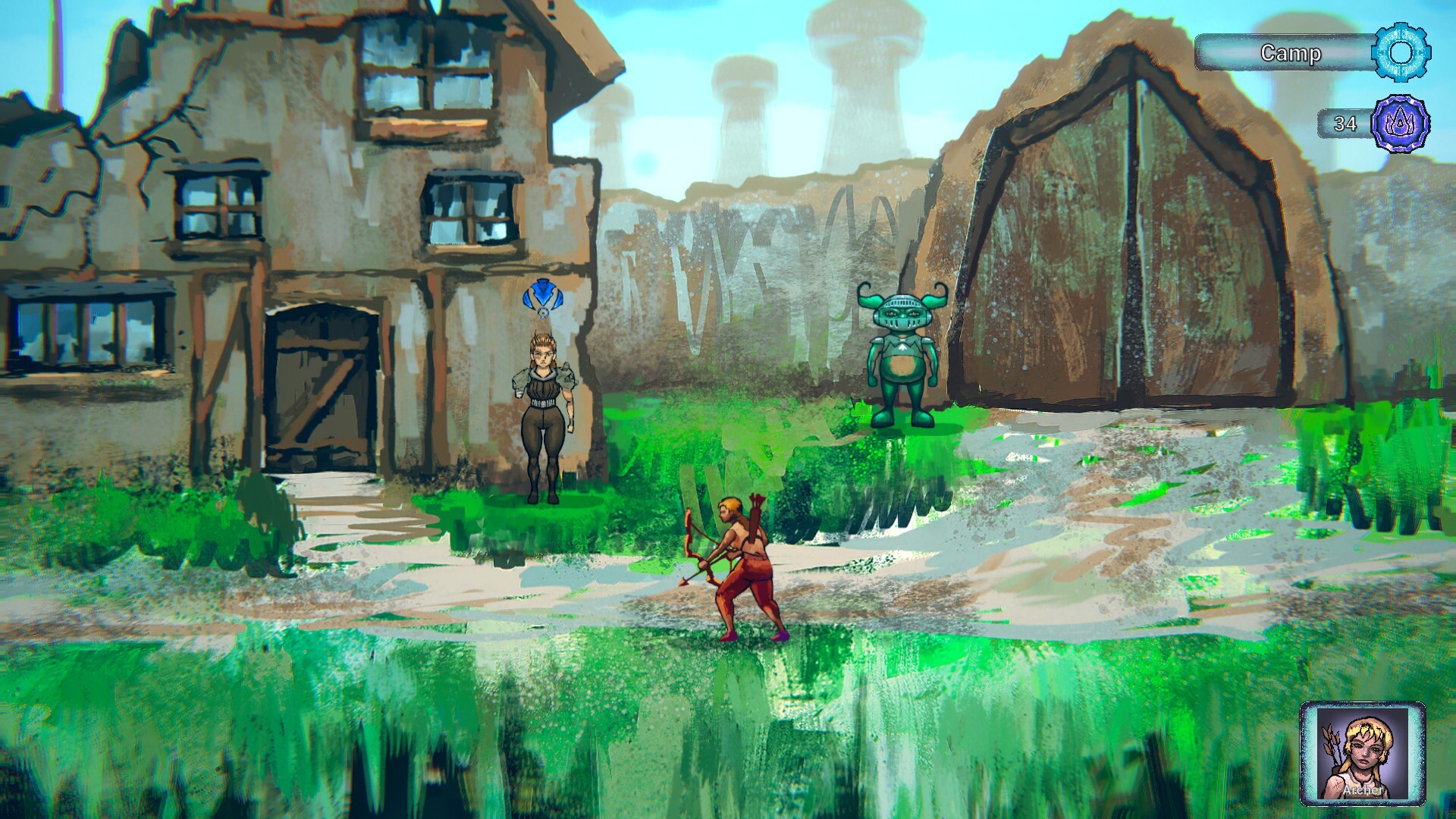
The camp screen, showing a recruited companion alongside the Archer outside the town's buildings.Steam store page