
Game review
Ironwake
6.8 / 10
- Developer
- Seahorse Games
- Publisher
- Seahorse Games
- Released
- 19 August 2026
- Platforms
- Windows
- Genre
- RPG
Zero Reviews for an Ambitious Gothic Roguelite
Ironwake entered Early Access on Steam on 19 August 2026 from solo developer Seahorse Games, and at the time of writing it has no user reviews at all, so everything here reflects the store page's own description of a genuinely ambitious feature list rather than any confirmed player experience. The pitch is a turn-based roguelite dungeon crawler with a gothic, "keeper of the gates" framing: the player descends into procedurally built dungeons for loot and power, then returns to a home camp and town between runs to maintain relationships, train, and shop. That home-base loop is the game's clearest point of differentiation from the roguelite pack — most games in the genre treat the run itself as the whole game and the hub as a menu; Ironwake's store page frames the hub relationships as a system with real stakes of their own, alongside the dungeon-diving.
Descend, Return, Repeat: A Loop Built Around Coming Home
The store page is specific about the social stakes of that hub loop: training with, gifting, and questing for Ironwake's townsfolk earns "new services, secret stock and stories," while neglecting or betraying them "will fracture" the bond, with consequences the store page doesn't fully spell out but implies are mechanically real rather than cosmetic flavor text. That's a genuinely distinctive framing for a roguelite, where between-run relationship management is usually either absent or purely transactional. Combat itself runs on what the store page calls a "tight 3 action point economy," requiring the player to sequence attacks, status effects, and positioning within a hard per-turn resource cap rather than simply picking the strongest available move each turn — a design choice that, if the numbers are tuned well, should reward planning several turns ahead over reactive play. Three classes and eight schools of elemental magic are named as the build-defining choices layered on top of that action-point system, alongside a stated variety of weapon roles that "impact how every turn is played" — a reasonably deep character-build matrix for a game still in Early Access. A character-creation screenshot confirms and sharpens that pitch considerably: the three classes are named Arcanist (a "glass cannon mage" with a Souls resource), Bloodwarden (a "sustain drain tank" with a Blood resource), and Shadowstrider (an "evasion ranger" with a Preparation resource), each running its own distinct secondary resource rather than sharing a single generic mana pool, on top of a full six-stat allocation panel — Strength, Dexterity, Constitution, Intelligence, Wisdom, and Charisma — with free points to distribute at creation. That's a considerably more traditional, tabletop-influenced character build than the store page's own wording suggests, and a genuine point in the game's favor for players who want build variety beyond picking a class and forgetting about it. A combat screenshot backs up the "tight 3 action point economy" claim directly: three AP slots, an ability bar listing exact AP costs, damage numbers, damage type (physical or spell, melee or ranged), and precise hit and dodge percentages for each move — a level of legible, numbers-forward combat feedback well above what many small-team roguelites bother to expose to the player. The same screenshot shows an "Awakening A3 — Relentless" difficulty label during a fight against a "Dungeon Wraith" and a stunned "Bone Colossus," concrete evidence that the store page's promised escalating, named difficulty tiers are implemented and visible mid-run rather than an abstract future promise. Procedurally built floors with branching paths, boons, curses, and a "tavern board" of changing townsfolk requests round out the run structure, giving players a reason to vary their route beyond simply pushing toward the exit.
A Beloved, Vulnerable Companion
The pet system is the store page's most unusual hook, and it's worth taking at face value as a real mechanical layer rather than a cosmetic add-on: players find eggs and creatures during runs, then feed and bond with them between dungeons to raise them into fighting companions that can attack targets, bless the player's fortune for better treasure, or physically intercept a hit meant for the player. The store page is explicit that this cuts both ways — companions "may suffer injuries or worse," meaning the pet is a genuine liability as well as an asset, not a risk-free buff. A further wrinkle, "foster corrupted pets as your own peril or cleanse them if you so choose," suggests some creatures arrive already flawed in a way that has to be actively managed or resolved rather than simply raised passively, adding a moral or resource-allocation decision to what could otherwise have been a straightforward pet-collecting side system. Combined with the relationship-based town loop, Ironwake is clearly building toward a game about maintaining fragile bonds — with people and with a companion creature alike — layered on top of a more conventional loot-and-power roguelite chassis. The same combat screenshot that confirms the action-point system also shows the pet mechanic working in practice: a small companion creature fights alongside the player character with its own dedicated health bar tracked separately from the player's, at a modest 12 out of 12 HP next to the player's much larger pool — visual confirmation that the companion is a genuinely fragile, trackable combatant in its own right rather than a set-and-forget buff icon.
Loot, Runes, and 67 Achievements Confirming a Long Game
The loot system promises an "immense variety" of weapons, armor, rings, and amulets, customizable with runes and sockets, alongside legendary items and "cursed relics" that presumably carry a drawback alongside their power — standard roguelite loot-table ambition, but backed up by concrete supporting systems: an item codex to track discoveries, and townsman services between runs including reforging, potion-fusing, and gambling away items for a chance at something better. The game's 67-entry achievement list gives some real, checkable texture to how deep that long game actually runs: alongside expected milestones like "First Blood" and "Getting Acquainted," names like "The Gravebreaker," "Mountain of Skulls," and "Purged" suggest specific late-game or high-difficulty encounters, while "It's Alive" almost certainly marks a companion's first successful hatching and "Hundredfold" reads as a milestone for repeated, deep runs rather than a single playthrough — consistent with the store page's own claim of "endless levels of difficulty to best" beyond the base campaign. With only 10 of 67 achievements named in the highlighted list, there's substantially more hidden structure than the store page spells out directly, which for a genre built on replayable depth is a reasonable, if unverifiable from the outside, sign of scope.
Price, Scope, and Early Access Caveats
At NZ$15.75, Ironwake is priced as a mid-weight Early Access roguelite, and it backs that up with a genuinely broad accessibility footprint for a solo-developed game: full controller support including DualShock and DualSense-specific support, a keyboard-only option, a mouse-only option, adjustable difficulty, playable without timed input, and a touch-only option — a notably more complete set of accommodations than most single-developer roguelites bother to ship even at 1.0. It's Windows-only and English-only with no other listed language support, and being Early Access, none of the pacing, difficulty balance, or long-term progression curve claims here have been tested by outside players yet — a zero-review Early Access launch means the entire feature list above is a promise rather than a confirmed experience, and Early Access games in general carry real risk of stalled development or a feature list that shrinks before 1.0 rather than growing.
Verdict
Ironwake pairs a genuinely distinctive hook — a roguelite where the relationships you maintain at home matter as much as the loot you bring back, plus a companion-creature system with real injury risk and moral complexity around corrupted pets — with a conventional but deep action-point combat system, three classes, eight magic schools, and a 67-achievement structure that suggests real long-term depth beyond the base loop. All of that is still an unverified promise at this stage: zero player reviews, Early Access status, and a solo developer mean the gap between this ambitious pitch and a well-tuned, bug-free experience is exactly the kind of thing that can't be judged from a store page alone. For roguelite and dungeon-crawler fans drawn to its unusually social hub loop and its risk-laden pet system, NZ$15.75 is a reasonable bet on potential, but it's a bet on potential rather than a confirmed recommendation until a real review base and further Early Access updates fill in the picture.
Screenshots
-
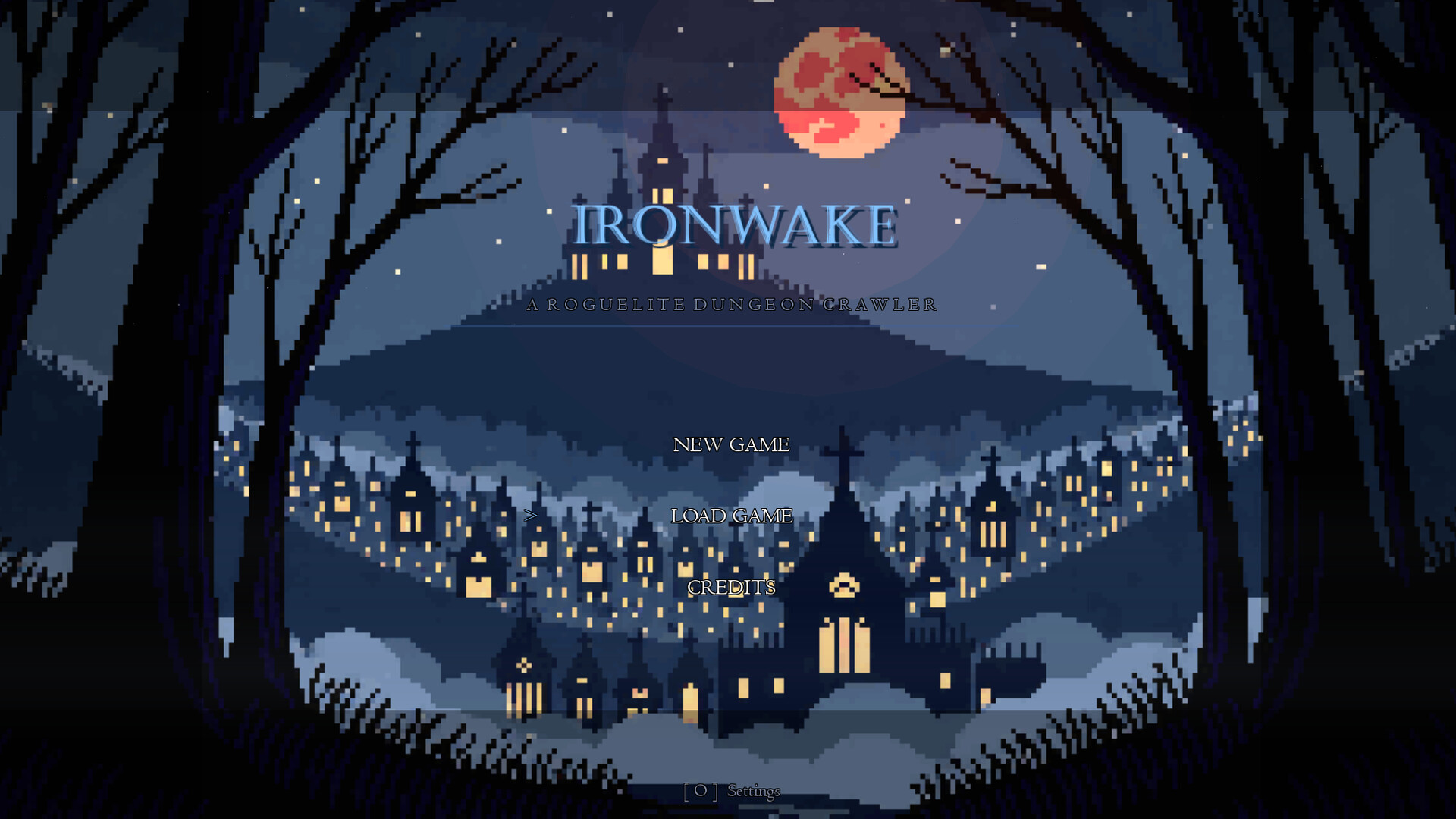
The title screen, confirming the pixel-art gothic-town aesthetic and the game's own self-description as a roguelite dungeon crawler.Steam store page -
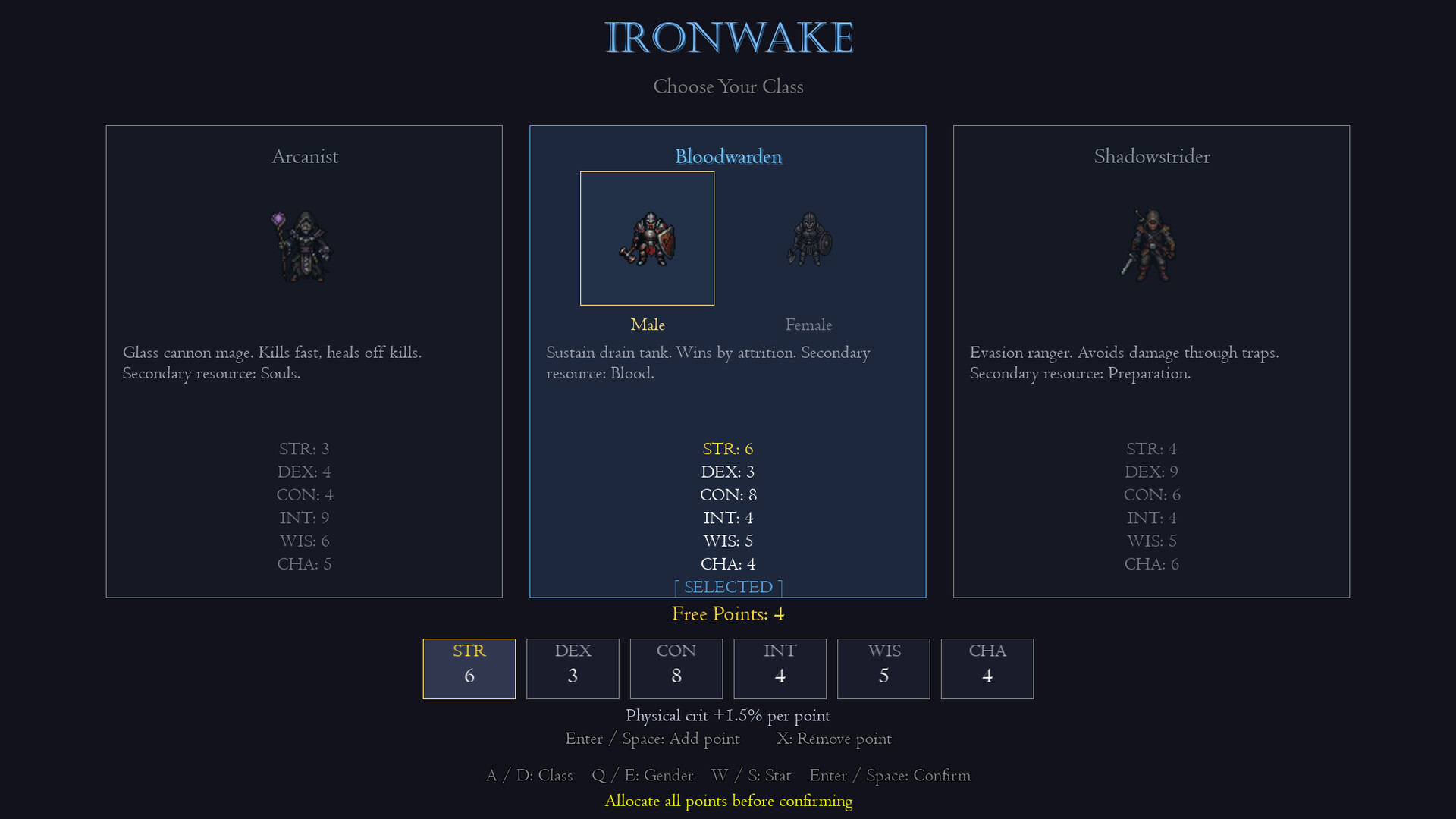
Class selection: Arcanist (Souls), Bloodwarden (Blood), and Shadowstrider (Preparation), each with its own six-stat spread and free points to allocate.Steam store page -
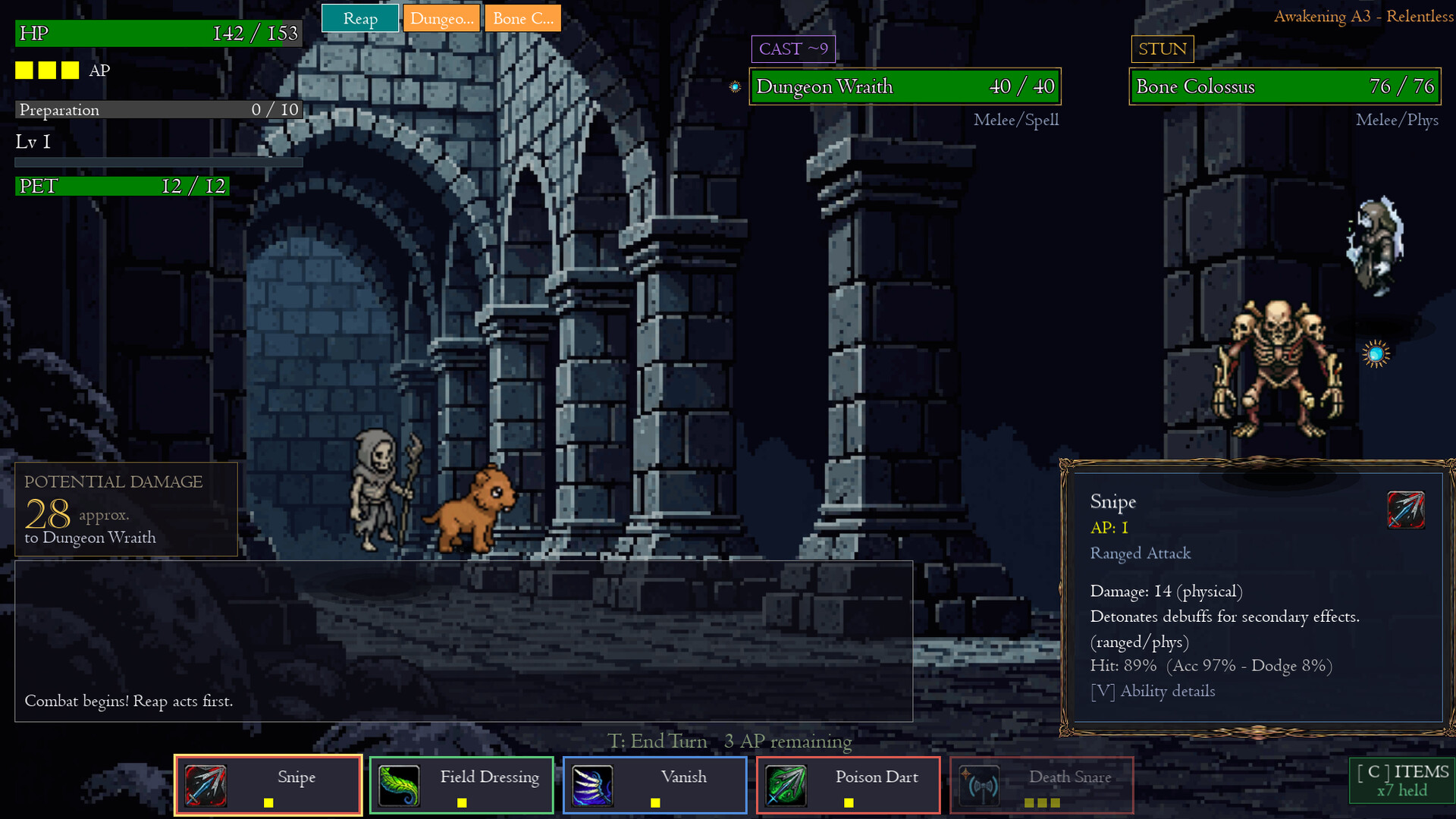
Combat in practice: a 3-AP turn economy, a separate pet health bar, per-ability hit/dodge percentages, and an escalating named difficulty tier.Steam store page