Game review
Half Hour RPG
6.5 / 10
- Developer
- Dea Machina
- Publisher
- Dea Machina
- Released
- 11 September 2026
- Platforms
- Windows
- Genre
- RPG
A Forty-Sixth Consecutive Launch Without a Single Review
Half Hour RPG launched on Steam on 11 September 2026 as a full release for Windows, and at the time of writing has zero user reviews. That's a genuinely strange gap for a game whose entire pitch is a joke about how quickly it can be finished — of all the titles in this run of unreviewed launches, this is the one where a single afternoon should have been enough for someone to weigh in, and yet nobody has.
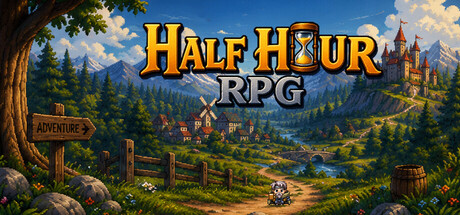
An RPG That Advertises Everything It Deliberately Left Out
The store page's entire personality is built around a bit: it's a "hand-asset-flipped" RPG that lists, feature by feature, every system a typical RPG would normally boast about, only to explain why each one was deliberately not implemented. Zero crafting is billed as "one of Half Hour RPG's most advanced systems," precisely because it requires no player interaction. There's no gathering, no base building, no survival mechanics, no procedurally generated open world, and no fast travel, because the developer says walking to the fast travel point would take longer than just walking there. It's a genre parody executed through cut features rather than through dialogue or cutscenes, which is a more disciplined kind of joke than most short comedic indies attempt — the humor is embedded in the game's actual design decisions, not layered on top of them as narration. Screenshots show the joke doesn't stop at the store page, either: a dungeon-dwelling NPC named Gandor tells the player he's "waiting for someone to report the bug," turning an acknowledged rough edge into an in-fiction punchline rather than something to hide.
Real Turn-Based Combat, Deliberately Small in Scope
Underneath the joke, the store page is specific that this is still a functioning RPG rather than a walking simulator wearing an RPG's clothes: it uses classic turn-based combat, with visible enemies on the map rather than random encounters, and a "carefully limited enemy variety" pitched as enough to avoid repetition without raising expectations of late-game surprises. That combination — no random encounters, no grinding, a fixed roster of threats you can see coming — is a legitimately different design choice from a lot of budget RPGs that pad their length with exactly the systems this game refuses to include. The tradeoff is stated plainly and repeatedly: the whole adventure is meant to run up to thirty minutes, which means whatever progression exists has to resolve inside that window rather than building toward the kind of long-term character growth that usually justifies an RPG's stat sheet. Full controller support, including DualShock and DualSense-specific listings, plus a "playable at your own pace" tag and save-anytime functionality, suggest the developer put real production care into a game that could easily have shipped as a five-minute browser toy instead.
Honesty as the Actual Selling Point
What makes the pitch land rather than read as a cheap excuse for a lack of content is how consistently it commits to the bit while still being upfront about what's actually being sold: an "epic adventure" scaled down to something "you can still reasonably justify to your family," with a real ending rather than an abrupt stop. That's a meaningfully different promise from most short indie RPGs, which tend to either apologize for their length or dress it up as an intentionally minimalist art statement. Here the shortness is the headline feature, marketed with the same confidence a much longer game would use to sell its hundred-hour campaign, and the store page never claims depth it isn't delivering — there's no vague talk of "hidden secrets" or "multiple builds to discover" layered on top of a thirty-minute runtime to make it sound bigger than it is. A companion named Nate driving that home in an actual overworld scene — flatly noting that the goblin standing next to the player is "forty-eight pixels tall," a direct callout of the mismatched scale that comes from stitching together pre-made assets — shows the writing is willing to point at its own construction rather than pretend the seams aren't there. Whether that comedic restraint actually holds up over a full playthrough, or whether the joke wears thin well before the end credits the game keeps promising, is the kind of thing only actual playtime can settle, and nobody has weighed in yet.
A Budget Price That Matches a Budget Runtime
At NZ$4.79 with no discount, the price is scaled proportionally to the promised length in a way that few RPGs bother to do — a rough per-hour cost that lands somewhere near what a full-priced RPG charges for its opening act, without pretending to be anything more than that. There's no mention of any additional monetisation, DLC, or in-app purchases on the store page, which is consistent with a tightly scoped, self-contained joke rather than a live-service product looking to extend engagement past its own thirty-minute premise. Minimum system requirements are modest — a mid-range Intel Core i3 or Ryzen 3, 2GB of RAM, and integrated-tier graphics — which fits a game explicitly built from "proven" pre-made assets rather than custom-built environments demanding real hardware. Support for English and Polish text suggests a small but international-facing developer rather than a single-market release, and single-player-only with no achievements or cloud save listed keeps the technical footprint about as minimal as the runtime itself.
Verdict
Half Hour RPG turns "we didn't have time to build a full RPG" into the actual joke, systematically listing every genre convention it skips — crafting, grinding, open-world exploration, survival systems — while still delivering real turn-based combat, visible enemies, and full controller support inside a stated thirty-minute runtime. The commitment to that bit, and the honesty about exactly what's being sold for NZ$4.79, is more disciplined than most short comedic indies manage, and screenshots showing named companions joking about mismatched sprite sizes and unreported bugs confirm the self-aware tone was actually written into the dialogue rather than confined to the store page. It launched on 11 September 2026 with zero user reviews so far, so whether the turn-based combat has enough texture to stay interesting across even half an hour, and whether the joke sustains itself to the promised real ending, remain unverified by anyone outside the studio.
Screenshots
-
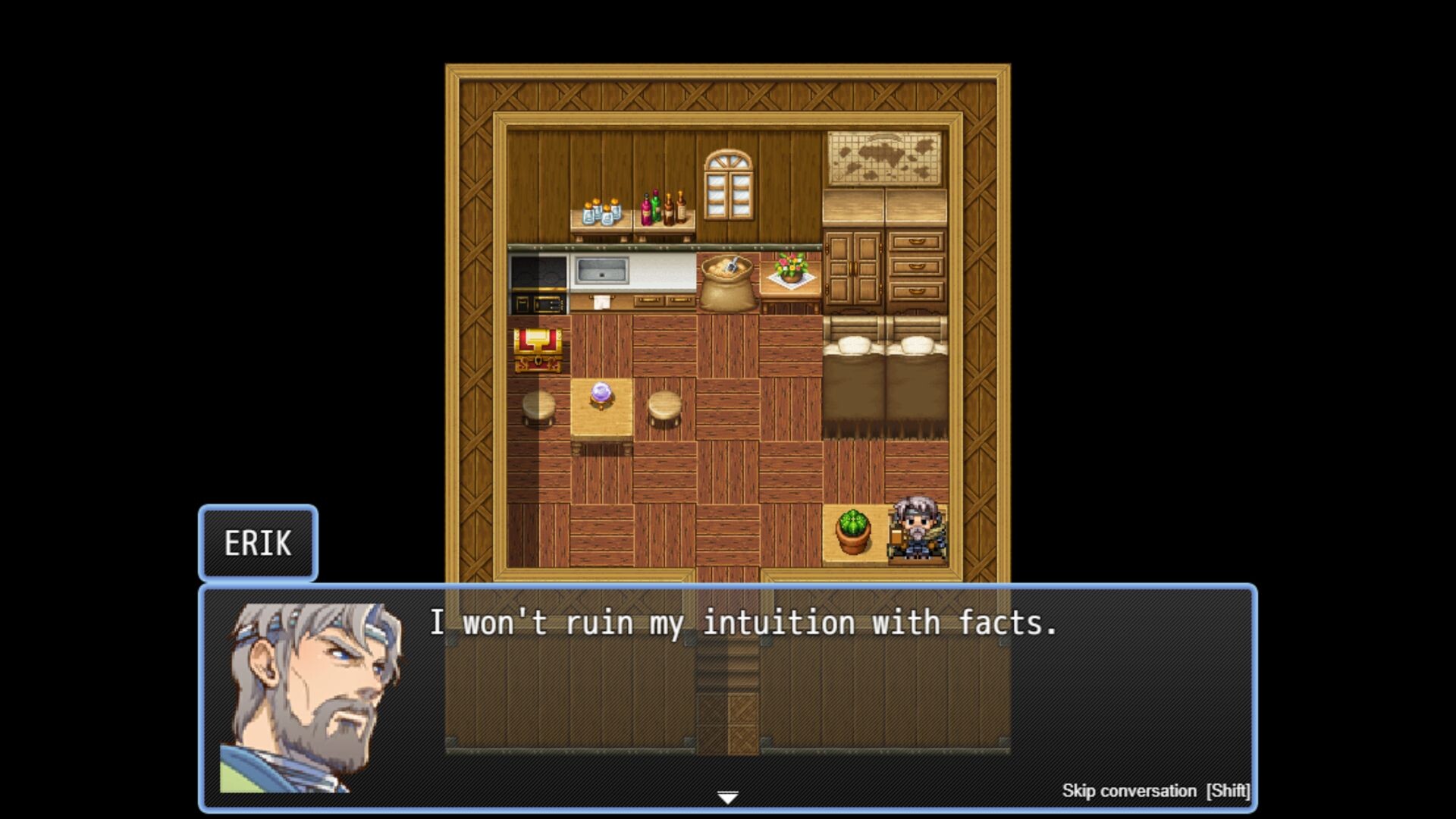
Dialogue like Erik's refusal to \"ruin my intuition with facts\" carries the store page's self-aware tone directly into the writing, not just the marketing copy.Steam store page -
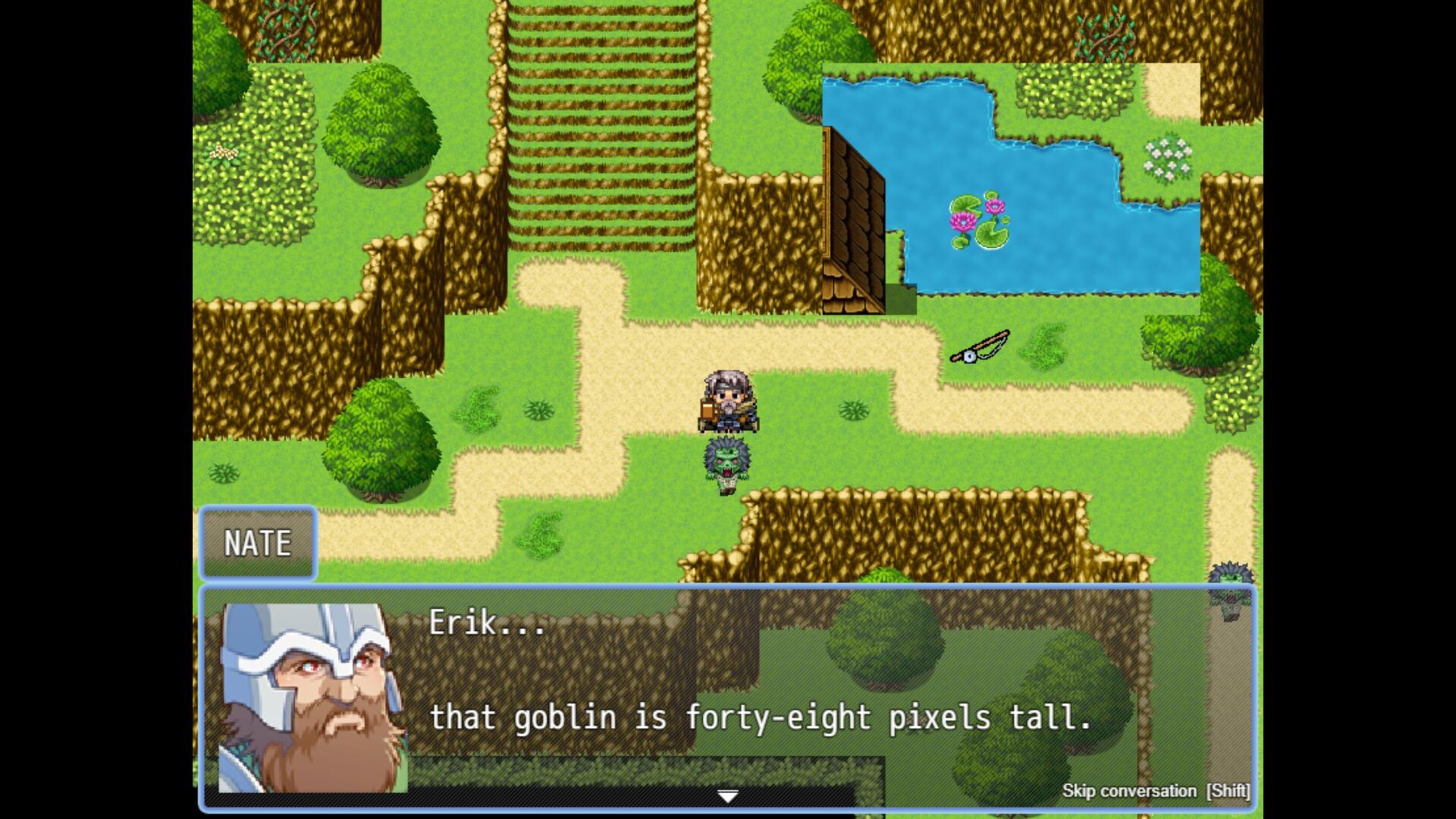
A companion pointing out that the goblin is \"forty-eight pixels tall\" turns an asset-flipped sprite-scale mismatch into an in-fiction joke rather than hiding it.Steam store page -
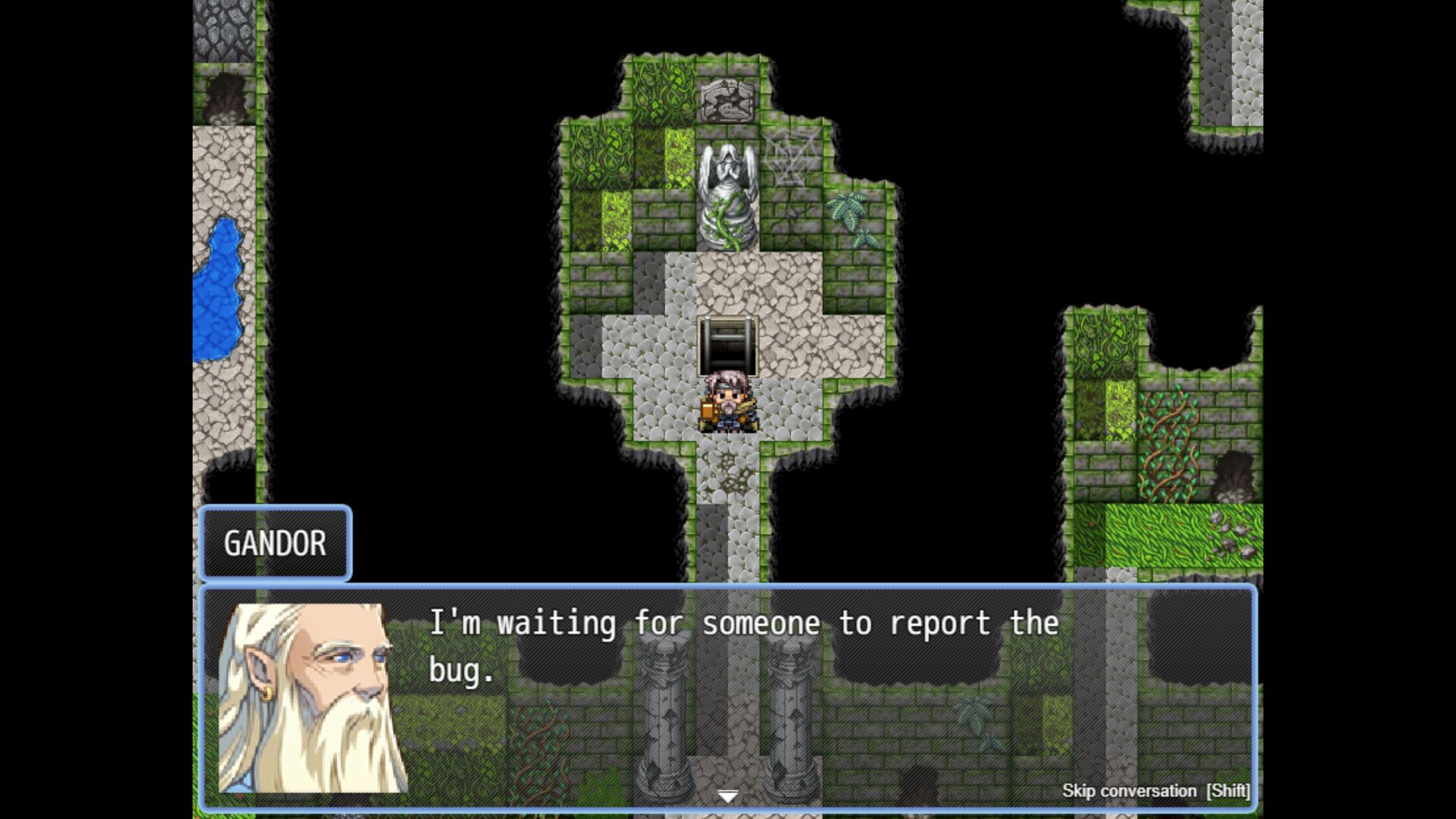
Gandor waiting around \"for someone to report the bug\" is the game turning its own rough edges into a punchline, right down to the dungeon-crawling framing.Steam store page