
Game review
Eternal Levels
6.5 / 10
- Developer
- Iohiko Colina
- Publisher
- CatBunny Studio
- Released
- 28 August 2026
- Platforms
- Windows
- Genre
- RPG
A Fifty-Fifth Consecutive Launch Without a Single Review
Eternal Levels launched on Steam on 28 August 2026, and at the time of writing it has zero user reviews. That's a meaningful gap for a game built around the "backrooms" internet horror mythos specifically, since that community lives on shared discoveries about specific levels and entities, and a real player base is usually what turns a backrooms game's scattered content into a mapped, documented experience within days of launch rather than leaving newcomers to work it out alone.
Starting as a Missing Person in an Endless Liminal Space
The premise drops the player in as a missing person trapped inside the backrooms, the internet horror concept built around endless, mundane, unsettling liminal spaces that shouldn't exist but somehow do. Survival here isn't just about avoiding creatures — the store page is explicit that hunger, thirst, and extreme temperature are all separate threats that can end a run on their own, which pushes the moment-to-moment loop toward resource management and careful searching rather than pure combat avoidance. Screenshots show the actual HUD tracks six separate meters rather than the three the store page calls out by name — health, a stamina-style meter, hunger, thirst, a swirling icon that reads as a sanity gauge, and oxygen — which is a more demanding resource-management spread than advertised and suggests survival pressure here comes from juggling several simultaneous drains rather than watching just one or two bars. Completing runs is stated to unlock new playable characters that carry an advantage into future attempts, giving failed runs a form of permanent payoff even when a specific level or entity proves impossible to survive the first time through. That unlock structure is doing most of the work behind Eternal Levels' RPG classification: there's no described stat sheet, skill tree, or levelling curve for an individual character within a single run, so the "role-playing" element here sits entirely at the meta-progression layer between attempts rather than in moment-to-moment character growth, which is worth knowing going in for anyone expecting a more traditional RPG structure layered onto the horror setting.
A World Built From Levels, Sub-Levels, and Distinct Entities
Structurally, the backrooms are presented as a series of discrete levels and sub-levels, each carrying its own difficulty and its own scripted events, rather than one procedurally generated maze repeating the same threat throughout. That level-by-level structure is core to how the actual backrooms mythos works online — different numbered levels have their own established hazards, aesthetics, and "entities" in the wider internet lore — and building the game around that same discrete-level logic suggests a genuine attempt to translate the source material's structure into mechanics rather than just borrowing its aesthetic. That distinction matters more than it might for other horror settings, because the backrooms mythos originated and grew almost entirely through community-written wikis cataloguing specific numbered levels and their quirks, so a game in this space is implicitly being measured against years of fan-made lore before a single player has weighed in on how faithfully or inventively this particular version handles it. Items scattered through each level are stated to require thorough searching to find, and crafting turns raw finds into more useful tools and weapons, giving exploration a direct payoff beyond simply progressing toward an exit. Screenshots back up the visual variety promised by that level-and-sub-level structure directly: a yellow-walled corridor, a red-walled variant explored by a different unlocked character, and a starkly different stark-white industrial area patrolled by a small brown creature are all visibly distinct environments rather than the same tileset with a colour filter applied.
Recruiting Survivors Who Might Refuse to Help
One of the more distinctive systems described is the ability to recruit other survivors encountered during a run, but the store page is upfront that not everyone found in the backrooms will actually agree to join — some are stated to prefer staying in whatever safe zone they've already found rather than risk exploring further with the player. That's a small but meaningful piece of characterization for what could otherwise be a purely mechanical companion-recruitment system: NPCs with their own risk tolerance make the backrooms feel populated by people making their own survival calculations, rather than existing purely as a pool of stat sticks waiting to be picked up. Combat against the setting's hostile entities is handled through weapons that can be found, bought, or crafted, though the store page is also candid that not every creature encountered can actually be defeated, with fleeing sometimes the only viable option — an honest acknowledgment that a horror game built around dread should occasionally take direct confrontation off the table entirely.
A Mid-Tier Price for a Two-Person Credited Team
At NZ$15.92 with no discount, Eternal Levels sits at a moderate price point for a horror-survival hybrid from what appears to be a small two-person credited team — one developer and a separate publisher. There's no mention of any additional monetisation, DLC, or microtransactions on the store page, keeping the commercial pitch to a single flat purchase. Support is limited to English and Latin American Spanish, and the accessibility feature list includes a keyboard-only control option and adjustable difficulty, which at least lowers the barrier to trying a genre that can otherwise demand precise, high-pressure input under threat.
Verdict
Eternal Levels takes the internet's backrooms mythos and builds a genuinely structured survival loop around it — discrete levels with their own hazards, hunger and temperature management sitting alongside entity threats, character unlocks that carry between runs, and a recruitment system populated by survivors who can say no. Screenshots confirm both the level variety and the survival pressure go further than the store text lets on, with visibly distinct environments and a six-meter HUD rather than the three hazards named in the description. That's a more considered translation of the source material's internal logic than a lot of backrooms games manage, even if the fundamentals — search, craft, manage resources, avoid or fight what finds you — are familiar survival-genre building blocks underneath the setting. It launched on 28 August 2026 with zero user reviews so far, so how varied the promised levels and entities actually turn out to be across a full playthrough, and whether the unlockable-character progression is substantial enough to reward repeated attempts, remain unverified by anyone outside the studio.
Screenshots
-
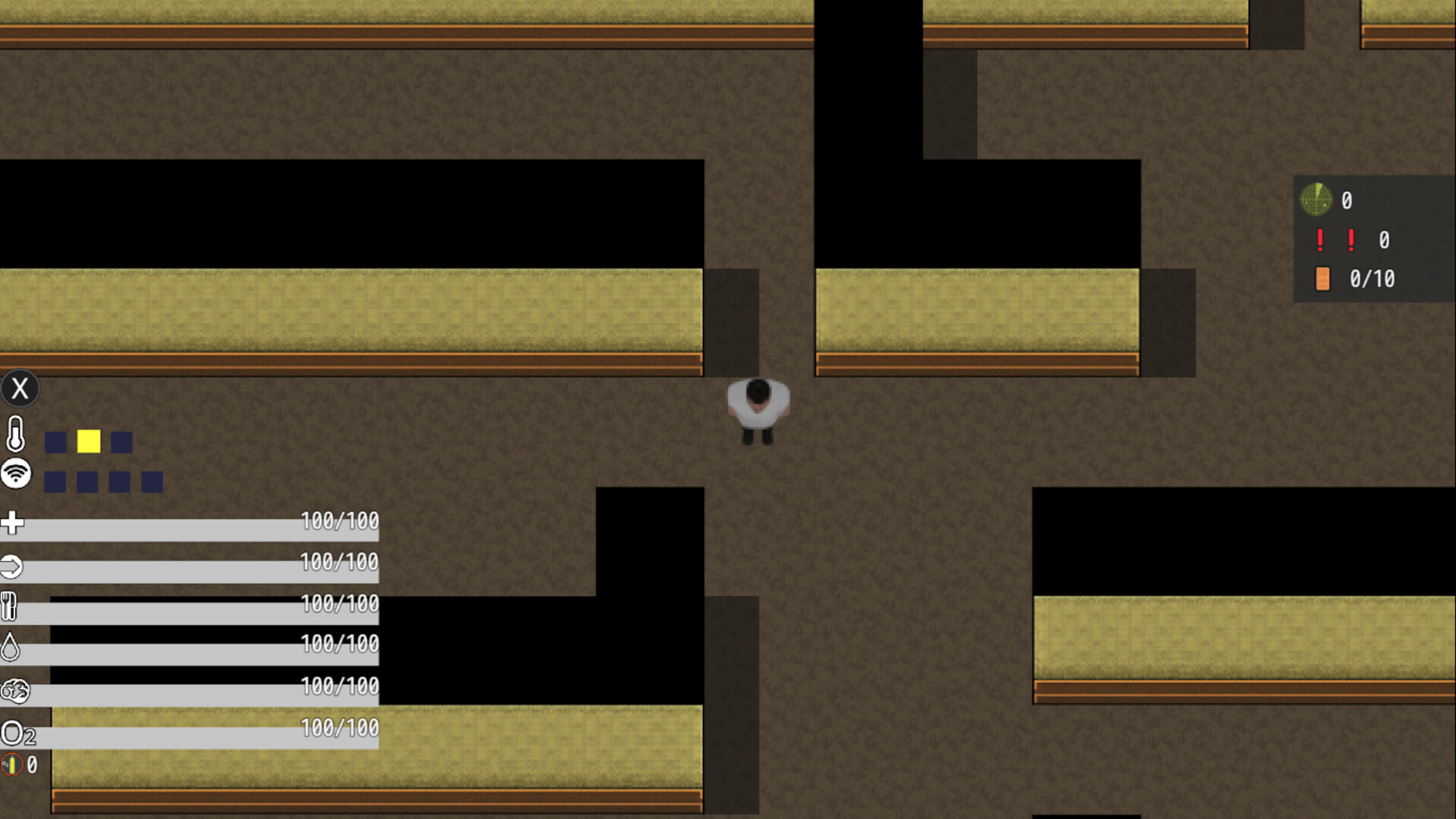
A yellow-walled corridor level with a full HUD tracking six separate survival meters, all shown at 100/100.Steam store page -
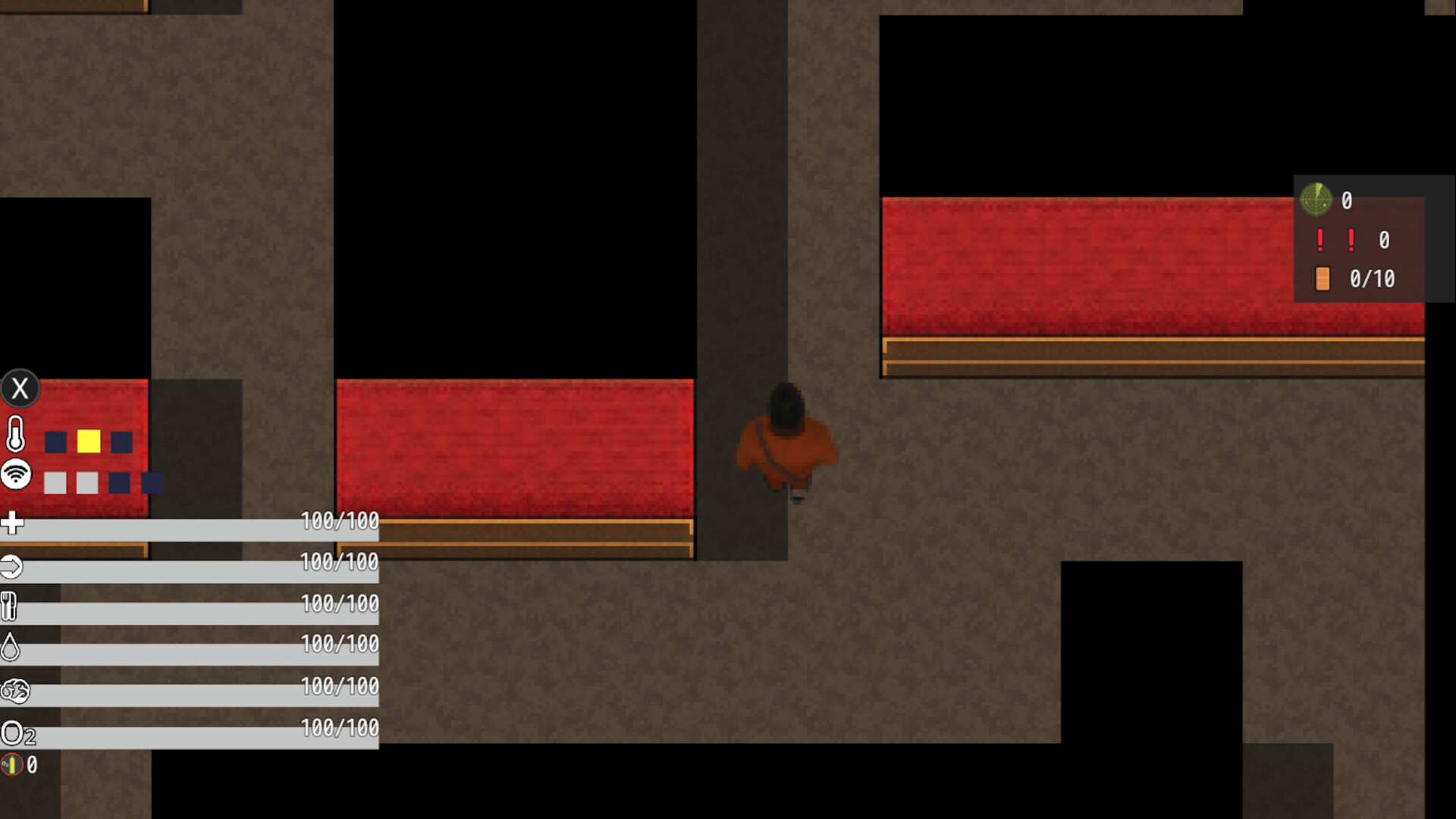
A second unlocked character explores a visually distinct red-walled level, confirming the level-to-level variety.Steam store page -
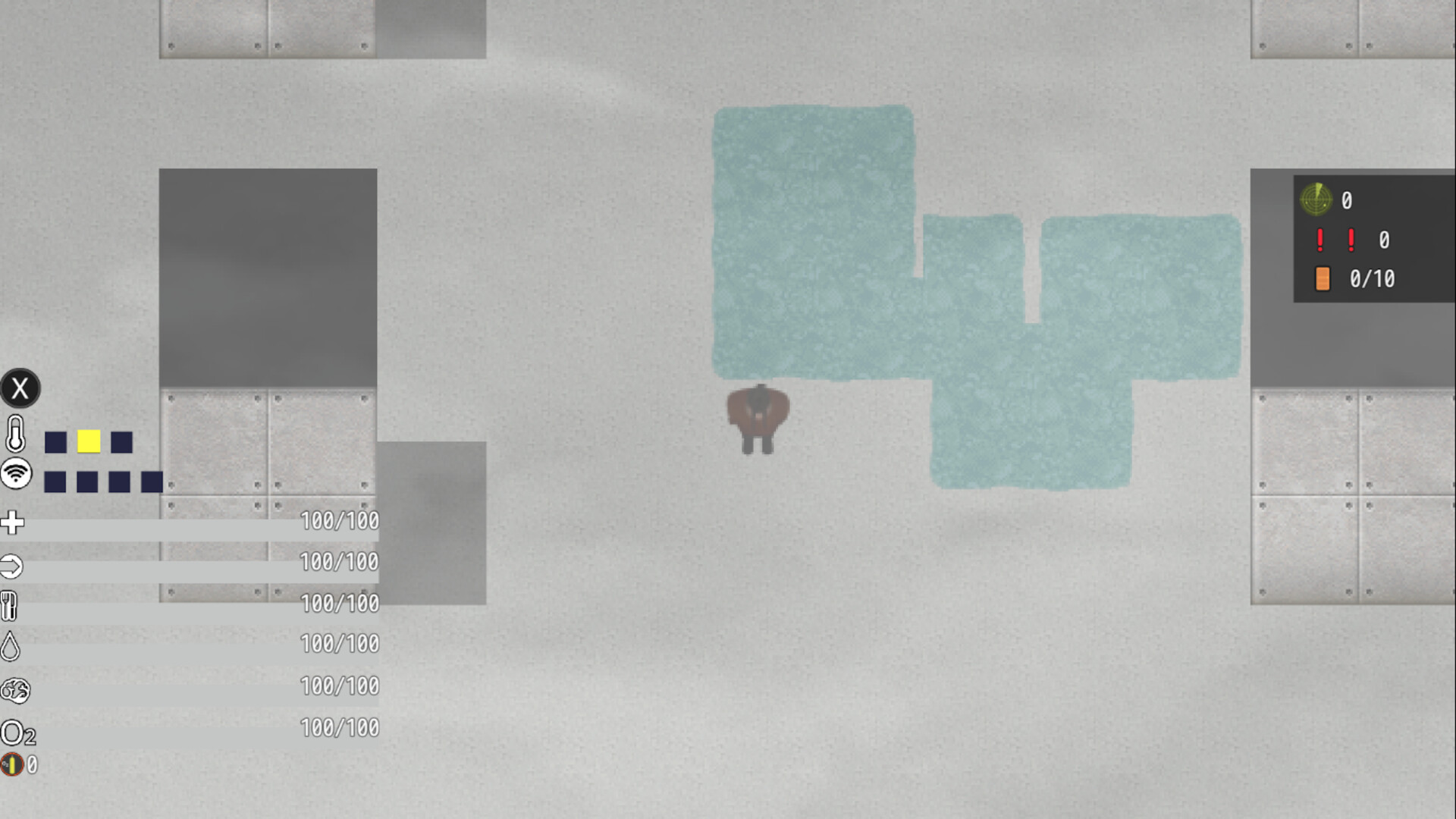
A small hostile creature stands in a starkly different white industrial level marked with teal hazard flooring.Steam store page