Game review
The Candle
7 / 10
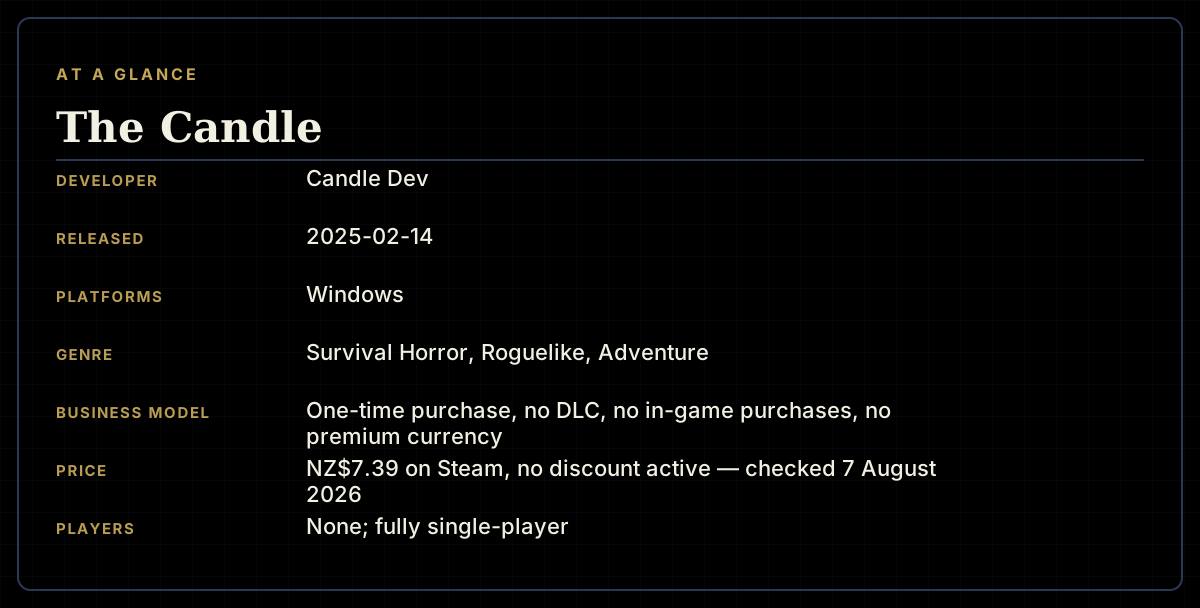
- Developer
- Candle Dev
- Publisher
- Candle Dev
- Released
- 14 February 2025
- Platforms
- Windows
- Genre
- Survival Horror, Roguelike, Adventure
- Monetisation
- One-time purchase, no DLC, no in-game purchases, no premium currency
- Players
- None; fully single-player
The short version
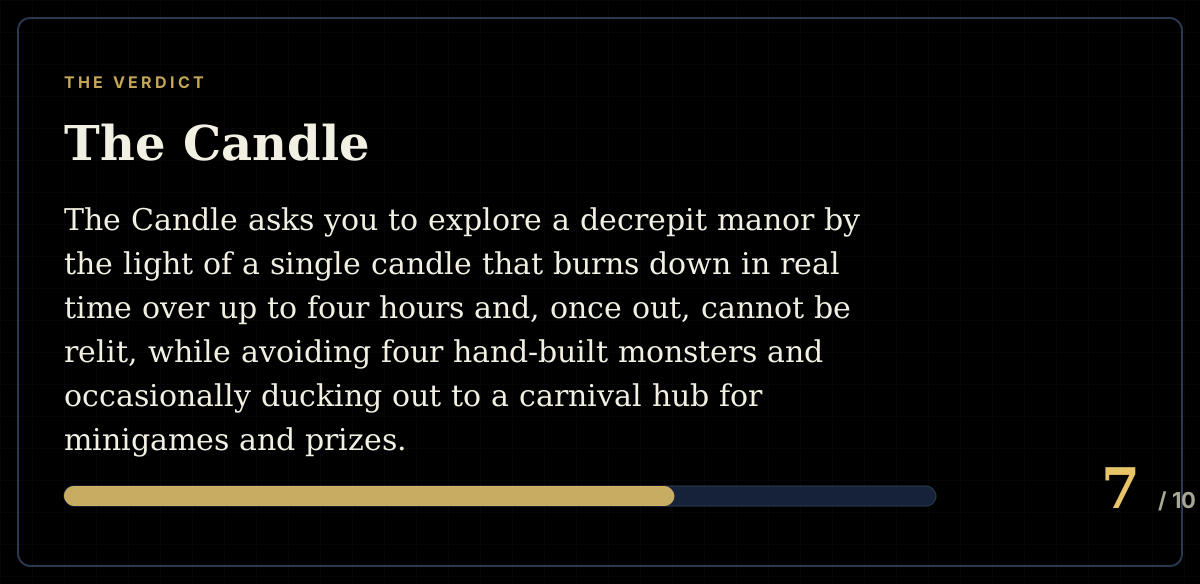
The Candle asks you to explore a decrepit manor by the light of a single candle that burns down in real time over up to four hours and, once out, cannot be relit, while avoiding four hand-built monsters and occasionally ducking out to a carnival hub for minigames and prizes. It began as an improvised, deliberately contradictory joke pitch on a November 2024 Twitch stream, and a solo developer built the actual thing in about three months flat. The community's own vote-weighted tags list "Idler" fourth out of twenty, but nothing in the game runs, earns or grows while you are away from it — this is an active, unforgiving first-person horror roguelite, not an idle game, and not one of its 82 Steam reviews uses the word "idle" to describe it. Global achievement data backs up how punishing that structure is: only 3.5% of owners have ever reached one ending, and 2.8% the other.
Biggest strengths
- Genuinely distinctive origin and tone — an absurdist horror game built entirely from one streamer's improvised, self-contradicting pitch, executed earnestly rather than sanded down into something safer
- Extremely cheap for the atmosphere on offer, backed by a fully custom score a volunteer composer wrote for free
- The real-time, un-relightable candle and permadeath structure create a specific kind of tension that a scripted horror game timer can't fake
Biggest weaknesses
- The community's own vote-weighted tags call it an "Idler," but there is no offline or incremental progression anywhere in the game — a shopper arriving for that will find a punishing, actively-played FPS horror roguelite instead
- An "invisible" hunger and thirst system layered on top of the candle timer is the single most-criticised mechanic in its own review corpus, adding tedium rather than dread
- Global achievement data shows barely 1 in 30 owners have ever reached either of the game's two endings, an unusually brutal completion rate
Who it's for: Horror fans who like short, brutal, replay-until-you-beat-it roguelite runs, and anyone who already knows what "The Candle" is from the stream that started it and wants to see the bit taken all the way to a finished, purchasable game.
Our recommendation: At NZ$7.39 it is priced for exactly what it is: a compact, atmospheric novelty rather than a full horror campaign. Go in expecting an actively played FPS survival horror roguelite with permadeath, not an idle or incremental game, and expect most runs to end in the candle going out rather than in victory.
7 / 10
Somewhere in Steam's back end, 218 people have voted that The Candle is an "Idler." That vote total is real and it is the fourth-highest tag on the game's page, just behind Exploration, Time Management and FPS. It is also, on every piece of evidence the game itself offers, wrong. There is no offline timer ticking over while you're at work, no currency compounding while the window is minimised, no number that gets bigger on its own. What there is instead is a lit candle that burns down in real time over up to four hours, a monster-infested manor you explore on foot with a flashlight's worth of light and, optionally, a handgun, and a permadeath structure that has let barely one in thirty owners ever see either of its two endings. Whatever The Candle is, it asks to be played, constantly and attentively, for as long as the wax holds out.
From a Twitch bit to a Steam page
The game's actual premise only makes sense once you know where it came from. On 10 November 2024, streamer Jerma985 spent part of a broadcast improvising a game concept out loud — a self-contradicting pitch that kept adding features on top of features, each one undercutting the last, the way a joke escalates when an audience is laughing along with it. A week later, a college graduate with a Computer Science and Art degree, unemployed and living with his parents, decided to actually build it. Working solo, often 14 to 16 hours a day, teaching himself everything from Reddit threads and developer forums as he went — including 3D modelling on a laptop trackpad while travelling, which he singles out in his own launch notes as miserable — he shipped The Candle on Valentine's Day 2025, three months after the stream that inspired it. A volunteer composer, William J McLeod, offered a full original score free of charge partway through development; before that, the game ran on public-domain music alone.
That origin story explains almost everything about the finished product, including the parts that don't quite cohere. The Candle plays like a game assembled from a list of ideas that were never meant to fit together in the first place, and it wears that looseness as a badge rather than hiding it.
What actually happens in the manor
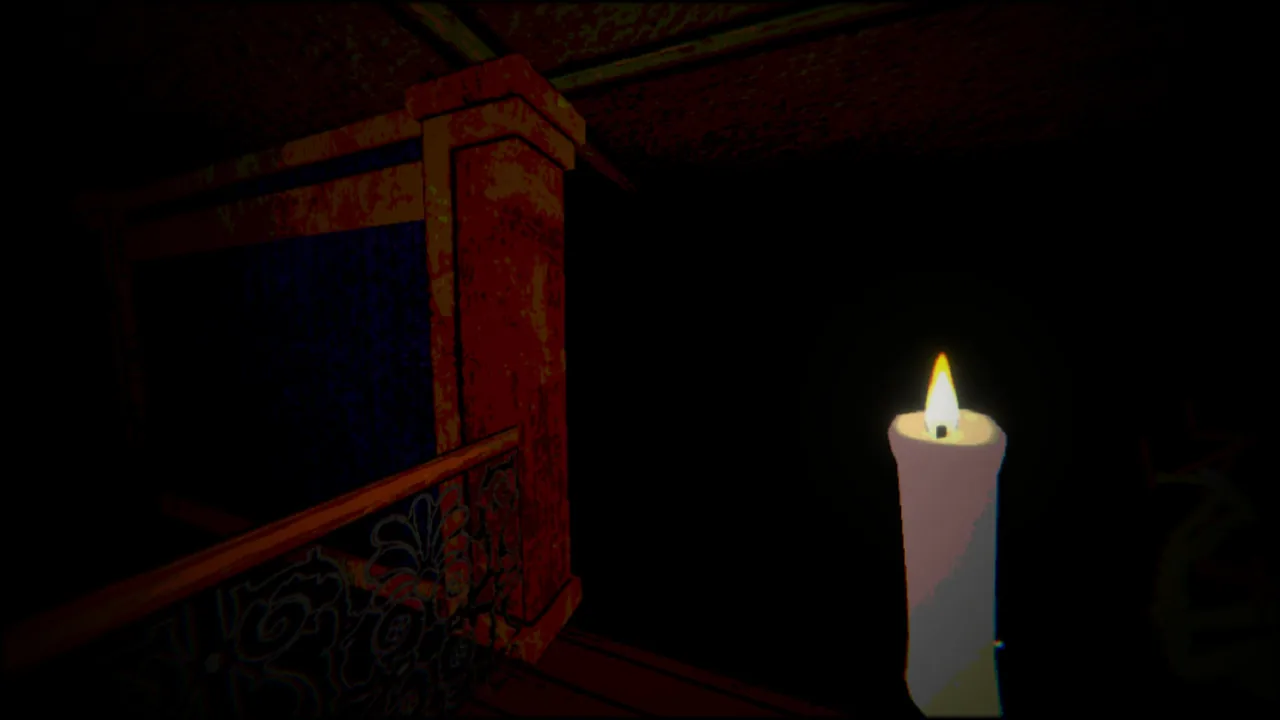
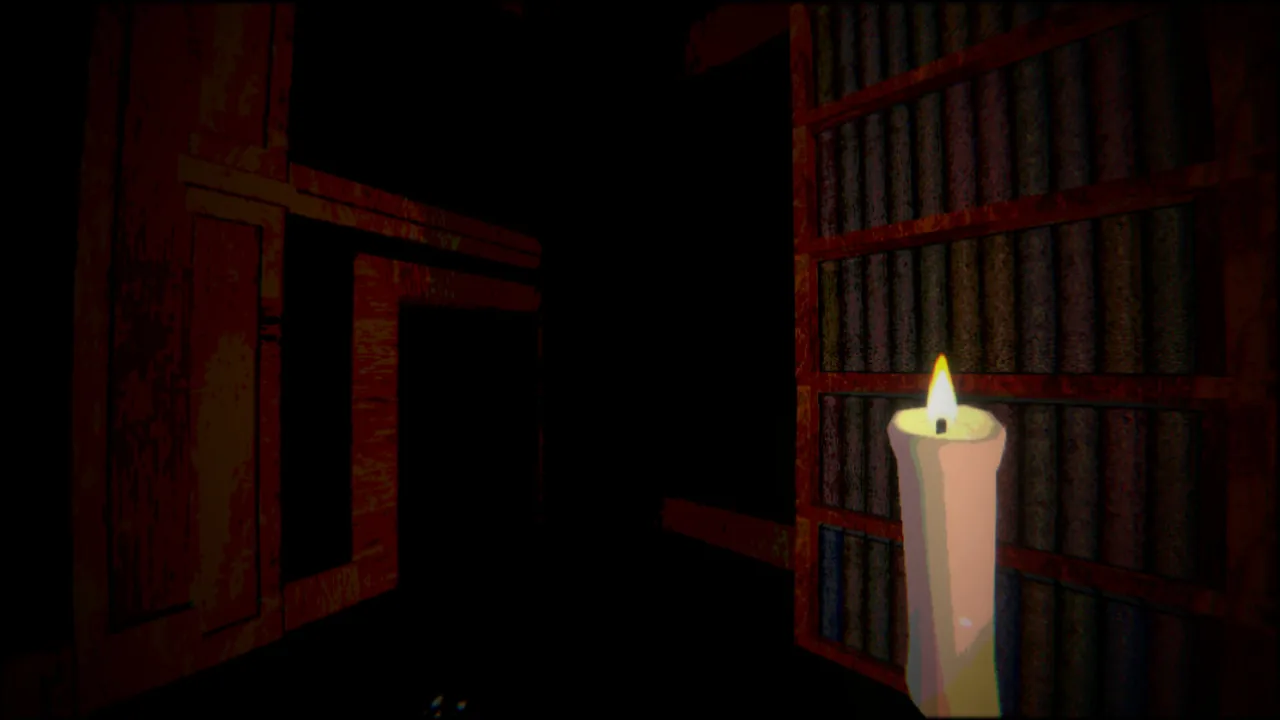
Strip away the meme and the mechanics are conventional first-person horror, just compressed and made unusually punishing. You start each run with a lit candle as your only real light source; blow it out manually (a control added mid-2025) to hide in darkness, or let it burn down naturally, and once it's gone it cannot be relit. Inside the manor you rummage through drawers for loot while avoiding four distinct, hand-designed monsters, one of which — the Butler — the developer eventually agreed not to spawn on a player's very first attempt, after enough people bounced off dying to him in the opening minutes. An unlockable handgun (Steam's own mature-content note specifically calls out "You can unlock a handgun to be fired") gives you a way to fight back rather than only flee. Layered underneath all of that is a hunger and thirst system the store page never mentions and the interface barely surfaces — reviewers repeatedly call it "invisible," and it's the single most disliked mechanic in the entire review corpus, criticised not for being hard but for being an unexplained tax on a run that's already fighting the clock.
Outside the manor sits a second, gentler space: a carnival with six minigames at the stalls, a ticket economy, and a prize office to spend them at, plus enough NPCs to "make allies or build rivalries with," in the store page's own words. One of the more detailed reviews in the corpus — 437 minutes played — describes grinding what it calls a "battlepass" reward track specifically to unlock an item that turns off the hunger and thirst mechanic, which is the closest thing The Candle has to a real progression system: a joke reward, for defeating a joke mechanic, in a game built out of jokes. It's a clever bit of design once you notice it, and it's almost entirely absent from how the game's own audience talks about it.
The tag is honest about the confusion, not about the genre
Read literally, the vote-weighted tag list looks like a genre in open contradiction with itself: Exploration and Time Management up top, Idler fourth, then Perma Death, Arcade, Roguelike, First-Person, Horror and Casual all bunched together behind it. That's not a mislabelled game so much as a community tagging exactly what the bit always was — a pile of mismatched, half-serious genre promises stacked on top of each other, the same way Jerma's original pitch kept adding contradictory features live on stream. Taken as a description of what you'll actually experience with a mouse and keyboard, though, it's decisive in one direction: this is an active, real-time, first-person survival horror roguelite. None of the 82 Steam reviews in the corpus use the word "idle" to describe playing it. Ten of them mention Jerma by name — more than any single gameplay term — which tells you plainly what most buyers are actually here for, and it isn't a number that goes up while they're away.
A short, brutal loop that mostly doesn't finish
The pacing tells a consistent story across every data point available. Median playtime across the full review sample sits at just 71 minutes; reviewers who ended up disliking the game bounced even faster, with a 42-minute median against 73 for those who liked it — the shape of an expectations mismatch rather than players wearing the game out. Global achievement data confirms it from the other direction: Candle Bearer sits at 3.5% completion and the hidden Snuffed Out achievement at 2.8%, meaning well over 96% of everyone who has ever owned this game has died, quit or wandered off before reaching either ending. For a roguelite that's not necessarily damning on its own — Perma Death and Roguelike are both top-ten vote-weighted tags, so repeated failed attempts are clearly part of the intended shape — but it does mean the "loop" most owners actually experience is a handful of short, doomed runs rather than the long incremental climb the Idler tag implies. There is a long tail of players who go much further (one review logs over 4,000 minutes), and for that self-selecting minority the permadeath structure does what it's supposed to: it makes every fresh attempt matter. For everyone else, one or two candles burning out in the dark is the whole experience.
A developer allergic to admitting he's patching it
Few solo horror games have a support history this openly conflicted. The Candle launched with a message telling players the developer didn't want feedback and there would never be a patch — and five days later, a news post titled "This dev LOVES to lie" added subtitles anyway. A July 2025 update fixed a GPU-load issue via framerate capping, added a manual candle-snuff control, and quietly shipped an "Easy Mode" beta branch (faster movement, a head start at the carnival, night-vision goggles when the candle's out) that disables achievements so nobody can prove they used it. On the game's first anniversary in February 2026, a final round of quality-of-life work landed — persistent volume and sensitivity settings, on-screen interaction prompts, a skippable intro monologue, and the Butler no longer ambushing brand-new players on their very first venture — closing with the developer stating he'll "very likely not update" again. That is, in practice, a reasonably healthy year of support for a NZ$7.39 solo project, even if every single post about it is written as though support were the last thing on the developer's mind. It also means the game reviewers are buying today is meaningfully friendlier than the one that launched, something the corpus itself doesn't fully reflect since most reviews predate the final patch round.
That contradiction cuts both ways in the review corpus. One negative review specifically blames the developer for "ruining" the game by patching it at all, arguing it should have stayed exactly as broken as it launched — a purist reaction that only makes sense once you understand a slice of this audience wanted the rawest, jankiest possible version of the bit, not a smoother horror game.
Presentation and price
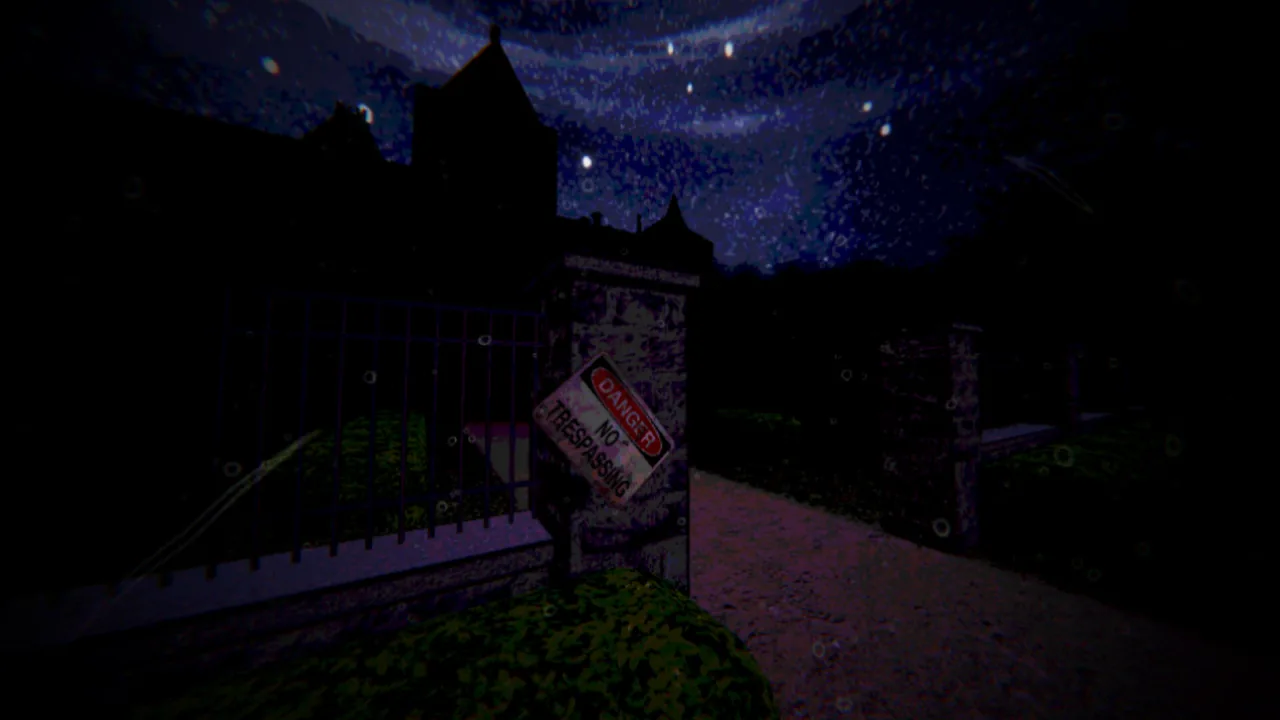
Visually, The Candle commits to a heavily posterised, dithered, PS1-era horror look — thick film grain, chromatic aberration, a manor and carnival that mostly exist as silhouettes against candlelight — built by a developer who was 3D modelling on a laptop trackpad for the first time in his life. It's derivative of an established retro-horror aesthetic rather than an original one, but it's applied consistently and it suits the material; the "Graphics: Potato" line in the system requirements is both a joke and, more or less, the truth, which keeps the game accessible to almost any PC even if it does nothing for players who wanted controller support or a language beyond English. William J McLeod's volunteer score is a genuine asset that the developer himself is visibly proud of, and it's easy to hear why in a game this light on other production polish.
At NZ$7.39, with no DLC, no premium currency and nothing resembling monetisation beyond the purchase price, the value case is straightforward: this is a cheap, short, atmospheric horror curiosity, not a long game pretending to be a short one. Judged as that, it earns its price. Judged as the "Idler" its own community tags suggest, it will disappoint anyone who buys it looking for a game that plays itself.
Final verdict
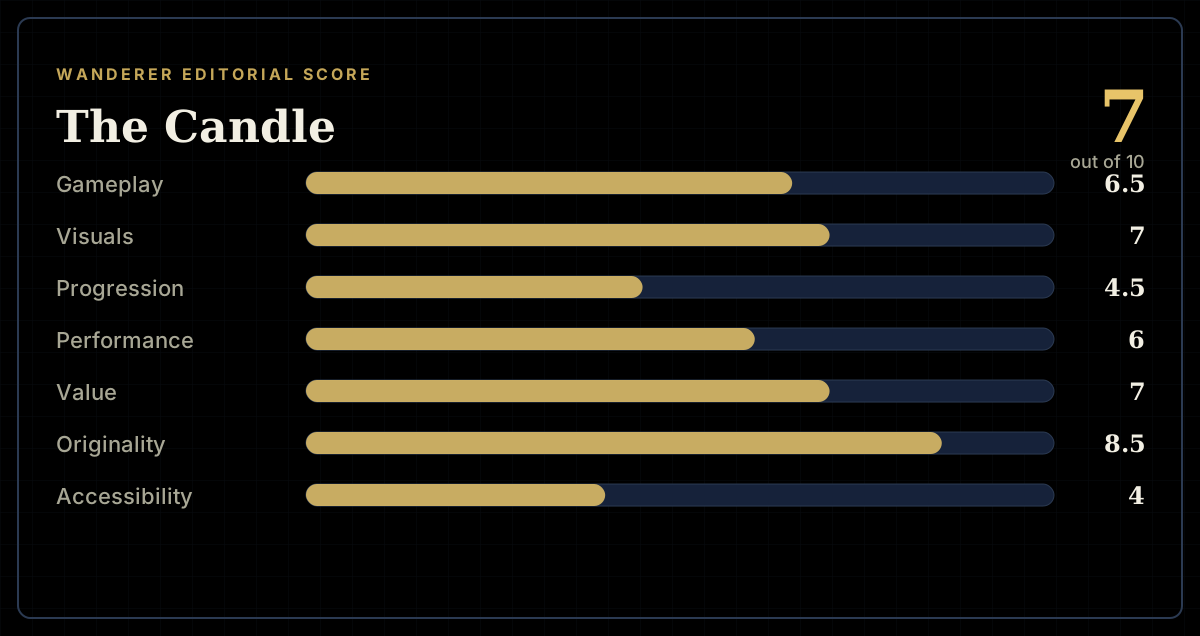
The Candle succeeds at the hardest part of its own premise: taking a joke that existed for one Twitch broadcast and turning it into a real, atmospheric, finishable game without smoothing away what made the joke work in the first place. It falls short of a stronger score for reasons that have nothing to do with its sense of humour — an unexplained hunger and thirst system that adds friction rather than fear, a permadeath curve so steep that fewer than one in thirty owners have ever finished it, and an accessibility footprint (English only, no controller support) that assumes an audience already in on the reference. 7.0 reflects a game that is exactly as distinctive as its origin story promises, wrapped around systems that don't yet reward the time it asks you to spend surviving them. Buy it for the bit and the atmosphere; don't buy it expecting the number-go-up genre its own tags are voting for.
Pros and cons
Pros
- Genuinely distinctive origin and tone — an absurdist horror game built entirely from one streamer's improvised, self-contradicting pitch, executed earnestly rather than sanded down into something safer
- Extremely cheap for the atmosphere on offer, backed by a fully custom score a volunteer composer wrote for free
- The real-time, un-relightable candle and permadeath structure create a specific kind of tension that a scripted horror game timer can't fake
- Minimal system requirements keep it playable on almost anything, and the developer added subtitles, persistent audio settings and quality-of-life fixes despite publicly swearing off patches
- A separate carnival hub with six minigames, a ticket economy and multiple endings give it more structural variety than its meme-game reputation suggests
Cons
- The community's own vote-weighted tags call it an "Idler," but there is no offline or incremental progression anywhere in the game — a shopper arriving for that will find a punishing, actively-played FPS horror roguelite instead
- An "invisible" hunger and thirst system layered on top of the candle timer is the single most-criticised mechanic in its own review corpus, adding tedium rather than dread
- Global achievement data shows barely 1 in 30 owners have ever reached either of the game's two endings, an unusually brutal completion rate
- No controller support and English-only text on a game whose audience skews toward casual, drop-in buyers rather than horror genre regulars
- The developer's public "I will never patch this" stance, walked back four times since launch, sets an odd tone for anyone expecting ordinary post-launch support
Screenshots
-
The CandleImage: Candle Dev via Steam -
The CandleImage: Candle Dev via Steam -
The CandleImage: Candle Dev via Steam -
How the review scores each part of the gameWanderer Editorial -
The game at a glanceWanderer Editorial -
The short versionWanderer Editorial