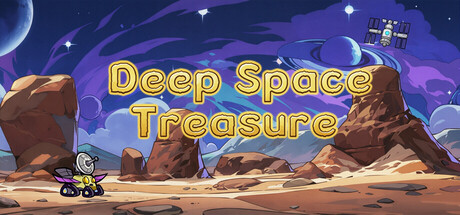
Game review
Deep Space Treasure
6.5 / 10
- Developer
- RoundTable_M
- Publisher
- RoundTable_M
- Released
- 25 August 2026
- Platforms
- Windows
- Genre
- RPG
A Fifty-Ninth Consecutive Launch Without a Single Review
Deep Space Treasure launched on Steam on 25 August 2026 from developer RoundTable_M, and at the time of writing it has zero user reviews. That's a notable gap for a game built entirely around procedural unpredictability, since a survival-crafting sandbox that promises "every jump generates a brand-new planet" needs exactly the kind of extended, varied play sessions a real community provides to confirm whether that generator actually delivers meaningful variety or just reshuffles the same handful of hazards.
A Universe With No Set Paths, Just a Rocket and a Drill
The core pitch is a 2D side-scrolling sandbox survival game built around pure random exploration and mining, framed explicitly around the absence of fixed maps or routes — every jump into the infinite universe generates a new planet with unique terrain and an unknown ecosystem, so the player's next destination is described as always a mystery rather than a known quantity picked from a menu. That's a meaningfully different structure from most survival-crafting RPGs, which tend to build a single large hand-authored or seeded world for players to gradually map out; here the game is explicitly designed around never letting a player settle into full familiarity with any one location; before moving on to the next. A full crafting tree is stated to let players upgrade from crude starting tools to advanced gear, giving that endless procedural churn a concrete sense of forward momentum even as the specific planet under a player's feet keeps changing. That tension between a persistent, ever-improving player and a universe that refuses to stay the same underneath them is the game's central design bet: progression here has to live entirely in what the player carries with them — their tools, their gear tier, their accumulated skill at reading an unfamiliar planet quickly — rather than in a map that gradually becomes familiar territory, which raises the stakes on crafting and equipment upgrades doing real, tangible work rather than existing as a secondary system layered on top of exploration for its own sake.
Extreme Temperatures, Toxic Air, and Sudden Geological Disasters
Survival pressure comes from three stacked threats layered directly onto the environment itself: extreme temperatures that constantly drain health, toxic atmospheres that corrode equipment over time, and geological disasters that can strike without warning and destroy everything a player has built, forcing a full rebuild from scratch. Framing catastrophic events as an ever-present threat that erases both structures and active mining claims raises the stakes of every base a player commits time to considerably higher than the genre's usual slow equipment-decay pacing, since it means investment in any one location is inherently precarious rather than a safe long-term project. That design choice pushes the moment-to-moment loop toward continuous resource gathering and rebuilding rather than the eventual "fully secured base" endpoint many survival games work toward, which is either a bracing structural commitment to the genre's core tension or a potential source of player fatigue depending on how frequently those disasters are tuned to strike — a balance question only sustained play can actually settle. Screenshots reveal the hazard system goes further than the store text describes: a named, coordinate-tagged planet called Tortoise Star tracks four separate environmental attack values on-screen — Fire, Ice, Nuclear, and Poison — suggesting each generated world carries its own specific elemental threat profile rather than a single generic "hostile atmosphere" modifier, which would give the promised planet-to-planet variety a concrete mechanical backbone beyond just changing scenery.
Rival Aliens and a Deliberately Simple Combat System
Beyond the environment itself, the universe is populated by hostile alien species treated as another natural hazard alongside temperature and disaster risk, plus a specific rival faction called the Three-Eyed Aliens who are explicitly after the same resource deposits the player is mining, adding time pressure to claim valuable finds before a competing party gets there first. Combat itself is stated to be intentionally simple, resolved mostly through a player's existing gear and stats rather than deep mechanical systems, which keeps the design's stated focus on survival and resource management rather than diverting attention into a separate combat metagame — a reasonable prioritization for a game whose real hook is the ever-changing planetary generator, even if it does mean combat depth isn't where this particular RPG is trying to compete. The game's ten Steam achievements back up that resource-and-survival framing directly, naming distinct progression tiers like SeniorMiner, MiningExpert, and TreasureHunter alongside dedicated exploration and combat milestones such as StarScout and AlienSlayer, and a base-building milestone tracked simply as BaseCount — confirming mining skill, exploration reach, alien combat, and construction are all tracked as genuinely separate progression threads rather than folded into one generic score.
Roguelike Replays and a Fair Price for the Genre
The developer frames the random maps and random resources as roguelike replayability, with every login pitched as a brand-new survival challenge rather than a continuation of a single static world — a framing that leans into the procedural generation as the game's core replay value rather than treating it as a workaround for limited hand-authored content. At NZ$15.75 with no discount, the price sits toward the middle of the survival-crafting RPG field, and support for both English and Simplified Chinese with full audio in each suggests a reasonably broad intended audience for a solo-credited release. Ten Steam achievements is a modest but functional spread for tracking meaningful milestones across a genuinely open-ended, procedurally generated game rather than a tightly scripted campaign with a fixed ending.
Verdict
Deep Space Treasure builds its identity around a genuinely uncommon structural bet for the survival-RPG space: no fixed world at all, just an infinitely regenerating universe where every jump resets the map, layered with stacked survival pressures from temperature, toxic air, and sudden disasters that can erase a base without warning. The named achievement tiers for mining, exploration, alien combat, and base-building suggest a reasonably fleshed-out set of parallel progression systems underneath that procedural churn, even with combat deliberately kept simple to keep the focus on survival and resource management, and screenshots confirming per-planet Fire, Ice, Nuclear, and Poison hazard values back up that the promised planetary variety has real mechanical teeth rather than being purely cosmetic. Whether the planet generator actually produces meaningful variety across dozens of jumps, rather than reshuffling a limited hazard palette, and whether the disaster frequency is tuned to feel tense rather than punishing, remain open questions for a solo-developed launch with zero user reviews so far.
Screenshots
-
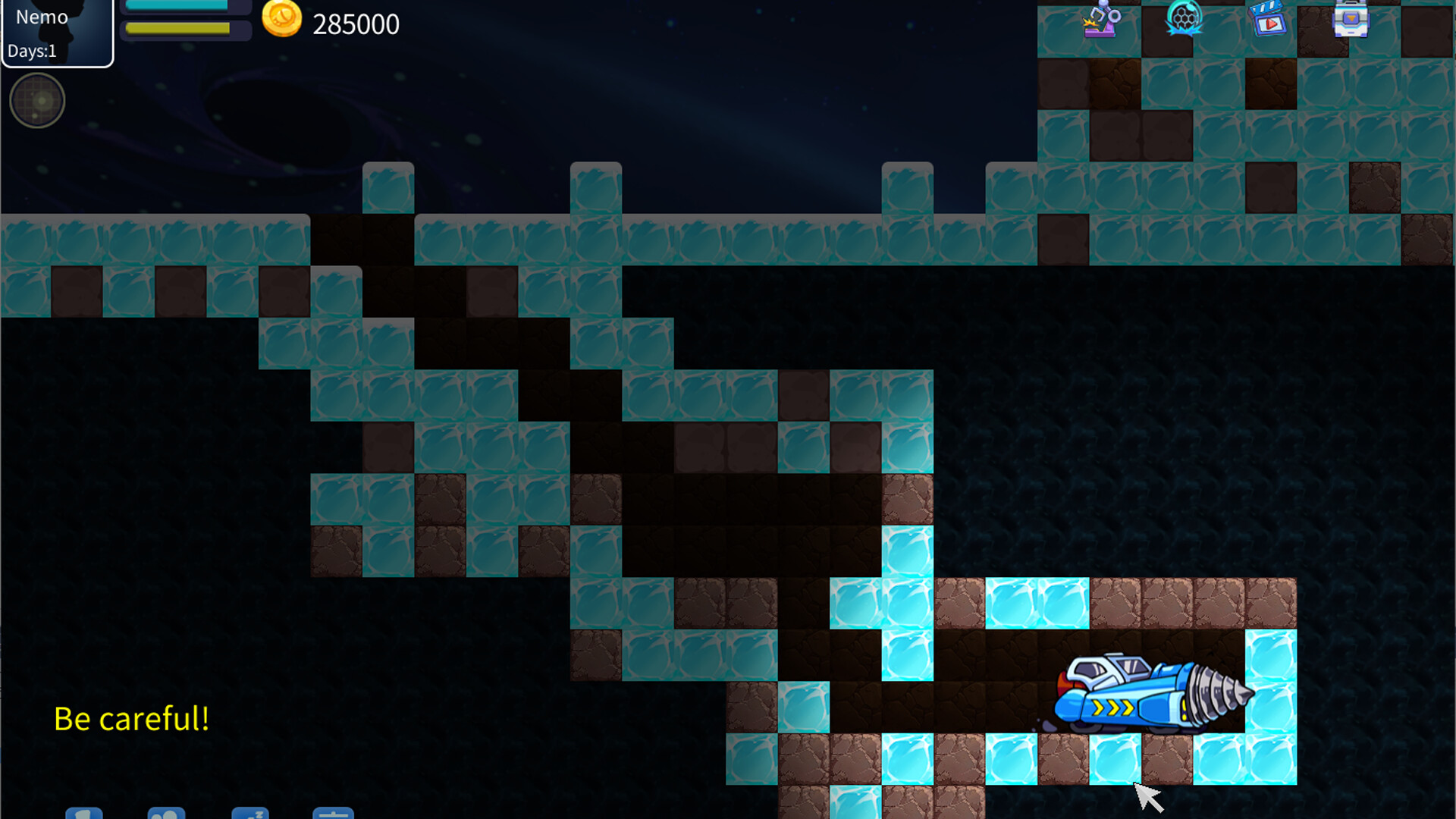
A drill vehicle bores through layered icy rock, with a Days counter and gold total tracked on the HUD alongside achievement icons.Steam store page -
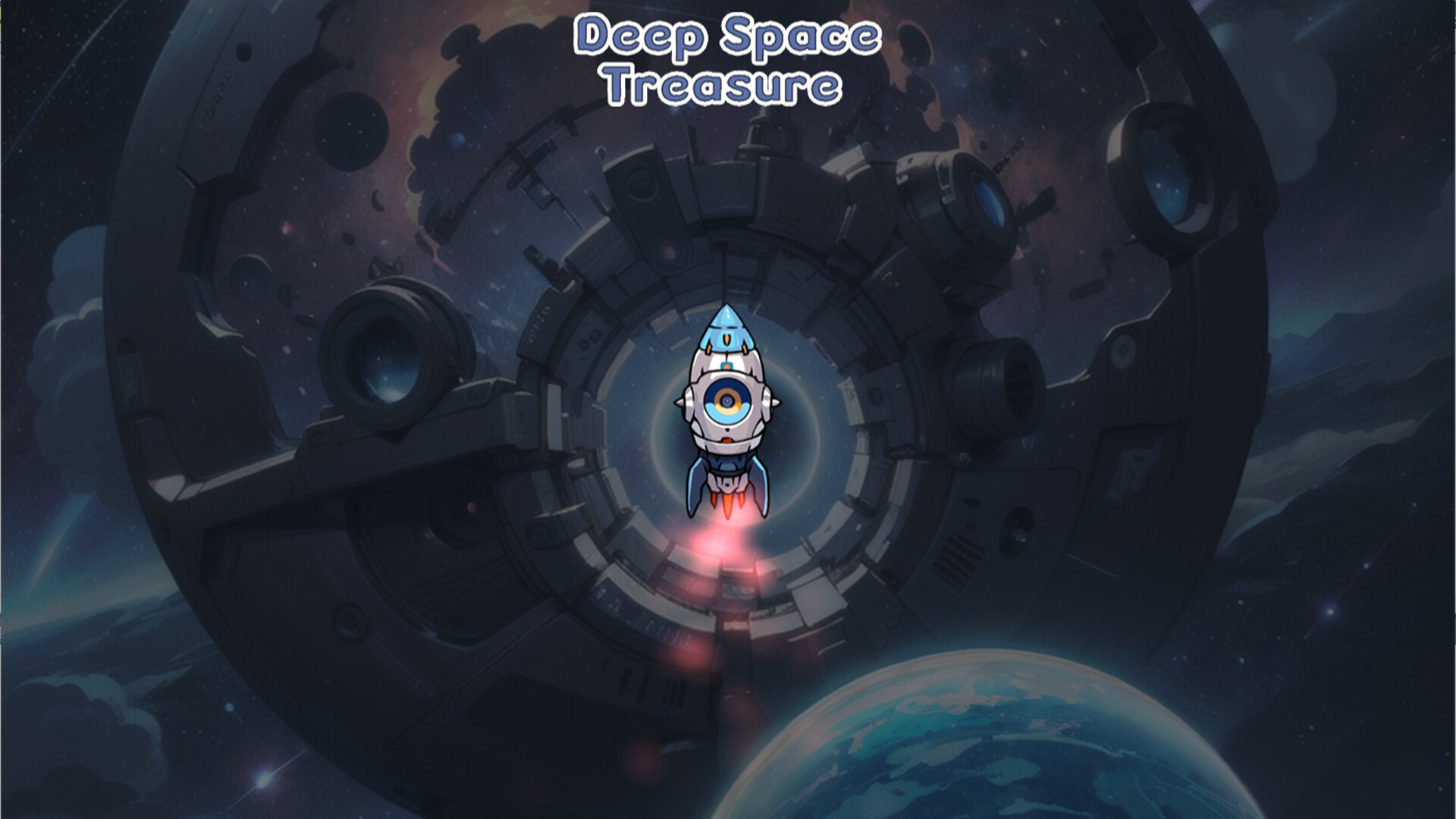
The title screen's cyclops-eyed rocket flies through a derelict station ring, setting the tone for the game's cartoon sci-fi presentation.Steam store page -
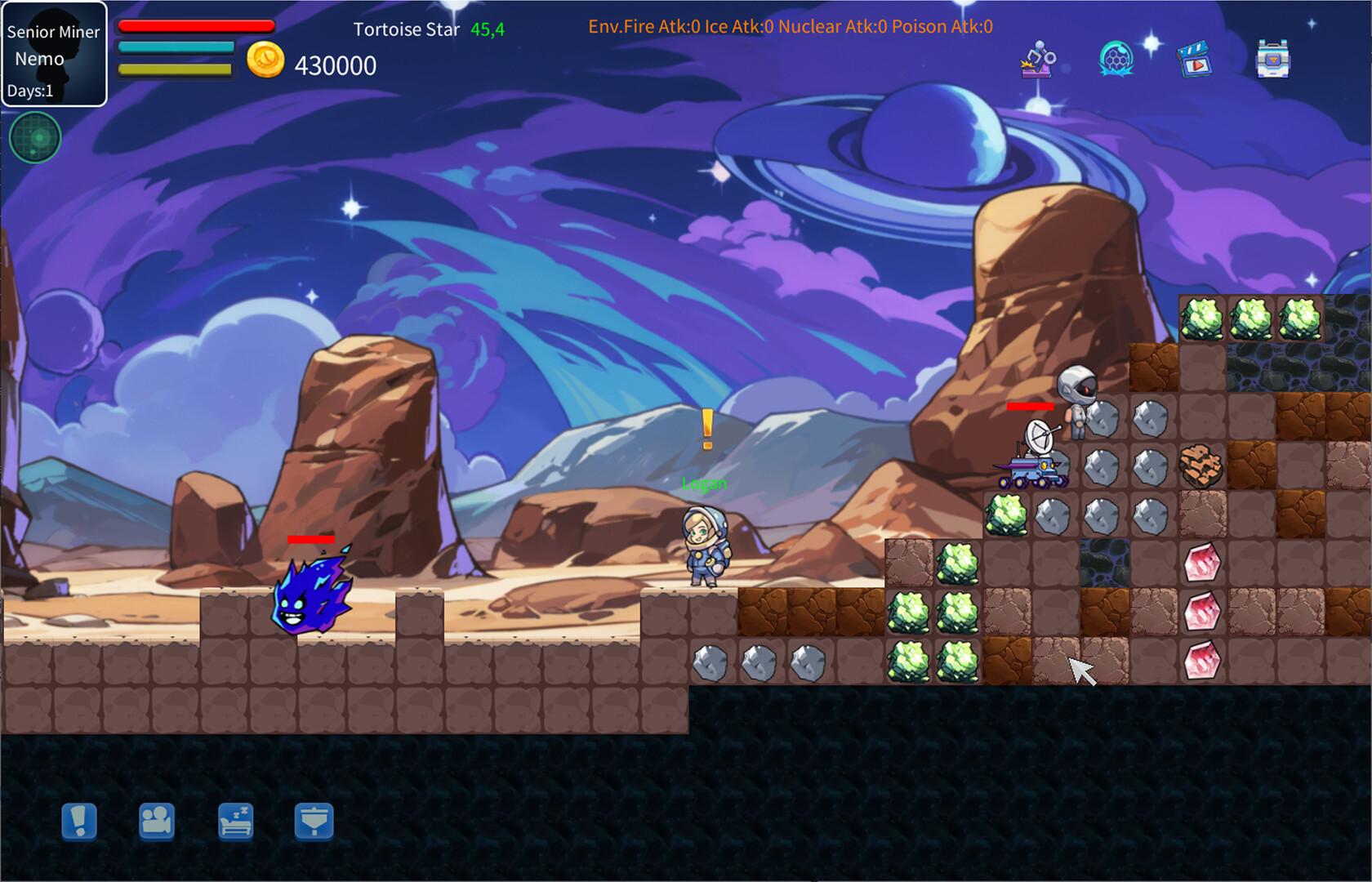
A named, coordinate-tagged planet, Tortoise Star, tracks separate Fire, Ice, Nuclear, and Poison environmental attack stats alongside a mining rover and resource nodes.Steam store page