
Game review
Layers of Fear 2 (2019)
6 / 10
- Developer
- Bloober Team SA
- Publisher
- Bloober Team SA, NA Publishing
- Released
- 28 May 2019
- Platforms
- Windows
- Genre
- Adventure
- Monetisation
- Paid, no in-app purchases found
- Players
- false
The short version
Layers of Fear 2 casts players as a Hollywood actor summoned aboard a haunted ocean liner by an unorthodox director, unraveling twisted memories through shifting, hallucinatory environments. Its atmosphere, sound design and visual craft carry forward the strengths of Bloober Team's original psychological horror hit. But this sequel made a deliberate design choice in response to criticism of the first game — replacing much of its slow-burn dread with frequent, insta-fail chase sequences — and this review corpus is split almost exactly down the middle on whether that trade was worth making.
Biggest strengths
- Genuinely stunning atmosphere and set-piece design that draws consistent praise even from the corpus's most disappointed reviewers
- Widely and specifically praised binaural sound design and an atmospheric, often-cited-as-excellent soundtrack
- More developed puzzle content than the original Layers of Fear, an area multiple reviewers explicitly credit as a real improvement over its predecessor
Biggest weaknesses
- A dominant, specifically named complaint that the developers overcorrected for "walking simulator" criticism of the first game by adding what one top review calls "an ABSURD amount of chase sequences," which a large share of reviewers find frustrating rather than frightening
- A real, opposing minority still finds the moment-to-moment gameplay a tedious walking simulator regardless, describing long stretches of opening doors and collecting notes with little else to do
- A story a substantial share of reviewers call more confusing and less coherent than the original, despite crediting it with more ambitious ideas
Who it's for: Psychological horror fans drawn to atmosphere and visual storytelling who don't mind occasional stealth-chase sequences interrupting the slow-burn pacing.
Our recommendation: Worth it at a discount for the atmosphere, sound design and improved puzzle content — just know upfront that the chase sequences are real, frequent, and either the sequel's biggest misstep or a manageable addition, depending entirely on which half of this corpus you end up agreeing with.
6 / 10
What it is
Layers of Fear 2 sends a Hollywood actor aboard a mysterious ocean liner, summoned by an unseen, unorthodox director to take the lead role in a film that gradually reveals itself as something far stranger — a psychological descent through shifting, hallucinatory sets and twisted memories in pursuit of "the perfect performance." Developed by Bloober Team, the Polish studio behind the original Layers of Fear and Observer, and published alongside NA Publishing, it released on 28 May 2019 at NZD 24.79 as a standalone sequel with an entirely new cast, setting and story.
Its review corpus, 810 in English, sits at a genuine Mostly Positive 70.7% (573 to 237), and reading through it in depth reveals a corpus unusually clear about the specific reason for its division: this sequel made a deliberate, identifiable design change in response to feedback on the original game, and this corpus disagrees sharply on whether that change paid off.
Atmosphere and sound that carry the series' reputation forward
Whatever else divides this corpus, its praise for presentation is close to unconditional. "Stunning atmosphere and set pieces," "terrific binaural sound design," and "great animations" are cited together by one detailed reviewer's list of the game's clear strengths. Another highlights the improved puzzle content specifically: "puzzles are interesting, and it is an area that lacked in the first" game, a notable admission from a reviewer otherwise disappointed overall. A separate, especially thoughtful review frames the game's presentation ambition directly: Bloober "somehow makes terror and gore into beautiful, tactful art," a description carried over from praise for the original and largely reaffirmed here even by critics of the sequel's other choices.
A deliberate design change that split the audience
The corpus is unusually explicit and self-aware about the specific reason for its division. "I think the devs saw the feedback to the first game, claiming it's just a disinteresting walking simulator... [and] proceeded to flood the game with an ABSURD amount of chase sequences," writes one of the most- upvoted reviews in the entire corpus — a genuinely useful, specific diagnosis rather than a vague complaint. A separate reviewer corroborates the same read directly: "I felt as though the devs listened way too much to the people who didn't like the first Layers of Fear and complained about how it was 'a walking simulator'" rather than to the fans who wanted more of the same slow-burn formula. Set against that, a real, detailed minority defends the change: "the chase sequences in Layers of Fear 2 are brief and not that hard to solve," writes one reviewer, arguing Bloober's own Observer handled similar sequences worse. That's a genuinely useful frame for prospective buyers — this isn't a disagreement about whether the game is well made, but about whether a specific, identifiable design decision improves or damages the experience.
The opposing complaint: still too much of a walking simulator
Confusingly for anyone trying to find a clean consensus, a separate contingent argues the opposite problem persists regardless of the added chase sequences. "The entire gameplay is painfully linear, bordering on a walking simulator," writes one reviewer, while another calls it directly "a clumsy, tedious walking sim with pointless dialogue that adds little to the experience," reporting the only real activity across long stretches is "opening and closing doors." That's worth naming honestly: this corpus doesn't cleanly split into "loved the changes" versus "wanted the original formula back" — a meaningful share of critics feel the game manages to combine frustrating chase sequences with dull, old-fashioned walking-simulator pacing at the same time, rather than successfully replacing one with the other.
A story that ambition outpaces clarity
Beyond the gameplay debate, a real share of reviewers raise a separate, more narrative-focused complaint. "The story is a potentially more interesting story told worse" compared to the original, argues one detailed review, a sentiment echoed by another who found the plot "unnecessarily confusing, with a story that is difficult to follow." A more sympathetic reviewer acknowledges the same tension: "intelligent writing, obscene imagery, a beautiful soundtrack and good voice acting. The story is a bit cryptic and to get the full understanding the reading of notes is necessary" — a fair characterization of a narrative that rewards patient engagement with collectibles but risks losing players who expect the plot to cohere from the main path alone.
What the achievement data confirms about engagement
Layers of Fear 2's achievement curve shows a real, fairly steep decline: early collectible-related achievements sit reasonably high (75.5%, 69.9%, 68.9%), dropping through chapter-completion milestones in the 20-50% range, before falling sharply to under 15% for most ending-specific and full-collectible achievements, and just 2.9% for "see every ending." That's consistent with a story many players start but don't fully unpack — corroborating the "confusing" and "cryptic" complaints above, since fully understanding this game's narrative appears to require a level of note-collecting and replay commitment that only a small fraction of the playerbase completes.
Verdict
Layers of Fear 2 preserves the atmospheric and sonic strengths that made Bloober Team's original a genre standout, and its puzzle design is a genuine, specific improvement. But its central gameplay decision — trading slow-burn dread for frequent chase sequences in direct response to criticism of the first game — remains a real, unresolved point of disagreement even within its own fanbase, compounded by a story that a substantial share of players find harder to follow than its predecessor's. Worth it at a discount for genre fans curious to form their own opinion on that trade-off, but not a guaranteed follow-up to what made the original click for everyone who loved it.
Pros and cons
Pros
- Genuinely stunning atmosphere and set-piece design that draws consistent praise even from the corpus's most disappointed reviewers
- Widely and specifically praised binaural sound design and an atmospheric, often-cited-as-excellent soundtrack
- More developed puzzle content than the original Layers of Fear, an area multiple reviewers explicitly credit as a real improvement over its predecessor
- A more ambitious, layered narrative blending an actor's identity crisis with a haunted-ship mystery, praised by several reviewers as intelligently written even when they find it hard to follow
- Three distinct endings and meaningful replay incentive for players who want to piece together the full story
Cons
- A dominant, specifically named complaint that the developers overcorrected for "walking simulator" criticism of the first game by adding what one top review calls "an ABSURD amount of chase sequences," which a large share of reviewers find frustrating rather than frightening
- A real, opposing minority still finds the moment-to-moment gameplay a tedious walking simulator regardless, describing long stretches of opening doors and collecting notes with little else to do
- A story a substantial share of reviewers call more confusing and less coherent than the original, despite crediting it with more ambitious ideas
- Several detailed reviewers report the chase sequences rely on repetitive flashing lights and jump scares without adequate build-up, with at least one describing genuine discomfort from the visual effects
- Considered by a real contingent to be a step down from Bloober Team's other horror work (the original Layers of Fear and Observer), with expectations set high by the developer's prior reputation contributing to some of the disappointment
Screenshots
-

Layers of Fear 2 (2019)Image: Bloober Team SA via Steam -

Layers of Fear 2 (2019)Image: Bloober Team SA via Steam -

Layers of Fear 2 (2019)Image: Bloober Team SA via Steam -
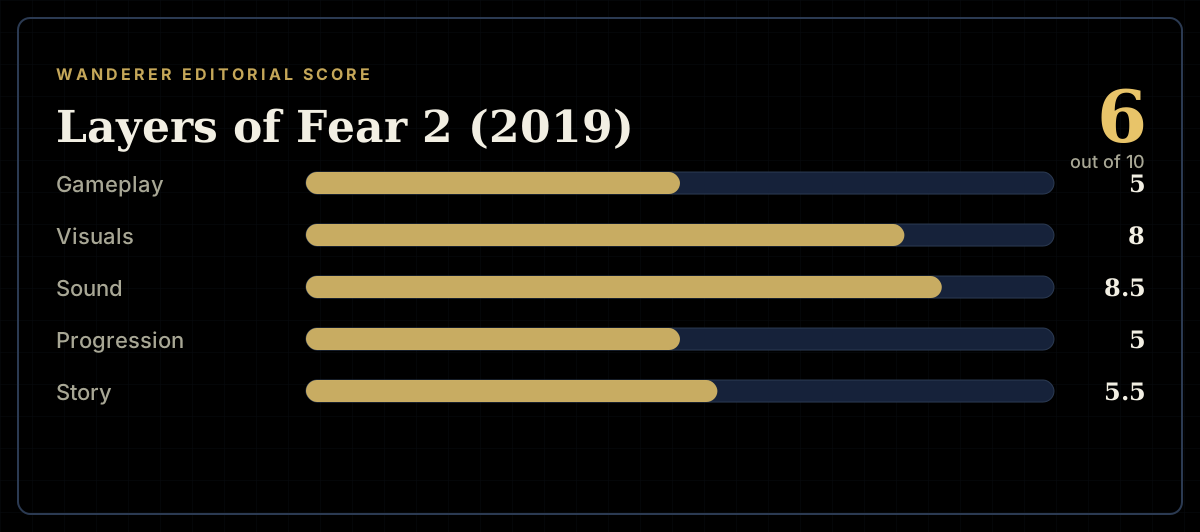
How the review scores each part of the gameWanderer Editorial -
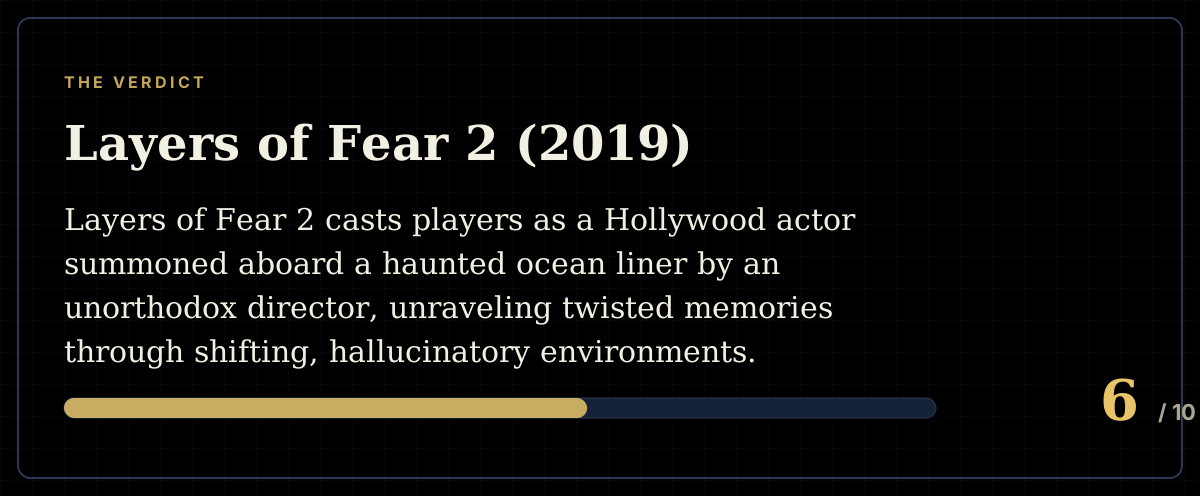
The short versionWanderer Editorial