
Game review
Save My Scrap Review
8 / 10
- Developer
- Unio Anou
- Publisher
- AMATA Games, Digital-Touch Co., Ltd.
- Released
- 21 April 2026
- Platforms
- ["Windows"]
- Genre
- Visual Novel
An Android Repair Job That Turns Into Something Else
Save My Scrap, released April 21, 2026 by developer Unio Anou and published by AMATA Games and Digital-Touch Co., Ltd., is a $10.99 visual novel with light point-and-click puzzle mechanics, casting the player as a mechanic hired by a doctor named Miomaru to repair his aging personal android, Harima. All twenty-one English reviews are positive, and the story's central twist, that Harima is far more self-aware than a repair job should require, and deeply opposed to being "fixed" at all, is what nearly every review circles back to. "She reads, she argues and discuss deep topics with quite strong opinions," one reviewer summarizes, describing a premise that starts as a simple mechanical job and quickly becomes a question about consent, identity, and what repairing someone actually means.
Puzzles That Know Their Place
The mechanical core, opening up Harima's body to fix broken components through small mini-game puzzles, is by design light and unobtrusive, and the review pool is remarkably consistent about exactly how light. "Puzzle gameplay is reasonably light and doesn't overstay its welcome or interrupt the story unnecessarily," one reviewer writes, a sentiment echoed by another who notes plainly, "you buy this game for the story and not the gameplay." A few reviewers do wish the puzzles pushed further, one asks for "more complex" puzzles as their only real complaint about an otherwise glowing experience, while at the opposite end one all-caps review found the last few puzzles too difficult to finish without a guide. That spread suggests the puzzle difficulty is tuned deliberately low as connective tissue between story beats rather than a genuine challenge layer, which serves most of the audience well even as it leaves puzzle-hungry players wanting more.
A Story About What It Means To Be Fixed
Where the review pool gets genuinely effusive is the writing itself, repeatedly praised for using its android premise to explore ideas that a purely human cast couldn't carry the same way. "I found myself thinking about companionship, emotion, what it means to be an android, what it means to be a human, how much someone's self and personality is tied to their body," one reviewer writes, adding "I will be thinking about this for some time." Another reviewer frames the whole game around that same idea more bluntly: "it's the kind of story that can really only be told with androids." The game's radio-listening mechanic, letting players tune into different in-world channels while riding in their car between story beats, comes up repeatedly as a quietly effective piece of world-building that fills in the setting's culture and politics without ever pausing the main plot to explain it.
A Few Rough Edges In Translation And Stability
Not every note in the pool is unreserved praise. One reviewer flags pronoun usage that "felt off at times" in the English localization, specifically around how the game distinguishes categories of personhood that "english just doesn't do" natively, describing the effect as initially confusing before the intent became clear. A second reviewer independently raises the same concern about awkward pronoun handling, suggesting the story "would have flown much better if they stuck with binary pronouns," and separately reports the game glitching and becoming unable to progress during one computer-based chapter, though they weren't sure what triggered it or fixed it. Two reviewers flagging the same localization friction, even while both still recommend the game, is worth taking seriously as a real if secondary rough edge rather than one player's isolated gripe.
Short, Replayable, And Worth The Gallery Unlock
Most reviewers finish an individual ending in four to six hours, short even by visual novel standards, but the game's branching structure and unlockable gallery mode give it real replay incentive beyond a single sitting. "You should be able to 100% it in 4-5 hours," one reviewer estimates, while another specifically recommends returning to the gallery after finishing, since it "has a lot of background information on the characters and game creation" beyond what a single playthrough reveals. One reviewer's only real critique of the structure is that manual saves rather than automatic checkpoints at key decisions make chasing multiple endings more tedious than it needs to be, a fair, reasonable request for a game explicitly built around multiple endings and choices that matter.
Verdict
Save My Scrap is a compact, consistently well-regarded visual novel that uses its light android-repair puzzle mechanic mostly as connective tissue for a genuinely thoughtful story about identity, consent, and what it means to fix someone who doesn't want to be fixed. Its puzzles won't satisfy anyone shopping specifically for mechanical depth, and a couple of reviewers flag real, corroborated friction in the English localization's pronoun handling, but neither issue meaningfully dents a review pool that keeps returning to the same word: engaging. At $10.99 for a four-to-six hour story with multiple endings and a gallery worth a second look, this is a strong, easy recommendation for visual novel fans drawn to grounded, character-first science fiction.
What lingers about Save My Scrap, based on how its own reviewers describe it, is how deliberately small its ambitions are and how much room that restraint leaves for the story to land. It isn't trying to be an epic about androids and humanity writ large; it's trying to make one player care about one android's right to say no, and by the reviews' own account, it succeeds often enough to be remembered well past its short runtime.
Screenshots
-
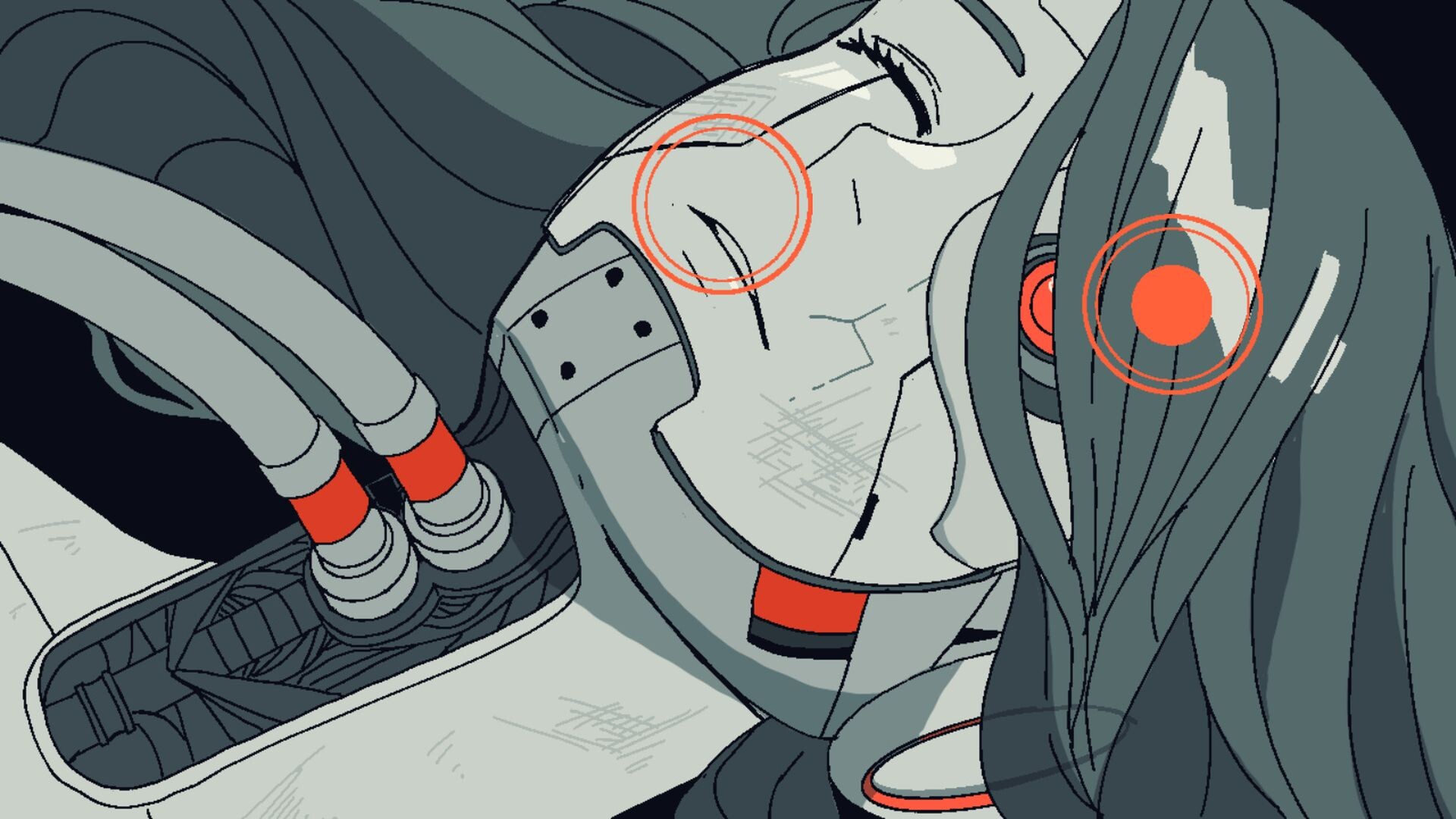
One of the repair mini-game's close-up illustrations, marking the specific damaged components the player has to identify and fix on Harima's body.Image: AMATA Games via Steam -
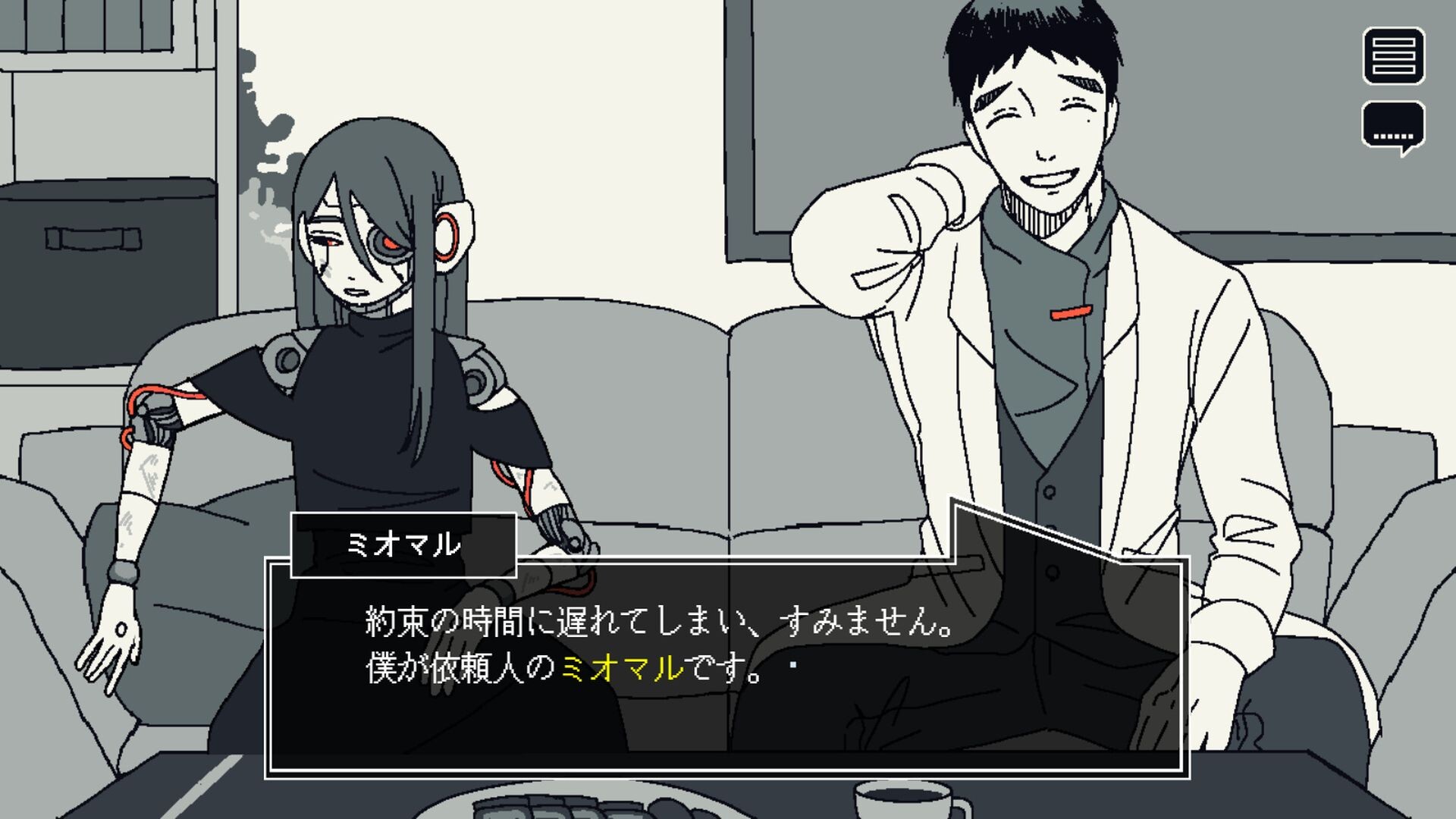
Miomaru introduces himself as the client early in the story, the visual novel's dialogue-driven scenes are where reviewers say the game's central relationship is built.Image: AMATA Games via Steam -
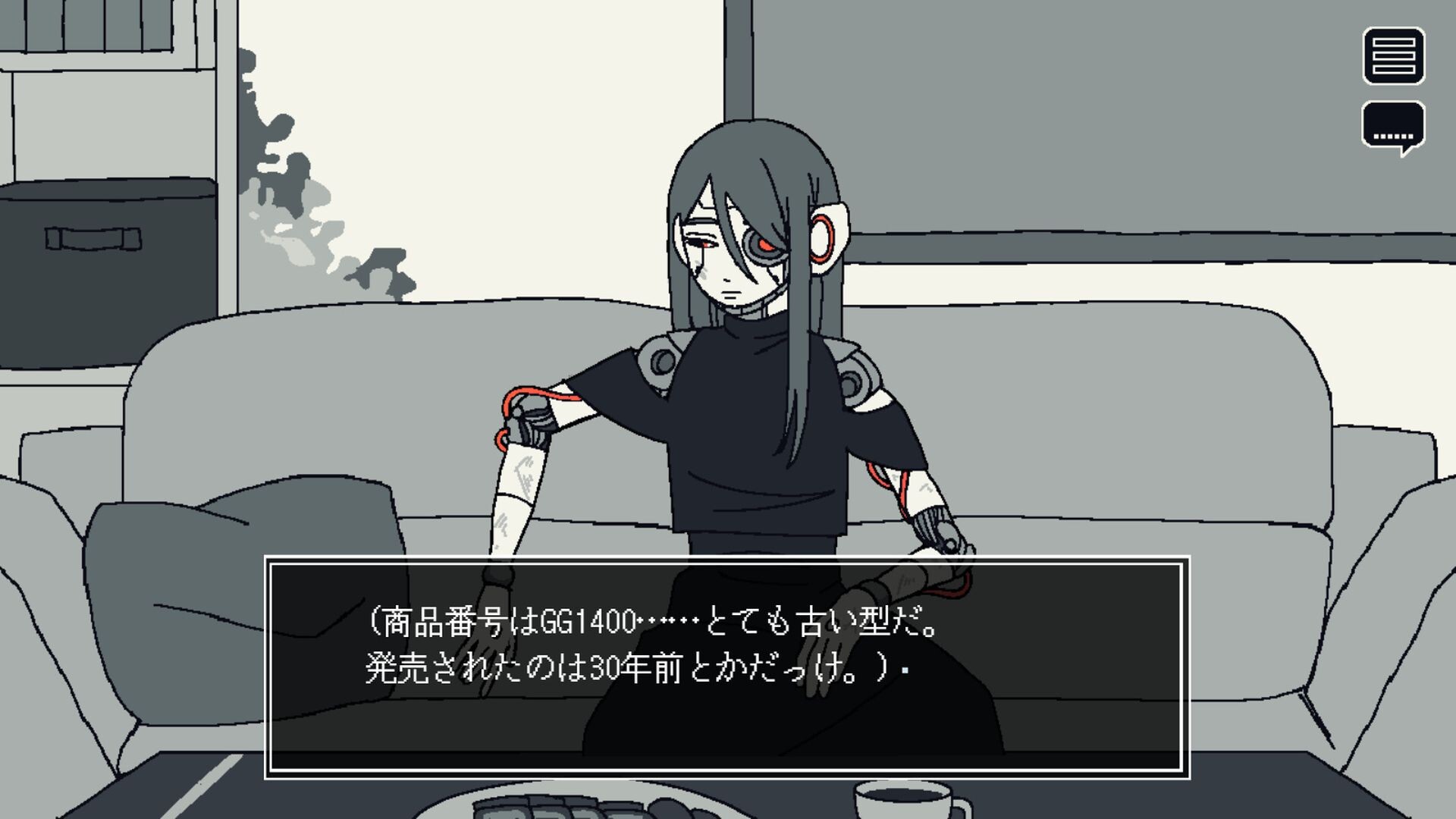
A quiet character moment establishing Harima's age and model history, exactly the kind of small worldbuilding detail reviewers say deepens the story's questions about identity.Image: AMATA Games via Steam