
Game review
Fugaz Review
8 / 10
- Developer
- Spheanix
- Publisher
- Spheanix
- Released
- 7 July 2026
- Platforms
- ["Windows"]
- Genre
- Puzzle
A Flute, A Dark Place, And No Hand-Holding
Fugaz, released July 7, 2026 by solo developer and publisher Spheanix, is a $5.99 knowledge-gated puzzle-adventure about a wanderer trapped in a dark, minimalist world who carries a flute capable of playing a handful of short melodies, each one unlocking a different effect on the environment. Every one of the thirty English reviews is positive, and the word that recurs more than any other across them is "metroidbrainia," the small but beloved genre of Animal Well, Tunic, and Outer Wilds, where progress comes from knowledge rather than items or stats. "A delightful Metroidbrainia that feels heavily inspired by Ocarina of Time, TUNIC, and Outer Wilds," one reviewer writes, and the comparison holds up across the rest of the pool almost unanimously.
Four Notes, A Map, And A World That Remembers What You Know
The central mechanic is deliberately tiny: a flute with just four notes, played in different short combinations to open doors, reveal paths, or shift the world in ways the game never explicitly explains. "With just 4 notes and a few lines of text, Fugaz asked me questions, the puzzles, and made me find the answers," one reviewer writes, describing exactly the loop the genre depends on: stumble across an ability, half-understand it, then later recognize the exact situation where that half-understanding pays off. Reviewers repeatedly praise the game's own map system as the tool that makes this loop bearable rather than punishing, annotating unsolved puzzles, tracking discovered solutions, and flagging rooms with a "there is more to know" prompt. "The map is VERY convenient for exploration," one reviewer notes, "not only does it tell you if there's an unsolved puzzle in a room, but it keeps track of solutions you already figured out." For a genre that lives or dies on how well it manages backtracking, that's the single most load-bearing piece of interface design in the whole game.
A Timer In The Dark
The one mechanical wrinkle multiple reviewers single out, both as a defining feature and a real point of friction, is a darkness effect that ejects the player back to the entrance after roughly seven minutes of exploring a given area, resetting any puzzles solved along the way while the map itself keeps its notes intact. "There is a timer. After 7 minutes you're back at the entrance, all puzzles reset," one reviewer explains, adding that while the map preserves everything learned, "if you want to go back to a place, and you do go back to places a lot, you need to solve all puzzles on the way again and again." A second reviewer independently raises the same complaint, calling the timer "quite frustrating, especially in a game that relies this much on back-tracking," and noting the game gives no on-screen indication of how much time remains before the reset hits. Two independent reviewers flagging the identical mechanic, in nearly identical language, is a real and corroborated design tension rather than a single player's pet peeve, even though neither reviewer lets it drag their overall recommendation down.
Short, Cryptic, And Not Interested In Holding Your Hand
Fugaz asks a lot of trust from its players in exchange for a short runtime, most reviewers finish in four to six hours, and a handful describe individual puzzles as genuinely obtuse on first contact. "The puzzle are pretty confusing and not really explaining the answer that well," one reviewer admits partway through their playthrough, a sentiment echoed more gently by others who describe needing pen and paper, or simply time away from the game, before a solution clicked. Reviewers who stuck with it consistently frame that friction as the point rather than a flaw: "good riddle/puzzle game... each puzzle can be solved with knowledge that you can find somewhere else on the map," one writes, comparing the design favorably to Animal Well. The pixel art and four-note soundtrack are minimalist by design, and while a couple of reviewers mention low-resolution visuals making certain details hard to parse in the game's darker areas, nobody treats that as more than a minor inconvenience against the puzzle design's clarity.
A Tragic, Understated Story Told Through Exploration Alone
Beneath the puzzle mechanics, several reviewers describe a quietly melancholy narrative that emerges entirely through environmental storytelling rather than dialogue or cutscenes, fitting a game whose entire text budget seems to be a handful of lines and four musical notes. "It also had a nice, albeit tragic, story to piece together," one reviewer writes, while another describes the game leaving them "with an answer to a question I hadn't ever considered asking," closing with the line "you are never alone in this world." That restraint, letting atmosphere and world design carry emotional weight without spelling it out, is consistently cited as one of the game's biggest achievements for a $5.99 solo release, and reviewers who finished it describe the ending as landing with more weight than the minimalist presentation would suggest going in.
Verdict
Fugaz is a confident, tightly-scoped entry in the metroidbrainia genre, built around one small musical mechanic that the game trusts players to explore and internalize without hand-holding, and it mostly earns that trust across a short but consistently well-regarded runtime. Its darkness timer is a real, corroborated point of friction for backtracking-heavy playthroughs, and its cryptic puzzle logic will occasionally leave players stuck without much recourse beyond patience, but neither issue stopped a genuinely unanimous review pool from recommending it warmly. For fans of Tunic, Outer Wilds, or Animal Well looking for a shorter, cheaper dose of the same knowledge-gated satisfaction, this is an easy recommendation, and the demo Spheanix still keeps live alongside the full release, built as a genuinely separate puzzle set rather than a slice of the main game, is a low-risk way to find out if the four-note language clicks before paying anything at all.
It's a reminder of how much a metroidbrainia can accomplish on a tiny budget when its core loop, a small set of tools, a world that remembers what the player has learned, and a map generous enough to make that memory usable, is sound. Bigger, better-funded puzzle games have shipped with more content and less clarity of purpose; Fugaz spends its six-or-so hours saying exactly what it means to say and then ending, which is its own kind of discipline worth rewarding.
Screenshots
-
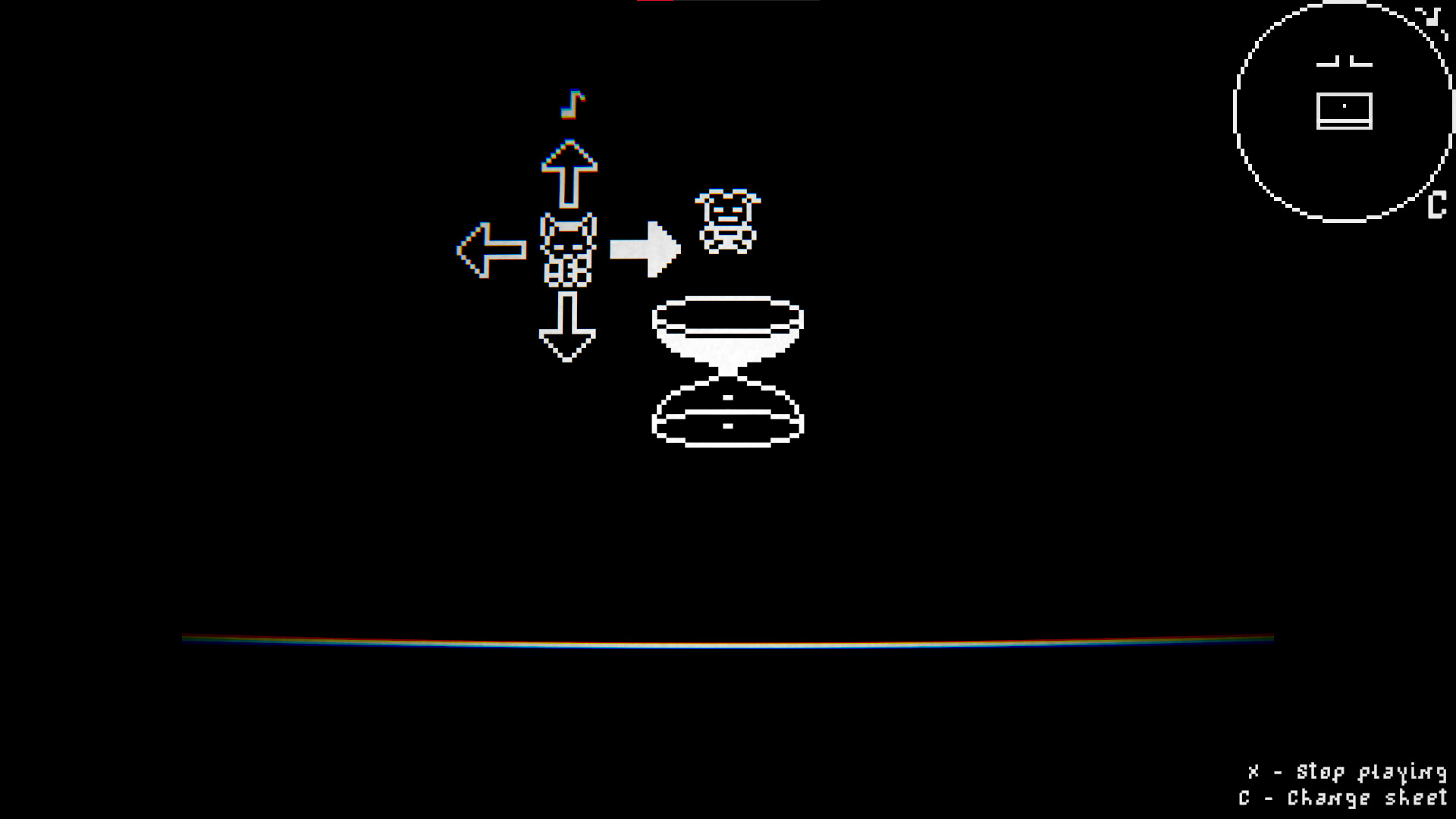
The four-directional flute prompt beside an hourglass icon, a visual cue for the darkness timer that resets solved puzzles roughly every seven minutes.Image: Spheanix via Steam -
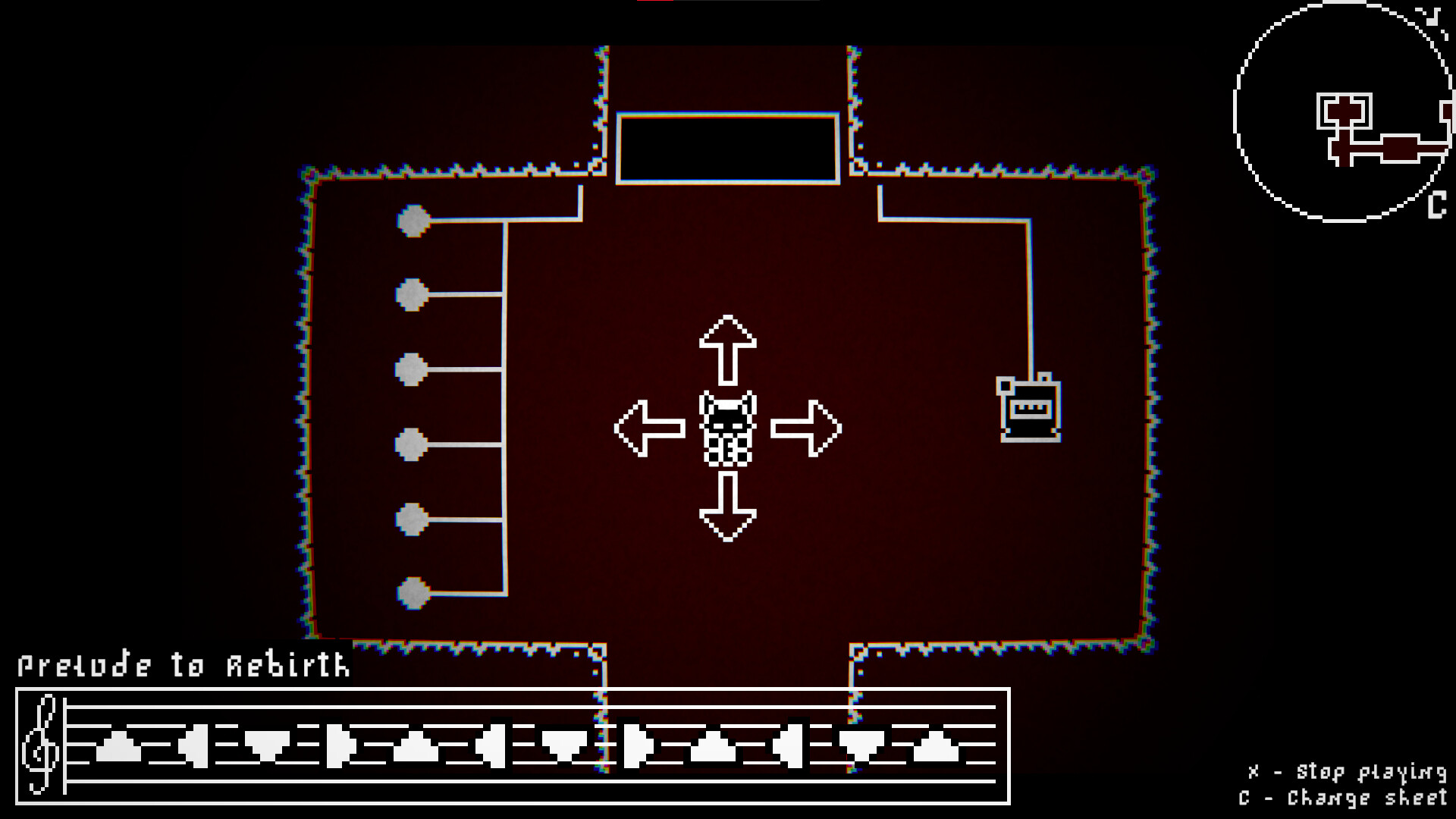
One of the game's knowledge-gated puzzle rooms, solved by playing back a melody on the flute rather than by trial and error.Image: Spheanix via Steam -
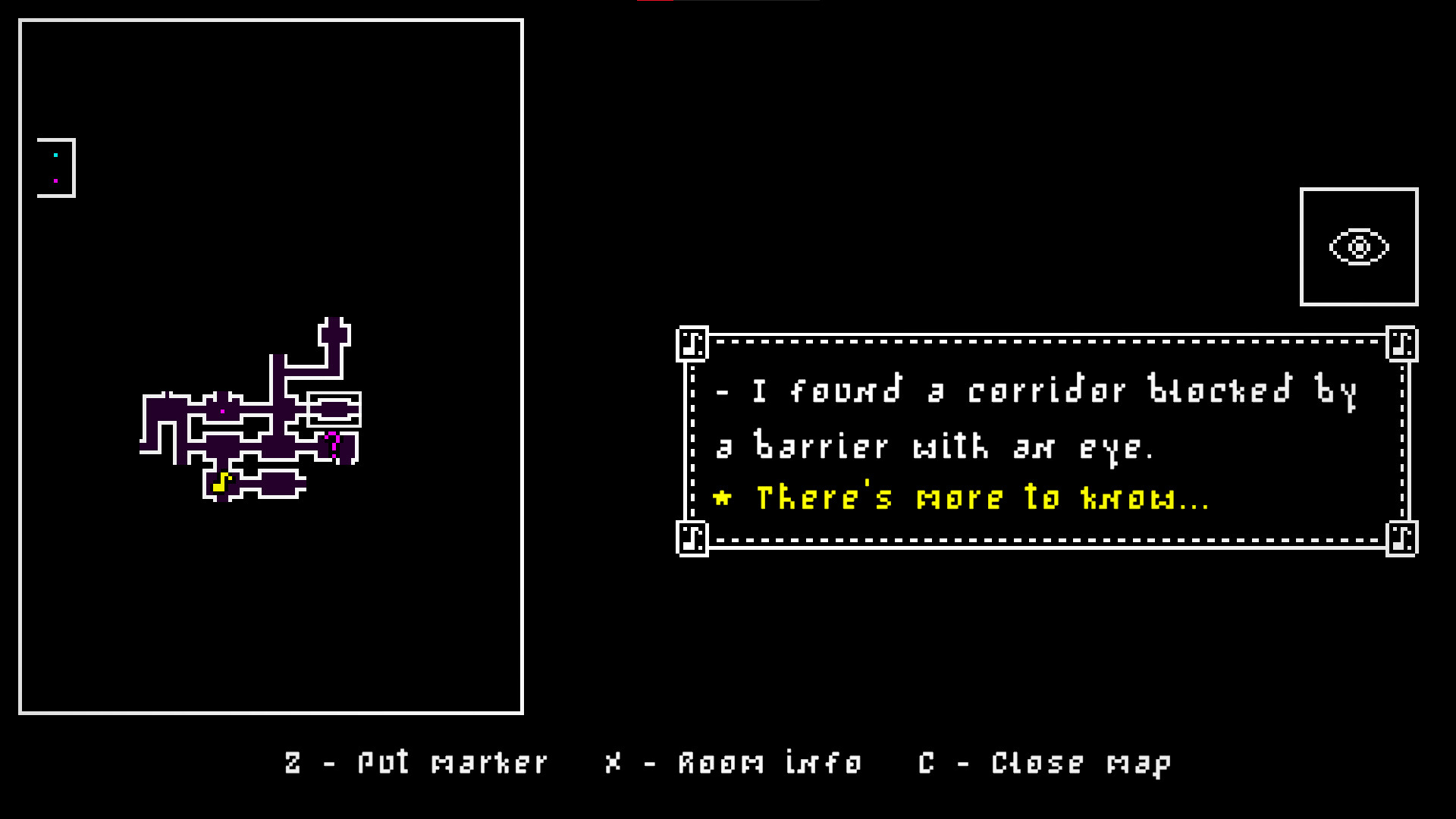
The map and journal system reviewers repeatedly credit for making the metroidbrainia's backtracking manageable, flagging exactly which rooms still hold unsolved secrets.Image: Spheanix via Steam