
Game review
Tumblebee Review
6.9 / 10
- Developer
- Agelvik
- Publisher
- Agelvik
- Released
- 17 September 2026
- Platforms
- ["Windows"]
- Genre
- Horror
A Tumbling Bumblebee Fleeing Giant Spiders Through an N64-Style Cave
Tumblebee is a short, bite-sized horror game from solo Norwegian developer Agelvik, built around a premise that's equal parts cute and unsettling: you play as a bumblebee whose family has been captured, and you must tumble, roll, and fly your way through a cave "filled with arachnid nightmares" to find and rescue them before the cave's waking predators catch you first. The whole thing is wrapped in a deliberately retro, N64-inspired low-poly aesthetic, told entirely without text or dialogue, and built around physics-driven flight-and-tumble movement rather than a conventional walk-and-run control scheme. At $6.99, it's positioned as a small, focused horror experience rather than a lengthy adventure, with a nonlinear cave layout that reviewers say produces a genuinely different route and a different string of close calls each time through.
A Perfect Score on a Very Small Sample
Tumblebee launched to 13 reviews, all 13 of them positive, for a 100% "Positive" score on Steam. Seven of the thirteen reviews sampled are in English, a bare majority, and with a launch pool this small, this snapshot should be read as an early, enthusiastic first reaction rather than a fully settled verdict — there simply isn't enough volume yet for a single dissenting voice to have shown up, let alone for any real pattern of complaints to emerge. That said, a perfect record across even a small pool, especially for a $6.99 solo-developer horror game with an unusual central hook, is a meaningfully positive signal in its own right.
Charming Bee Physics and a Genuinely Creepy Cave
The reviews that go beyond a one-line reaction are consistently enthusiastic about the specific combination of cute and creepy the game is going for. One reviewer calls it "bee-autiful," writing that it's "a mix of scary and cute" and specifically praising the PSX/N64-style visuals and sound design as exactly the kind of retro horror aesthetic they seek out. The most detailed review in the pool comes from someone who played an earlier build during the game's public playtest, comparing that experience directly to the developer's prior game Death in Abyss and describing Tumblebee as "the best animal game since Frogger." That same reviewer highlights the open-ended structure as the game's biggest strength, writing that Tumblebee "offers this in SPADES" when it comes to letting players approach each run differently, since the exact route through the cave, the player's improving skill at the tumble-and-flight movement, and the unpredictable placement of the game's spiders combine to make every playthrough feel distinct — reporting they "genuinely can't stop replaying it" despite the game's small, bite-sized scope. Multiple shorter reviews echo the same core appeal in miniature, with one simply writing "I like bees!" and another calling the game "tuff," a light, enthusiastic tone that matches a game built around a fundamentally silly premise delivered with real horror-game craft.
A Tense, Occasionally Punishing Spider-Chase Loop
The one detailed account of the game's difficulty comes from a reviewer describing a chain of bad luck rather than a design flaw: "i got chased by a giant spider... i escaped... i immediately got chased again... the spider i first got chased by came back and ate me while i was trying to escape from the other one." Rather than reading as a complaint, this account (posted as a recommendation) doubles as a demonstration of exactly what the pool's more detailed reviewers praise — spiders that can "pop up when you least expect it" and don't behave on a predictable schedule, which is clearly the intended source of tension in a short horror game built around evasion rather than combat. One reviewer with substantially longer playtime than the rest of the pool combined states plainly that the game "made me feel like I was in bee hell," a review that reads as a compliment given the context of an otherwise glowing writeup elsewhere from the same kind of dedicated player. No reviewer in this pool raises technical complaints, bugs, or control issues, though the small sample size means it's worth going in with the expectation that, as a solo-developer horror game just past launch, some rough edges may still surface as a wider audience plays it. Agelvik confirmed Steam Deck support shortly before launch, a small but notable detail for a physics-driven movement game where handheld controls could easily have been an afterthought, and the studio ran a public playtest in the weeks before release specifically to get the tumble-and-flight controls in front of players ahead of launch day.
Verdict
Tumblebee is a small, confident horror game built around a genuinely fun idea — a tumbling, flying bumblebee evading giant spiders through a moody, N64-inspired cave — executed well enough that its tiny early review pool is unanimously positive, including from at least one dedicated player who tracked the game through its public playtest and still can't stop returning to it. Its scope is unapologetically modest: this is a bite-sized experience rather than a lengthy adventure, and at $6.99 that price tag needs to be weighed against a runtime measured in a handful of tense, spider-filled sessions rather than hours of content. For horror fans drawn to short, atmospheric, mechanically distinctive experiences with real personality and a healthy dose of tension, Tumblebee's opening reception suggests it delivers exactly what it promises — just don't expect a long journey, and be ready for the cave's spiders to have their own ideas about your escape route.
Screenshots
-
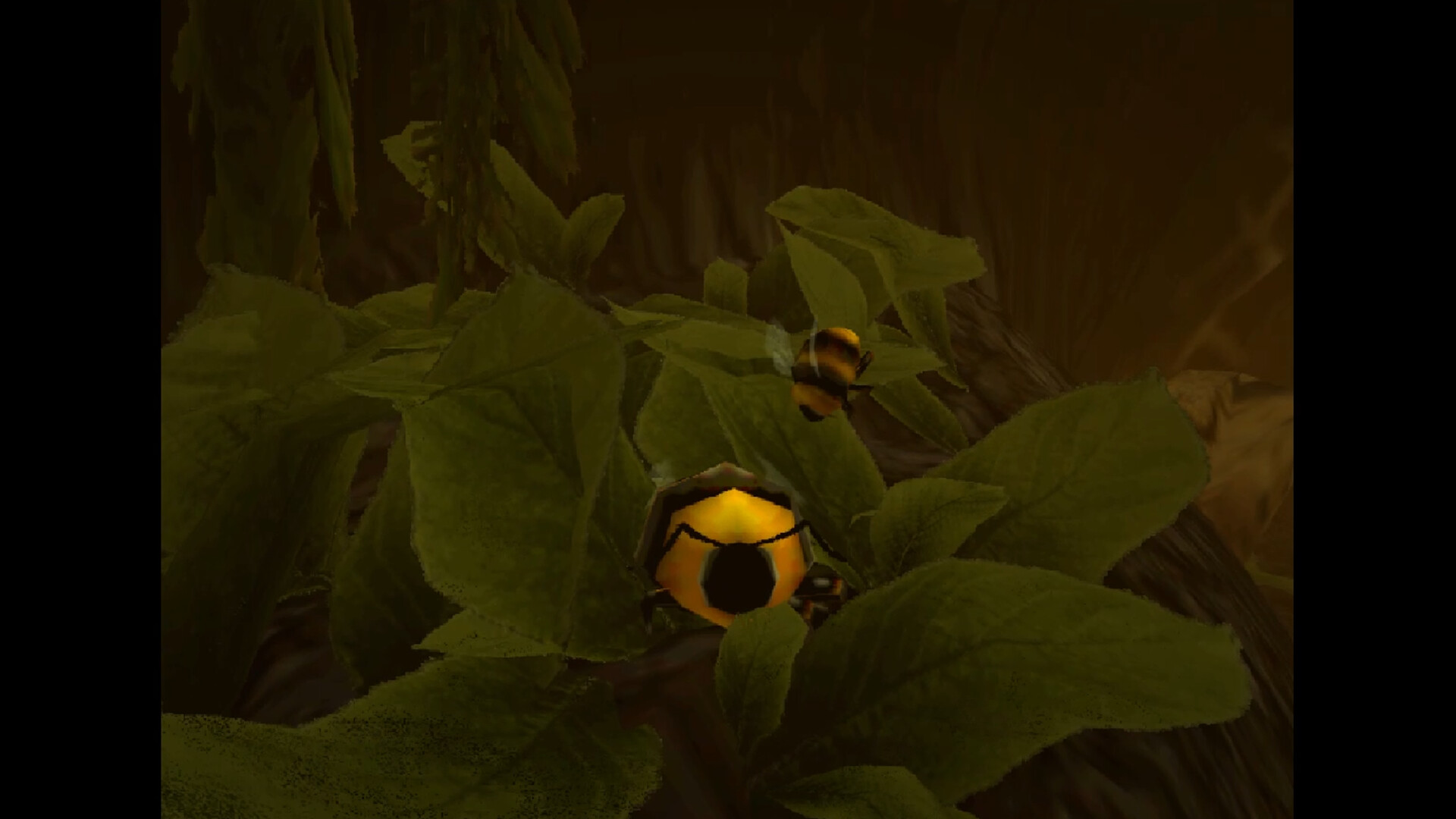
Resting among oversized leaves deep in the cave's low-poly, N64-inspired environmentImage: Agelvik via Steam -
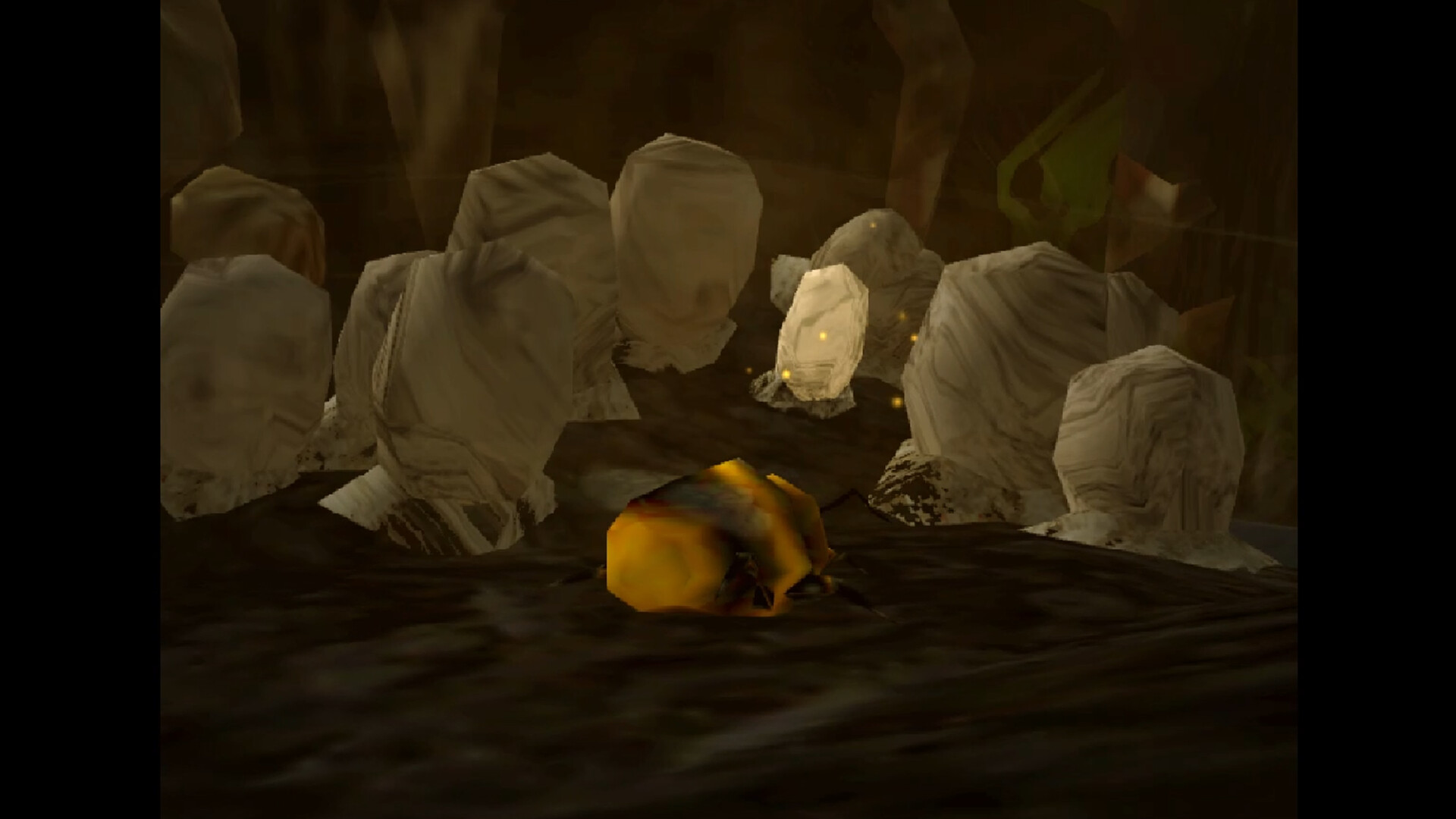
A bumblebee surrounded by ominous, faceless egg sacs deep in the spiders' lairImage: Agelvik via Steam -
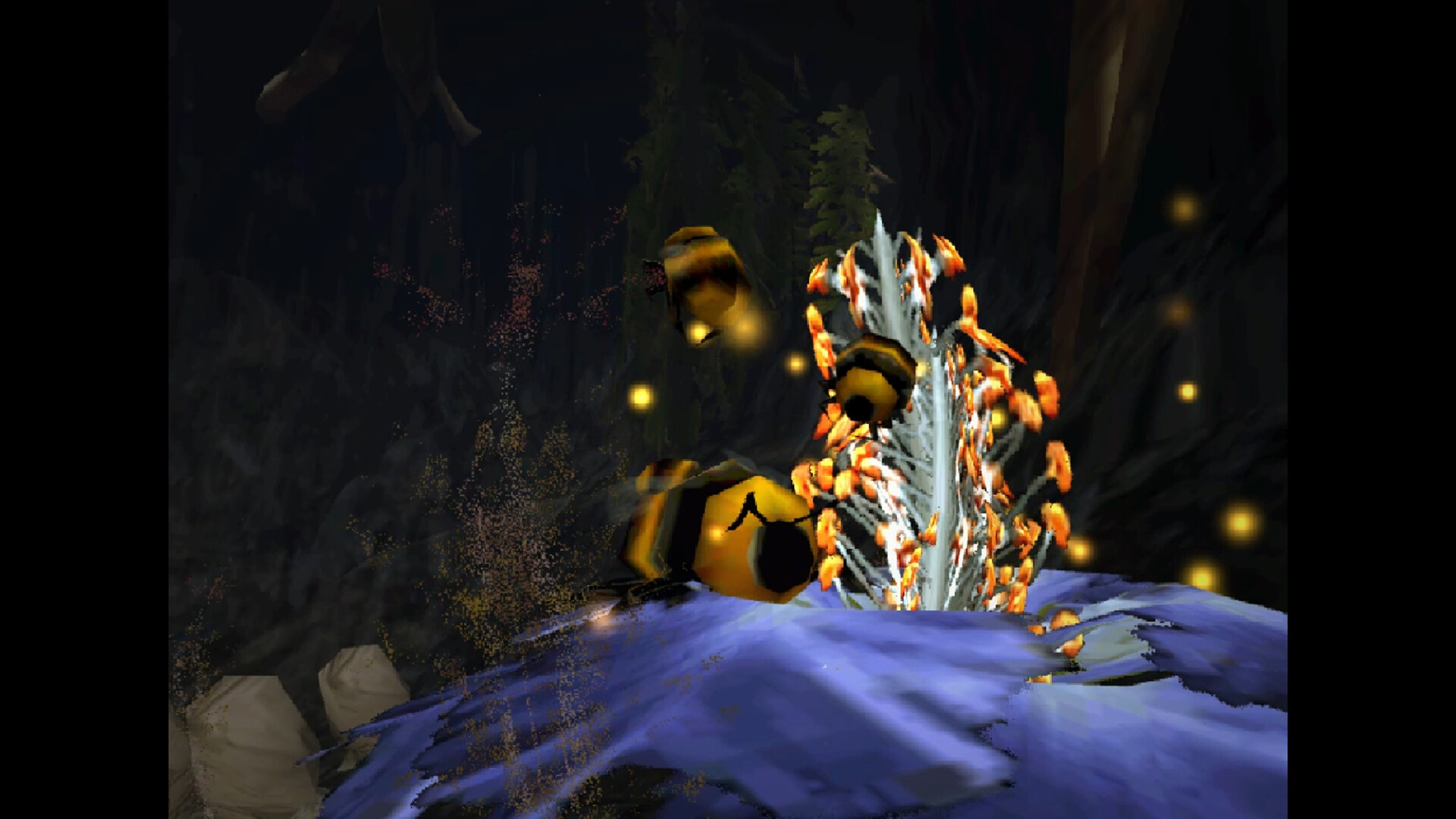
A cluster of bees near a strange glowing plant in one of the cave's more surreal outdoor-facing areasImage: Agelvik via Steam