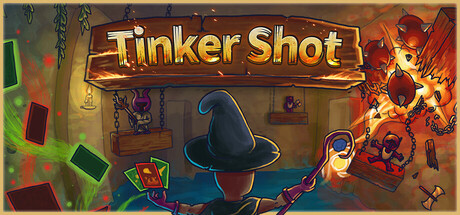
Game review
Tinker Shot Review
7.6 / 10
- Developer
- CodeRed
- Publisher
- Gamersky Games
- Released
- 16 September 2026
- Platforms
- ["Windows"]
- Genre
- RPG
Slay the Spire Meets Angry Birds, More or Less
Tinker Shot's own elevator pitch, "a turn-based skill-crafting roguelike where every fight becomes a little experiment in chaos," undersells just how odd and specific its hybrid actually feels once you're a few runs deep. More than one reviewer reaches for the same comparison independently: it plays like Angry Birds crossed with Slay the Spire, a turn-based deckbuilder skeleton wrapped around physics-driven, trajectory-aimed attacks that owe an obvious debt to Scorched Earth-style artillery games. You draft cards, sure, and you manage a hand and a run structure that will feel instantly familiar to anyone who has spent time with a roguelike deckbuilder, but when it's time to actually use a skill, you're aiming an arc, accounting for terrain, and watching your custom-built projectile bounce, split, or explode its way through the Underground Ruins.
That combination sounds like it shouldn't work, mixing careful turn-based planning with twitchy physics aiming is the kind of pitch that could easily collapse into neither genre doing its job well, but reviewers who've spent time with it come away impressed at how naturally the two halves fit together. The card-drafting layer gives you the strategic framework roguelike fans expect, while the aiming layer adds a layer of physical skill expression that a pure numbers-and-icons deckbuilder never offers. It's a genuinely novel combination for a genre that can feel over-mined at this point, and that novelty is the single biggest thing working in Tinker Shot's favor.
Building Skills From Spare Parts
The real hook, and the one CodeRed leans on hardest in its own marketing, is the skill-crafting system: rather than picking from a fixed list of pre-made abilities, you build your own skills from scratch by combining parts, effects, and upgrades. A base projectile part might get paired with a splitting effect, a burn-on-impact modifier, and a ricochet upgrade, and suddenly you've got something that behaves nothing like what any individual piece would suggest on its own. Reviewers who've dug into the system describe genuinely surprising, occasionally "delightfully broken" combinations emerging from what starts as a fairly small toolbox of parts, which is exactly the kind of emergent complexity that makes a crafting-driven roguelike worth returning to.
Because the parts, effects, and upgrades all interact with each other rather than existing in isolation, experimentation is rewarded rather than punished: a combo that looks unpromising on paper might turn out to be the run-defining discovery a few fights later. Early access to this system comes fast, within the first half hour by most accounts, which matters a lot for a roguelike; games in this genre live or die by how quickly they hand you the tools that make the loop interesting, and Tinker Shot gets there almost immediately rather than gating its best ideas behind hours of grinding.
A Little Rough Around the Interface
The most consistent point of friction reviewers raise isn't the combat or the crafting, it's the moment-to-moment act of managing your hand. Slotting a newly crafted or drawn skill card into position currently requires a manual drag, and more than one reviewer specifically asks for a double-click-to-auto-slot option to speed up what can otherwise feel like a clunky extra step between rounds, particularly once you're juggling a fuller loadout later in a run. It's a small complaint in the grand scheme, nobody frames it as a dealbreaker, but it's the kind of quality-of-life gap that stands out precisely because everything else around it, the crafting logic, the physics aiming, the combat pacing, already feels considered and deliberate.
There's a reasonable argument that some of this friction is simply what a smaller-scale indie roguelike looks like at launch: the fundamentals are sound, playtesting has clearly gone into the parts-and-effects balance, but the UI layer that ties it all together hasn't had quite the same level of polish applied to it yet. It doesn't sour the experience, but it is the one area where Tinker Shot feels less finished than the rest of the package.
A Cheap, Portable-Feeling Roguelike With Room to Grow
At $3.74 during its launch discount off a $4.99 list price, value barely comes up as a point of contention, reviewers uniformly describe it as cheap for what's here, and more than one specifically imagines it working beautifully as a phone or tablet game given how bite-sized and pick-up-friendly individual runs feel. That portable-game instinct says a lot about the pacing: fights resolve quickly, runs don't overstay their welcome, and the aiming-based combat translates naturally to short, focused sessions rather than demanding long, uninterrupted blocks of time.
Tinker Shot also arrives with a reasonably complete feature set for a small-studio release: Steam Achievements, adjustable difficulty, a mouse-only control option, a mode that removes timed input pressure entirely, cloud saves, and Remote Play Together support all ship at launch. Windows is currently the only supported platform, and the single-player campaign is the whole offering, there's no separate multiplayer mode beyond the shared-input Remote Play option, but for a roguelike built around one well-executed central idea, that scope feels appropriate rather than thin. One reviewer mentions having followed the game's development for years leading up to release, and that kind of patient, sustained interest from its own community is a reasonable proxy for confidence in where CodeRed is likely to take it post-launch, with a system this open-ended, new parts and effects added down the line could meaningfully extend the crafting depth without requiring any structural changes to the game itself.
Verdict
Tinker Shot takes a genuinely unusual pairing, turn-based deckbuilding and physics-based artillery aiming, and makes it work far better than the pitch alone suggests it should, anchored by a skill-crafting system that rewards experimentation almost from the first run. The card-slotting interface could use a quality-of-life pass, and there's not a huge amount of content beyond the core loop at launch, but the combat itself is inventive, the price is close to an impulse buy, and the "Angry Birds meets Slay the Spire" comparison that keeps coming up in reviews is, if anything, underselling how well the two halves have been stitched together.
Pros:
- Genuinely novel hybrid of turn-based deckbuilding and physics-based artillery aiming
- Skill-crafting system produces surprising, sometimes wild combinations from a small set of parts
- Hands you the best parts of the system within the first half hour rather than gating it behind grinding
- Very cheap at launch, with runs paced well for short, portable-feeling sessions
- Solid day-one feature set: achievements, adjustable difficulty, mouse-only and no-timed-input options, cloud saves, Remote Play Together
Cons:
- Card-slotting interface requires manual drag-and-drop with no faster auto-slot option
- Windows-only at launch with no Mac or Linux support
- Single-player only, aside from shared-input Remote Play
- Content beyond the core crafting loop is relatively light at launch
- Physics-based aiming layer may not appeal to players who want a purely strategic deckbuilder
Screenshots
-
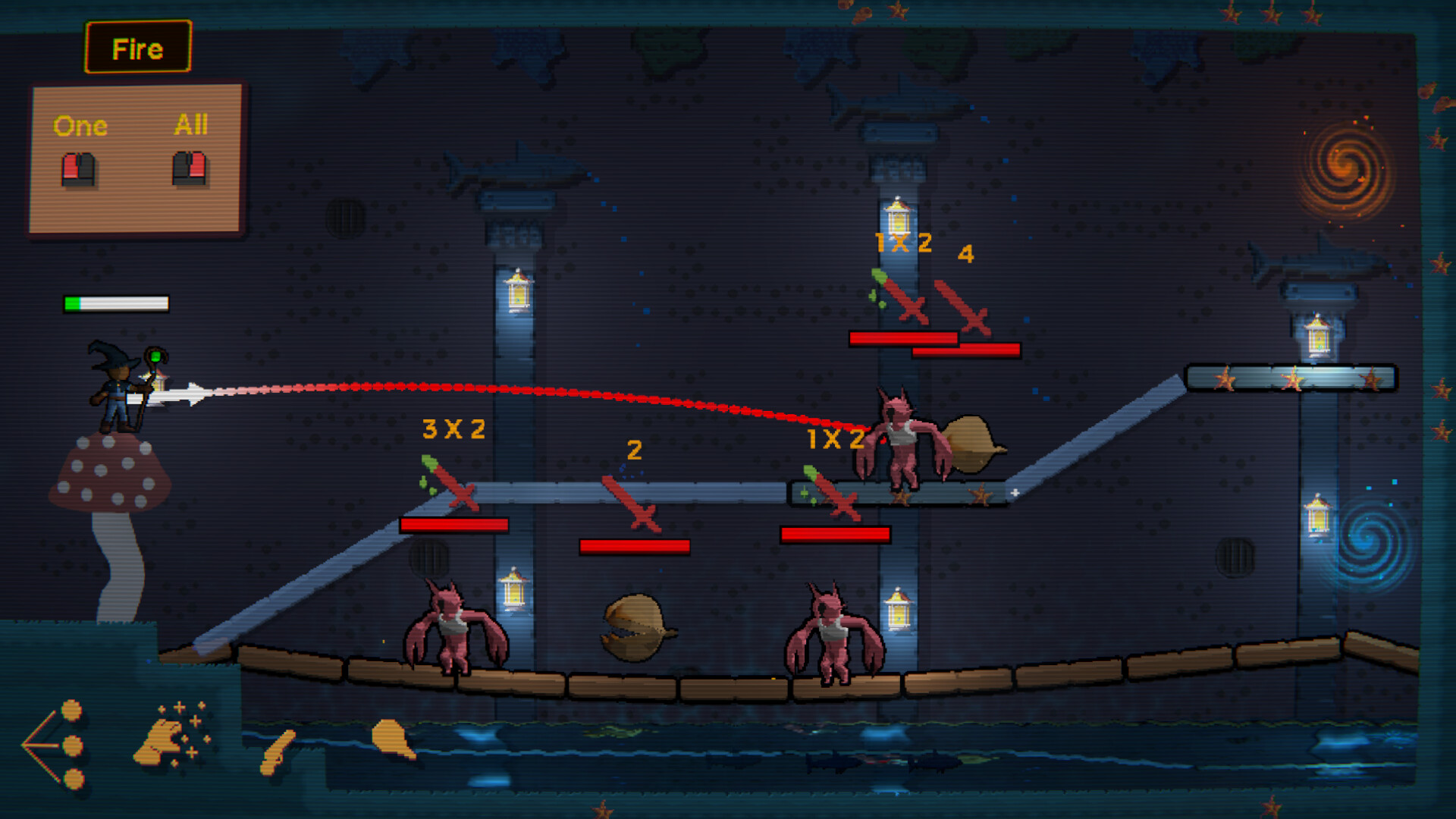
Lining up an arcing shot at a row of enemiesImage: CodeRed -
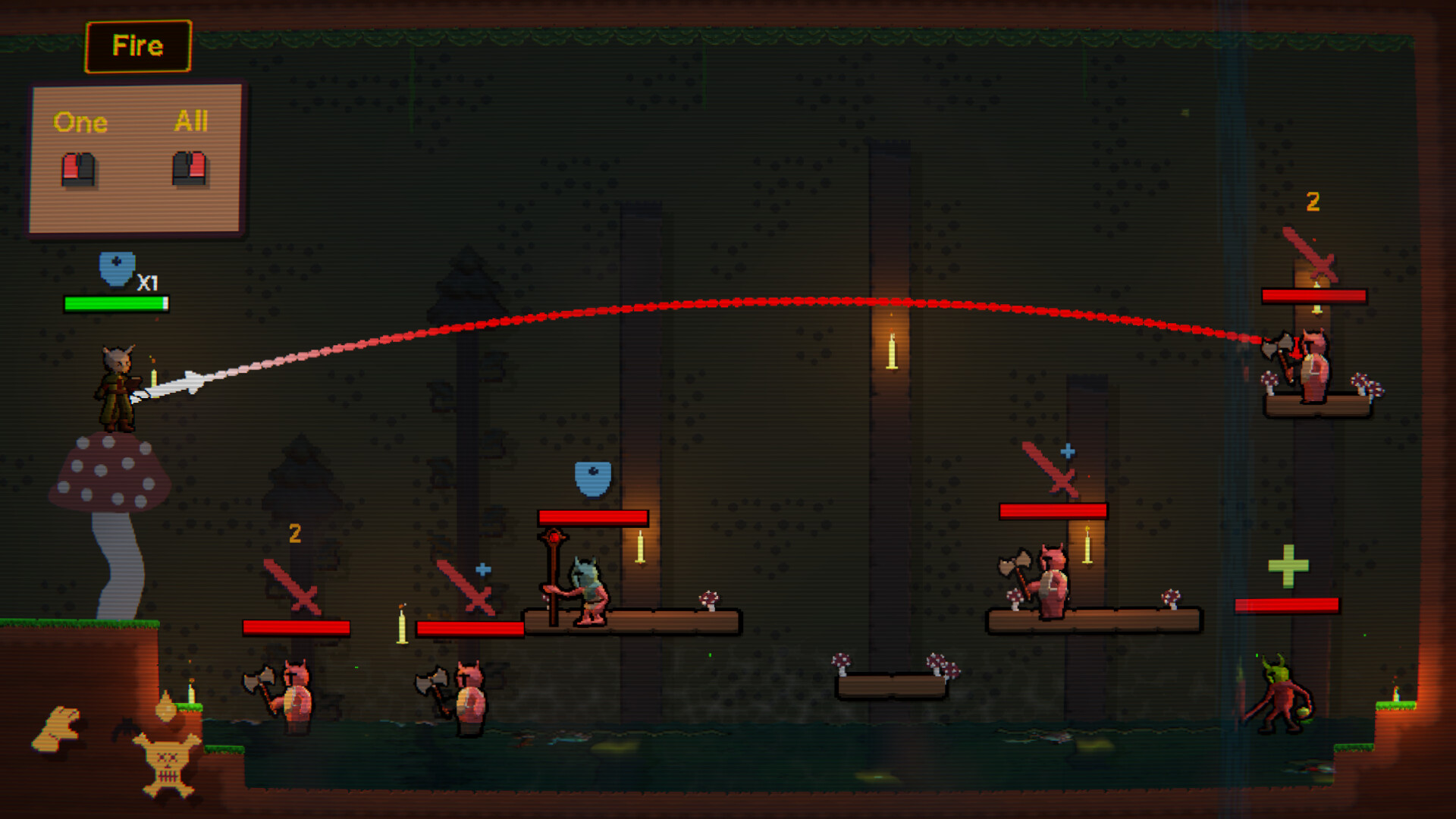
Taking aim at a cluster of axe-wielding enemiesImage: CodeRed -
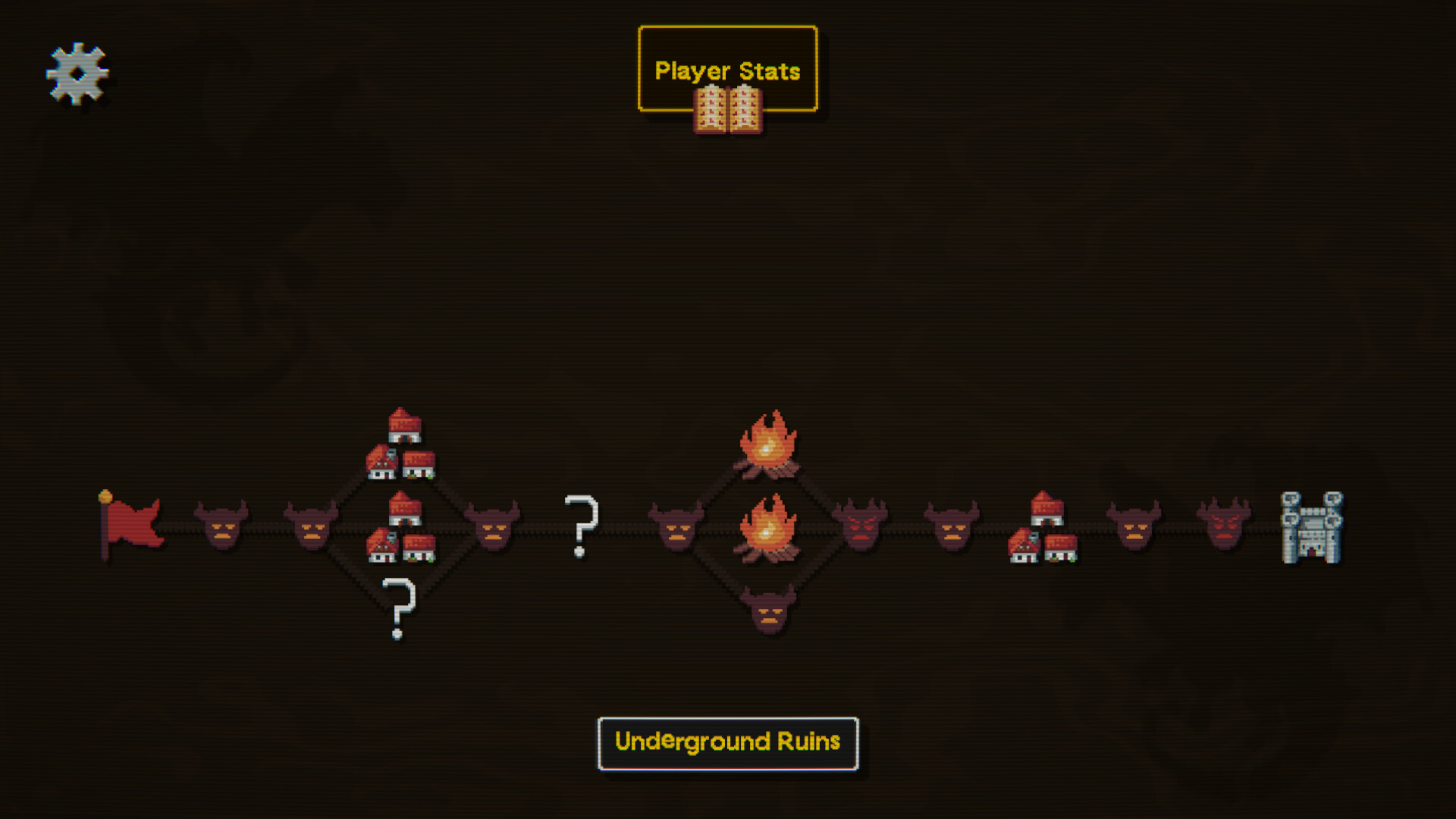
Choosing a path through the Underground RuinsImage: CodeRed -
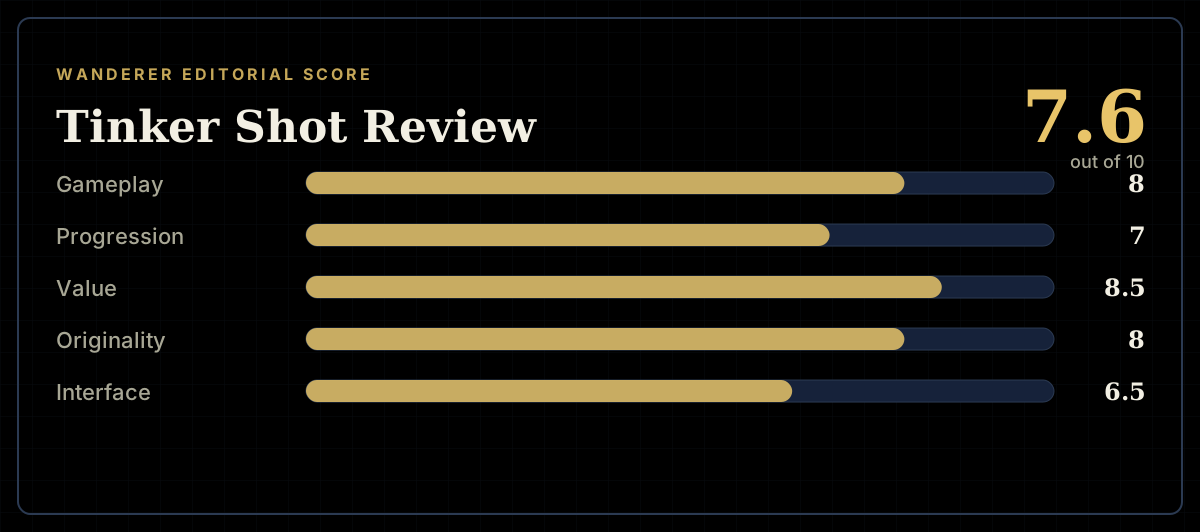
How the review scores each part of the gameWanderer Editorial -
The short versionWanderer Editorial