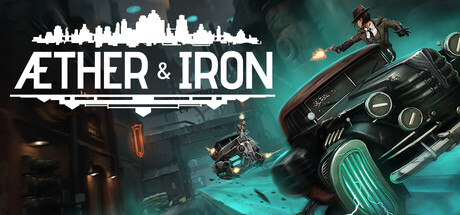
Game review
Aether & Iron
6.4 / 10
- Developer
- Seismic Squirrel
- Publisher
- Seismic Squirrel
- Released
- 30 March 2026
- Platforms
- ["Windows"]
- Genre
- RPG
- Monetisation
- Paid
- Players
- Single-player
The short version
Aether & Iron is a striking, richly voiced decopunk noir with a genuinely original hook, undercut by a vehicle combat system and choice structure that rarely live up to the strength of its writing and world.
Biggest strengths
- A genuinely original decopunk noir setting, with a floating 1930s New York split between wealthy Highers and desperate Lowers, brought to life by excellent hand-drawn art and full voice acting
- Sharp, hardboiled narration from protagonist Gia Randazzo and a supporting cast that reviewers consistently single out as some of the best-written characters in the narrative RPG space this year
- A distinctive turn-based vehicle combat system built around lanes, ramming, and positioning that several reviewers compare favourably to nothing else currently on the market
Biggest weaknesses
- Skill checks and dialogue choices frequently turn out to be cosmetic, with the plot railroading toward the same outcomes regardless of what the player picks
- Vehicle combat and inventory management draw persistent complaints about shallow tactics, uneven difficulty spikes, and a cumbersome garage and item-grid interface
- Launched with significant technical problems, including lost save files, audio dropouts, and performance stutter, that required several months of patches to bring under control
Who it's for: Readers first, gamers second: anyone who wants a fully voiced, richly written noir visual novel and is willing to treat its turn-based car combat as an occasional diversion rather than the main event.
Our recommendation: Play the free demo before buying. If you fall for Gia's narration and the flying-city setting in the first hour, the rest of the game delivers more of the same; if the writing doesn't hook you immediately, the combat alone won't carry it.
6.4 / 10
A Noir Smuggler's Tale in the Clouds
Aether & Iron is the debut game from Seismic Squirrel, a decopunk narrative RPG set in an alternate 1930s where the discovery of the titular red aether has lifted entire districts of New York into the sky. Players take the role of Gia Randazzo, a hardened smuggler dragged into a citywide conspiracy after a courier job for a naive young scientist named Nellie goes catastrophically wrong. What begins as a simple delivery spirals into a fight against the city's ruling crime lords, known as Barons, who control the floating Highers while the Lowers below scrape by in their shadow. Released March 30, 2026, the game arrives fully voiced from top to bottom, a rarity for a project of its scale, and bills itself as a hybrid of visual novel storytelling and tactical, vehicle-based combat.
Reviewers are near-unanimous that the setting and presentation are the game's strongest asset. The hand-drawn art, character portraits, and rendered environments consistently draw praise, and several reviewers compare the atmosphere favourably to genre touchstones like Disco Elysium and the recently released Esoteric Ebb, while noting Aether & Iron carves out its own identity through its noir-pulp tone and unusually detailed worldbuilding around class division, floating infrastructure, and a society built on a resource nobody fully understands.
Beautiful Prose, Uneven Choices
The bulk of Aether & Iron plays out as dialogue-driven scenes punctuated by skill checks, in the vein of Disco Elysium, with stats governing Gia's chances of talking her way past guards, reading a room, or working a con. The writing draws the most consistent praise in the game's reviews: Gia's hardboiled internal narration, the chemistry between her and her crew, and standout scenes like her fraught reunion with an ex-partner are repeatedly called some of the best character writing in the genre this year. Multiple reviewers highlight the sound design and voice direction as elevating otherwise ordinary scenes into something memorable.
That praise comes with a consistent asterisk, though: reviewers on both sides of the recommendation line describe the game's choices as largely cosmetic. Skill checks tend to unlock minor flavor text or small resource gains rather than meaningfully branching the story, several key plot beats happen regardless of what the player decides, and one particular supporting character, Nellie, repeatedly overrides player agency at pivotal moments, a design choice some reviewers found thematically justified and others found simply frustrating. The story's handling of its 1920s-30s setting, and particularly its choices about which real-world social themes to foreground or leave out, was also a lightning rod, with a vocal minority of reviewers taking issue with the developers' stated approach to representation in interviews and store-page communication. For readers who come mainly for the atmosphere and prose, none of this substantially dims the experience; for players expecting genuine narrative branching, it's a recurring source of disappointment.
Turn-Based Car Combat, For Better or Worse
Combat replaces the expected foot soldiers with a party of three vehicles fighting across a lane-based highway grid, using action points to ram opponents into obstacles, trigger status effects, and pull off class-specific abilities tied to light, medium, and heavy car builds. It's a genuinely novel idea, and reviewers who enjoyed it call the positioning and hazard interactions some of the freshest tactical combat they've seen in the genre recently. But an equally large group describes the system as underbaked: encounters marketed as random are almost entirely scripted, resources for repairs and upgrades are scarce enough that experimentation feels punishing, and difficulty spikes hard and unpredictably at boss fights, several of which are explicitly singled out as unfair gear checks that force a respec or a lengthy replay of preceding dialogue. Because Gia's defeat is an automatic game over regardless of her allies' status, much of the tactical decision-making reduces to protecting one character rather than deploying a full team, which several reviewers found undermined the system's own depth.
A Rough Launch, Slowly Smoothed
Aether & Iron's technical state at launch is a recurring theme across both positive and negative reviews. Players describe corrupted or lost save files, audio dropouts mid-scene, significant lag even during static dialogue sequences, and at least one softlock caused by a vendor's inventory failing to refresh. Several reviewers who ultimately recommend the game are explicit that they're doing so despite these problems, crediting the developer with fast, regular patches over the months following release that addressed the worst save-corruption bugs and improved load times. The inventory and garage management systems draw near-universal criticism regardless of a reviewer's overall verdict: a cluttered item grid, no easy way to compare currently equipped parts against what's for sale, and a currency economy stingy enough that most players finish the game without ever affording the vehicles' higher-tier equipment.
Verdict
Aether & Iron is an ambitious, distinctive debut that succeeds most clearly as a piece of writing: its decopunk noir setting, voice cast, and central smuggler-turned-reluctant-hero are strong enough to carry the game for a large share of its audience, even when the systems wrapped around that story don't fully deliver. The vehicle combat is a genuinely interesting idea that too often plays out as either trivial or unfairly spiky, the illusion of meaningful choice wears thin the longer the story goes on, and a rocky launch cost the game real goodwill before months of patches brought it up to a more stable standard. At $24.99 for a 25-to-50-hour narrative RPG, it's a reasonable ask for players who prioritize story and atmosphere over tight systems, but anyone hoping for Disco Elysium-level narrative consequence or genuinely tactical combat should look elsewhere first.
Pros and cons
Pros
- A genuinely original decopunk noir setting, with a floating 1930s New York split between wealthy Highers and desperate Lowers, brought to life by excellent hand-drawn art and full voice acting
- Sharp, hardboiled narration from protagonist Gia Randazzo and a supporting cast that reviewers consistently single out as some of the best-written characters in the narrative RPG space this year
- A distinctive turn-based vehicle combat system built around lanes, ramming, and positioning that several reviewers compare favourably to nothing else currently on the market
Cons
- Skill checks and dialogue choices frequently turn out to be cosmetic, with the plot railroading toward the same outcomes regardless of what the player picks
- Vehicle combat and inventory management draw persistent complaints about shallow tactics, uneven difficulty spikes, and a cumbersome garage and item-grid interface
- Launched with significant technical problems, including lost save files, audio dropouts, and performance stutter, that required several months of patches to bring under control
Screenshots
-
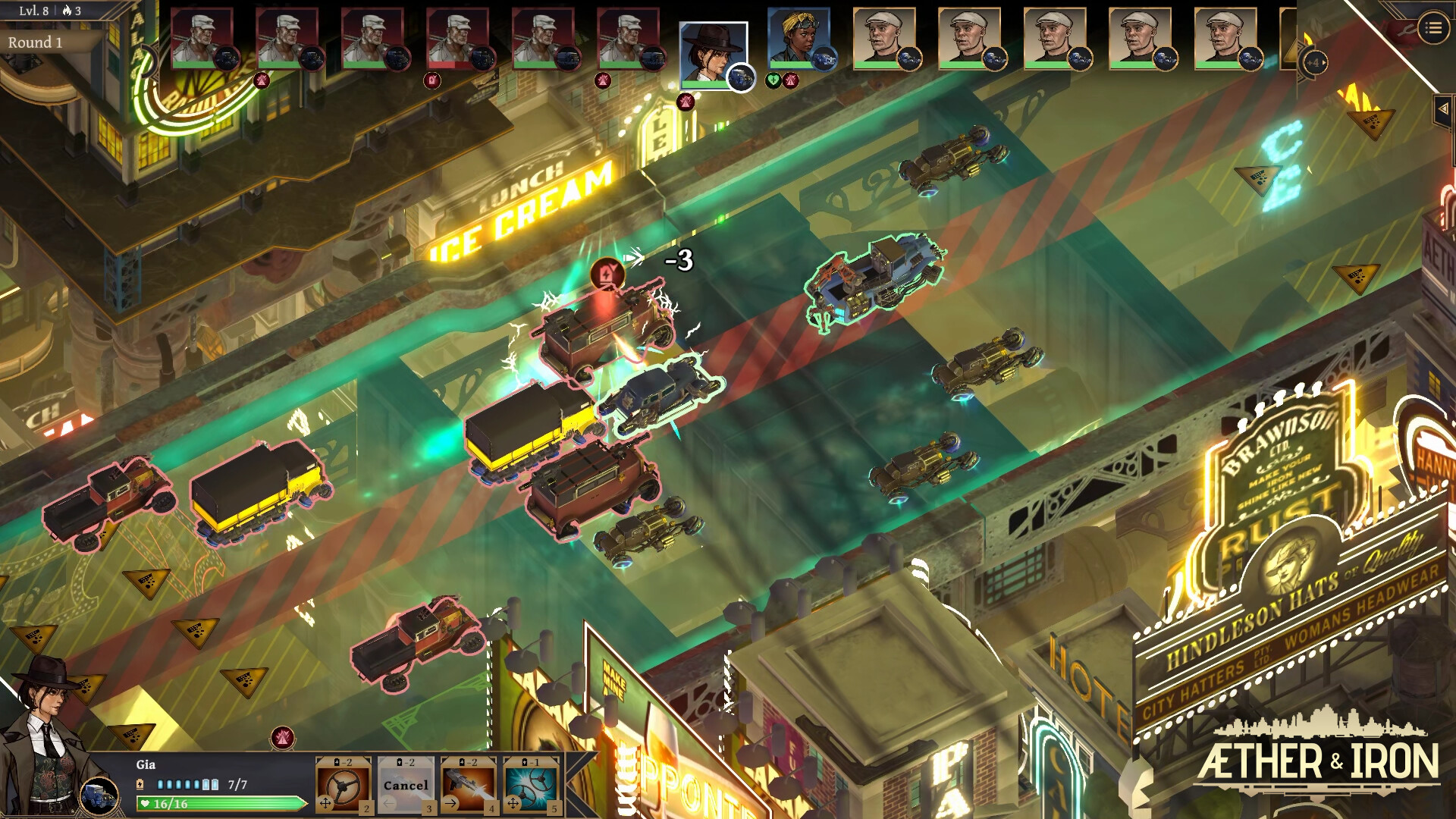
Combat unfolds across lane-based highway grids, with positioning and ramming as central tacticsImage: Seismic Squirrel -
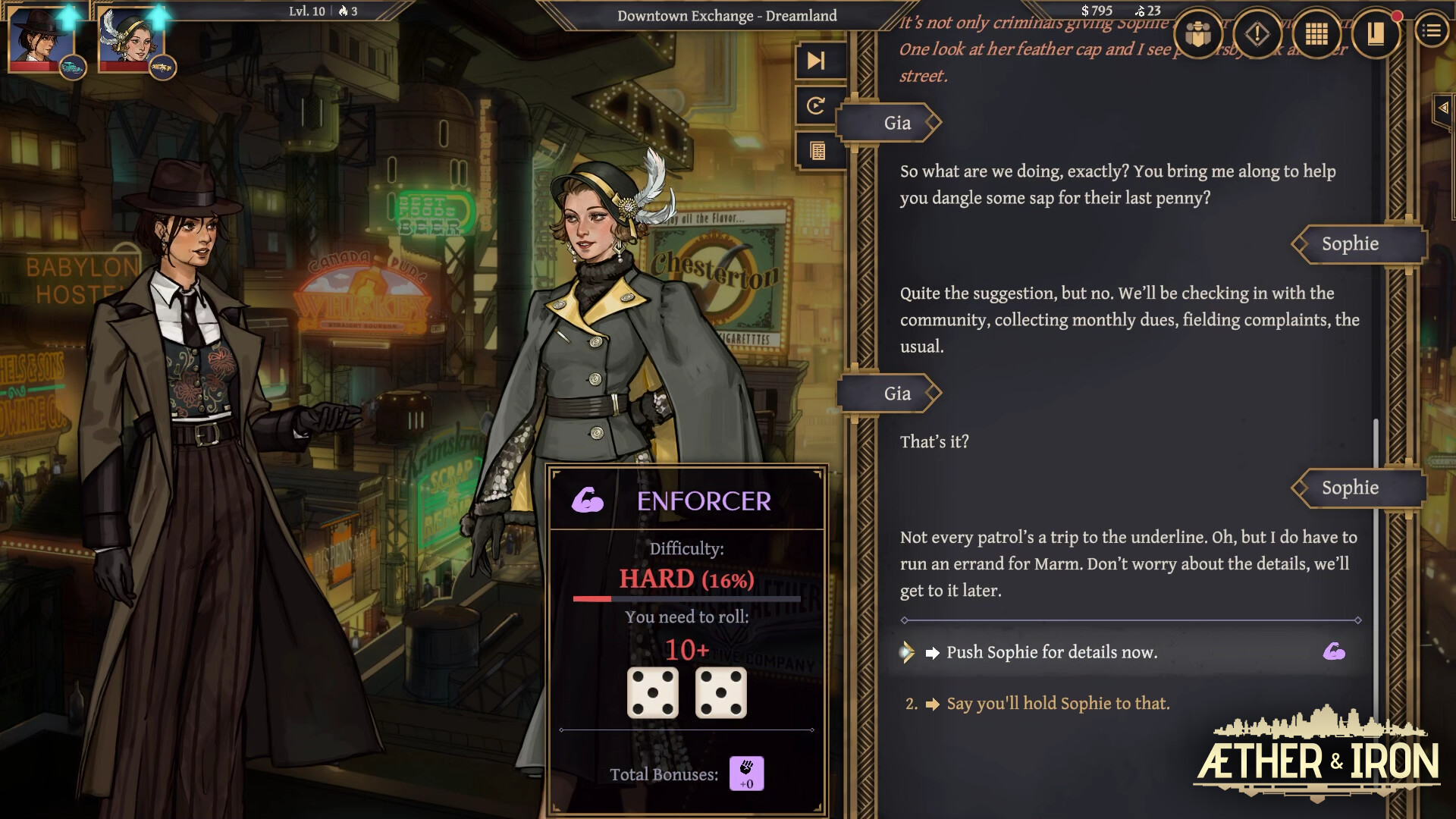
Dialogue scenes are built around dice-based skill checks tied to Gia's statsImage: Seismic Squirrel -
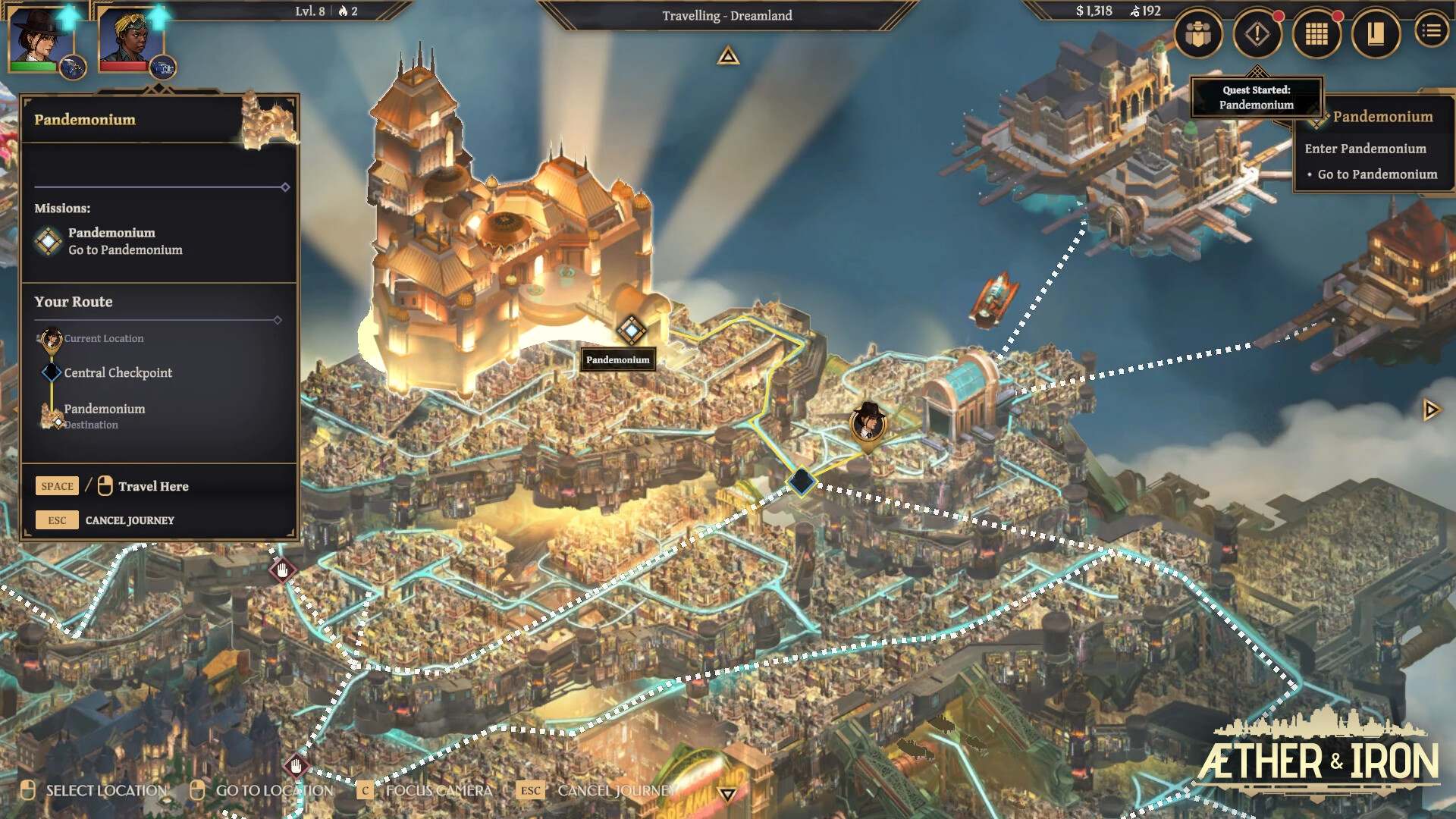
Travel between the game's floating districts plays out on a stylised overhead city mapImage: Seismic Squirrel -
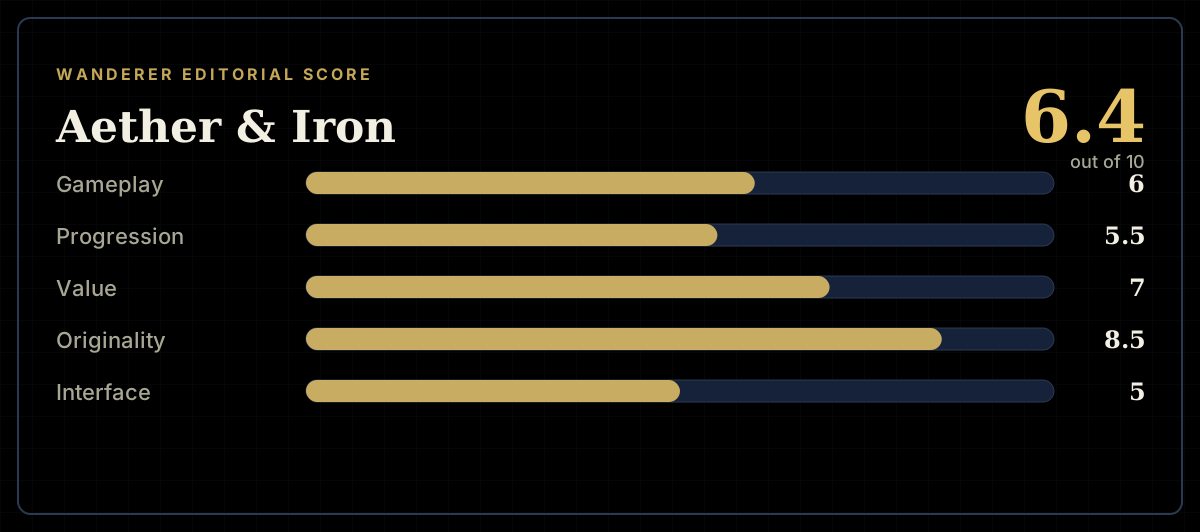
How the review scores each part of the gameWanderer Editorial -
The short versionWanderer Editorial