Game review
Banquet for Fools
6.4 / 10
- Developer
- Hannah and Joseph Games
- Publisher
- Hannah and Joseph Games
- Released
- 5 March 2026
- Platforms
- ["Windows"]
- Genre
- RPG
- Monetisation
- Paid
- Players
- Single-player
The short version
Banquet for Fools is one of the most singular-looking and singular-feeling RPGs to release in 2026, a claymation dark fairy tale with real ambition behind its refusal to hold the player's hand, but its hybrid real-time-with-pause combat and deliberately opaque systems left as many players furious as they left enchanted.
Biggest strengths
- A striking, completely original claymation-and-marionette art style that reviewers repeatedly compare to The Dark Crystal, unlike almost anything else in the genre
- Dense, lived-in worldbuilding and lore built by a two-person team, with a paganistic setting, distinct races, and quests that reward genuine attention and note-taking
- An ambitious party-combat system with rally attacks, pinning, charging, and formation techniques that clicks into something genuinely satisfying once learned
Biggest weaknesses
- A real-time-with-pause combat system many reviewers found confusing, poorly targeted, and either too hard or trivially easy depending on party build
- No quest log, no map markers, and no repeatable dialogue by design, which some players found immersive and others found actively hostile
- Diablo-style grid inventory management with no autosort, a stingy currency economy, and lingering Early Access rough edges like settings menus still labelled accordingly
Who it's for: Patient CRPG veterans who miss the unforgiving, notebook-and-pencil design of 80s and 90s RPGs and are willing to fight through a genuinely strange combat system to get to a world worth exploring.
Our recommendation: Try the demo or watch gameplay first. If the claymation art style and no-hand-holding design philosophy appeal to you, this is a deep and rewarding 50+ hour adventure; if targeting and inventory friction sound exhausting, it will wear you down fast.
6.4 / 10
Four Guards, One Vanished Village
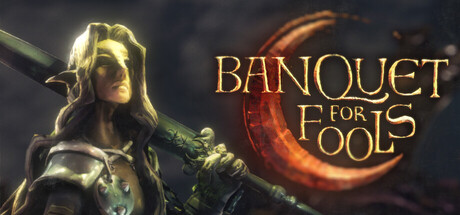
Banquet for Fools is a party-based dark fantasy RPG from Hannah and Joseph Games, the two-person studio formerly known as Whalenought Studios, whose earlier cult titles Serpent in the Staglands and Mechajammer share its setting. Released on March 5, 2026 after a period in Early Access, it drops players into the role of four guards, called Vollings, sent by their House leader to investigate the disappearance of the entire population of a farming village on the isolated island of Invimona. Centuries earlier, the island's pantheon of gods wiped each other out in a cataclysm known as the Silence, leaving its people to rely on shrine deities, witches, and dryads, and to live under the constant threat of the restless dead.
Reviewers consistently praise the strength of that premise and its execution: paganistic, lived-in, and unlike almost anything else on the market. The claymation, marionette-like art style draws constant comparisons to Jim Henson's The Dark Crystal, and several reviewers single it out as one of the most distinctive things they've seen in the genre in years, describing a world that feels simultaneously whimsical and genuinely unsettling.
Notes, Not Markers
The most divisive design decision in Banquet for Fools is its refusal to hold the player's hand in almost any conventional sense. There is no quest log, no map markers, no repeatable NPC dialogue, and no automatic journal. Instead, players are given an in-game notebook and expected to write down clues, directions, and objectives themselves, exactly as older CRPGs like the Infinity Engine classics or early Ultima and Might and Magic games demanded. For a substantial portion of reviewers, this is the game's single best feature: it forces genuine engagement with the world, rewards careful listening and exploration, and creates a sense of discovery modern RPGs have largely abandoned. Several reviewers explicitly call the resulting immersion a highlight, describing dozens of hours spent piecing together lore about the setting's undead problem, its vegetarian taboos, and its shrine-based faith from scattered NPC hints. For others, the same system reads as needless friction dressed up as design philosophy; one detailed critical review calls it "hostile to the player," arguing that a journal isn't a crutch for lazy players but an acknowledgment that a player's real life continues outside the game, and that stepping away for even a day can turn painstakingly written notes into indecipherable gibberish.
A Combat System That Splits the Room
Combat borrows from real-time-with-pause CRPGs like Baldur's Gate, but reworks it into something closer to a party brawler: units fill an action bar based on speed, and the player can freeze time to issue one command through a radial menu before resuming. Layered on top are rally attacks, pinning, charging, and formation "harmony" techniques that let a coordinated party chain devastating combos, alongside a system that rewards non-lethal takedowns and a spellcrafting mechanic where players physically draw runes to name their own spells. Enthusiastic reviewers describe this as one of the few RTWP systems that actually rewards active micromanagement rather than punishing it, comparing the flow favourably to Parasite Eve or Vagrant Story once its rhythm clicks. But an almost equally large group of reviewers describe the same system as a confused hybrid that satisfies neither real-time nor turn-based fans: a clunky radial targeting ring that's awkward to aim during combat, global cooldowns that leave allies standing idle, and encounters that frequently devolve into being swarmed by cheap, high-health hordes rather than facing tactically interesting fights. Multiple reviewers who requested refunds cite the combat specifically, calling it inconsistent about executing selected commands and describing early fights as punishing not because they're clever, but because the controls fight back.
Ambition With Rough Edges
Character progression uses a usage-based skill system, where the abilities used most often during a level-up window grow fastest, which reviewers who embraced it call an unusually organic way to shape a build, and reviewers who didn't call an opaque trap that locks players into their first few hours of choices with an expensive, punishing respec cost. Inventory management draws near-universal complaints: a Diablo-style grid with no autosort across four characters' worth of loot, cluttered further by keys and documents that all look identical. The economy is consistently described as stingy, with high-tier gear priced well out of reach for most of a playthrough. And despite officially exiting Early Access, several reviewers note visible leftovers from that period, including options menus still labelled "Early Access," performance stutter in crowded fights, and a story that some found ends abruptly without clear signposting, cutting off dozens of unfinished side quests without warning.
Verdict
Banquet for Fools is a genuinely ambitious, visually unlike-anything-else CRPG built by just two developers, and it earns comparisons to Morrowind, Baldur's Gate, and Dark Crystal-era dark fantasy without ever feeling derivative. Its note-taking, no-hand-holding design and rally-driven party combat will feel like a revelation to the right player, several reviewers call it a genre highlight and a personal game of the year, but the same systems left an equally vocal group of players frustrated, refunding, or simply unable to parse what the game wanted from them. This is a rare case where the negative and positive reviews are both telling the truth about the same game; whether you'll land in the first camp or the second depends almost entirely on how much friction you're willing to tolerate in exchange for genuine strangeness. At $19.99 for a 50-to-100-hour adventure, the asking price is fair either way, but this is not a game to buy on the strength of a trailer alone.
Pros and cons
Pros
- A striking, completely original claymation-and-marionette art style that reviewers repeatedly compare to The Dark Crystal, unlike almost anything else in the genre
- Dense, lived-in worldbuilding and lore built by a two-person team, with a paganistic setting, distinct races, and quests that reward genuine attention and note-taking
- An ambitious party-combat system with rally attacks, pinning, charging, and formation techniques that clicks into something genuinely satisfying once learned
Cons
- A real-time-with-pause combat system many reviewers found confusing, poorly targeted, and either too hard or trivially easy depending on party build
- No quest log, no map markers, and no repeatable dialogue by design, which some players found immersive and others found actively hostile
- Diablo-style grid inventory management with no autosort, a stingy currency economy, and lingering Early Access rough edges like settings menus still labelled accordingly
Screenshots
-
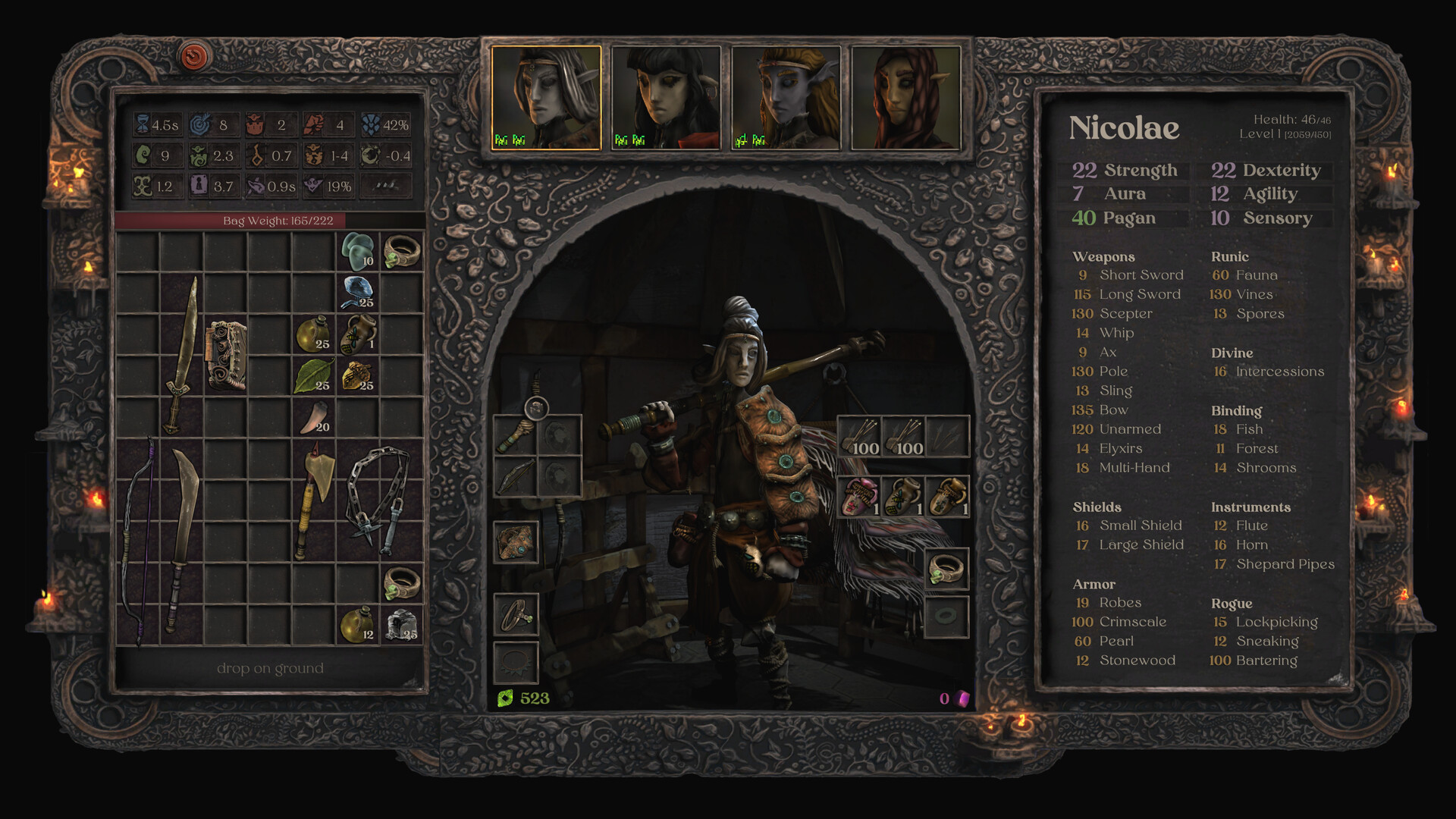
Character screens expose a dense stat and skill list, with inventory managed on a cluttered item gridImage: Hannah and Joseph Games -
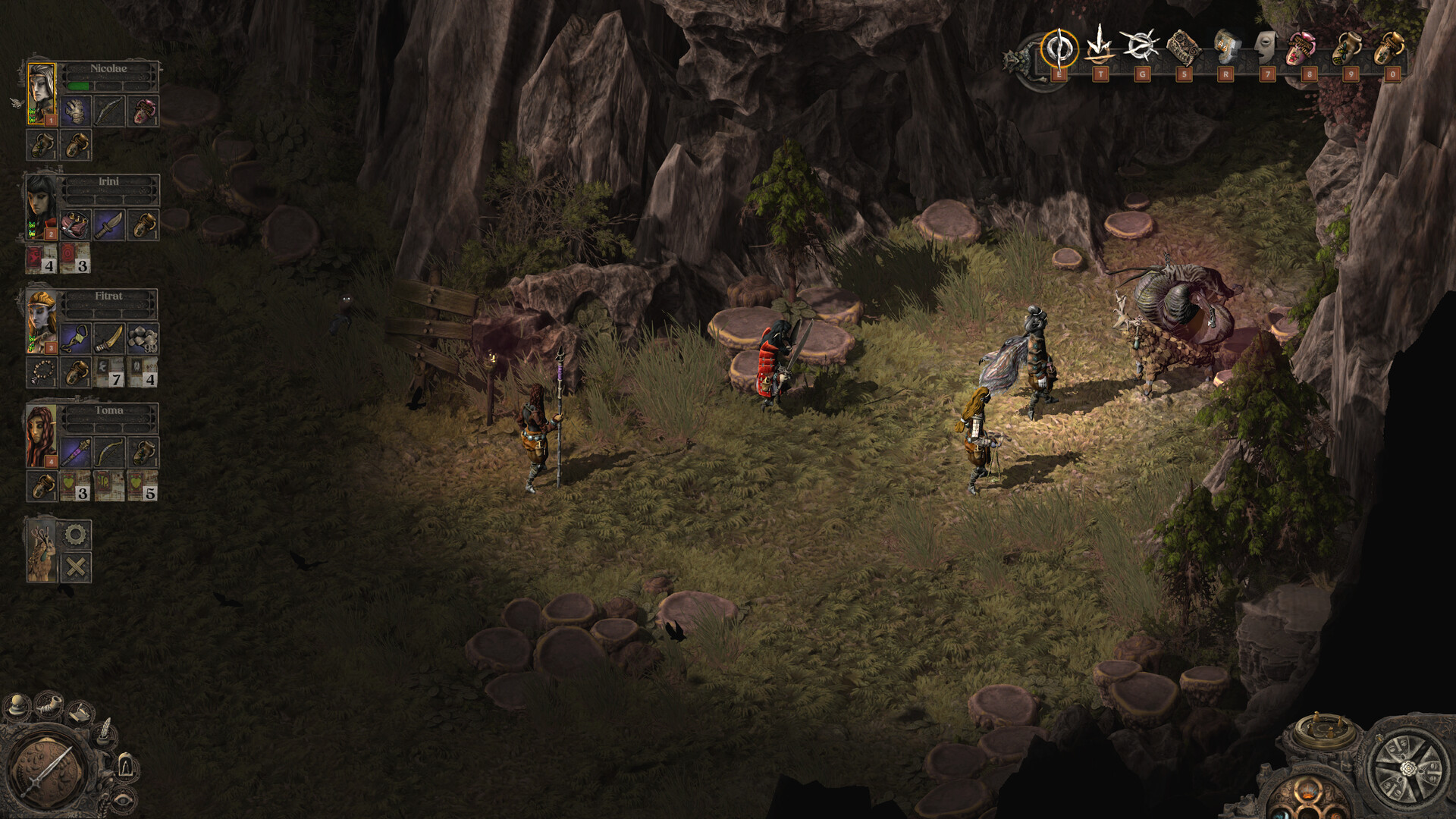
The party explores a cave system, with three guards acting autonomously while the player directs one directlyImage: Hannah and Joseph Games -
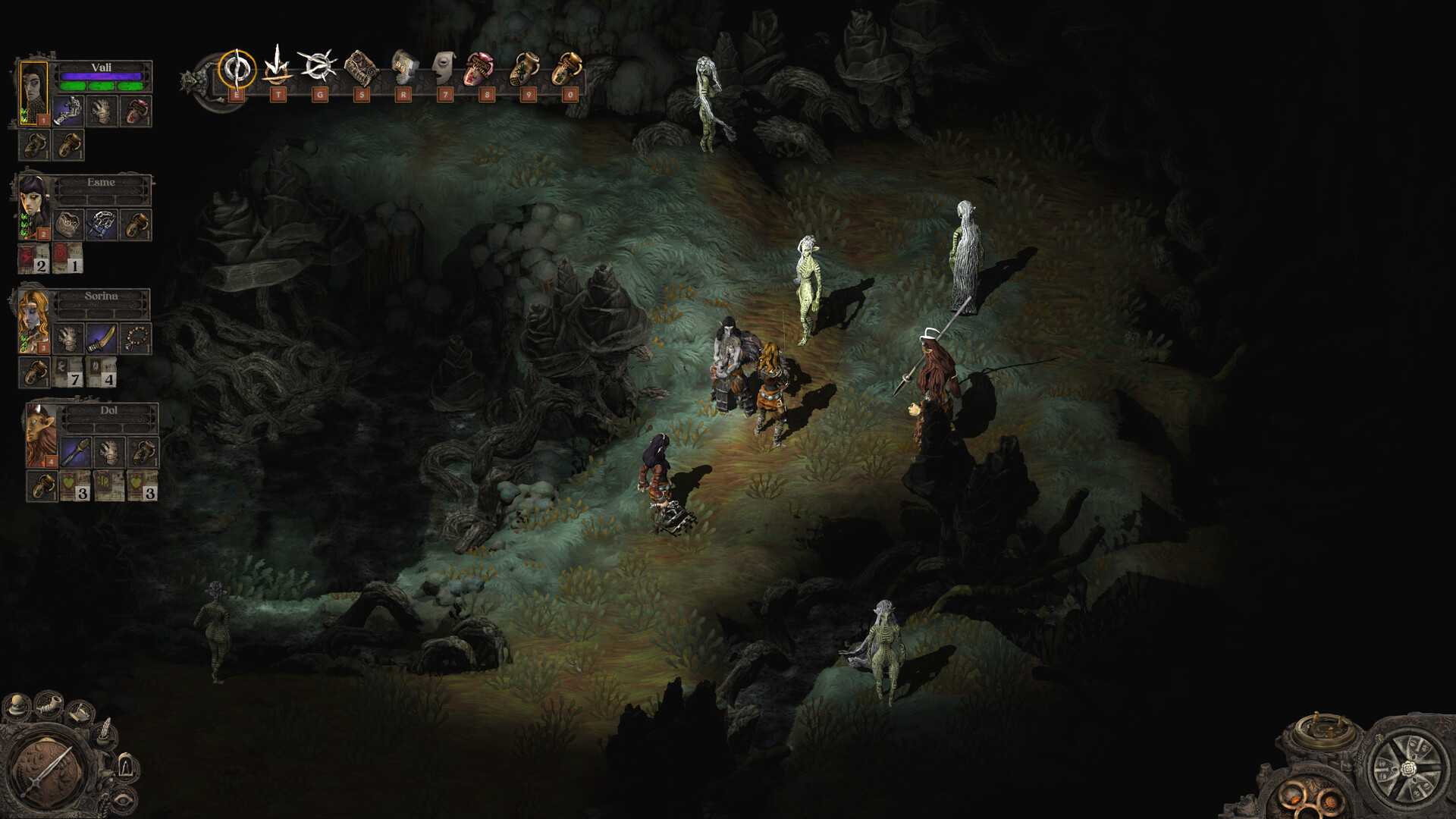
Combat in the game's darker crypts often means facing down hordes of the restless deadImage: Hannah and Joseph Games -
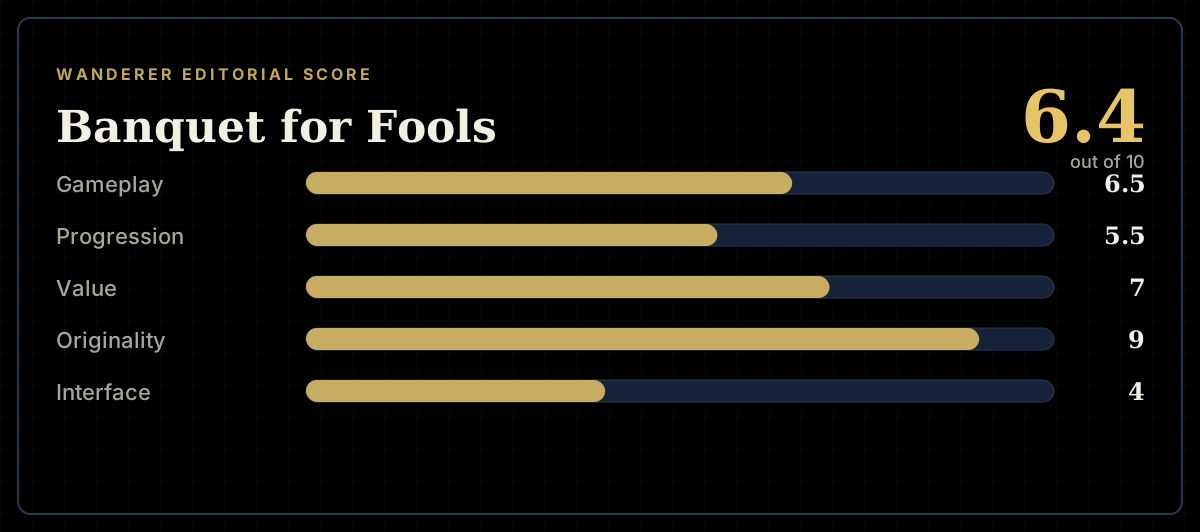
How the review scores each part of the gameWanderer Editorial -
The short versionWanderer Editorial