Game review
Static Dread: The Lighthouse Review: Papers, Please Meets Cosmic Horror
7.4 / 10
- Developer
- solarsuit.games
- Publisher
- Polden Publishing
- Released
- 6 August 2025
- Platforms
- ["PC", "Mac"]
- Genre
- Adventure
- Monetisation
- Paid
- Players
- false
The short version
Static Dread: The Lighthouse pitches itself as "Lovecraft meets Papers, Please," and for its atmosphere, art direction and central premise, that comparison is well earned. Reviewers are consistently won over by the mood the game builds around a lone keeper guiding ships through cosmic horror, but a recurring, detailed complaint runs through the sample: the second half piles on interruptions and distractions faster than it develops the systems underneath them, leaving a strong opening act that some reviewers feel the game never quite follows through on.
Biggest strengths
- Reviewers consistently praise the game's art style, sound design and Lovecraftian atmosphere as some of the strongest in the genre, with several drawing direct comparisons to Firewatch and Voices of the Void
- The core hook of verifying ship documents over radio while cosmic horror unfolds around the lighthouse is repeatedly singled out as a genuinely fresh combination of ideas
- Multiple endings driven by cumulative player choices give the roughly five-to-ten-hour campaign real replay value, and a follow-up title (Static Dread: Submarine) extends the world for players who want more
Biggest weaknesses
- A detailed review describes the second half as static rather than escalating: ship-guiding conditions stop meaningfully changing, in-lighthouse threats never evolve, and dialogue starts repeating
- One widely-echoed complaint is that the sheer volume of simultaneous interruptions, doors, alarms, floor stains, generators, overwhelms the core radio-operator loop rather than complementing it
- A specific, repeated criticism flags a loud, near-constant ambient drone in the back half of the game that several reviewers say undercuts the atmosphere rather than building it
Who it's for: Fans of Lovecraftian narrative horror and choice-driven management sims who prioritise atmosphere and story over sustained mechanical depth or scares.
Our recommendation: Recommended for the atmosphere, art direction and premise alone, with a clear-eyed note that the back half trades escalating challenge for escalating noise.
7.4 / 10
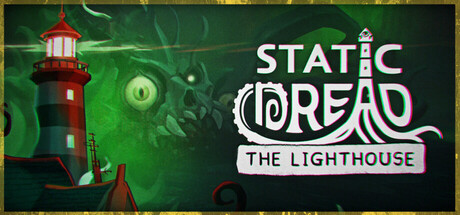
Static Dread: The Lighthouse casts players as a keeper dispatched to a remote, recently reactivated lighthouse in the aftermath of an unspecified global cataclysm, tasked with guiding ships safely to harbour while an unmistakably Lovecraftian horror creeps in around the edges of every shift. Developed by solarsuit.games and published by Polden Publishing, the game launched to full release in August 2025 and has built a strong 90% positive rating across 1,393 Steam reviews. The 20-review English-language sample pulled for this piece, spanning both the toprated and most-recent review queues, shows a game whose premise and presentation win reviewers over almost universally, even as a specific, detailed criticism about its pacing recurs throughout.
Lovecraft Meets Papers, Please, and the Comparison Holds Up
The game's own store-page pitch, "Lovecraft meets Papers, Please," is quoted approvingly by multiple reviewers, and it's an accurate shorthand for the core loop: each day, ships radio in, the keeper receives documents and instructions, and decisions about which vessels to wave through, delay or deny ripple outward into the surrounding community and the game's overarching mystery. One reviewer calls the elevator pitch "excellent," noting that "your admin work shapes the fate of a community and...perhaps...the world." Another, a self-described longtime fan of both reference points, writes they were "enchanted by this game at first sight," praising how the daily radio-and-documents routine is wrapped in an atmosphere of "unknowable horror" built from analog-horror art direction, unsettling sound design and a genuinely well-realised cast of visiting oddities, including, as one reviewer fondly puts it, "a pulsating fishman posted up by my fireplace."
That atmosphere is the single most consistently praised element across the entire sample. Reviewers repeatedly single out the visuals, the music, the character designs of the various villagers and cosmic-adjacent visitors who knock on the lighthouse door each night, and the way the game lets players simply watch the ocean or listen to radio transmissions describing horrors unfolding elsewhere on the island chain. Several reviewers explicitly note that despite the horror framing, actual jump scares are rare or absent entirely, something more than one reviewer counts as a strength rather than a weakness, preferring dread and mood over cheap frights.
A Strong Opening That Some Reviewers Feel Doesn't Escalate
The most detailed and most repeated criticism in the sample concerns structure and pacing. One extensively detailed review, while ultimately recommending the game, argues the "Papers, Please" side of the pitch "feels like such a small part of it," and that the daily document-checking task is rarely difficult enough to meaningfully fail. That reviewer's larger complaint is about escalation: rather than the challenge deepening over time, the game instead multiplies the number of simultaneous distractions thrown at the player, doors knocking, lights flickering, corruption creeping across the floor that needs to be burned off, equipment failing, until what started as "spooky and cool" interruptions become, in their words, "annoying nonstop chaos" by the campaign's later days. Their suggested fix, fewer but longer days with more room to actually inhabit the lighthouse-keeper role, is echoed in spirit by a second, more critical Not Recommended review that goes further, arguing the second half doesn't just fail to escalate but actively "stagnates": ship-guiding conditions become "trivial to fulfill" despite appearing more complex on paper, unique ship dialogue and abnormality art stop appearing and start repeating, and the in-lighthouse threats "never evolve in any fashion."
A Recurring, Specific Sound Design Complaint
A second, more narrowly technical criticism surfaces independently in that same Not Recommended review and is worth flagging on its own terms: a loud, near-continuous ambient drone that kicks in during the back half of the game, which the reviewer describes as an assault on the senses that undercuts rather than reinforces the atmosphere everyone else in the sample praises so highly. The reviewer speculates it may be an unintentional audio bug rather than a deliberate design choice, but either way, it's flagged as a specific, checkable issue for anyone particularly sensitive to sustained background noise going into a longer session.
Choices, Endings and a Meager but Worthwhile Length
On the positive side of structure, reviewers consistently praise the game's choice-and-consequence systems and multiple endings, even if one detailed reviewer notes that most endings can be reached simply by replaying the final day with a different choice rather than requiring a full second playthrough, meaning the practical difference between endings is "some different text" rather than dramatically different content. Even so, several reviewers describe deliberately replaying specific days to chase achievements or alternate outcomes, and more than one recommends the game as a worthwhile lead-in to its own follow-up title, Static Dread: Submarine, which several reviewers explicitly suggest playing afterward within the same shared world.
Value and Final Verdict
At its price point, reviewers who focus on mood, premise and presentation over sustained mechanical depth get a genuinely distinctive five-to-ten-hour experience that earns its "Lovecraft meets Papers, Please" tagline in its opening hours, even if that comparison thins out as the campaign progresses. Static Dread: The Lighthouse succeeds most clearly as an atmosphere piece: striking art direction, a well-cast rotation of unsettling visitors, and a radio-operator hook that's rarely been paired with cosmic horror quite this effectively. Where it falls short, according to a consistent and detailed thread in the review sample, is in following through on that opening promise, trading meaningful escalation for a pile-up of interruptions and, for some, an actively fatiguing soundscape in the later days. Go in for the mood and the premise rather than expecting the management-sim challenge to deepen alongside the horror, and there's a genuinely memorable game here.
Pros and cons
Pros
- Reviewers consistently praise the game's art style, sound design and Lovecraftian atmosphere as some of the strongest in the genre, with several drawing direct comparisons to Firewatch and Voices of the Void
- The core hook of verifying ship documents over radio while cosmic horror unfolds around the lighthouse is repeatedly singled out as a genuinely fresh combination of ideas
- Multiple endings driven by cumulative player choices give the roughly five-to-ten-hour campaign real replay value, and a follow-up title (Static Dread: Submarine) extends the world for players who want more
Cons
- A detailed review describes the second half as static rather than escalating: ship-guiding conditions stop meaningfully changing, in-lighthouse threats never evolve, and dialogue starts repeating
- One widely-echoed complaint is that the sheer volume of simultaneous interruptions, doors, alarms, floor stains, generators, overwhelms the core radio-operator loop rather than complementing it
- A specific, repeated criticism flags a loud, near-constant ambient drone in the back half of the game that several reviewers say undercuts the atmosphere rather than building it
Screenshots
-
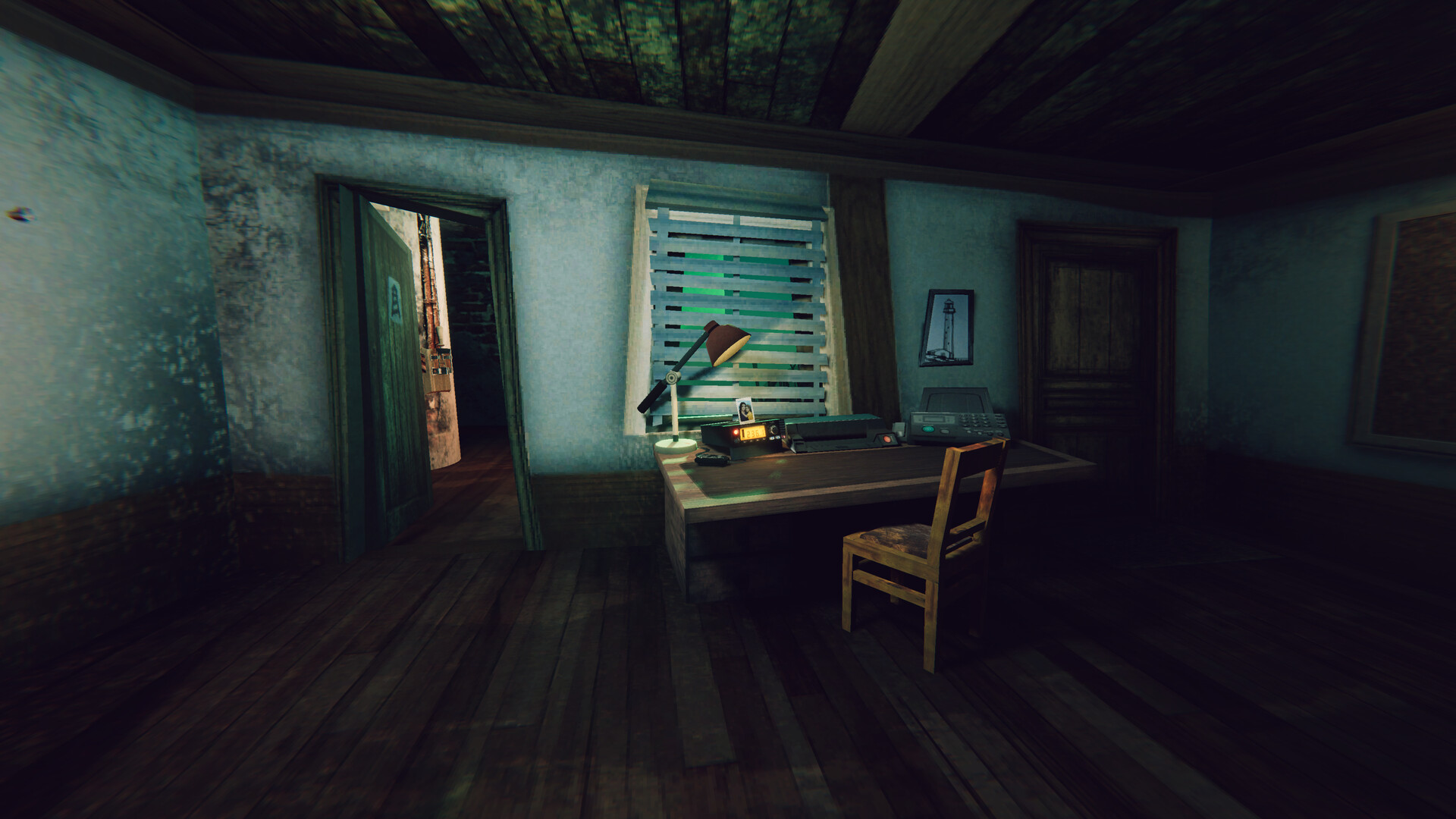
The keeper's cramped office, where radio calls and faxed shipping documents drive the daily routinePolden Publishing -
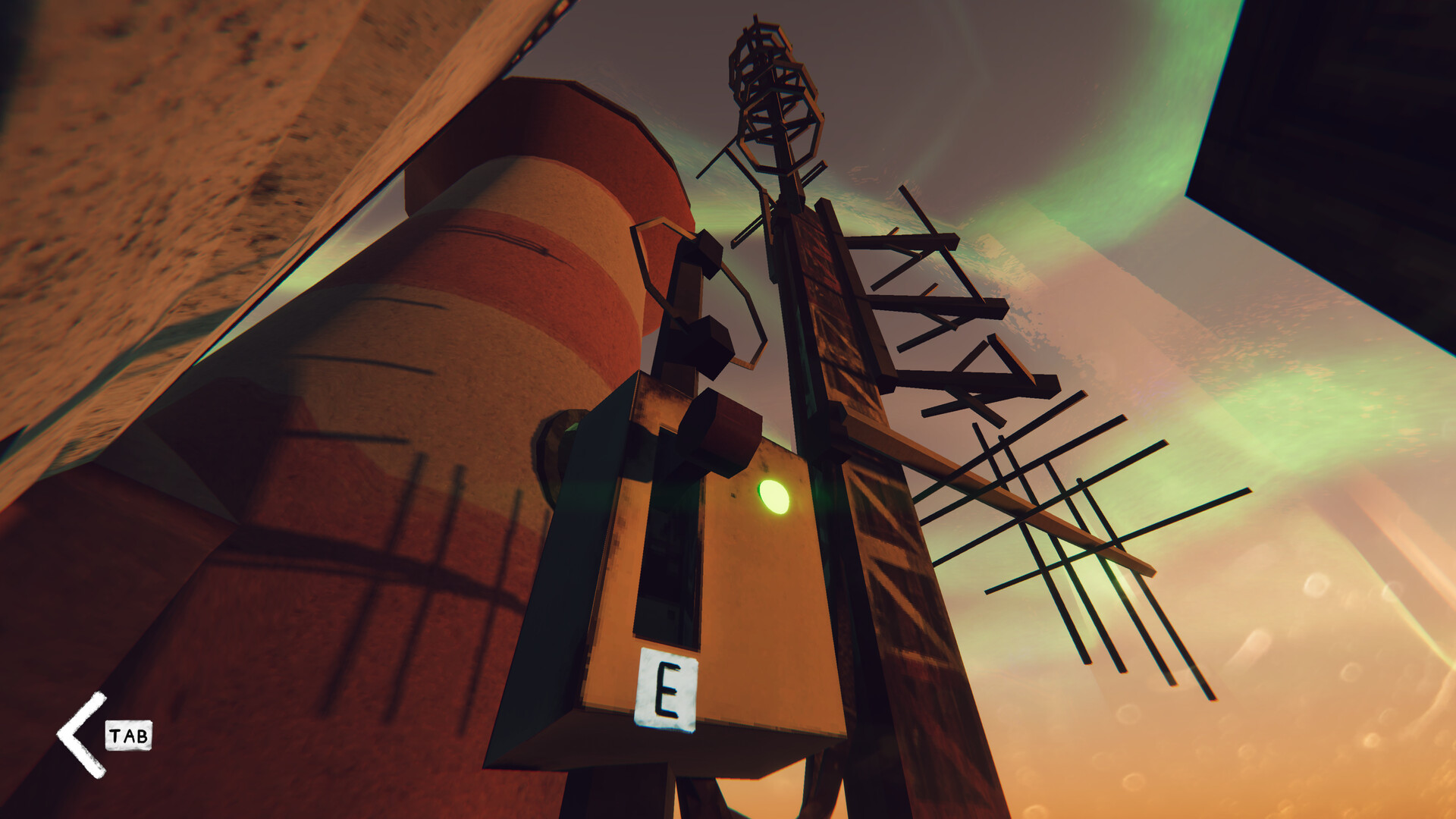
Keeping the beacon and antenna running is a constant, hands-on task layered on top of the ship-guiding loopPolden Publishing -
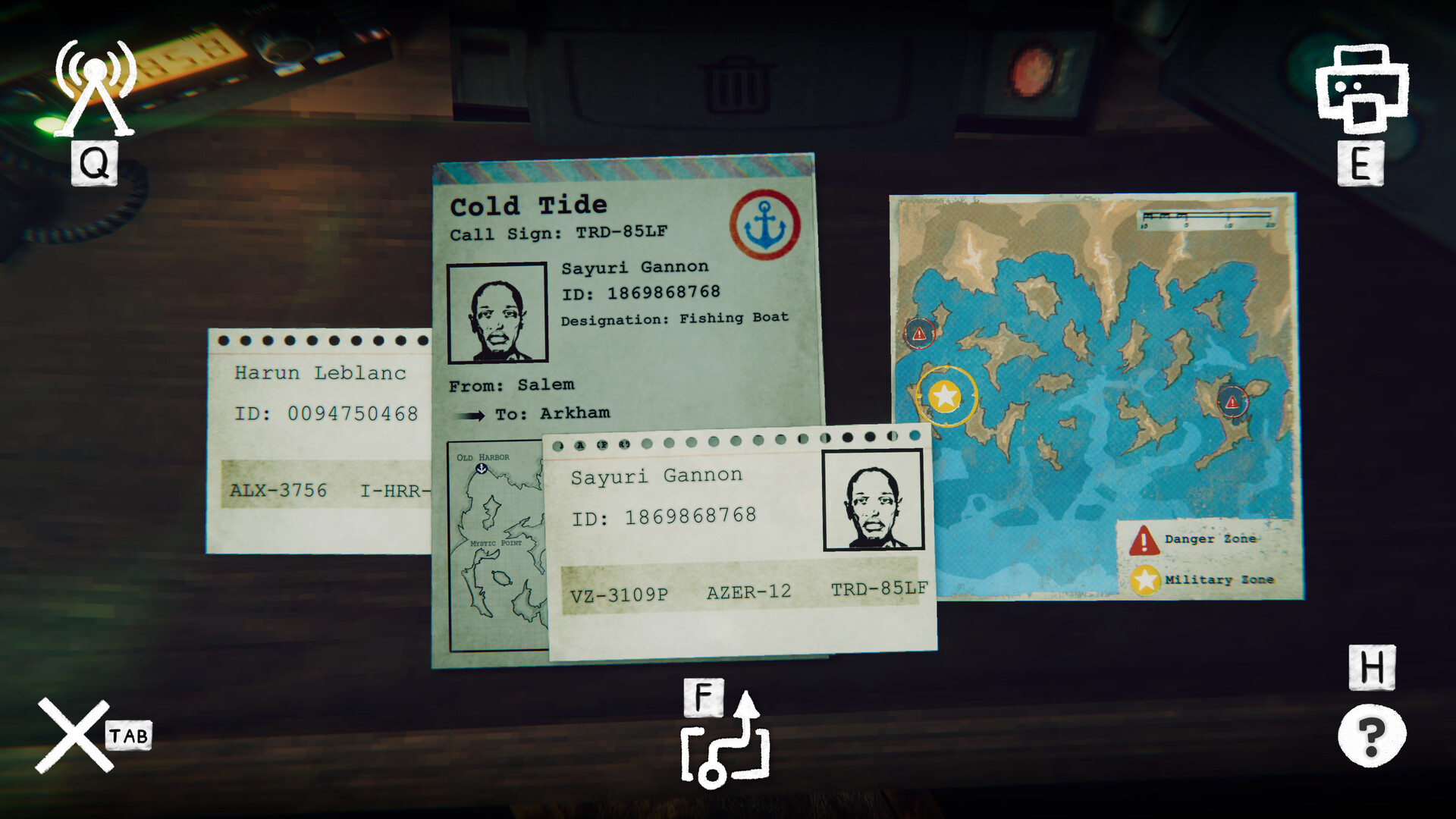
Verifying ship papers against IDs and route maps is the game's Papers, Please-inspired core loopPolden Publishing -
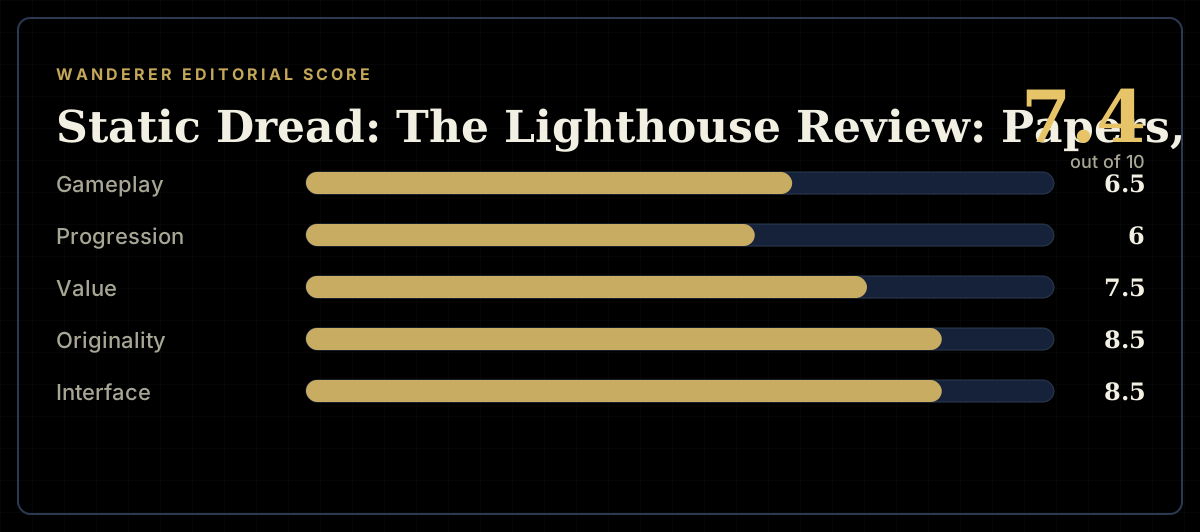
How the review scores each part of the gameWanderer Editorial -
The short versionWanderer Editorial