Game review
The Séance of Blake Manor Review: A Gorgeous, Gentle Mystery That Rarely Makes You Think
7.5 / 10
- Developer
- Spooky Doorway
- Publisher
- Raw Fury
- Released
- 27 October 2025
- Platforms
- ["PC"]
- Genre
- Adventure
- Monetisation
- Paid
- Players
- false
The short version
The Séance of Blake Manor is a lavishly written, gorgeously staged supernatural mystery that reviewers describe as genuinely hard to put down, built around 20-plus interwoven character stories steeped in Irish folklore. It arrives, though, with a persistent and well-documented catch: for a game repeatedly compared to Obra Dinn and Golden Idol, it does remarkably little actual deducing for the player, automating most of its own investigation and leaning on a time-pressure mechanic that almost never actually pressures anyone.
Biggest strengths
- Reviewers near-universally praise the writing, voice acting and Irish-folklore-steeped worldbuilding across the game's 20-plus character mysteries, several calling it the best treatment of Irish history and mythology they've seen in a game
- A distinctive, bright comic-book art style paired with a genuinely eerie gothic manor setting that multiple reviewers say has no right to work as well as it does
- A generous 15-to-30-hour campaign with multiple endings based on how many guests are saved, giving genuine reason to revisit once the mysteries are known
Biggest weaknesses
- Multiple detailed reviews describe the actual detective mechanics as almost entirely automated, with the mystery board effectively telling players what to do next and very little real deduction required
- The signature time-pressure mechanic is repeatedly called a non-factor by reviewers who finished every mystery with hours to spare, undercutting a system built around tension and hard choices
- A number of reviewers report bugs ranging from minor visual glitches to progression-blocking issues, alongside frequent short loading screens every time a door is opened
Who it's for: Fans of narrative-heavy, low-difficulty mystery adventures who want strong writing and atmosphere over demanding deduction, and anyone specifically drawn to Irish folklore and history.
Our recommendation: Recommended, with expectations firmly reset: go in for the story, the cast and the setting, not for a taxing detective challenge, and you're very likely to have a great time.
7.5 / 10
The Séance of Blake Manor drops the player into 1897 Ireland as private investigator Declan Ward, sent to a remote hotel-turned-manor to find a missing guest before a séance, scheduled for All Hallow's Eve, tears down the barrier between the living and the dead. Developed by Spooky Doorway, the studio behind the Darkside Detective series, and published by Raw Fury, the game has landed at a striking 94% positive across more than 3,100 Steam reviews since its October 2025 launch. The 20-review English-language sample pulled for this piece, drawn from both the most-praised and most-recent reviews in that pool, reads as one of the more consistent this outlet has seen: near-total agreement that the writing, cast and setting are exceptional, paired with a genuinely widespread and specific complaint that the game marketed itself, and gets compared to, detective games it doesn't actually resemble very closely once you're inside it.
A Detective Story Steeped in Irish Folklore
What reviewers return to again and again, more than any single mechanic, is how deeply the game commits to its setting. One reviewer calls it "the most accurate reflection of the complex tapestry of history, conflict, mythos, religion, immigration, emigration, sorrow and joy" of Ireland they'd encountered in a game, writing as a self-described "proud Irishman" that the experience touched them in a way no other game had. That reaction isn't isolated. Another reviewer, who says they weren't personally invested in Irish mythology going in, describes getting "hooked" regardless, praising how the game weaves the history of Oliver Cromwell's conquest, the role of the Catholic Church, the Great Famine and older pre-Christian traditions into its more than 20 individual character mysteries, all discoverable through an in-manor library stuffed with books and lore entries. A third reviewer frames the themes more broadly, noting the game "expertly marries" classism, spirituality, colonialism and trauma across its huge cast into what they call "a near perfect narrative." This isn't background dressing; it's consistently described as the game's central achievement, the thing that turns a fairly conventional missing-persons plot into something reviewers describe wanting to talk about "for years to come."
The presentation matches the ambition of the writing. Reviewers repeatedly highlight the game's comic-book-influenced art style, bright and saturated in a way that, on paper, shouldn't suit a gothic, ghost-haunted 19th-century manor, but which multiple reviewers say works far better than expected. One reviewer describes Blake Manor as feeling "every bit the late 19th century Irish mansion it claims to be," crediting the setting work for paying off thematically even when the reviewer had broader complaints about the game's mechanics. Voice acting draws similarly strong, consistent praise across the sample, with reviewers calling the large cast "fantastic" and noting that even smaller supporting characters are given enough voice-acted personality to feel memorable rather than functional.
The Loop: Talk, Search, Manage Your Minutes
Mechanically, the game plays out as an open, first-person exploration of the manor and its grounds, populated by more than 20 guests and staff, each moving on their own hourly schedule. The central resource isn't real-world time but in-game minutes: nearly every meaningful action, from asking a question to examining an item, consumes one minute of a roughly 45-to-48-hour countdown toward the titular séance. Rooms, once entered, reveal hidden compartments and belongings; conversations unlock new dialogue topics with other characters; and clues accumulate on per-character corkboards that gradually assemble into a solvable mystery.
Once a corkboard for an individual character's story has enough evidence attached, the game shifts into what several reviewers describe as an Obra Dinn-style "fill in the blanks" hypothesis screen, where the player selects from a pool of possible answers to explain what's really going on with that character, before optionally confronting them directly. It's a structure that, described in the abstract, sounds exactly like the genre of clue-gathering detective game it's constantly compared to. In practice, reviewers are remarkably consistent in reporting that it doesn't play like one.
Investigation Lite: Why the Deduction Comparisons Don't Hold Up
This is the most heavily repeated, most specific criticism in the entire sample, appearing independently across reviews that otherwise range from glowing to lukewarm to outright negative. One reviewer states plainly that they bought the game expecting something closer to Outer Wilds, Obra Dinn or the Golden Idol games, based on other reviews making exactly that comparison, and came away disappointed on that specific front: "I can only think of one instance in the whole game where I actually had to stop for a minute and figure out what I had to do." A second, more critical reviewer goes further, arguing the game is structurally closer to an Ace Attorney title than a true deduction game, since "there is no real risk of failure, and any thinking you might have to do is automated for you by the game." That reviewer specifically calls out how the mystery board tends to spell out the next step directly, often surfacing several new evidence notifications at once after a single action, to the point where the game can effectively be "brute forced" just by following the board's prompts.
The sample's longest and most critical review pushes this argument the furthest, describing a case where a supposedly difficult clue turned out to be gated behind a bug rather than genuine difficulty, and noting that was, ironically, "the most fun I had solving anything in the game simply because the game gave me even a modicum of freedom and stopped the hand holding for just a moment." That same reviewer highlights a structural complaint worth calling out specifically: the game builds an entire UI system for narrowing down suspects fact by fact, only for the final, decisive piece of evidence to render all of that prior narrowing irrelevant, since it uniquely identifies the culprit on its own regardless of what's been ruled out beforehand. Not every reviewer who raises the "it's not really a deduction game" point holds it against the experience; several explicitly reframe their expectations mid-review and land on a strong recommendation anyway, essentially arguing this is a narrative adventure with detective-game trappings rather than a detective game proper, and is worth playing on those terms.
A Time Mechanic That Rarely Bites
Closely related is a second, almost equally repeated observation: the minute-based time pressure that's meant to force meaningful choices about where to spend limited hours turns out, for most reviewers, not to be much pressure at all. Multiple reviewers report finishing every character's story, attending every scheduled event, and reaching the "perfect" ending with hours of in-game time to spare, without having played especially efficiently. One reviewer calls the time system "a total macguffin," arguing that since the player can realistically do everything the game offers, the tension the mechanic is ostensibly designed to create never actually materialises. Not every account agrees entirely; one reviewer, playing closer to the deadline than most, reports running out of time before completing one character-specific questline near the end and finding that outcome "really frustrating," which suggests the leniency isn't absolute for every playstyle. On balance, though, the weight of the sample lands on the side of the time mechanic being a well-intentioned system that rarely produces the stakes it seems designed for.
A Sprawling Cast in a Sprawling Manor
The game's scale is a genuine double-edged sword in the sample. Early hours are repeatedly described as overwhelming: one reviewer compares the opening stretch to Paradise Killer's open, unguided world, describing their first five hours as "wandering and clicking on every person and thing that could be interacted with," with little sense yet of which threads mattered. That same reviewer admits to caring more about checking mysteries off a list than about the characters themselves during that early stretch, before the writing eventually won them over as the manor's cast and history became more familiar.
Once that initial acclimation period passes, though, the density becomes one of the game's strengths rather than a weakness, according to most of the sample. Reviewers praise how individual character arcs interweave with the central mystery of Evelyn Deane's disappearance, and multiple reviewers specifically note that characters they initially disliked "turn around and show depth" as more of their personal stories are uncovered. A recurring smaller complaint sits alongside this praise: because characters move on fixed hourly schedules, certain guests become unavailable at inconvenient times, which several reviewers say is particularly noticeable on the game's final day, when players trying to wrap up every remaining mystery may find half the cast simply isn't where they need them to be.
Some Narrative Beats Land Awkwardly
Not every story thread earns universal praise. One especially detailed critical review picks apart specific character resolutions as implausible, describing a scene where a guest confesses outright to murdering her husband and receives almost no meaningful reaction from the player character, who instead focuses on a more practical follow-up task. The same reviewer questions how naturally some information is delivered, singling out a conversation between two background staff members, clearly placed to hint at where hidden keys are located, as "super artificial," and joking that characters who recite their entire weekend schedule on request "nobody plans their weekend to such a degree." These are presented as nitpicks by a reviewer who otherwise still recommends the game, but they're specific and recur often enough, particularly around how directly the game telegraphs information it wants the player to have, to be worth flagging rather than dismissing.
Technical Rough Edges
Polish is the sample's third recurring thread of criticism, and it ranges from cosmetic to genuinely disruptive depending on the reviewer. Multiple reviews mention minor bugs: a camera that occasionally fails to zoom in properly on safe-code puzzles, visual glitches where characters "ripple" strangely when turning, and small text or map errors. One reviewer reports something more serious, a bug that permanently locked them out of completing two characters' storylines partway through their save, with no viable way to correct it short of restarting entirely. Loading is a separate, smaller but widely mentioned annoyance: because the manor loads each room individually behind every door rather than streaming the space seamlessly, several reviewers note that walking between adjacent rooms can take roughly as long as the load screen itself, and one reviewer specifically suspects a memory leak, since load times noticeably lengthen over the course of a longer session.
Value and Replayability
On the question of whether the experience is worth its price, the sample is close to unanimous. Reported playtimes cluster heavily between 15 and 30 hours for a full or near-full completion, and reviewers consistently frame that as generous for a story-focused adventure at this price point. The game supports multiple endings based on how many of the manor's guests are saved by the time of the séance, and at least one reviewer explicitly plans a second, faster playthrough specifically to chase the mysteries they missed the first time, suggesting the replay incentive is real rather than nominal. Achievement hunters should note one specific caveat raised in the sample: while a casual playthrough leaves plenty of time to spare, reviewers pursuing 100% completion describe the time mechanic as considerably less forgiving, with one noting it "can get frustrating at times" specifically for that audience.
Final Verdict
The Séance of Blake Manor succeeds overwhelmingly at the thing it's actually trying to be: a richly written, beautifully staged narrative mystery that uses Irish folklore and history as more than set dressing, populated by a cast reviewers describe wanting to spend more time with rather than less. Where it consistently falls short of expectations is the detective-game framing that surrounds it, both in its own marketing and in the comparisons its early reviewers reached for; the actual mechanics of deduction are heavily automated, the signature time-pressure system rarely produces genuine stakes, and the game's handling of evidence and suspect-narrowing is, by at least one detailed account, largely cosmetic by the closing act. None of that has stopped the overwhelming majority of this sample from recommending it, and rightly so, but anyone buying in expecting an Obra Dinn-calibre deduction challenge should recalibrate first: this is a detective story to be experienced rather than a detective game to be solved.
Pros and cons
Pros
- Reviewers near-universally praise the writing, voice acting and Irish-folklore-steeped worldbuilding across the game's 20-plus character mysteries, several calling it the best treatment of Irish history and mythology they've seen in a game
- A distinctive, bright comic-book art style paired with a genuinely eerie gothic manor setting that multiple reviewers say has no right to work as well as it does
- A generous 15-to-30-hour campaign with multiple endings based on how many guests are saved, giving genuine reason to revisit once the mysteries are known
Cons
- Multiple detailed reviews describe the actual detective mechanics as almost entirely automated, with the mystery board effectively telling players what to do next and very little real deduction required
- The signature time-pressure mechanic is repeatedly called a non-factor by reviewers who finished every mystery with hours to spare, undercutting a system built around tension and hard choices
- A number of reviewers report bugs ranging from minor visual glitches to progression-blocking issues, alongside frequent short loading screens every time a door is opened
Screenshots
-

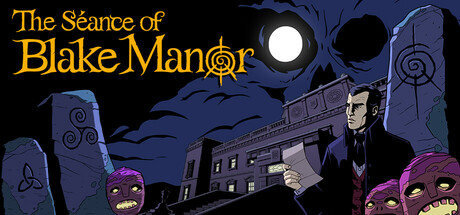
The manor's gothic exterior, rendered in the game's bright comic-book art style set against a stormy night skyRaw Fury -
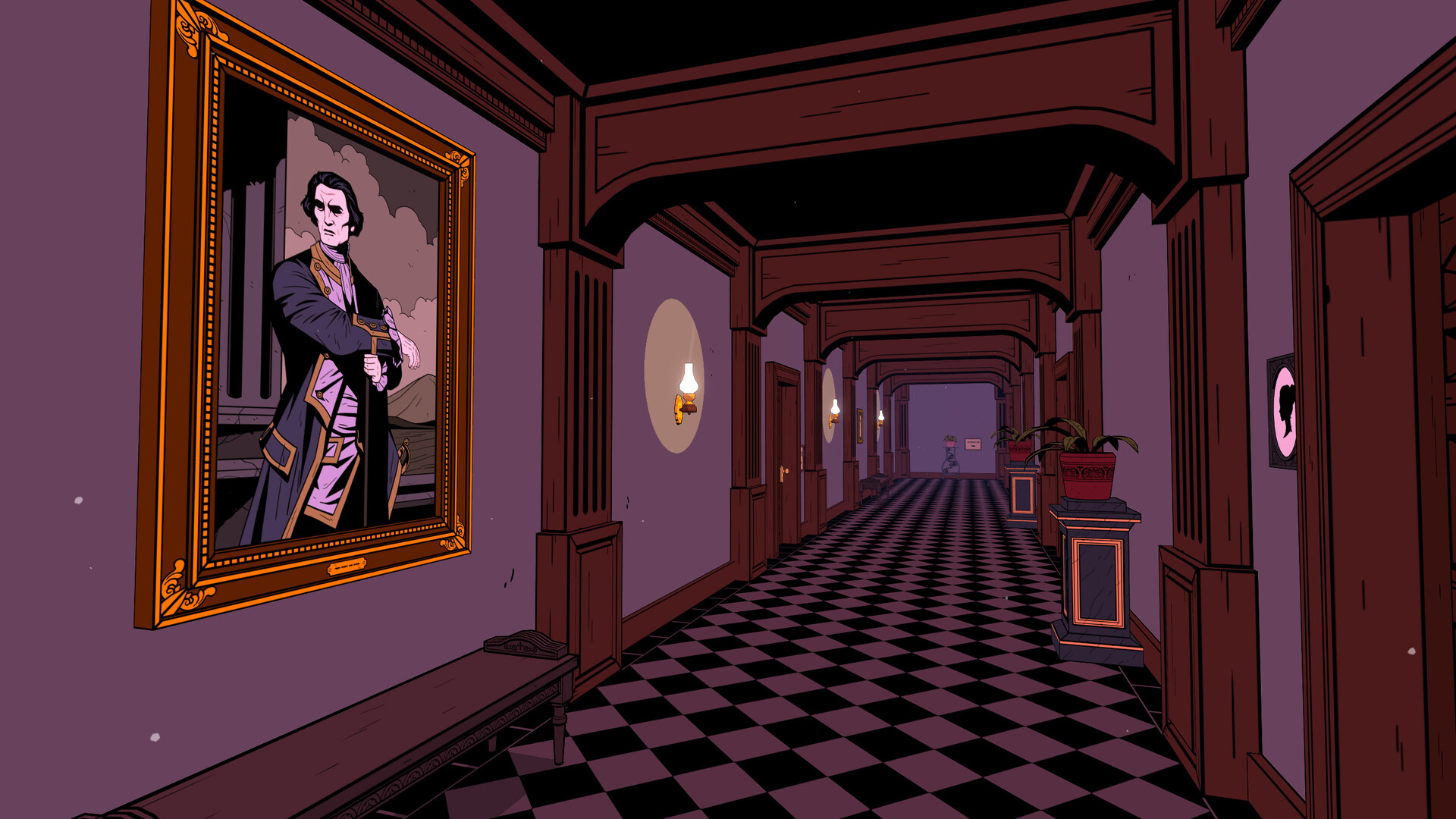
One of the manor's many corridors, each room and hallway loading individually behind its own doorRaw Fury -
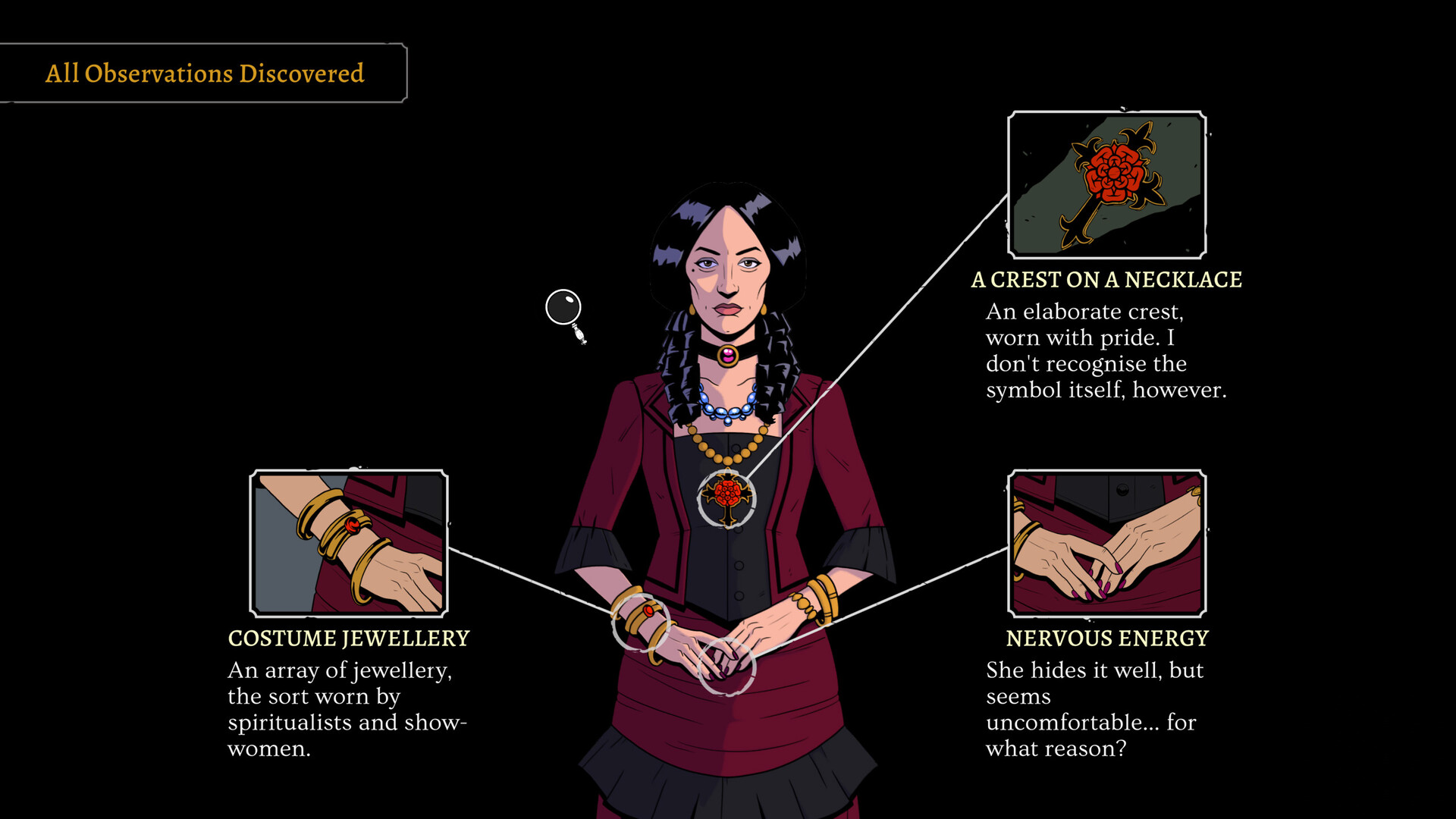
A character's observation board, where gathered clues are laid out for the player to review before a hypothesisRaw Fury -
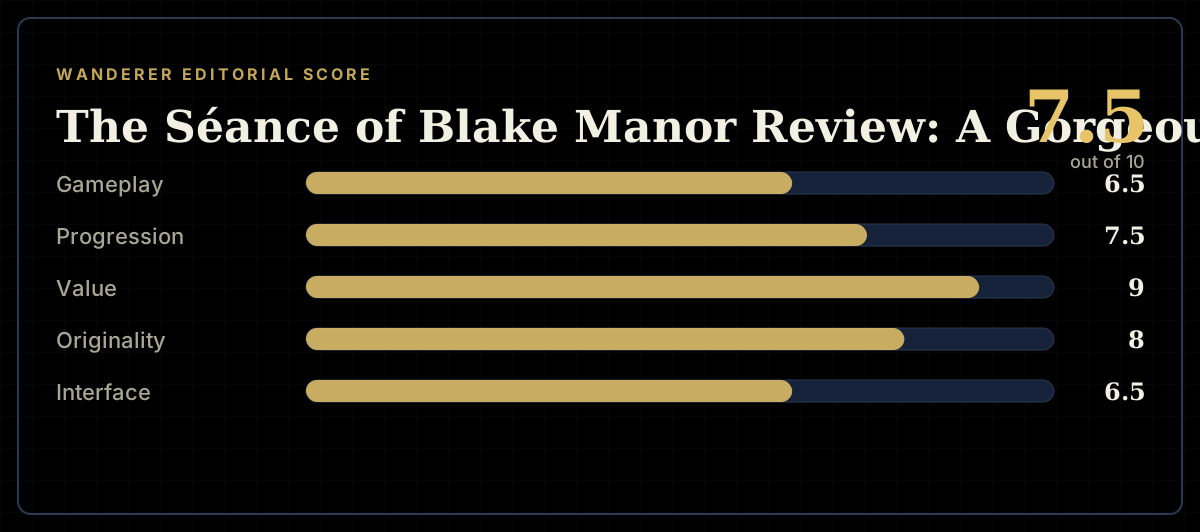
How the review scores each part of the gameWanderer Editorial -
The short versionWanderer Editorial