Game review
Acceptable Losses Review
7 / 10
- Developer
- Zann Archive
- Publisher
- Zann Archive
- Released
- 8 September 2026
- Platforms
- ["Windows", "Mac"]
- Genre
- Strategy
Command Without Combat: A Different Kind of WWI Game
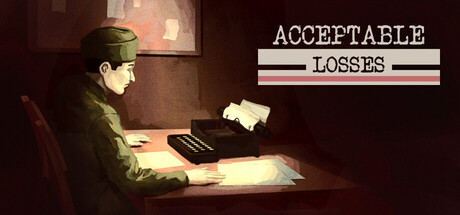
Acceptable Losses is the debut Steam release from solo developer Zann Archive, and it takes a deliberately unglamorous angle on the First World War. There's no rifle to aim, no trench to storm in first person — instead you're the lieutenant behind the line, reading reports, signing off on assignments, and deciding which of your soldiers get sent where each day. The entire twenty-day campaign plays out through menus, incident cards, and nightly paperwork rather than any kind of direct battlefield control, and that's very much the point. You are not the hero of this story. You're the person responsible for whoever doesn't come back.
Each day you split four squads between patrols, trench repairs, wiring parties, and offensive pushes, with morale, fatigue, cohesion, weather, and enemy readiness all quietly modifying your odds of success behind the scenes. At night, attention shifts to administration: reading incident reports, reviewing medical updates, scanning intelligence briefings, and hoping reinforcements show up on schedule. It's a small, text-forward package, and reviewers who go in expecting cinematic tactical combat tend to be caught off guard by how quiet and procedural the whole thing actually is. For the audience it's aimed at — people who like systems-driven military management over direct action — that quietness reads as a feature rather than a shortfall.
Named Soldiers, Permanent Death, and a Campaign That Escalates
The strongest idea in Acceptable Losses is how it handles its soldiers. Every one of your men is individually generated with a name and a place of birth, and death is permanent — there's no anonymous manpower pool quietly refilling itself between missions. Reviewers consistently point to this as the game's emotional hook: losing "J. Williams from Squad 3" carries more weight than losing an abstract number, even with the relatively thin characterization the game gives each soldier. You can also send your commanding officer along on missions personally for a leadership bonus, at the risk of taking an injury yourself, which is a small mechanic that fits the game's broader philosophy that every advantage comes with a cost attached.
Performing well enough over the twenty days can earn you an escalation to an "Over the Top" assault, and surviving that doesn't end your responsibilities either — holding the newly captured ground becomes its own separate challenge. It's a smart structural beat that gives the campaign a real sense of momentum building toward something, rather than just being twenty interchangeable days on a loop. HQ evaluates your performance throughout and hands out influence you can spend on citations or requested missions, creating a running tension between protecting your men and satisfying a command structure that doesn't particularly care about either.
The RNG Problem That Dominates Nearly Every Review
If there's a single issue that comes up across almost every review — positive and negative alike — it's how heavily randomness governs outcomes. A squad with good stats on a supposedly easy one-star mission can still come back gutted, and several reviewers describe running controlled experiments (savescumming a perfect first day versus a catastrophic one) to demonstrate just how much a single early roll can snowball into a doomed or charmed run. Defenders of the design argue this is thematically intentional — the game explicitly warns players that unexpected things happen in war and that good decisions only improve your odds rather than guarantee results — and plenty of reviewers embrace that framing, treating the unpredictability as the whole point rather than a flaw to be balanced away.
Critics are less forgiving, and their complaints cluster around a specific concern: that the amount of genuine player agency is thin. One detailed negative review breaks the entire game down to three real actions — spending influence, assigning troops to squads, and picking which squad does which task — and argues that citations barely matter, fatigue rarely becomes a real constraint, and mission outcomes function closer to a slot machine than a strategy game. Several reviewers who otherwise liked the concept ultimately refunded or gave a reluctant thumbs-down specifically over this, wanting more tools to recover from a bad stretch rather than simply riding it out. The campaign's short length compounds the issue for some — several reviewers report finishing a full run in under two hours, and a few say they'd seen most of the game's content within a single sitting.
A Promising Foundation With an Unusually Responsive Developer
What comes through clearly across the review base is that this is a genuinely small, personal first project, and it's being treated that way by the person who made it. The developer shipped four patches in the launch week alone addressing bugs and clarity issues, and multiple reviewers specifically call out how quickly feedback from Discord, discussions, and reviews gets acknowledged and acted on — a rare enough thing that it's actively buying the game goodwill even from players still waiting on bigger fixes like RNG tuning or a difficulty selector. Suggestions reviewers keep raising — an R&R system to pull worn-out soldiers from the line, visible success-rate percentages before committing to a mission, ranks and a real chain of command, more reinforcement events — read less like fundamental design failures and more like the natural next steps for a solid but still-thin foundation.
At $7.99, the price is broadly considered fair for what's here, even by reviewers who wanted more content or better balance. Comparisons to 60 Seconds!, XCOM's permadeath tension, and the more narrative-driven All Quiet in the Trenches come up regularly, usually to note that Acceptable Losses occupies its own smaller, stranger niche rather than directly competing with any of them. It's not a long game and it doesn't pretend to be one — for the asking price, most reviewers treat a two-to-four-hour playthrough with real replay variance as a reasonable trade.
Verdict
Acceptable Losses is a small, unusually somber WWI management game built around a genuinely good idea — permanent, named soldiers and a command structure that punishes you for caring about them just as much as it punishes you for not caring enough. The RNG-heavy mission system will be a dealbreaker for players who want their decisions to reliably matter, and there's a legitimate argument that the current toolset gives you too little to work with when a run turns against you early. But as a first Steam release from a solo developer who is visibly still building the game out, patch by patch, in direct response to what players are telling him, it's an easy recommendation for anyone drawn to grim, systems-driven military management, as long as you go in understanding that "acceptable losses" sometimes means the whole platoon.
Pros:
- Named, permanently mortal soldiers give consequences real emotional weight
- Distinctive command-from-behind-the-lines structure with a strong late-campaign escalation
- Fair price for the amount of tension and replay variance on offer
- Developer shipping frequent, responsive post-launch patches based on direct feedback
- Genuinely novel niche within the WWI and squad-management space
Cons:
- Randomness heavily outweighs player agency in many mission outcomes
- Short campaign length leaves some reviewers seeing most content in a single sitting
- Limited tools for recovering from an early bad stretch, leading to snowballing losses
- Influence and citation systems feel undertuned and low-impact as currently implemented
Screenshots
-
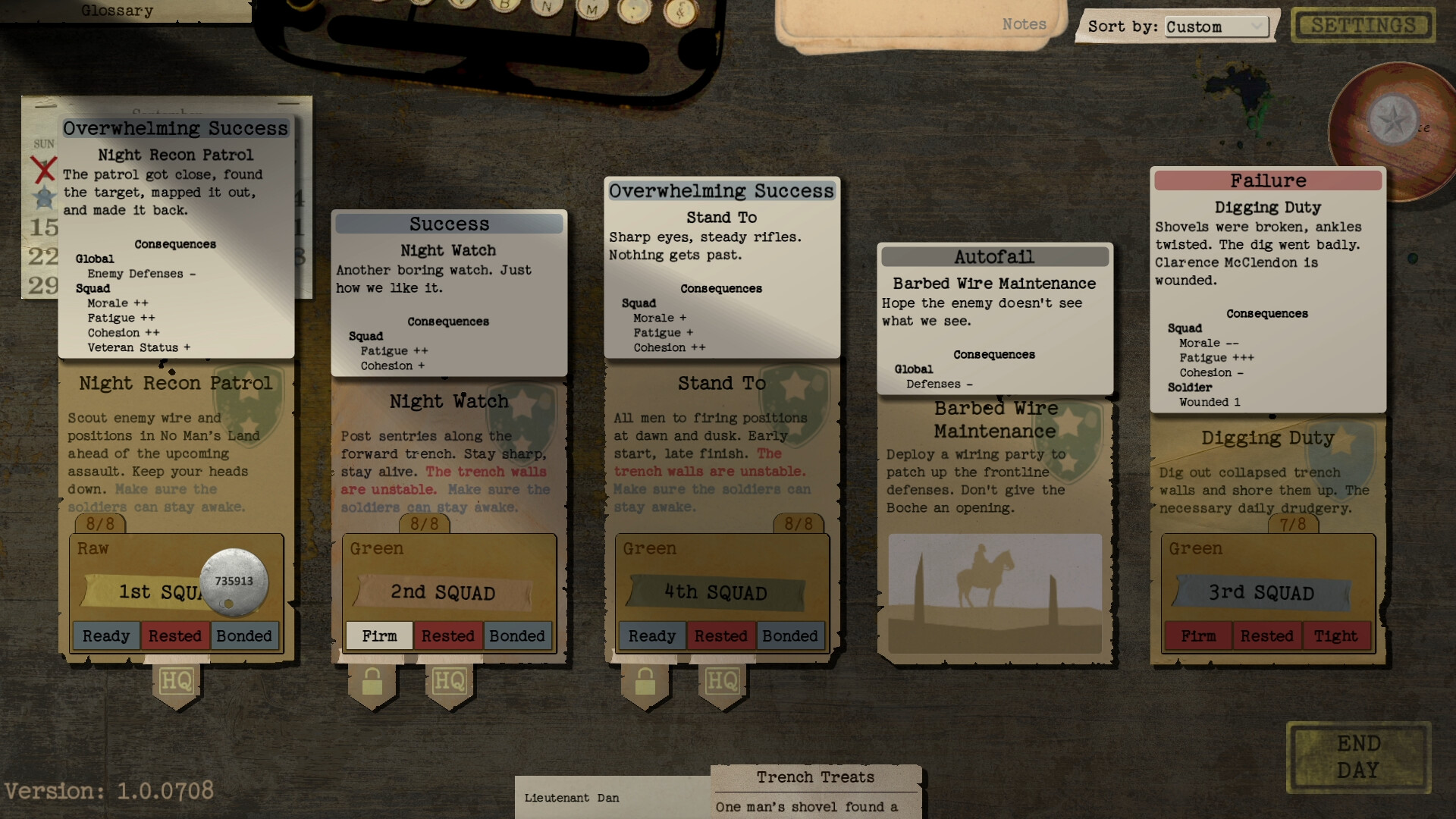
Reviewing the day's mission outcomes and their consequences for each squadImage: Zann Archive -
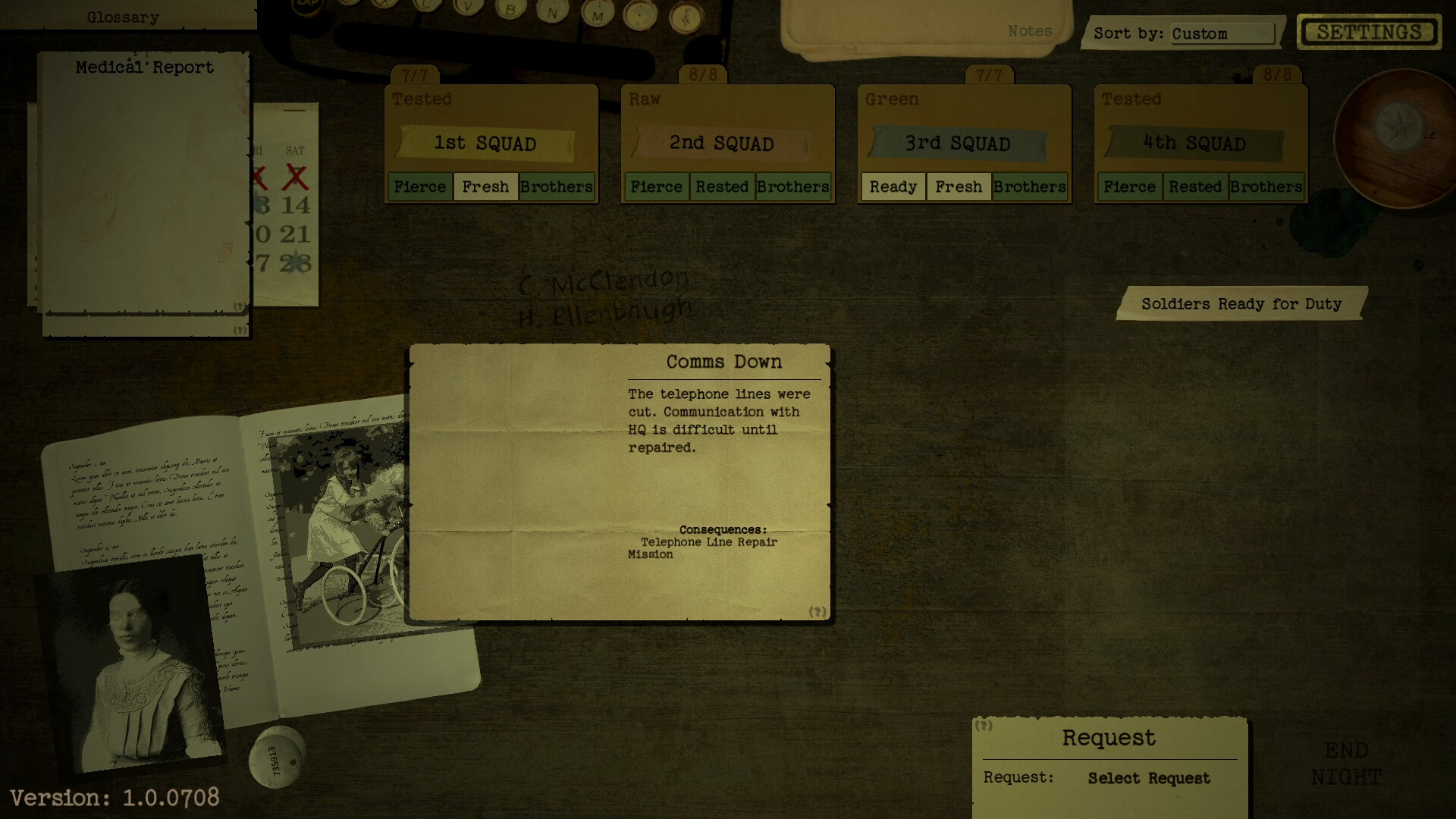
Working through the nightly paperwork of medical reports and incidentsImage: Zann Archive -
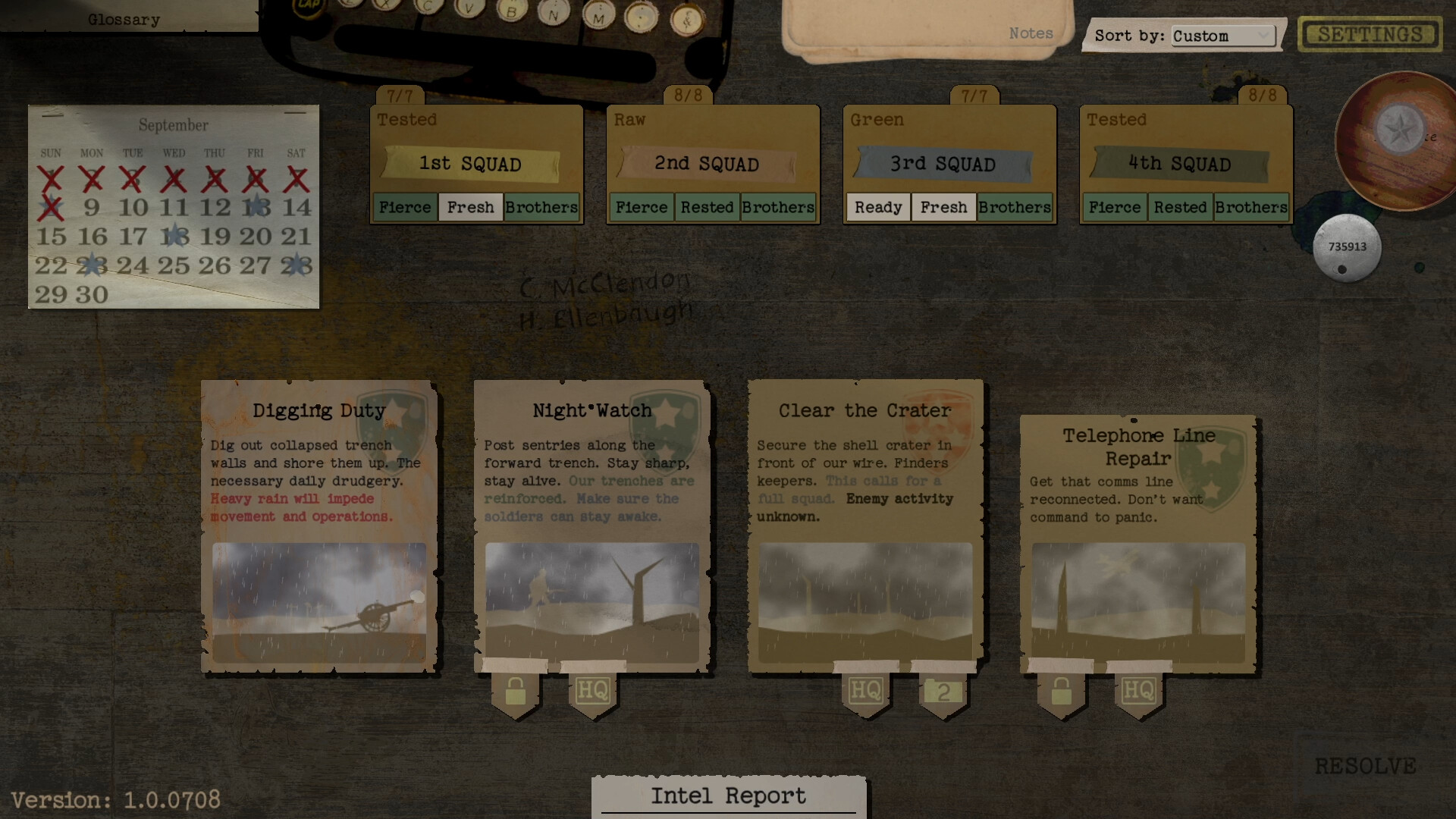
Assigning squads to the day's available missions on the trench deskImage: Zann Archive -
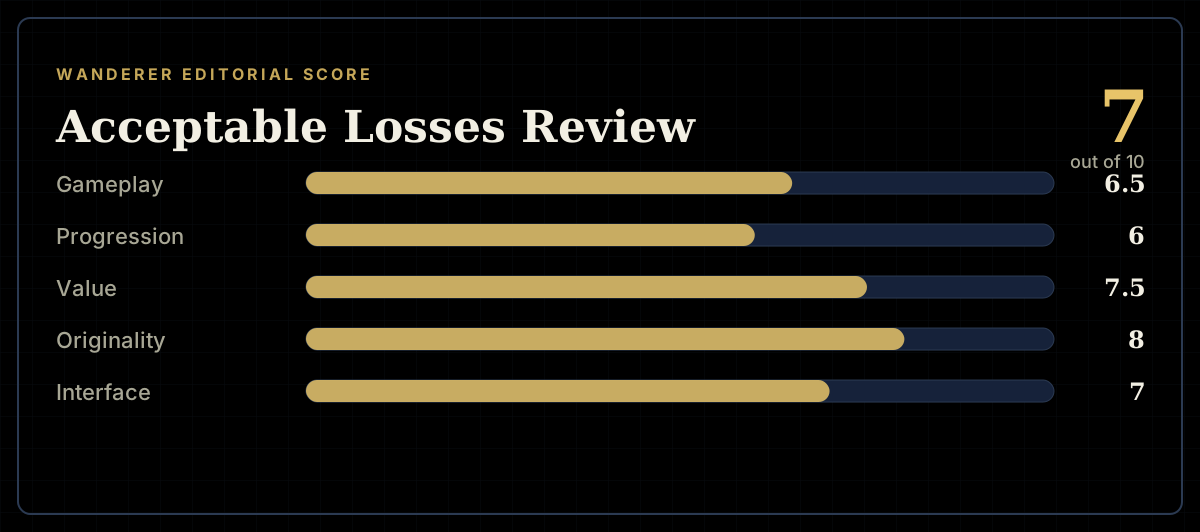
How the review scores each part of the gameWanderer Editorial -
The short versionWanderer Editorial