
Game review
Imperial Ambitions Review
6.2 / 10
- Developer
- aoiti
- Publisher
- Electronic Sheep Games
- Released
- 13 July 2026
- Platforms
- ["Windows", "Mac"]
- Genre
- Colonial 4X Strategy
The short version
Biggest strengths
- A genuine spiritual successor to Imperialism and Sid Meier's Colonization
- The replanting and production-chain systems make resource management feel tactile
- Hand-drawn pixel art with a striking amount of animation detail
Biggest weaknesses
- Nearly every system launches with little to no tooltip or explanation
- Diplomacy and war declarations feel arbitrary and disconnected from borders
- The AI puts up almost no resistance once a player understands the economy
6.2 / 10
A Spiritual Successor Nobody Else Was Making
Strategy fans have spent decades waiting for someone to pick up where Imperialism II and Sid Meier's Colonization left off, and solo developer aoiti has spent the last several years building exactly that. Imperial Ambitions puts players in charge of a European power during the age of exploration and colonization, tasking them with founding settlements across a hand-generated world map, extracting and refining raw materials into finished goods, and gradually building an economic and military machine capable of dominating rival nations.
The game had a long public run through free playtests and patch cycles before its July 2026 launch, and that history shows. The core loop of shipping colonists across the ocean, discovering new resources, and feeding them back into an ever-expanding production chain at home is instantly familiar to anyone who has sunk hundreds of hours into the genre's classics, while still finding its own identity through mechanics like the "replanting" system, where crops discovered in the New World can be brought back to Europe and cultivated from scratch. It is a small but clever touch, and it is emblematic of a design that clearly loves the source material it is drawing from without simply copying it wholesale.
Where Imperial Ambitions distinguishes itself most is in how unsentimental it is about the era it depicts. The wellbeing of the common population is not a moral consideration baked into the systems the way it is in most modern grand strategy games; starving peasants, forced labor, and religious unrest are simply outputs of an indifferent economic model, not signals that the player is doing something wrong. Several reviewers noted that this makes for an uncomfortable, occasionally alienating experience, but it is also a genuinely distinct point of view for the genre, and one that sets the game apart from softer, more sanitized colonial strategy titles.
Deep Systems, Almost No Explanation
The single biggest complaint leveled at Imperial Ambitions at launch, and it is not a small one, is how little the game does to explain itself. Labor allocation, logistics levels, agent leveling, unrest modifiers, and the tech tree are all deep, interconnected systems, but very few of them come with meaningful tooltips or in-game documentation. Players are largely left to reverse-engineer how their economy actually functions through trial and error, consulting a sparse community wiki, or asking questions directly in the Steam forums, where the developer has built a reputation for personally responding.
That responsiveness genuinely matters here. Across dozens of player reviews, a consistent theme is that aoiti reads feedback and ships fixes and quality-of-life improvements quickly, sometimes within days of a bug being reported. One player who complained about screen tearing reported getting a personal reply from the developer promising a V-Sync option, and came away recommending the game specifically because of that exchange. For a one-person studio, that level of engagement buys considerable goodwill, and it shows in how many otherwise frustrated reviews still land as recommendations.
Still, goodwill only stretches so far when core systems are this hard to parse on a first playthrough. New players routinely report spending their first several hours in a slow, confused spiral: cities starving for reasons that are never surfaced, production chains that silently fail because an upstream resource ran dry, and no consistent explanation for why some settlements are self-sufficient while others are not. A free public demo helps players sample the game before buying, which is a smart move given how steep that initial learning curve is, but it does not fix the underlying problem that the tutorial explains how to click on things without explaining why any of it matters.
Diplomacy, Combat, and an AI That Rarely Fights Back
Beyond the economic simulation, Imperial Ambitions layers in tactical hex-based combat, agent-driven espionage and diplomacy, and a broader map of rival colonial powers to compete against. On paper this gives the game a satisfying amount of scope, closer to the scale of Europa Universalis than a pure economic sim, but in practice the systems around the core colonization loop are the weakest part of the package.
Borders exist but do little to constrain movement, with multiple players describing enemy armies simply walking through their territory without a formal declaration of war. Diplomacy events, including wars, can trigger at scripted dates regardless of a player's actual standing with a rival, which undercuts the sense that choices matter. Most damning of all, the AI puts up little resistance once a player understands the basic loop; several reviewers described conquering entire rival nations within the first couple of decades almost by accident, or exploiting undefended AI ships left sitting along the coastline. For a genre where a credible opponent is half the appeal, this is a real gap.
Launch-week technical issues compounded the frustration for some players, with reports of a roughly one-in-four crash rate during extended sessions and memory usage climbing into the tens of gigabytes after several hours of play. These are the kinds of problems that are common for a small-studio launch and that the developer has a track record of addressing quickly, but they will matter to anyone deciding whether to buy in during the first weeks after release rather than waiting for a few patch cycles.
A Foundation Worth Watching Grow
It would be easy to read the list of complaints above and assume Imperial Ambitions is a broken game, but that undersells what is actually here. The economic core loop, the production chains, the sense of building an empire brick by brick from a handful of struggling colonists, is genuinely compelling, and a striking number of critical reviews still end with a thumbs-up and a note that they are looking forward to future updates. Fans of Imperialism, Colonization, or the slower end of the grand strategy spectrum will recognize a kindred spirit here, even if the execution is still finding its footing.
The pixel art deserves specific credit. Despite complaints about UI clarity, the world map and unit animations carry a level of craft that belies the size of the team behind them, and the presentation goes a long way toward making the early, confusing hours feel like they are worth pushing through. Combined with a genuinely novel take on labor and resource logistics, there is enough here that reviewers with thousands of hours in the genre's biggest names are still coming away impressed by the ambition on display, even when they are frustrated by the execution.
Verdict
Imperial Ambitions arrives as one of the most promising throwbacks the colonial strategy genre has seen in years, built by a single developer who clearly understands what made Imperialism and Colonization special and who has already shown a strong track record of listening to players and patching quickly. The economic core loop, the replanting mechanic, and the unsentimental take on the era's darker realities give it a real identity of its own.
But it launches rough. Systems go almost entirely unexplained, the AI offers little real challenge once its weaknesses are understood, diplomacy and borders feel disconnected from what is actually happening on the map, and early technical issues will test the patience of anyone who buys in during launch week. None of that is fatal, and the developer's rapid patch cadence gives real reason to expect the rough edges to smooth out over time, but right now this is a game best suited to strategy veterans willing to tolerate a steep, underexplained learning curve in exchange for a genuinely fresh take on a beloved formula. Everyone else should try the free demo first and consider waiting for a few more rounds of balance and clarity patches.
Pros and cons
Pros
- A genuine spiritual successor to Imperialism and Sid Meier's Colonization
- The replanting and production-chain systems make resource management feel tactile
- Hand-drawn pixel art with a striking amount of animation detail
- A solo developer who is unusually active and responsive to player feedback
- A huge amount of systemic depth for a $19.99 asking price
Cons
- Nearly every system launches with little to no tooltip or explanation
- Diplomacy and war declarations feel arbitrary and disconnected from borders
- The AI puts up almost no resistance once a player understands the economy
- Crashes and memory bloat during longer sessions at launch
- The tech tree and unit stats remain frustratingly opaque
Screenshots
-
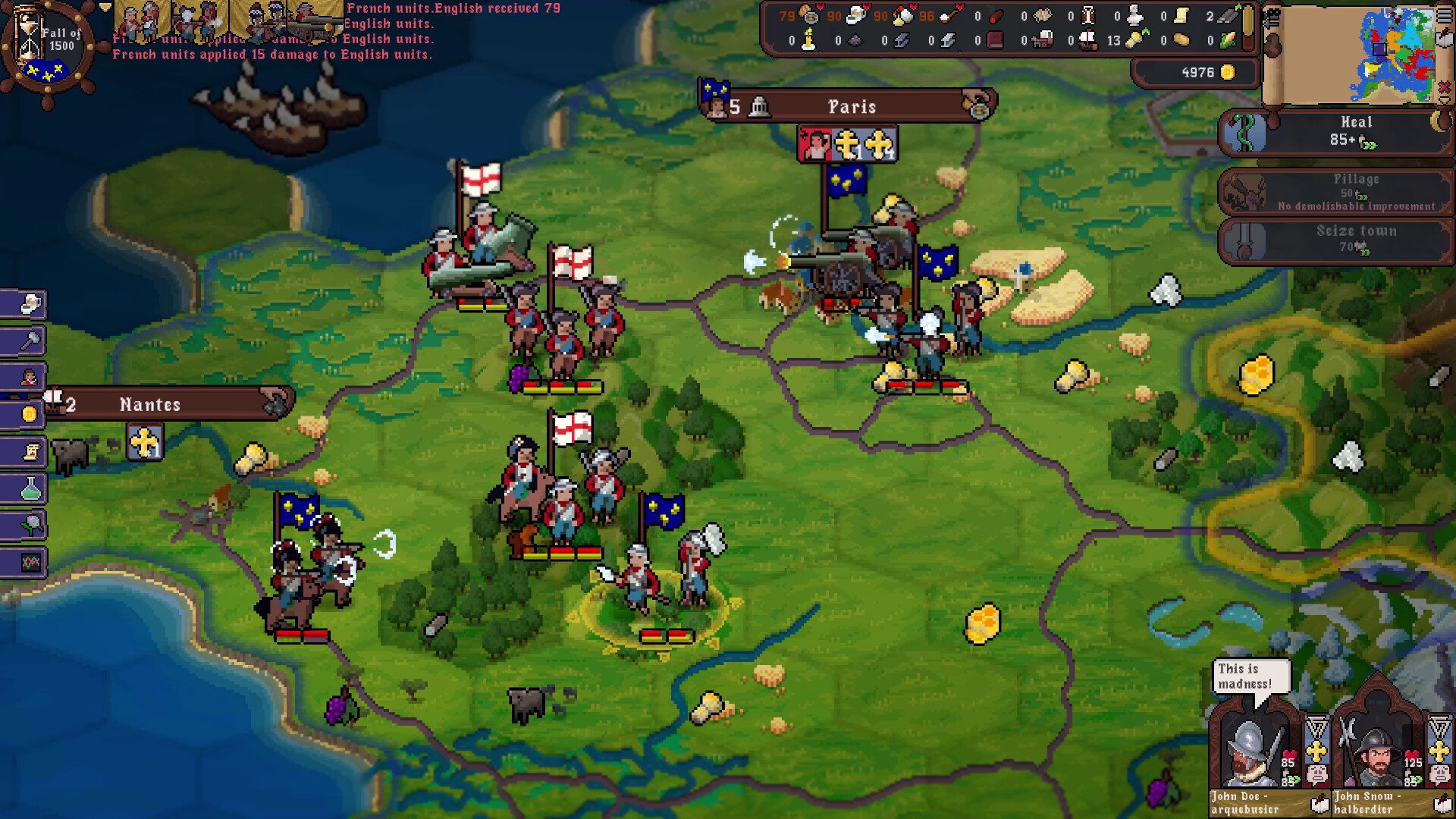
Hex-based tactical battles play out directly on the strategic map, complete with a running combat logImage: aoiti -
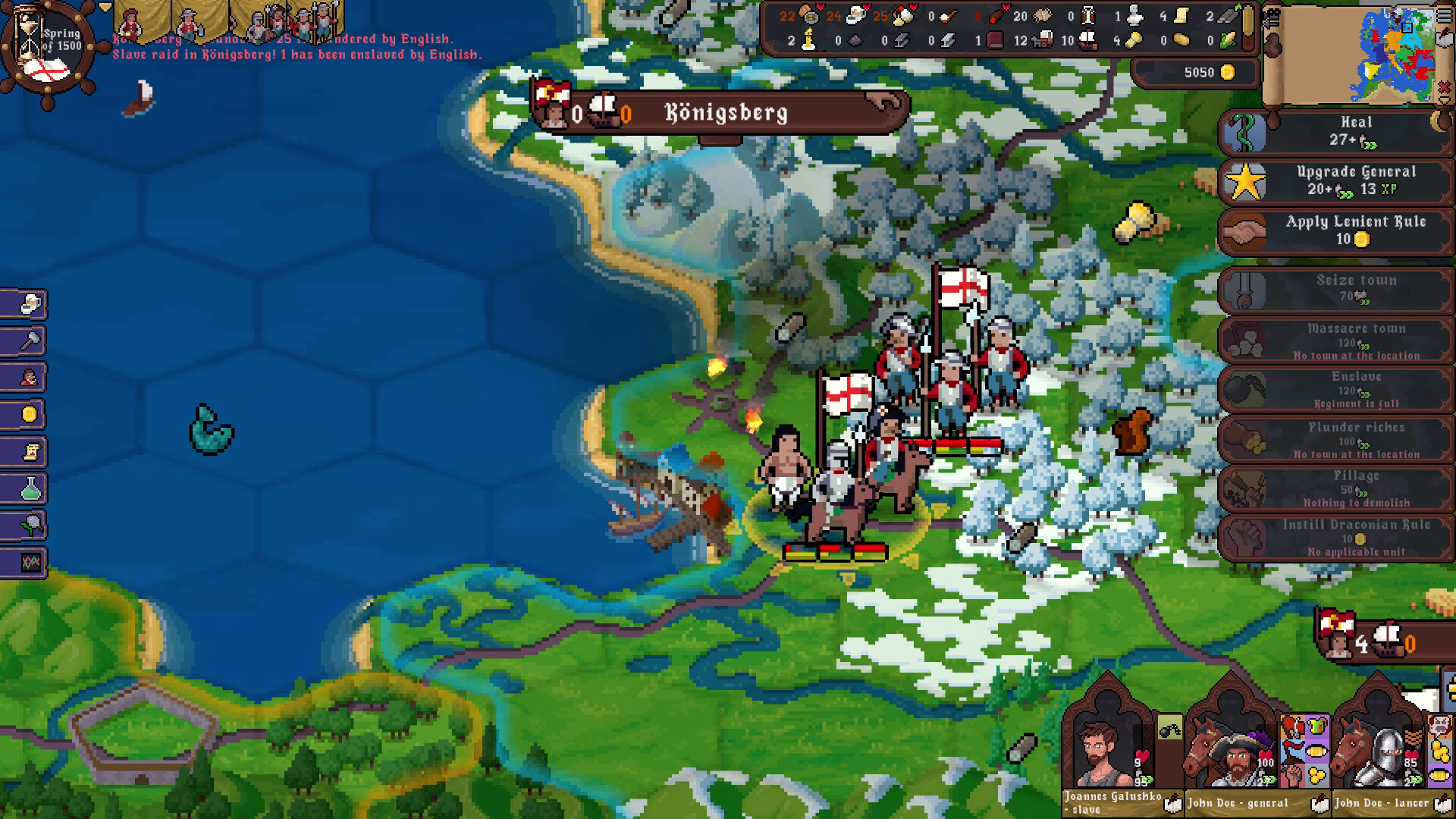
Captured settlements offer a grim menu of options, including enslaving the population, that reflect the game's unsentimental take on the eraImage: aoiti -
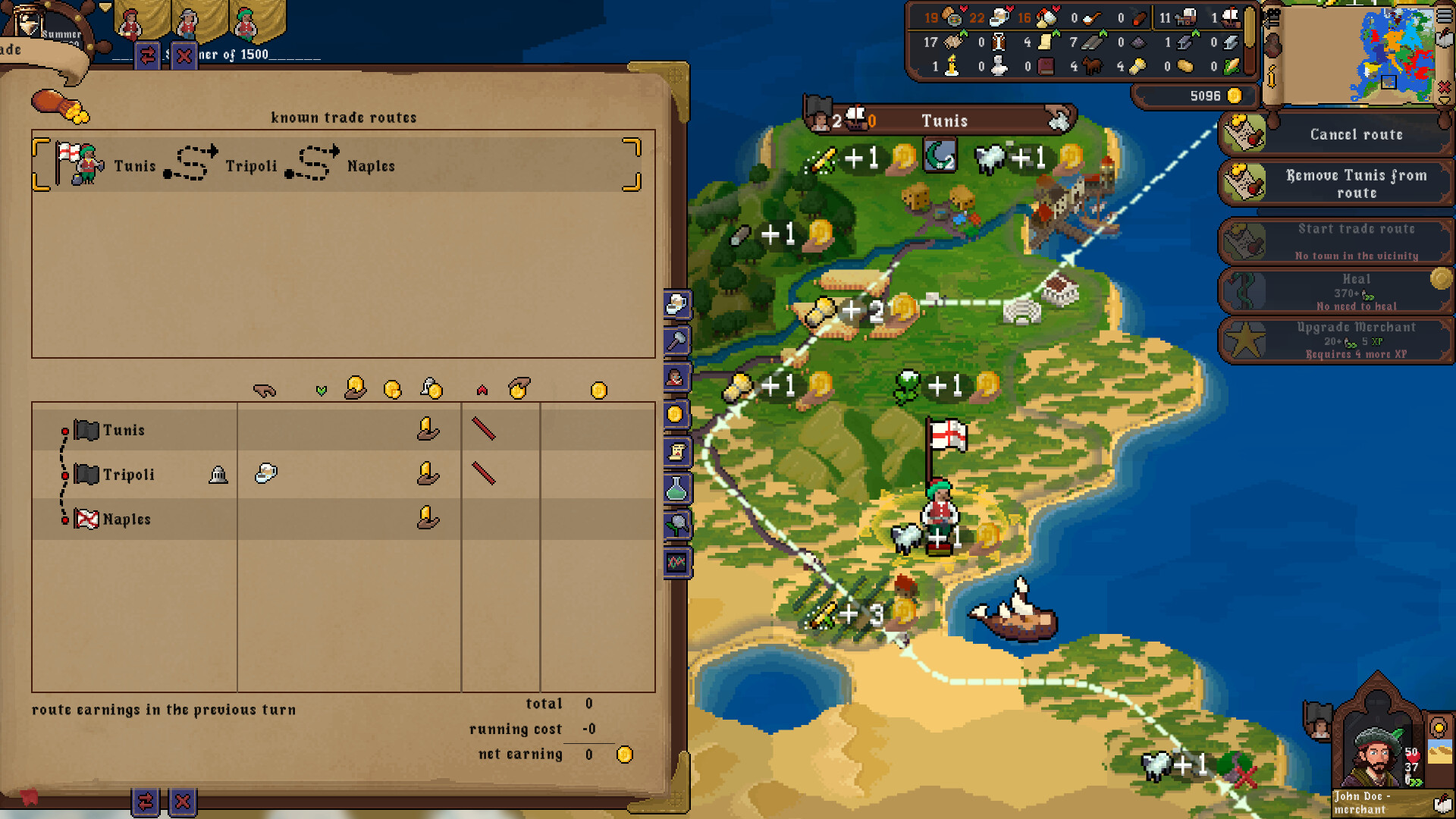
Trade routes connect distant ports, though many players report gold ends up mattering less than raw resourcesImage: aoiti -
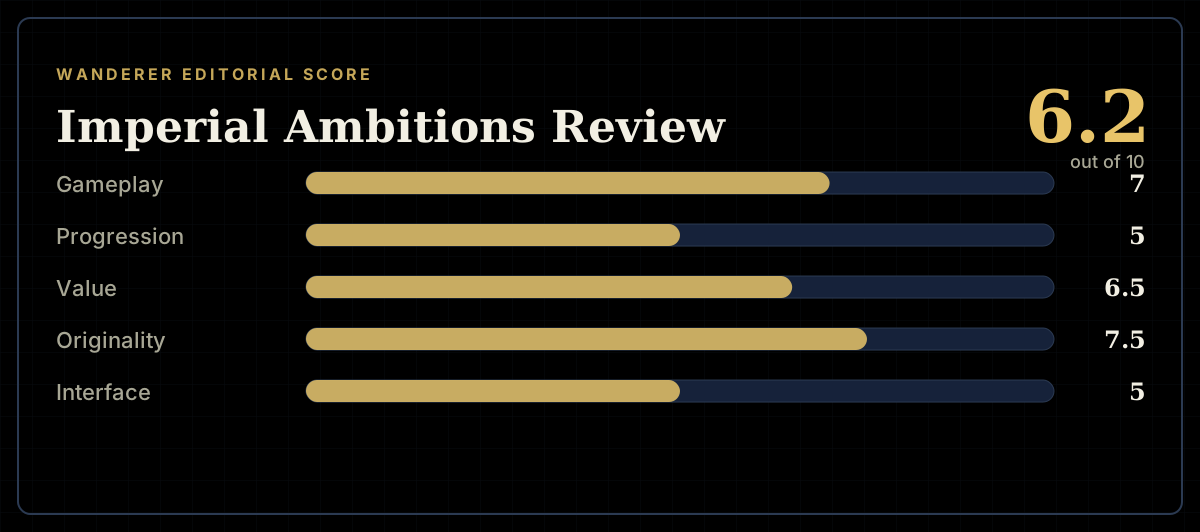
How the review scores each part of the gameWanderer Editorial -
The short versionWanderer Editorial