
Game review
Under Par Golf Architect Review
6.4 / 10
- Developer
- Broken Arms Games
- Publisher
- Gambit Digital
- Released
- 16 April 2026
- Platforms
- ["Windows", "Mac"]
- Genre
- Golf Management Simulation
- Monetisation
- Paid
- Players
- Single-player
The short version
Under Par Golf Architect delivers the golf-course-building fantasy SimGolf fans have wanted for twenty-five years, and the core loop of designing and then playing your own holes is a genuine joy, but a shallow scenery and hazard selection, an easily gamed scoring system that punishes creative course design, and thin management systems leave it feeling more like a strong foundation than a finished product.
Biggest strengths
- The course design toolset is intuitive, satisfying, and genuinely scratches the SimGolf itch that's gone unaddressed for over two decades
- Watching your own AI golfers actually play the holes you built, including reacting to doglegs and hazards, remains the game's standout hook
- First-person avatar mode lets you walk and play your own creations, a feature the genre's classics never offered
Who it's for: SimGolf nostalgics and golf-course-design enthusiasts willing to overlook thin content variety for a relaxing, low-pressure building loop.
Our recommendation: Worth it on sale for genre fans craving a SimGolf-style fix; those wanting deep tycoon management or a real challenge should wait for content updates.
6.4 / 10
A Twenty-Five-Year Wait for a SimGolf Successor
Few genres have gone as long without a proper successor as the golf-course-building tycoon sim popularized by Sid Meier's SimGolf back in 2002. Under Par Golf Architect, from small studio Broken Arms Games, arrives explicitly chasing that legacy, and the comparison is unavoidable in nearly every player review of the game: reviewers describe waiting "thirty years" or "twenty-five years" for something to fill the exact gap SimGolf left, and many say this is the first game to genuinely scratch that specific itch since. The core pitch is simple and appealing: design golf holes and full courses using a grid-based terraforming and hazard-placement toolset, then watch (or personally play, in first-person, as your own custom golfer avatar) how AI visitors navigate what you've built.
That core loop, design a hole, then see it played, works. Reviewers across the board single out the moment a carefully shaped dogleg or a cleverly placed water hazard actually influences how an AI golfer approaches a shot as the game's most satisfying feature, one that neither modern golf sims nor SimGolf's other would-be successors have quite managed to replicate. The addition of a fully explorable first-person mode, letting players walk their own courses and play them personally rather than just observing, is a genuine step beyond what the genre's decades-old touchstone offered, and it's consistently cited as a highlight even by reviewers otherwise frustrated with the game's rough edges.
A Toolset With Real Charm and Real Limits
The terraforming and course-building tools themselves draw consistent praise for being intuitive and quick to pick up: raising and lowering terrain, laying down fairways and greens, and placing tee boxes and pins all feel approachable even to players with no background in the genre. Several reviewers describe losing hours simply experimenting with hole shapes and layouts long before they've unlocked the game's full toolset. But that same toolset draws just as consistent criticism for its narrow scope once the novelty wears off: with essentially one type each of tree, water, sand trap, and rough terrain available for much of the game, reviewers repeatedly describe every course they build starting to look the same after the first few hours. Requests for basic scenery variety, different tree types, colored decorations, varied hazard shapes, come up in a large share of both positive and negative reviews, suggesting this is the single most requested improvement across the community regardless of overall sentiment.
The management side of the "tycoon" half of the experience fares worse in player reception. Systems for staff, visitor happiness, and course economics are widely described as thin or underdeveloped relative to the depth of the building tools, functioning more as a light wrapper around the course-design loop than a meaningful management layer in their own right. Several reviewers note that money accumulates far faster than there's anything meaningful to spend it on, undercutting the economic tension that similar tycoon-adjacent sims typically rely on to give building decisions weight.
A Scoring System That Rewards the Wrong Kind of Course
The most substantive and frequently repeated criticism concerns the game's scoring and difficulty balance. Multiple reviewers independently arrived at the same discovery: the most reliable way to earn high hole ratings and win in career mode is to build long, straight, low-hazard holes that let AI golfers post artificially good scores, rather than the interesting, dogleg-filled, hazard-rich courses the design tools were clearly built to encourage. Several reviewers describe this as actively punishing creativity, noting that a genuinely well-designed hole with a blind approach or a strategic water carry often scores worse in the game's rating system than a straightforward, boring par-4 with hazards placed purely for decoration where they never come into actual play. One reviewer who completed the entire career mode in under six hours specifically attributed the speed to this exploit, calling the lack of meaningful challenge a significant letdown given how much promise the core design tools show.
Compounding the frustration, several reviewers report that the game displays golfers' adjusted handicap scores rather than their raw gross scores on the scoreboard and in chat bubbles, leading to confusing situations where a golfer who clearly bogeyed a hole is shown celebrating a birdie or even an albatross. AI golfer pathing and shot selection also draw repeated complaints, with several reviewers describing golfers making bizarre decisions, such as repeatedly driving directly into a treeline on a dogleg rather than working around it, or getting stuck entirely and requiring a game restart to resolve.
Early Roughness in a Full-Priced Release
A recurring tension in the game's reception is that Under Par Golf Architect launched as a full, non-Early-Access release, but a large share of reviewers describe its overall polish, content depth, and balance as feeling more like an Early Access title. Bugs are reported with some regularity: terrain tools glitching in ways that leave undeletable objects behind, golfers and staff getting permanently stuck, and in a smaller number of cases, black-screen freezes tied to interacting with amenities like restrooms that have reportedly caused real progress loss. Several reviewers explicitly contrast the game's day-one downloadable content offerings with its unfinished feel, arguing the studio should have prioritized fixing core systems over selling additional content so soon after launch. On the more encouraging side, the developers appear to be actively engaged: multiple reviewers who left critical feedback report the team responding to community input with patches addressing specific complaints, and several updated their own reviews positively after follow-up fixes landed, a pattern that suggests real ongoing investment in the game's future even if the base release fell short of the genre-revival many were hoping for.
Verdict
Under Par Golf Architect gets the hardest part right: the fantasy of designing a golf course from scratch and then watching, or personally playing, how it comes to life is genuinely satisfying, and for players who have spent decades waiting for a proper SimGolf successor, that alone may be worth the price of admission. But a scoring system that actively discourages the creative, hazard-rich course design its own tools are built to enable, a scenery and decoration palette that feels stretched thin across dozens of hours of play, and management systems that never develop much beyond a surface-level wrapper all keep this from being the complete package its premise promises. This is a strong, promising foundation with a clearly engaged developer behind it, but right now it rewards patience and low expectations more than it rewards ambition.
Pros and cons
Pros
- The course design toolset is intuitive, satisfying, and genuinely scratches the SimGolf itch that's gone unaddressed for over two decades
- Watching your own AI golfers actually play the holes you built, including reacting to doglegs and hazards, remains the game's standout hook
- First-person avatar mode lets you walk and play your own creations, a feature the genre's classics never offered
Screenshots
-
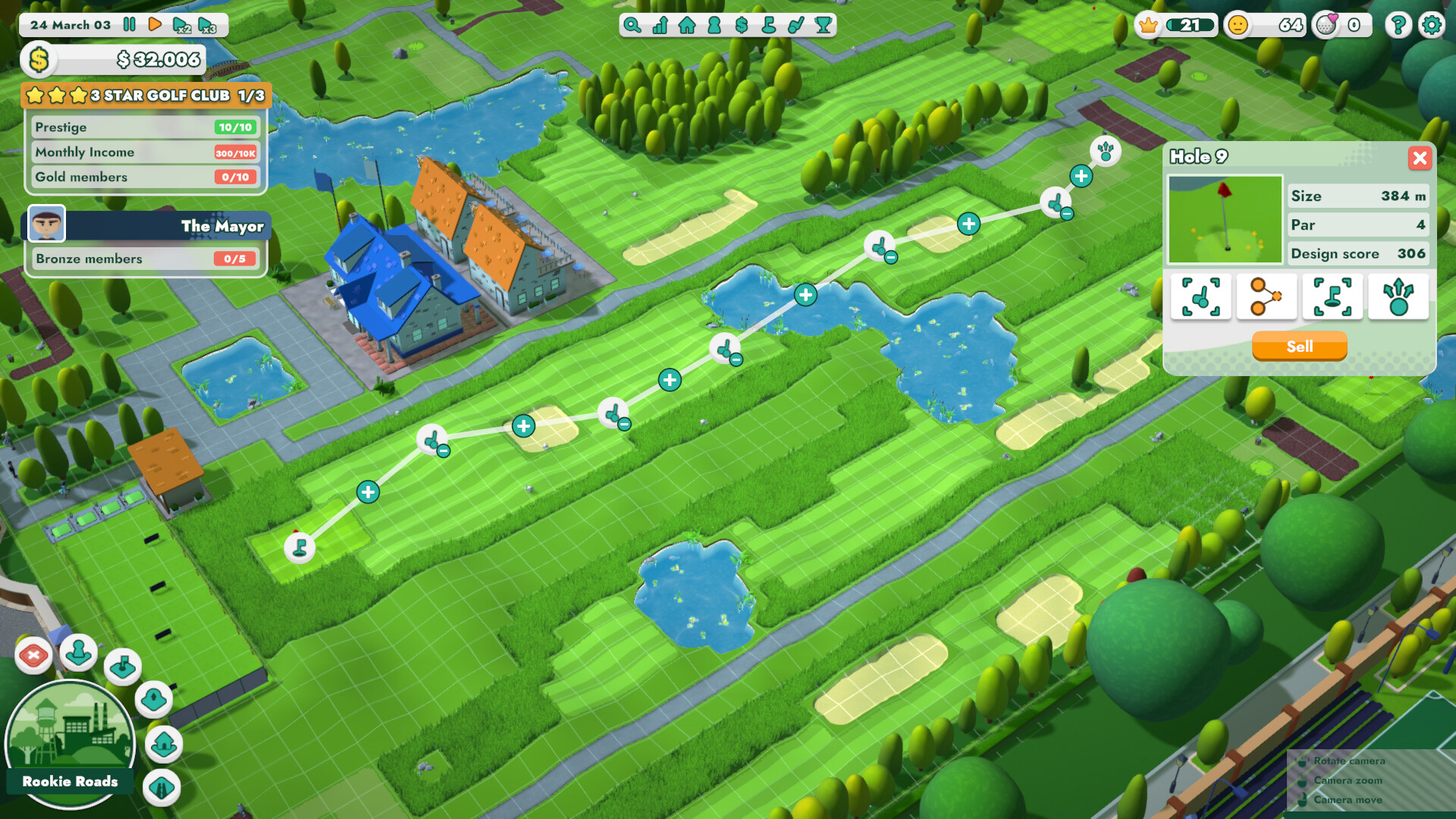
Course design mode lays out fairways, hazards, and terrain across a full club mapImage: Broken Arms Games -
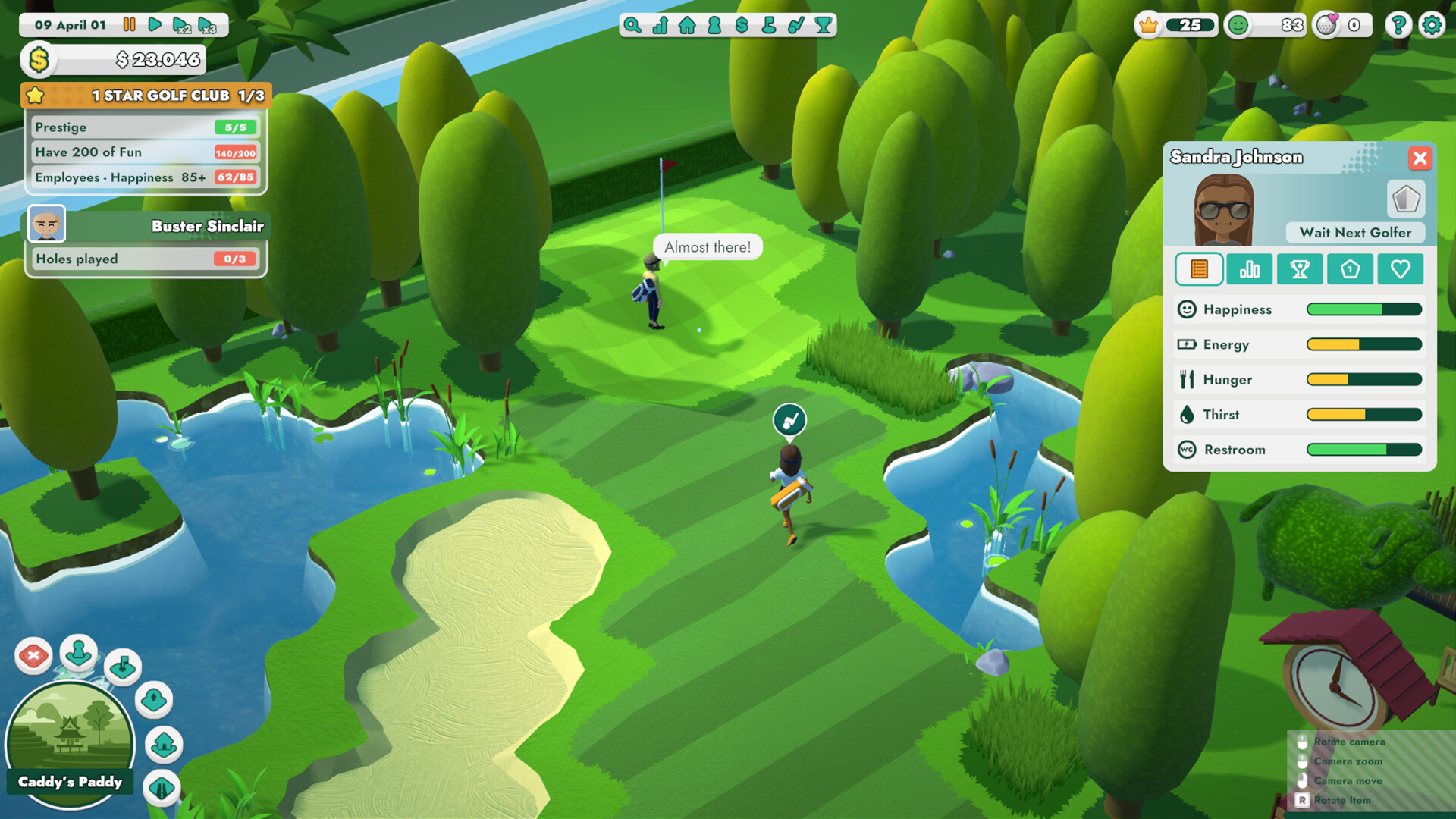
First-person avatar mode lets you walk your own course and check on visiting golfers' needsImage: Broken Arms Games -
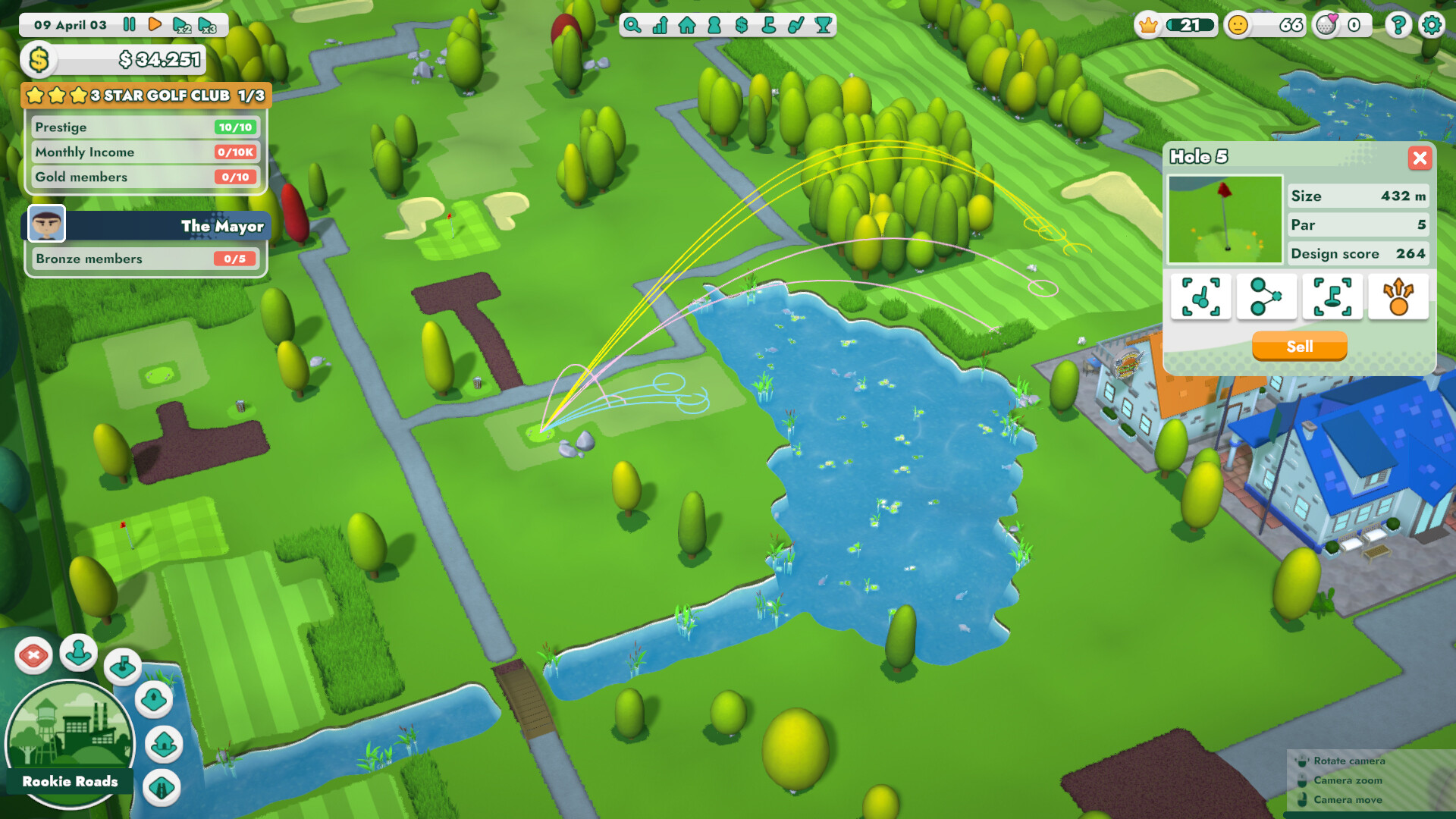
Shot trajectories reveal how a hole's hazards, like this lake carry, actually get playedImage: Broken Arms Games -
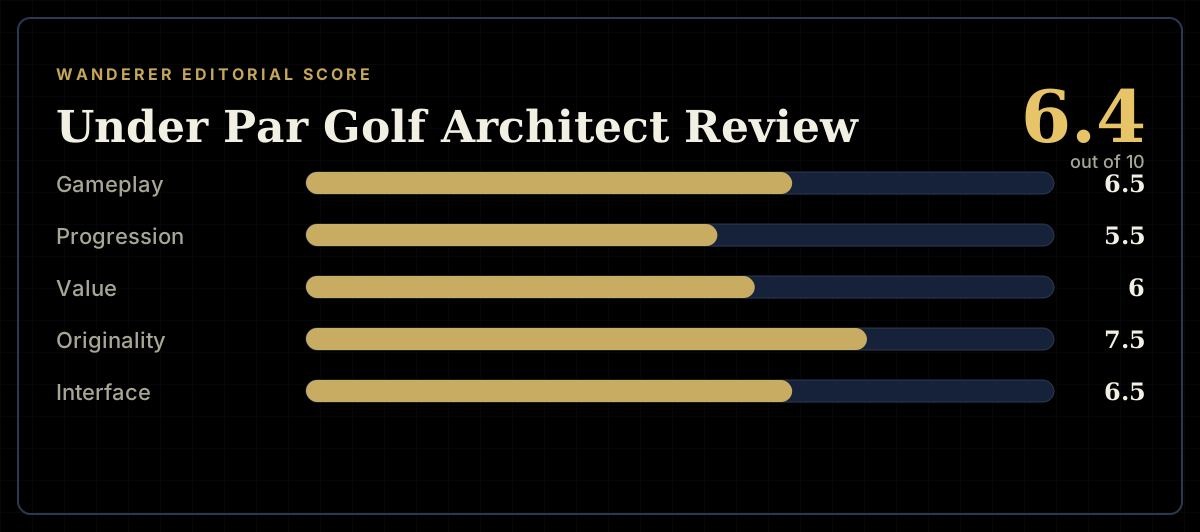
How the review scores each part of the gameWanderer Editorial -
The short versionWanderer Editorial