Game review
Deck & Conn Review
6.5 / 10
- Developer
- Funtime Electrics
- Publisher
- MicroProse Software
- Released
- 1 September 2026
- Platforms
- ["Windows", "Mac", "Linux"]
- Genre
- Strategy
Cold War Naval Sim, Fifteen Minutes Into the Future of 1989 — In Space
Deck & Conn puts you in command of a single nuclear-powered corvette in an endless, low-key war against the Spiral Arm Federacy, filtered through the aesthetic of a Cold War submarine thriller crossed with a 1980s mainframe terminal. Developer Funtime Electrics, working in a small team, built the game as an explicit throwback to the 1971 mainframe classic Super Star Trek and the early-'90s MicroProse catalogue, and MicroProse Software's return as publisher for a game this specifically indebted to their own back catalogue is a fitting pairing. There's no story campaign in the traditional sense — you're a captain answering distress calls, hunting enemy shipping, and slowly earning renown through a series of patrols, all narrated through terse mission briefings and randomly generated officer bios rather than cutscenes.
The most immediately striking thing about the game, and the thing nearly every reviewer leads with, is its interface: a bank of skeuomorphic control panels, toggle switches, and CRT-green readouts that you physically click through to run your ship, right down to choosing what's in your captain's coffee mug. Reviewers repeatedly compare the layout to Highfleet or Nebulous: Fleet Command in spirit, though considerably lighter in mechanical depth than either. A detailed in-game manual and a set of startup checklists are meant to walk new players through procedures like reactor startup, FTL jumps, and docking — and how well that onboarding actually lands is one of the sharpest dividing lines in the review base.
Energy Management and Tense, Turn-Based Duels Are the Real Draw
Where Deck & Conn earns its strongest praise is in the moment-to-moment combat. Reviewers consistently single out the energy-management system — balancing railgun charge, shield power, FTL readiness, and weapon accuracy against a single shared reactor output — as the game's best idea, turning even a lone gunboat encounter into a genuine risk calculation. One reviewer describes an FTL jump landing them face-to-face with an enemy destroyer in the same sector, both ships still recovering power from the jump, resulting in what they call an "extremely short and vicious" duel decided by a hair's-breadth power margin. Several others describe similarly tense standoffs, and the turn-based structure gives players time to think through each decision rather than reacting under time pressure — reviewers who aren't normally drawn to turn-based strategy specifically call out how approachable the combat loop is once the interface clicks.
That approachability has real limits, though. A meaningful share of critical reviews describe onboarding as actively obstructive rather than just old-fashioned: checklist steps that don't clearly map to the control being referenced, a "General Quarters" switch that one reviewer spent thirty minutes hunting for, and a docking tutorial that several reviewers say doesn't actually explain where the dock button lives. The game launched without the ability to save mid-patrol, which a large number of reviewers — both positive and critical — flag as a serious early misstep given patrols can run 20 minutes to over an hour. To Funtime Electrics's credit, several reviewers explicitly note the studio patched in mid-patrol saving within days of launch, and a few reviewers who'd left negative reviews over the missing feature say they've since reconsidered.
A Short Campaign That Maxes Out Fast and Repeats Its One Mission Type
The most consistent criticism, appearing across both positive and negative reviews alike, is a lack of content relative to the game's depth of presentation. The campaign runs eight patrols, reviewers report fully upgrading their ship's systems within two or three of them, and the mission variety — largely "patrol a friendly sector" or "patrol a hostile sector" — repeats without much structural change beyond difficulty. Multiple reviewers who otherwise enjoyed the game describe finishing a full campaign in five to seven hours and feeling like they'd seen everything the systems had to offer well before the credits rolled, with requests for new ship classes, escort or interception missions, and a sense of strategic stakes across the wider war all coming up repeatedly as things reviewers wish were there. A vocal minority go further, arguing the shallow mission variety and quickly-maxed progression make the asking price hard to justify regardless of how appealing the aesthetic is.
Bugs compound the frustration for some players. Several reviewers describe a softlock tied to targeting multiple close-in weapon turrets at once, where the game won't let you execute a turn or cancel the targeting once you're over sensor capacity, forcing a restart. A handful of reviewers also bring up Funtime Electrics's previous game, Objects in Space, which was left in an unfinished state after an extended early access period, and cite that history as a reason for skepticism about whether Deck & Conn will receive sustained post-launch support — though the pace of hotfixes and content patches visible in the game's own update history (eleven updates within roughly two weeks of launch) cuts against that concern for reviewers willing to look at what's actually happened since release.
A Genuine Niche Throwback That Rewards Patience With Its Interface
For reviewers who click with the retro, checklist-driven presentation, Deck & Conn delivers something genuinely uncommon: a slow, deliberate command simulator that treats flipping switches and reading gauges as the point rather than an obstacle. Reviewers who grew up with mainframe Star Trek games or 1990s naval sims describe real nostalgia payoff, and several specifically praise small touches like randomly generated crew biographies and the option to choose a captain's beverage as evidence of a design team that cared about atmosphere even where it doesn't affect gameplay. For reviewers expecting a deeper simulation in the vein of Dangerous Waters or even Highfleet, though, the game's actual mechanical ceiling — a handful of weapon types, one ship class, and a war that never visibly shifts based on your actions — reads as a disappointment relative to the promise of its interface and framing.
Verdict
Deck & Conn nails a genuinely specific, underserved niche — a skeuomorphic, checklist-driven Cold War space command sim with real tension in its energy-management combat — and Funtime Electrics has shown it's willing to patch fast when the community pushes back, addressing the missing mid-patrol save within days of launch. What holds it back from a stronger recommendation is a campaign that maxes out its own systems well before it ends, mission variety that repeats more than it evolves, an onboarding process several reviewers found genuinely obstructive rather than charmingly retro, and a softlock-capable bug or two that shouldn't have shipped in a 1.0 release. Fans of retro command sims and turn-based tactics who go in expecting a focused five-to-seven-hour experience rather than a deep, expansive campaign are likely to find a lot to like here, especially if Funtime Electrics keeps building on it the way its early patch cadence suggests.
Pros:
- Genuinely tense, well-designed energy-management combat system
- Distinctive, atmospheric skeuomorphic interface with real charm
- Developer has patched quickly and repeatedly since launch, including adding mid-patrol saves
- A rare, specific throwback niche with little direct competition on Steam
- Approachable for players who don't normally enjoy turn-based strategy
Cons:
- Campaign content is thin — ship upgrades and mission variety max out within a few patrols
- Onboarding and checklist tutorials are unclear at several key steps
- A close-in weapon targeting bug can softlock a patrol and force a restart
- Mission structure barely varies beyond "patrol a friendly or hostile sector"
- Some reviewers find the asking price steep given how quickly the content is exhausted
Screenshots
-
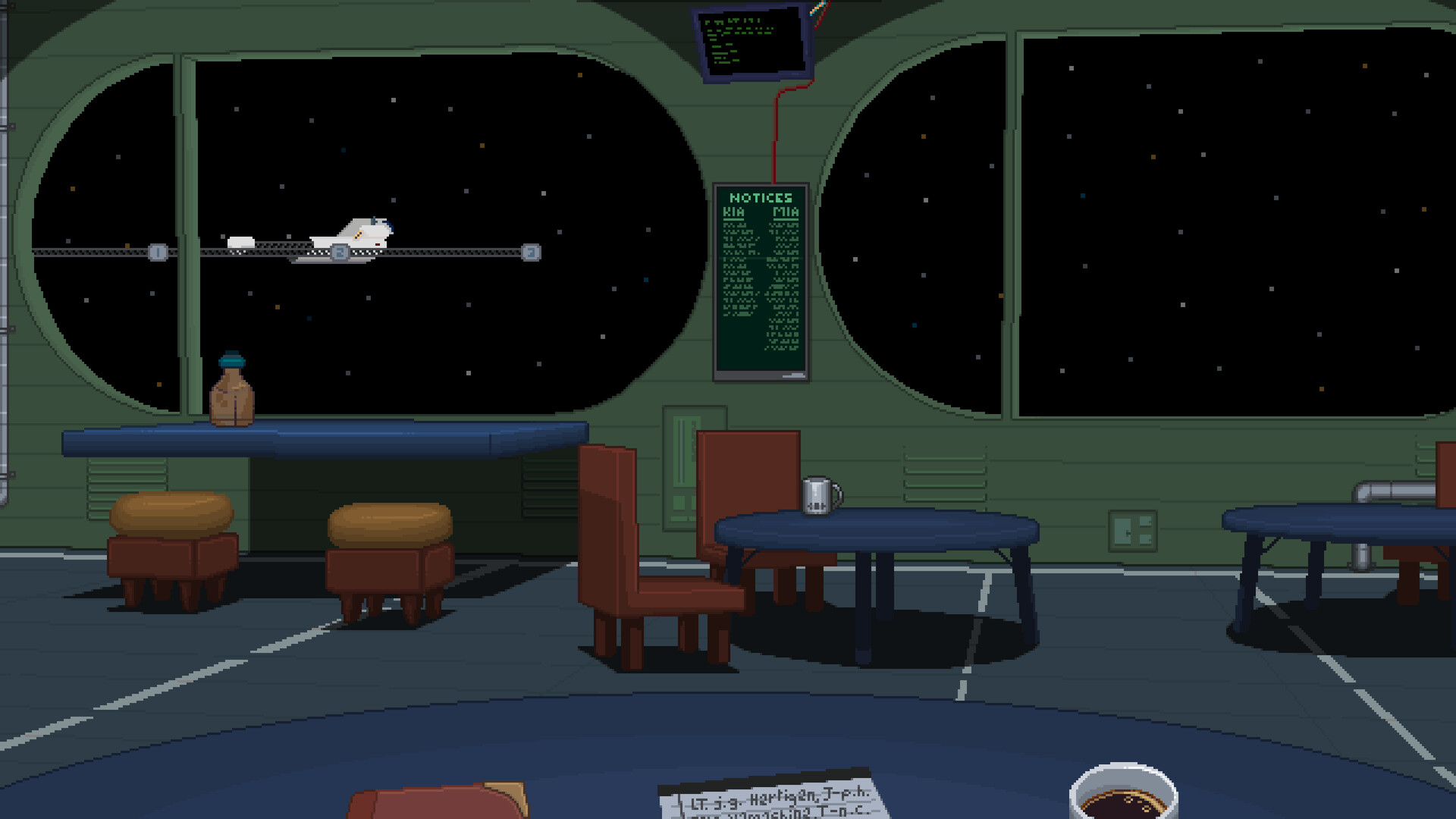
The corvette's crew lounge, with the ship visible through the observation windowImage: Funtime Electrics -
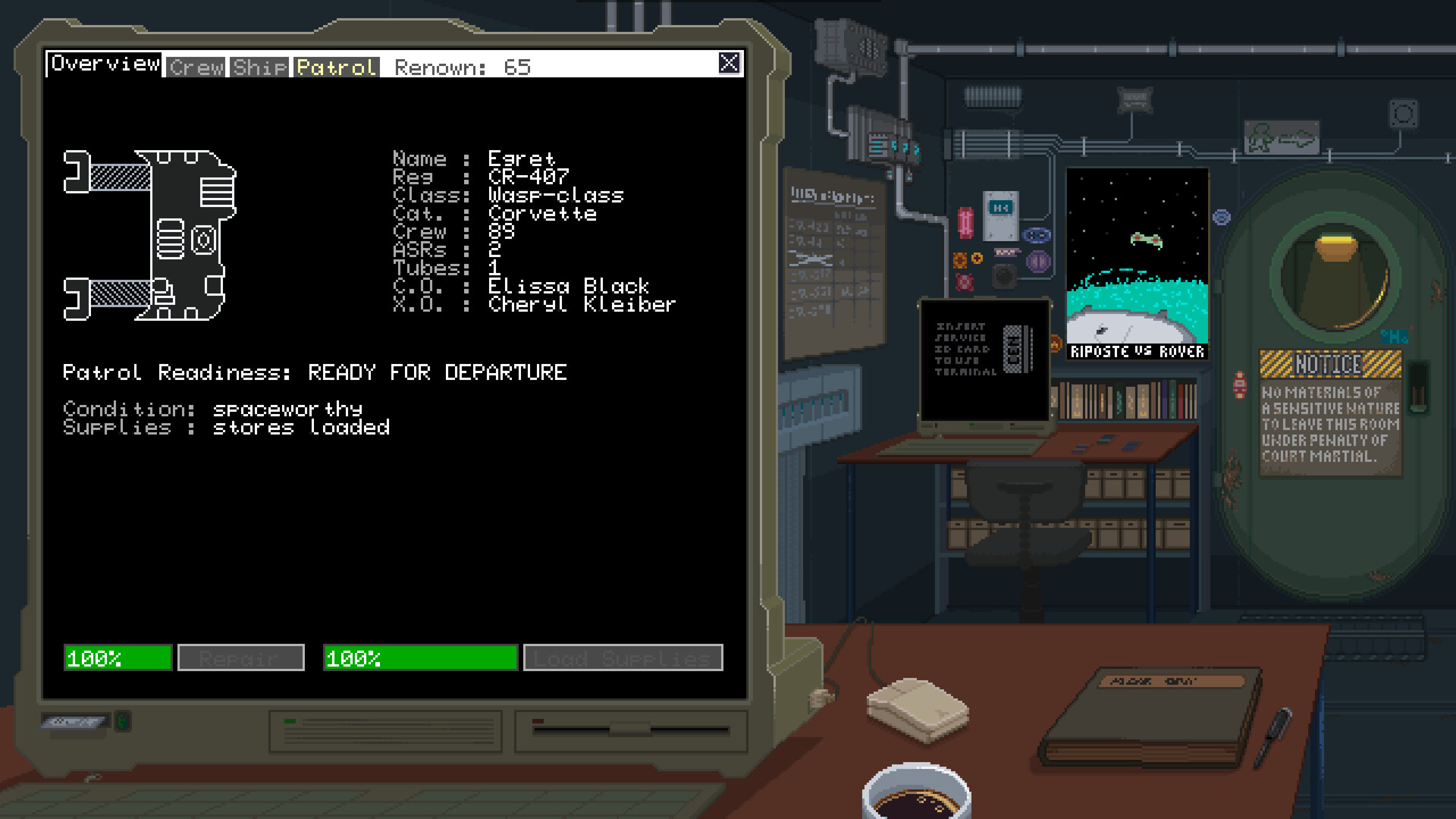
The ship overview screen, showing crew, readiness, and renownImage: Funtime Electrics -
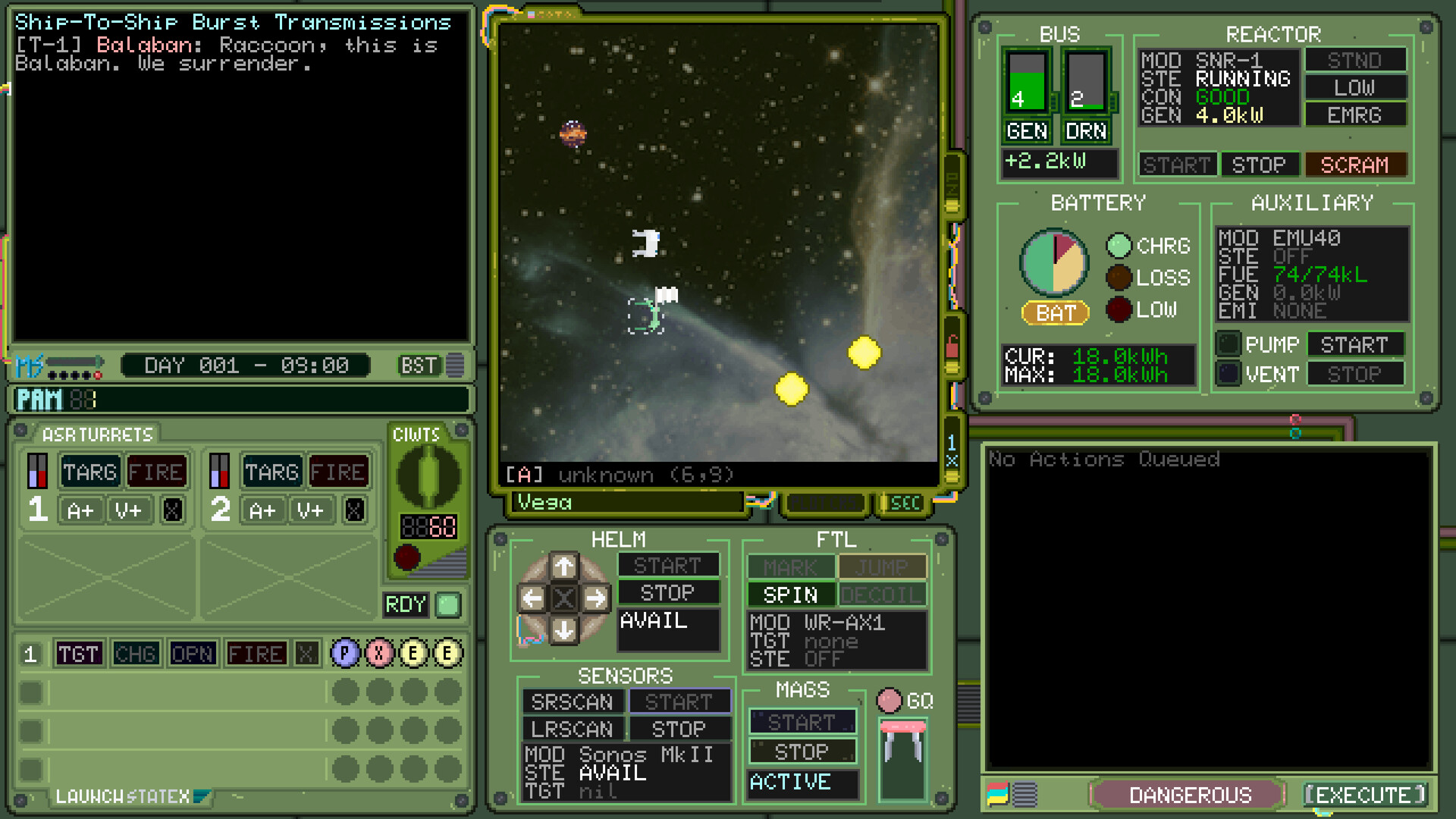
The bridge's skeuomorphic control panels during a tense encounterImage: Funtime Electrics -
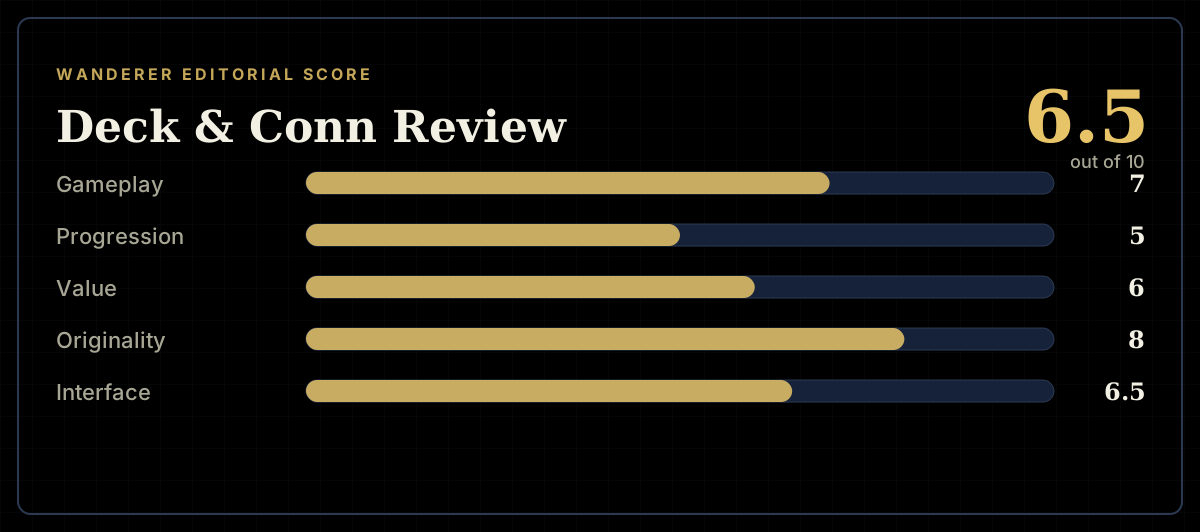
How the review scores each part of the gameWanderer Editorial -
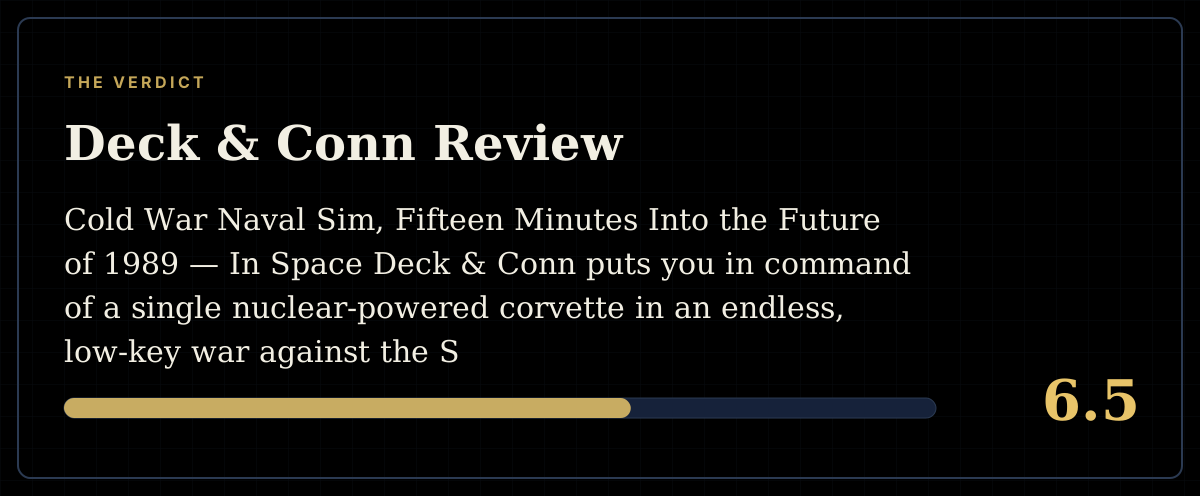
The short versionWanderer Editorial