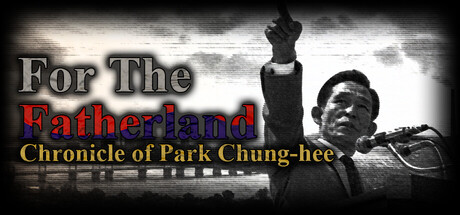
Game review
For the Fatherland: Chronicle of Park Chung-hee Review
7 / 10
- Developer
- KMS STUDIO
- Publisher
- KMS STUDIO
- Released
- 3 September 2026
- Platforms
- ["Windows"]
- Genre
- Strategy
Playing the Most Contested Figure in Modern Korean History
For the Fatherland: Chronicle of Park Chung-hee is a solo-developed political and economic simulation that drops you into January 1960 Seoul as an Army major general watching the Rhee government collapse under its own corruption. From there you're steering toward the real May 16, 1961 coup, and everything that follows — years of rule as head of the Supreme Council for National Reconstruction, the Economic Planning Board, the National Assembly, and eventually the presidency itself, through elections, purges, the 1972 Yushin constitutional overhaul, and on toward one of twenty-four possible endings. It's an unusually direct approach to one of modern Korea's most divisive historical figures, and the developer says so outright on the store page: whether Park Chung-hee comes out of your playthrough as the father of the nation's economic miracle or as a military dictator rests entirely on the choices you make.
That subject matter alone sets the game apart from nearly everything else in its genre, and reviewers — a heavily Korean and Chinese audience by review-language breakdown, unsurprisingly given the setting — consistently describe it as a genuinely deep dive into a period underexplored in games generally. It's frequently compared to Suzerain, Crisis in the Kremlin, Power & Revolution, and Mao's Legacy, and more than one reviewer argues it holds its own against all of them, particularly on the strength of its economic modeling.
An Economy Worth Studying, a Military and Diplomacy Barely There
The core loop runs through a set of dedicated ministry screens — the Economic Planning Board, Ministry of Finance, Judiciary, National Assembly, Bank of Korea, and more — each modeling a real institution from the period with enough granularity that reviewers repeatedly single out the economic simulation as the game's standout system. One detailed early review breaks the game's four major pillars into gameplay inspired by Nostalgames' political-sim catalog, an economic model complex enough to draw direct Paradox comparisons, a diplomatic system that's promising but underdeveloped, and a military simulation described as "kind of non-existent." That's a fair summary of where the game currently sits: the Cold War-era balancing act between the Eastern Bloc and Western Alliances is present and open-ended in principle, but reviewers note there simply aren't enough concrete diplomatic actions to meaningfully pivot relationships with China, North Korea, or the Non-Aligned Movement, and the same thinness applies even more to military affairs, where South Korea's actual defense posture and Vietnam-era involvement get comparatively little mechanical depth for how central they were historically.
The branching-history structure is where the ambition really shows. Every major decision generates a chronicler's record of the path you took and the paths you didn't, and the twenty-four endings span everything from the coup failing before dawn to walking away peacefully after two terms to proclaiming the authoritarian Yushin system and everything that followed from it. Reviewers describe genuinely divergent playthroughs — one focused entirely on debt-free economic development, another escalating into open war with the North — and treat that replayability as a real strength even among reviewers otherwise frustrated with the game's rougher systems.
Rough Localization and Real Bugs, But a Developer Visibly Racing to Fix Them
The most consistent complaint among English-speaking reviewers isn't the historical content or the mechanics, it's the presentation. The English localization is repeatedly described as leaving a lot to be desired, and UI problems compound it — character names and decision text are reported bleeding off the edges of the screen and becoming illegible in places. Several reviewers report bugs beyond translation, including notifications that don't clear properly and moments where the game doesn't seem to register player input as expected, though none describe these as campaign-ending. One reviewer notes catching what they believe is AI-assisted writing in parts of the localization, but frames it charitably given how extensively the underlying history is clearly researched — a reasonable read on a solo-developer project working from a non-English source language into an international audience.
What consistently earns the game goodwill despite these issues is the pace of post-launch support. Multiple reviewers specifically call out updates landing every few days that add deeper mechanics and improve the UI, and more than one explicitly frames the game as "a diamond in the rough that needs polishing" rather than a finished product falling short — language that shows up again and again across the review base as a shorthand for how forgiving players are being while the systems mature.
A Genuinely Unusual Simulation Worth the Price of Admission
At $14.99, reviewers who came in for the historical subject matter and the economic depth overwhelmingly describe it as a worthwhile purchase, with several noting six-plus-hour first playthroughs and stated intent to replay for different historical branches. It won't be for everyone — the localization roughness is a real barrier for players without patience for imperfect English text, and anyone hoping for a full military or diplomatic simulation to match the economic side will come away wanting more of both. But as a menu-driven political simulation built around one of the most contested leaders in modern East Asian history, treated with a level of narrative and mechanical seriousness that's rare for the subject, it's carving out a niche nothing else currently occupies.
Verdict
For the Fatherland: Chronicle of Park Chung-hee is an ambitious, unusually specific political simulation that succeeds where it matters most — a genuinely deep economic model wrapped around a branching, twenty-four-ending take on one of modern Korea's most contested historical figures — while still visibly needing work on its military and diplomatic systems, its English localization, and its UI. The developer's rapid post-launch patch cadence is buying real patience from a review base that clearly wants this game to succeed, and for players with any interest in Cold War-era political simulation or Korean history specifically, the current rough edges are a reasonable trade for a genre entry with this much ambition and this little competition.
Pros:
- Genuinely deep, well-researched economic and institutional simulation
- Unusually direct, seriously handled take on a historically contested figure
- Twenty-four branching endings with real, divergent playthrough outcomes
- Developer shipping frequent post-launch updates adding mechanics and UI fixes
- A rare and distinctive subject matter within the political-sim genre
Cons:
- English localization is rough, with text sometimes bleeding off screen and becoming illegible
- Diplomatic system is underdeveloped, lacking concrete actions to meaningfully shift relationships
- Military simulation is minimal relative to the period's historical importance
- Assorted UI and notification bugs remain, though none reported as game-breaking
Screenshots
-
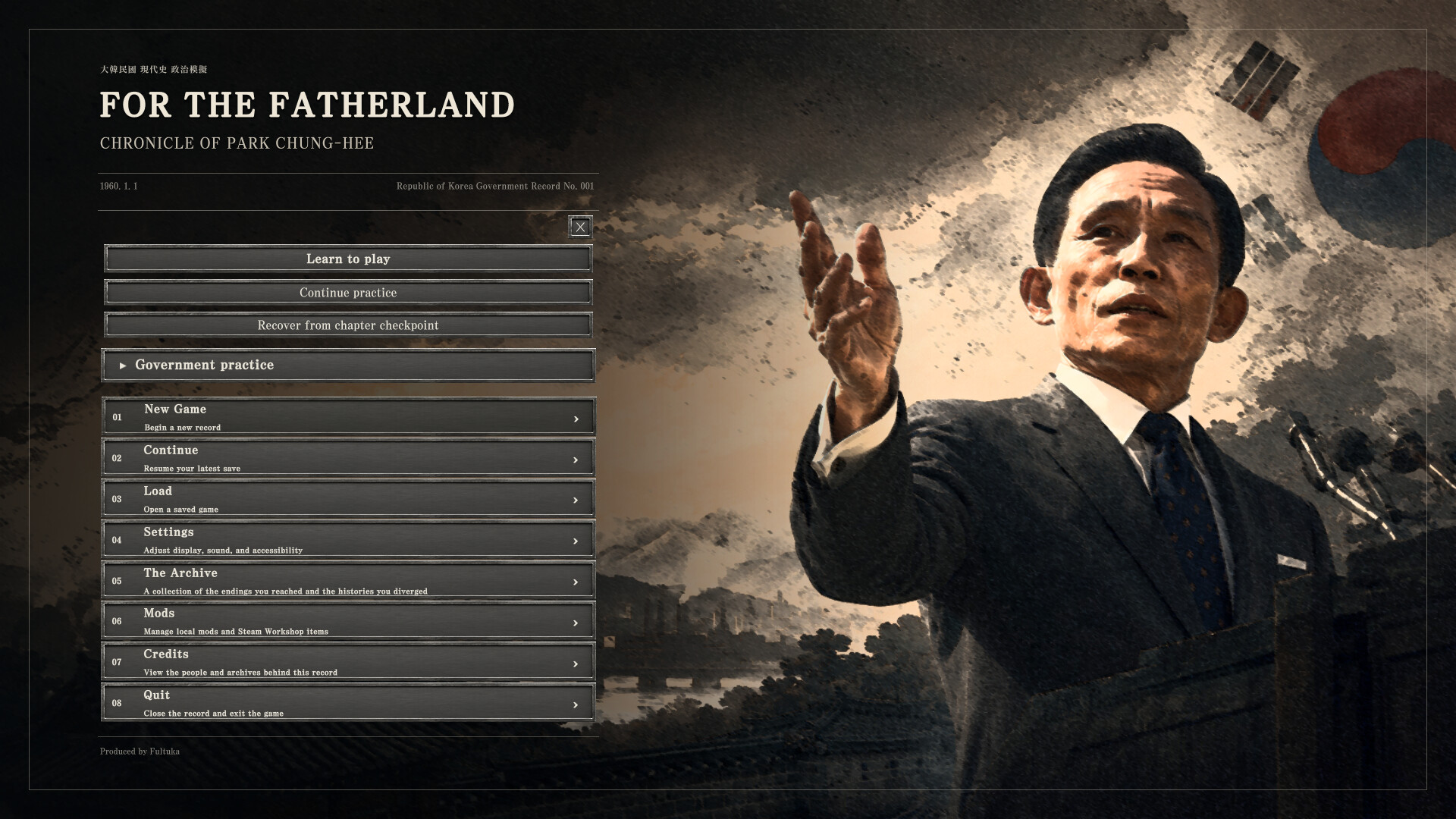
The main menu, with a painted portrait of Park Chung-hee alongside the South Korean flag.Image: KMS STUDIO -
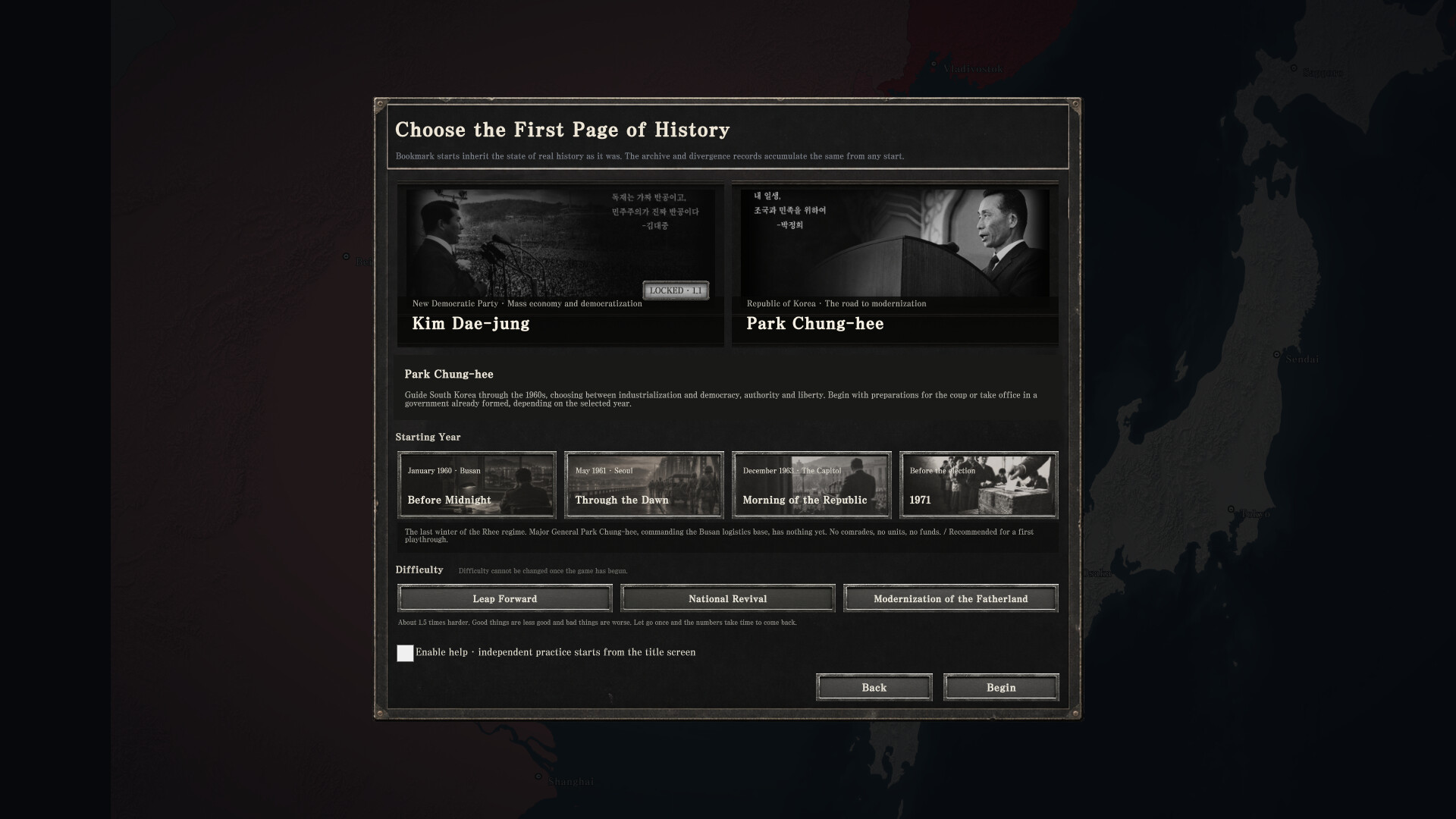
Choosing a starting scenario, starting year, and difficulty before beginning a campaign as Park Chung-hee.Image: KMS STUDIO -
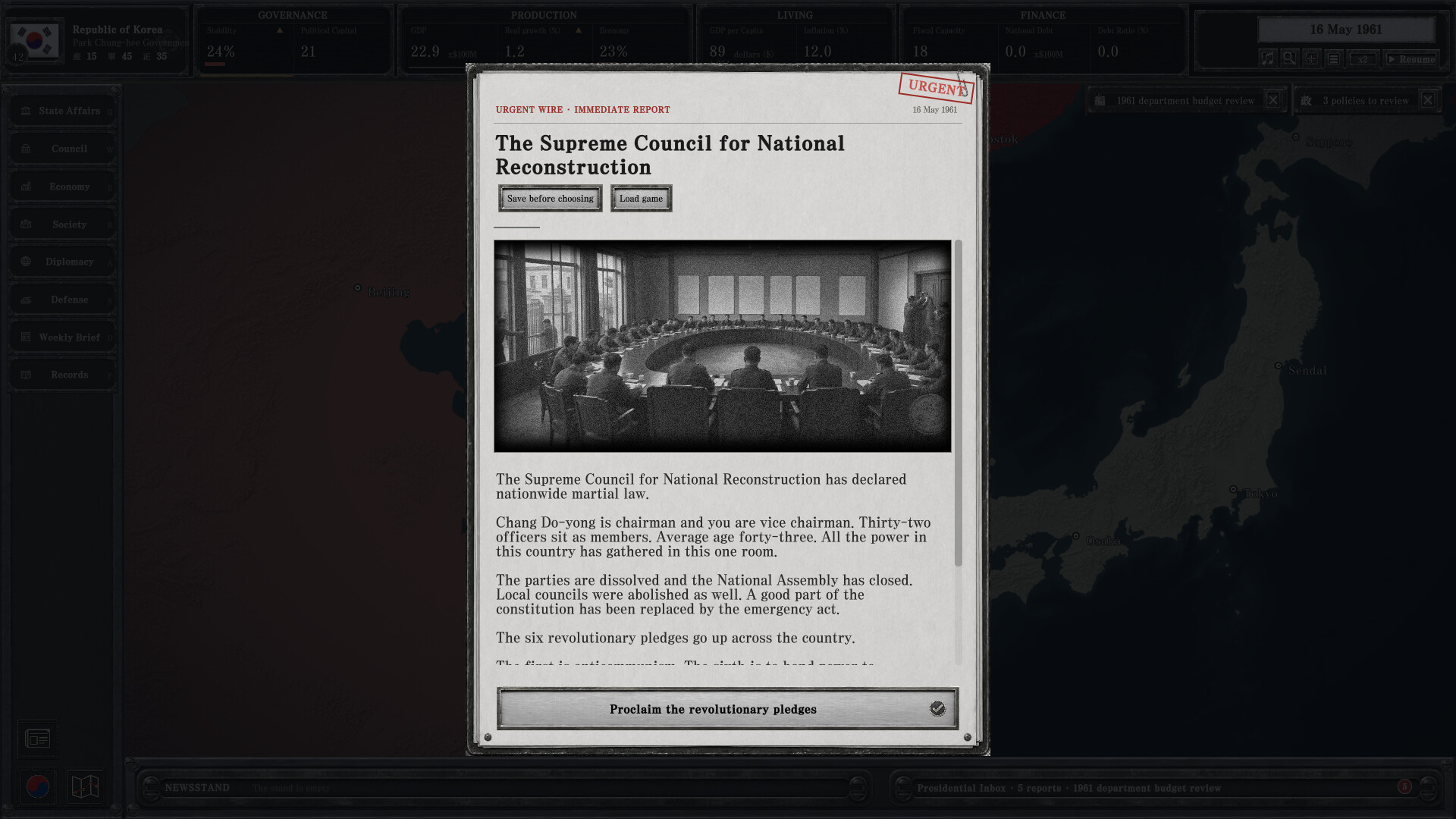
An urgent wire report on the formation of the Supreme Council for National Reconstruction following the May 1961 coup.Image: KMS STUDIO -
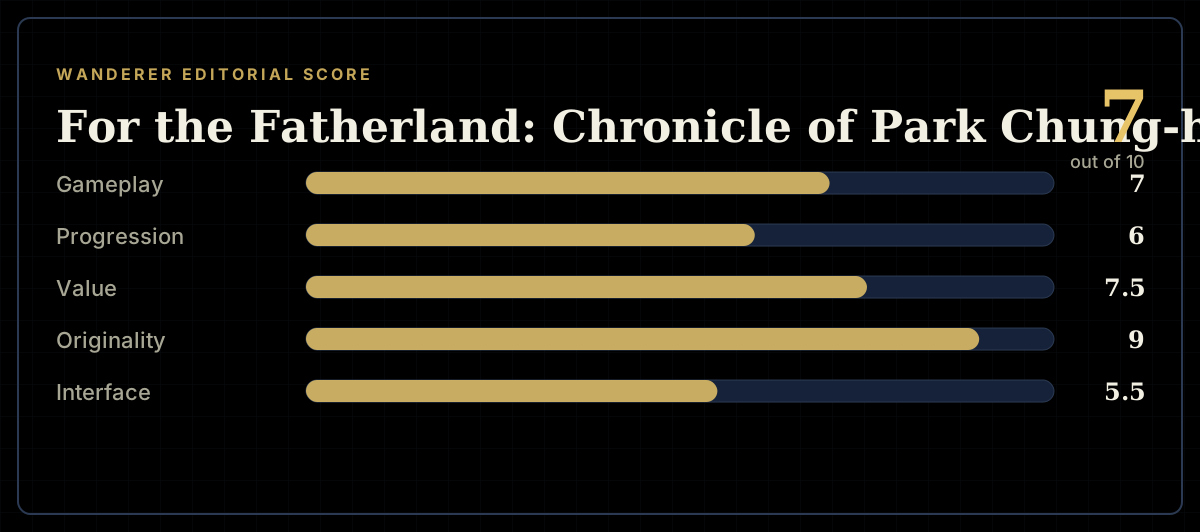
How the review scores each part of the gameWanderer Editorial -
The short versionWanderer Editorial