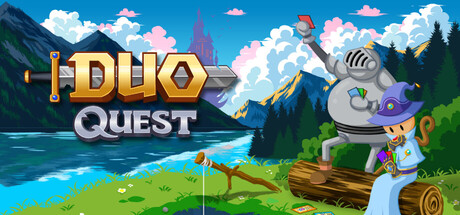
Game review
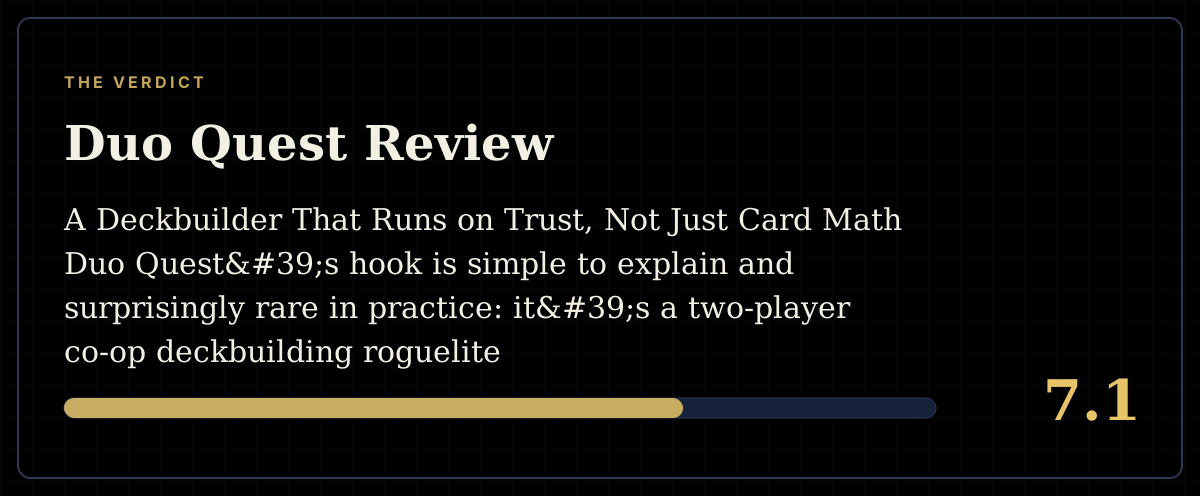
Duo Quest Review
7.1 / 10
- Developer
- 1+1 Studios
- Publisher
- Rising Tide, Electronic Sheep Games
- Released
- 16 September 2026
- Platforms
- ["Windows"]
- Genre
- Strategy
A Deckbuilder That Runs on Trust, Not Just Card Math
Duo Quest's hook is simple to explain and surprisingly rare in practice: it's a two-player co-op deckbuilding roguelite where your actual weapon is how well you know your partner. Battles hinge on answering quirky, personal questions about each other — matching answers powers up your combo cards, mismatched ones cost you an opening. It's a novel spin on the "talk to your partner while also fighting monsters" idea that games like Overcooked have explored through chaos rather than conversation, and 1+1 Studios leans all the way into the bit, right down to a Demon King whose signature weapon is literally called the Bondbreaker.
You and a friend, partner, or willing non-gamer pick from a small roster of characters, each with their own starting deck and playstyle, and set off through an 8-bit fantasy world fighting themed monster encounters. The game is explicitly built for two, and it shows in the best way — nothing about the pacing, difficulty, or humor feels like it was designed for solo play and then patched to allow a second player. You can also play split-screen on one computer if only one of you owns a copy, which is a thoughtful accessibility choice for a game clearly meant to be shared on a couch.
Building Combos by Learning What Your Partner Would Say
The deckbuilding itself borrows familiar bones from the genre — you play cards from a shared pool, manage a resource system, and gradually unlock stronger combinations as runs progress — but the personal-question layer changes how those decisions feel. Instead of just optimizing numbers, you're constantly guessing at your partner's mindset: would they say the same color shirt as you? The same childhood memory? Get it right and you trigger a fusion into a more powerful card; get it wrong and you're stuck improvising with whatever you drew. With over a thousand questions spread across more than twenty themes, there's a lot of raw material here, though several players noted that individual runs can start to feel repetitive once you've seen a chunk of the question pool, since any single session only surfaces a fraction of it.
Character variety helps keep things fresh between runs — different starting kits nudge you toward different archetypes, and the enemy roster is full of small, funny touches (a fan-favorite frog character in particular gets called out constantly in player reviews) that keep the tone light even as the difficulty ramps. The game's charm is genuinely its strongest asset: it's rare to find a deckbuilder this openly interested in being goofy and warm rather than grim and optimized, and for the audience it's built for — couples, friend groups, anyone looking to introduce a non-gamer to the genre — that tone does a lot of heavy lifting.
Rough Around the Edges, Especially With a Controller
Where Duo Quest struggles is polish, and it struggles there consistently enough across reviews that it's worth taking seriously before buying. Controller support is a recurring sore spot: certain menus and the custom-question input don't support controllers at all despite the game recommending one, the mouse cursor lingers on screen even after switching to a gamepad, and a "reconnect controller" screen has been reported to soft-lock or hard-lock sessions outright, sometimes forcing a full restart. For a game whose entire appeal is uninterrupted, low-friction co-op play, having sessions derailed by input bugs undercuts the premise more than it would in a solo game you can just pause and troubleshoot alone.
The UI has its own rough patches beyond controller support — blurry text at some resolutions, unclear indicators for what enemy status icons mean, and a card-fusion preview system that several players found genuinely confusing, sometimes showing the same resulting card regardless of which options you picked. None of these are the kind of bugs that make the game unplayable, but they're the kind that chip away at a game built specifically to feel smooth and inviting for players who don't normally game. 1+1 Studios has been visibly active post-launch — the news history shows a steady cadence of language localizations and feature additions since the closed playtest began, which is a good sign for how quickly these rougher edges might get sanded down.
It's also worth noting the question content itself is a matter of taste. A few players found the earlier question sets a little too safe or generic — the kind of "getting to know you" prompts you'd find in party games at a store shelf — and wished for sharper or more surprising material. The game does let you write and submit custom questions, which several reviewers flagged as the feature with the most potential to fix this if the community embraces it, but out of the box the writing doesn't always match the ambition of the concept.
A Genuinely Fresh Co-op Hook Held Back by Launch Jank
At $11.99, Duo Quest is priced sensibly for what's ultimately a lighter, more casual deckbuilder than genre heavyweights, and that's the right framing for it — this isn't trying to out-strategize Slay the Spire, it's trying to give you and a partner a reason to sit down, laugh, and maybe learn something new about each other along the way. On that goal, it mostly succeeds, and the sheer number of five-star reviews praising it as "date night" material speaks to how well the core hook lands for its intended audience.
The game's Mostly Positive standing on Steam reflects a real split, though: players who came in expecting a tight, mechanically deep deckbuilder bounced off the controller bugs and the relatively shallow combat layer beneath the question gimmick, while players who came in for the social hook mostly walked away charmed despite the jank. If you have a regular co-op partner and don't mind some early rough edges, the good news is 1+1 Studios has shipped a steady stream of post-launch updates already, and a deckbuilder this openly earnest about its central idea deserves the benefit of the doubt while it gets sanded down.
Verdict
Duo Quest takes a genuinely clever premise — deckbuilding powered by how well you know your co-op partner — and builds a charming, if mechanically light, roguelite around it. Controller bugs, some UI confusion, and a question pool that can feel repetitive across longer sessions keep it from greatness, but for couples and friend groups looking for a co-op game with real heart, it's an easy recommendation once you're playing on keyboard and mouse.
Pros:
- Genuinely novel co-op hook built around answering personal questions together
- Strong, warm sense of humor and character design that suits its intended audience
- Over a thousand questions across twenty-plus themes, with custom-question support
- Built from the ground up for two players, including same-screen play with one copy
- Active post-launch support with a steady stream of localization and feature updates
Cons:
- Significant controller support bugs, including soft-locks on the reconnect screen
- UI clarity issues around status icons, card fusion previews, and blurry text
- Underlying deck combat is fairly shallow once the question gimmick is set aside
- Question content can feel repetitive or overly safe across a single run
- Best experienced with a regular, willing co-op partner rather than solo or with strangers
Screenshots
-
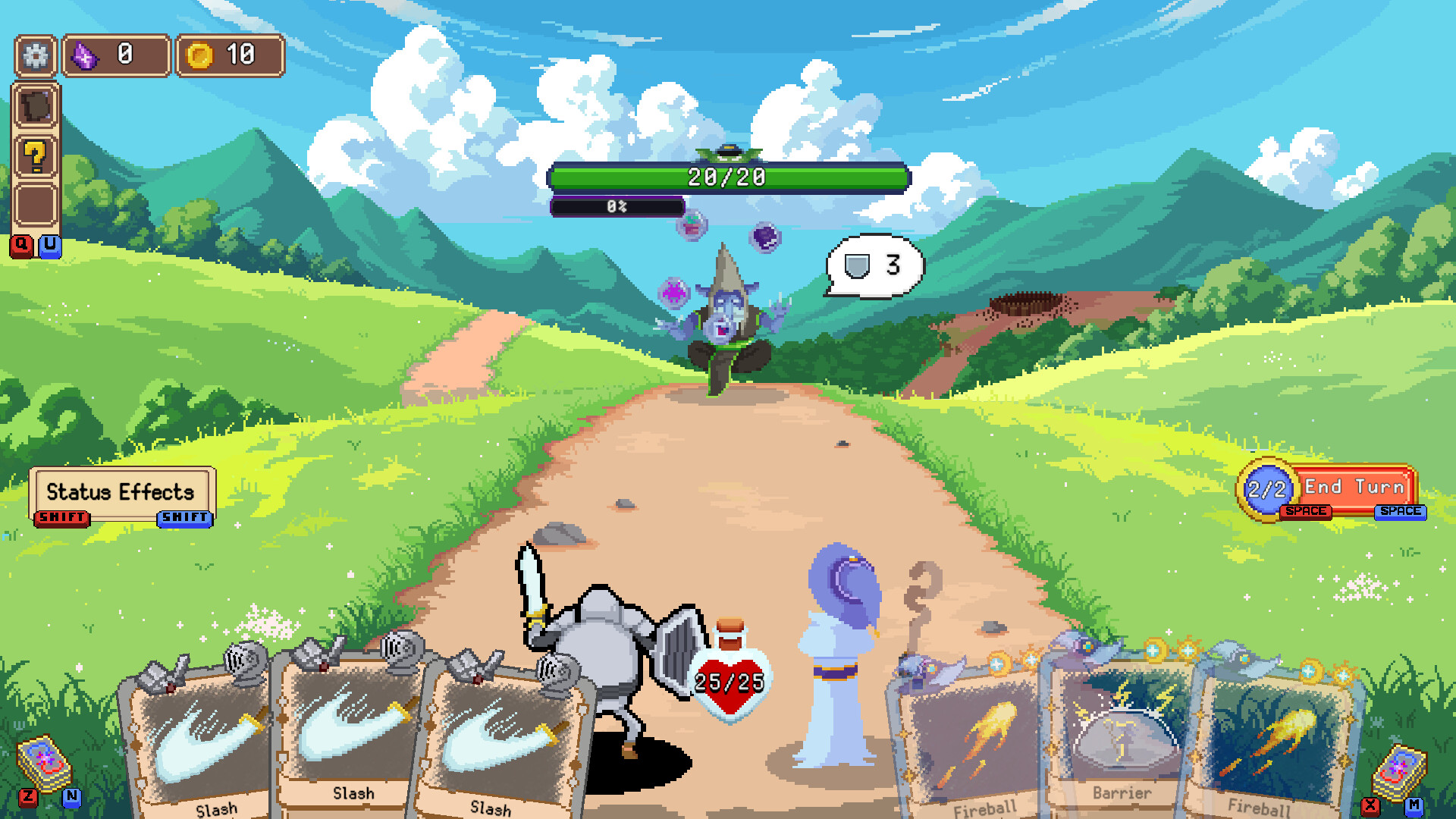
A battle on the overworld road, with combo cards ready to playImage: 1+1 Studios -
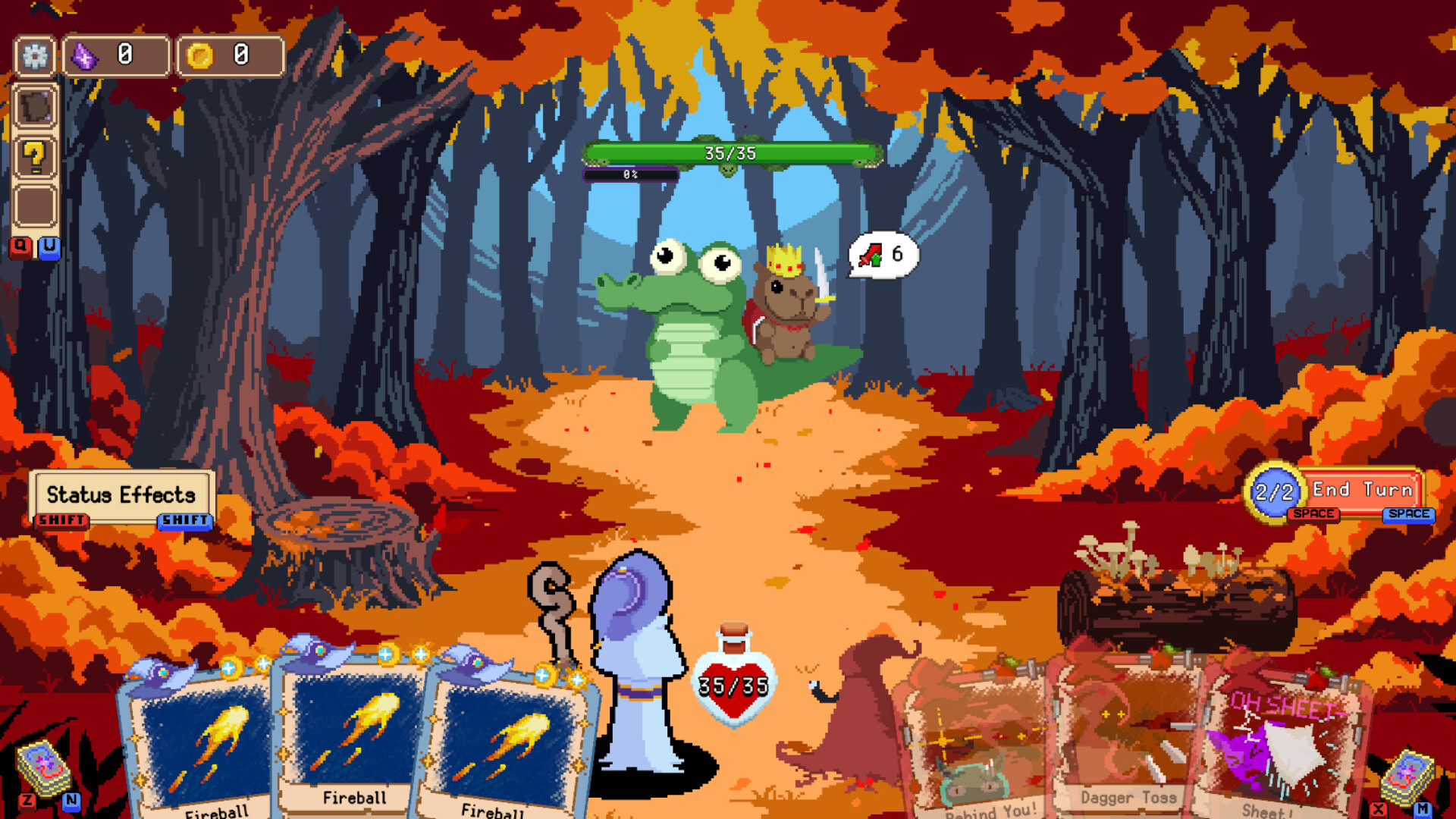
Facing down a crowned crocodile boss in the forestImage: 1+1 Studios -

A swamp encounter against a giant egg-shaped foeImage: 1+1 Studios -
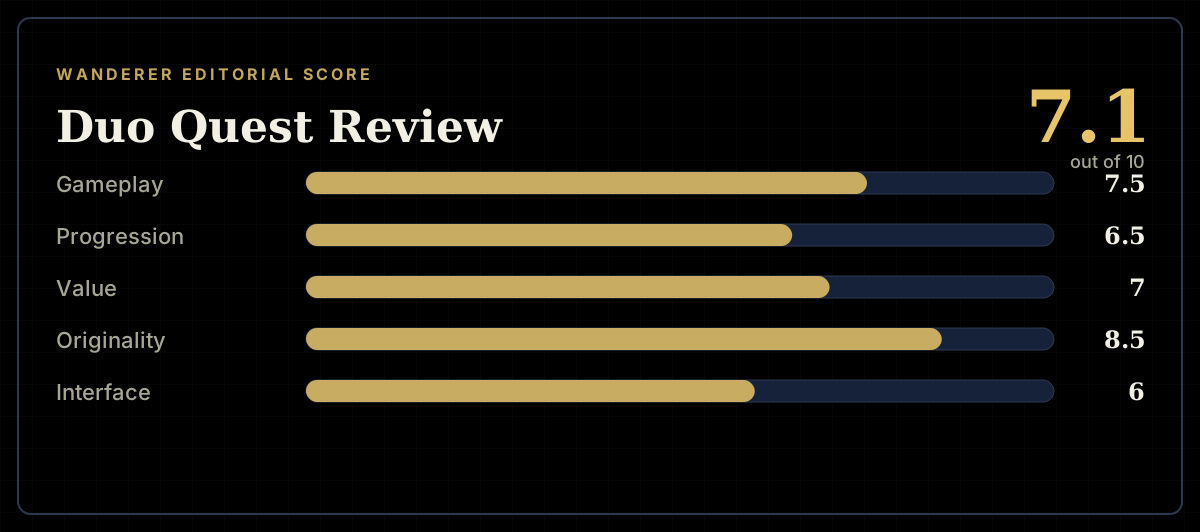
How the review scores each part of the gameWanderer Editorial -
The short versionWanderer Editorial