
Game review
Coin Tavern Review: A Clever Coin-Flipping Roguelike With a Grindy Unlock Problem
5.4 / 10
- Developer
- Woven Dream Isle
- Publisher
- Woven Dream Isle
- Released
- 23 July 2026
- Platforms
- ["PC"]
- Genre
- Strategy
- Monetisation
- Paid
- Players
- false
The short version
Coin Tavern trades the slot reels of games like Luck Be a Landlord for a tavern full of quirky, synergy-laden coins, tossing a handful onto a playmat each round and rewarding players for reading how they interact, a wolf coin devouring a sheep coin, a combo chaining into a bonus, and letting a run snowball from there. Developer Woven Dream Isle's take draws real, repeated praise across the review sample for its cozy presentation, genuine strategic depth and no-timer pacing that reviewers describe as ideal for a relaxed, background session. Set against that is a specific structural complaint, that unlocking each new level's coin pool requires first beating the previous level twice on trivially easy settings, which a meaningful slice of the sample calls an unwelcome grind bolted onto an otherwise casual game, and a launch-week controversy in which at least two reviewers say they refunded the game after concluding it used undisclosed AI-generated content during development, a claim this review cannot independently verify but that clearly shaped some players' reception.
Biggest strengths
- The core loop of reading coin synergies, face-up triggers versus face-down value, chained combos, cause-and-effect chains like a wolf coin consuming a sheep coin, is repeatedly praised as genuinely clever and satisfying to master
- No run timer and a 4x speed option make it an easy game to leave running in the background, described by several reviewers as ideal chill, relaxing, low-commitment strategy game
- A number of reviewers with 20 to 70-plus hours logged describe strong long-term engagement and motivation to keep pushing difficulty tiers across each level's coin pool
Biggest weaknesses
- Unlocking a new level's exclusive coins requires first beating the previous level twice, once on Beginner and once on Easy, both described by multiple reviewers as trivially easy guaranteed wins, turning early progression into a padded, repetitive grind before real difficulty appears
- At least two reviewers in the sample report refunding the game after concluding it used undisclosed AI-generated content during development, a claim Wanderer cannot independently verify but which visibly affected some players' willingness to recommend it
- Smaller but real technical complaints recur: a restart button with no confirmation prompt that has cost at least one reviewer lost run progress twice, one report of a fully lost save file after ten hours, and rough English wording on some relic descriptions
Who it's for: Deckbuilding roguelike and Luck Be a Landlord fans looking for a cozy, low-pressure spin on the genre, with patience for an early grind before the good stuff unlocks.
Our recommendation: Recommended for fans of coin/slot-style roguelikes who can tolerate a slow, repetitive unlock curve, with the AI-disclosure question worth researching before buying if it matters to you.
5.4 / 10
Coin Tavern takes the now-familiar "toss randomised tokens onto a board and watch the synergies unfold" roguelike template, popularised by games like Luck Be a Landlord, and swaps slot reels for a wild assortment of coins. Each round, a handful of coins land on the table; a coin that lands face-up triggers its special effect, while one that lands face-down simply pays out its base value, and the real game is in building a coin deck where those effects chain into escalating combos, hoarding value, refining a deck's odds, and unlocking new coin pools as runs progress. Developer and publisher Woven Dream Isle released it on 23 July 2026, and it currently sits at 85% positive across 114 Steam reviews. The 17-review English-language sample gathered for this piece, spanning both the top-rated and most-recent queues, is dominated by real enthusiasm for the core loop, tempered by a specific and repeated frustration with how the game gates its own content, and shadowed by a launch-week controversy over the game's use of AI during development.
A Clever Coin-Based Spin on the "Luck" Roguelike Formula
The dominant sentiment across the sample is straightforward praise for how satisfying the coin-synergy system is to learn and master. One reviewer, 23.5 hours in, calls it "a fantastic mix of gambling and deckbuilding" with "deep tactical gameplay" and "gorgeous art direction," flatly declaring it "a hidden gem." Another, drawing the direct genre comparison, describes it as "essentially the same game" as Luck Be a Landlord but says they prefer Coin Tavern specifically because each level's distinct coin pool interacts in "unique and interesting ways that inspire you to build slightly different" each time, rather than working from one static pool throughout. A third reviewer highlights the specific joy of discovering interactions organically, singling out a wolf coin that devours a sheep coin for a one-time bonus as an example of the kind of emergent moment the game rewards paying attention to. Several reviewers also call out the lack of a run timer and the presence of a 4x speed option as genuinely valuable design choices, describing the game as ideal to leave running in the background during a relaxed, low-pressure session, "chill and relax," in one reviewer's words, while still demanding "a lot of strategy."
Difficulty Gating Frustrates Even Fans of the Core Loop
Set against that praise is a specific structural complaint that recurs independently across multiple critical reviews. To unlock a new level's exclusive coin pool and item drafts, players must first clear the previous level twice, once on Beginner difficulty and once on Easy, both of which one detailed review describes as "uninteresting guaranteed wins" that a player with any genre experience would have to actively try to lose. That same reviewer calculates each level takes roughly thirty minutes even played at maximum speed, and objects specifically to being forced through that process even when they'd rather have simply paid off a level's in-game debt to skip ahead, concluding that "the casual fun it brings is not worth the serious grind it requires to get there." A second, shorter critical review independently echoes the same complaint, calling the requirement to replay minimal-difficulty runs "boring" and saying it "only highlights the flaws in the game" by dragging out the early hours rather than showcasing the system's depth. It's a notable point of alignment between two otherwise-unconnected Not Recommended reviews, and it stands out precisely because the underlying gameplay loop both reviewers are complaining about accessing is the same one the positive reviews praise so consistently.
An Undisclosed AI Controversy Shadows the Launch
A separate and more serious thread in the sample concerns the game's development process itself. One reviewer, who requested a refund, states plainly that the developer "did not disclose their use of AI, which is against Steam policy," and lists it as a central reason for refunding alongside complaints about thin animation and an unsatisfying lack of physical coin-flip physics. A second, longer review that is otherwise focused on the difficulty-gating complaint above adds, as an edit, that they separately "learned that AI was used in the development process, which is an insta 'no buy'" for them, and says they are "staying away from this shady dev" as a result. This review cannot independently verify what, if any, AI-generated content the game contains, or confirm whether Steam's disclosure requirements were actually violated, Steam's own storefront page for the game carries no AI-content disclosure notice at the time of writing, but the fact that this specific concern surfaces unprompted from more than one reviewer, framed as a dealbreaker serious enough to trigger a refund, is worth flagging as part of the game's launch reception regardless of how the underlying claim is ultimately resolved.
Small But Real Technical Rough Edges
Beyond the two larger complaints, the sample includes a handful of smaller but concrete technical issues. One reviewer reports losing run progress twice after accidentally pressing an unconfirmed restart button placed, in their words, confusingly close to other interface elements, and asks for a simple confirmation prompt to be added. A more serious report describes a fully lost save file after ten hours of play, with reinstalling the game failing to recover it, a bug this review's sample doesn't show any developer response to as of the review's posting date. A separate, more positive reviewer notes the English localisation is "a bit rough" in places and suggests some relic descriptions could use a rewrite for clarity, a minor but recurring theme that speaks to a game still smoothing out its presentation post-launch.
Value and Final Verdict
At around NZ$15.75, and with multiple reviewers logging well over twenty, forty, even seventy hours, Coin Tavern's core loop clearly has staying power for the audience it's aimed at, and most of the sample's complaints are about structure and trust rather than the fundamental gameplay, which is consistently and specifically praised. The forced-grind unlock curve is a real design misstep worth going in prepared for, especially for anyone who bounces off repetitive early-game padding, and the undisclosed-AI concern raised by a handful of reviewers is the kind of claim worth researching independently before buying if a developer's use of AI tools during production matters to your purchasing decision. Neither issue erases what reviewers who pushed past them describe as a genuinely clever, cozy, and replayable coin-based roguelike, but both are specific enough, and specific enough to this game rather than the genre generally, that they're worth weighing before committing.
Pros and cons
Pros
- The core loop of reading coin synergies, face-up triggers versus face-down value, chained combos, cause-and-effect chains like a wolf coin consuming a sheep coin, is repeatedly praised as genuinely clever and satisfying to master
- No run timer and a 4x speed option make it an easy game to leave running in the background, described by several reviewers as ideal chill, relaxing, low-commitment strategy game
- A number of reviewers with 20 to 70-plus hours logged describe strong long-term engagement and motivation to keep pushing difficulty tiers across each level's coin pool
Cons
- Unlocking a new level's exclusive coins requires first beating the previous level twice, once on Beginner and once on Easy, both described by multiple reviewers as trivially easy guaranteed wins, turning early progression into a padded, repetitive grind before real difficulty appears
- At least two reviewers in the sample report refunding the game after concluding it used undisclosed AI-generated content during development, a claim Wanderer cannot independently verify but which visibly affected some players' willingness to recommend it
- Smaller but real technical complaints recur: a restart button with no confirmation prompt that has cost at least one reviewer lost run progress twice, one report of a fully lost save file after ten hours, and rough English wording on some relic descriptions
Screenshots
-
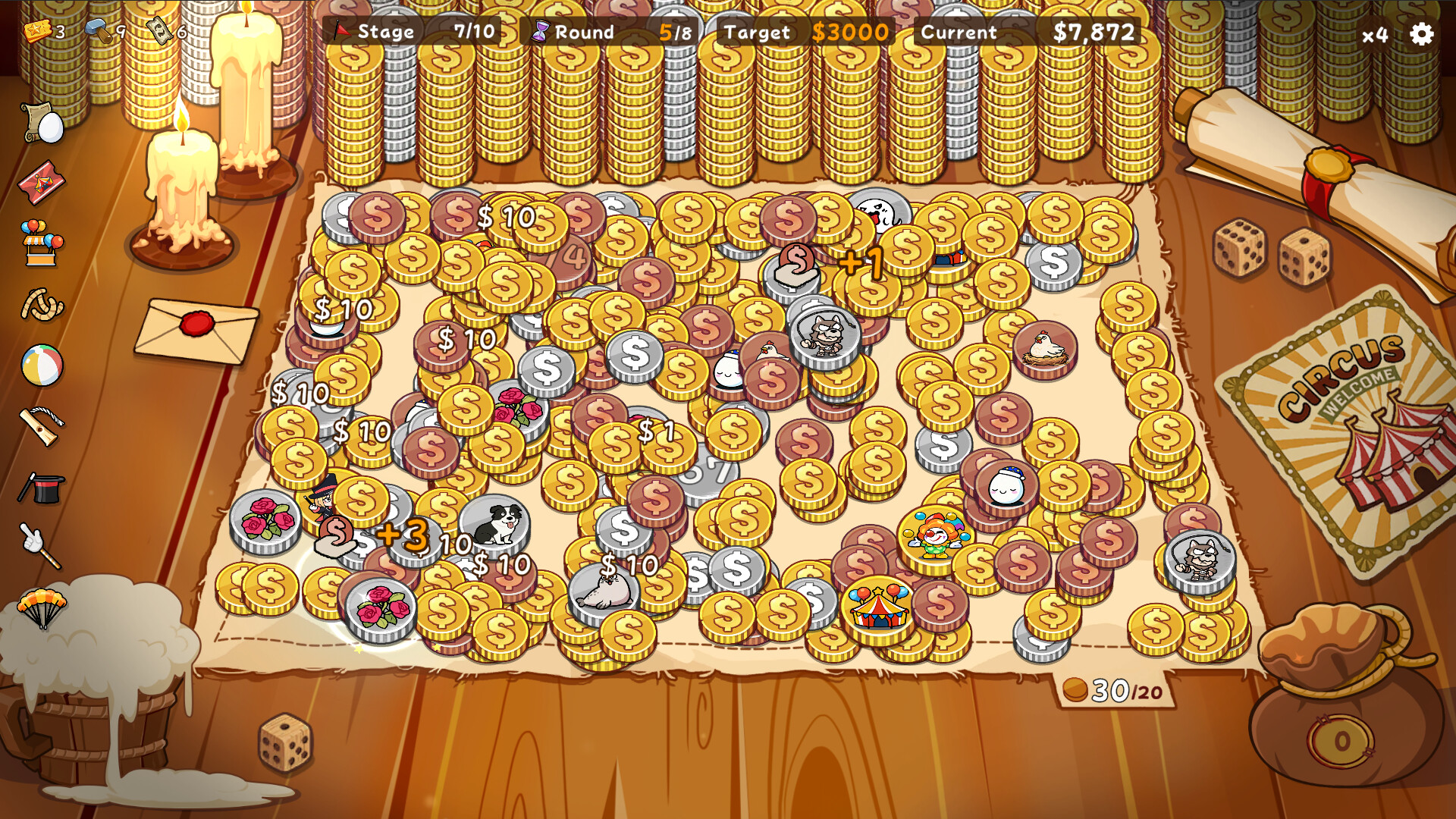
A late-stage round, coins piling up as synergies chain together across the playmatWoven Dream Isle -
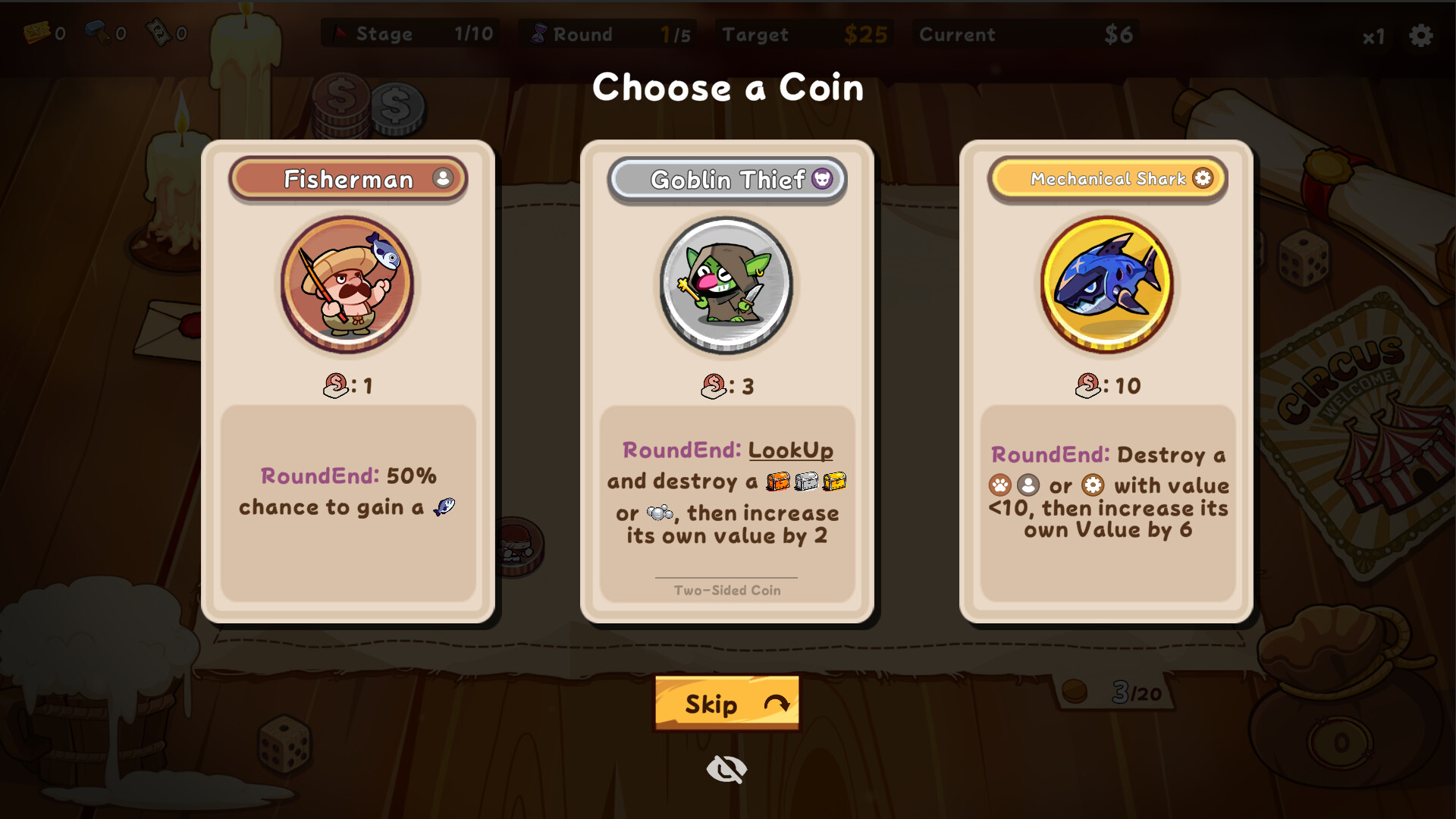
Choosing a new coin to add to the deck, each with its own round-end effectWoven Dream Isle -

Browsing the shop between stages to expand and refine the coin deckWoven Dream Isle -
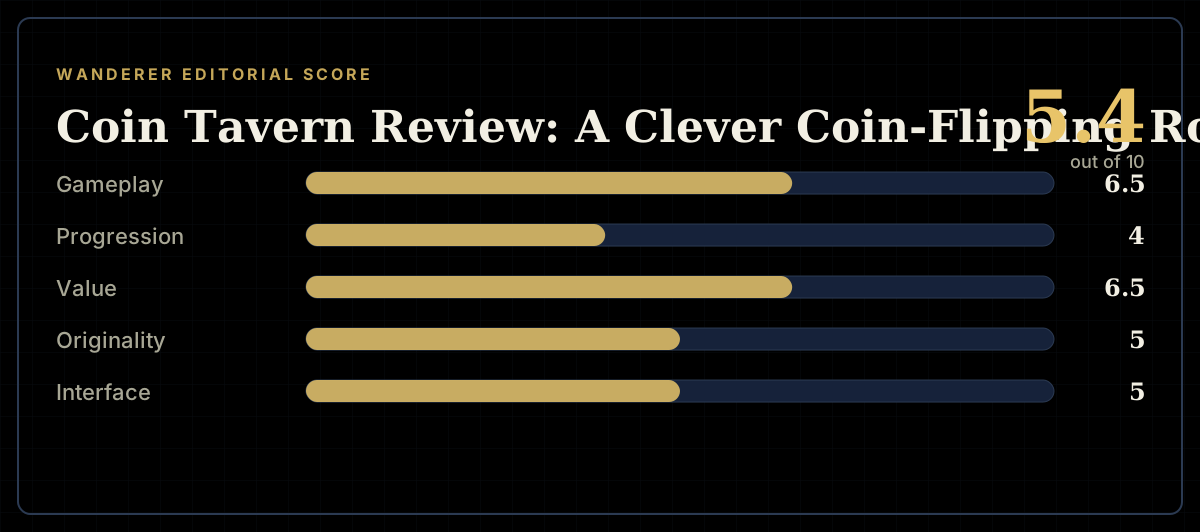
How the review scores each part of the gameWanderer Editorial -
The short versionWanderer Editorial